
Kevin McFarthing

9.5K posts

Kevin McFarthing banner
Kevin McFarthing

Kevin McFarthing

@InnovationFixer

Parkinson's research advocate, curator of the Parkinson's Hope List, used to know a lot about innovation management and R&D

Oxford, UK 가입일 Haziran 2010
7.6K 팔로잉8.7K 팔로워
고정된 트윗
Kevin McFarthing
Kevin McFarthing@InnovationFixer·
The latest version of the Parkinson’s Hope List is now available at bit.ly/ParkinsonsHope… . It has 237 projects in Research stage, 98 in Discovery and 139 in Pre-clinical; and 166 in Clinical stage broken down by phase. #Parkinsons 1/2

Kevin McFarthing tweet media
English
1
0
6
685
Kevin McFarthing 리트윗함
Michael Okun
Michael Okun@MichaelOkun·
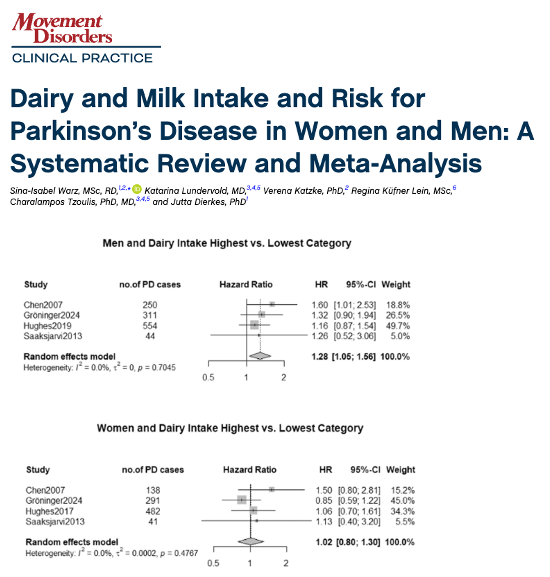
Does dairy increase Parkinson’s risk? A new meta-analysis takes a closer look. Dairy refers to foods produced from milk (milk, cheese, yogurt and butter). Warz and colleagues describe in a new paper that just dropped in Movement Disorders Clinical Practice how dairy and milk intake may relate to Parkinson’s disease risk in men and women. Key Points: - A systematic review and meta analysis including more than 578,000 participants examined whether higher dairy intake was linked to Parkinson’s disease risk. - Higher total dairy intake was associated w/ a modestly increased Parkinson’s disease risk in men, but no meaningful association was observed in women. - Milk intake alone showed a possible signal toward higher risk, however the evidence was inconsistent and the overall certainty of the data remained low. My take: The dairy and Parkinson’s discussion has been around for decades and continues to evolve. This updated analysis suggests overall there may be a small association in men, however the signal remains weak and observational. Dairy remains an important nutritional source and the current evidence does not support sweeping dietary changes specifically to prevent Parkinson’s disease. We should remember the Honolulu Aging Study when discussing dairy and Parkinson’s disease. In that cohort, higher milk consumption was clearly associated w/ greater Parkinson’s disease risk. Investigators later uncovered an environmental clue tied to dairy production. Dairy cows had been fed pineapple plant tops contaminated w/ the pesticide heptachlor. The chemical entered the milk supply and likely exposed those who consumed the dairy. This story reminds us that the risk signal may not be the milk itself, but what may occasionally travel along w/ it. Here are 5 points that resonated w/ me about the recent paper: 1- Environmental factors likely contribute to Parkinson’s disease risk and diet may be one small piece of a much larger puzzle. 2- The association between dairy intake and Parkinson’s disease appeared stronger in men, highlighting possible biological or hormonal differences. 3- Several hypotheses exist including pesticide contaminants in dairy or metabolic effects such as lower uric acid levels. 4- Observational nutrition studies can show associations, however they do not prove cause and effect. 5- At this time health care providers should focus on balanced nutrition and overall health rather than eliminating dairy solely to reduce Parkinson’s disease risk. …mentdisorders.onlinelibrary.wiley.com/doi/10.1002/md… @ParkinsonDotOrg @MDCP_Journal #parkinson
Michael Okun tweet media
English
3
8
36
2.8K
Kevin McFarthing 리트윗함
Benjamin Stecher
Benjamin Stecher@Neuronologist1·
The Past, Present and Future of Clinical Trials in Parkinson's Disease as well as a Critique of How, Who and What We Measure... tmrwedition.com/2026/03/05/obs…
English
1
4
7
810
Kevin McFarthing 리트윗함
Michael Okun
Michael Okun@MichaelOkun·
Why is Parkinson disease growing worldwide? The 'bathtub analogy' explains the surge. A bathtub analogy means imagining disease cases like water filling a tub where inflow, outflow and drainage determine how high the water rises. Dommershuijsen and colleagues describe in a new paper in Nature Reviews Neurology how simple epidemiological dynamics help explain the worldwide growth of Parkinson disease. They apply the bathtub metaphor. Key Points: - The bathtub water level represents the total number of folks living w/ Parkinson's disease, and this level has risen dramatically worldwide over the past decades. - Inflow into the bathtub represents new cases and may rise due to population aging, environmental exposures and better detection of Parkinson's. - Outflow represents deaths or cures, and longer survival w/ Parkinson's means less water draining from the bathtub and a steadily rising level. My take: The bathtub analogy is a powerful way to understand the Parkinson pandemic. Even if the rate of new diagnoses stays stable, the total number of folks living w/ Parkinson disease can keep rising because more folks survive longer and populations are aging. This framing also reminds us that prevention, environmental protection and disease modifying therapies will be essential if we want to slow the rising water level. Here are 5 points that resonated w/ me: 1- Parkinson disease is the fastest growing neurodegenerative disorder worldwide and the number of affected folks continues to climb. 2- Population aging expands the reservoir of individuals at risk and adds more water flowing into the bathtub. 3- Environmental exposures across a lifetime may contribute to rising disease risk in many regions of the world. 4- Better recognition and earlier diagnosis mean fewer cases are missed, which also raises the apparent number of folks living w/ Parkinson's. 5- Slowing the Parkinson's pandemic will require prevention strategies, disease modifying therapies and ultimately cures. These strategies will actively pump water out of the bathtub. nature.com/articles/s4158… #parkinson @ParkinsonDotOrg
Michael Okun tweet media
English
6
54
153
7.9K
Kevin McFarthing 리트윗함
Louisa Nicola
Louisa Nicola@louisanicola_·
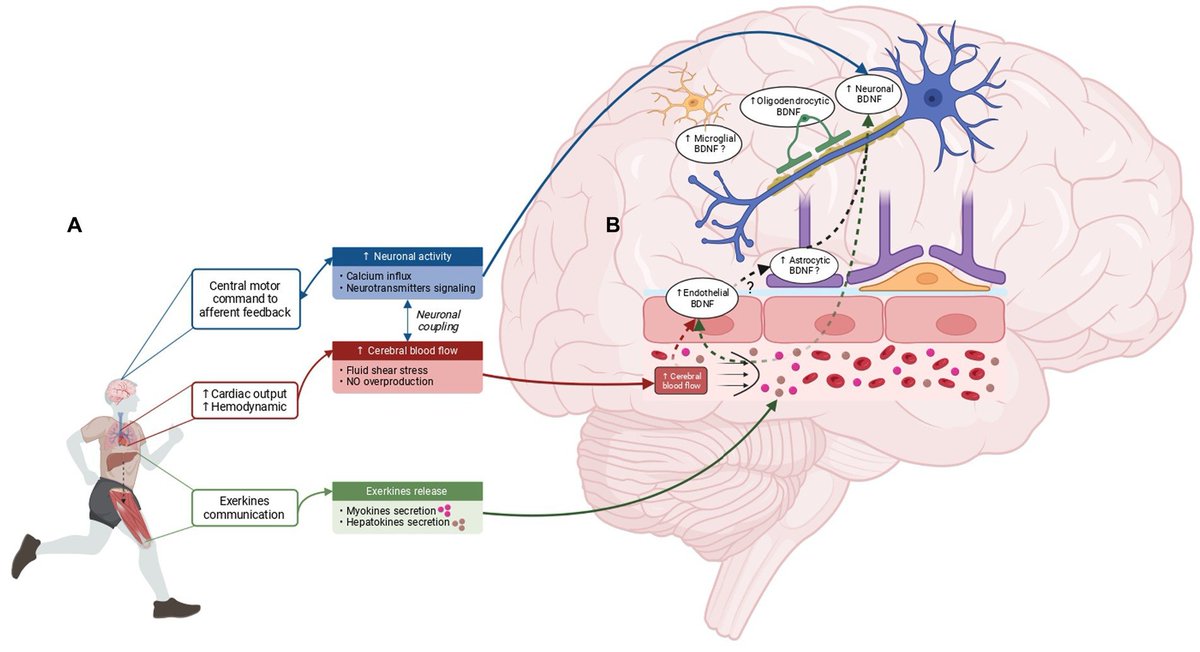
Exercise is a brain drug. Here’s the biology behind it New review in Frontiers in Molecular Neuroscience breaks down how exercise boosts brain BDNF, the key molecule for learning and memory. What matters most: 1. Exercise reliably increases brain BDNF, a driver of neuroplasticity and neurogenesis 2. BDNF supports memory, learning, mood, and stress resilience 3. Blocking BDNF signaling removes many cognitive benefits of exercise How exercise raises BDNF: 4) Neuronal activity increases calcium signaling and gene expression 5) Increased cerebral blood flow activates endothelial BDNF production 6) Muscle and liver release exerkines like lactate, irisin, IGF-1, and ketones that signal the brain 7) Brain BDNF comes from neurons, blood vessels, and peripheral organs working together Exercise isn’t just movement, it’s a whole body signal that rewires the brain from the inside out.
Louisa Nicola tweet media
English
23
339
1.3K
48.7K
Kevin McFarthing 리트윗함
Michael Okun
Michael Okun@MichaelOkun·
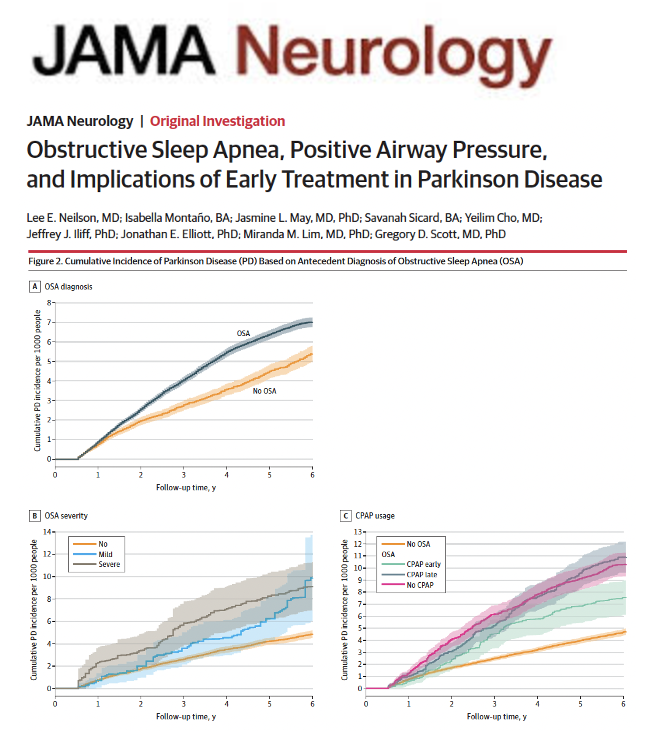
Did you know that treating sleep apnea early may reduce the likelihood of a later Parkinson's diagnosis? Apnea describes brief pauses in breathing during sleep that can trigger drops in oxygen and potentially stress the brain. Neilson and colleagues describe in a new paper in JAMA Neurology that having obstructive sleep apnea elevated Parkinson disease risk and that early use of positive airway pressure may have lowered that risk. Key Points: - Obstructive sleep apnea increased the risk of later being diagnosed w/ Parkinson's as early as two years after diagnosis (of OSA) and the risk continued to rise through six years. - Early positive airway pressure treatment reduced Parkinson disease incidence, including in those w/ mild and severe sleep apnea. - Positive airway pressure was also linked to fewer falls, fractures, and lower mortality in those who later developed Parkinson's. My take: Do not ignore sleep when thinking about risk for later Parkinson's disease. This paper offers a compelling reason to identify and treat sleep apnea. Here are 5 points that resonated w/ me: 1- Sleep apnea matters for brain health, however many folks remain undiagnosed and untreated. 2- Early screening is critical since positive airway pressure showed protective effects when started w/in two years of sleep apnea diagnosis. 3- Positive airway pressure may modify a midlife risk factor that contributes to vulnerability for Parkinson's. 4- Treatment appeared to reduce harmful downstream consequences such as falls, fractures and early mortality. 5- Folks w/ Parkinson's and sleep symptoms should ask their health care providers about targeted screening and ways to improve night-time breathing. jamanetwork.com/journals/jaman… @ParkinsonDotOrg #parkinson @JAMANeuro @JAMA_current @movedisorder @uoregon @VeteransHealth
Michael Okun tweet media
English
2
26
70
9.1K
Kevin McFarthing 리트윗함
The Science of Parkinson's
The Science of Parkinson's@ScienceofPD·
Another a-synuclein-targeting immunotherapy runs into trouble... Takeda walks away from an AstraZeneca-partnered neurological program after the TAK-341/MEDI1341 Phase 2 study in 159 people with multiple system atrophy missed primary & sec. endpoints fiercebiotech.com/biotech/takeda…
English
0
1
3
569
Kevin McFarthing 리트윗함
Cure Parkinson's
Cure Parkinson's@CureParkinsonsT·
"The start of recruitment to the EJS ACT-PD trial offers real hope to people living with Parkinson's and their families.” Helen Matthews, CEO, Cure Parkinson’s. Learn how this new project will help transform Parkinson’s clinical trials in the UK: buff.ly/ZhqLihx
Cure Parkinson's tweet media
English
0
1
1
440
Kevin McFarthing 리트윗함
Cure Parkinson's
Cure Parkinson's@CureParkinsonsT·
We’re excited to announce that recruitment for the first multi-arm, multi-stage (MAMS) platform for Parkinson’s in the UK – @EJS_ACT_PD – is open. This project will continuously test new therapies that could impact Parkinson's progression: buff.ly/W7eqbec #ejsactpd
English
0
3
10
2.7K
Kevin McFarthing
Kevin McFarthing@InnovationFixer·
@DrRigid Bad move but there’ll be some smart people available for hire
English
0
0
0
9
Kevin McFarthing 리트윗함
Parkinson's News Today
Parkinson's News Today@parkinsonstory·
The Parkinson's Foundation has launched PD Trial Navigator to help increase enrollment in clinical studies testing gene-targeted therapies. buff.ly/Kvwq6tP
Parkinson's News Today tweet media
English
0
2
3
328
spoutmouzert
spoutmouzert@DrRigid·
@InnovationFixer @ScienceofPD Anyone know who has licensing rights to eltoprazine, a Phase 2b-ready small molecule indicated for Parkinson's disease levodopa-induced dyskinesia now that Amarantus BioScience has gone bust? 2b Results were good. Thanks
English
1
0
0
37