Larry Stevens
14.4K posts


The Tesla Semi might be the most important product Tesla has ever built. This is a huge deal. Any company buying a diesel semi truck today is lighting money on fire: - The Tesla Semi costs 15 cents per mile to power - A diesel Class 8 costs 48 cents That’s a 70% reduction in energy costs per mile… Over the battery’s rated million-mile lifespan, that gap compounds into $330,000 in energy savings, PER TRUCK Buy ten of them and you’ve saved $3.3 million. Buy a hundred and you’ve restructured your entire P&L. And that’s just fuel. The Semi has no engine, no transmission, no oil changes. Regenerative braking means brake pads last dramatically longer. Tesla’s pilot fleet is running at 95% uptime, and when trucks do break down, half are back on the road within an hour. PepsiCo, DHL, Frito-Lay, ArcBest, and Saia are already running them. 13.5 million real-world miles logged across the fleet. One single truck has done 440,000 miles. At $290,000, the Long Range version is also cheaper than the industry average of $435,000 for a zero-emission Class 8. At some point this stops being an environmental discussion and becomes fiduciary negligence for anyone still signing diesel purchase orders.




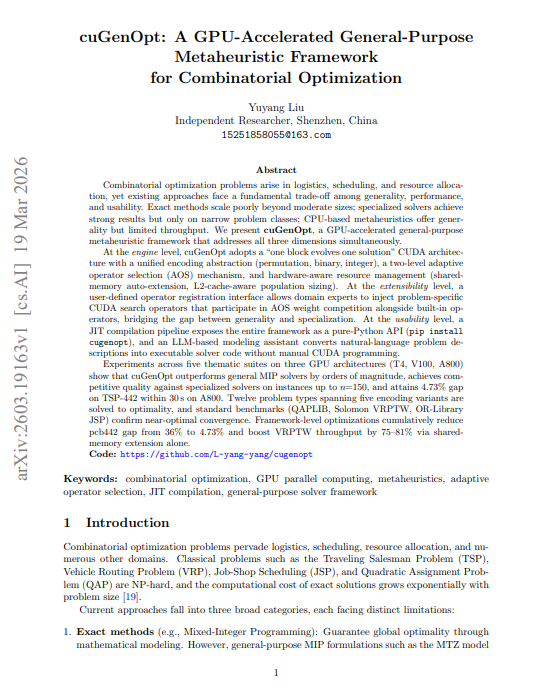



TSMC mskes thousands of different chips for hundreds of customers. Terafab will make two chips. This massively simplifies the factory and allows them to focus on trying different iterations of those two chips to accelerate production and reduce costs.

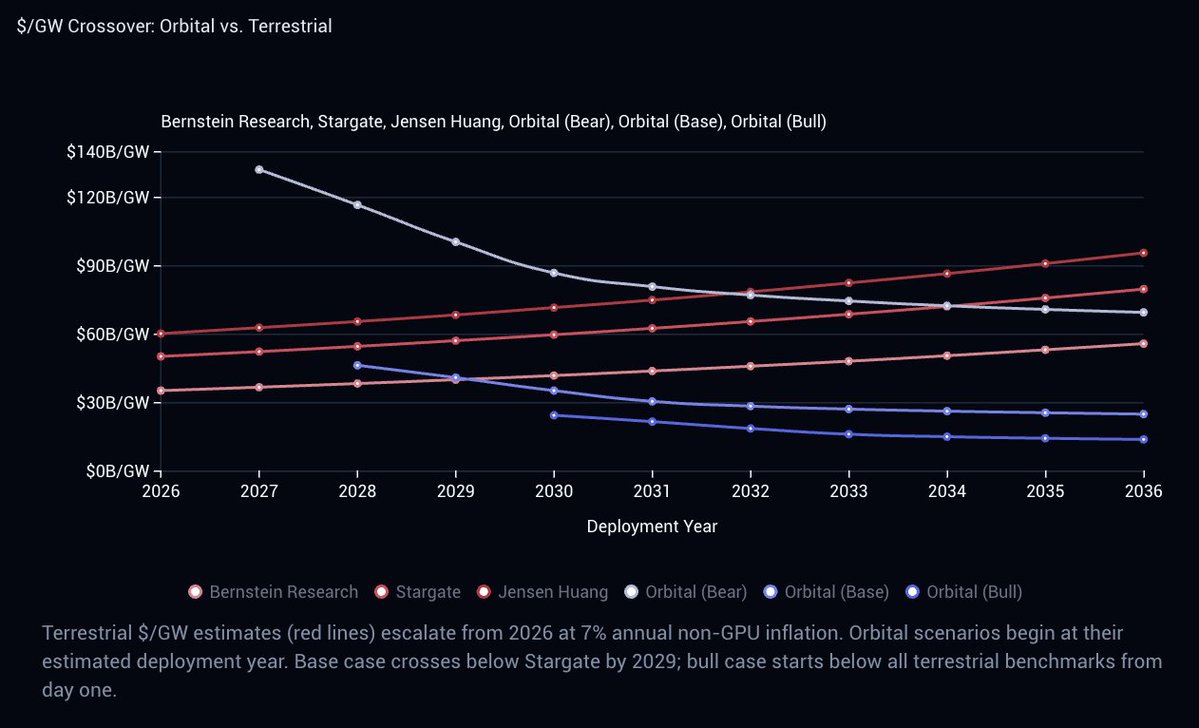
There it is the first AI Sat concept with solar panels & radiators to scale … 100kw scale.

Global attention is focused on the Persian Gulf. But we have news too. March 2026 became the first month when, in terms of deep strikes, Ukraine reached parity with Russia. The average number of long-range kamikaze drones launched by Ukraine has significantly increased, while the average number of Russian strike drones launched against Ukraine has currently dropped to 90–110 per day. Experts offer various possible reasons for this decrease: ▪️ drone production in Russia was not fully localized and partially depended on Iran; ▪️ logistics routes have become longer, and Iran itself now needs drones; ▪️ Ukraine is partially hitting production sites and factories; ▪️ possibly, Russia is stockpiling drones, perhaps for hybrid provocations in other regions; ▪️ it is also likely that Russia has started supplying drones to Iran. By spring, Ukraine has significantly increased strikes on Russia using long-range kamikaze drones. For example: on the night of March 18, Russia officially claimed to have "shot down" 238 drones; however, some of them struck a chemical plant in Stavropol Krai and an electronics facility in Sevastopol. Ukraine has also expanded its operational range: over 1,500 km. Russians have openly expressed concern about the security of military infrastructure in the Urals. Ukraine has increased and continues to increase both the production and variety of drones. Moscow has been declared a target: from March 14 to 17, Russia reported about 250 drones in the Moscow air defense zone. 📹: Ukrainian Defenders destroying Russian air defense systems in Bryansk region of Russia


The Warriors have ruled Steph Curry out of the next two games (tonight and at Mavericks on Monday), but he will be incorporated into live practice in coming days. Evaluated again when they return home on Tuesday. GSW starts homestand on Wednesday vs Nets.


Let's dimension the US robotaxi market (since market participants seem unwilling to do so). People pattern match against structurally ~$3 per mile point to point mobility products and so misunderstand the potential scope of robotaxi as it becomes mass accessible. The average US adult spends nearly an hour per day driving. The imputed labor cost of all that manual piloting runs in excess of $4 trillion per year. In addition we pay $1.6 trillion annually for the actual service of driving point to point. By giving people back time (for which they don't have to pay full freight) and winning spend share, we think the US market could approach $4 trillion annually at saturation. Given reasonable expectations of supply diffusion and consumer adoption robotaxi service providers could exceed $1.5 trillion in revenue by 2030 with gross profits in excess of $1 trillion.


"Phase 1: Develop superintelligence. Phase 2: ????? Phase 3: Cure cancer, solve climate change, universal education." @Emilia_Javorsky unpacks why superintelligence is NOT the magical solution to all of our problems, contrary to AI companies' claims: