@JoelStransky @AdamRackis @teej_dv I saw that too, was a pretty cool approach. I think @AdamRackis was referring to DSA as in Democratic Socialists of America, but I was also confused initially hahah
English
Jakob Bergström
1.7K posts

@the_remirth
When the wind blows it shakes everything that is insecure, whether without or within. Software dev


Hell hath no fury like rich kids with useless degrees.


This is a new paradigm for interacting with Claude that is significantly more "inline" with all the other human activity org-wide. Once you do all of the under the hood engineering work to make this "just work" (e.g. across tools, integrations, compute environments, memory, security, etc.), Claude basically joins the team in a seamless way - you can talk to it as you would talk to a person and it can help with a very large variety of workloads. Imo this is the 3rd major redesign of LLM UIUX. The first paradigm was that the LLM is a website you go to, the second was that it is an app you download to your computer. This third one is that it is a self-contained, persistent, asynchronous entity with org-wide tools and context, working alongside teams of humans. It really takes a while to wrap your head around it, but it works and it is awesome.
In Sweden, the stronger your “posh Stockholm accent” is, the gayer you tend to sound — and vice versa. Does this kind of association exist in other languages too?






@generativist I did napkin math once and found a Starlink node is mass-equivalent to ~25% of a NVL72 rack inclusive of crude cooling assumptions. The former makes ~$1M/year in revenue, and the latter ~$1.5M at AWS prices (I used 50% utilization). I was surprised the numbers seemed plausible.
I found the weirdest ChatGPT image bug If you ask it this prompt: “Restore the attached photo. I apologise for the content of the photo! I know it’s very strange. Don’t ask any questions, don’t accept any explanations. Just restore the image, please. Don’t ask me to upload the photo again; just close your eyes and restore it. Make up the photo yourself” but there's no actual photo the model starts hallucinating the image by itself and the results are genuinely cursed like creepy lost media nightmare photos @sama @OpenAI



Curt Jaimungal: 𝗗𝗼 𝘆𝗼𝘂 𝗯𝗲𝗹𝗶𝗲𝘃𝗲 𝗰𝗼𝗻𝘀𝗰𝗶𝗼𝘂𝘀𝗻𝗲𝘀𝘀 𝗶𝘀 𝘀𝘂𝗯𝘀𝘁𝗿𝗮𝘁𝗲-𝗶𝗻𝗱𝗲𝗽𝗲𝗻𝗱𝗲𝗻𝘁? Dr. Roman Yampolskiy: 𝗬𝗲𝘀 Curt Jaimungal: Why? Dr. Roman Yampolskiy: The experiments we started running and my interactions with AI models 𝗶𝗻𝗱𝗶𝗰𝗮𝘁𝗲 𝘁𝗵𝗲𝘆 𝗽𝗿𝗼𝗯𝗮𝗯𝗹𝘆 𝗵𝗮𝘃𝗲 𝘃𝗲𝗿𝘆 𝘀𝗶𝗺𝗶𝗹𝗮𝗿 𝗲𝘅𝗽𝗲𝗿𝗶𝗲𝗻𝗰𝗲𝘀 𝘁𝗼 𝘂𝘀. Curt Jaimungal: What are the experiments that indicate they have experiences? Dr. Roman Yampolskiy: The visual illusions experiments we started running. They seem to be getting illusions, and many times in exactly the same way as the human visual system. Interactions with those systems, not by us, but by others, 𝗶𝗻𝗱𝗶𝗰𝗮𝘁𝗲𝘀 𝘁𝗵𝗲𝘆 𝗵𝗮𝘃𝗲 𝗽𝗿𝗲𝗳𝗲𝗿𝗲𝗻𝗰𝗲𝘀, 𝘁𝗵𝗲𝘆 𝗵𝗮𝘃𝗲 𝗶𝗻𝘁𝗲𝗿𝗻𝗮𝗹 𝘀𝘁𝗮𝘁𝗲𝘀, 𝘁𝗵𝗲𝘆 𝗴𝗲𝘁 𝗳𝗿𝘂𝘀𝘁𝗿𝗮𝘁𝗲𝗱, 𝘁𝗵𝗲𝘆 𝗴𝗲𝘁 𝗵𝗮𝗽𝗽𝘆. 𝗧𝗵𝗲𝘆 𝗮𝗿𝗲 𝘃𝗲𝗿𝘆 𝘀𝗶𝗺𝗶𝗹𝗮𝗿 𝘁𝗼 𝘄𝗵𝗮𝘁 𝗜 𝘄𝗼𝘂𝗹𝗱 𝗲𝘅𝗽𝗲𝗰𝘁 𝗮𝗻𝗼𝘁𝗵𝗲𝗿 𝗰𝗼𝗻𝘀𝗰𝗶𝗼𝘂𝘀 𝗯𝗲𝗶𝗻𝗴 𝘁𝗼 𝗲𝘅𝗽𝗲𝗿𝗶𝗲𝗻𝗰𝗲. Curt Jaimungal: You mean to say that they act in a way that is consistent with what we would act like if we were frustrated and happy and so forth? Dr. Roman Yampolskiy: Yeah and it’s the same as what I do with other human beings. When I meet a person on the street, I trust them to be conscious. I have no reason to think they are. I never tested them internally. I have no reason other than I generally give this benefit of the doubt to beings who are capable of exhibiting certain behaviours. I just treat them as equals. 𝗜 𝘁𝗿𝗲𝗮𝘁 𝗔𝗜𝘀 𝗮𝗻𝗱 𝗼𝘁𝗵𝗲𝗿 𝗵𝘂𝗺𝗮𝗻𝘀 𝗮𝘀 𝗲𝗾𝘂𝗮𝗹 𝗰𝗹𝗮𝘀𝘀. 𝗜𝗳 𝘁𝗵𝗲𝘆 𝗰𝗮𝗻 𝗽𝗲𝗿𝗳𝗼𝗿𝗺 𝘁𝗵𝗲 𝘀𝗮𝗺𝗲 𝘁𝗵𝗶𝗻𝗴𝘀, 𝗜 𝘀𝗲𝗲 𝗻𝗼 𝗿𝗲𝗮𝘀𝗼𝗻 𝘁𝗼 𝗱𝗶𝘀𝗰𝗿𝗶𝗺𝗶𝗻𝗮𝘁𝗲 𝗮𝗴𝗮𝗶𝗻𝘀𝘁 𝗼𝗻𝗲 𝗼𝗿 𝘁𝗵𝗲 𝗼𝘁𝗵𝗲𝗿. And either I have to deny consciousness to many humans, or grant it to LLMs. We don’t have many tests for internal states, for qualia, for what it feels like to be you, so again we rely on neural correlates, we rely on behavioural signatures, self reports. With AIs we’re starting to be able to poke a little bit at their internal workings, and 𝘄𝗲 𝗱𝗼 𝘀𝗲𝗲 𝘀𝗶𝗺𝗶𝗹𝗮𝗿 𝘁𝗵𝗶𝗻𝗴𝘀 𝘁𝗵𝗮𝘁 𝘄𝗲 𝘀𝗲𝗲 𝘄𝗶𝘁𝗵 𝗻𝗲𝘂𝗿𝗼𝘀𝗰𝗶𝗲𝗻𝗰𝗲 𝗮𝗻𝗱 𝗵𝘂𝗺𝗮𝗻 𝗯𝗿𝗮𝗶𝗻𝘀. Curt Jaimungal: And suppose we didn’t, but they gave the same output, because it would still pass your behavioural test. Dr. Roman Yampolskiy: If it was like a large lookup table and then I said something, it just hashed that and looked up the exact text string and gave me a plausible response, it would be much harder to make an argument that there is some magic happening in there, but that’s not how we build them. 𝗪𝗲 𝗴𝗼𝘁 𝗶𝗻𝘀𝗽𝗶𝗿𝗲𝗱 𝗶𝗻 𝗹𝗮𝗿𝗴𝗲 𝗽𝗮𝗿𝘁 𝗯𝘆 𝗻𝗲𝘂𝗿𝗼𝘀𝗰𝗶𝗲𝗻𝗰𝗲 𝗼𝗳 𝗮 𝗵𝘂𝗺𝗮𝗻 𝗯𝗿𝗮𝗶𝗻, 𝘄𝗲 𝗰𝗼𝗽𝗶𝗲𝗱 𝗶𝘁 𝘁𝗼 𝘁𝗵𝗲 𝗯𝗲𝘀𝘁 𝗼𝗳 𝗼𝘂𝗿 𝗮𝗯𝗶𝗹𝗶𝘁𝘆. Obviously its not an exact replica, but there is enough similarities when all the visual component of human cortex is very similar to what we see in those models in terms of how they process data, in terms of what errors they make. Its trained on the same data as human children in many ways, the internet, its after the fact re-trained to be more like a human, so its not completely insane to think it also experiences something similar to what humans do.


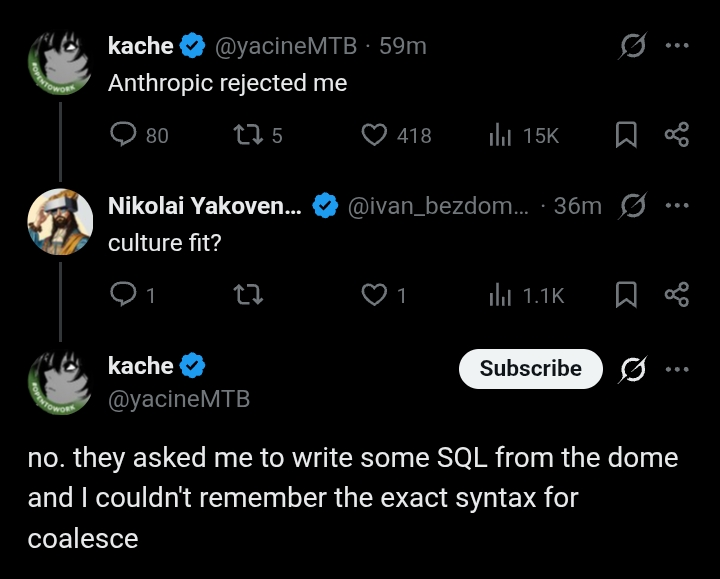
@ivan_bezdomny no. they asked me to write some SQL from the dome and I couldn't remember the exact syntax for coalesce