Oranges 🦇🔊

2.1K posts

Oranges 🦇🔊 banner
Oranges 🦇🔊

Oranges 🦇🔊

@0xOranges

BD Lead @Alchemixfi 🔮⚗️ Prev BD @VenusProtocol | @Geode_finance ETH Enjoyoor COIN Hodler 🛡️

Katılım Mart 2015
830 Takip Edilen553 Takipçiler
Oranges 🦇🔊
Oranges 🦇🔊@0xOranges·
@MacroMate8 @SolanaFndn You definitely know how to write a post for engagement.. Congratulations on the new role. Good luck competing against Ethereum 🫡
English
0
0
1
8
Seraphim
Seraphim@MacroMate8·
big personal news: first off, Ethereum is dead second, i am now Special Situations at @SolanaFndn. my mandate is mega deals that will drive max value why solana? > the most engaged userbase in crypto with the highest take rate per volume (more than hype coinbase binance) > foundation is very lean and full of killers > other chains dont need me. ethereum is fucked (stuck in communism) and hype’s perp game is mature. solana is perfect for me to have fun and get shit done what will i do at solana: > bring 10B TVL to solana i’ve brokered 1-2B before and wanna up my game. if you are a large TVL provider, we have super scalable fixed yield products at 7-8% in a tradfi setup dm me > help grow RWA perps on solana hype done a great job with oil, gold, nasdaq perps and we will take it further if you are a serious crypto/tradfi market maker in rwa, we have the distribution and open to deals dm me what motivates me personally: first off, I am doing this for glory. I want to come in and be instrumental in growing trading activity and onchain tvl. second, I want to be relevant again. I miss pissing people off while being unavoidable. its fun thirdly, learn how to acquire trading distribution. almost no one in crypto knows how to do but thats where billion usd opportunities lie and they belong on solana.
English
343
39
907
140.5K
DeFi Dad ⟠ defidad.eth
In what universe are we, that AAVE is trading at $1.7B FDV and WLFI is trading at $10B FDV? 🥸 Data below from: @DefiLlama
DeFi Dad ⟠ defidad.eth tweet media
English
30
5
187
23.9K
Schlag
Schlag@Schlagonia·
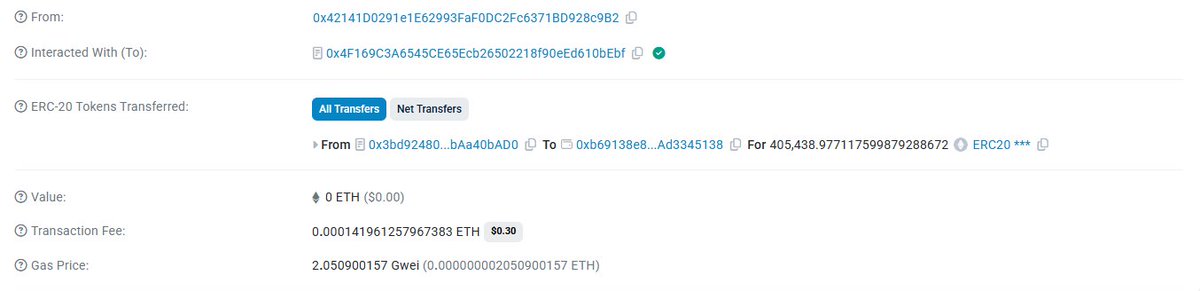
Today we learn, there is a single EOA that can unilaterally withdraw any funds from Gauntlet's USD Alpha vault. Good think we don't have a track record of any private key leaks causing issues...

Schlag tweet media
Omer Goldberg@omeragoldberg

Chaos AI analyzed the vaults impacted by the USR exploit. A ton of interesting weekend transactions. Here, we build a knowledge graph, filtering for the Gauntlet USD Alpha Vault and the Gauntlet Resolv USDC vault: Pre-exploit: • USD Alpha had allocated ~438,440 USDC to the Gauntlet Resolv USDC vault • That vault was deposited into the impacted Morpho Resolv markets via the Gauntlet Resolv USDC vault. app.morpho.org/ethereum/vault… • USD Alpha held receipt tokens representing this exposure Post-exploit, March 23: • 00:30 UTC, Gauntlet USD Alpha sends ~438,440 USDC worth of resolvUSDC receipt tokens (~405,439 shares) to a Safe. • 00:35 UTC, Gauntlet USD Alpha receives USDC ($438,401) from Coinbase. Receipt tokens out, USDC in, 5 min apart, w/ roughly the same notional. etherscan.io/tx/0x7db422e95… #eventlog#541" target="_blank" rel="nofollow noopener">etherscan.io/tx/0x35ce2a750… A ton more to dig into. Analyzing and contrasting vault curator operations and allocation patterns in real time is one of the use cases we’re building Chaos AI for.

English
7
5
105
39.7K
Oranges 🦇🔊
Oranges 🦇🔊@0xOranges·
The USR contagion is wild. Lessons to be learnt.
wumpy crypto@wumpycrypto

a semi-comprehensive list of every vault/protocol hit by the @ResolvLabs exploit morpho vaults: - Gauntlet USDC Core - Gauntlet USDC Frontier - Resolv USDC - 9Summits USDC - Extrafi XLend USDC - Re7 USDC - Seamless USDC - Apostro Resolv USDC - August AUSD - Clearstar Yield USDC - kpk USDC Yield - MEV Capital USDC - Keyrock USDC euler markets: - Apostro Resolv - Euler Arbitrum Yield midas products: - mBASIS - mAPOLLO - mEDGE - msyrupUSDp - @yields yoUSD - @0xfluid on arb, base, eth, plasma - @VenusProtocol Flux - @lista_dao USD1 vault - @InverseFinance dola - @upshift_fi coreUSDC, upUSDC, earnAUSD could be missing more; some protocols are promising to cover bad debt accrued (inverse, fluid)

English
0
0
0
105
Oranges 🦇🔊 retweetledi
RYAN SΞAN ADAMS - rsa.eth 🦄
THEY DID IT. The SEC and CFTC just dropped a landmark document that officially classifies crypto assets. They're actually telling us which crypto assets are securities and which ones aren't - by name! THIS IS SOMETHING GENSLER REFUSED TO DO (he focused on prosecuting crypto out of existence) This rule doc gives crypto many of the benefits of the clarity bill - it lifts us out of the gray market - it gives every asset a path. It's almost like the Clarity act just passed by way of regulator. (of course, the actual clarity act will harden all this into legislation and make it irreversible in the event we get another Gensler, we still want it) This rule says there's 5 categories for crypto assets: 1) Digital Commodities - assets tied to a functional, decentralized crypto system (e.g., BTC, ETH, SOL, XRP, ADA, DOGE). Not securities. (yes, they name them on page 14) 2) Digital Collectibles - NFTs, meme coins, artwork tokens, in-game items. Not securities (fractionalized collectibles may be an exception). 3) Digital Tools - membership tokens, credentials, domain names (e.g., ENS). Not securities. 4) Stablecoins - payment stablecoins under the GENIUS Act are not securities. Other stablecoins, it depends. 5) Digital Securities - tokenized versions of traditional securities. Like tokenized stocks. Always securities. Amazing! This makes so much sense I can't believe it's coming from a regulator. No more enforcement threats to Ethereum developers and crypto exchanges. How about the Howey test? More common sense! If an issuer makes specific promises of managerial efforts from which buyers expect profits, the offering is a security until those promises are fulfilled. Then it's a commodity. The asset itself was never the security, the deal around it was. (E.g. XRP was a security pre launch, became a commodity after). How about stuff like staking and mining? Mining? Not a securities transaction. Staking? Also not a securities transaction, that includes custodial and liquid staking even with LSTs! How about wrapping BTC? Not a securities transaction. Airdrops? NOT SECURITIES. NO MORE GEO BANS PROTECTING AMERICANS from free airdrops. Remember this is a joint doc from the SEC and CFTC, They're actually cooperating on this, no internal strife, this is binding to both. SEC regulates $80-100 trillion assets CFTC regulates $5-10 trillion assets Both of the world's largest capital markets are showing us that crypto assets are here to stay and they're welcome alongside traditional assets. Every country will follow. This is the biggest move toward legitimacy I've seen in all my time in crypto. Maybe bigger than the genius act since is covers all crypto assets. Well done @MichaelSelig and @SECPaulSAtkins. And especially well done to the indefatigable @HesterPeirce. Her fingerprints are all over this, couldn't have happened without her eight years of principles-based curiosity.
RYAN SΞAN ADAMS - rsa.eth 🦄 tweet mediaRYAN SΞAN ADAMS - rsa.eth 🦄 tweet media
English
201
831
4.3K
382.3K
Marc Zeller
Marc Zeller@Marczeller·
@DefiIgnas ok let's play, 1) meltem 2) Mike novogratz 3) cathy wood Unsure who are the others?
English
13
0
18
6.4K
Ignas | DeFi
Ignas | DeFi@DefiIgnas·
Recognized just 3 out of 7 people from this photo. And I’m terminally online on X
Ignas | DeFi tweet media
English
74
4
187
24.4K
Oranges 🦇🔊
Oranges 🦇🔊@0xOranges·
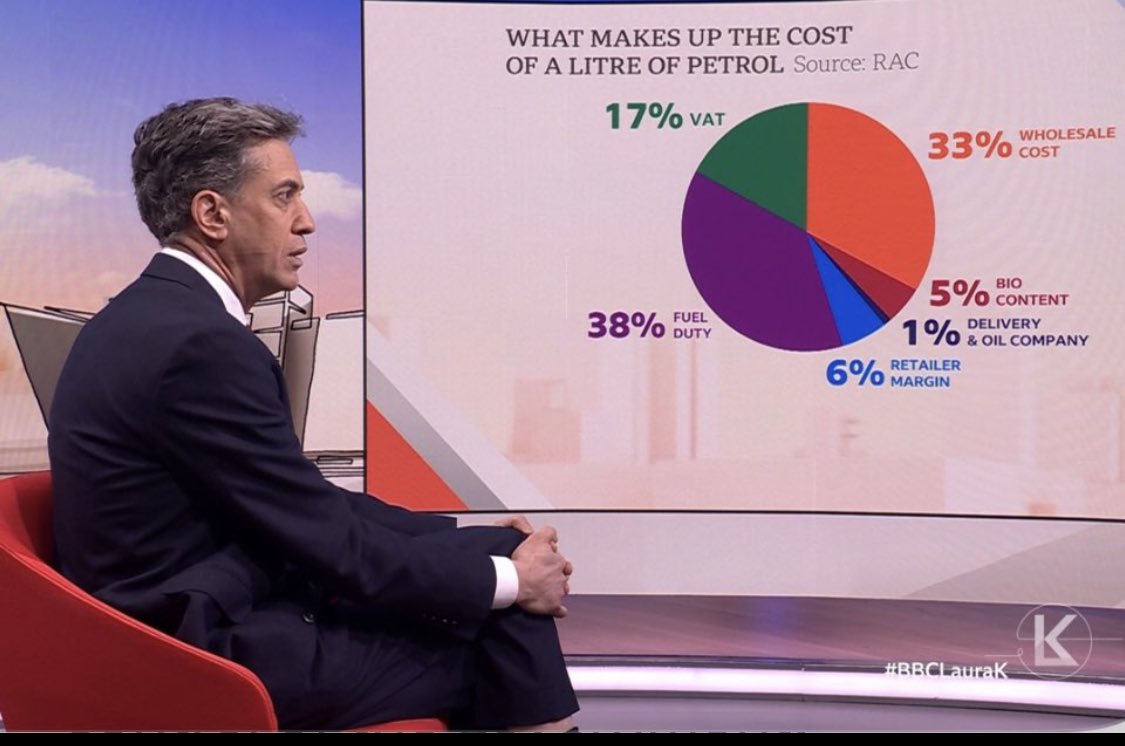
@DVATW Fuel Duty + VAT feels a bit unnecessary. Double dipping
English
0
0
0
19
David Vance
David Vance@DVATW·
That awkward moment when you are shown to be the cause of high fuel prices…
David Vance tweet media
English
285
2.9K
13.6K
528.4K
Oranges 🦇🔊 retweetledi
Kwasi Kwarteng
Kwasi Kwarteng@kwasi_stackbtc·
Here is the uncomfortable truth: The British political class is years behind when it comes to Bitcoin and digital assets. We are asleep at the wheel. Too many people in Westminster are happy to dismiss it with throwaway lines about “Ponzi schemes” without having spent even a few hours/days understanding what it actually is. Bitcoin didn’t appear in a vacuum. It is the latest chapter in a very long story, the evolution of money itself. From gold, to paper backed by gold, to purely fiat currencies controlled by central banks. Anyone who has seriously studied that history can see why a decentralised monetary network with a fixed supply was inevitable. That doesn’t mean every crypto project has merit. Far from it. But confusing Bitcoin with the worst excesses of the crypto industry simply reveals a lack of understanding and full transparency, this was once my view also before I took the time to learn. Britain should be leading the conversation about the future of money and financial infrastructure. Instead, far too many of our decision-makers are still trying to understand the last one. Bitcoin is the future.
English
249
154
1.2K
58.8K
Stani.eth
Stani.eth@StaniKulechov·
Earlier today, a user attempted to buy AAVE using $50M USDT through the Aave interface. Given the unusually large size of the single order, the Aave interface, like most trading interfaces, warned the user about extraordinary slippage and required confirmation via a checkbox. The user confirmed the warning on their mobile device and proceeded with the swap, accepting the high slippage, which ultimately resulted in receiving only 324 AAVE in return. The transaction could not be moved forward without the user explicitly accepting the risk through the confirmation checkbox. The CoW Swap routers functioned as intended, and the integration followed standard industry practices. However, while the user was able to proceed with the swap, the final outcome was clearly far from optimal. Events like this do occur in DeFi, but the scale of this transaction was significantly larger than what is typically seen in the space. We sympathize with the user and will try to make a contact with the user and we will return $600K in fees collected from the transaction. The key takeaway is that while DeFi should remain open and permissionless, allowing users to perform transactions freely, there are additional guardrails the industry can build to better protect users. Our team will be investigating ways to improve these safeguards going forward.
English
2.9K
1K
11.2K
6.5M
Oranges 🦇🔊 retweetledi
vitalik.eth
vitalik.eth@VitalikButerin·
Now, the quantum resistance roadmap. Today, four things in Ethereum are quantum-vulnerable: * consensus-layer BLS signatures * data availability (KZG commitments+proofs) * EOA signatures (ECDSA) * Application-layer ZK proofs (KZG or groth16) We can tackle these step by step: ## Consensus-layer signatures Lean consensus includes fully replacing BLS signatures with hash-based signatures (some variant of Winternitz), and using STARKs to do aggregation. Before lean finality, we stand a good chance of getting the Lean available chain. This also involves hash-based signatures, but there are much fewer signatures (eg. 256-1024 per slot), so we do not need STARKs for aggregation. One important thing upstream of this is choosing the hash function. This may be "Ethereum's last hash function", so it's important to choose wisely. Conventional hashes are too slow, and the most aggressive forms of Poseidon have taken hits on their security analysis recently. Likely options are: * Poseidon2 plus extra rounds, potentially non-arithmetic layers (eg. Monolith) mixed in * Poseidon1 (the older version of Poseidon, not vulnerable to any of the recent attacks on Poseidon2, but 2x slower) * BLAKE3 or similar (take the most efficient conventional hash we know) ## Data availability Today, we rely pretty heavily on KZG for erasure coding. We could move to STARKs, but this has two problems: 1. If we want to do 2D DAS, then our current setup for this relies on the "linearity" property of KZG commitments; with STARKs we don't have that. However, our current thinking is that it should be sufficient given our scale targets to just max out 1D DAS (ie. PeerDAS). Ethereum is taking a more conservative posture, it's not trying to be a high-scale data layer for the world. 2. We need proofs that erasure coded blobs are correctly constructed. KZG does this "for free". STARKs can substitute, but a STARK is ... bigger than a blob. So you need recursive starks (though there's also alternative techniques, that have their own tradeoffs). This is okay, but the logistics of this get harder if you want to support distributed blob selection. Summary: it's manageable, but there's a lot of engineering work to do. ## EOA signatures Here, the answer is clear: we add native AA (see eips.ethereum.org/EIPS/eip-8141 ), so that we get first-class accounts that can use any signature algorithm. However, to make this work, we also need quantum-resistant signature algorithms to actually be viable. ECDSA signature verification costs 3000 gas. Quantum-resistant signatures are ... much much larger and heavier to verify. We know of quantum-resistant hash-based signatures that are in the ~200k gas range to verify. We also know of lattice-based quantum-resistant signatures. Today, these are extremely inefficient to verify. However, there is work on vectorized math precompiles, that let you perform operations (+, *, %, dot product, also NTT / butterfly permutations) that are at the core of lattice math, and also STARKs. This could greatly reduce the gas cost of lattice-based signatures to a similar range, and potentially go even lower. The long-term fix is protocol-layer recursive signature and proof aggregation, which could reduce these gas overheads to near-zero. ## Proofs Today, a ZK-SNARK costs ~300-500k gas. A quantum-resistant STARK is more like 10m gas. The latter is unacceptable for privacy protocols, L2s, and other users of proofs. The solution again is protocol-layer recursive signature and proof aggregation. So let's talk about what this is. In EIP-8141, transactions have the ability to include a "validation frame", during which signature verifications and similar operations are supposed to happen. Validation frames cannot access the outside world, they can only look at their calldata and return a value, and nothing else can look at their calldata. This is designed so that it's possible to replace any validation frame (and its calldata) with a STARK that verifies it (potentially a single STARK for all the validation frames in a block). This way, a block could "contain" a thousand validation frames, each of which contains either a 3 kB signature or even a 256 kB proof, but that 3-256 MB (and the computation needed to verify it) would never come onchain. Instead, it would all get replaced by a proof verifying that the computation is correct. Potentially, this proving does not even need to be done by the block builder. Instead, I envision that it happens at mempool layer: every 500ms, each node could pass along the new valid transactions that it has seen, along with a proof verifying that they are all valid (including having validation frames that match their stated effects). The overhead is static: only one proof per 500ms. Here's a post where I talk about this: ethresear.ch/t/recursive-st… firefly.social/post/farcaster…
English
802
1K
5.7K
901.8K
Oranges 🦇🔊 retweetledi
Wall Street Mav
Wall Street Mav@WallStreetMav·
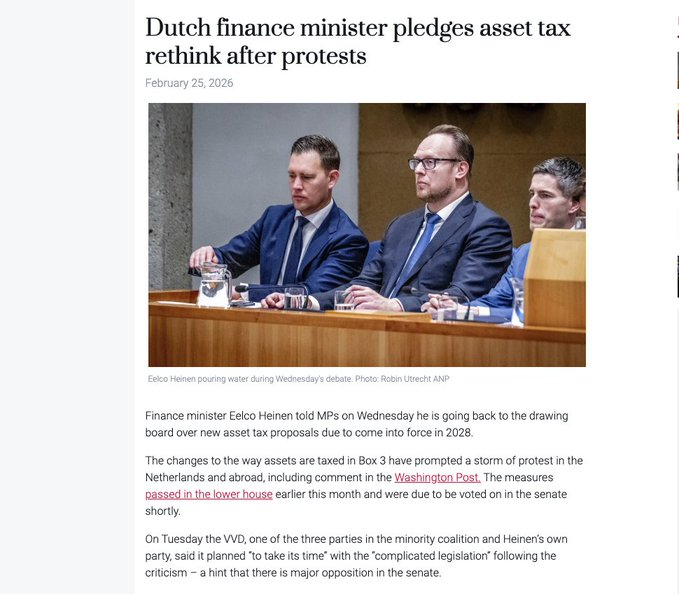
Netherlands just cancelled the 36% tax on unrealized gains. Back to the drawing board after huge negative public reaction. You can't force people to pay taxes on paper profits they have not realized yet. Especially when those gains can evaporate overnight. This policy was going to destroy retail investors and drive wealth to other countries. People would have been forced liquidate assets just to cover tax bills on holdings they wanted to keep. Public pressure works when enough people speak up.
Wall Street Mav tweet media
English
526
1.5K
7.8K
586.1K
Cointelegraph
Cointelegraph@Cointelegraph·
🇬🇧 NEW: UK investors will be unable to buy crypto products in their ISAs from April after HMRC reclassified crypto ETNs to a wrapper that no mainstream platform currently offers.
Cointelegraph tweet mediaCointelegraph tweet media
English
223
157
731
255.2K