
Sabitlenmiş Tweet
Yaron Naymark
8.7K posts


Yaron Naymark
@1MainCapital
Tweets are informational only, never investment advice.
Katılım Ocak 2018
647 Takip Edilen34.4K Takipçiler

To be clear I am not talking my book here...just starting to think about this.
English
What if the models get so smart that they are able to improve compute efficiency so much that capital efficiency improves dramatically? Before you dismiss this idea Anthropic has been consistently saying each new model is much more compute efficient.
English
Feels like the average market participant has gotten very dumb and/or the market has gotten very inefficient to me. Or maybe I should get off Twitter.
English
@WaterworldCapi1 Easier for the smart or for the simpletons?
English
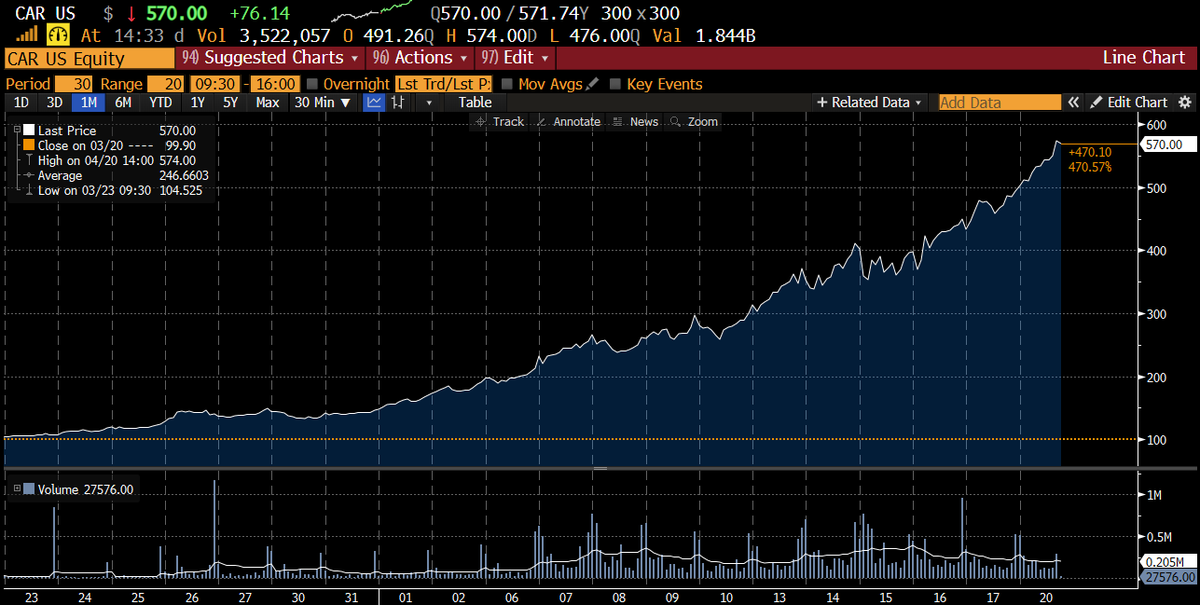
My fav part of recovery rallies is that they are 2x as ferocious as the selloffs that preceded them. Market structure has changed. Props to anyone successfully managing an idio short book.
English
@Bkclaims @Will_Schryver Seems like the play is: use a vehicle that has been granted low cost of capital to acquire a bunch of cyclically depressed businesses that historically have been charged a high cost of capital. Use the scale to get synergies. Wait for end mkt recovery.
English

@Will_Schryver what is the play here? Rev growth tailwinds + synergies gets you to a good entry
English

14.9x EBITDA for a building products distributor
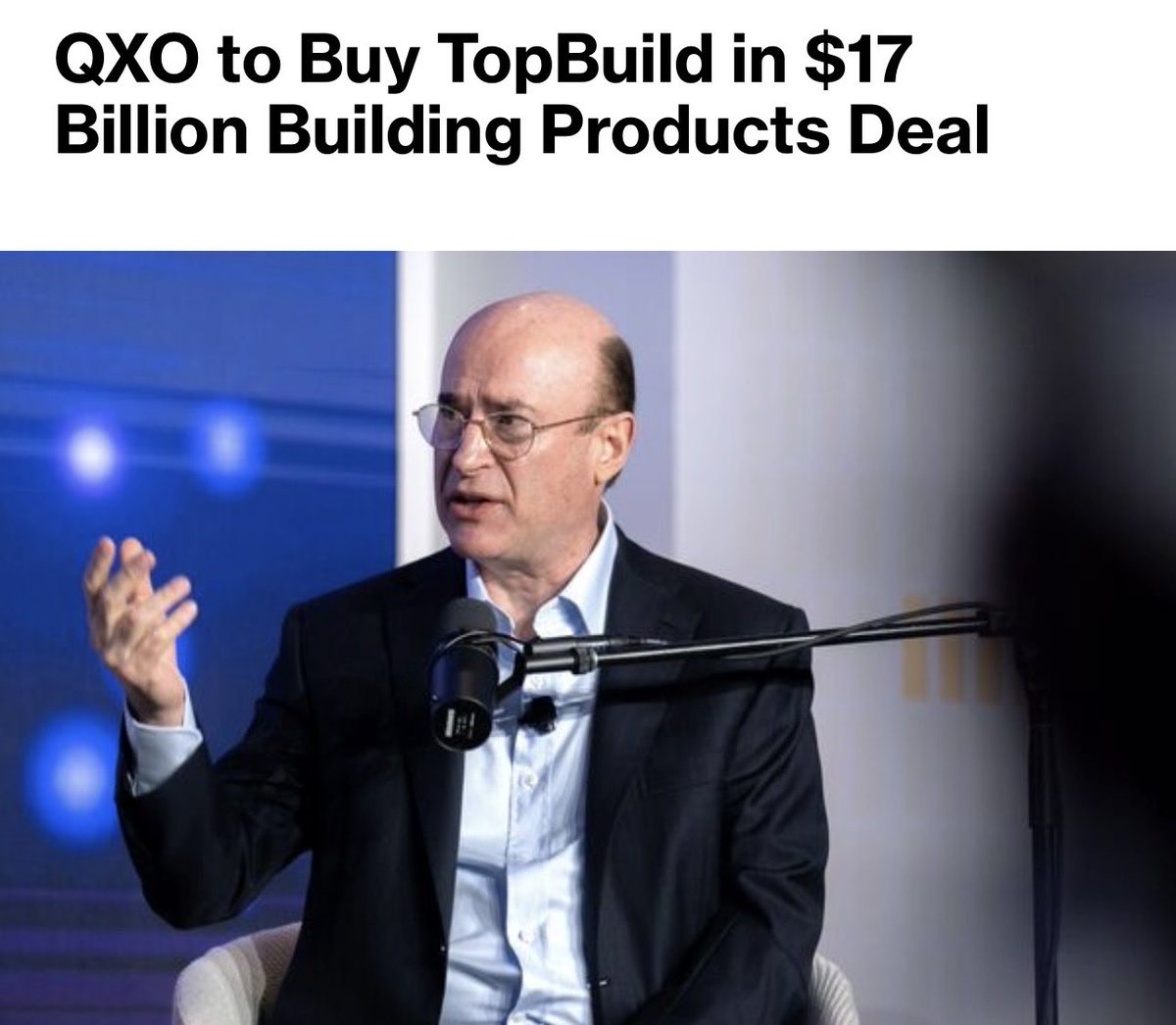
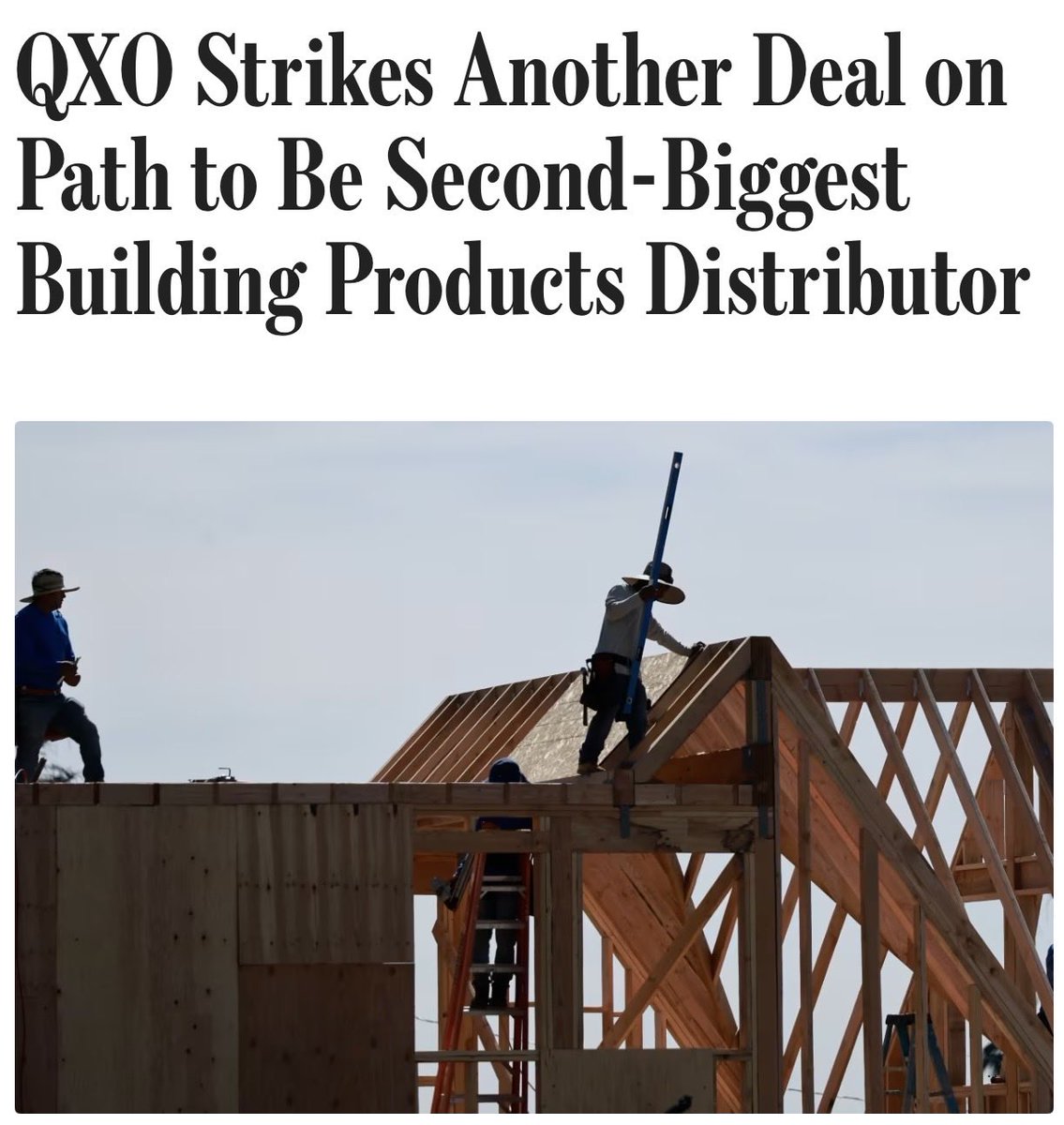
$QXO spent $13 billion in 11 months on M&A and now it’s striking another $17 billion deal for TopBuild $BLD
2025 - Acquired Beacon for $11B, ~10.8x
2026 - Acquired Kodiak for $2.25B, ~10.7x
2026 - Targeting TopBuild for $17B, ~14.9x
Pro Forma QXO will generate $18+ billion in revenue and $2+ billion EBITDA
CEO Brad Jacobs is known for his aggressive M&A roll-up strategy and he’s executing the same playbook in the building products space
Brad Jacobs has stated his plan to turn QXO into a $50 billion revenue company within a decade
Will Schryver@Will_Schryver
What part of the cycle are we in when lumberyards trade for 10.7x $QXO is acquiring Kodiak Building Partners for $2.25B Kodiak generated ~$2.4B revenue / ~$211M EBITDA Few years ago I was on the sell side for a lumberyard and we were lucky to get 6x PE-backed consolidating platforms targeted 8x upon exit so Kodiak trading for 10x+ is extraordinary
English
@garyHeff Yes. Tho once everyone internalizes the current structure it’ll change again
English

@1MainCapital lots of folks still haven't internalized the change in market structure
English
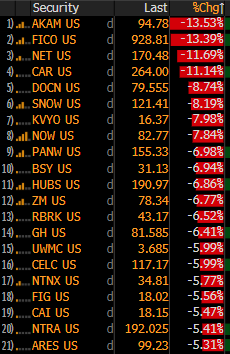
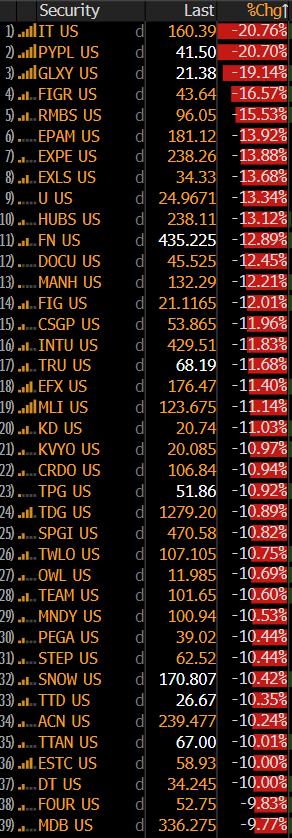
@AltaFoxCapital But what if the next tick is down rather than up??
English

The market wants your full attention on Iran. We have no special insight into the next turn in the conflict, and while we remain appropriately positioned for a range of outcomes, our time is better spent in transcripts, filings, and models.
Selloffs create opportunity. More high-quality companies are beginning to trade at prices disconnected from underlying business value. Eventually, fundamentals reassert themselves.
For example, we have been adding to a company trading 50%+ below its long-term average multiple, with an incentivized management team and a credible path to doubling EPS over the next 3 years through self-help initiatives. We see a path to a 2-3x return without heroic assumptions... and it has a pristine balance sheet to weather a weaker macro backdrop. Excited to share soon.
English
@McNamara_Brief @BillAckman BTW, I totally understand why it may be a good idea to re-privatize the GSEs even if it is not the way to maximize NPV to govt.
Def think it is harder to do if hedge funds are enriched by it, esp before midterms.
English
@McNamara_Brief @BillAckman The market value of the equity may be worth more with SPS being deemed repaid, but doesnt the govt get more value from the current state than the one proposed by ackman?
x.com/1MainCapital/s…
Yaron Naymark@1MainCapital
The below is according to grok. Why/where is this wrong? Once the GSEs hit their regulatory capital target (ERCF or any lowered version), the 2021 PSPA amendment kicks in: • The GSEs pay quarterly dividends to Treasury equal to the lesser of: • 10% of the senior preferred liquidation preference (annual rate), or • The quarterly increase in the GSE’s net worth (i.e., basically that quarter’s net income). • 2025 actual combined net income: $25.1 billion ($14.4B Fannie + $10.7B Freddie). • Current senior preferred liquidation preference: ≈ $373 billion combined at year-end 2025 (it grew by the full $25.1B retained earnings in 2025; it was ~$348B earlier in the year). • 10% of $373B = $37.3 billion per year — larger than the $25.1B in earnings. Result: The binding limit is the net-worth-increase cap, so Treasury receives essentially 100% of ongoing net income as dividends each quarter. Government makes ≈ $25 billion per year (recurring cash dividends). The GSEs’ net worth stays flat at the capital target; all future profits flow to Treasury. No 25 bps fee exists, and there are no common dividends or warrant monetization.
English
What I don’t get about the Ackman GSE plan: under current PSPA terms, once GSE hit capital targets, treasury effectively sweeps ~100% of net income forever via the senior pref.
So why would the govt voluntarily deem the pref repaid and thus ending up w 80% of the GSEs (instead of 100%), while letting hedge funds capture a massive windfall?
Seems way more likely to happen via court pressure than voluntarily…and especially unlikely before midterms.
Aakash Gupta@aakashgupta
The math on Fannie and Freddie is so dislocated it looks like a pricing error. Fannie printed $14.4 billion in net income last year. Freddie printed $10.7 billion. Combined market cap on the pink sheets right now: ~$12 billion. The market is pricing $25 billion in annual earnings at a 0.48x multiple. Find me another 0.48x earnings multiple anywhere in American finance. It doesn't exist. The dilution fear is the reason the stock is cheap and the reason the stock is wrong. Treasury put in $187 billion. The GSEs have swept back over $300 billion since 2012. That's an 11.6% IRR. If Treasury exercises its 79.9% warrants at today's price, the government's stake is worth ~$9.6 billion. If it exercises post-relist at 10x earnings, that stake is worth $200 billion. The difference is $190 billion. Washington doesn't leave $190 billion on the table to spite penny stock holders. Capital requirements look scary until you do the arithmetic. The ERCF says $334 billion. They have $179 billion. The FHFA can lower Tier 1 to 2.5% without Congress. New target: ~$190 billion. Gap: $11 billion. One IPO closes it. One year of retained earnings closes it twice. G-fees are already at 65 bps. Pre-crisis they were 20. The GSEs have been charging privatized pricing inside a conservatorship for 14 years. Credit losses outside of 2008 average under 5 bps. The margin is so fat that mortgage rates don't move at all on release. So what are you actually buying at $5? A royalty on the American mortgage system. 65 bps on $7.5 trillion in outstanding MBS. $48 billion in gross annual revenue. Under 5 bps in historical losses. The most predictable spread in finance, backstopped by a guarantee both parties have publicly committed to preserving. JPMorgan trades at 13x and takes real credit risk. Utilities trade at 15x with half the visibility. These two trade at 0.48x collecting tolls on other people's risk. The second those warrants convert and the NYSE listing goes live, every index fund and pension fund with a financial sector mandate has to buy. Two of the ten most profitable companies in America, sitting on the pink sheets, waiting for one signature.
English
The below is according to grok. Why/where is this wrong?
Once the GSEs hit their regulatory capital target (ERCF or any lowered version), the 2021 PSPA amendment kicks in:
• The GSEs pay quarterly dividends to Treasury equal to the lesser of:
• 10% of the senior preferred liquidation preference (annual rate), or
• The quarterly increase in the GSE’s net worth (i.e., basically that quarter’s net income).
• 2025 actual combined net income: $25.1 billion ($14.4B Fannie + $10.7B Freddie).
• Current senior preferred liquidation preference: ≈ $373 billion combined at year-end 2025 (it grew by the full $25.1B retained earnings in 2025; it was ~$348B earlier in the year).
• 10% of $373B = $37.3 billion per year — larger than the $25.1B in earnings.
Result: The binding limit is the net-worth-increase cap, so Treasury receives essentially 100% of ongoing net income as dividends each quarter.
Government makes ≈ $25 billion per year (recurring cash dividends).
The GSEs’ net worth stays flat at the capital target; all future profits flow to Treasury. No 25 bps fee exists, and there are no common dividends or warrant monetization.
English

@1MainCapital There is no “100% forever” outcome. The sweep is a conservatorship mechanism, not a permanent structure. Treasury already holds ~80% warrants in FNMA/FMCC—this is about maximizing total value, not clinging to a theoretical 100% that doesn’t actually exist.
English
Open to feedback for why this is a bad take btw. Would love to understand the asymmetry…
English
@evrgn11112231 Near term cyclicality w a hint of long term biz risk
Abigail Shrier@AbigailShrier
Two years ago, almost 0 schools were interested in even considering going phone free. Now, whole school systems are phone free. The rest are scrambling to get on board We owe @JonHaidt a tremendous debt of gratitude. What he achieved - this quickly - is almost unimaginable.
English

@CrosscheckC @hfreflection @stockthoughts81 Agree. Can make you hold on even if your brain/gut is telling you otherwise…
English

Investing is a job where you can do a lot of busy work, but get little of value done. What are the biggest time wasters you’ve observed ppl do? Curious analyst vs PMs, keeping in mind some things that are wastes of time to some may not be to others. Some thoughts below:
English
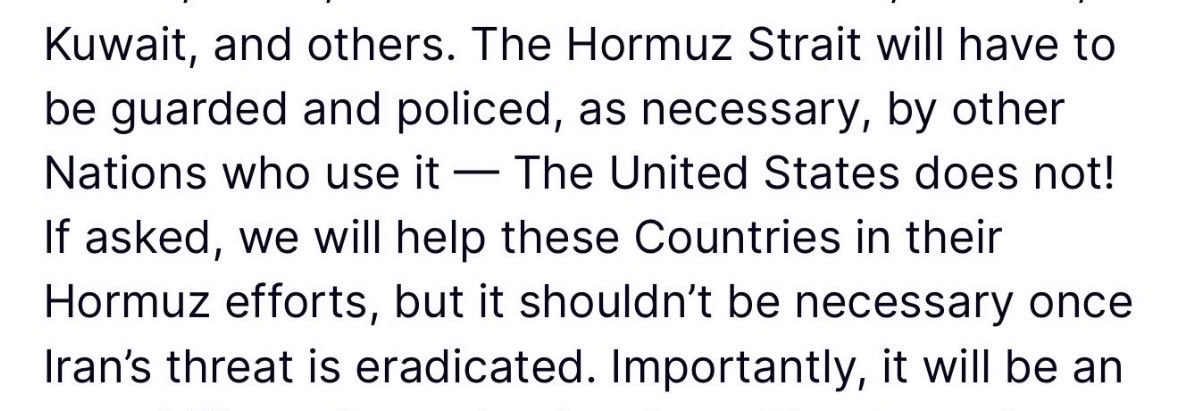

@1MainCapital @zriboua If it’s 1-3 weeks it means no ground troops. If we deploy ground troops, then it’s months if not years bc there’ll be casualties and the need to get even…
English

This was never meant to be a "forever war," Trump hit IRGC at its lowest, at its weakest, and at a time when it simply couldn’t recruit or retain its legitimacy.

English