alex
163 posts

alex retweetledi

Together with RDW, we have officially completed the final vehicle testing phase for Full Self-Driving (Supervised) and have submitted all documentation required for the UN R-171 approval + Article 39 exemptions. The RDW team is now reviewing the documentation and test results package internally. They have communicated the expected approval for Netherlands date of 4/10, shifting from 3/20 previously and we look forward to successful completion of this cooperation.
Following the Netherlands’ approval, European countries will be able to recognize this approval nationally. We are anticipating a possible EU-wide approval during the summer.
Over the past 18 months, this approval has involved a series of intense documentation, development, testing, research & audits. Including but certainly not limited to:
– 1,600,000+ km of FSD (Supervised) testing on EU roads
– 13,000+ customer sales ride-alongs
– 4,500+ track test scenario executions
– Thousands of pages of written documentation for 400+ compliance requirements
– Dozens of research studies into safety performance/results
We're extremely proud of the work conducted with the RDW team up until this point.
We very much look forward to the approval in April, and sharing FSD (Supervised) with our patient EU customers!
English
@MineCooky Reden wir von V2G oder V2H? Wenn die Netzschutzanforderungen eingehalten werden sollen wird es ohne 15118-20 schwierig, zumindest auf legalem Weg.
Deutsch

@3006BGS Wer sagt denn, dass bidirektionales Laden an Typ 2 mit digitale Kommunikation beinhalten wird? Warum sollte sie? Anderer Widerstand und gut ist, so wie bei den V2L Adaptern auch.
Deutsch

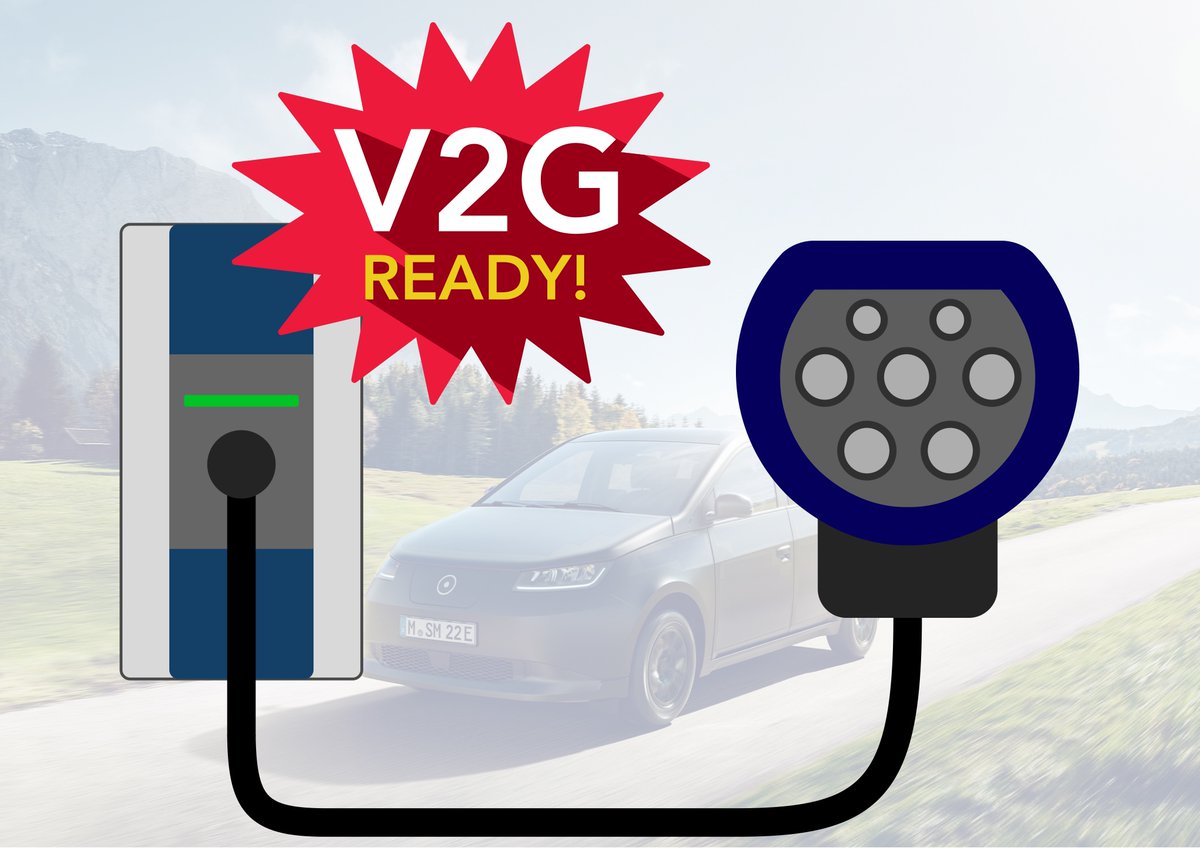
Jede Wallbox ist bereit für bidirektionales Laden!
In letzter Zeit stolpere ich immer wieder darüber, dass bei Wallboxen einer der Verkaufspunkte nun "Vorbereitet für bidirektionales Laden" ist. Ich hab es selbst auch schon öfters gelesen, mir aber nichts weiter dabei gedacht. Ich weis ja, dass es reines Marketing ist. Aber so mancher Freund und auch Leser hat das dann direkt zum entscheidenden Argument gemacht, diese Wallbox zu kaufen, statt einer anderen.
Entsprechend möchte ich das hier nochmal ganz deutlich klarstellen:
Eine Typ 2 Wallbox ist "nur" eine wunderschöne Stromdose mit einem recht rudimentären Kommunikationsprotokoll (Mehr zum Protokoll hier: smart-emotion.de/article/86-typ…). Sie "lädt" das Elektroauto so wenig, wie auch eine Steckdose das Handys. Viel mehr stellt sie einfach nur eine Verbindung zum 230 V Netz bereit und teilt dem Elektroauto über das Protokoll mit, wie viel Leistung es hier maximal bekommt. Ob sich das Auto indessen daran hält und wie schnell es dann hier lädt, entscheidet das Auto selbst. Denn das eigentliche Ladegerät ist bei Typ 2 im Auto. So wie es beim Handy auch das Netzteil ist, welches das Handy lädt und darüber entscheidet, wie schnell es geht. Nicht die Steckdose selbst.
Ob das Auto nun Strom lädt oder wieder an die Wallbox abgibt, ist der Wallbox herzlich egal. Sie ist nur eine Steckdose mit ein paar sehr guten Sicherheitsvorrichtungen. Entsprechend ist "V2G Ready" auch nur ein Marketingspruch, welcher super klingt, aber nicht wirklich etwas bedeutet. Es gibt heute noch keine wirkliche Norm für diesen Anwendungsfall. Entsprechend muss die Wallbox einfach nur fähig sein ein Update zu bekommen, wenn es diese Norm dann wirklich gibt.
Aber es ist heutzutage sowieso praktisch jede Wallbox fähig, irgendwie geupdatet zu werden. Manche einfacher als andere, aber möglich ist es bei jeder.
Die Frage ist eher, ob der Wallboxhersteller dann dieses Update anbieten wird und wie man es auf die Box bekommt. Das weis aber heute auch noch keiner der Hersteller wirklich. Setzt auch voraus, dass es den Hersteller dann noch gibt und er sich für das bereits verkaufte Produkt noch interessiert. Es kann natürlich auch sein, dass es das Update dann zum Preis einer neuen Wallbox gibt.
Entsprechend würde ich dringend davon abraten, eine Kaufentscheidung von diesem Marketingspruch abhängig zu machen. Kauft die Wallbox nach dem, was sie heute kann. Nicht nach dem, was sie vielleicht in Zukunft dann mal können könnte. Sofern der Hersteller Wort hält.
Dass die Hardware es kann, ist selbstverständlich. Jeder Steckdose ist egal, ob da nun Strom bezogen oder wieder eingespeist wird. Auch die Steckdose, über die gerade Euer Balkonkraftwerk läuft.
All meine langen Threads findet ihr übrigens auch meiner Webseite unter "Kommentar" @smartEMOTION:
smart-emotion.de/category-artic…

Deutsch

@MineCooky Gab`s da nicht einen Brand in der Produktion, alles wieder ok dort?
Deutsch

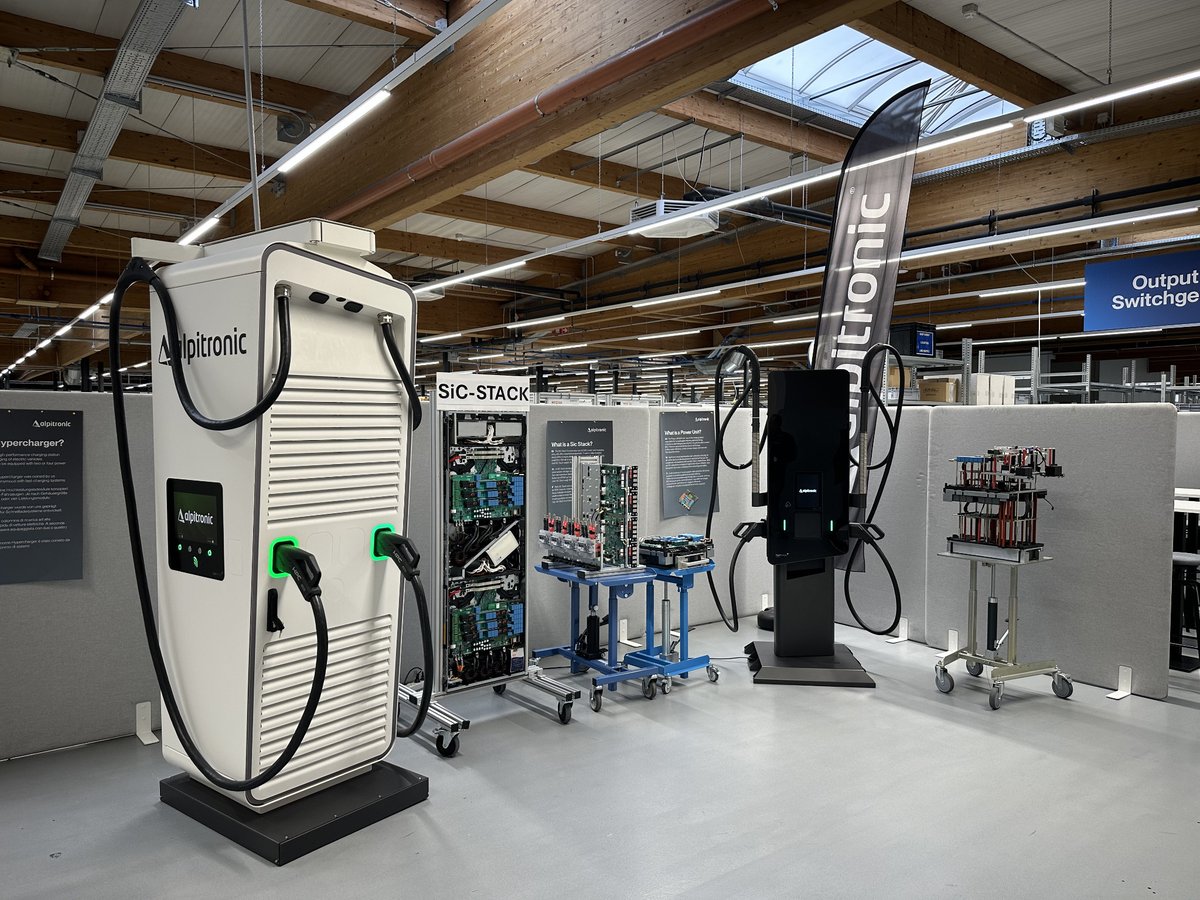
Exklusive Werksführung beim Alpitronic - Europa's größtem Ladesäulenhersteller
Was kann der Ladesäulenhersteller Alpitronic und wo baut er seine Produkte? Was macht sie zum Marktführer und wie sieht es bei denen in der Fabrik aus?
Bei meiner exklusiven Werksführung in Italien bekam ich hautnahe Einblicke, konnte alles fragen, und in diesem Artikel möchte ich es Euch präsentieren. Von der Fertigung der einzelnen Komponenten bis zur Endprüfung jeder einzelnen fix und fertigen Ladesäule. Alles ist bei Alpitronic nah zusammen, und das ist auch, was sie zum Marktführer macht.
In meinem Artikel erfahrt ihr alles, was zu wissen gibt.
via @smartEMOTION
smart-emotion.de/article/522-ex…

Deutsch

Cool to see the industry utilizing the common standard (MCS) right from the ramp up, at least for heavy duty vehicles. Although in Europe we see slow to zero MCS installations of MCS chargepoints so far, as there are no trucks available with it (yet)- chicken/egg problem. Curious to see if Tesla will also have a CCS2 backup solution, not to get stuck on the road @danWpriestley
English

@Electric_Maik Semi charger is a V4 system. Semi and passenger cars leverage the same cabinet and post design, with minimal differences such are cable + connector. Common components and assembly line mean lower cost, greater reliability, and aligned field service.
English

Before counting down the New Year, count up to 1.2MW charging
Tesla Semi@tesla_semi
Engineers hitting 1.2MW on Semi Megacharger
English
alex retweetledi

alex retweetledi

Along for the ride in unsupervised FSD testing
Elon Musk@elonmusk
@cb_doge Testing is underway with no occupants in the car
English

Release Tesla Full Self Driving Supervised in Europe - Sign the Petition! c.org/9MgwNCpDs6 via @ChangeGER
English
alex retweetledi
alex retweetledi
alex retweetledi

BREAKING: Tesla Model Y Robotaxi with literally no one in the car spotted driving itself on public roads in Austin, Texas!
A new age has begun 🤖
420 Bounty Hunter@Mandablorian
Just saw a Tesla with no one in the car @SawyerMerritt @wholemars @robotaxi @Tesla
English
alex retweetledi
alex retweetledi

Wtf this is so good 💪
$TSLA
Lampi di Tesla@devix195
Italian narrow roads? How can Tesla FSD handle them???😉
English
alex retweetledi

Tesla has been working hard toward shipping Full Self-Driving (Supervised) in Europe for over 12 months now. We have given FSD demos to regulators of almost every EU country. We have requested early access, pilot release programs or exemptions where possible.
We have developed & shared detailed safety evidence for FSD, now public in our latest Safety Report. And we have driven over 1 million kilometers safely on EU roads across 17 different countries (internal testing).
Our main path to success is partnering with the Dutch approval authority RDW to gain exemption for the feature. This involves proving compliance with existing regulations (UN-R-171 DCAS) + filing an exemption (EU Article 39) for yet-to-be-regulated behaviors like Level 2 systems off-highway, system-initiated lane changes with hands-off the wheel etc.
Some of these regulations are outdated and rules-based, which makes FSD illegal in its current form. Changing FSD to be compliant with these rules would make it unsafe and unusable in many cases. While we have changed FSD to be maximally compliant where it is logical and reasonable, we won't sacrifice the safety of a proven system or materially deteriorate customer usability.
As a result, we are gathering evidence to get exemptions on a specific rule-by-rule basis. Unfortunately, the real world fleet-proven safety wins alone are considered insufficient.
Currently, RDW has committed to granting Netherlands National approval in February 2026. Please contact them via link below to express your excitement & thank them for making this happen as soon as possible. Upon NL National approval, other EU countries can immediately recognize the exemption and also allow rollout within their country. Then we will bring it to a TCMV vote for official EU-wide approval.
We're excited to bring FSD to our owners in Europe soon!
rdw.nl/en/contact/our…
English
alex retweetledi

Better to live life erring on the side of being optimistic and wrong than pessimistic and right!
Be realistic, but, as Monty Python would say, always look on the bright side of life!
Peter H. Diamandis, MD@PeterDiamandis
The only time more exciting to be alive than today is tomorrow.
English
alex retweetledi
alex retweetledi

@julio_bree @Techgnostik @live_munro @robotaxi zum linksabbiegen gab es ca 50m vorher eine separate linksabbiegespur. die hat es verpasst. an der krezung war dann für beide spuren nur geradeausfahren erlaubt. siehe grüner pfeil der ampel...
Deutsch

@Techgnostik @live_munro @robotaxi why was it wrong to use that lane for it? I don't get it (German here, so I don't know everything about traffic rules in the US)
English

Our first Tesla @robotaxi ride started with a pretty major error 😬
It attempted a left turn from the middle lane and left us stranded, exposed in the intersection.
The next two rides? Remarkably smooth.
English
alex retweetledi