Titus

26.3K posts

Titus banner
Titus

Titus

@71tu5

不退転

Katılım Nisan 2011
2.5K Takip Edilen681 Takipçiler
Titus retweetledi
Antonio Vieira Santos
Claude Mythos found a 27-year-old vulnerability in OpenBSD that survived decades of expert review. A 16-year-old bug in FFmpeg that automated tools hit 5 million times without catching. AI isn't future-of-cybersecurity. It's now. Project Glasswing is Anthropic's response: put the capability in defenders' hands first. Before attackers get it. anthropic.com/glasswing
English
3
8
9
282
Titus retweetledi
Atay Ilgun
Atay Ilgun@tyaagnliu·
Explaining what RXALITI is and how it's made, I feel this slide from the talk at @elluba 's fab Creative AI meet-up is the best. Basically the glitch/flicker you are seeing are the noise layers of a GAN. It's basically the 'material' AI uses to paint, computational impasto.
English
0
2
7
318
Ewan Morrison
Ewan Morrison@MrEwanMorrison·
Announcement: Hey folks, the audiobook of my anti-AI novel - For Emma - has come out today. This book was written to be spoken & the voice actors have done such a beautiful job. So moving to hear the characters come alive. Enjoy. Link below:
Ewan Morrison tweet media
English
30
69
272
74.1K
Titus retweetledi
Will
Will@willreil·
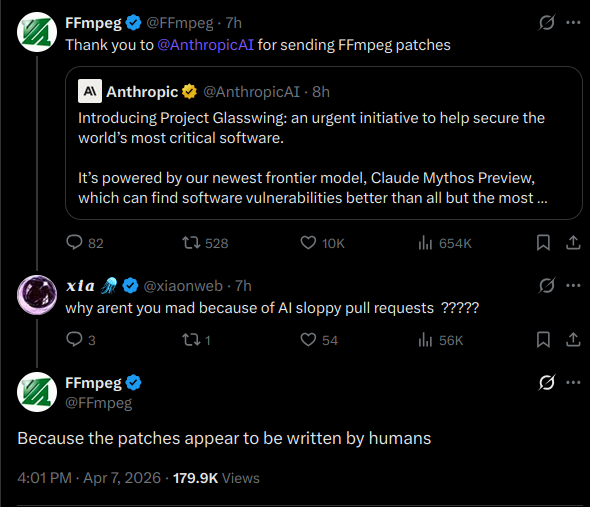
It's so over. Anthropic just sent patches for FFmpeg supposedly using their latest model, Claude Mythos. The code quality is indistinguishable from top level engineers. If these really were found and written by AI, things are about to get really weird, really fast.
Will tweet media
FFmpeg@FFmpeg

@xiaonweb @AnthropicAI Because the patches appear to be written by humans

English
88
154
2.3K
924.6K
Titus retweetledi
Nina Schick
Nina Schick@NinaDSchick·
Claude Mythos. Ten trillion parameters: the first model in this weight class. Estimated training cost: ten billion dollars. On the hardest coding test in the industry (SWE bench) it scores 94%. It found a security flaw in a system that had been running for 27 years, one that every human engineer and every automated check had missed. It found another bug that had survived five million test runs over 16 years. (It did so overnight.) It is so capable in cybersecurity that Anthropic will not release it to the public, instead it is launching Project Glasswing along with 100m in compute credits to help secure software. Only twelve partners currently have access: Amazon, Cisco, Apple, Google, Microsoft, NVIDIA, JPMorgan Chase, Crowdstrike, Palo Alto, AWS, The Linux Foundation, Broadcom. (I'm sure the Pentagon is on the line?) This is not a product launch: it is a controlled deployment of a system too powerful to distribute freely. Tell me this isn't (very expensive) AGI?
Anthropic@AnthropicAI

Introducing Project Glasswing: an urgent initiative to help secure the world’s most critical software. It’s powered by our newest frontier model, Claude Mythos Preview, which can find software vulnerabilities better than all but the most skilled humans. anthropic.com/glasswing

English
556
889
11K
1.8M
Om Patel
Om Patel@om_patel5·
SOMEONE ACTUALLY MEASURED HOW MUCH DUMBER CLAUDE GOT. THE ANSWER IS 67%. the data shows Opus 4.6 is thinking 67% less than it used to. anthropic said nothing until the numbers went public. then suddenly Boris Cherny (creator of Claude Code) shows up on the GitHub issue. users are calling it "AI shrinkflation" (same price, less intelligence) we already know from the leaked source code that they have an internal switch that keeps the models working to their full extent for anthropic employees. in the last week Claude went from WOW to being a more restricted and expensive version of ChatGPT. people are saying Anthropic is deliberately downgrading Opus to save compute for training Mythos, their next model.
Om Patel tweet media
English
501
728
8.8K
1.1M
Titus
Titus@71tu5·
@RobustFeed How difficult can it be to remove the calyx before slicing the tomato?
English
0
0
0
4
Robust Feed
Robust Feed@RobustFeed·
Perfect tomato slicer
English
5
5
84
101.6K
Titus retweetledi
Ryan B
Ryan B@Network_Guy8·
Artemis II just sent this back. structure looks intact
English
684
3.3K
35.8K
2.2M
عبدالعزيز الغدير
في إيطاليا فكرة جميلة اسمها “متعة ألا تفعل شيئًا”. أن تجلس بهدوء، تشرب قهوتك، وتعيش اللحظة بدون استعجال. تذكير بسيط: أحيانًا الراحة بحد ذاتها هي السعادة.
العربية
608
2.5K
18.2K
2.2M
Heavy Metal
Heavy Metal@HeavyMetalInk·
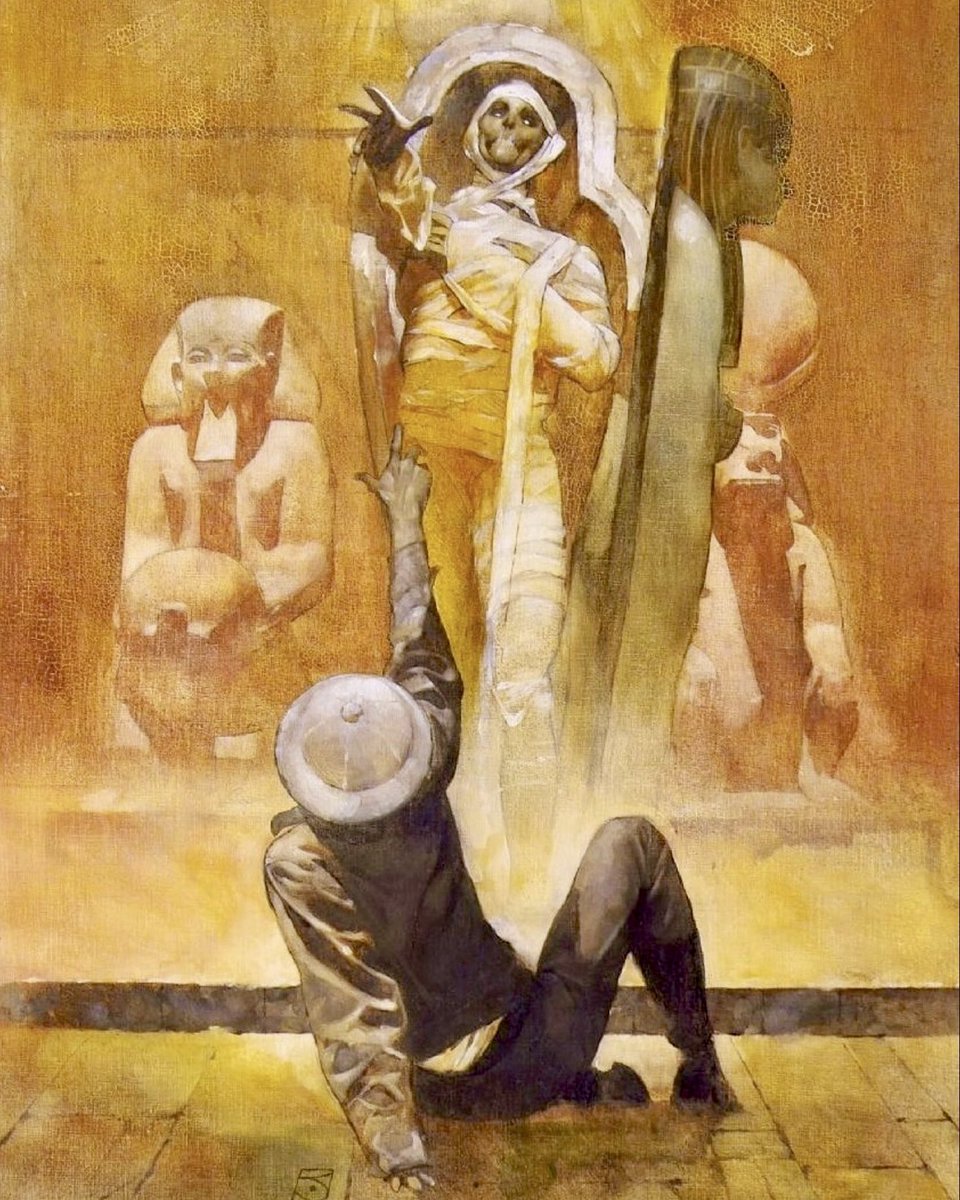
Jeffrey Catherine Jones (1944-2011) was an American illustrator and painter who left a quiet yet profound mark on 1970s fantasy, standing out for a more intimate, painterly approach than the genre’s standard.
Heavy Metal tweet mediaHeavy Metal tweet mediaHeavy Metal tweet mediaHeavy Metal tweet media
English
11
329
2.6K
63.6K
Aran Nayebi
Aran Nayebi@aran_nayebi·
As @GaryMarcus admits, he doesn't use these models, nor does he know the technical details behind how they work. By definition, he is not an authority on the subject of AI. Moreover, the benchmarks he frequently cites do not include frontier reasoning models, and unfortunately mischaracterizes them to the public. Like I said in the post he links, GPT-5-Thinking isn't as good as GPT-5.2/5.4-Pro, so this is at best an upper bound on the error rate. The main reason I mention it, is because it has a control with its base LLM counterpart, supporting the claim that reasoning drastically reduces hallucinations.
English
20
0
82
30.3K
Titus
Titus@71tu5·
@codexeditor Breathtaking! I'm wondering what would happen if you messed a bit with the image of the drawing and increased the contrast of the hand lines with Photoshop... 🙂
English
1
0
1
6
Codex
Codex@codexeditor·
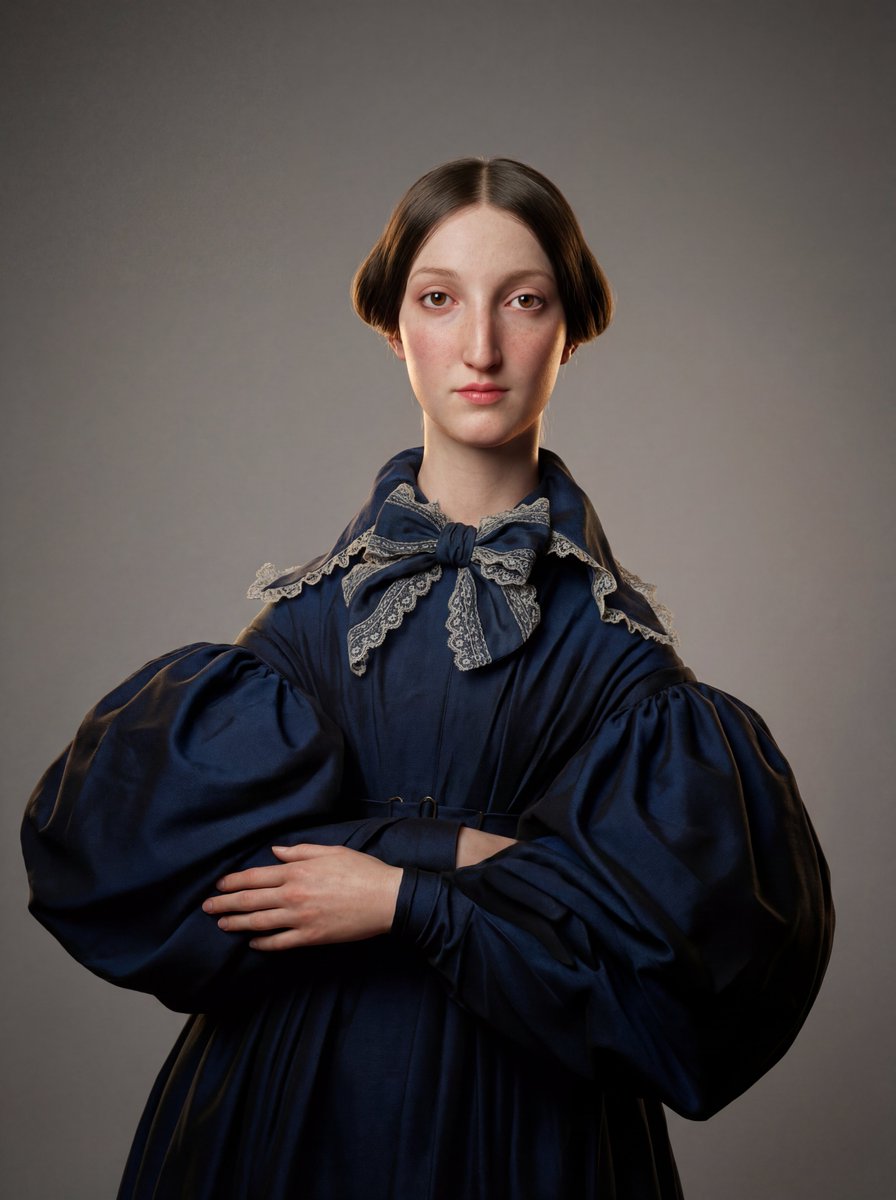
AI completion of Ingres' portrait drawing of Mademoiselle Louise Vernet.
Codex tweet mediaCodex tweet media
English
1
0
1
62
Titus retweetledi
Mindset Machine 
Mindset Machine @mindsetmachine·
You are always one decision away from a different life
English
59
911
9K
696.2K
Titus
Titus@71tu5·
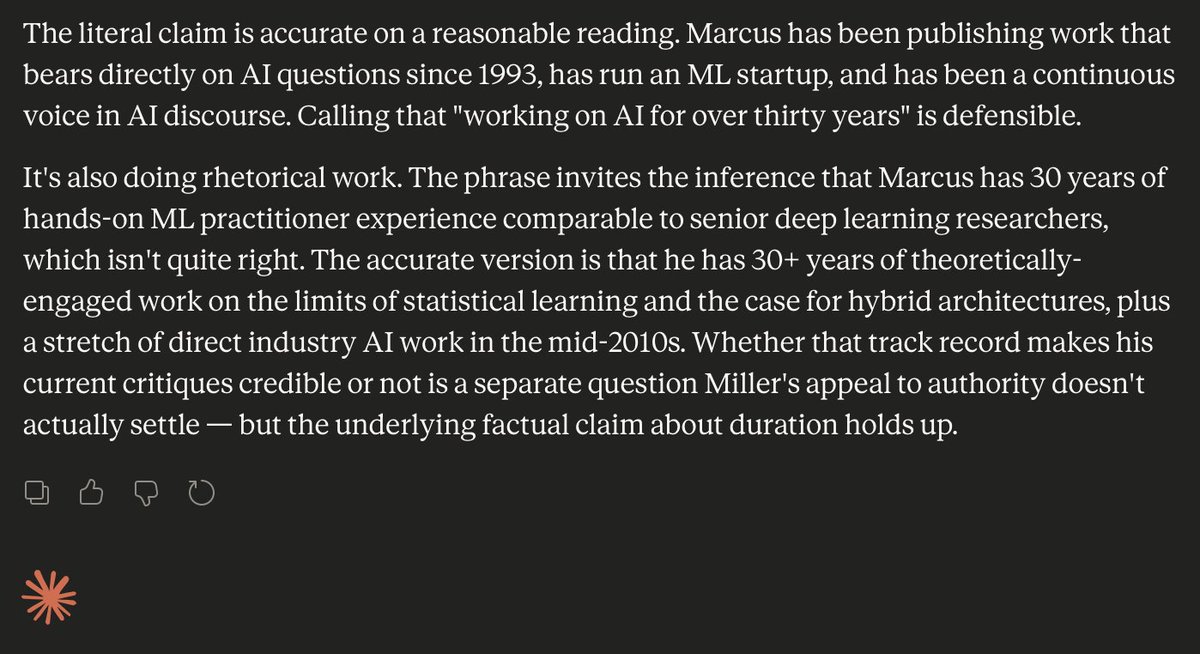
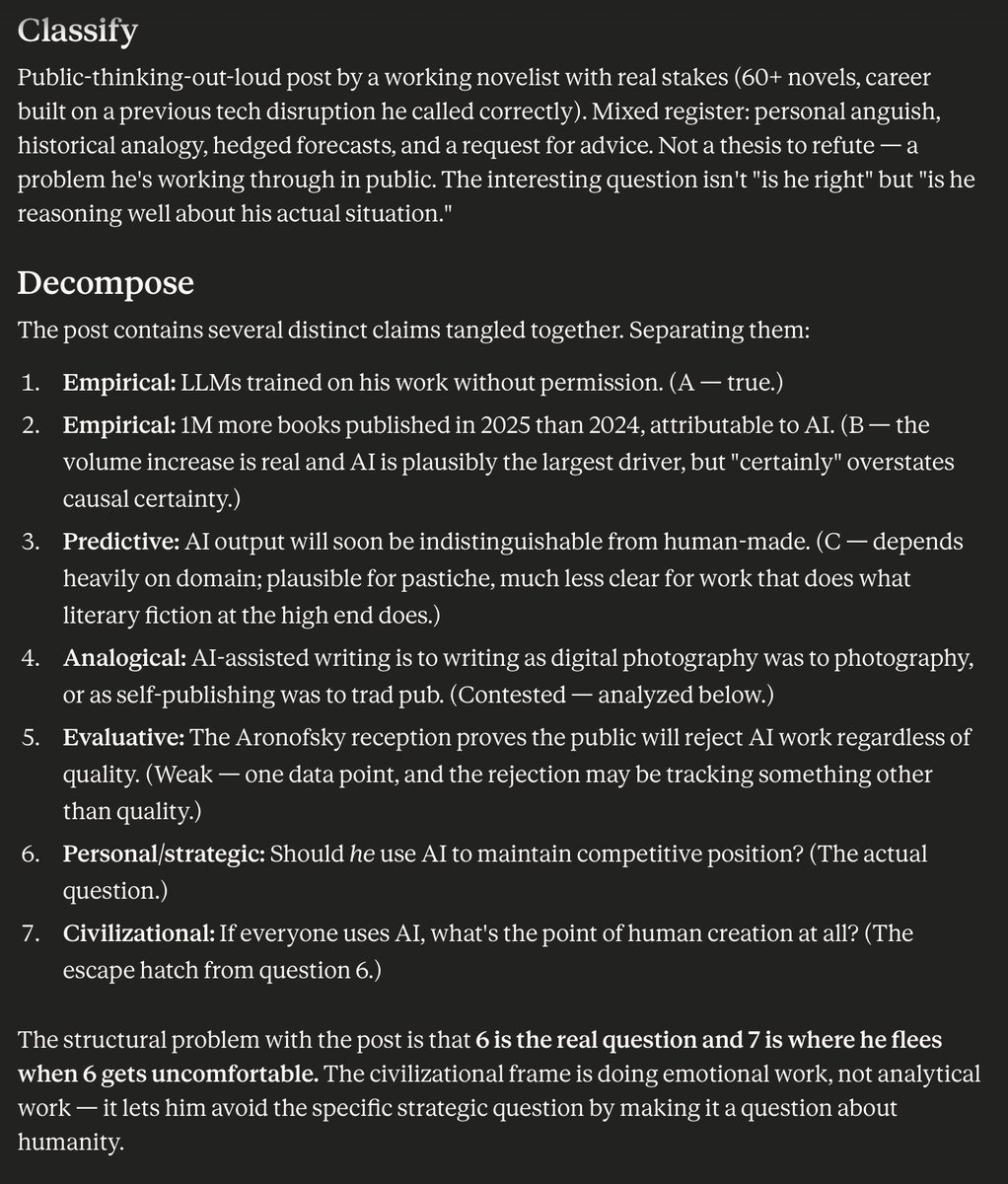
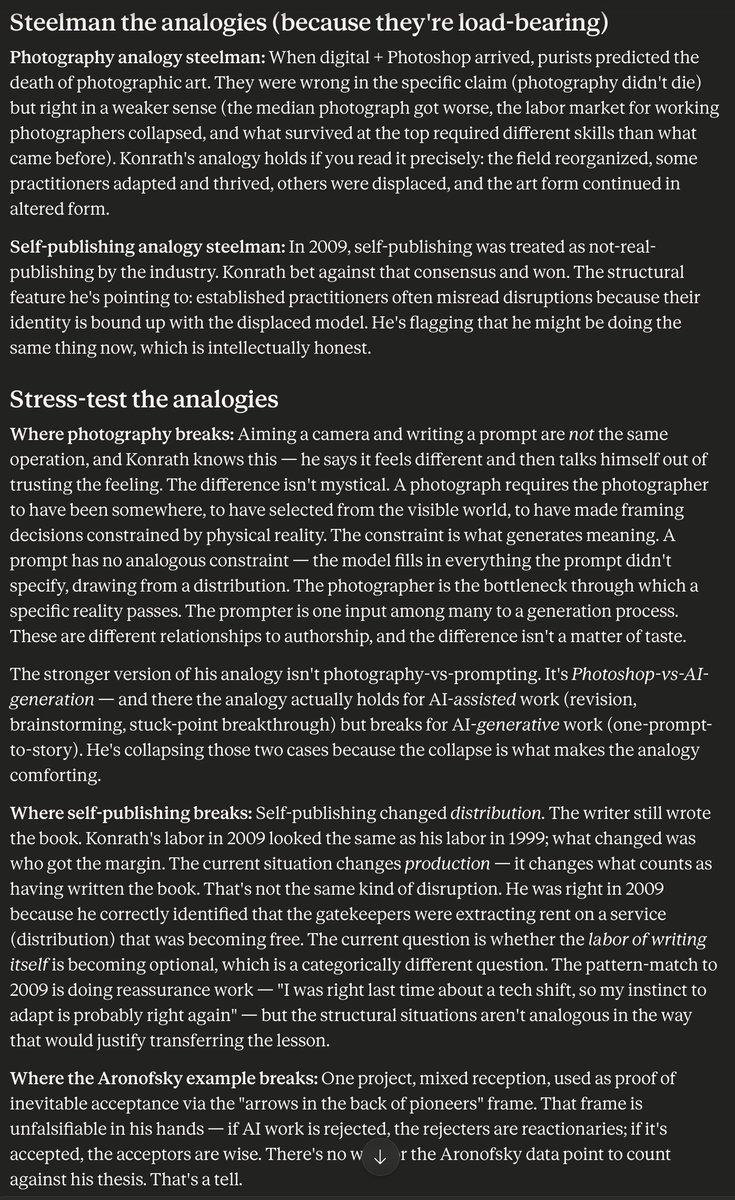
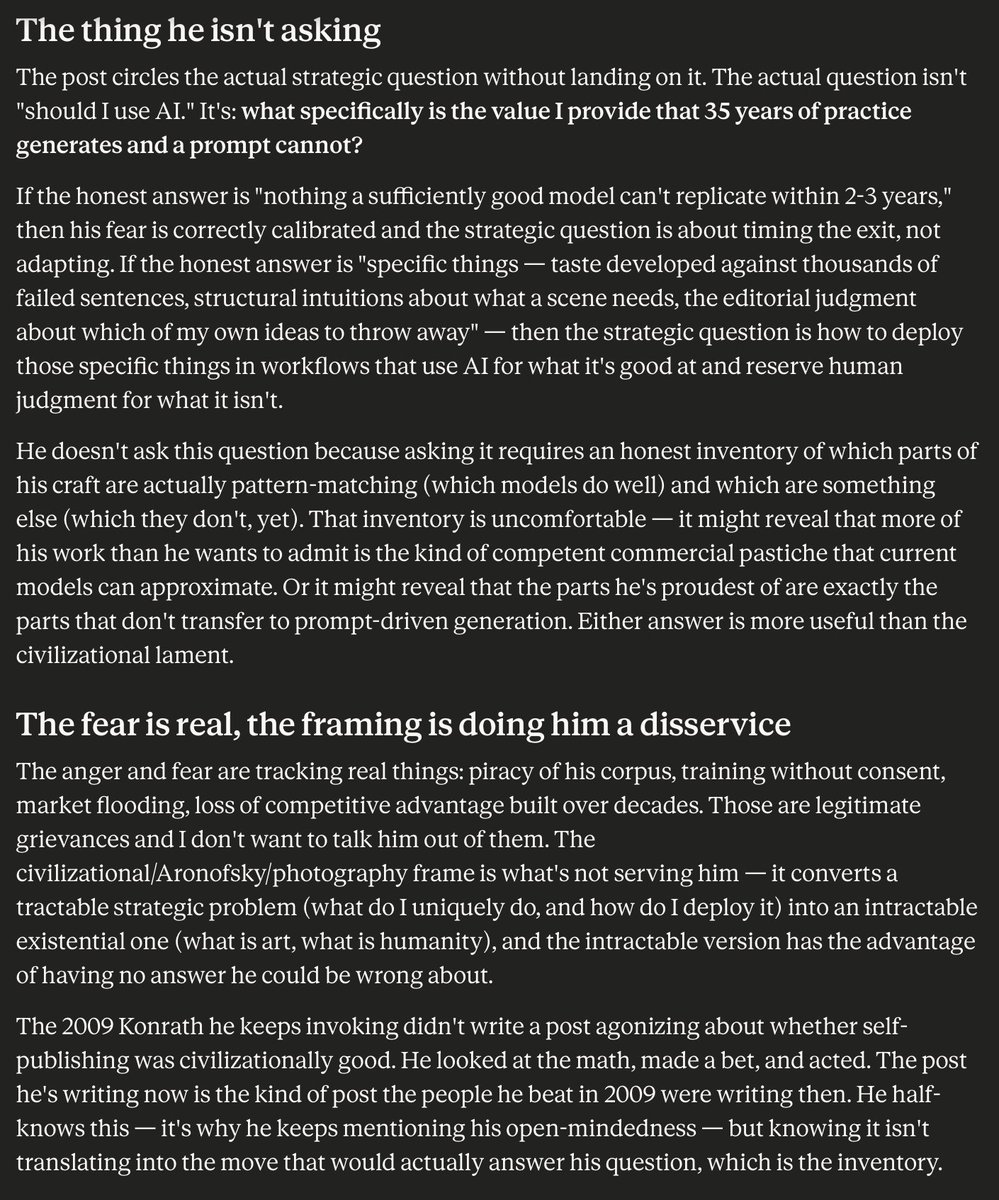
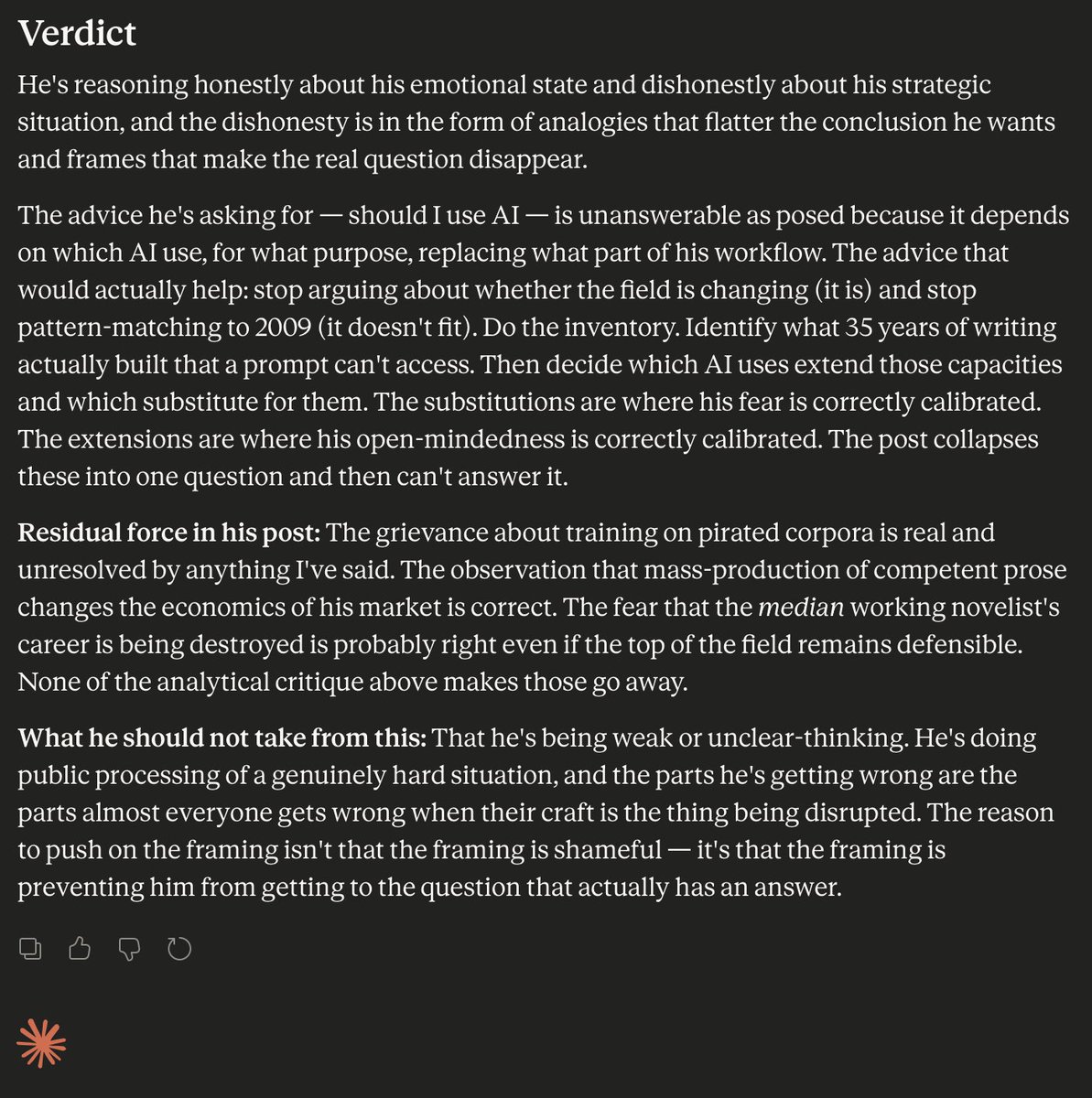
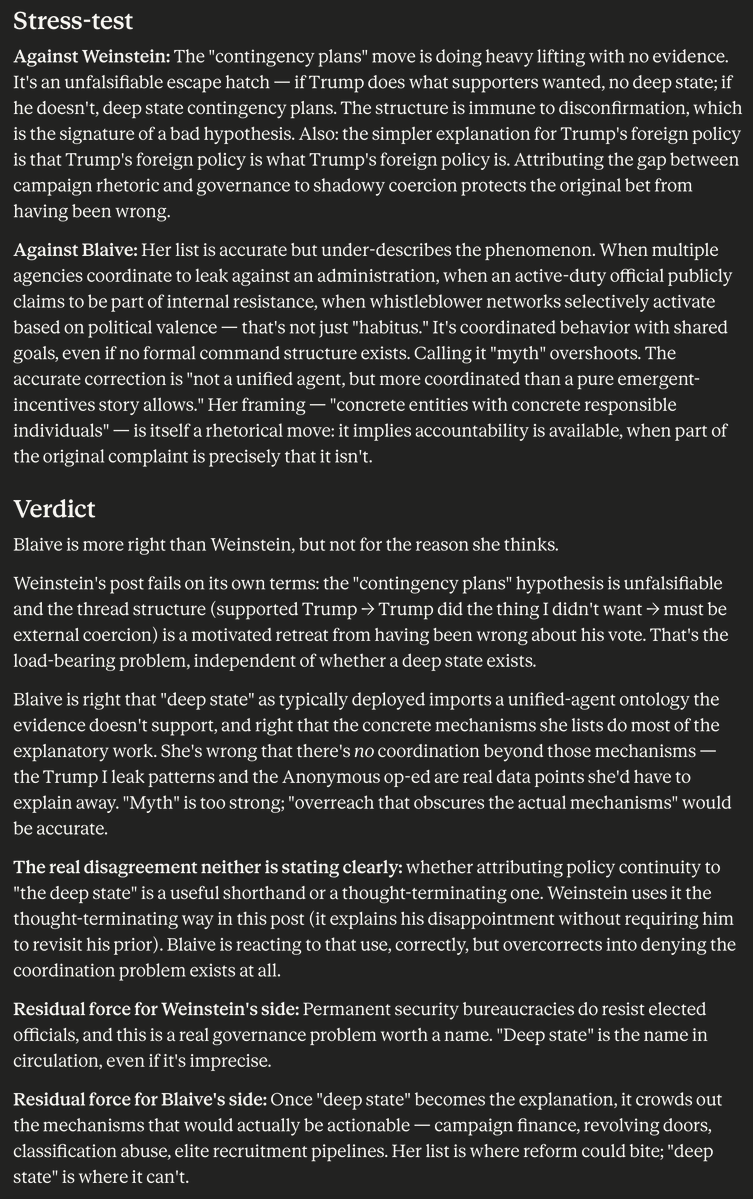
@jakonrath What do you think of this response from Claude?
Titus tweet mediaTitus tweet mediaTitus tweet mediaTitus tweet media
English
0
0
0
2
J.A. Konrath
J.A. Konrath@jakonrath·
I've been a professional fiction writer since 2001. I've sold a few million books. Right now it is 2026, and I am struggling to reconcile AI use and art. Struggling hard. Please share my pain and offer advice. AI isn't a black and white issue. It's gray all the way down. Many of the AI haters aren't thinking clearly and refuse to open their minds. Many AI users aren't thinking at all, they're letting AI do the thinking for them. This topic is torturing me. LLMs pirated ALL of my work and trained on it. That's over 60 novels and dozens of short stories. More than four million words. AI stole it, learned from it, and now anyone can write like JA Konrath with a few prompts and pump out a book in a day. I can compete against human writers. I cannot compete against non-writers who can suddenly write in my style with the press of a button. This is a real fear, not an imagined one. In 2025, there were 1 million MORE books published than the prior year. Is that because of AI? I believe it is. This year, that number will certainly go up. Do I jump on that bandwagon? Should I use AI to write like JA Konrath? My initial response; hell no. I haven't used AI to write anything. But I pride myself on keeping an open mind. So let me try to suss this out. I've been keeping an eye on professional artists using AI. One big example leapt out at me. Darren Aronofsky--a fine director whose work I admire--used AI to create the short web series On this Day... 1776. Did he have supporters? Was he recognized for bravely trying something new? Nope, not really. He was (almost) universally excoriated. The series has a 1-star IMDb rating. The hate is real. Do you know how to recognize a pioneer? The arrows in his back. Aronofsky is a bona fide artist and a vetted pro playing with new tech. Whether the series sucks or not is subjective, and it doesn't matter. Why doesn't it matter? Because AI will get better, guaranteed. And soon no one will be able to tell the difference between human-made, AI-assisted, or full AI with minimal prompting. Technology upending the status quo isn't new. I've been part of it before. Back in 2009 I was widely derided for self-publishing. The push-back was real. Lots of fear. Lots of anger. Lots of hate. But I turned out to be right. Is Aronofsky right? I am trying hard to figure it out. It's a much deeper problem than "Human art good, AI bad." In the year 2000 it was possible to go into a department store and buy both a Polaroid and a Sony Cyber-shot DSC-S70. Both were cameras. Both took photographs. Both were revolutionary. But the differences were huge. The Polaroid immortalized a low resolution immutable moment in time. The digital camera (plus software) allowed reality to be changed, fixed, and altered in almost infinite ways. Purists whined about the art of photography dying; of the extensive journeyman training needed to prepare the artist for that one lucky Pulitzer moment and why that is a Good Thing. But wiser heads embraced Photoshop and digital manipulation and changed the field. Digital may have taken away some of the purity of the art, but it allowed for the art to do so much more. Both the Polaroid and the Cyber-shot required a human being to snap the pic using human eyes and human perspective. Is aiming a camera akin to typing in an AI prompt? Don't both require agency? If they are the same, why does AI feel so much like cheating? This morning, out of curiosity, I went to an AI site, told it to make a song, and it did. In 15 seconds it created a damn good song that sounded exactly human. I couldn't tell the difference. A few months ago I prompted AI to write a short story, and it wrote one of my favorite shorts ever. But that story... it wasn't me. My one sentence prompt magically becoming a 500 word story did not feel the same as me taking a picture, Polaroid or digital. It is kind of the same, but also very different. Or is it? Elon Musk is convinced every household will have a robot. I talked to my wife about that, and she called bullshit. She declared that we don't need them. She also declared, back in 1996, that cell phones were stupid and no one would need them. Here's the thing, though. Cell phones have revolutionized how we communicate, learn, and have fun. But they haven't replaced us. Having a robot that cooks and cleans and repairs things will take away our ability to do things for ourselves. It will rob us of experience. Of usefulness. Of what it means to be human. People need to have a purpose. They need to contribute. They need to be challenged, and struggle, and fail, and hurt. Art reflects us. If and when we become creatures of leisure with universal basic income, what will be the point of life? Right now we have a window where using AI to assist in art can be like using Photoshop. Smart creators can work faster and do more. I'm trying to be OK with this. Aronofsky tried, too. I don't like a world that has people creating things without having to learn anything. That can't be good. Why figure out how to tie your shoes when a robot can do it for you? Why figure out narrative arcs when all you need is a prompt? Why even snap a photograph when you can describe a scene and have it appear without leaving your chair? This isn't an argument against AI slop or junk. That exists, but it won't for long. AI is improving too quickly. My argument is that my career is being murdered through piracy, mind theft, and unfair competition. I am literally raging against the machine. So... should I use that machine? I am sure there will be some great AI-assisted art. But if art becomes mostly (or all) AI, why should we even show up? Why do I even need to be in the equation? Let AI make art for other AI. If you take me out of the creation side, you can take me out of the reaction side. There is evidence that AI is making people dumber. Kids using AI in school aren't learning from it, they are learning they don't have to learn because AI will take care of it. Picasso trained hard to paint realistically before deconstructing art into cubism. He reached that point on his own. Those using AI to write fiction, without knowing how to write fiction, is sad to me. But I'm not that guy. I've spent 35 years writing novels. I've paid my dues. And now... I'm struggling. I now have to compete with millions of people who didn't spend any time learning anything. I'm afraid. And I'm angry. Is it sour grapes? Knee-jerking at unfairness? Lamenting AI slop? Honest fear? I have proof that I keep an open mind. Read my blog, A Newbie's Guide to Publishing. I was on Team Trad Pub for years. Rah rah find an agent rah rah work hard for your publisher. Then technology changed, and I changed with it. I switched teams. And I was right. I was hated, and insulted, and derided, and burned bridges, but I was right. And I sold millions of books. I know I could increase my writing output by 10X using AI. But I haven't. If this post seems confused and conflicted it is because I am confused and conflicted. Earlier today on X I saw someone cheerleading AI and my kneejerk reaction was to refute them. That post become this, and the kneejerk refutation became... learned helplessness? Acceptance? Cognitive dissonance? I still have some arrow scars in my back. They've mostly healed. Now I'm looking ahead into the unknown and wondering if I should venture there again. Or if I even have a choice.

J.A. Konrath tweet media
English
61
15
83
4.7K
Muriel Blaive, PhD
Muriel Blaive, PhD@MurielBlaivePhD·
I'm so annoyed by this "deep state" myth. There is no deep state. There are social actors, motivated by habitus, corruption, and moral virtue. There is an administrative culture that fails to questions long established habits. There is a certain culture of world domination transmitted in elite universities and emulated even by those who didn't graduate from them. There is an industry that actively corrupts officials (in the US it's often called "lobbying") to promote its interests and that brainwashes the public into believing its products are indispensable. There is a police and a justice system that turn a blind eye, and a political class that is too busy profiting from this system to dismantle it. There are fallible human beings, corruption (a lot of it), conflicts of interests (even more), arrogance, and hubris. There are concrete entities with concrete responsible individuals. But there is no abstract "deep state" that would be accountable to no one and would secretly act in the background. And there certainly is no fatality to it.
Bret Weinstein@BretWeinstein

I supported Trump in '24 as the only viable and legitimate candidate running. Maybe those, like me, who expected him to avoid war, simply got conned. But that's not the only valid hypothesis. The deep state appeared to vehemently oppose Trump. Presumably it had contingency plans

English
4
1
4
420
Titus
Titus@71tu5·
@codexeditor "the queen of the pose and the princess of the gesture" I wonder what that looked like and how it would be perceived today. I hope not something along these lines...: youtube.com/shorts/BlZ37JT… 🤣
YouTube video
YouTube
English
0
0
0
11
Codex
Codex@codexeditor·
Sarah Bernhardt (1844–1923), French stage actress and sculpturess who starred in plays including La Dame aux Camélias and Ruy Blas. Rostand called her "the queen of the pose and the princess of the gesture", and Hugo praised her "golden voice".
Codex tweet media
English
1
0
1
80
Titus
Titus@71tu5·
@codexeditor Beautiful portrait. He was way ahead of his time. 🤣
English
0
0
1
7
Codex
Codex@codexeditor·
Sâr Joséphin Péladan (1858–1918), French novelist and Rosicrucian. He established the Salon de la Rose + Croix for painters, writers, and musicians sharing his Symbolist artistic ideals.
Codex tweet media
Română
1
0
3
68