

DIMITRIOS ZIOGAS
393 posts

"Dark fleets" have been a known thing since the beginning of the war, but satellites can't see ship names and flags.
This report confirmed that the "dark fleet" is indeed existing and ships do pass through the Straight daily.
The report also points out that there is a 50% under reporting on the number of ships passing, which basically means almost double traffic than accounted for by most experts.
Even if so, traffic through the straight is still 10-15% of pre-war levels.
This information does change my thesis re long oil. If there is no escalation today, delay by Trump again or a potential deal, that is most likely the top for oil.
If there is no deal, and continued escalations, the push towards $125 - $150 oil will be a potential great entry for a generational oil short.
By longing oil, you are longing the asset at historic highs, that every single country wants lower. It was the play til now. Might have changed.
Shanaka Anslem Perera ⚡@shanaka86
Citrini Research sent an analyst to Oman with $15,000 in cash, recording sunglasses, a smuggled camera, and Cuban cigars for networking. The analyst signed a pledge to Omani authorities not to gather intelligence, then got on a boat and sailed to within 18 miles of the Iranian coast. What he saw contradicts every headline about the Strait of Hormuz being closed. Approximately 50 percent of tanker traffic in the strait is missing from public AIS tracking systems. The vessels are not missing because they sank. They are missing because they turned off their transponders, spoofed their GPS coordinates to broadcast false positions, duplicated the identity codes of decommissioned ships, switched to low-power transmission mode, or swapped identities with nearby vessels. The result is an electronic fog through which physical ships move crude to Asian ports while the tracking systems that Bloomberg terminals rely on show an empty waterway. More than $3 billion in crude has been transported through the strait since the war began, primarily to China, much of it under Iranian terms, paid in yuan or cryptocurrency. The strait is not closed. It is filtered. Iran decides who passes and who does not. Ships that pay the IRGC toll and accept escort through the Larak corridor transit under the electronic fog. Ships that refuse are turned away or attacked. The “closure” that drove Brent to $115 and Aramco’s OSP to a record $19.50 premium is a selective blockade operating behind spoofed transponder data that makes it look total when it is not. Brent dropped from approximately $115 to the $108 range as the report circulated. The market had priced in a complete shutdown. The reality is a controlled chokepoint generating toll revenue while maintaining the appearance of total disruption to maximise the scarcity premium on every barrel that gets through. Iran is running two operations simultaneously: a blockade for the cameras and a toll booth behind the blockade for the revenue. The opacity is the product. The fear is the markup. The techniques are not sophisticated. Going dark requires flipping a switch. GPS spoofing requires a $500 device injecting false coordinates into the transponder’s GPS input. Identity theft requires typing a different MMSI number into the AIS configuration screen. Low-power mode requires switching from 12.5 watts to 1 watt. These are not state-level cyber operations. They are the maritime equivalent of turning off your phone’s location services. The ghost fleet runs on technology any ship’s officer can deploy in minutes. The 50 percent blind spot means every estimate of Hormuz disruption based on public AIS data, every IEA shortfall calculation, every Goldman Sachs supply model, and every insurance premium derived from vessel tracking is working with half the picture. The other half is sailing in the dark, loaded with crude, headed for Chinese refineries, paying the IRGC in the currency of the country that ships sodium perchlorate to fill the missiles that the same IRGC fires at Israeli cities. The strait the world thinks is closed is open for business. The price of admission is invisibility. And the entity collecting the toll in yuan while demanding war compensation in the ten-point response is profiting from the blockade it claims is absolute, selling passage through the chokepoint it says will “never return to its former state,” and funding the war with the revenue from the peace it refuses to sign. open.substack.com/pub/shanakaans…
English
@DegenClubGR @HormuzLetter @adamscochran Μπαίνουν και οι άμαχοι στο παιχνίδι, εμένα αυτό μου λέει ότι όσο πάει χειροτερεύει το πράγμα και δεν υπάρχουν σοβαρές προοπτικές για κάποιο είδος συμφωνίας 🤔🤔🤔
Ελληνικά


BREAKING: Iran is organizing nationwide human chains of youth, athletes, and artists at every power plant in the country at 2 PM Tehran time tomorrow, per Iran's Ministry of Sports and Youth.
The campaign is named "Human Chain of Iranian Youth for a Bright Future." Its slogan: "attacking public infrastructure is a war crime."
International signage will be displayed for global media coverage. At least 2,000 NGO members are confirmed. The chains form 13 hours before Trump's 8 PM ET strike deadline.
Iran is gathering civilians at the exact infrastructure the US has threatened, and televising it to the world.
English

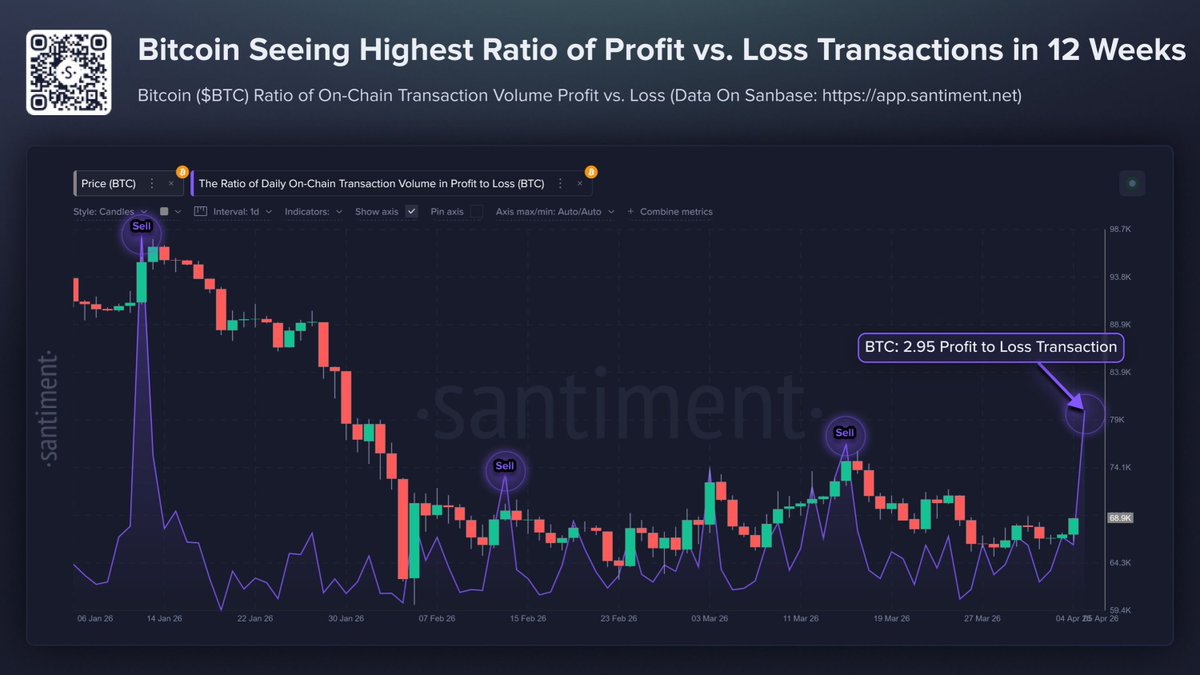
🚨 UPDATE: Bitcoin's profit-to-loss transaction ratio has hit 2.95, its highest in 12 weeks and a historically reliable short-term price top signal, per Santiment.
English
@Bybit_Greek Αν πάλι θέλεις να το δεις εντελώς μαθηματικά η πράσινη επιλογή σε πληρώνει 100/1 περισσότερα σε σχέση με την πρώτη και η πιθανότητα να σου βγει είναι 1 προς 2 δλδ είναι ένα ρίσκο που θα σε συνέφερε να βάλεις αν μπορούσες να το επαναλάβεις πολλές φορές
Ελληνικά
@Bybit_Greek Το κόκκινο γιατί τα 10 btc με σωστή διαχείριση μπορείς να τα κάνεις 1000 ενώ αν διαλέξεις το πράσινο δεν σου κάτσει και πάρεις 0 btc ότι και να κάνεις 0 btc θα είναι...
Ελληνικά

Εσείς ποιο θα διαλέγατε άραγε; 👀
Bybit EU@BybitEU
There is only 1 correct answer. It is ____.
Ελληνικά
@DegenClubGR @Breaking911 @zerohedge Σε λάθος post έγραψα, ανανεώνονται τόσο γρήγορα που έχουμε χάσει την μπάλα
Ελληνικά
Ελληνικά

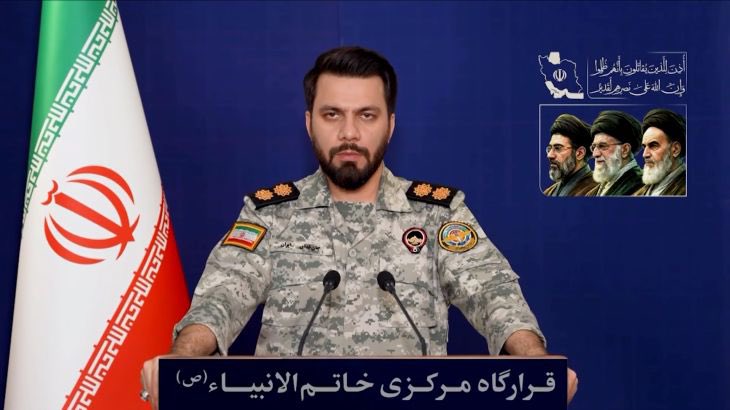
🚨 BREAKING: The IRGC has reportedly threatened to target the Middle East operations of 18 U.S. technology companies starting tomorrow night if any further senior commanders are assassinated.
The companies named include Apple, Google, Tesla, Microsoft, Intel, Oracle, IBM, Meta, Nvidia, Boeing, and others, as tensions continue to escalate.
English

🚨 HEGSETH ON IRAN: COULD BE FOUR, SIX, EIGHT WEEKS OR ANY NUMBER
English
🔥 JUST IN: Paolo Ardoino teases three major product launches from Tether in the next 3 weeks.


English
@DegenClubGR Παρακαλάω για κλείσιμο σε 4ωρο κερί κάτω από τα 67Κ που για εμένα είναι signal ότι τελείωσε το relief και πάμε για δυνατή βουτιά οπότε θα παίξω ένα ωραιότατο short.
Ελληνικά
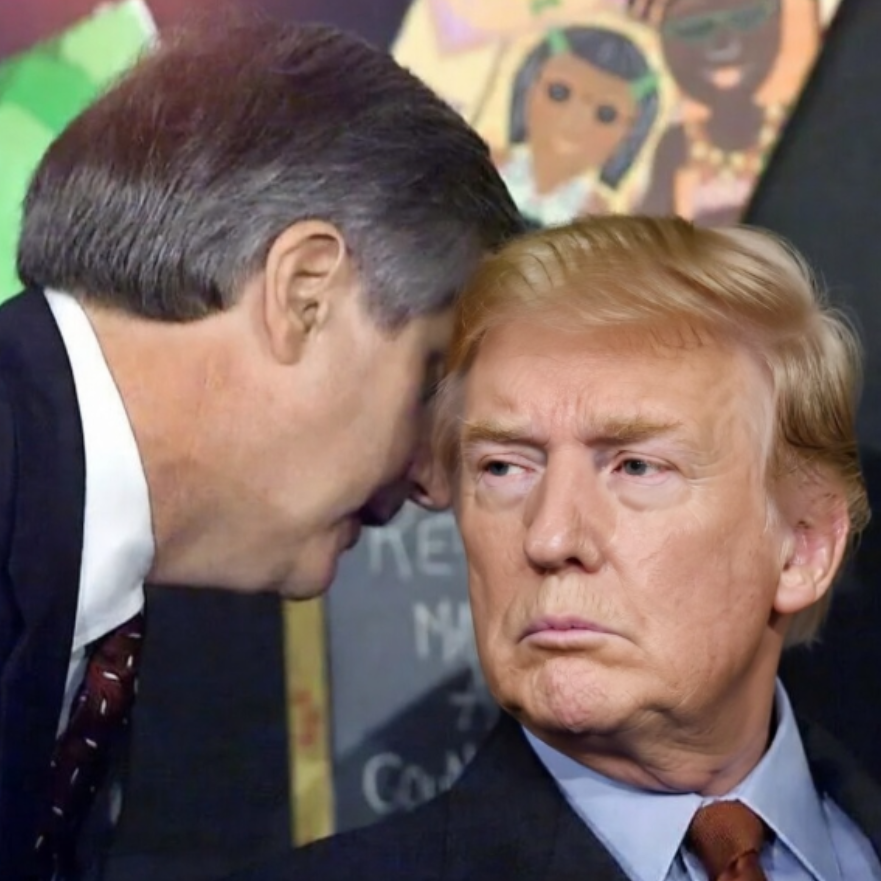
Οι σύμβουλοι του Τραμπ αυτή τη στιγμή:
"SIR, θέλουμε ΟΠΩΣΔΗΠΟΤΕ ψευτοtweet ανακοίνωσης νέας ψευτοσυμφωνίας ΤΩΡΑ. Ναι ο Barron είναι ΗΔΗ short στο Brent. Ναι το ξέρουμε είναι η δέκατη φορά αυτή τη βδομάδα. Δεν μας νοιάζει πλέον, BTC πέφτει PLEASE just DO it sir". 😅
Ελληνικά
@FKaisaritis Και εγώ έβαλα φίλε πριν λίγο στα 350 με πολύ tight sl τα σημερινά high, gl μας Φάνη!
Ελληνικά


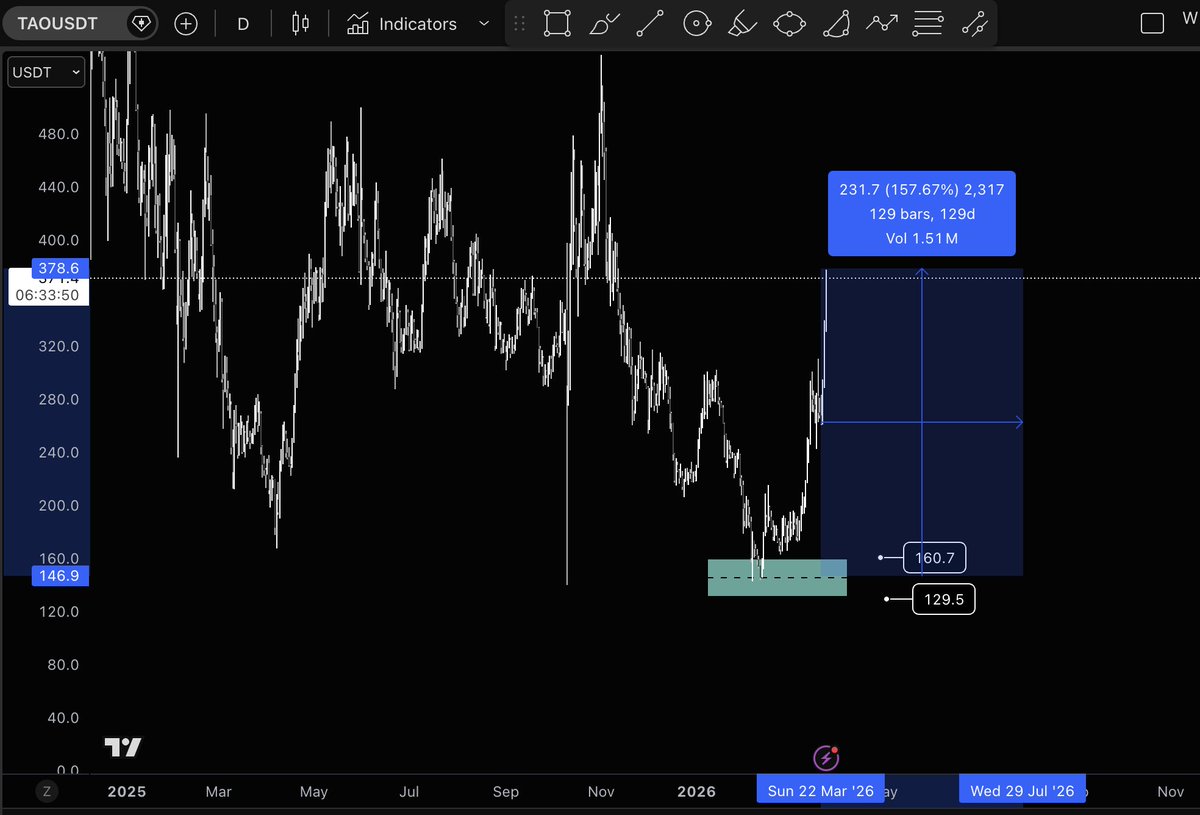
@DegenClubGR @sentdefender Νομίζω πρέπει να μπω short τώρα πριν περάσει το 5αλεπτο 😂😂😂
Ελληνικά

Speaking to reporters earlier at the White House, President Trump mentions and vaguely talks about a mysterious “present” given to the United States yesterday by Iran:
“Because they're going to make a deal. They're going to make a deal. They did something yesterday that was amazing, actually. They gave us a present, and the present arrived today. It was a very big present worth a tremendous amount of money. And I'm not going to tell you what that present is, but it was a very significant prize. And they gave it to us, and they said they were going to give it. So that meant one thing to me, we’re dealing with the right people. No, it wasn't nuclear related. It was oil and gas related. And it was a very nice thing they did.”
English
@DegenClubGR Αν υποθέσουμε ότι το live θα κρατήσει αυστηρά 1 ώρα (😂😂😂) και ο πορτοκαλης κάνει κολοτουμπες ανα 5 λεπτά τότε ο πόλεμος προλαβαίνει να σταματάει και να αρχίζει ξανά 12 φορές χαχαχαχα LFG!!
Ελληνικά
🔴LIVE: ΘΑ ΥΠΑΡΞΕΙ ΟΝΤΩΣ ΑΝΑΚΩΧΗ ΣΤΗΝ Μ.ΑΝΑΤΟΛΗ? Ανάλυση Αγοράς +Q&A
(για μέλη)
Σήμερα στις 20:30 ⌛️
Ίσως μέσα στο λαιβ σταματήσει και ξαναρχίσει ο πόλεμος 3-4 φορές 😅🥷🙏
youtube.com/watch?v=ljxj3c…

YouTube
Ελληνικά
@Bybit_Greek @christospano @jaffrakitty @uliseslion94 Congratulations to the winners, next time my turn!! 😂😂😂
English
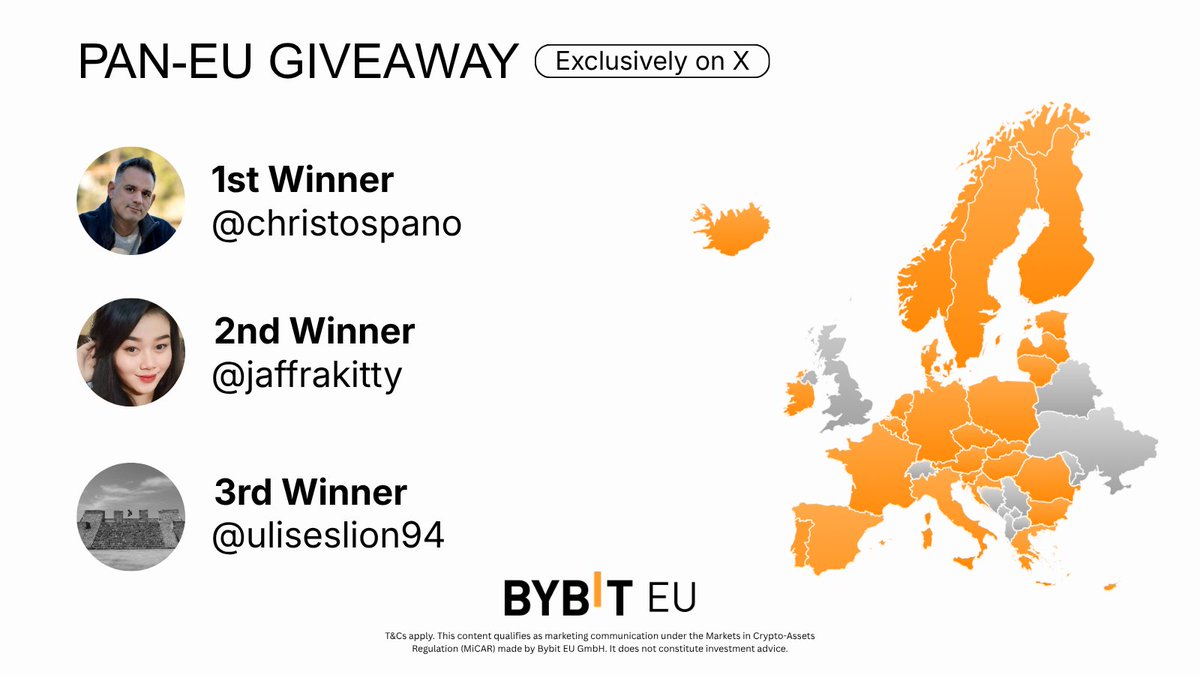
Congratulations to everyone who participated in our PAN-EU Giveaway! 🎉
The 1st winner is: @christospano
The 2nd winner is: @jaffrakitty
The 3rd winner is: @uliseslion94
Please make sure to send us a DM with your Bybit EU UID to receive your rewards!
English
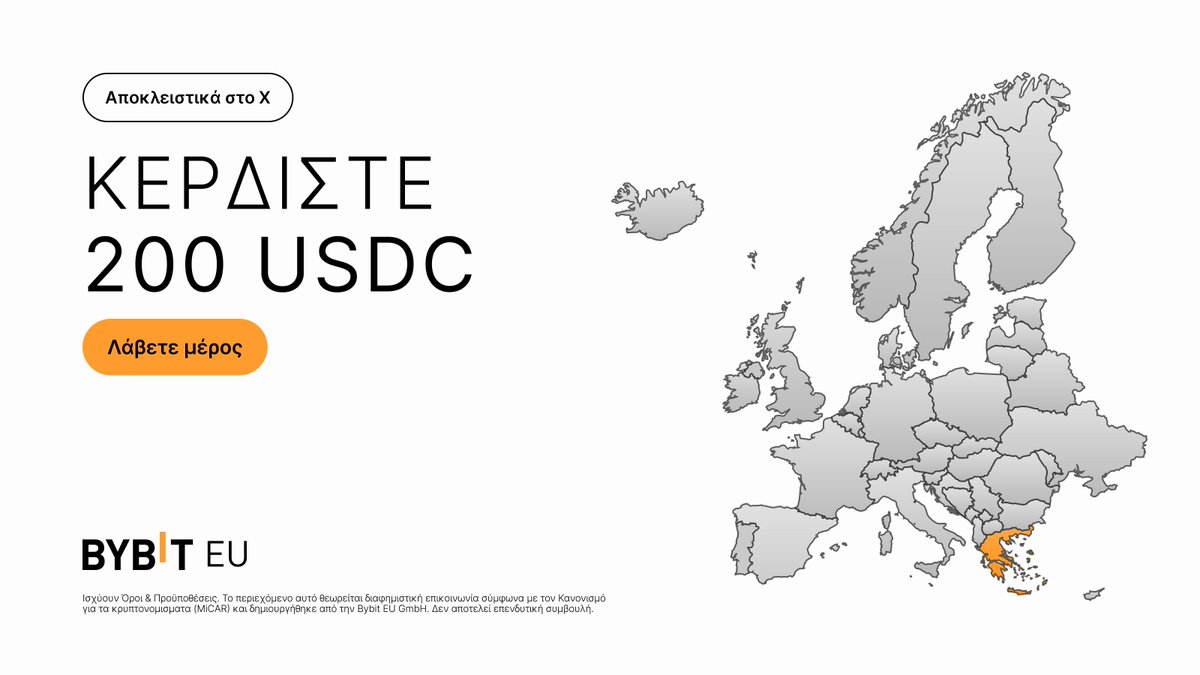
🚨 ΔΙΑΓΩΝΙΣΜΟΣ GIVEAWAY 🎁
Χαρίζουμε συνολικά 200 USDC!
🥇 1ος Νικητής: 100 USDC
🥈 2ος Νικητής: 50 USDC
🥉 3ος Νικητής: 50 USDC
Πώς να συμμετάσχετε: 👇
1️⃣ Ακολουθήστε το @Bybit_Greek + @BybitEU
2️⃣ Κάντε Like & Repost αυτή την ανάρτηση
3️⃣ Κάντε Tag 2 φίλους στα σχόλια + αναφέρετε και το @BybitEU
Αυτό ήταν! Συμμετέχετε κι εσείς 😎
📌 Ανακοίνωση Νικητών:
Οι νικητές θα ανακοινωθούν στις 23 Μαρτίου!
Μην το χάσετε!!! Δηλώστε συμμετοχή τώρα! 🔥
#BybitEU #Giveaway
Ελληνικά
@DegenClubGR Επειδή τους φοβάμαι ότι θα τα γυρίσουν δεν μπαίνω πουθενά το καλύτερο σενάριο για εμένα είναι να δούμε ένα pump μέχρι τα 74 και εκεί να κάνω μεγάλο swing short, LFG!!
Ελληνικά
@DegenClubGR Μαζί σου degen για αυτό σε σχόλιο μου σε άλλη ανάρτηση λέω ότι είμαι Μαξ usdc και περιμένω να κάνω αγορές κύκλου μέσα στο καλοκαίρι κατά προτίμηση μετά από κάποιο black swan γεγονός μέχρι τότε αναμονή, αν και το σκέφτομαι για ένα swing short play σε αυτή την φάση, LFG!
Ελληνικά
@7LIVES78 Μεσα προς τελη Μαρτιου ναι, αλλα αυτη ειναι απλα μια ενδιαμεση, δευτερευουσας σημασιας χρονικοτητα αν μπορω να το πω ετσι 😅
Αυτη που εχει μεγαλυτερη σημασια ειναι η αλλη που αναφερω στο νιντζα για υποψηφιο τελος bear.
Ελληνικά
Καλησπέρα Degens 🌞
Σιγααα σιγά ο κόσμος αναρωτιέται μήπως αυτό που συμβαίνει δεν είναι απλά ένα μινι-σοκ 🤯
Όταν κάποιος με τον χαρακτήρα του Τραμπ στριμώχνεται, συνήθως δεν ακολουθούν νορμάλ απόφασεις.
Το "καλό(?)" είναι ότι το χάος φέρνει τις μεγαλύτερες ευκαιρίες...
ΛΦΓ🔥
GIF
Ελληνικά
@DegenClubGR Για εμένα τα πράγματα είναι ξεκάθαρα ότι entry και να ψάχνει κάποιος τώρα είναι σαν να προσπαθεί να βγάλει από την μύγα ξύγκι μένω προσωπικά usdc Μαξ και περιμένω τέλος καλοκαιριού για αγορές κύκλου, LFG!!
Ελληνικά
ΟΙ ΑΥΤΑΠΑΤΕΣ ΤΩΝ (ΚΡΥΠΤΟ)ΑΓΟΡΩΝ | Crypto Market Update 138
ΛΦΓ 🔥
youtube.com/watch?v=NGEYP2…
YouTube
@FKaisaritis Max μέχρι 78 θα πάει το btc μέχρι να φουνταρει πάλι οπότε πρώτα τα 62
Ελληνικά