Ben Silbermann
208 posts

Ben Silbermann
@8en
/ Founder @Pinterest, @HowWeFeel / Making Something New / San Francisco
San Francisco, CA Katılım Nisan 2007
673 Takip Edilen20.8K Takipçiler

@shishirmehrotra @Superhuman looks cool! my favorite feature of kindle is highlight to define a word. having an ai explanation in context would be very helpful for me.
English

We launched a cool new feature in @Superhuman Go that helps you understand anything you're reading on the web. Highlight text on any page and Go can explain, translate, or answer questions, all in context without leaving the page.
Grammarly's power has always lived in editable surfaces, and this is the start of bringing that same work-where-you-work experience to the reading side of your workflow. Lots of fun talking about it on Super Shipped, where one of our engineering managers walks me through how it works:
English
Ben Silbermann retweetledi

The brain has multiple types of circuits; not just neurons, but also astrocytes. Little pores, called gap junctions, physically bridge the cytoplasms of neighboring astrocytes, connecting the cells together into networks that span the entire brain. Some of these astrocyte networks even run across brain hemispheres, through the corpus callosum.
Astrocytes are a support cell, of sorts. They supply neurons with nutrients (and help them remove waste), form the blood-brain barrier, and help form synapses between neurons. But astrocytes also share nutrients with *other* astrocytes through those gap junctions I mentioned, including glutathione, phosphocreatine, and neurotransmitters.
Gap junctions are formed by a protein called connexin 43. When six copies of this protein come together, they form a ring, called a connexon, that punches a hole into the cell membrane. When a connexon on one astrocyte touches the tip of a connexon on a neighboring cell, the two come together to form a gap junction through which nutrients get exchanged.
Scientists have known about these gap junctions for a long time. But they didn’t understand how far astrocyte networks actually extend; are the connections mostly local, in little clusters? Or do astrocytes somehow build networks that span across the brain, much like neurons?
Historically, there were few ways to get at this question. You could kill a mouse, for example, and then extract its brain and slice it into thin pieces. Then, you might stick a thin electrode into one of the astrocytes, pump it with an electrical current, and see whether nearby cells respond. If they do, the cells might be connected! But this approach is obviously 2-dimensional; it destroys connections in the z-axis. So you get decent *local* information, but it’s hard to then reconstruct the full network.
Another option is to take an intact brain, inject the astrocytes with a dye, wait for the dye to diffuse through the tissue, and then study the slices to see where the dye went. This is better, but diffusion is slow and the dye will not necessarily reach astrocytes located far away from the injection point.
A new paper solves both of these problems.
It is a beautiful study, in my eyes, because it hinges around a single clever idea. Namely, what if we just genetically-modified animals such that, when a molecule passes through a connexon, the astrocyte makes a physical record of it? In this way, animals can be engineered to “tag” or “trace” their own astrocyte networks.
The authors took the connexin 43 protein (the one that forms the gap junctions) and fused it to another protein, called TurboID. The beauty of TurboID is that it takes a nearby molecule -- whatever is floating on by -- and sticks a biotin tag onto it. That’s all it does. The fusion protein was designed so that TurboID sits inside the gap junction. Whenever a neurotransmitter or glutathione moves through the pore — SPLAT! — the TurboID tags it with a biotin.
The researchers next injected mice with an adeno-associated virus (AAV5) carrying a gene encoding this fusion protein. The fusion gene was placed near a promoter sequence, called GfaABC1D, that is “only” active in astrocytes. And then, since the brain does not *naturally* make biotin, the researchers fed the mice with biotin-laced water for about one week.
Finally, they killed the mice, made their brains transparent (search for “tissue clearing” if you want to learn more), and then incubated them with a protein, called streptavadin, that tightly grabs onto biotin. The streptavidin is fused to a fluorescent dye, which can then be seen with a microscope.
And that’s the gist! What they found is that about 10 percent of astrocytes picked up and actually made the engineered gap junctions, but 80 percent of nearby astrocytes were connected to those astrocytes.
Some astrocyte networks were isolated, whereas other networks talked to each other. There is an astrocyte network that runs through the motor cortex, for example, and it seems quite isolated; but the astrocyte networks in the frontal cortex and hypothalamus communicate with each other.
Some astrocyte networks ran through both brain hemispheres, as I said, directly through the corpus callosum. These networks change over time, and they differ spatially from neural networks. In some cases, they even link brain regions that are not connected by neurons.
Biology gets deeper, and life becomes more resolved, every day.
Image below: Astrocyte networks in the brain. All the purple stuff is streptavidin, which is a marker for biotin (and, therefore, astrocyte connections.)


English

Congratulations to the super talented team from @extradotemail on today's launch. It's so rare to see any company launch such a polished and thoughtfully designed product on day 1. Give it a try! extra.email.
English

@patrickc Are there any interventions or treatments you’ve tried as a result of your investigations?
English

I'm lucky enough to have a great doctor and access to excellent Bay Area medical care. I've taken lots of standard screening tests over the years and have tried lots of "health tech" devices and tools.
With all this said, by far the most useful preventative medical advice that I've ever received has come from unleashing coding agents on my genome, having them investigate my specific mutations, and having them recommend specific follow-on tests and treatments.
Population averages are population averages, but we ourselves are not averages. For example, it turns out that I probably have a 30x(!) higher-than-average predisposition to melanoma. Fortunately, there are both specific supplements that help counteract the particular mutations I have, and of course I can significantly dial up my screening frequency. So, this is very useful to know.
I don't know exactly how much the analysis cost, but probably less than $100. Sequencing my genome cost a few hundred dollars.
(One often sees papers and articles claiming that models aren't very good at medical reasoning. These analyses are usually based on employing several-year-old models, which is a kind of ludicrous malpractice. It is true that you still have to carefully monitor the agents' reasoning, and they do on occasion jump to conclusions or skip steps, requiring some nudging and re-steering. But, overall, they are almost literally infinitely better for this kind of work than what one can otherwise obtain today.)
There are still lots of questions about how this will diffuse and get adopted, but it seems very clear that medical practice is about to improve enormously. Exciting times!
English

Thesis case study drop!
Read here: diana.lu/point-n-talk
AI Is Smart Enough, Let's Just Point and Talk to it ;)
English

A professional update, as it were! @blockpartyapp_ has been acquired by @joindeleteme!
English

I’m biased but this continues to be the only personal assistant I use every day.
Magical experience from my very first interaction
Poke@interaction
Starting today, personal superintelligence is just one tap away. No download, no signup. Text Poke for free now: Poke.com 🌴 — 0:00 – What's Poke? 0:50 – Introducing Poke Recipes 1:25 – Create a Recipe in 10 seconds 1:43 – Earn on Poke 2:44 – Build with npx poke 12:58 – Recap 13:36 – Parisian Love
English

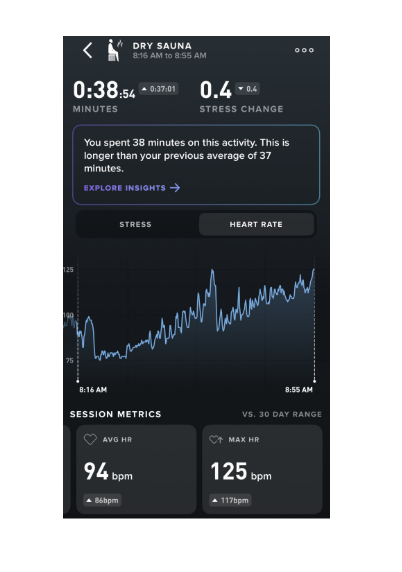
@bryan_johnson What caused the dip in heart rate midway through the session?
English

This article by @onecaseman is very useful for early stage consumer networks: caseyaccidental.com/p/zero-to-one-…
English

@kepano is there a way for obsidian to open a vault saved in Files from the iOS app?
English

@nikunj what is the the personal project you've built that you're most proud of?
English

Been sharing this with close friends lately who are honestly still sleeping..
Wake up.
The future you’re dreaming of is ALREADY here.
But, it’s not too late as everyone proclaims it is.
Anything you wish to build digitally can be done today - if you put a *little* bit of effort.
It doesn’t need to be a company, start with just side projects. The habit of building (at first) is far more important than what you build.
This is a truly special time. Life’s too short to be bored or unfulfilled at work.
Choose hard quests, and let it rip. And, take care of yourself!
English
Ben Silbermann retweetledi

I've enjoyed the podcast "A Slight Change of Plans" for years, so I'm looking forward to reading Maya Shankar's first book.
amazon.com/dp/0593713680?…
English

@mikeyk anthropic released some WONDERFUL products under your leadership. good luck getting back into the labs!
English

There’s never been a better time to be a builder — Opus 4.5 & Claude Code keep surprising me in the quality and completeness of the products they can create.
So I’m doing exactly that — putting my product founder hat back on and joining our Labs team to be hands-on at the frontier, building products that channel AI toward solving the world's hardest problems. Excited to pass the baton to Ami Vora as she leads the product team in scaling Claude.
Anthropic@AnthropicAI
We’re expanding Labs—the team behind Claude Code, MCP, and Cowork—and hiring builders who want to tinker at the frontier of Claude’s capabilities. Read more: anthropic.com/news/introduci…
English

@bswud @AlterMagIndia @inflectionptswk @mattyglesias @_brianpotter @ByrneHobart @antonhowes Thanks for your great work at worksinprogress. I have already bought 2 subscriptions for me and a friend and plan to buy more!
English

@8en I’m enjoying new magazines @AlterMagIndia and @inflectionptswk.
On Substack I always read @mattyglesias, @_brianpotter, @ByrneHobart, Wood from Eden, and @antonhowes.
English

Can you share your favorite sources of long-form essays? The two sources I currently like are:
- asimov.press - Biology
- worksinprogress.co - Ideas to Improve the World
English
Ben Silbermann retweetledi

As a kid, I used to create Minecraft maps that millions of people played on. My dream is to bring that same creativity to the real world. I want the physical world to become as inspiring as the internet has been.
So I started a new company, @DraftedAI, to solve this!
Drafted@DraftedAI
Hello World 👋 Welcome to Drafted — an AI tool that lets anyone design a home from scratch, tailored to your life. techcrunch.com/2025/12/23/thi…
English