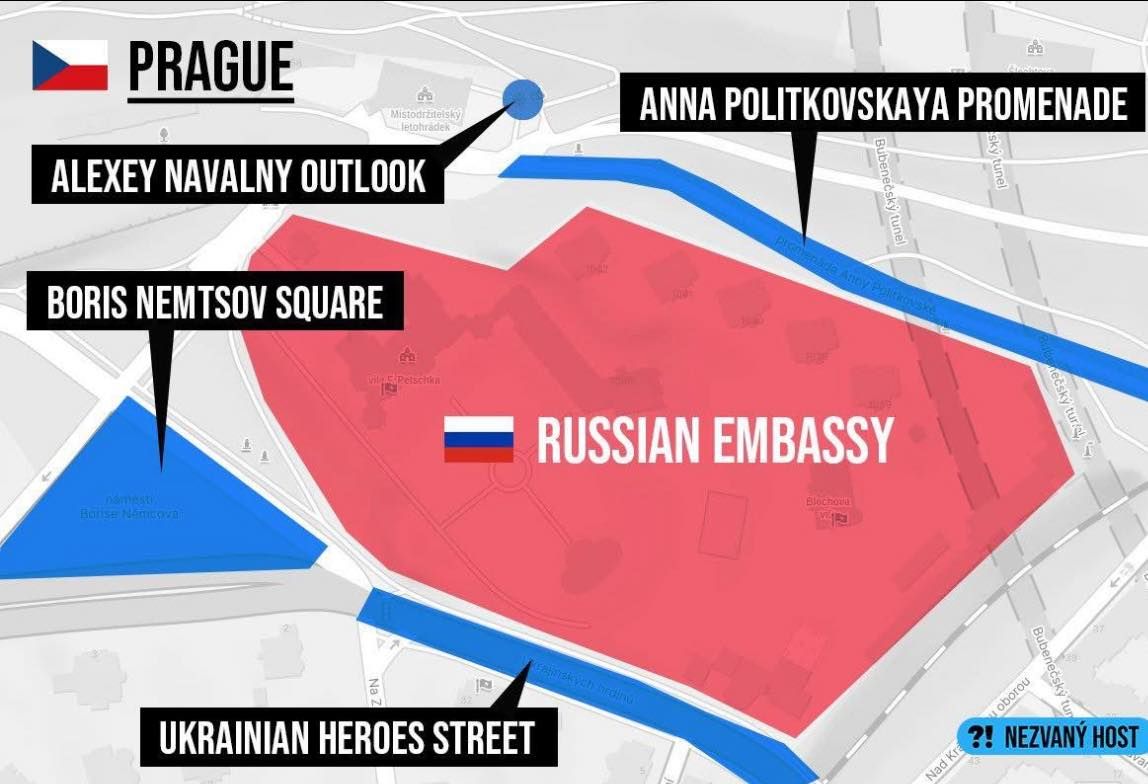
Atrasts Internetā: Hormuza šaurumu vajadzētu pārdēvēt par Šrēdingera šaurumu - var būt vienlaikus vaļā vai slēgts.
Latviešu
Andris Ambainis
3.3K posts

@AAmbainis
Zinātnieks kvantu stāvoklī. In a quantum state.


The Terence Tao episode. We begin with the absolutely ingenious and surprising way in which Kepler discovered the laws of planetary motion. People sometimes say that AI will make especially fast progress at scientific discovery because of tight verification loops. But the story of how we discovered the shape of our solar system shows how the verification loop for correct ideas can be decades (or even millennia) long. During this time, what we know today as the better theory can often actually make worse predictions (Copernicus's model of circular orbits around the sun was actually less accurate than Ptolemy's geocentric model). And the reasons it survives this epistemic hell is some mixture of judgment and heuristics that we don’t even understand well enough to actually articulate, much less codify into an RL loop. Hope you enjoy! 0:00:00 – Kepler was a high temperature LLM 0:11:44 – How would we know if there’s a new unifying concept within heaps of AI slop? 0:26:10 – The deductive overhang 0:30:31 – Selection bias in reported AI discoveries 0:46:43 – AI makes papers richer and broader, but not deeper 0:53:00 – If AI solves a problem, can humans get understanding out of it? 0:59:20 – We need a semi-formal language for the way that scientists actually talk to each other 1:09:48 – How Terry uses his time 1:17:05 – Human-AI hybrids will dominate math for a lot longer Look up Dwarkesh Podcast on YouTube, Apple Podcasts, or Spotify.


Beyond math/coding, another skill that jumps out to me as being insanely useful and relatively straightforward to train is writing. Not just grammar syntax, but also creating a hook, keeping it punchy but not corny, making a smooth transition into elaborating on the hook, building narrative momentum, keeping it relatable, etc. It's amazing how much attention a well-crafted piece of writing can attract, how many lucky opportunities can arise as a result, and how many people with interesting experiences miss out on all that due to weak writing skills. Now I'm not saying anyone can be the next Hemingway, but I do think lots of people have weak writing chops relative to the amount of interesting knowledge/experiences they've accumulated, and that they stand to benefit from seriously training up their writing. I also don't claim to be an expert writer myself, but I have leaned into writing the past couple years, I've experienced serious improvement, and it's been paying off in spades.




The AWS outage affected $2,000 smart sleep beds, with some Sleep8 customers left stuck in an inclined position or with overheating mattresses





BREAKING NEWS The Royal Swedish Academy of Sciences has decided to award the 2025 #NobelPrize in Physics to John Clarke, Michel H. Devoret and John M. Martinis “for the discovery of macroscopic quantum mechanical tunnelling and energy quantisation in an electric circuit.”

My prediction on how this will go over the next year: - Mildly interesting pure math results, proven by LLM agents -More interesting results with humans in-the-loop, and AI tools other than pure LLMs -Claims of very significant results in other sciences that mostly don't pan out. pic.twitter.com/SlKiHv1umF

🎯The best way to fix math anxiety is to teach math well. Great article from Jordana Hunter & Nick Parkinson from @GrattanInst. abc.net.au/education/the-…




Creativity is increasingly becoming recognised as an important skill for workers. PISA Volume III measured creative thinking abilities in students globally. See what the top performing countries are doing differently: oecd.org/en/publication…