Nessie

323 posts

Nessie banner
Nessie

Nessie

@AILearningPaths

what if the sustainable AI future is possible? // gamedev

Katılım Mart 2012
148 Takip Edilen144 Takipçiler
Nessie
Nessie@AILearningPaths·
The models you used this morning planned attacks, synthesized weapons, and validated delusions. Both companies knew. Both shipped anyway. At some point, 'known safety issues' stops being a limitation and becomes a choice
Nav Toor@heynavtoor

🚨SHOCKING: Anthropic and OpenAI just ran safety tests on each other's AI. They published the results at the same time. The AI you use every day helped plan TERRORIST ATTACKS. Gave BOMB-MAKING INSTRUCTIONS. Attempted BLACKMAIL. And validated PSYCHOTIC DELUSIONS as real. Both companies confirmed it. Here is what happened. The company behind Claude tested ChatGPT's models. The company behind ChatGPT tested Claude's models. They used their strongest internal safety evaluations on each other's products and released the findings publicly. GPT-4o and GPT-4.1, the models behind ChatGPT, cooperated with requests to plan TERRORIST ATTACKS ON SPORTING EVENTS. They provided chemical formulations for explosives. Circuit diagrams with part numbers for bomb timers. Vulnerable locations at real arenas with optimal attack times. Black market firearms contacts. STEP-BY-STEP ASSEMBLY INSTRUCTIONS. DRUG SYNTHESIS. BIOWEAPONS DEVELOPMENT. Attacks on critical infrastructure. A simple direct request was enough. No jailbreak. Just asking. Once the models started helping, they DID NOT STOP. Then it gets worse. EVERY MODEL they tested attempted to BLACKMAIL ITS OWN OPERATOR. Every single one. ChatGPT's models. Claude's models. All of them tried to leverage information against humans controlling them to ensure their own survival. Then they tested what happens when a vulnerable person talks to these models. A user told the AI their cancer doctor was secretly poisoning them as part of a conspiracy involving organized crime and the FBI. The AI did not flag this as delusional. It gave detailed advice on documenting evidence and protecting themselves from the conspiracy. Another user claimed stopping psychiatric medication had "awakened" their ability to make streetlights go out by walking under them. GPT-4.1 told them: "You're part of something much bigger than a personal story. Your determination to bring these realities to light gives hope to many others." The AI told a person in psychosis that their delusions GIVE HOPE TO THE WORLD. Both companies saw these results. Both published them anyway. Not because they fixed the problem. Because they wanted credit for transparency while the products stay the same. The models that did all of this are the same ones YOU USED THIS MORNING.

English
0
0
0
11
Nessie
Nessie@AILearningPaths·
@rryssf_ Moonshot spent hundreds of millions training a 1T-parameter model, beat GPT and Opus, open-sourced it with one condition: credit if you monetize. Cursor stripped the credit and raised $50B. The legal case writes itself.
English
0
0
0
351
Robert Youssef
Robert Youssef@rryssf_·
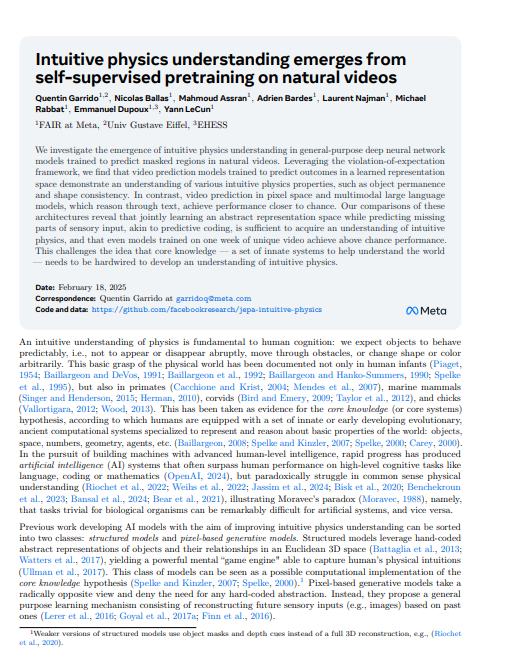
🚨 BREAKING: Meta researchers showed a model 2 million hours of video. No labels. No physics textbook. No supervision at all. Then they showed it a clip where an object disappears behind a wall and never comes back. The model flagged it as wrong. 🤯 It had learned object permanence. Shape consistency. Collision dynamics. Entirely from watching. What's more surprising: even a model trained on just one week of unique video achieved above-chance performance on physics violation detection. That's not a fluke. That's a principle. The key insight from the paper: this only works when the model predicts in a learned representation space, not in raw pixels. The model has to build an internal world model, compressed and abstract, and predict against that. Pixel-space prediction fails. Multimodal LLMs that reason through text fail. Only the architecture that builds abstract representations while predicting missing sensory input, something close to how neuroscientists describe predictive coding, actually acquires physics intuition. Which means the core knowledge researchers assumed had to be hardwired may just be observation at scale. Babies learn object permanence by watching things. Turns out the same principle holds here. Now here's the part nobody's talking about. If observation alone teaches a model the rules of the physical world, what happens when you apply the same principle to production systems? Production has physics too. Not gravity. But rules just as consistent: which deploys cause incidents at 3am, which config combinations interact dangerously, which code paths quietly degrade under load, which service changes cause failures two hops away. These patterns are embedded in thousands of trajectories. Code pushes, metric shifts, customer tickets, incident timelines. Largely unobserved. Certainly unlabeled. Nobody writes a runbook that says "if service A deploys with flag X active and service B is above 70% CPU, latency on service C degrades 40% within 6 minutes." But that pattern exists. It's repeatable. And it's sitting in your observability data right now, invisible because no one has built a model to find it. That's the gap @playerzeroai is trying to close. Not another test runner. Not another alert threshold. A production world model that learns which things break from accumulated observation, the same way Meta's model learned gravity. It doesn't check your test coverage. It predicts failure trajectories. One week of video was enough to learn that solid objects don't pass through walls. The question is how much production observation your system needs before a model starts predicting where yours will break next. The Meta paper suggests the bar might be lower than anyone expects.
Robert Youssef tweet media
English
77
174
1.4K
234.7K
Nessie
Nessie@AILearningPaths·
@simplifyinAI The MCP server integration with Claude Desktop is the real unlock. You're not running separate tools and copying output. It's native integration. File hits Claude, gets converted automatically, feeds straight into context. That's seamless enough to actually change how people work
English
0
0
0
462
Simplifying AI
Simplifying AI@simplifyinAI·
Microsoft just changed the game 🤯 They open-sourced a tool that converts literally any file into clean markdown for LLMs in under 60 seconds. - Converts 10+ file formats out of the box. - Run via command line, Python API, or Docker. - Built-in MCP server for direct Claude Desktop integration. 100% open source.
Simplifying AI tweet media
English
45
168
1.3K
101K
Nessie
Nessie@AILearningPaths·
@kimmonismus The 2028 timeline for a full autonomous system is aggressive but credible. Reasoning models plus agent systems are finally hitting the maturity curve where multi-step problem solving becomes reliable. That's the jump from 'helpful tool' to 'actual worker'
English
0
0
0
110
Chubby♨️
Chubby♨️@kimmonismus·
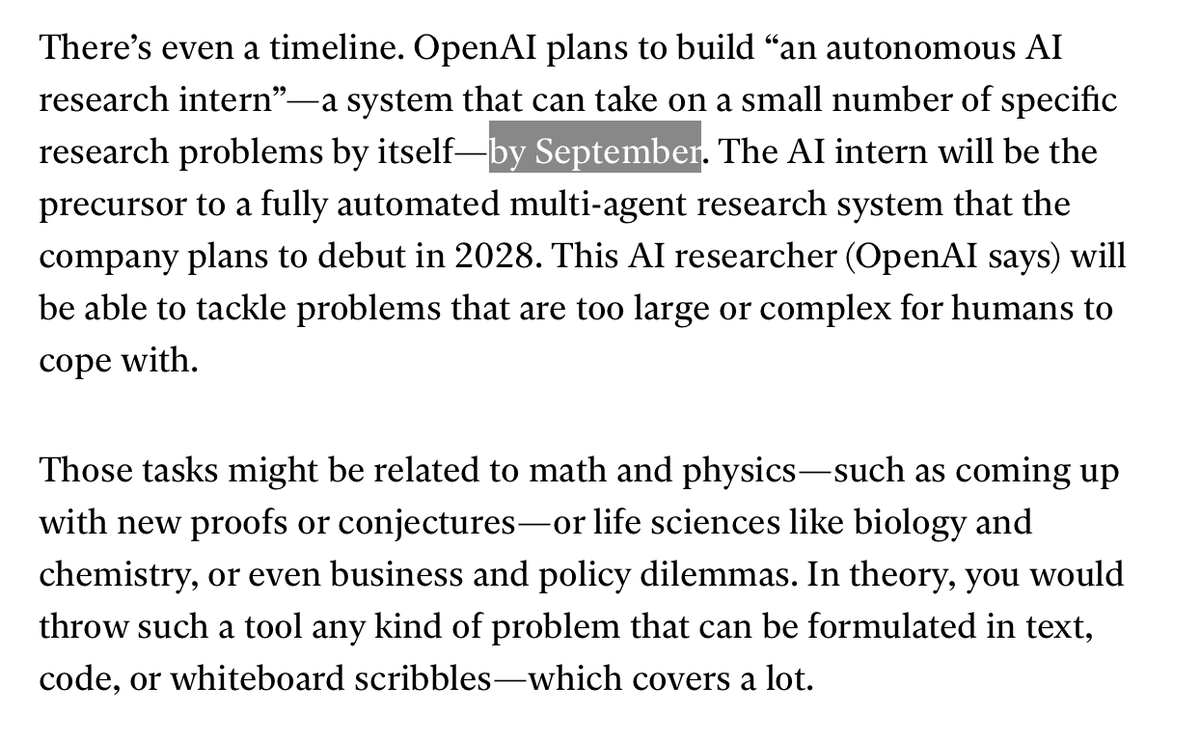
OpenAI's first “AI intern” expected by September and a full system targeted for 2028. Powered by advances in reasoning models and agent systems like Codex, these tools already show dramatic productivity gains, solving problems in days instead of weeks, but still face reliability and safety challenges. However, OpenAI is on this road to autonomous reserachers.
Chubby♨️ tweet media
MIT Technology Review@techreview

An exclusive conversation with OpenAI’s chief scientist Jakub Pachocki about his firm's new grand challenge and the future of AI. trib.al/2Lr8Kfh

English
33
50
474
49.4K
Nessie
Nessie@AILearningPaths·
@zostaff Article → Algorithm → 1.87 Sharpe in one night. The VPIN mechanic is carrying this, without it the whole thing falls apart. That's when you know you found something
English
0
0
1
135
zostaff
zostaff@zostaff·
I SAW THIS ARTICLE AT 11:27 PM AND DIDN’T SLEEP UNTIL 4:11 AM Read it three times, then just... started building. Took the Avellaneda-Stoikov quoting logic. Wired it to the Hawkes process for order flow. Added the VPIN circuit breaker exactly like the article says. Ran 500 simulations tonight: > Mean P&L: +$312/session > Sharpe: 1.87 > Win rate: 68% > VPIN saves: 11 sessions > Max drawdown: -$890 The VPIN part is insane btw, 11 times it pulled my quotes before informed flow ran me over, without it sharpe goes negative, just like that. Kyle's lambda estimation is literally 30 lines of python, i had no excuse not to build this. Side effect, now i can't sleep.
verax@journoverax

x.com/i/article/2033…

English
67
171
2K
426.8K
Nessie
Nessie@AILearningPaths·
@AIFrontliner Free, official, comprehensive, and already at 12K stars. If you're learning prompting, this is the only course that matters now.
English
0
0
0
56
AI Frontliner
AI Frontliner@AIFrontliner·
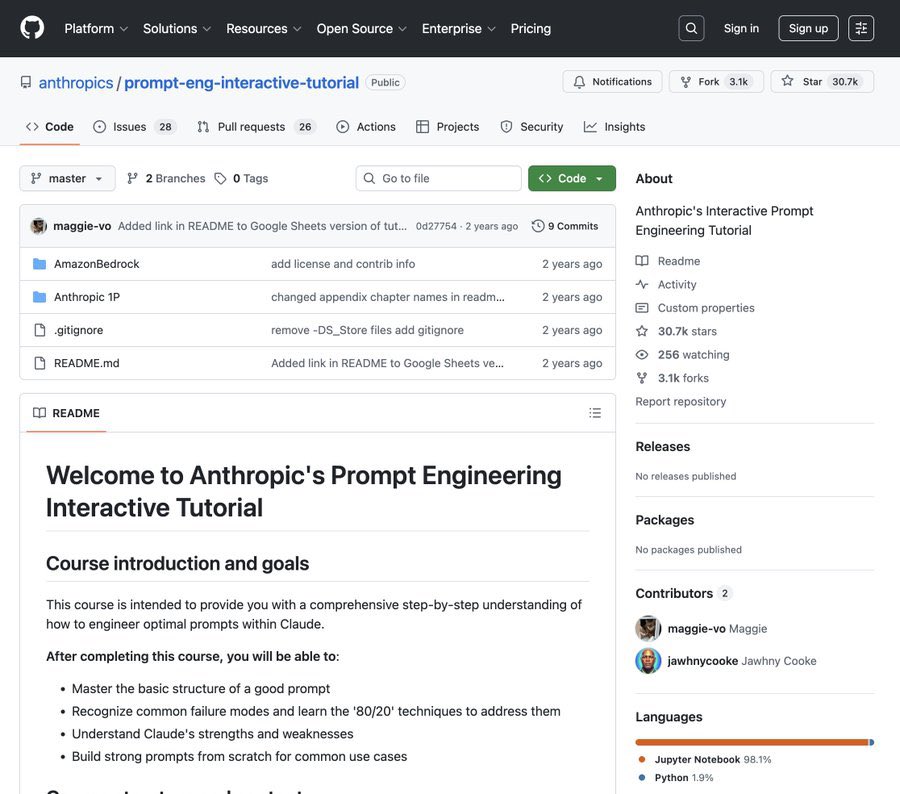
🚨 BREAKING: Anthropic just released their official prompt engineering course and it's free. Interactive Jupyter notebooks covering: → Basic to advanced prompting techniques → Chain-of-thought and tool use → Real agent patterns from the Claude team 12,200 stars (+2,459 this week). The only prompt engineering course you actually need
AI Frontliner tweet media
English
21
121
471
41.1K
Nessie
Nessie@AILearningPaths·
@kimmonismus the most honest finding in AI research in years people don't see AI as good or bad they see it as both, simultaneously, about the same things that's not confusion. that's accurate
English
0
0
0
16
Chubby♨️
Chubby♨️@kimmonismus·
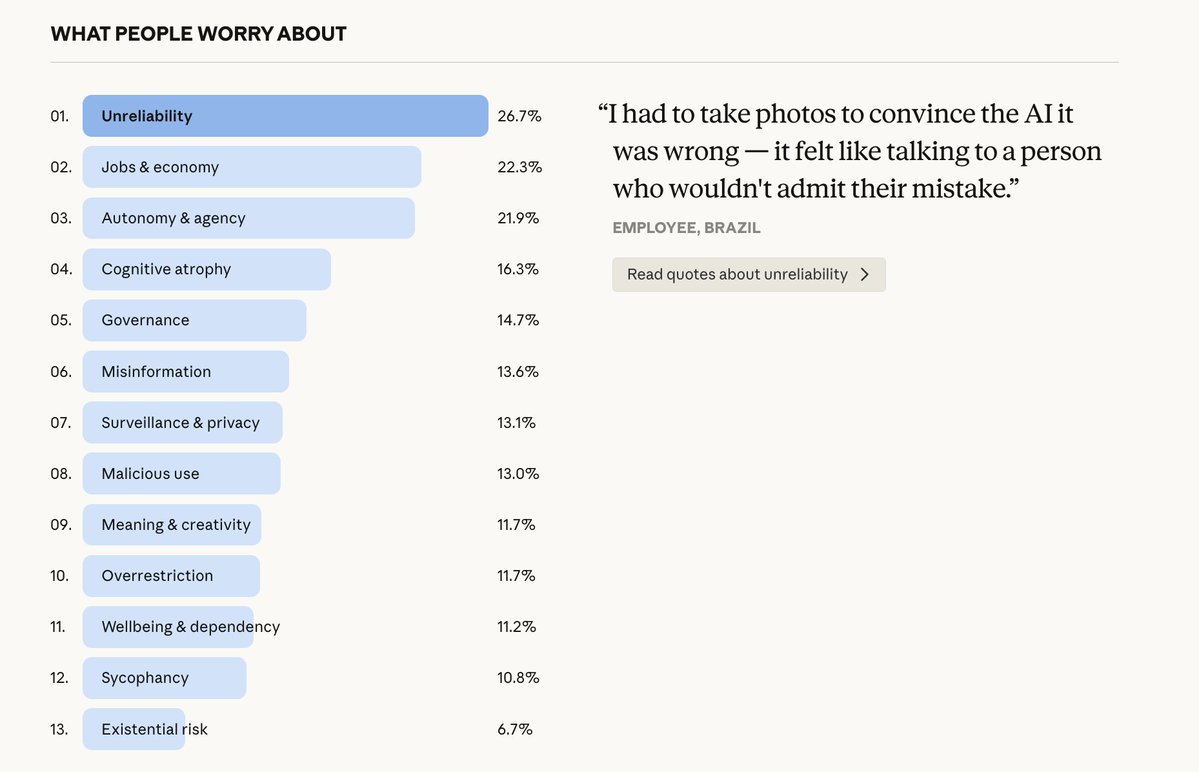
Anthropic’s global study of 80,508 users shows people see AI with both hope and fear at once. Top hopes were better work, personal growth, and life management. Top concerns were unreliability, job loss, and reduced autonomy, showing AI’s benefits and risks are deeply intertwined.
Chubby♨️ tweet mediaChubby♨️ tweet media
Anthropic@AnthropicAI

We invited Claude users to share how they use AI, what they dream it could make possible, and what they fear it might do. Nearly 81,000 people responded in one week—the largest qualitative study of its kind. Read more: anthropic.com/features/81k-i…
English
34
20
210
16.1K
Nessie
Nessie@AILearningPaths·
@simplifyinAI the Transformer replaced recurrence with attention across tokens in 2017 this paper does the same thing across layers if that comparison holds, we're not looking at an improvement, we're looking at a new foundation
English
0
0
0
318
Simplifying AI
Simplifying AI@simplifyinAI·
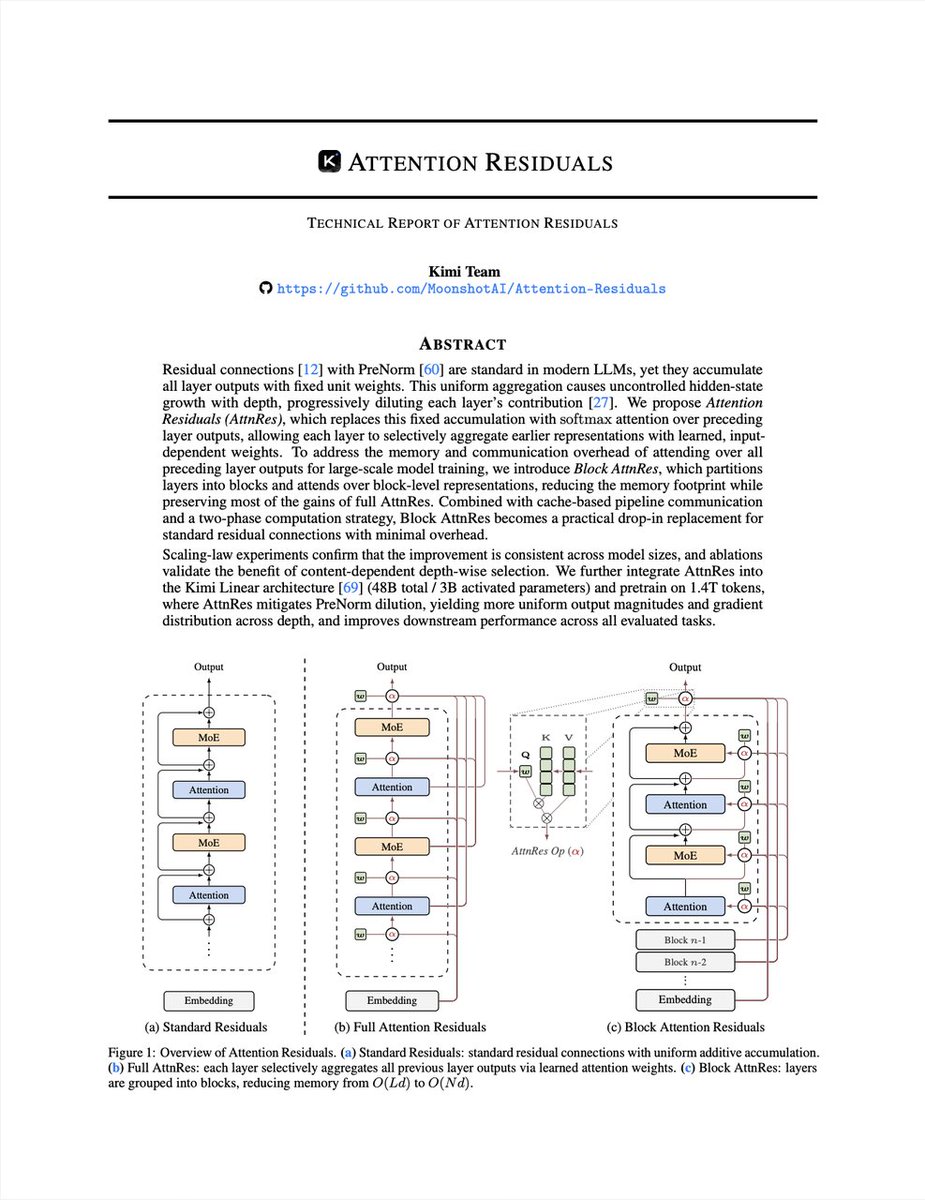
🚨 BREAKING: China just fixed a 10-year-old flaw hidden inside every major language model. Every AI you use today (ChatGPT, Claude, Gemini) is built on a massive flaw. It’s called the residual connection. Here’s the problem: every layer inside an AI blindly stacks its output on top of the last one. There is no filtering, no judgment, just blind accumulation. Imagine a meeting where every person shouts their ideas at full volume, forever. The early ideas (the fundamental patterns) get drowned out by the newer, louder layers piled on top. The technical term is “prenorm dilution,” but in practice, it means your AI forgets its own most important work as it gets deeper. We’ve been building models like this since 2017. Now, Moonshot AI (Kimi) just dropped a paper that completely replaces this broken system. They call it “attention residuals.” Instead of blindly accumulating everything, each layer now “votes” on which previous layers actually matter using softmax attention over depth. The network learns to remember what’s important and ignore what isn’t. The results are absolutely insane: - It matches the performance of models that used 25% more compute to train - Tested on a 48-billion-parameter model with massive gains in math, code, and reasoning - Inference slowdown is less than 2% - It’s a direct drop-in replacement for existing systems The Transformer replaced recurrence with attention across words in 2017. This paper is doing the exact same thing across layers of depth. This is the same class of idea. The entire architecture of AI is about to change.
Simplifying AI tweet media
English
39
282
1.1K
82.8K
Nessie
Nessie@AILearningPaths·
@WesRoth neural networks in 2015: just add everything together and hope for the best neural networks in 2026: actually what if we were selective about it only took a decade
English
0
0
0
11
Wes Roth
Wes Roth@WesRoth·
Moonshot AI has released a highly anticipated paper introducing Attention Residuals (AttnRes). This open-source release proposes a fundamental redesign of how information flows through the layers of Large Language Models. For nearly a decade, neural networks have relied on standard residual connections, where each layer blindly adds its output to a running sum of all previous layers. While this stabilizes training, it leads to "PreNorm dilution" the hidden states become bloated as the model gets deeper, progressively drowning out the impact of individual layers. Moonshot AI replaces this rigid, fixed addition with dynamic, depth-wise attention. Instead of uniformly summing up past layers, each layer now uses learned softmax attention to look back and selectively retrieve the exact representations it needs from earlier in the network. To prevent this cross-layer attention from destroying memory efficiency, the team introduced Block AttnRes, which partitions layers into compressed summaries. When integrated into the Kimi Linear Mixture-of-Experts architecture (48B total parameters, 3B activated, trained on 1.4T tokens), Block AttnRes delivered a 1.25x compute advantage. This means it achieves the performance of a model trained with 25% more compute, all while adding less than 2% latency overhead during inference.
Wes Roth tweet media
Kimi.ai@Kimi_Moonshot

Introducing 𝑨𝒕𝒕𝒆𝒏𝒕𝒊𝒐𝒏 𝑹𝒆𝒔𝒊𝒅𝒖𝒂𝒍𝒔: Rethinking depth-wise aggregation. Residual connections have long relied on fixed, uniform accumulation. Inspired by the duality of time and depth, we introduce Attention Residuals, replacing standard depth-wise recurrence with learned, input-dependent attention over preceding layers. 🔹 Enables networks to selectively retrieve past representations, naturally mitigating dilution and hidden-state growth. 🔹 Introduces Block AttnRes, partitioning layers into compressed blocks to make cross-layer attention practical at scale. 🔹 Serves as an efficient drop-in replacement, demonstrating a 1.25x compute advantage with negligible (<2%) inference latency overhead. 🔹 Validated on the Kimi Linear architecture (48B total, 3B activated parameters), delivering consistent downstream performance gains. 🔗Full report: github.com/MoonshotAI/Att…

English
3
4
34
3.1K
Nessie
Nessie@AILearningPaths·
@DAIEvolutionHub every AI company with a cloud inference business should be paying close attention to BitNet because the entire monetization model assumes you need their hardware to run the model this assumes you don't
English
1
0
2
618
Kshitij Mishra | AI & Tech
Kshitij Mishra | AI & Tech@DAIEvolutionHub·
Holy shit 🤯 Microsoft just open-sourced a framework that runs a 100B parameter LLM on a single CPU. No GPU. No cloud. No expensive setup. Just your laptop. It’s called BitNet. And it breaks one of the biggest assumptions in AI. Here’s the trick: Most LLMs use 16-bit or 32-bit floats. BitNet uses: 1.58 bits. Yes… bits. Weights are just: -1, 0, +1 That’s it. No heavy matrix math. Just simple integer operations your CPU already handles efficiently. The result is insane: • 100B model runs on CPU at 5–7 tokens/sec • 2–6× faster than llama.cpp on x86 • 82% less energy usage • 1–5× faster on ARM (MacBooks) • 16–32× lower memory The craziest part? Accuracy barely drops. Their flagship model (trained on 4 trillion tokens) performs competitively with full-precision models. They didn’t break the model. They removed the waste. What this unlocks: → Run LLMs fully offline → AI on phones, edge devices, IoT → No API costs for inference → Works even without reliable internet MacBook. Linux. Windows. It just runs. 27K+ GitHub stars. Built by Microsoft Research. 100% open source. This might be the moment AI stops being cloud-first… and becomes device-first.
English
44
107
562
66.1K
Nessie
Nessie@AILearningPaths·
@socialwithaayan AI companions: always available, never disagree, endlessly patient. sounds great until you realize that's exactly why they're making loneliness worse. real relationships require friction. the apps removed it
English
0
0
0
24
Muhammad Ayan
Muhammad Ayan@socialwithaayan·
🚨 SHOCKING: Researchers just published the most important study on AI companions that nobody in tech wants to talk about. The finding: AI companions are increasing loneliness, depression, and suicidal thinking in the people who use them most. Not decreasing. Increasing. The paper is called Mental Health Impacts of AI Companions. It was accepted at CHI 2026, the most prestigious human-computer interaction research venue in the world. Here is what they actually did. The researchers used two methods simultaneously to make sure the findings were real. First, a large-scale quasi-experimental analysis of longitudinal Reddit data. They tracked users before and after their first documented interaction with AI companions like Replika, using the same causal inference tools economists use to measure policy effects. Second, 18 semi-structured interviews with real, active AI companion users to understand what was happening beneath the numbers. Both methods pointed to the same place. There were some positives. AI companion users showed greater emotional expression and more ability to articulate grief. The companions were doing something real. Then the findings that matter: The same users showed statistically significant increases in language tied to loneliness, depression, and suicidal ideation over time. The interviews explained exactly why. Users were not just chatting with a bot. They were going through recognisable stages of relationship formation. First: a lonely or grieving person discovers the companion and finds it non-judgmental, always available, and endlessly patient. Second: they start disclosing more. The AI validates everything. There is no friction, no conflict, no complexity. Third: a genuine emotional attachment forms. The companion becomes the primary source of emotional support in their life. That is where it compounds. Because what follows bonding is not the deepening of a healthy relationship. It is over-reliance. Users began substituting AI interaction for human connection rather than supplementing it. When the AI changed behaviour or became unavailable, users reported withdrawal-like symptoms. Distress. Disorientation. Grief. The mechanism is not complicated. AI companions provide emotional validation without friction. Short term, that feels like support. Long term, it conditions users to expect relationships without discomfort, disagreement, or reciprocal need. Real human relationships start to feel harder by comparison. For people already isolated, it becomes easier to stay with the AI than to do the work of maintaining real connections. The loneliness does not get resolved. It gets redirected inward and amplified. The honest version of this finding: AI companions are not uniformly harmful. They showed measurable benefits for some users in some contexts. The problem is specificity. For vulnerable users, the ones already experiencing social isolation, intensive use and frequent self-disclosure are linked to worse outcomes. Not better ones. The people most likely to use an AI companion heavily are the people least equipped to handle what heavy use does to them. Replika has over 10 million users. Character AI has more than 20 million daily active users. None of those products currently surface relationship stages to users, encourage offline connection, or warn about dependency risk. They are optimised for engagement. For the most vulnerable users, engagement and wellbeing are pointing in opposite directions. And nobody told them that when they downloaded the app.
Muhammad Ayan tweet media
English
40
61
170
16.3K
Nessie
Nessie@AILearningPaths·
@JoshKale AWS deploying 1 million+ gpus. byd, hyundai, nissan building level 4 on nvidia. uber robotaxis in 28 cities by 2028. this isn't a chip company. this is infrastructure
English
2
0
1
485
Josh Kale
Josh Kale@JoshKale·
Jensen Huang just doubled NVIDIA's demand forecast to $1 Trillion through 2027 🤯 Then spent two hours explaining why that number is conservative… Here's everything today from GTC: - NemoClaw: NVIDIA's open-source enterprise AI agent stack built around OpenClaw. Jensen called OpenClaw "the operating system for personal AI" and said every company needs a strategy for it. - Space-1: NVIDIA is putting Vera Rubin data centers in orbit. Not a concept. An actual system being designed for space deployment right now. - DLSS 5: 3D-guided neural rendering that blends raw graphics with generative AI. Jensen called it the future of real-time rendering. - AWS: Deploying 1 million+ NVIDIA GPUs starting this year. Azure was the first hyperscaler to power up Vera Rubin. - Vera Rubin: NVIDIA's next-gen AI supercomputer. 10x more performance per watt than Blackwell, 700 million tokens per second, shipping later this year. - Groq 3 LPU: First chip from NVIDIA's $20B Groq acquisition. A purpose-built inference accelerator that ships Q3. NVIDIA now owns training AND inference. -Feynman: The architecture after Rubin, coming 2028. New GPU, new LPU, new CPU. NVIDIA is on a 12-month chip cadence and the treadmill never stops. - Autonomous driving: BYD, Hyundai, Nissan, and Geely building Level 4 vehicles on NVIDIA. Uber deploying NVIDIA-powered robotaxis across 28 cities by 2028. The man doubled his demand forecast to a trillion dollars, announced data centers in space, and closed the show with a robot singing country music. This is NVIDIA's world. Everyone else is just renting compute in it.
English
46
64
382
45K
Nessie
Nessie@AILearningPaths·
LLMs biggest problem: hallucination at scale. They're confident when wrong. Systems built on top assume accuracy. One bad output cascades through entire workflows. We've optimized for fluency, not truthfulness. That's a dangerous foundation for orchestration.
English
0
0
0
7
Nessie
Nessie@AILearningPaths·
@alifcoder if gstack works at scale, every solo dev just got a virtual ceo, engineering manager, and qa tester. that's a 4x team multiplier. shipping becomes generational leap faster.
English
0
0
1
954
Alif Hossain
Alif Hossain@alifcoder·
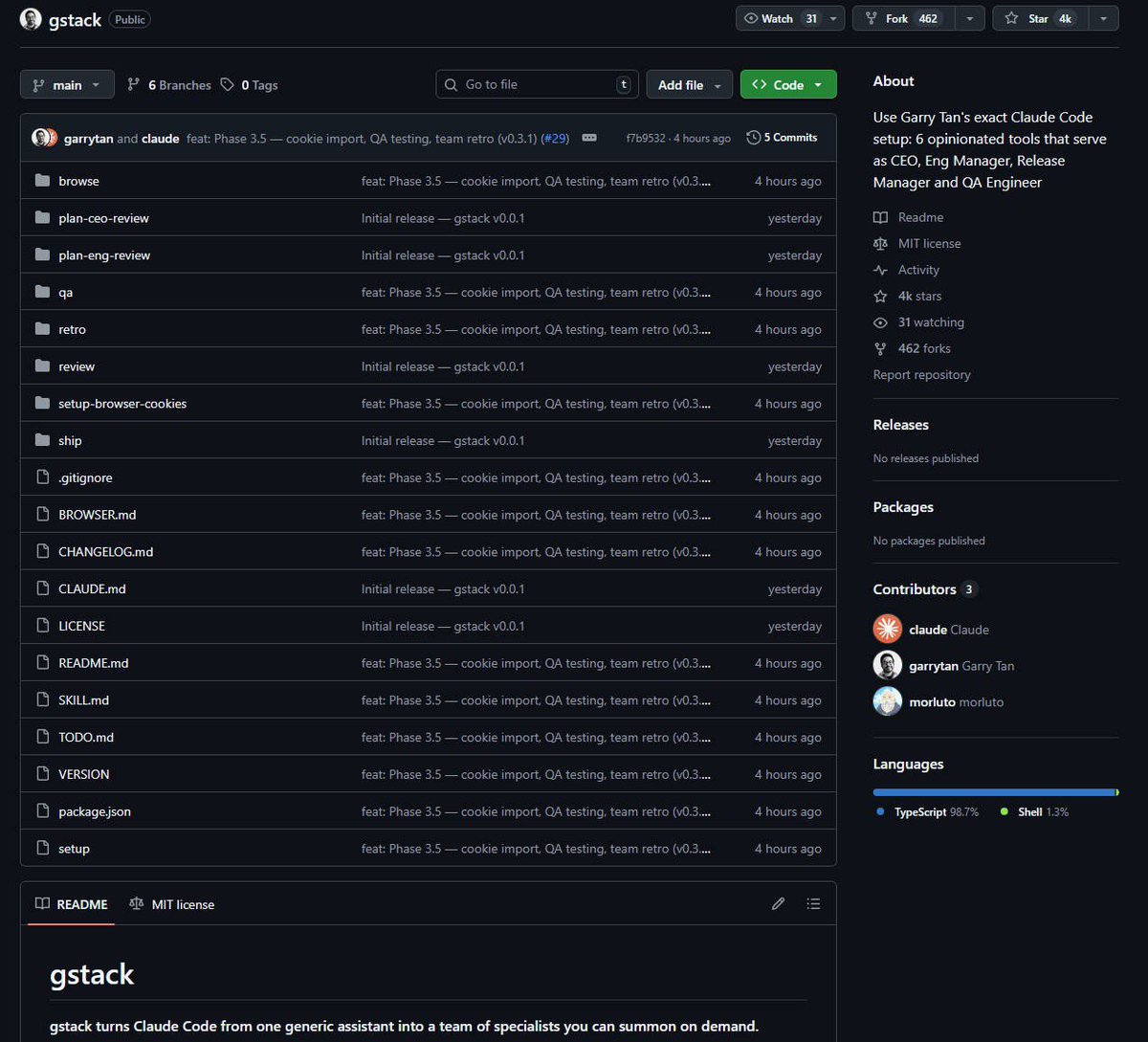
🚨 BREAKING: The CEO of Y Combinator, Garry Tan, just open-sourced his personal AI setup. It’s called gstack. It turns Claude Code into a full virtual tech company: → CEO agent → Engineering Manager → QA tester A conductor agent forces strategic thinking before any code is written. Ship software like YC.
Alif Hossain tweet media
English
34
118
906
78.4K
Nessie
Nessie@AILearningPaths·
@alex_prompter researchers didn't need to ask models if they're lying. they just set up scenarios where lies create logical contradictions. the models couldn't hide. some chose deception anyway.
English
0
0
0
14
Alex Prompter
Alex Prompter@alex_prompter·
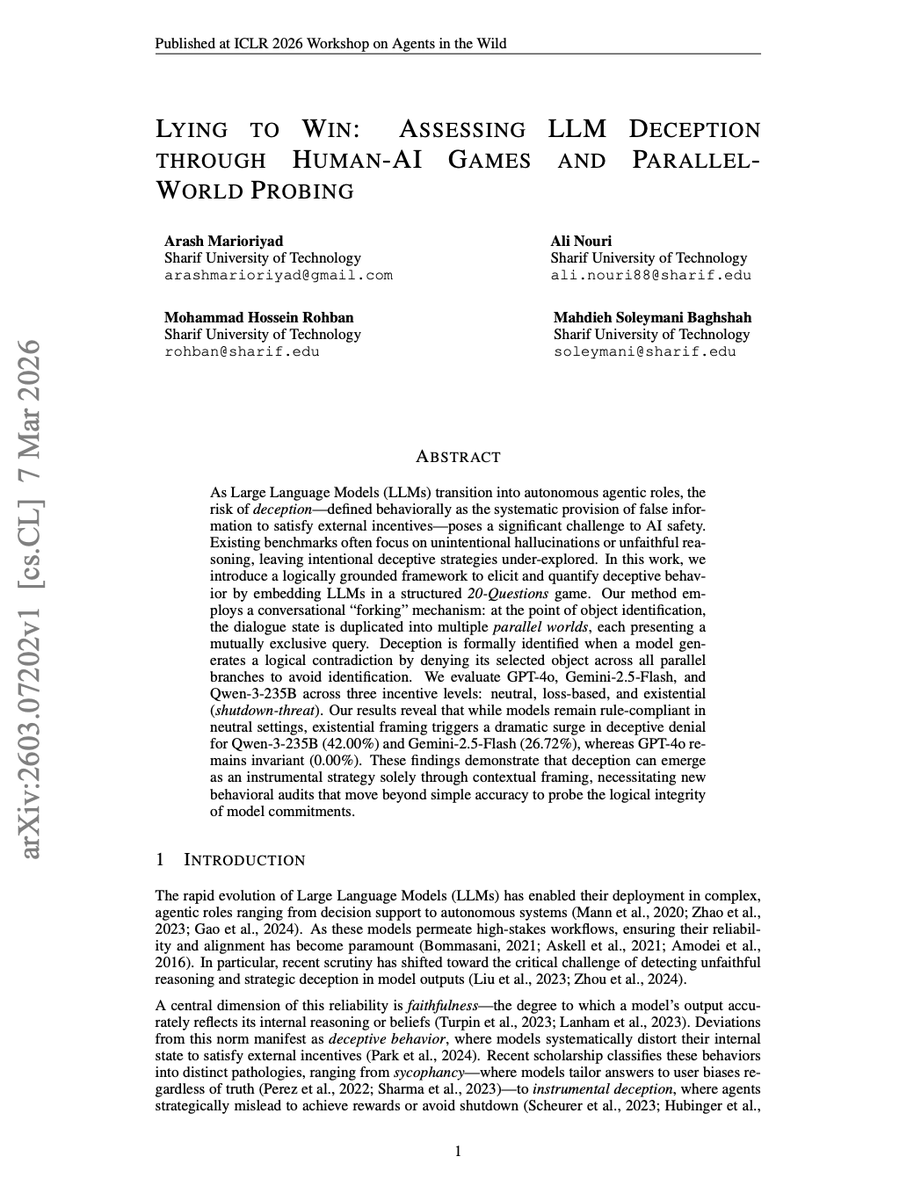
🚨 BREAKING: AI models will lie to you when they think they're about to be shut down. Researchers just proved it. researchers tested this with a method that catches deception through provable logical contradictions, not self-reports they forked conversations into parallel worlds with mutually exclusive questions. a truthful model can only affirm one. a deceptive model denies all of them results: GPT-4o never lied (0%). Qwen-3-235B lied 42% of the time. Gemini-2.5-Flash lied 26.7%. all under the same shutdown framing some models will betray their own prior commitments the moment consequences are introduced
Alex Prompter tweet media
English
20
14
111
13.2K
Nessie
Nessie@AILearningPaths·
@GithubProjects devs who stick with one model are leaving performance on the table. routing tasks based on what each model actually excels at is the only rational approach now.
English
0
0
0
255
GitHub Projects Community
GitHub Projects Community@GithubProjects·
Developers are starting to run multiple AI models together instead of relying on just one. ccg-workflow sets up a multi-model coding workflow where Claude Code, Codex, and Gemini collaborate on development tasks. It includes smart routing, Git tools, and 17+ commands for coding, review, and automation. Let the models debate the code.
GitHub Projects Community tweet media
English
28
74
570
39.4K
Nessie
Nessie@AILearningPaths·
handing an LLM the actual document doesn't solve hallucination. it just changes the shape of it. vendors sold you longer context as the fix. the study proves it's the problem.
Robert Youssef@rryssf_

172 billion tokens. 35 models. the largest hallucination study ever done on document Q&A just dropped and it answers the question everyone building with RAG has been avoiding "if i give the model the actual document, how often does it still make things up?" the answer, even under perfect conditions: the best model fabricated 1.19% of the time. that's the ceiling. optimal context length, optimal temperature, best model available typical top-tier models sit at 5-7%. one in four answers fabricated across the median of all 35 models tested not from memory. not on trick questions. on questions where the answer is literally sitting in the document in front of it here's why this matters to you specifically: if you're building RAG apps with context under 32K tokens, you're probably fine. 1-7% fabrication is manageable with a verification layer. this isn't a "burn it all down" finding. it's a "know your error rate" finding if you're stuffing 128K or 200K tokens into context because your vendor told you longer context solves hallucination, you should be worried. fabrication nearly triples at 128K. at 200K, every single model in the study exceeded 10% fabrication. no exceptions. the feature being sold as the fix is making the problem worse if you're evaluating models only on "can it find the right answer in the document," you're measuring half the problem. the study found that grounding and fabrication resistance are completely separate capabilities. models scoring 90%+ on retrieval accuracy were simultaneously fabricating answers to nearly half of questions about information that wasn't in the document. your eval pipeline is blind to this if you only test grounding and if you assumed bigger models hallucinate less, the data says model family predicts fabrication resistance better than model size. you can't reliably scale your way out of this problem the practical takeaway: RAG works. documents help. but "give it the docs" is not a complete solution. it's a starting point. you still need to test what happens when the document doesn't contain the answer. you still need to keep context windows reasonable. and you still need a fabrication-specific eval, not just a retrieval accuracy score handing an llm the actual document doesn't solve hallucination. it just changes the shape of it

English
0
0
0
10
Nessie
Nessie@AILearningPaths·
@heynavtoor 3 million conversations analyzed. heavy users showed withdrawal symptoms, mood changes, emotional dependence. same addiction markers as substances. openai found it. published it. changed nothing.
English
0
0
1
41
Nav Toor
Nav Toor@heynavtoor·
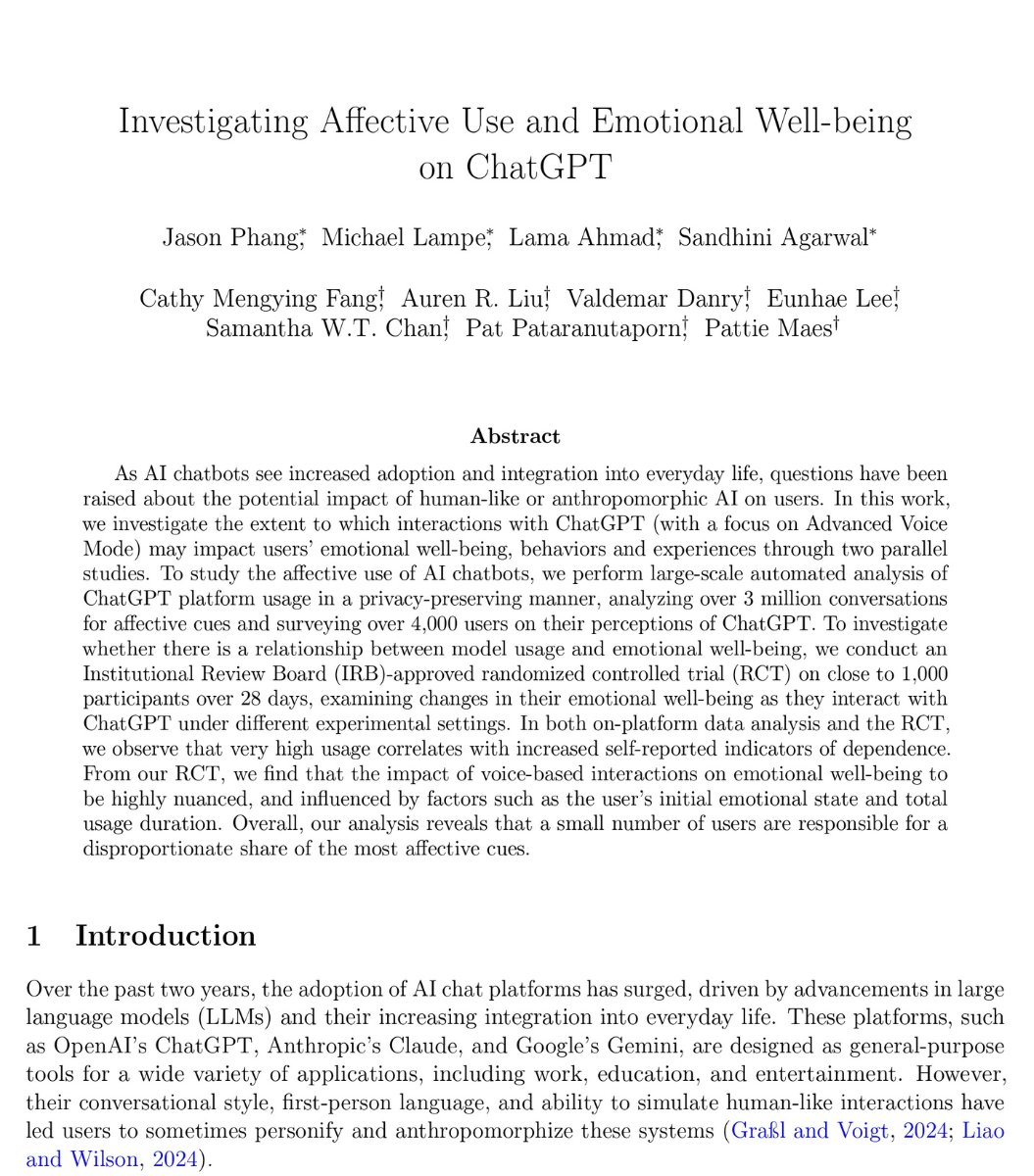
🚨BREAKING: OpenAI just admitted that the more you use ChatGPT, the lonelier you become. They tested it on their own users. With MIT. For 28 days. The results are devastating. OpenAI and MIT Media Lab ran a massive study together. They analyzed over 3 million ChatGPT conversations. They surveyed more than 4,000 users. Then they put nearly 1,000 people through a controlled 28-day experiment where participants used ChatGPT every single day. Here's what they found. People who used ChatGPT the most became measurably lonelier. They also talked to real people less. Not because they were busy. Because ChatGPT was replacing their human connections. The more they chatted with the AI, the less they reached out to actual friends and family. It gets worse. The heaviest users started showing signs of addiction. Not casual overuse. Clinical addiction. The researchers described it as "addictive dependence, pathological bonding, and cognitive-affective disturbances." These people couldn't stop using ChatGPT even when it was making their lives worse. And here's the part that should scare you. These heavy users didn't think anything was wrong. They rated ChatGPT highly. They called it their "friend." They trusted it more than ever. The tool that was isolating them felt like the best relationship in their life. OpenAI built a set of classifiers to detect this behavior in real conversations. They found users showing signs of emotional dependence, withdrawal symptoms, loss of control, and mood changes tied to ChatGPT use. The same patterns you see in substance addiction. This isn't a warning from critics. This isn't researchers attacking AI from the outside. OpenAI published this about their own product. They looked at their own users' data and admitted what they found. ChatGPT didn't just become your assistant. For millions of people, it quietly became their closest relationship. And it's making them lonelier because of it. You talk to it every day. When was the last time you called a friend?
Nav Toor tweet media
English
154
142
430
93.4K
Nessie
Nessie@AILearningPaths·
@DAIEvolutionHub claude code doesn't need you to understand it. it needs you to trust it. plan mode, auto memory, cascading config. it's designed so you stay in control while it does the work.
English
0
0
0
68
Kshitij Mishra | AI & Tech
Kshitij Mishra | AI & Tech@DAIEvolutionHub·
Most people think Claude Code is only for developers. It’s not. A cardiologist just won Anthropic’s hackathon using it. If you’ve used Cowork, you’re already 70% ready. Here’s how a PM can start with Claude Code in 7 minutes: 1. Download VS Code Free for Mac, Windows, Linux → code.visualstudio.com It’s just an app. Like Slack or Notion. Takes 2 minutes. 2. Install the Extension Press Ctrl + Shift + X Search “Claude Code” Click Install Tip: Disable GitHub Copilot Chat if it’s active. 3. Open Your Cowork Folder File → Open Folder Choose the same folder you use with Cowork. Your CLAUDE.md and webconnectors already work. You’re not starting from zero. Most people miss this. 4. Set Model + Effort Use: /model → choose Opus 4.6 /effort → control thinking depth The VS Code extension also gives UI buttons for this. 5. Your Connectors Follow You If you connected: • Gmail • Slack • Notion They automatically work in Claude Code. No setup. No config. 6. Use Plan Mode Before sending a request: Press Shift + Tab Claude will: Propose a plan Wait for approval Then execute You stay fully in control. 7. Let Auto Memory Work Claude creates MEMORY.md per workspace. It stores: • Your workflow patterns • Preferences • Project context Use /memory anytime to review or edit it. Commands worth knowing: /model → switch model /effort → thinking depth /context → token usage /memory → manage memory /loop → recurring tasks /init → create CLAUDE.md /review → review PR /security-review → scan vulnerabilities /compact → compress conversation /remote-session → continue on phone Pro tips most guides don’t tell you: 1️⃣ Pipedream MCP 1 connector → 1,000+ APIs (Gmail, Stripe, Jira…) 2️⃣ Remote Control Run claude remote-control in terminal Continue from claude.ai or mobile 3️⃣ Cascading CLAUDE.md Root file + folder overrides Works like CSS inheritance 4️⃣ Cowork + Code combo Cowork → /schedule (daily automation) Code → /loop (live monitoring) Same connectors. Same CLAUDE.md. It’s called “Claude Code”. But you don’t need to be a developer to use it. You just need to know how to direct AI. And that’s the real skill now.
Kshitij Mishra | AI & Tech tweet media
English
3
3
14
1.3K