Angel Manuel Ramos del Olmo

5.2K posts

Angel Manuel Ramos del Olmo banner
Angel Manuel Ramos del Olmo

Angel Manuel Ramos del Olmo

@AMRamosDelOlmo

Prof. Applied Mathematics @unicomplutense President Spanish Society of Applied Mathematics (SEMA) Former Director Interdisciplinary Mathematics Institute (IMI)

Guadalajara, España Katılım Ocak 2019
162 Takip Edilen1.8K Takipçiler
Math Files
Math Files@Math_files·
Math Trick: There are 4! hours in a day. There are 8! minutes in 4 weeks. There are 10! seconds in 6 weeks. Using these observations, you can quickly answer many time-related queries. For example: How many hours are there in a month? Assuming 30 days: 30 × 4! How many minutes are there in a year? (52 × 8!) ⁄ 4 + 60 × 4! How many minutes are there in the month of August? (31 days = 4 weeks + 3 days): 8! + 3 × 60 × 4! How many seconds are there in 3 years? 3 × ((52 × 10!) ⁄ 6 + 60 × 60 × 4!).
English
7
6
86
12.3K
Math Files
Math Files@Math_files·
6174 is known as Kaprekar’s constant, discovered by the Indian mathematician D. R. Kaprekar. Take any 4-digit number, using at least two different digits. (Repdigits like 1111 won’t work, as they lead to 0.) Arrange the digits: In ascending order (smallest to largest) Then in descending order (largest to smallest) (Add leading zeros if needed—for example, 4560 → 0456 and 6540) Subtract the smaller number from the larger number. Repeat the process with the result. This process, called the Kaprekar routine, will always reach the number 6174 within at most 7 iterations. Once you reach 6174, the process becomes constant: 7641 − 1467 = 6174 And it will keep repeating forever. Example: Take the number 4906: 9640 − 0469 = 9171 9711 − 1179 = 8532 8532 − 2358 = 6174 7641 − 1467 = 6174.
English
6
16
95
9K
Math Files
Math Files@Math_files·
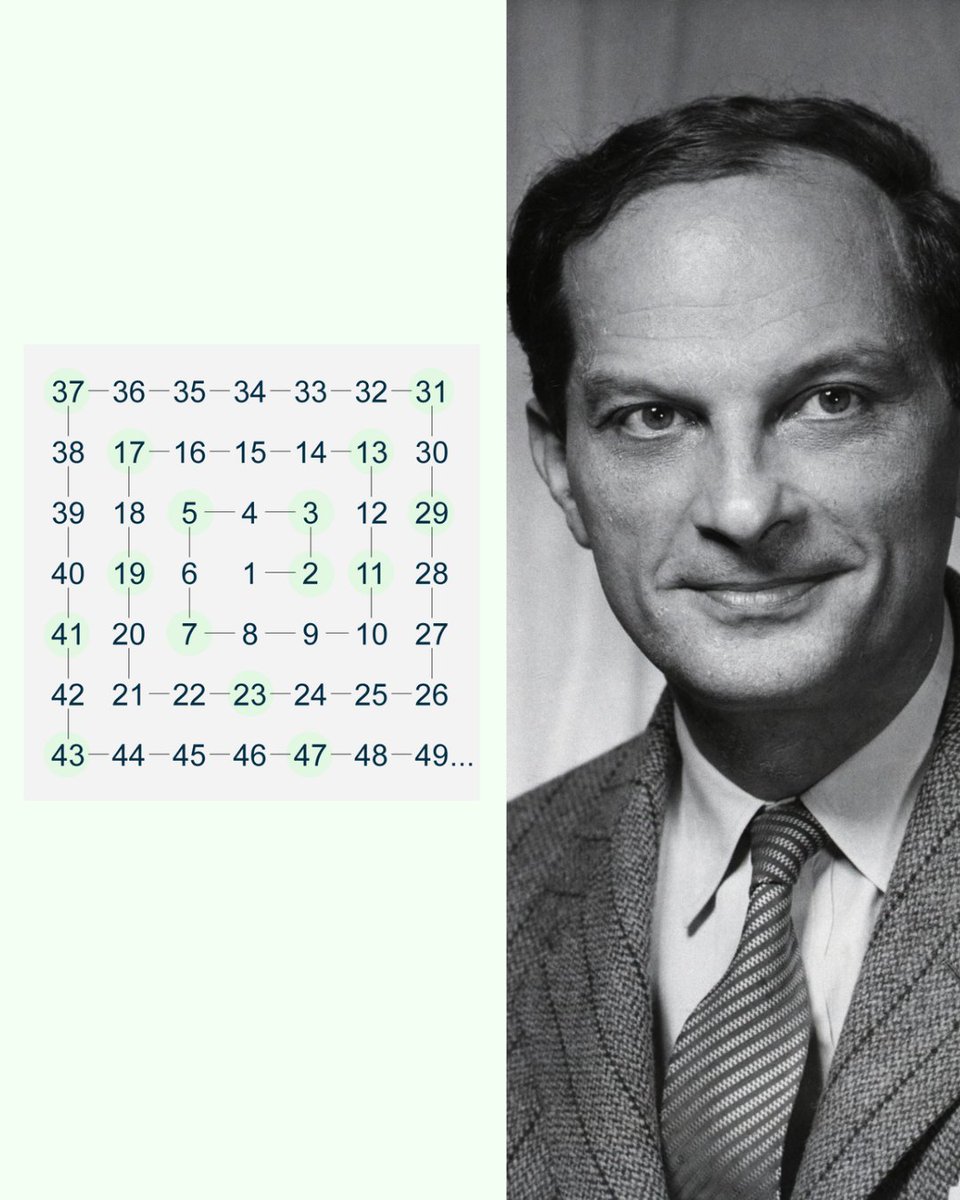
Did you know that one of the most important discoveries in mathematical history happened because a scientist was bored during a meeting in 1963? Stanisław Ulam was sitting through a dull lecture when he began doodling on graph paper. He wrote the number 1 in the center, then spiraled outward—2, 3, 4, 5, and so on—simply to pass the time. But then he did something remarkable: he circled all the prime numbers—2, 3, 5, 7, 11, 13... What he saw next was astonishing. The primes were not scattered randomly as everyone had assumed. Instead, they formed striking diagonal lines across the spiral—like hidden highways running through the numbers. This seemed impossible. Prime numbers are supposed to be irregular and unpredictable, yet here they were, aligning in beautiful patterns no one had noticed before. When Ulam showed his discovery to other mathematicians, they were amazed. What began as a simple doodle revealed deep and mysterious structures within numbers—patterns that, even today, we do not fully understand.
Math Files tweet media
English
46
217
1.8K
365.7K
Angel Manuel Ramos del Olmo
Angel Manuel Ramos del Olmo@AMRamosDelOlmo·
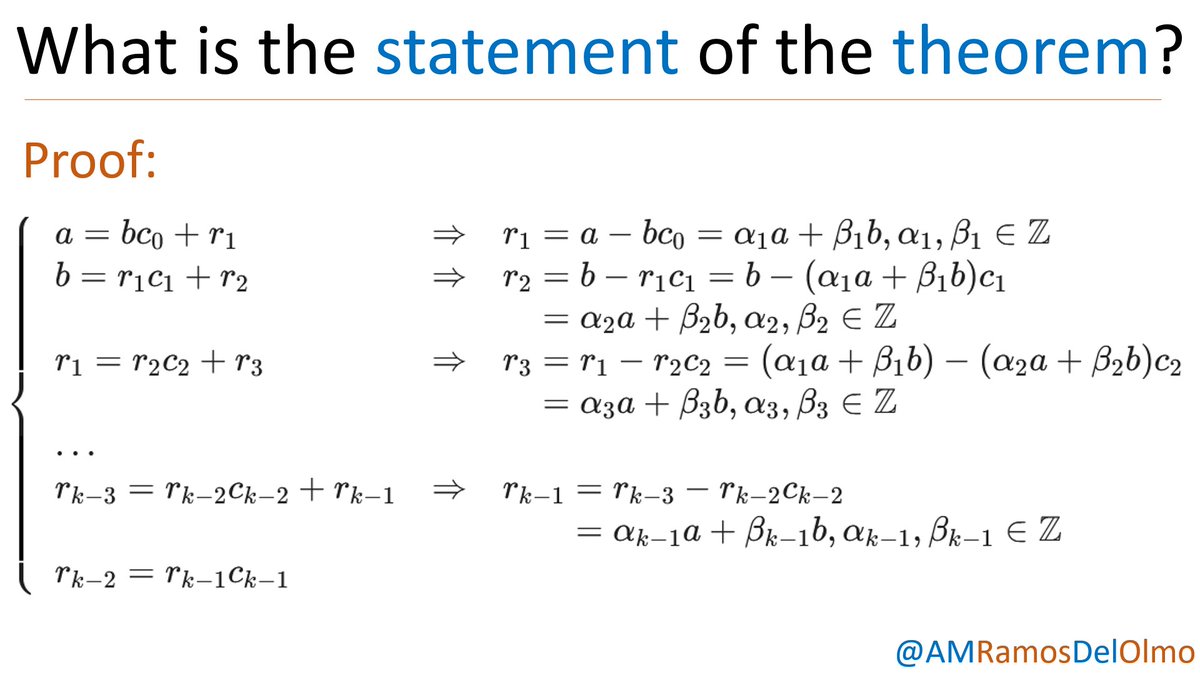
What is the statement of the theorem whose proof is shown in the image?
Angel Manuel Ramos del Olmo tweet media
English
5
1
21
2.5K
Math Files
Math Files@Math_files·
What would you choose? $1 million today… OR $2 that doubles every day for 30 days... Most people quickly say $1 million. Sounds obvious. But that choice could cost you a lot. If you start with just $2 and it doubles every day: Day 1 → $2 Day 2 → $4 Day 3 → $8 By Day 10, it’s still only around $1,000+ (doesn’t feel impressive yet). But this is where math gets interesting… Because of exponential growth, the amount suddenly explodes. By Day 30, that tiny $2 becomes over $1 billion! Yes — more than $1,000,000,000. So if you chose $1 million, you actually missed out on nearly $1 billion. Big results don’t always look big in the beginning. Patience + the power of compounding = magic. Don’t underestimate small beginnings — math never does.
English
18
10
82
10.6K
Math Files
Math Files@Math_files·
Magic of mathematics Left panel: Right panel: 11² = 121. 121 = 11² 12² = 144. 441 = 21² 13² = 169. 961 = 31²
English
11
210
1.3K
45.3K
Algebra Etc.
Algebra Etc.@AlgebraFact·
If m and n are relatively prime, so are the Fibonacci numbers F_m and F_n.
English
3
7
85
5.6K
Physics In History
Physics In History@PhysInHistory·
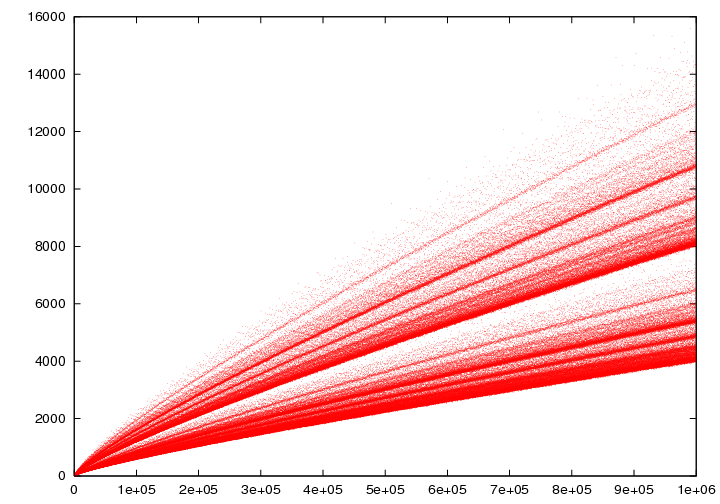
A graph showing the number of ways an even number can be written as the sum of two primes (4 ≤ n ≤ 1000000).
Physics In History tweet media
English
9
11
120
10.5K
Math Files
Math Files@Math_files·
73939133 is a prime number. 7393913 is a prime number. 739391 is a prime number. 73939 is a prime number. 7393 is a prime number. 739 is a prime number. 73 is a prime number. 7 is a prime number.
English
16
56
449
17.6K
Math Files
Math Files@Math_files·
In 1742, a mathematician named Christian Goldbach wrote a letter to the famous Leonhard Euler. In it, he made a surprisingly simple claim: "Every even number greater than 2 can be written as the sum of two prime numbers." For example: 18 = 13 + 5; 74 = 43 + 31 In 1938, Nils Pipping verified it by hand for every number up to 100,000 by hand. Mathematicians checked using computers millions, billions, even trillions of cases—and it never fails. But in mathematics, checking examples isn’t enough. You need a proof that works forever. No one has been able to prove that this rule works for all even numbers.
Math Files tweet media
English
39
130
754
76.9K
Angel Manuel Ramos del Olmo
Angel Manuel Ramos del Olmo@AMRamosDelOlmo·
New publication involving the modeling of the African Swine Fever Outbreak in Wild Boar in Catalonia WIMBOARD. An Operational Eco-Epidemiological Decision-Support Platform. Application to the 2025-26 African Swine Fever Outbreak in Wild Boar in Catalonia researchgate.net/publication/40…
English
0
0
0
53
Math Files
Math Files@Math_files·
169 is the reverse of 961. The same is true of their square roots... √169 = 13 and √961 = 31
English
28
567
3.2K
89.9K
AnecdotesMaths
AnecdotesMaths@AnecdotesMaths·
cos(20°) × cos(40°) × cos(80°) = 1/8
Español
2
5
41
5.2K
Math Files
Math Files@Math_files·
The number 12345678910987654321 is a prime. It consists of 20 digits and is easy to remember: count from 1 to 10, then count backward again until you reach 1.
English
10
17
194
16.3K
Wikingenieria
Wikingenieria@Wikingenieria·
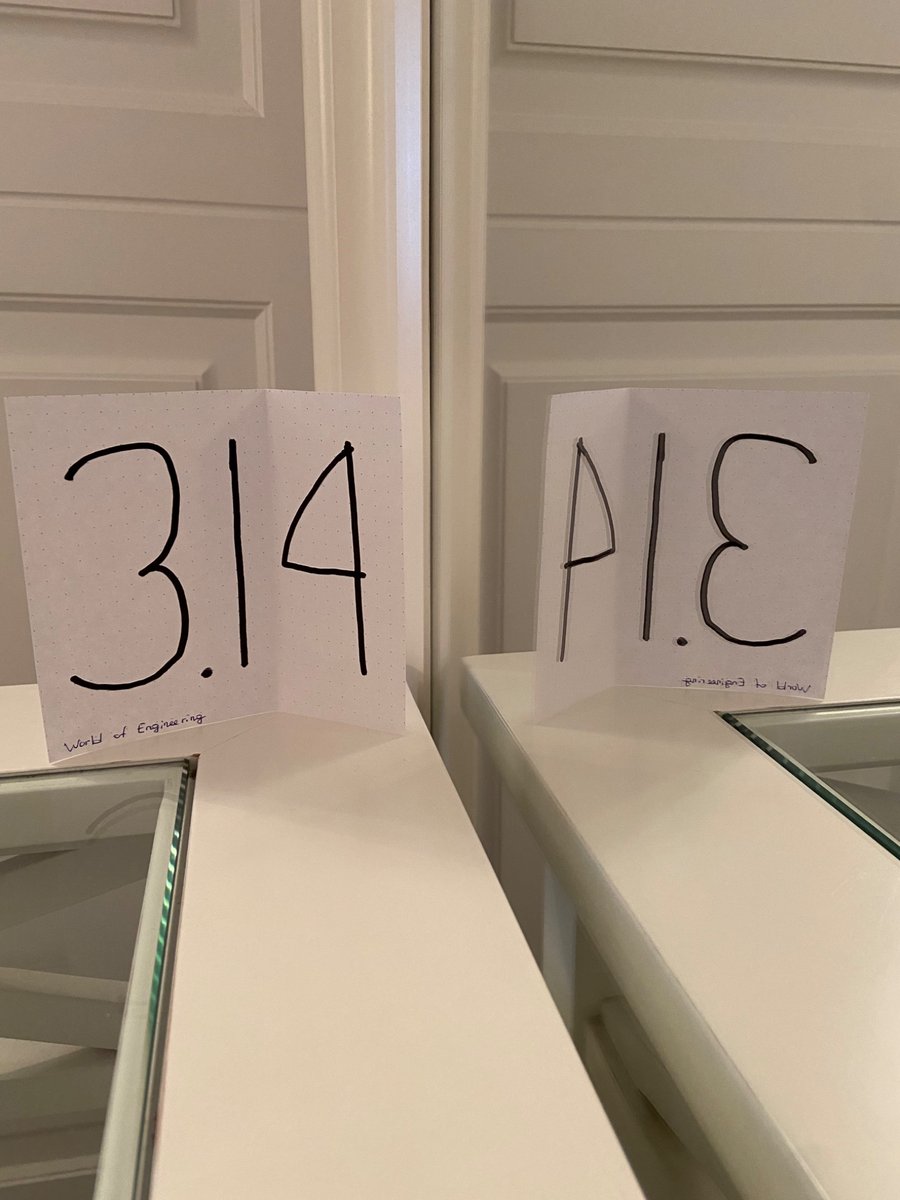
Feliz día 𝜋
Slovenščina
21
508
3.7K
151.2K