
A. Z. retweetledi
A. Z.
12.8K posts

A. Z.
@AZ_the_second
Somewhere between shitposts and politics || Lover of Eugene Stoner || American supremacist || We miss you, Charlie.
Missouri Katılım Mart 2023
4K Takip Edilen367 Takipçiler

A. Z. retweetledi
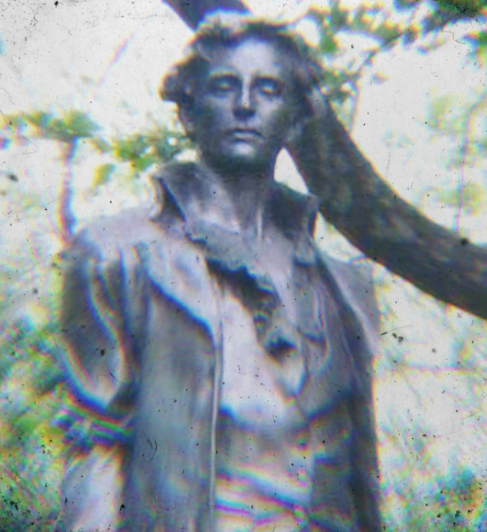
"I only regret that I have but one life to lose for my country."
—The final words of Nathan Hale, 1776
American Soldier & Spy
English
A. Z. retweetledi

@HistoryWJacob Two great men, but letting Wilson win was a terrible, terrible mistake.
English
A. Z. retweetledi


@KelceGroyper @N1archv I've picked cotton before, the cotton gin stopped that from being a problem in regards to the seeds causing bloody fingers.
English

@N1archv if you knew anything about cotton but guessing after seeing 1 video your entire life about it, you know your fingers would be bleeding after 5 minutes
English
The fact that they complained about this puts into perspective just how lazy they actually are.
Redd@ReddCinema
Have you seen how cotton is picked?
English
A. Z. retweetledi

*loses another state to cartels*
Spot World Affairs@SpotGlobals
Mexican President Claudia Sheinbaum announces free universal healthcare for 130 million citizens starting next year.
English
@agraybee probably a relic of 19th century orientalism. Islam was just mysterious and exotic, perfect secret society stuff.
English
Gotta say I would have bet anything their ritual book would be called the Klible and not the Kloran.
Hole Man@TheHoleMan22
What the fuck was the KKK doing
English
A. Z. retweetledi
A. Z. retweetledi
@SmasherIsEma So they can use their tongues to consume food better without fingers. Watch a dog or cat drink, for example.
English

@DSiPaint @Zoya_ki_batein Still. If a woman, or even a young girl, doesn't want the baby, she SHOULD have access to abortion
English


A. Z. retweetledi

Let’s see if a random fork can break 6.74M views.

Variety@Variety
The series finale of “The Late Show With Stephen Colbert” drew 6.74M viewers on Thursday night, making it the most-watched weeknight episode in the show’s history. • The finale was up sharply from the show’s 2026 Q1 average of 2.69M viewers • It’s also above “The Late Show” series premiere on Sept. 8, 2015, which averaged 6.55M viewers • The most-watched episode remains Colbert’s post-Super Bowl broadcast on Feb. 7, 2016, which drew 20.55M viewers variety.com/2026/tv/news/t…
English
A. Z. retweetledi

Cohort of the Extremely Online who spent the last 15 years helping Companies Debank People STUNNED to find that they can now also be Debanked.
🍑 MIYUUNA (ミョックン) 🔞 // KUPONPO@AngerRiceBall
English
A. Z. retweetledi
“So you sucked the dick.”
“What could I do? I sucked the dick, Jerry.”
“And you ate the shit?”
“I ate the shit.”

English
A. Z. retweetledi
@Su25T_Frogfoot W: "To the dick sucking means the first thing I suck are your toes, first on the left foot, then on the right, then your arse at the hole, then your nose..."
H: "And then my dick I suppose?"
W: "I wasn't finished! The next thing I suck is your left ball and then your right!"
English
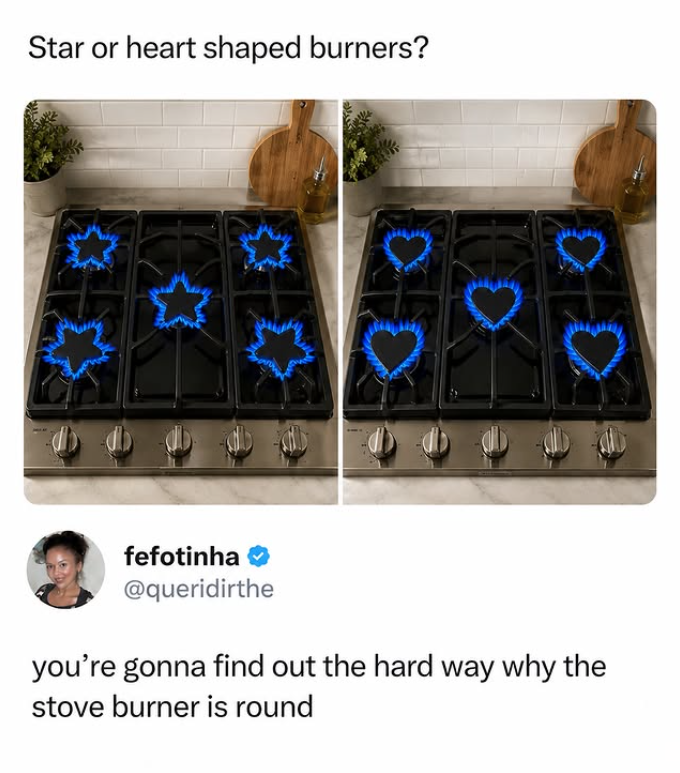
@maanvis81 @messedupfoods Even heat distribution to round pots and pans, it doesn't create hot or cold zones on the dish. 👍
English

A. Z. retweetledi

@tim39826 @Jason_R_Burt Tells you how many salvos were fired at incoming bombers. I don't think it's fiction, it would make sense if it was the lead plane in the formation. It would be the one most concentrated upon.
English

@Jason_R_Burt Thats such a BS story.
On average, one in every 1,500 shots was a hit, and here there were apparently as many as 11
English

In 1943, an American bomber flying over Germany was hit 11 times in the fuel tanks by explosive ordnance, but none of them exploded. ✈️
When the shells were cut open, they contained no explosives. One held a note in Czech that read, 'This is all we can do for you now.' 🇨🇿🇺🇸

English
A. Z. retweetledi

🇺🇸 Most Badass Presidents: Combat Veteran Edition #10 Harry S. Truman
Harry S. Truman, our 33rd President, was one badass President.
He was a hard-nosed leader of men.
Born May 8, 1884, in Lamar, Missouri.
Truman dreamed of attending West Point but was rejected because of his terrible vision.
In 1917, determined to fight, he went to the military eye exam and memorized the letters beforehand. He passed and hid his eyeglasses until he was sworn in.
He became captain and took command of Battery D, 129th Field Artillery.
The unit was a wild bunch of Irish and German Catholics known for drinking and brawling. They were already nicknamed the “Dizzy D.”
Truman busted half the NCOs on his first day and promoted the loyal ones.
He quickly whipped them into a top-tier unit, setting regimental records for firing accuracy.
His unit travelled to France on the USS George Washington.
August 29, 1918, in France's Vosges Mountains, German artillery smashed into Truman's position.
Soldiers panicked, threw on their gas masks, and fled. The famous “Battle of Who Run”
A shell exploded just 15 feet from Truman, killing his horse and trapping him beneath it.
Once freed, he witnessed his men scattering in the dark.
Truman stood in the open and unleashed a blistering string of railroad-style curses that shocked the men back to their guns.
This moment forged the unit. It became Battery D legend.
His battery then moved to the Meuse-Argonne Offensive.
In the chaos of battle, they pushed their guns so far forward that Battery D was sometimes positioned 200 yards ahead of the American infantry.
Truman’s men fired their 75mm cannons so rapidly that the metal gun barrels began to overheat and warp. The crew wrapped the barrels in wet blankets for ten minutes out of every hour to cool them down.
Truman spotted a German artillery battery setting up across a river. The Germans were positioned to ambush the neighboring U.S. 28th Division.
Truman's strict orders confined his targeting to his own sector. He didn’t care.
He waited until the German soldiers unhitched their horses so they couldn't escape, then ordered Battery D to open fire, completely destroying the enemy.
His commander, Colonel Karl Klemm, flew into a rage over the insubordination and threatened Truman with a court-martial. Because Truman's illegal strike saved countless American lives, the threat was quietly dropped.
The next day, Truman was faced with the same exact scenario. He defied orders again to save American lives. General Pershing stepped in this time and had the rules changed to allow it.
His battery then worked together with
George Patton’s tanks near Cheppy that allowed them to break through.
Truman’s Battery D was only 150 yards forward of the exact spot where Patton was later shot and wounded.
They were credited with completely wiping out or forcing the permanent abandonment of two entire German field artillery batteries that were pinning Patton's forces down.
Under his command Battery D suffered no combat deaths and fired over 10,000 rounds.
His battery fired some of the last shots of the war on November 11, 1918, up to the last minutes before the armistice.
On the ship ride home from Europe, the men of Battery D pooled together money won from a massive shipboard craps game.
They bought Truman a large "loving cup" trophy inscribed:
"Presented by the Members of Battery D in appreciation of his justice, ability and leadership."
He was the only U.S. president to see combat in World War I.
Truman again volunteered for active duty in 1941. He was refused.
He remained in the Army Reserve thru his Presidency and officially retired as a Colonel in 1953.
The 129th honors him today with a Battery D - the only Battery D in the entire US Army.
He fought for the Republic long before he ever stepped foot in the White House.
Thank you, Mr. President! 🇺🇸🫡

Barnaby Breaks History 🇺🇸@CorpBarnaby
🇺🇸 Most Badass Presidents: Combat Veteran Edition #11 James Monroe James Monroe, our 5th President, was one badass President. He crossed the Delaware River with George Washington and took a Hessian musket ball at Trenton that nearly killed him. Born April 28, 1758, in Westmoreland County, Virginia. In 1774, Monroe entered the College of William and Mary in Williamsburg, VA. The next year he and his classmates looted the arsenal at the Governor’s Palace after Governor Dunmore fled. They escaped with 200 muskets and 300 swords. When war erupted, Monroe dropped his studies and joined the 3rd Virginia Regiment as a lieutenant and marched straight into history. By December 1776 the Continental Army was freezing, starving, and on the brink of collapse. Washington ordered a surprise attack across the Delaware. Monroe went first and secured the landing zone ahead of Washington's main crossing. During the night march after crossing, Monroe and his vanguard passed a farmer’s house. The owner rushed out yelling, mistaking them for British soldiers. Once he realized they were Americans, he invited the freezing troops inside for hot breakfast. The man was no ordinary farmer. He was Dr. John Riker, a Princeton-trained physician. He told Monroe, “I know something is to be done, and I’m going with you. I’m a doctor, and I may be of help to some poor fellow.” When they made it to Trenton, Monroe was right in the first assault wave. With sword drawn, he led the charge down King Street under fire. When Captain William Washington fell wounded, command fell to Monroe. In house-to-house fighting his men overran Hessian positions and captured their artillery. A Hessian musket ball then slammed into his left shoulder and severed an artery. Blood poured heavily down his uniform. Monroe kept pressing the attack until he grew faint from blood loss. Fellow officer John Marshall helped drag him to safety. Dr. John Riker was there to clamp the severed artery just in time to save his life. The musket ball stayed lodged in his body for the rest of his days. Washington promoted him to captain for his extraordinary bravery. Monroe recovered and returned to the fight. He fought at the Battle of Brandywine, where he tended the wounded Marquis de Lafayette and formed a lifelong friendship. He knew French and was ordered by Washington to accompany the young nobleman. He fought at Germantown and endured the brutal winter at Valley Forge, sharing a log hut with his friend John Marshall. Yes, that John Marshall that became the longest serving chief justice in U.S. history. He served as aide-de-camp to Lord Stirling and was promoted to major. His final combat came at the Battle of Monmouth in 1778. In 1814, as both Secretary of State and Secretary of War, Monroe personally rode out as a scout to warn President Madison that the British were marching on Washington. He bled for the Republic as a teenager long before he ever stepped foot in the White House. Thank you, Mr. President! 🇺🇸🫡
English
A. Z. retweetledi
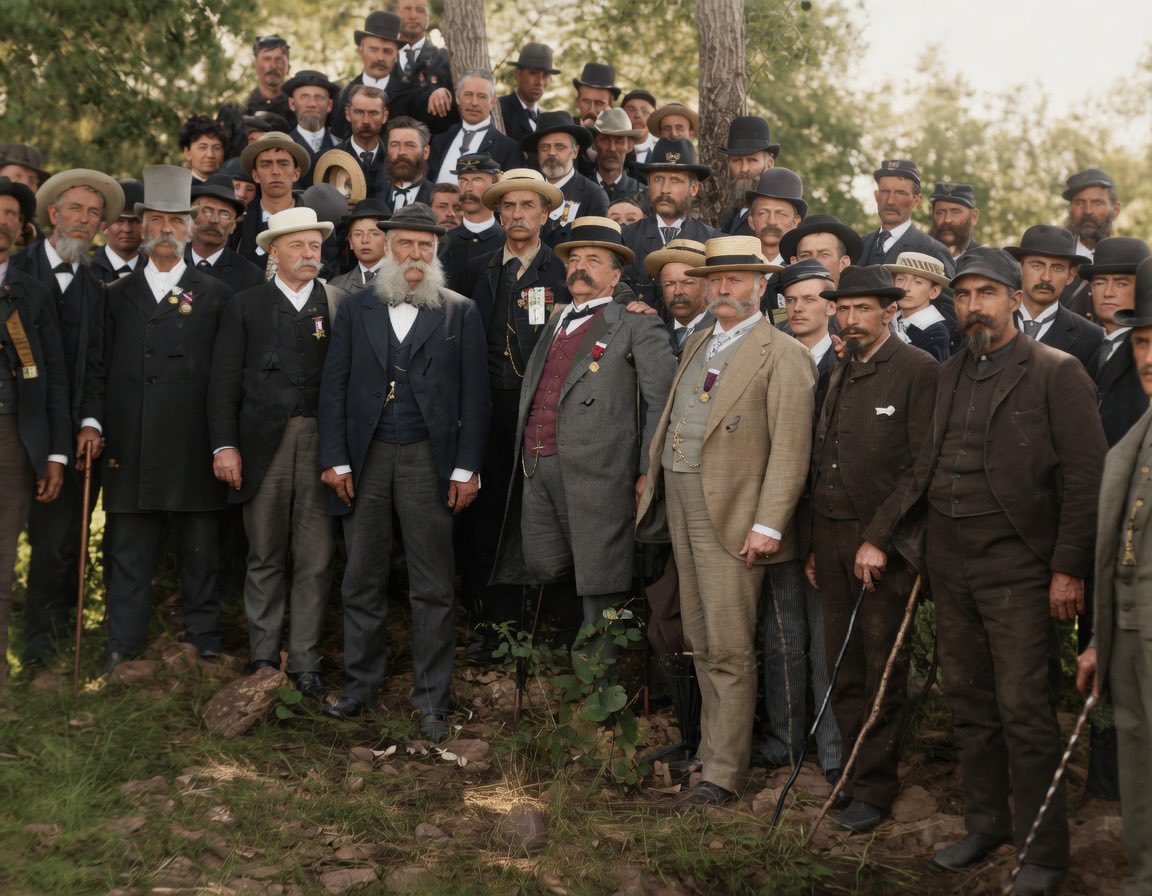
In 1888, General Longstreet returned to Gettysburg.
A one-legged Yank hobbled up on crutches, grasped his hand, and said, "General, I fought against you at Round Top. I lost a wing there, but I am proud to meet you here."
Longstreet beamed and grasped the veterans hand. "Yes, those were hot times then, but I’m all right now."
Over 30,000 Union and Confederate veterans gathered to promote national unity and reconciliation.
Those who bled there knew the war was over and we were all countrymen again. We could learn something from them.
Echoes of War@EchoesofWarYT
Almost no one knows the full story of Ulysses S. Grant and Robert E. Lee. In 1847, during the Mexican War, a young Lieutenant Grant served as an obscure regimental quartermaster. Robert E. Lee, already famous, served on General Winfield Scott's elite staff. They crossed paths once. Lee did not remember it. Eighteen years later, they met again. April 9, 1865. Appomattox Court House, Virginia. Lee arrived first, in an immaculate gray dress uniform, red sash, embroidered gauntlets, and a presentation sword with a jeweled hilt. He looked like an emperor walking to his coronation. Grant rode up an hour later, alone, splattered head to boot in Virginia mud, wearing a private's field blouse with no sword, no sash, and no insignia except the dirty shoulder straps of a lieutenant general. The first thing he did was apologize to Lee for his appearance. The surrender happened in the parlor of a farmer named Wilmer McLean. McLean had fled his old home near Manassas because the first major battle of the war had literally been fought across his front yard in 1861. Four years later the war followed him 120 miles and ended in his front parlor. He later said he could have wallpapered his house with the war. Before any terms were discussed, Grant tried small talk. He asked Lee if he remembered him from Mexico. Lee politely said he did not. Grant said he had remembered Lee perfectly for almost twenty years. Then came the terms, and they stunned everyone present. Officers could keep their sidearms and personal horses. Enlisted men who owned their mounts could take them home for the spring plowing. No prison. No trials. Every Confederate soldier would be paroled and allowed to walk home, on his honor, unmolested by U.S. authority for as long as he kept his parole. Lincoln had asked for leniency. Grant gave him more than he asked for. When Lee mentioned, almost in passing, that his men had not eaten in days, Grant ordered 25,000 rations sent across the lines from his own supply trains that same afternoon. The Union army fed the army it had just defeated. As Lee rode back to his lines on his old gray horse Traveller, Union batteries began firing celebratory salutes and Grant's men started to cheer. Grant rode out himself and shut it down on the spot. "The war is over," he said. "The rebels are our countrymen again, and the best sign of rejoicing after the victory will be to abstain from all such demonstrations." He later wrote that he felt "sad and depressed" the rest of that day, not triumphant. He could not bring himself to rejoice over the downfall of a foe who had fought so long, so well, and had suffered so much for his cause. Then came the chapter history almost forgot. Two months after Appomattox, a federal grand jury in Norfolk indicted Robert E. Lee for treason. The penalty on the books was death by hanging. Lee wrote a single letter to Grant, citing the parole he had been given. Grant was furious. He went directly to President Andrew Johnson and told him plainly that if the indictment moved forward, he would resign his commission as commanding general of the entire United States Army. He had pledged his personal word to Lee at Appomattox, and no civilian politician was going to break that word while Grant still wore the uniform. Johnson backed down. The indictment was quietly killed. The man who beat Lee in war saved him from the gallows in peace. Twenty years later, Grant was dying of throat cancer in a cottage on Mount McGregor, racing in agony to finish his memoirs before bankruptcy and death caught up with his family. He won by four days. The book sold 300,000 copies and made his widow rich. At Grant's funeral procession in New York in August 1885, his pallbearers walked side by side: Union generals William Tecumseh Sherman and Philip Sheridan, and Confederate generals Joseph E. Johnston and Simon Bolivar Buckner. The same men who had spent four years trying to kill each other carried the coffin together through a million and a half mourners lining the streets. Six years later, when Sherman himself died, the old Confederate Johnston traveled to New York again to serve as a pallbearer for his former enemy. It was a freezing February day with cold rain. Johnston, 84 years old, stood through the entire outdoor ceremony with his hat held over his heart. A friend pleaded with him to put his hat back on. Johnston refused. "If I were in his place," he said, "and he were standing in mine, he would not put on his hat." Johnston caught pneumonia that day. He died a few weeks later. That is the real ending of the American Civil War. Not at Appomattox. In the rain, at a funeral, with an old Confederate refusing to cover his head out of respect for the Union general he had spent his youth trying to destroy.
English