Adam Helsinger

6.7K posts

Adam Helsinger banner
Adam Helsinger

Adam Helsinger

@AdamHelsinger

AI | BJJ | ☕️ | @Lenovo | @UTAustin @Thunderbird | 🇺🇸 Expat 🇯🇵 🇮🇳 🇲🇽 🇨🇿

Austin, TX Katılım Ocak 2009
1.8K Takip Edilen1K Takipçiler
Adam Helsinger retweetledi
SAIR
SAIR@SAIRfoundation·
Terence Tao: AI is creating a “traffic jam” in math If AI generates more proofs than humans can verify, science needs new infrastructure. SAIR competitions build that infrastructure by surfacing high-quality results, so the best work is not lost in a flood of AI-generated math.
English

20
75
545
77.6K
Adam Helsinger
Adam Helsinger@AdamHelsinger·
Claude started talking to me in Matrix text this morning. I wonder if any FedEx or Amazon couriers will have white rabbit tattoos today.
Adam Helsinger tweet media
English
0
0
1
18
Adam Helsinger
Adam Helsinger@AdamHelsinger·
The saying “I’ve forgot more than you’ll ever know” comes to mind. I also think LLMs taking cross disciplinary perspectives will generate some exciting innovation.
Thor Berger@bergerthor

A lot of the debate on AI and science focuses on whether LLMs can generate *new* ideas. Yet 20–80% of existing papers are never cited and presumably not read. By digesting vast uncited literatures, LLMs may meaningfully advance knowledge simply by absorbing *old* ideas.

English
0
0
0
8
How To AI
How To AI@HowToAI_·
Someone just built a tool that turns any GitHub repo into an interactive knowledge graph. You just paste any repo, and it builds a live D3.js graph of every function, class, and call relationship, then lets you query it in plain English with an AI agent. 100% Open Source and runs in your browser.
English
13
23
194
16.9K
Arnaud Bertrand
Arnaud Bertrand@RnaudBertrand·
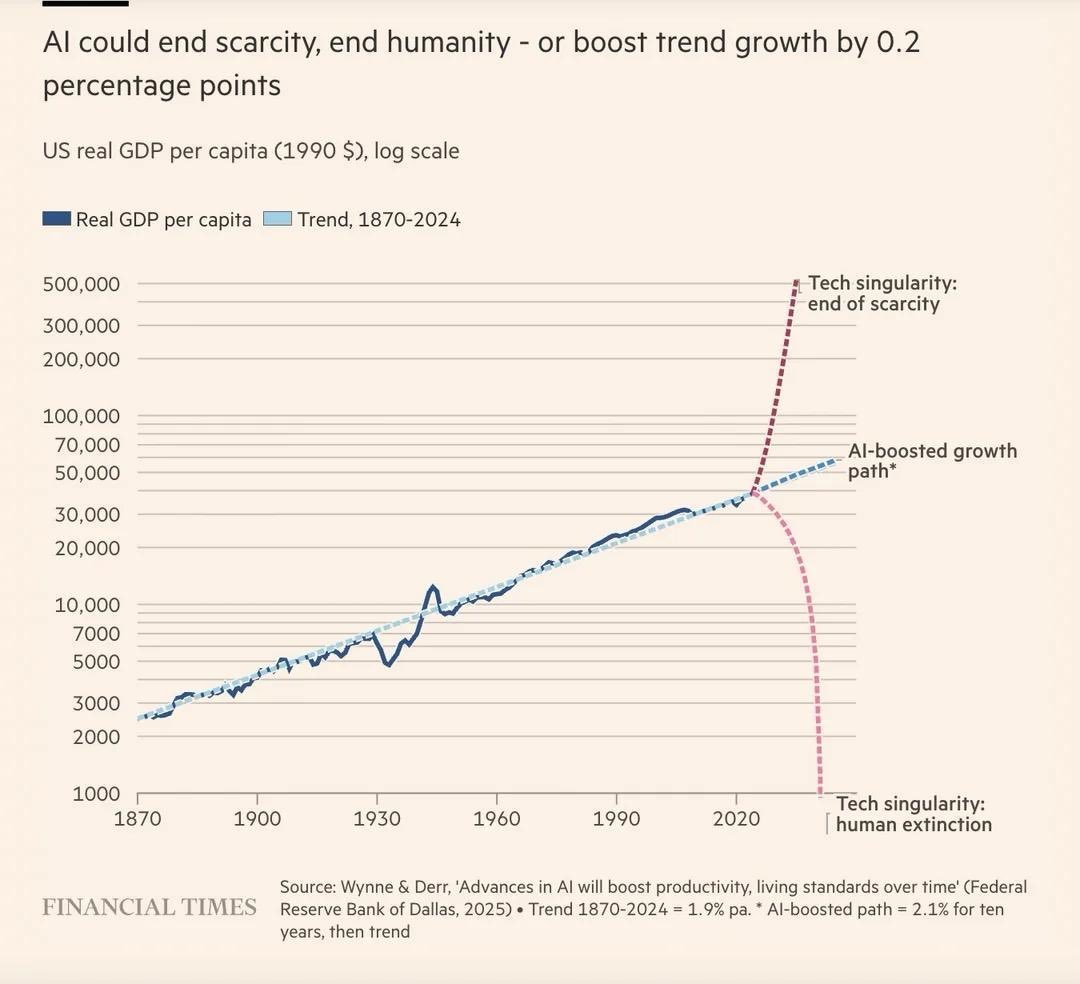
Probably the funniest graph ever published by the FT: our 3 possible futures are either 1) infinite wealth and abundance, 2) human extinction or 3) 0.2% faster GDP growth 🤣
Arnaud Bertrand tweet media
English
202
1.3K
11.7K
592.8K
Chris Powers
Chris Powers@fortworthchris·
Apparently ~160 people in Austin, TX may make $100M+ from the SpaceX IPO. 12 will clear $1B. Don't sleep on Austin - that's a lot of capital formation, very quickly.
English
351
528
13K
3M
Avid
Avid@Av1dlive·
In 14 minutes, this Anthropic engineer who created MCPs will teach you more about building them right than most developers figure out on their own in months. bookmark this today this guide is literally the exact 2026 playbook to build and sell mcps to make $10k/mo
Khairallah AL-Awady@eng_khairallah1

x.com/i/article/2051…

English
40
306
2.4K
368.5K
Adam Helsinger
Adam Helsinger@AdamHelsinger·
@GoodfireAI Are you seeing that concpets have similar geometries across different LLMs and SLMs, or between GPUs and TPUs?
English
0
0
0
57
Goodfire
Goodfire@GoodfireAI·
Neural networks might speak English, but they think in shapes. Understanding their rich *neural geometry* is key to understanding how they work – and to debugging and controlling them with precision. Starting today, we’re releasing a series of posts on this research agenda. 🧵
English
310
1.7K
11.2K
3.1M
Alex Lieberman
Alex Lieberman@businessbarista·
I want to start an AI community for executives. This will be a space for people to share killer use cases, agentic workflows/agents, post-AI org structure, AI governance, AI training/enablement, change management, and more. Comment “AI-native” if you want to join.
English
1.8K
33
1.1K
183.1K
Adam Helsinger retweetledi
Matt Mullin
Matt Mullin@matthewwmullin·
NASA HAS RELEASED OVER 12,000 IMAGES OF THE ARTEMIS II MISSION. Unbelievable perspectives captured by the Crew! The aurora on the eclipse is incredible.
Matt Mullin tweet mediaMatt Mullin tweet mediaMatt Mullin tweet mediaMatt Mullin tweet media
English
280
8.9K
61.6K
2M
Adam Helsinger
Adam Helsinger@AdamHelsinger·
@BradSmi @Microsoft This is reminiscent of the Wang Laboratories’ word processor disruption Christensen wrote about.
English
0
0
0
387
Brad Smith
Brad Smith@BradSmi·
Today we’re introducing a new Legal Agent in @Microsoft Word, built to support the precision and rigor legal work demands. Every clause matters. Every redline tells a story. That’s why this agent was built to follow the structured workflows lawyers use while keeping them fully in control. Early in my career, I asked for a computer on my desk because I believed technology could change how lawyers work. It did. Today, I believe this next generation of tools will do the same, grounded in trust and responsible use.
English
243
952
6.8K
4.1M
Adam Helsinger
Adam Helsinger@AdamHelsinger·
@DKThomp Ha, childcare is the inverse of sleep, TV, and leasure
English
1
0
1
608
Derek Thompson
Derek Thompson@DKThomp·
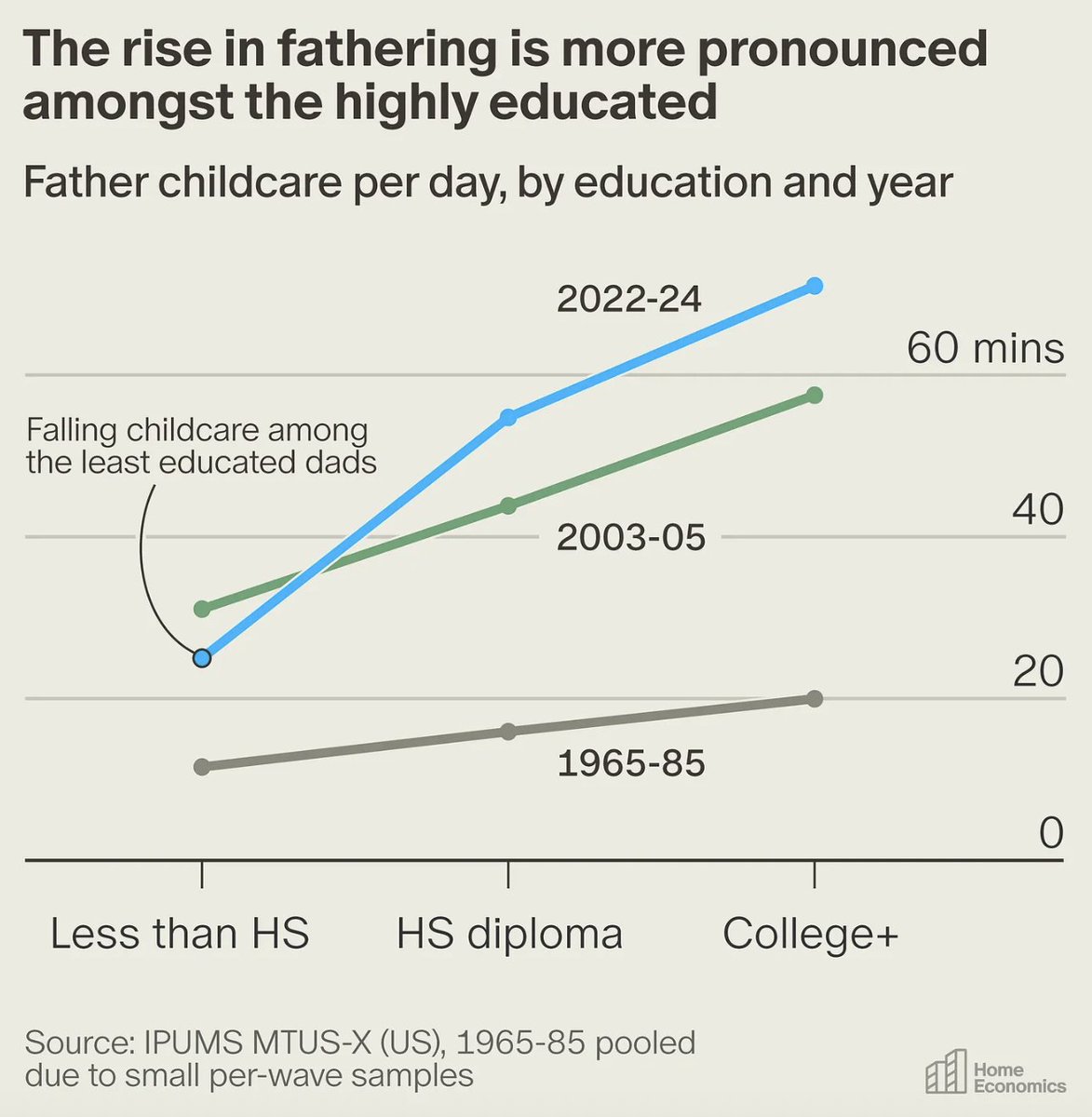
New newsletter: MODERN FATHERHOOD WOULD BE UNRECOGNIZABLE TO A 1950'S DAD Compared to their Boomer parents, childcare time among Millennial dads has more than doubled. Compared to their Silent Generation grandparents, it’s nearly quadrupled. You will be hard-pressed to find any part of day-to-day modern life that has changed more in the last half-century than the way today’s parents—and fathers, in particular—spend their time. The new American dad is more present and more exhausted—but also, more satisfied with life. What's behind this half-century transformation? Today's piece combines history, economic analysis, and gorgeous charts galore from @AzizSunderji
Derek Thompson tweet mediaDerek Thompson tweet mediaDerek Thompson tweet mediaDerek Thompson tweet media
English
197
844
6.8K
2.6M
EricInsideTexas
EricInsideTexas@EricNahlin·
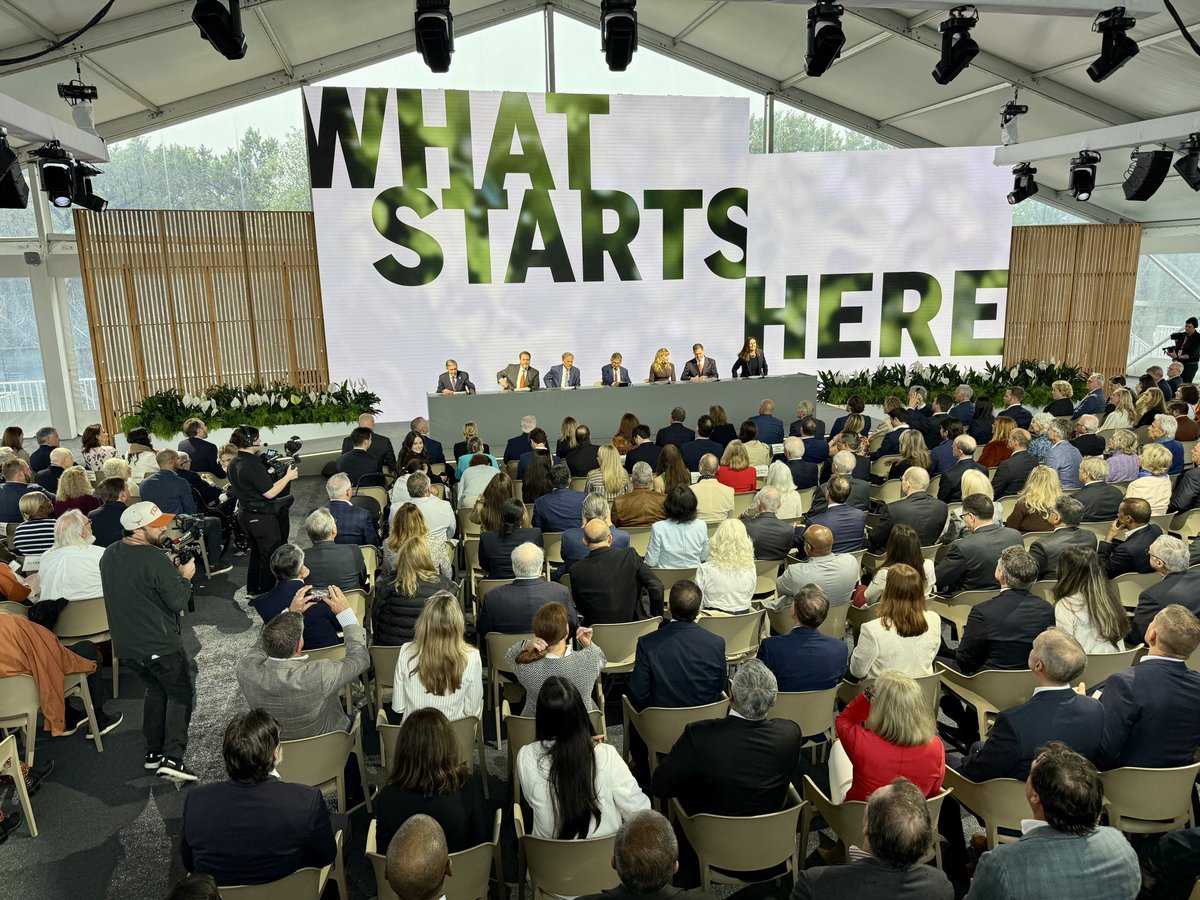
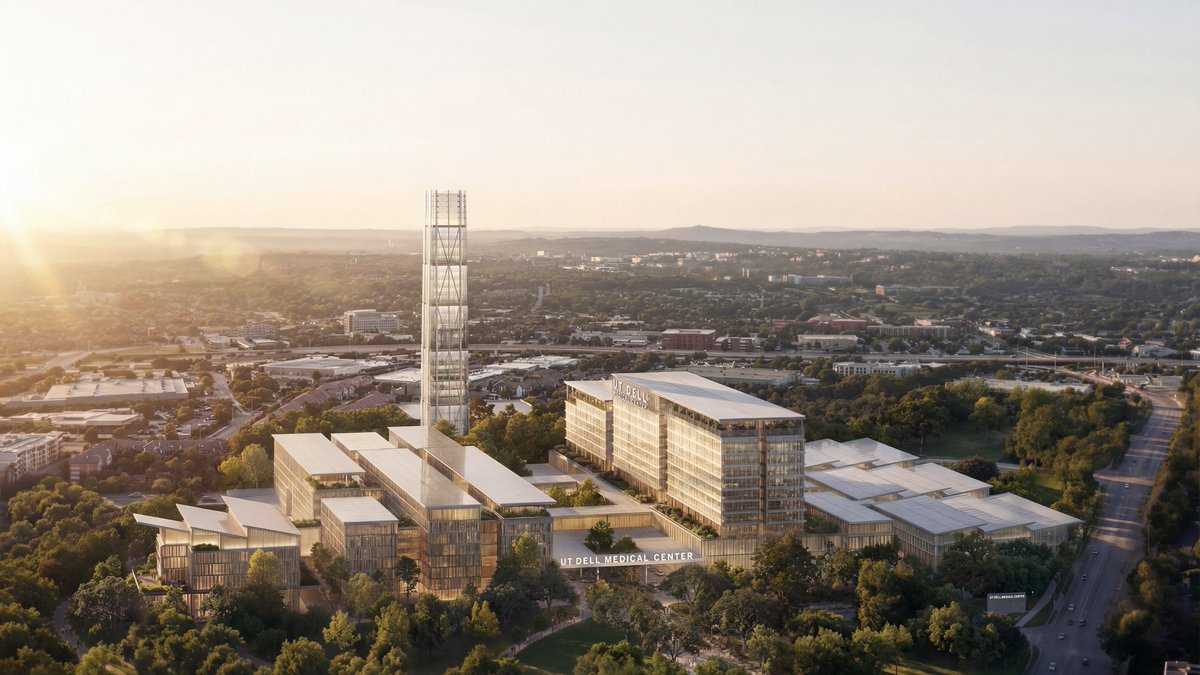
Pics of the new Michael Dell / UT initiative.
EricInsideTexas tweet mediaEricInsideTexas tweet mediaEricInsideTexas tweet media
English
6
23
410
38.8K
Adam Helsinger retweetledi
Bettie Cross
Bettie Cross@BettieCrossTV·
BREAKING: Michael and Susan Dell announced a new $750 million commitment to the University of Texas at Austin. The investment will build the UT Dell Medical Center in north Austin. It will be a new kind of medical center for the AI era. @cbsaustin @UTAustin
Bettie Cross tweet mediaBettie Cross tweet mediaBettie Cross tweet mediaBettie Cross tweet media
English
23
121
1.4K
139.8K
Adam Helsinger
Adam Helsinger@AdamHelsinger·
AI compresses everything. Value shifts to the relational sector. Character becomes a competitive advantage. Relationships become the moat. Integrity scales. Personal development becomes economic strategy. Community becomes currency.
Alex Imas@alexolegimas

New essay on the economics of structural change and the post-commodity future of work. 1. Almost any question about the impact of advanced AI on the economy needs to start at the same place: what is still scarce? Answer that, and the analysis becomes pretty straightforward. This essay explores what becomes scarce if AI really can replicate most of what humans do in production, and what this mean for the future of jobs. 2. My conjecture, working through the economics: labor reallocates across sectors, and the sector it reallocates to has properties that keep labor a meaningful share of the economy. Ultimately this is about the structure of demand itself. For this, we have to go back to Girard, Augustine and Rousseau: once people's base needs are met, their preferences shift to comparative motives (e.g., status, exclusivity, social desirability). This motive is inherently non-satiated. 4. The key paper is Comin, Lashkari, and Mestieri (Econometrica 2021). As people get richer, they don't buy proportionally more of everything. They shift spending toward sectors with higher income elasticity. They estimate income effects account for 75%+ of observed structural change. 5. The ironic consequence: the sector that gets automated becomes a smaller share of the economy, not a larger one. Agriculture got massively more productive and its share of employment collapsed. Manufacturing too. The "stagnant" sectors absorb the spending and the jobs. 6. So the question is: which sectors have high income elasticity in a post-AGI world? I argue it's what I call the relational sector. Categories where the human isn't just an input into production, it is part of the value. 7. Why does the relational sector have high income elasticity? Because human desire has a mimetic, relational dimension. We don't just want things for their intrinsic properties. We want what others want, and we want it more when others can't have it. Girard, Rousseau, Augustine, and Hobbes all saw this. 8. In work with Kristóf Madarász, we showed this experimentally: WTP roughly doubles when a random subset of others is excluded from the good. And in new work with Graelin Mandel, AI involvement kills the premium. Human-made art gains 44% from exclusivity; AI-made art only 21%. 9. This all comes together for the core argument. The sector that absorbs spending as AI makes commodity production cheap is one where human provenance is part of the value, and demand for it grows faster than income. Exactly the profile that keeps labor meaningful. 10. To be clear about the claim: I'm NOT saying aggregate labor share must rise. It may fall. The claim is about sectoral composition, i.e., where expenditure and employment go once commodities get cheap, and the fact that the sector that will absorb reallocated labor maps to a substantial component of human preferences and desire. 11. If you're interested in the formal model, a linked companion technical note works out all the economics. Read the essay here: aleximas.substack.com/p/what-will-be…

English
0
0
2
454