ThereAreManyLikeItButThisOneIsMine

17.7K posts
ThereAreManyLikeItButThisOneIsMine banner
ThereAreManyLikeItButThisOneIsMine

ThereAreManyLikeItButThisOneIsMine

@AfMook

A beautiful day to make bad decisions with high conviction.

Katılım Ağustos 2013
158 Takip Edilen270 Takipçiler
57th Overlanders
57th Overlanders@57thOverlanders·
@EODHappyCaptain Glad this worked out but it's still a really bad idea to feed all your personal pay stub info into ai
English
1
0
0
139
Happy Captain
Happy Captain@EODHappyCaptain·
Ai has its uses. Here’s a recent one, I witnessed firsthand: A Soldier was notified that they had a substantial financial debt to the tune of close to 7k dollars. The only problem? The Soldier has no idea what the issue is, so they go to finance. Finance can’t figure it out. They say the debt is legitimate and the Soldier must pay. His only option is to request forgiveness from the first COL in the chain of command. In order to do so, he must provide evidence as to why he doesn’t owe the money. The problem is that no one knows what the debt is for, so he cant provide evidence. So him and the 1SG take all of his paystubs and put it into GenAi. The response? There was a mistake at a previous duty station. Not only does he not owe the money, finance owes HIM money. He takes all the evidence to finance. They process everything and he goes from owing thousands to getting thousands. Stay on top of your finances folks.
English
61
155
3.3K
212.4K
Arya Yadeghaar
Arya Yadeghaar@AryJeay·
It wasn’t Russian air defenses It wasn’t Chinese air defenses It wasn’t American air defenses It was a fully domestically built Iranian air defense system that tracked & hit the “stealth” F-35. Built by Iranian engineers during MAXIMUM sanctions. Never been more proud to be Iranian.
Arya Yadeghaar@AryJeay

Iran has published footage showing the exact moment when Iranian air defenses tracked & intercepted the American F-35 over central Iran. The IRGC says it locked & hit the F-35 over central Iran and severly damaged it.

English
893
5.8K
26.6K
714.4K
wgm5239
wgm5239@wgm5239·
@mercoglianos Ok so we agree on incompetence then. No other way to describe it on a multibillion dollar military carrier.
English
1
0
3
196
Sal Mercogliano (WGOW Shipping) 🚢⚓🐪🚒🏴‍☠️
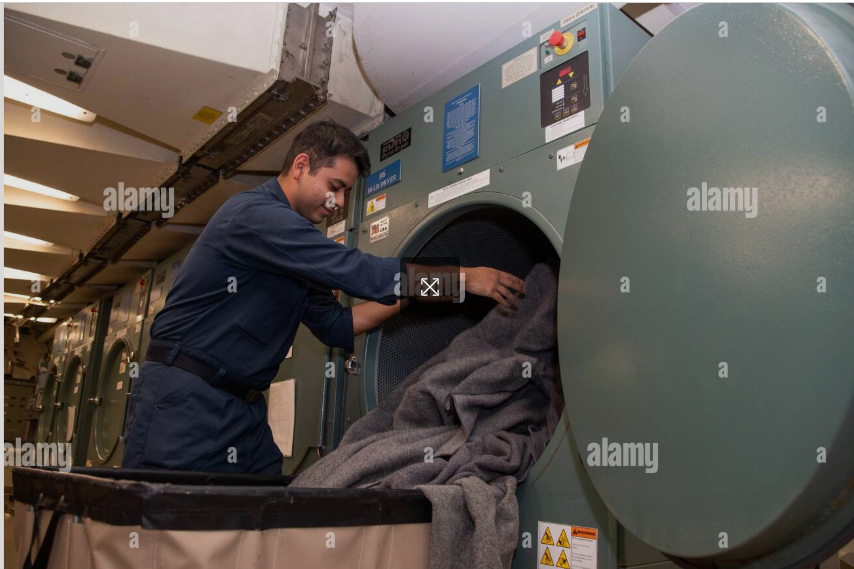
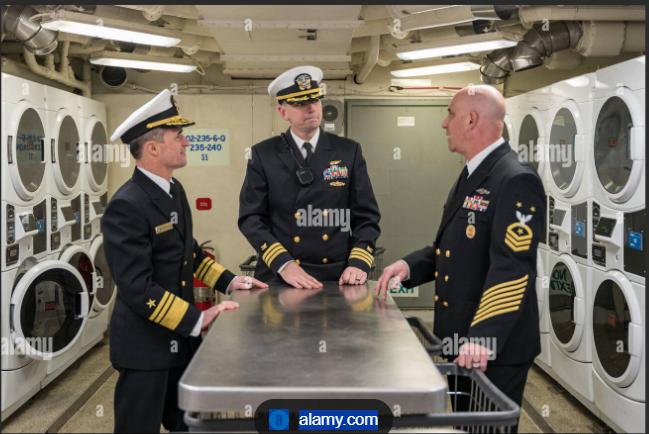
Gerald R Ford has both large industrial size laundry machines and some smaller self-serve. Either way, a laundry room fire is a serious event and not uncommon when these units have been in near continuous use for 10 months for over 5,000 sailors. The loss of bedding probably means the fire either spread to an adjoining compartment, there was smoke damage, or in the effort to cool bulkheads, they were doused with water. Either way, losing berths for 600 crew, the loss of laundry facilities, is a serious casualty for a ship. Fires such as these are common on ships, but their severity and frequency do increase the longer a ship is deployed, particularly in a high optempo operation.
Sal Mercogliano (WGOW Shipping) 🚢⚓🐪🚒🏴‍☠️ tweet mediaSal Mercogliano (WGOW Shipping) 🚢⚓🐪🚒🏴‍☠️ tweet media
OSINTdefender@sentdefender

Following last week’s laundry room fire onboard the USS Gerald R. Ford (CVN-78), which extended into several berthings, the U.S. Navy was forced to take 1,000 mattresses off the future USS John F. Kennedy (CVN-79) in Norfolk, Virginia over the weekend to send to the Ford, sources tell USNI News. In addition, the Navy has also collected almost 2,000 sweatsuits and other clothing items to distribute to the crew because many sailors are unable to clean their clothes with most of the laundry services out of commission, as the tired ship heads for Souda Naval Base in Crete.

English
73
158
1.2K
244.3K
Bourbon OTR
Bourbon OTR@bourbondreaming·
@ThinkAppraiser Are the two zeroes to the right of the decimal point really necessary? Are they just there to be performative zeroes? Have they no shame?
English
1
0
2
57
Bitfunded
Bitfunded@bitfunded·
The reply thats gets 0 likes receives 100K Bitfunded challenge. Winner announced in 24 hours 🤝
English
13.3K
325
3.6K
3.7M
John Koes
John Koes@JohnKoesS·
@carltonkitheka1 These little guys just want to survive thus observing our routines and trying to hide as much as possible. in this case we are the monsters and we should totally follow a routine 🙈😂
English
1
0
4
1.9K
planefag
planefag@planefag·
This will invite the question: "why didn't they send this to start with?" and the answer ties into something else I've wanted to talk about: The Iranian A2/AD strategy that never materialized. "A2/AD" is a phrase - some say a buzzphraze - meaning "anti-access/area denial." The basic idea is to hold your enemy at risk at long range and force them to fight their way in through a defense-in-depth, best exemplified by the Chinese doctrine in the Pacific. Iran was hobbled by their weak tech base but blessed by the tight geography of the strait and the Gulf of Oman, so their version leaned more towards the attritional defense-in-depth and less the standoff fires, but still had those elements working together. Minefields in a strait work much like minefields on land - once a single casualty is inflicted, the enemy knows its there and will start removing it, so a minefield is only effective if covered by fire. Ergo the much-maligned "red rings of death" maps usually touted when "A2/AD" is brought up usually aren't seen with Iran (in favor of Red Rings showing their ballistic missile arsenal,) but they were theoretically sufficient nonetheless; Iran's SA-20 systems (S-300 PMU-2) might have a notional max range of only 120ish nautical miles, but the distance from Muscat on the Omani coast to Zarabad in Iran is only 130 or so. This is 170ish nautical miles from the strait proper; that's how quickly the geography compresses the battlespace for naval forces. So with S-300s (and shorter-ranged systems to provide layered inner defense against aircraft and incoming weapons) they could throw up a wide enough air umbrella from their coast to give their light naval forces; mainly fast-attack missile boats, room to work. Especially given the heavy civilian traffic in the Gulf of Oman, the small size of their vessels and even land-based jamming support they stood a reasonable chance of making things difficult for an American CSG. The key here is the strait itself; to open it following an Iranian blockade the US would have to get in close; both with aircraft (to do the kind of thorough seek-and-destroy whack a mole required to root out every surface to surface antiship cruise missile launcher and even artillery piece given how narrow the strait gets at its narrowest point,) and eventually with either vulnerable aircraft or ships (helicopter-towed or ship-towed mine sweeps.) So despite the apparent skew of Iranian weapons to close-range instead of standoff; they could expect to pepper the US at range and rapidly increase the presented threat level as they pushed in towards the strait. This has been their obvious plan for decades, as revealed by their force structure and indeed anyone with their resources who had eyes to read a map would've emulated it. They never put it into action. The two biggest reasons for this are the total obsolescence and consequent destruction of Iran's theater-range air defenses and the US/Israel starting the party early with a devastating attack that decapitated almost the entire high-level leadership of their government, paralyzing their command and control. Following the first-ever direct MRBM attack on Israel by Iran in early April of 2024, I predicted a vigorous response, but it was surprisingly more muted - Israel apparently only destroyed the radar of one of Iran's four S-300 batteries with just two air-launched ballistic missiles. Now when it comes to attacking modern SAM systems you've got multiple challenges - the first is getting enough weapons in the air to fight through the defenses because most everything post-80s can (theoretically) engage incoming precision guided munitions, and then you've got to hope your weapons hit the radar/control van to conclusively put the battery out of action (an anti-rad missile will miss by some distance depending on when the radar went cold and/or how good its target memory is, if using cruise missiles against battery components as spotted by ground search radar you don't know which one's a TEL and which one's the radar, precisely, etc.) The April 19th strike by Israel demonstrated that all the above no longer applied between them and Iran. They had weapons the S-300's effectors couldn't engage and Israel's ISR was more than good enough to land pinpoint hits on the radar itself with the first shot. A message was being sent - the air umbrella that enables half your A2/AD strategy effectively doesn't exist to us. The warning was not heeded, and the rest is history. The second factor is the surprise decapitation attack - and this is why the USS Tripoli wasn't already in-theater. I have no doubt they were already prepping and either on standby to deploy or intending to, but the golden opportunity Israeli intelligence cued them to was too good to pass up. And indeed, I think it paid off. The tightly compressed battlespace of the Gulf of Oman actually worked *against* Iran here; typically when you see your enemy flying tons of assets in-theater and moving two carrier strike groups in your direction you tend to deploy your own forces. But given their defensive depth was maybe 100 nautical miles, US forces could be close indeed in a normal sense without being inside what Iran would consider their outer A2/AD perimeter. In short there was plenty of time to "deploy," and esp. since so many of their assets are light or ultra-light ships/boats that can't house their crews for any serious length of time at sea there was no reason to sortie. And when the war started with the decapitation of their entire chain of command, there was nobody left to order those sorties before US follow-on strikes started hitting their Navy at anchor. The Iranians planned to meet the US in the Oman gulf with a horde of missile boats and with the strait bristling with hundreds if not thousands of mines behind them... but it turns out that an anti-access/area denial strategy doesn't work very well when your enemy's already accessing the hell out of the area you wanted to deny them by the time you get your pants on.
planefag@planefag

I KNEW it. They're sending the Tripoli, one of the two America-class LHAs! This is basically a light carrier; it can fit 20+ aircraft, (up to 30 depending on their size.) So a full squadron of Marine AH-1Z attack helos that are perfectly suited to swatting USVs, drones and attack speedboats ("boghammers") in the strait, plus Helicopter Mine Countermeasures Squadron 15. "Normal" LHAs are landing ships; they have a well deck for putting hovercraft or AAV amphibs into the water as well as a wide flight deck for helo or VTOL ops flying air support for the troops. They were the primary reason the Marines bought and flew Harriers. (LPDs are more well-deck focused and their helipad mainly for using helos to move troops to shore, though LHAs can do that too.) The America class omits the well deck in favor of a bigger hangar deck, making this two-ship class uniquely suited for supporting air ops when the big boys are otherwise engaged. This is the perfect tool for the job.


English
34
120
834
103.9K
CIV INTEL
CIV INTEL@CIVINTL·
It’s not confirmed they collided. Supposed video footage has been circulating of the tanker going down and it’s a fireball split into multiple pieces, meaning it exploded very likely due to enemy fire. What’s supporting that theory is that they were operating over Iraq, now there’s none flying over Iraq…. If they did collide, they wouldn’t be avoiding the airspace
English
1
0
0
157
Michael Tsai — llam/acc 🦙
Michael Tsai — llam/acc 🦙@thedataroom·
THE TANKER CHAPTER Look at this airspace. 47 tankers in 36 hours over the same corridor. The collision was inevitable — not a matter of if, but when.This is a deconfliction and mission planning problem at surge tempo. Open-source AI that runs on edge hardware — offline, no cloud, no comms dependency — exists right now and could be analyzing these orbit conflicts before crews ever take off. Six airmen are dead. "Ramping up and only up" without upgrading the planning infrastructure is how you lose more American servicemembers. The KC-135 fleet averages 66 years old. The mission planning tools aren't much younger. We're running a 21st century air campaign on 20th century operational infrastructure. We have AI tech to fix this is available, open-source, and deployable today. What's missing is the will to integrate it.
Evergreen Intel@vcdgf555

In the same 24 hours that a KC-135 tanker and it's 6 crew members were lost – and by mere feet, nearly at least one other KC-135... Hegseth: "Ramping up and only up." Here's the last 36 hours of tanker flights over Israel and Jordan, including the 2 that collided. 47 tankers.

English
5
9
28
8.5K
Arya Yadeghaar
Arya Yadeghaar@AryJeay·
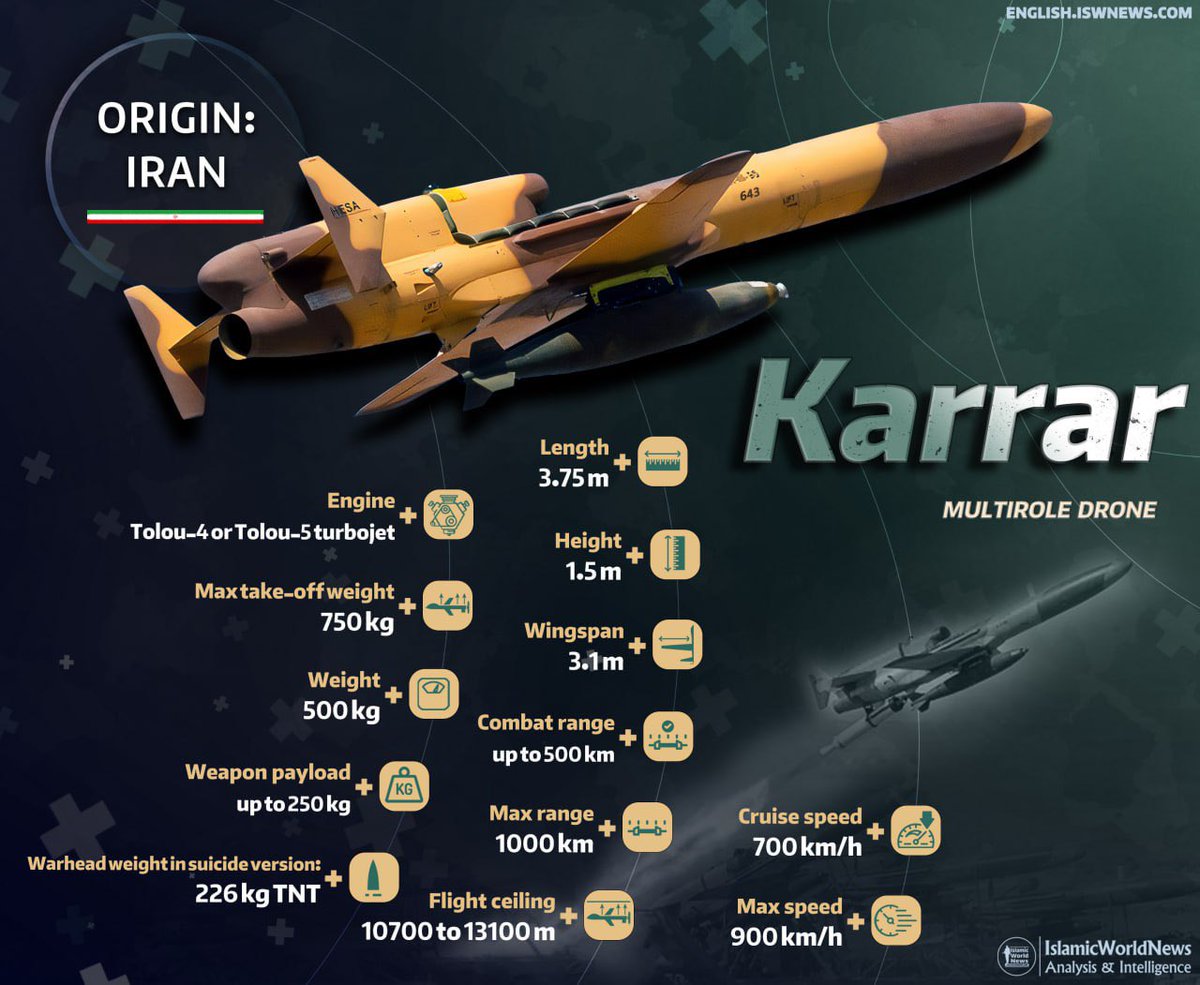
The Iraqi resistance probably used Iran’s 359 surface-to-air loitering munition to “crash” the USAF KC-135 refueler. But… wait till people realise Iran has yet to unveil its Karrar UCAV which can be armed with Mk-82 bombs AND air-to-air missiles (or air-to-surface such as Iran’s Shafagh missile). Deploying these drones against US refuelers is a big game changer.
Arya Yadeghaar tweet mediaArya Yadeghaar tweet media
Arya Yadeghaar@AryJeay

My initial guess: The 359 surface to air missile.

English
70
1.4K
6.4K
369.2K
Mattys-uh-baddy
Mattys-uh-baddy@mattydunk1988·
The way the rear stabilizer on the other plane is sheared off....the plane that was above and in front had to of lost air speed very quickly and obviously one of the wings clipped the read stabilizer of the other plane. So. If a surface to air missile struck, it would have been into one of the engines, as they are heat seakers....which would definitely cause a plane to dramatically lose air speed. Other than that it could have been catastrophic engine failure. Which does happen. So.
English
1
0
0
385