

Alex Beatson
107 posts

Alex Beatson
@AlexBeatson
Co-founder of Axiom - AI for drug toxicity
Katılım Aralık 2014
276 Takip Edilen556 Takipçiler

Dope. I found a kitchen in SF to host the pop-up and test some of the dishes on this menu.
It has a 10 person table.
Comment if you want to book a pair of seats.
Mike Wang@zmwang
Chindian dim sum restaurant concept for SF Menu 1) chili crisp papadums 2) mapo paneer 3) hot & sour pani puri 4) claypot goat biriyani 5) Peking duck + scallion aloo parathas 6) butter chicken XLBs 7) black sesame jalebi sundae 8) dan dan chaat noodles Should we do this?
English
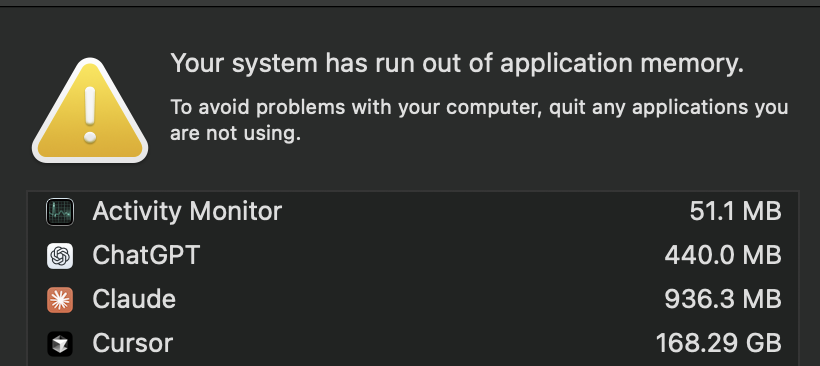
The new "100 chrome tabs" is 15 open cursor windows each with multiple terminals running claude code
English
Alex Beatson retweetledi

btw by far the most interesting new pattern we are seeing in @latentspacepod (upcoming with @olivierddr and @sdrzn and @pashmerepat)
is that people are using @claude_code and @Cline for non-coding tasks and this is becoming surprisingly effective for things like sales/BI automation and Gsuite (read my emails, slacks, linears, search web, make report, etc etc)
ofc enabled by MCP, but somehow BOTH chatgpt and claude desktop have not captured this kind of organic integration/white collar work automation behavior
part of this i guess is driven by the generous $200 claude max plan limits, part of it is maturity of MCP, but that still doesnt explain why people don't seem to use Claude Desktop for this stuff?

English
Alex Beatson retweetledi

nobody wants to look at the data, either
will brown@willccbb
everybody wants to do fun experiments nobody wants to write core infrastructure code
English
Alex Beatson retweetledi

everybody wants to do fun experiments
nobody wants to write core infrastructure code
English
Alex Beatson retweetledi

To replace animal testing with AI, we need MASSIVE human datasets.
Today, we're thrilled to share Axiom's new data exploration tool, providing the ability to visually explore the world's largest primary human liver toxicity dataset. Built with Axiom's proprietary wetlab protocols, our dataset includes detailed liver toxicity profiles for over 100,000 distinct molecules.
The key to this dataset is our ability to do high-throughput, multiplexed high-content screening with primary human liver cells. Traditionally, toxicity assays either sacrifice throughput or sacrifice biological relevance (using easy-to-grow immortalized cell lines instead of real human cells). We managed to combine throughput, physiological relevance, and multiplexing in one platform. The assays run in a high throughput format using automation, meaning thousands of compound-dose conditions can be tested in one experiment. We achieved this using pooled primary human hepatocytes, which are often fragile and expensive. By systemizing our automation and quality control processes, we were able to run over 120+ batches on the same donor pool with incredible reproducibility and consistency.
We did this while integrating many readouts per well, whereas many existing toxicity assays only do a single readout. Our multiplexed approach provides far more data per experiment enabling us to measure 10-20 different toxicity phenotypes such as apoptosis, necrosis, mitochondrial fission, endoplasmic reticulum stress, stress granule formation, microtubules, and more all from a single well on a 384-well plate! The combination of scale, high content information, and data quality is exactly what is needed to train highly accurate AI models in biology.
If you're interested, please explore the dataset in the comments below and let me know if you want to chat about the details!
English
Alex Beatson retweetledi
Exclusive: Amplify Partners has raised $200 million for its first biotech-specific fund
Targeting ~20 investments of $1.5m-$10m in pre-seed/seed/Series A-stage startups.
The Silicon Valley VC has also hired @ElliotHershberg as a partner: endpoints.news/amplify-raises…
English
@bwhite5290 Every full stack and infra eng needs to train / eval models
English
New standard: Every lab scientist needs to code, every ML researcher needs to do frontend.
English
Humanity discovers new drugs painfully slowly. Why?
Most clinical trials fail due to (1) drug toxicity or due to (2) selecting the wrong protein target. The bottleneck isn't protein structure prediction, or binding prediction, or molecule generation. It's toxicity and target selection.
We're making progress on toxicity at Axiom via massive in vitro experiments, learning representations of cell images, mapping between chemical structure and cell biology, and LLM-driven curation/understanding of clinical trial and tox/chem/bio knowledge.
We're selectively hiring across AI/ML, engineering, and chemistry for our small, insanely driven and insanely high pace/ownership team in San Francisco. DM if this sounds interesting.
Brandon White@bwhite5290
Announcing Axiom: Eliminating drug toxicity, without using animals! Alex Beatson and I founded Axiom a little over over a year ago with the mission of eliminating drug toxicity by replacing traditional experiments, such as animal testing, with AI models. We are excited to announce that we've raised $15M in seed funding from Amplify Partners, Dimension Capital, and Zetta Ventures to get this done. It has been a wild ride since we got started. Within our first year, we've created the world's largest human toxicity dataset, encompassing data on over 100,000 molecules generated through proprietary lab methods combined with 1000s of clinical outcomes structured using LLMs. With this dataset, we trained an AI model which predicts drug-induced liver injury more accurately than traditional physical experiments, addressing a leading cause of clinical failure recently exemplified by Pfizer's discontinued obesity drug. We publicly launched this model at the Society of Toxicology conference in March and the response has been tremendous! We're actively conducting or finalizing pilot studies with diverse partners, including six of the twenty top pharmaceutical companies, a major agrochemicals firm, many biotechnology companies, hedge funds, and strategic partners. We're honored to partner with these insanely great scientists to rigorously assess our AI models and explore how to best integrate them into their drug discovery workflows. The expertise of these scientists is crucial for validating and thoroughly evaluating these new methods. We have multiple publications out already but we plan to share a lot more data from these early pilot studies in the coming months. At the same time, the FDA recently announced plans to phase out animal testing over the next few years, emphasizing that animal studies will become "the exception rather than the norm." The HHS Secretary RFK has said that "they have found AI to be much more precise in identifying the impacts of toxins" on the human body. With our recent progress, Axiom is uniquely positioned to support the FDA and scientific community in realizing this shift. We will eliminate clinical trial failures due to toxicity. And we don't need animals to do it. For more, you can read Andrew Dunn's Endpoints article on Axiom in the comments.
English
Alex Beatson retweetledi

Alex Beatson retweetledi
Announcing Axiom: Eliminating drug toxicity, without using animals!
Alex Beatson and I founded Axiom a little over over a year ago with the mission of eliminating drug toxicity by replacing traditional experiments, such as animal testing, with AI models. We are excited to announce that we've raised $15M in seed funding from Amplify Partners, Dimension Capital, and Zetta Ventures to get this done.
It has been a wild ride since we got started. Within our first year, we've created the world's largest human toxicity dataset, encompassing data on over 100,000 molecules generated through proprietary lab methods combined with 1000s of clinical outcomes structured using LLMs. With this dataset, we trained an AI model which predicts drug-induced liver injury more accurately than traditional physical experiments, addressing a leading cause of clinical failure recently exemplified by Pfizer's discontinued obesity drug.
We publicly launched this model at the Society of Toxicology conference in March and the response has been tremendous! We're actively conducting or finalizing pilot studies with diverse partners, including six of the twenty top pharmaceutical companies, a major agrochemicals firm, many biotechnology companies, hedge funds, and strategic partners. We're honored to partner with these insanely great scientists to rigorously assess our AI models and explore how to best integrate them into their drug discovery workflows. The expertise of these scientists is crucial for validating and thoroughly evaluating these new methods. We have multiple publications out already but we plan to share a lot more data from these early pilot studies in the coming months.
At the same time, the FDA recently announced plans to phase out animal testing over the next few years, emphasizing that animal studies will become "the exception rather than the norm." The HHS Secretary RFK has said that "they have found AI to be much more precise in identifying the impacts of toxins" on the human body. With our recent progress, Axiom is uniquely positioned to support the FDA and scientific community in realizing this shift.
We will eliminate clinical trial failures due to toxicity. And we don't need animals to do it.
For more, you can read Andrew Dunn's Endpoints article on Axiom in the comments.
English
Alex Beatson retweetledi

Alex Beatson retweetledi
I'm incredibly excited to announce our new company, @datologyai!
Training models is hard and identifying the right data is the most important and difficult part -- our goal @datologyai to make optimizing training data at scale easy and automatic across modalities.
techcrunch.com/2024/02/22/dat…
English
Alex Beatson retweetledi
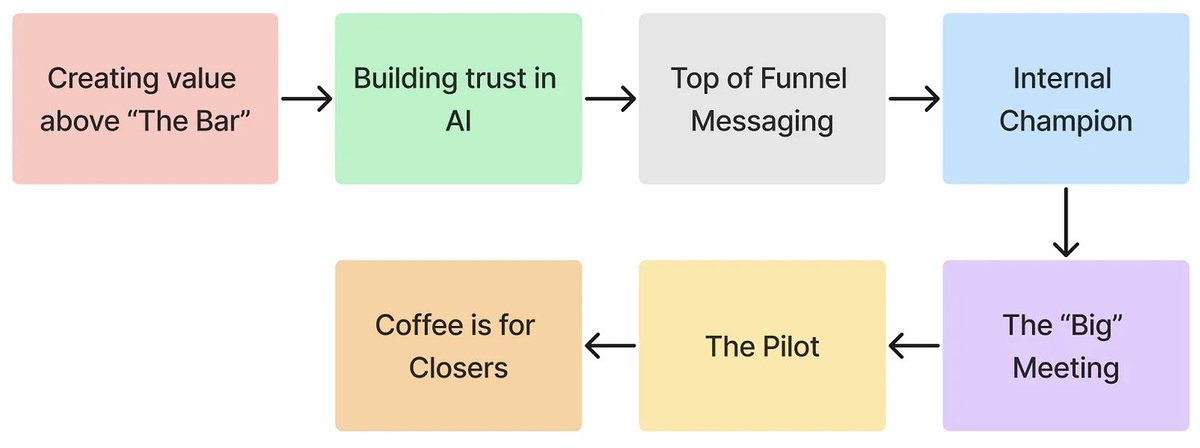
Wrote a blogpost on selling AI products + services to big pharma! Check it out below!
English
@bwhite5290 There's fairly convincing evidence now that transformers >> GNNs for large-scale molecular property prediction, see arxiv.org/abs/2207.02505, microsoft.com/en-us/research… and more
English
How does this paper apply to GNNs trained on chemical structure? welcomeaioverlords.com/t/graph-bert-o…
English
@AlfredoAndere If he's also interested in biotech, we're hiring interns at Redesign Science jobs.lever.co/redesignscienc…
English

My younger brother, the smarter one in the family, is looking for a SWE internship at a startup this summer.
He published in NeurIPS, is studying CS and Math at UChicago, and has built multiple apps in AI and crypto.
DM me for an intro.
English
Alex Beatson retweetledi

Super excited to introduce Neuromechanical Autoencoders! We build "artificial mechanical intelligence" by coupling parametric neural networks with parametric mechanical metamaterials, accepted to ICLR 2023 as a Spotlight!
arxiv.org/abs/2302.00032
English
Alex Beatson retweetledi
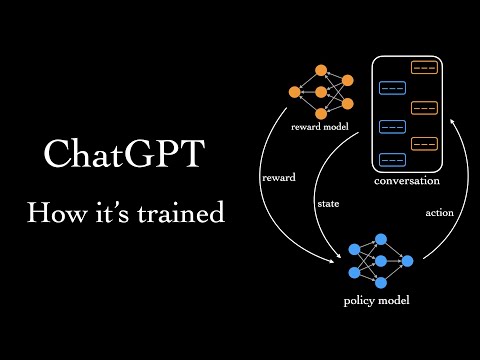
Unlike GPT-3 or PaLM, ChatGPT is not just a raw language model trained with maximum likelihood. It's fine-tuned with a combination of additional supervised and reinforcement learning signals based on human preferences.
Video covering the training recipe: youtu.be/VPRSBzXzavo
YouTube
English
@Dirque_L @fpedregosa The observation is direct from any of the many formulae for RR variance in literature. But Fabian’s formula highlights it nicely and I don’t think I’ve seen it elsewhere.
English
@AlexBeatson @fpedregosa That's exactly what Fabian describes in his post. He also presents a proof of that fact, but says that he does not know a reference. Do you have one?
English
I recently learned about the Russian Roulette (in statistics), a mind-boggling trick to compute an unbiased estimator of the limit. To understand it better I wrote a blog post about it:
fa.bianp.net/blog/2022/russ…
English
@fpedregosa It is a mainstream technique in graphics / rendering though
English
@fpedregosa Nice write up! IMO another reason it hasn’t caught on is that the estimator has finite variance only when a biased truncation of the series / approximation to the limit has small error, and why not use the latter which is usually better behaved
English