Alison Monk retweetledi
Alison Monk
9.3K posts

Alison Monk
@AliLauraMonk
Professional Shopper, Europhile, SciFi and crime fiction fan, occasionally political. No one is safe until everyone is safe.
Edinburgh Katılım Mayıs 2010
456 Takip Edilen220 Takipçiler
Alison Monk retweetledi

Just read it.
Spot On -
An Aussie reply to Trump’s rant about ‘NATO not being there for us’:
“Mate. You run a country with 600,000 homeless people sleeping on the street tonight. A country where 40% of adults can't cover a $400 emergency without borrowing money. A country where insulin costs more than a car payment and people are rationing it to survive. A country where medical debt is the number 1 cause of bankruptcy. A country where women are dying in hospital car parks because doctors are too scared of abortion laws to treat a miscarriage.
You lock up more of your own citizens than any nation on earth. More than China. More than Russia. More than North Korea. The land of the free has 2 million people in cages, and a quarter of them haven't even been convicted of anything. They're just too poor to make bail.
Your life expectancy is going backwards. You're the only developed nation where that's happening. Your infant mortality rate is worse than Cuba's. Your kids do active shooter drills between maths and English while you sell the gunmaker's stock to your mates.
Your minimum wage hasn't moved in 15 years. You've got teachers working 2 jobs and veterans sleeping under bridges and you just spent a trillion dollars flattening a country that didn't attack you.
And you’ve got a convicted felon, adjudicating raping, paedophile protecting, porn star shagging insurrectionist running the biggest dumpster fire war campaign since the Taliban thanked you very much for losing again.
And you're calling Greenland poorly run?
Greenland has universal healthcare. Free education. One of the lowest incarceration rates in the world. Nobody goes bankrupt there because they got sick. Nobody dies in a waiting room because their insurance said no.
"NATO wasn't there when we needed them." When exactly was that, champ? September 11? Because NATO invoked Article 5 for the first and only time in history FOR YOU. Soldiers from dozens of countries deployed, fought, bled, and died in Afghanistan FOR YOU. Australia wasn't even in NATO and we still showed up. For 20 years.
And you pulled out at 2am without telling anyone and left them to deal with the mess.
So maybe before you start calling other countries poorly run, have a look at your own backyard, you spray-tanned aluminium siding salesman. The only thing poorly run in this picture is your fucking mouth.”
English
Alison Monk retweetledi

@ziggy6769 Struggling to decide probably Libdem to keep SNP out locally and then Labour on the list.
English
Alison Monk retweetledi

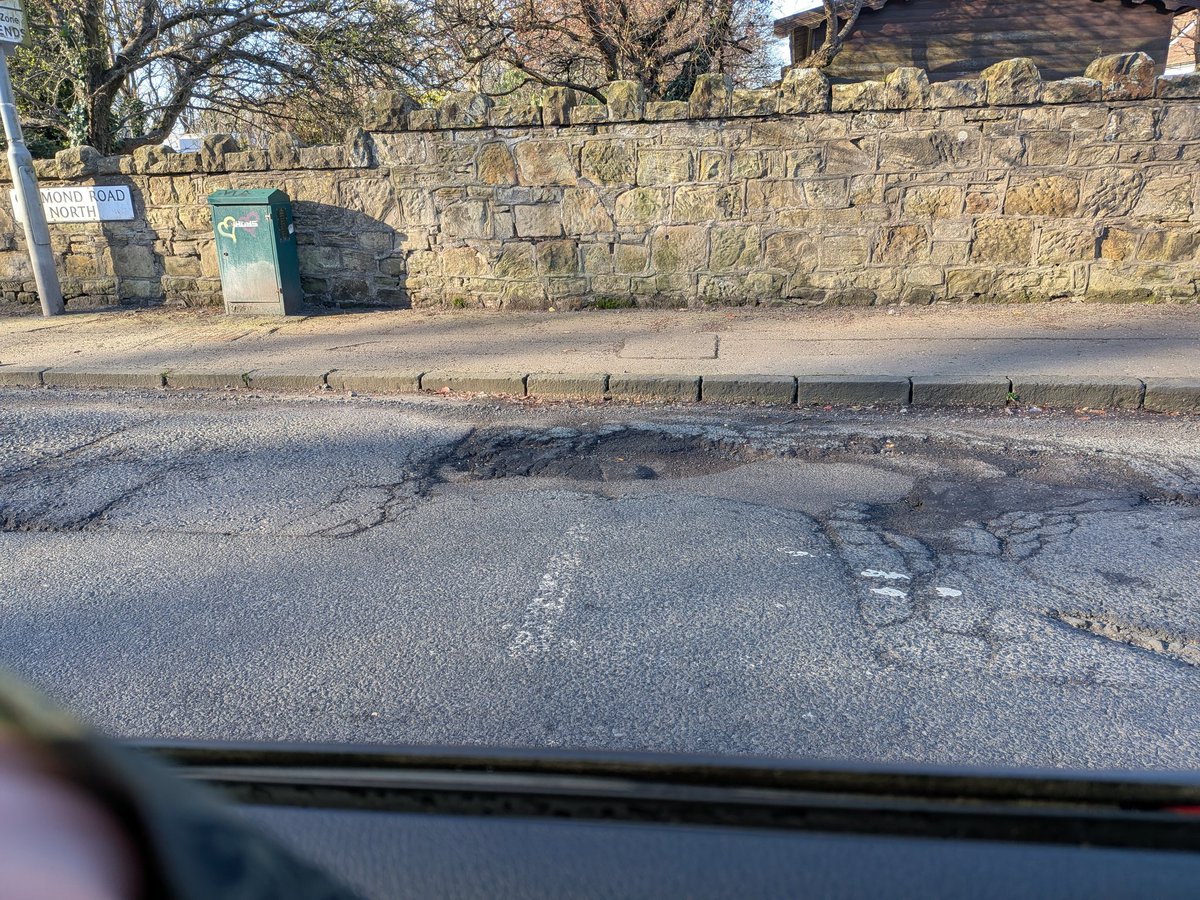
@edinhelp lots of car killing pot holes on Cramond Road North. Can they be fixed please. It's only bus route through Cramond so is getting worse daily.

English

@GHmltn @MajorDMalpas Why should they have it easy sending Evri parcels, rest of us manage without a printer, it's not very secure from a GDPR perspective.
English

That's the main thing I suppose. Glad they're alright. Especially the ones who can barely string a sentence together and would struggle to secure a minimum wage job in the private sector.
Conor Matchett@conor_matchett
EXCLUSIVE: MSPs to get new raft of financial perks including a printer, childcare, and council tax bills covered alongside their £3k pay rise as Scots struggle with cost-of-living thescottishsun.co.uk/news/16075421/…
English
Alison Monk retweetledi

Robert Mueller died last night.
He was 81 years old. He had a wife who loved him for sixty years. He had two daughters, one of whom he met for the first time in Hawaii, in 1969, on a few hours of military leave, before he got back on the plane and returned to Vietnam. He had grandchildren. He had a faith he practiced quietly, without performance. He had, in the way of men who have seen real things and survived them, a quality that is increasingly rare and increasingly mocked in the country he spent his life serving.
He had integrity.
And tonight the President of the United States said good!
I have been sitting with that word for hours now. Good. One syllable. The thing you say when the coffee is hot or the traffic is moving. The thing a man who has never had to bury anyone, never had to sit in the specific silence of a room where someone is newly absent, reaches for when he wants the world to know he is satisfied. Good. The daughters are crying and the wife is alone in the house and good.
I want to speak directly to the Americans reading this. Not the political Americans. Just the human ones. The ones who have lost a father. The ones who know what it is to be in that first hour, when you keep forgetting and then remembering again, when ordinary objects become unbearable, when the world outside the window seems obscene in its indifference. I want to ask you, simply, to hold that feeling for a moment, and then to understand that the man you elected looked at it and typed a single word.
Good.
This is not a country having a bad day. I need you to understand that. Countries have bad days. Elections go wrong. Leaders disappoint. Institutions bend. But there is a different thing, a rarer and more terrible thing, that happens when the moral center of a place simply gives way. Not dramatically. Not with a single catastrophic event. But quietly, in increments, until one evening a president celebrates the death of an old man whose family is still warm with grief, and enough people find it acceptable that it becomes the weather. Just the weather.
That is what is happening. That is what has happened.
The world knows. From Tokyo to Oslo, from London to Buenos Aires, people are not angry at America tonight. Anger would mean there was still something to fight for, some remaining faith to be betrayed. What I see, in the reactions from everywhere that is not here, is something older and sadder than anger. It is the look people get when they have waited a long time for someone they love to find their way back, and have finally understood that they are not coming.
America is being grieved. Past tense, almost. The idea of it. The thing it represented to people who had nothing else to believe in, who came here with everything they owned in a single bag because they had heard, somehow, across an ocean, that this was the place where decency was written into the walls. That idea is not resting. It is not suspended. It is being buried, in real time, with 7,450 likes before dinner.
And the church said nothing.
Seventy million people have decided that this man, this specific man who has cheated everyone he has ever made a promise to, who has mocked the disabled and the dead and the grieving, who celebrated tonight while a family wept, is an instrument of God. The pastors who made that bargain did not just trade away their credibility. They traded away the thing that made them worth listening to in the first place. The cross they carry now is a costume. The faith they preach is a loyalty oath with scripture attached. When the history of American Christianity is written, this will be the chapter they skip at seminary.
Now I want to talk about the men who stand next to him.
Because this is the part that actually breaks my heart.
JD Vance is not a bad man. I have to say that, because it is true, and because the truth matters even now, especially now. Marco Rubio is not a bad man. Lindsey Graham is not a bad man. They are idiots, but not bad, as in BAD! These are men with mothers who raised them and children who love them and friends who remember who they were before all of this. They are not monsters. Monsters are simple. Monsters do not cost you anything emotionally because there is nothing in them to mourn.
These men are something more painful than monsters.
They are men who knew better, and know better still, and will get up tomorrow and do it again.
Every small compromise they made had a reason. Every moment they looked the other way had a justification that sounded, at the time, almost reasonable. And now they have arrived here, at a place where a president celebrates the death of an old man and they will find a way, on television, to say nothing that means anything, and they will go home to houses where children who carry their name are waiting, and they will say goodnight, and they will say nothing.
Their oldest friends are watching. The ones who knew Rubio when he still believed in something. Who knew Graham when he said, out loud, on the record, that this exact man would destroy the Republican Party and deserve it. Who sat next to Vance and thought here is someone worth knowing. Those friends are not angry tonight. They moved through anger a long time ago. What they feel now is the quiet, irrecoverable sadness of watching someone disappear while still being present. Of watching a person they loved choose, again and again, to become less.
That is what cowardice costs. Not the coward. The people who loved him.
And in the comments tonight, the followers celebrate. People who ten years ago brought casseroles to grieving neighbours. Who stood in the rain at gravesides and meant the words they said. Who told their children that we do not speak ill of the dead because the dead were someone's beloved. Those people are tonight typing gleeful things about a man whose daughters are not yet done crying. And they feel clean doing it. Righteous. Because somewhere along the way the thing they were given in exchange for their decency was the feeling of belonging to something, and that feeling is very hard to give up even when you can no longer remember what you gave for it.
When Trump is gone, they will still be here.
Standing in the silence where the noise used to be. Without the permission the crowd gave them. Without the pastor who told them their cruelty was holy. They will be alone with what they said and what they cheered and what they chose to become, and there will be no one left to tell them it was righteous.
That morning is coming.
Robert Mueller flew across the Pacific on military leave to hold his newborn daughter for a few hours before returning to the war. He came home. He buried his dead with honour. He served presidents of both parties because he understood that the institution was larger than any one man. He told his grandchildren that a lie is the worst thing a person can do, that a reputation once lost cannot be recovered, and he lived that, every day, in the quiet and unglamorous way of people who actually believe what they say.
He was the kind of American the world used to point to when it needed to believe the story was true.
He died last night. His wife is alone in their house in Georgetown. His daughters are learning what the world is without him in it. And somewhere in the particular hush that falls over a family in the first hours of loss, the most powerful man and the biggest loser on earth sent a message to say he was glad.
The world that loved what America was supposed to be is grieving tonight. Not for Robert Mueller only. For the country that produced him and then became this. For the distance between what was promised and what was delivered. For the suspicion, growing quieter and more certain with each passing month, that the America people believed in was always partly a story, and the story is over now, and there is nothing yet to replace it.
That is all it needed to be.
A man died. His family is broken open with grief.
That is all it needed to be.
Instead the President said good.
And the country that once stood for something looked away 🇺🇸
Gandalv / @Microinteracti1

English
Alison Monk retweetledi

@fesshole The kids will prefer you both to be happy over being together.
English
Alison Monk retweetledi

She kept finding women in laboratory photographs from the 1800s. Then she read the published papers—and every single woman had vanished. Someone had erased them from history.
Yale University, 1969.
Margaret Rossiter was a graduate student studying the history of science. She was one of very few women in her program.
Every Friday afternoon, students and faculty gathered for beers and informal conversation. One week, Margaret asked a simple question: "Were there ever any women scientists?"
The faculty answered firmly: No.
Someone mentioned Marie Curie. The group dismissed it—her husband Pierre really deserved the credit.
Margaret didn't argue. But she also didn't believe them.
So she started looking.
She found a reference book called "American Men of Science"—essentially a Who's Who of scientific achievement. Despite the title, she was shocked to discover it contained entries about women. Botanists trained at Wellesley. Geologists from Vermont.
There were names. There were credentials. There were careers.
The professors had been wrong.
But Margaret's discovery was just the beginning. Because as she dug deeper into archives across the country, she found something far more disturbing.
Photograph after photograph showed women standing at laboratory benches, working with equipment, listed on research teams.
But when she read the published papers, the award citations, the official histories—those same women had disappeared. Their names were missing. Their contributions erased.
It wasn't random. It was systematic.
Women who designed experiments watched male colleagues publish results without giving them credit. Women whose discoveries were assigned to supervisors. Women listed in acknowledgments instead of as authors. Women passed over for awards that went to male collaborators who contributed far less.
Margaret realized she was witnessing a pattern that stretched across centuries.
Women had always been present in science. The record had simply pushed them aside.
She needed a name for what she was documenting.
In the early 1990s, she found it in the work of Matilda Joslyn Gage—a 19th-century suffragist who had written about this exact phenomenon in 1870.
In 1993, Margaret published a paper formally naming it: The Matilda Effect.
The term captured something that had been hidden in plain sight for generations. Once you knew the term, you saw it everywhere.
Her dissertation became a lifelong mission.
For more than 30 years, Margaret researched and wrote her landmark three-volume series: Women Scientists in America. She examined letters, institutional policies, individual careers. She gathered undeniable evidence that women in science had been consistently under-credited and structurally excluded.
Her work faced resistance. Many dismissed women's history as political rather than academic. Others insisted she was exaggerating.
Margaret didn't argue emotionally. She presented data. Documented cases. Patterns repeated across decades and institutions.
Eventually, the evidence became undeniable.
Her research helped restore recognition to scientists who had been erased:
Rosalind Franklin, whose X-ray work revealed DNA's structure—credit went to Watson and Crick.
Lise Meitner, who explained nuclear fission—omitted from the Nobel Prize.
Nettie Stevens, who discovered sex chromosomes—received little credit.
Cecilia Payne-Gaposchkin, who discovered stars are made of hydrogen—initially dismissed.
And countless others whose names had nearly vanished.
Margaret changed the narrative. Science was no longer just the story of solitary male geniuses. It became a story of collaboration that included women who had been written out.
The Matilda Effect became standard terminology. Scholars used it to examine how credit is assigned, how authors are listed, who receives awards, who gets left out.

English

All hail @emmabarnett that was the best episode of "Defend the Indefensible" in years. Fool one prime minister shame on you, fool two shame on the PM, fooling a third just shows incompetence.
English
Alison Monk retweetledi

A man who lives in New York with a holiday home in London and has no ability to vote in Scotland, tell the people living Scotland how they should live.
Imagine if that was someone who was pro U.K., the nationalist outrage would be off the charts
The National@ScotNational
EXCLUSIVE: Scottish actor Brian Cox is to address a pro-independence rally in Edinburgh next month #Echobox=1772792595-1" target="_blank" rel="nofollow noopener">thenational.scot/news/25912289.…
English