Ali Madani

348 posts

Ali Madani banner
Ali Madani

Ali Madani

@AliMLearning

Staff Machine Learning Scientist | Author of Debugging Machine Learning Models with Python (Packt publishing) | Recursion, University of Toronto

Toronto Katılım Mayıs 2017
246 Takip Edilen257 Takipçiler
Ali Madani retweetledi

Recursion
Recursion@RecursionPharma·
Today we’re reporting interim Phase 1 clinical data for our REC-617 monotherapy trial – with plans to expand into combination studies in advanced solid tumors. At the @AACR Special Conference in Cancer Research, CSO David Hallett shared interim monotherapy dose-escalation data from the Phase 1/2 study (ELUCIDATE) of REC-617, a selective CDK7 inhibitor, in advanced solid tumors. 🔹The interim Phase 1 clinical data for REC-617 included: ▫️Dose-linear pharmacokinetics (PK) with rapid absorption and robust pharmacodynamic (PD) biomarker modulation, suggesting substantial target engagement; ▫️Confirmed partial response (PR) during monotherapy dose-escalation in a patient with platinum-resistant ovarian cancer, treated with 4 lines of prior therapy in an advanced setting, with durable response ongoing after more than 6 months of treatment; ▫️In 4 additional patients, a best response of stable disease (SD) for up to 6 months of treatment. Dr. Hallett noted: “Cell cycle dysregulation and transcriptional 'addiction' are both hallmarks of many aggressive cancers. By inhibiting CDK7, we have the potential to target both mechanisms while fine tuning the therapeutic index.” "These initial findings for REC-617 represent an exciting step forward in the development of CDK7 inhibitors, with a favorable PK/PD profile and a durable confirmed partial response observed in dose escalation in a highly pre-treated patient population," said Najat Khan, Ph.D., Chief R&D Officer and Chief Commercial Officer. “Designed using our AI-powered OS platform, REC-617 reflects our focus on enhancing the therapeutic index to deliver more effective and safer treatment options for patients. We are eager to continue this momentum in dose escalation and to initiate the next phase of the program next year." 👉Learn more: ir.recursion.com/news-releases/… 🔹Join the Update Call: Tomorrow, Tues., Dec. 10 at 8:30am ET, Dr. Hallett and Dr. Khan will hold a live Update Call webcast to present the preliminary data. ▫️Submit questions for the Update Call here: bit.ly/3ZsQ71x ▫️Tune in to the Update Call here on X or on: LinkedIn: linkedin.com/company/recurs… YouTube: @RecursionPharma" target="_blank" rel="nofollow noopener">youtube.com/@RecursionPhar
English
1
21
73
11.9K
Ali Madani retweetledi
InstaDeep
InstaDeep@instadeepai·
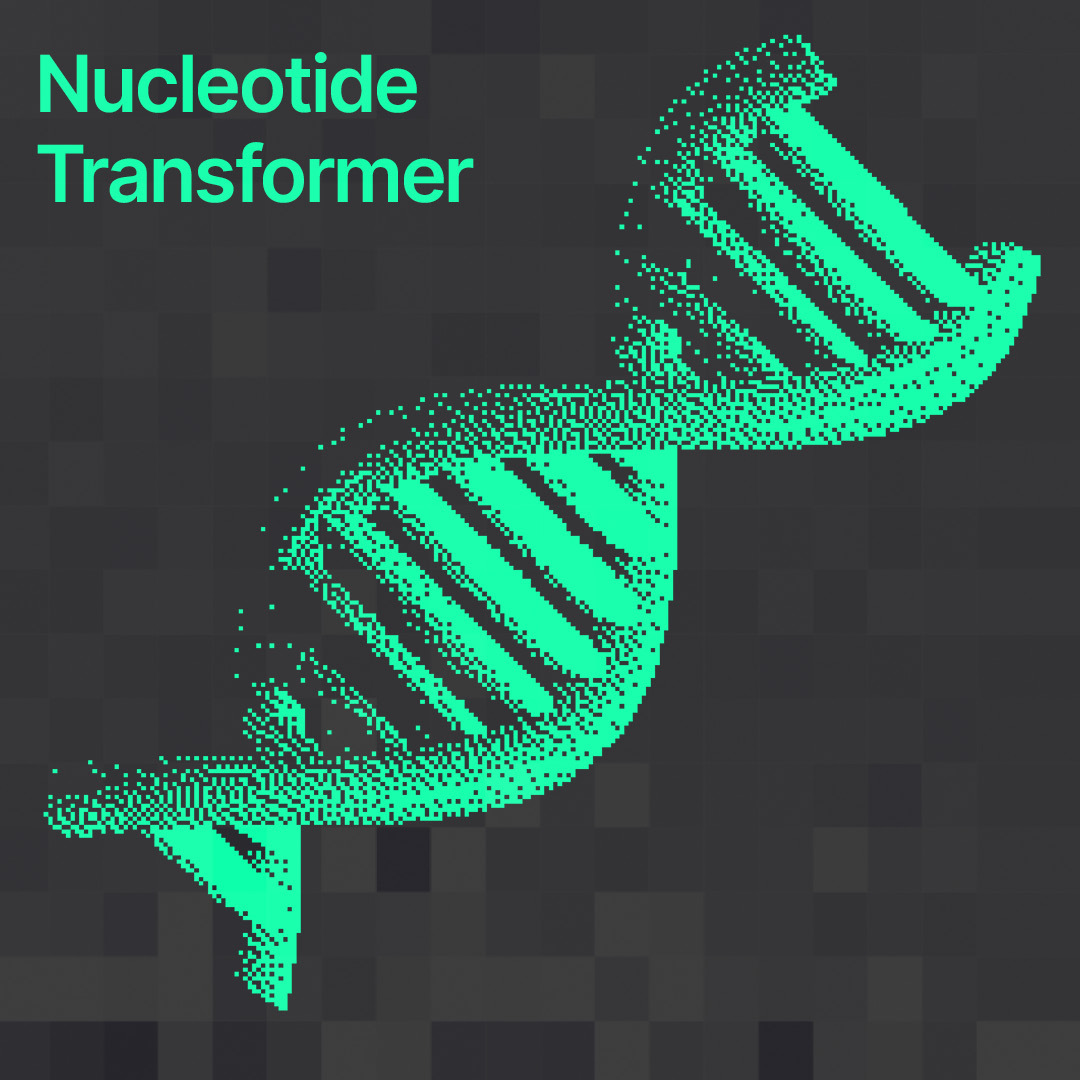
🎉Big news! Our Nucleotide Transformer foundation models for genomics have been published in @naturemethods! The models pave the way for progress in ML and genomics, redefining our approach to genomics prediction tasks and enabling improved performance over specialized methods across a diverse range of applications 🚀 📘Paper: go.nature.com/3OA7dWr 📕Research briefing: go.nature.com/3BbSPQY 💻Blog post: bit.ly/4f1Gkp6
InstaDeep tweet media
English
1
7
29
8.5K
Ali Madani retweetledi
Mathieu Lupien
Mathieu Lupien@MatLupien·
Big news! Recursion is a sponsor for the 2025 Cancer Genetics and Epigenetics GRC! With Recursion (recursion.com​), this GRC conference is one where advanced technologies and human ingenuity will converge to outsmart cancer’s complexity. Join us grc.org/cancer-genetic…
English
0
3
16
1.2K
Ali Madani retweetledi
NEJM
NEJM@NEJM·
The combination of nivolumab and ipilimumab in patients with metastatic colorectal cancer led to 24-month progression-free survival of 72%, as compared with 14% with chemotherapy. Read the full CheckMate 8HW trial results: nej.md/4eGp1tj
NEJM tweet media
English
12
318
1.1K
298.7K
Ali Madani retweetledi
Recursion
Recursion@RecursionPharma·
Our business combination with Exscientia is officially closed and one TechBio powerhouse has emerged. Our expanded clinical pipeline and partnership programs puts us on par with many mid-sized pharma companies. Meanwhile, our combined platforms – bringing together the best of digital biology & chemistry with the industry’s fastest supercomputer – will allow us to rapidly iterate and scale. 🔹Highlights: ▫️Pipeline: 10 clinical & preclinical, and 10 advanced discovery programs across rare disease, infectious disease & oncology – an unprecedented scale achievable only through the speed and efficiency brought by our combined AI-enabled platforms. ▫️Partnerships: 10+ partnered programs with Sanofi, Roche and Genentech, Bayer, and Merck KGaA, Darmstadt, Germany, with $450 million in upfront and milestone payments already received & which could yield over $20 billion in additional milestones before royalties. ▫️Platform: Combining Maps of Biology driven by 60+ petabytes of proprietary data, automated labs, supercomputing & ML models with precision chemistry capabilities to design & test highly optimized first-in-class molecules for high-interest targets. 🔹How We’re Improving Pharma Averages: ▫️3X Speed: Traditional pharma takes 30 months to develop a validated candidate; we’re doing it in 10 months. ▫️10X Productivity: Traditional pharma produces 2,500 molecules before they find a compound for testing; we’re producing just 250 on average. ▫️Up to 80% Cost Reduction: Traditional pharma costs $25-$35 million to reach an investigational new drug (IND); we’re getting there for $5-$10 million. 👉Learn more: ir.recursion.com/news-releases/…
English
3
18
64
8.7K
Ali Madani retweetledi
Vega Shah
Vega Shah@dr_alphalyrae·
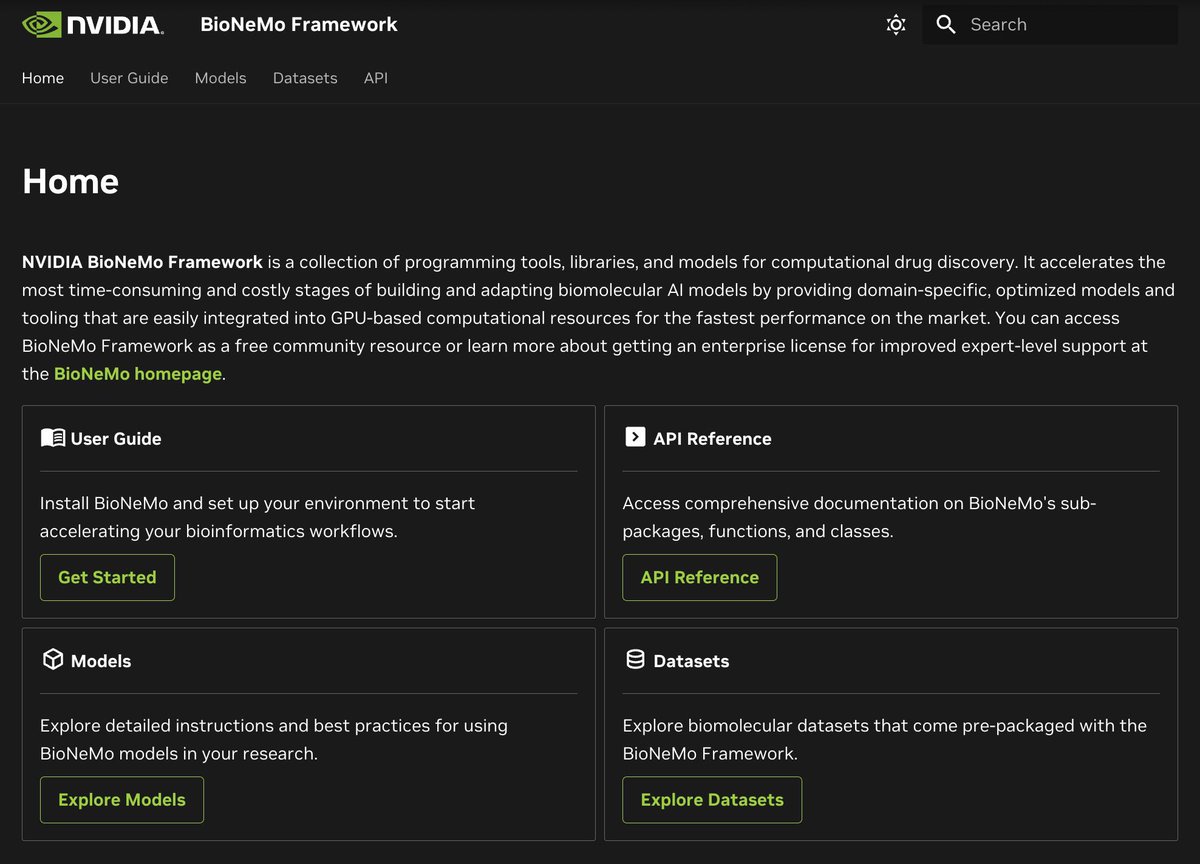
Big day today - @nvidia is open-sourcing the BioNeMo Framework, a toolkit of programming resources, libraries, and AI models designed for drug discovery. This release equips academic labs and biotech companies with advanced tools for protein design, small molecule generation, and even custom model development. Built with GPU optimization in mind, BioNeMo is tailored to speed biochemistry predictive modeling, and we think this is an impactful step ahead in computer-aided drug discovery nvidia.github.io/bionemo-framew…
Vega Shah tweet media
English
12
126
565
47.4K
Ali Madani retweetledi
Recursion
Recursion@RecursionPharma·
🚀Presenting at the NVIDIA AI Summit in Japan, @RecursionChris announced the release of our OpenPhenom-S/16 foundation model in @googlecloud's Vertex AI Model Garden & anticipated release on @NVIDIA’s platform. This non-commercial publicly available foundation model built on microscopy data will help democratize access to state-of-the-art machine learning tools to the broader research community to accelerate scientific discovery. 🔹The details: ▪️ OpenPhenom-S/16 is trained using masked-autoencoder-based self-supervised learning on over 3 million microscopy images from publicly accessible datasets (RxRx3 & JUMP-CP) ▪️ The off-the-shelf model outperforms traditional microscopy analysis pipelines – including CellProfiler – without additional tuning or training – and offers significant improvement in recalling known biological relationships from the StringDB database in the public JUMP-CP dataset compared to our earlier public model, Phenom-Beta. ▪️ We also released the RxRx3-core dataset, a challenge dataset in phenomics optimized for the research community which includes labeled images of 735 genetic knockouts and 1,674 small-molecule perturbations. More: ir.recursion.com/news-releases/…
Recursion tweet media
English
1
11
43
8.5K
Ali Madani retweetledi
Andrej Karpathy
Andrej Karpathy@karpathy·
Moravec's paradox in LLM evals I was reacting to this new benchmark of frontier math where LLMs only solve 2%. It was introduced because LLMs are increasingly crushing existing math benchmarks. The interesting issue is that even though by many accounts (/evals), LLMs are inching well into top expert territory (e.g. in math and coding etc.), you wouldn't hire them over a person for the most menial jobs. They can solve complex closed problems if you serve them the problem description neatly on a platter in the prompt, but they struggle to coherently string together long, autonomous, problem-solving sequences in a way that a person would find very easy. This is Moravec's paradox in disguise, who observed 30+ years ago that what is easy/hard for humans can be non-intuitively very different to what is easy/hard for computers. E.g. humans are very impressed by computers playing chess, but chess is easy for computers as it is a closed, deterministic system with a discrete action space, full observability, etc etc. Vice versa, humans can tie a shoe or fold a shirt and don't think much of it at all but this is an extremely complex sensorimotor task that challenges the state of the art in both hardware and software. It's like that Rubik's Cube release from OpenAI a while back where most people fixated on the solving itself (which is trivial) instead of the actually incredibly difficult task of just turning one face of the cube with a robot hand. So I really like this FrontierMath benchmark and we should make more. But I also think it's an interesting challenge how we can create evals for all the "easy" stuff that is secretly hard. Very long context windows, coherence, autonomy, common sense, multimodal I/O that works, ... How do we build good "menial job" evals? The kinds of things you'd expect from any entry-level intern on your team.
Epoch AI@EpochAIResearch

1/10 Today we're launching FrontierMath, a benchmark for evaluating advanced mathematical reasoning in AI. We collaborated with 60+ leading mathematicians to create hundreds of original, exceptionally challenging math problems, of which current AI systems solve less than 2%.

English
153
498
4K
448.9K
Chris Gibson
Chris Gibson@RecursionChris·
Looking forward to joining @NVIDIAHealth in Tokyo tomorrow (and for sure grabbing some 🍣 while there)! I love the energy I feel every time I visit Japan 🇯🇵 , every time we work with NVIDIA and whenever I get to tell the @RecursionPharma story! So should be a great week! But definitely needed coffee this morning to kick things into gear before airport visit n+1 this week (where n is >> than I wish it was…)
Chris Gibson tweet media
English
5
2
62
4.3K
Ali Madani retweetledi
Mathieu Lupien
Mathieu Lupien@MatLupien·
📖 New review in Nature Reviews Cancer on how epigenomic heterogeneity drives tumour evolution! We dive into: Check it out if you're into epigenetics, single-cell tech, or the future of cancer therapy! 📖 nature.com/articles/s4156…
English
2
72
257
25.8K
Ali Madani retweetledi
Bo Wang
Bo Wang@BoWang87·
🚀 We're thrilled to introduce Orthrus 🧬🐕—a groundbreaking mature RNA foundation model designed to push the boundaries of RNA property prediction! 🔬 What is Orthrus? Orthrus is a Mamba-based RNA foundation model, pre-trained using a novel self-supervised contrastive learning objective with biologically inspired augmentations. It optimizes the similarity between splicing isoforms and orthologous transcripts, capturing functional and evolutionary relationships to enhance mature RNA property prediction accuracy. 📑 Preprint: biorxiv.org/content/10.110… 💻 Code: github.com/bowang-lab/Ort… 🌐 Project Page:philechka.com/science/orthrus 📦 Model Weights: huggingface.co/antichronology… 🧠 Why Orthrus? Decoding the RNA regulatory code is key to understanding biology, but traditional experimental approaches are slow and costly. Existing genomic foundation models rely on techniques like masked language modeling or next-token prediction, which aren't fully aligned with the complexities of genomic data—leading to suboptimal results. 🌟 Orthrus Highlights: - Biologically-Informed Contrastive Learning 🧪: A novel contrastive learning objective designed specifically for genomics, maximizing similarity between splicing isoforms and orthologous transcripts across species. - Extensive Pre-training 📊: Trained on splicing annotations from 10 species and orthologous alignments from 400+ mammalian species (Zoonomia Project), with a focus on sequences of high functional importance. - Superior Representations🏅: Orthrus outperforms existing genomic models on 5 mRNA property prediction tasks, often surpassing supervised methods with just a simple linear transformation. - Efficiency in Low-Data Settings📉: Orthrus excels in low-data regimes, achieving state-of-the-art results with as few as 45 labeled examples for fine-tuning on RNA half-life prediction. Shoutout to the amazing leading authors Phil (@phil_fradkin) and Ian (@ianshi3)! Also the work is impossible without an outstanding collaboration by Karina (@karini925), Brendan (@frey_brendan) , Quaid (@quaidmorris), Leo J. Lee! @VectorInst @UHN @UofTCompSci @UofT_TCAIREM @UofT_LMP
English
10
90
434
114.7K