Andrew Cohill -- One Minute Essays

3K posts

Andrew Cohill -- One Minute Essays

Andrew Cohill -- One Minute Essays

@AndrewCohill

Once upon a time, I looked for love in all the wrong places. Finally fixed that and found love in all the right places.

Blacksburg, Virginia Katılım Mayıs 2012
1.4K Takip Edilen359 Takipçiler
Andrew Cohill -- One Minute Essays
@IMPERATORAUS I have begun to wonder if X is playing some small but important role here. On X, Protestants are meeting mostly civil, mostly kind explanations and illuminations of Catholic beliefs and Catholic teaching—perhaps for the first time in their lives. It may be having an impact.
English
0
0
2
69
IMPERATOR
IMPERATOR@IMPERATORAUS·
One of the most fascinating phenomenons on X is watching Protestant Christians post completely heretical content, then watching other Protestant Christians – whom I agree with – getting offended and correcting them. We're watching, in real time, the effects of rejecting Sacred Tradition and the Magisterium. As a Protestant, you actually have no authority to correct what you know in your heart and mind to be objectively wrong because each man and woman has become their own authority. And in making everyone their own authority, there is no authority. There is no correct interpretation. There is no incorrect interpretation. Everyone is right. Everyone is wrong. The Reformation keeps on reforming to the point where many of the beliefs held by Protestants Christians today would be condemned by Martin Luther and John Calvin themselves. This is not an attack on many of the amazing Protestant Christians I've come to know through this platform who are incredibly knowledgable and faithful Christians, but explains why so many are returning to the Catholic – and by extension Orthodox – Church. However, if you do choose to remain Protestant, at least return to the more traditional forms of magisterial Protestantism.
Matthew Marsden@matthewdmarsden

I just wanted to highlight the fact that there are hundreds of comments on my timeline from Christians who all claim to have the truth, yet they disagree with each other over a ton of stuff, including interpretation of scripture. Who is right? Who has the correct interpretation of Scripture? If everyone can interpret the scripture through the Holy Spirit, you cannot say a Catholic is wrong in their interpretation, any more than you can say any other Christian is. Did Jesus want us to be confused? Can you see that? I am okay with you believing whatever you want. I am not here to try and convert you, but saying you have the authority and the Catholic Church doesnt, when non-Catholics differ on their interpretation of the scripture, doesnt make sense " I am not Lutheran. I do not follow what he says." But you have the Bible he created. Where did he go wrong? Who gave him the authority to change the Bible, add a word, and if he had the authority to do that, when did the Holy Spirit leave him? Why don't we all have the same interpretation of the Bible? Be logical, not emotional. Love you guys. 🙏

English
22
25
222
16.2K
さやか
さやか@Charis_112·
帰り道に教会があるのですが、真夜中なので当然ながら門は閉じており、とても祈りたかったので、教会の前で泣きながら祈りました。外は寒かったのに、背中と肩はなぜか暖かく、寒さを感じませんでした。私は神様を感じた気がしました
日本語
42
188
1K
9.4K
Andrew Cohill -- One Minute Essays retweetledi
Kenny Carmody
Kenny Carmody@KennyCarmody·
Something worth understanding about why so many people still do not question the COVID injections. It is not simply laziness or indifference. The psychology of not-knowing is more active than that. For many people, the effort required to genuinely examine what happened would mean confronting the possibility that they were deceived by institutions they trusted, that decisions they made cannot be unmade, and that people they dismissed or treated poorly were raising legitimate concerns. Some may call it Cognitive Dissonance. That is a significant psychological cost. And many people are simply not ready to pay it. But the facts remain regardless. The definition of vaccine was changed by the CDC in 2021, from a product that produces immunity to one that produces an immune response. The change was not incidental. The mRNA products did not meet the prior definition and the definition was adjusted to accommodate them. The trials that supported emergency authorisation were of insufficient duration to assess long-term safety. The participants who experienced adverse events were in some cases removed from the efficacy analysis. The placebo group was vaccinated early, eliminating the possibility of genuine long-term comparison. The transmission protection that was used to justify mandates, the claim that vaccination prevented you from passing the virus to others, was never established by the trial data and was acknowledged by Pfizer’s own representative under European Parliament questioning to not have been studied. These are not interpretations. They are documented.
English
94
552
1.5K
26.9K
Ryno J van Vuuren🇺🇲
Ryno J van Vuuren🇺🇲@RynoJvVuuren·
@restoreorderusa We are Christians, gun loving, pro family, and our cultures and past and very similar. We want to assimilate and contribute to this amazing country. 🫡🇺🇲
English
18
16
310
1.9K
Paul Reynolds
Paul Reynolds@PaulReynoldsPhD·
Ischemic heart disease remains the world’s #1 killer, claiming over 9 million lives every year. We’ve blamed fat and cholesterol for decades, but the evidence points elsewhere. The real accelerator is glycation—excess sugars binding to arterial proteins—sparking chronic inflammation that stiffens vessels and builds deadly plaques. Control insulin resistance, and you protect your heart at the root. #InsulinResistance #Glycation #MetabolicHealth #HeartHealth
English
10
14
57
2.7K
Wade Buehler
Wade Buehler@wade_buehler·
@AndrewCohill @joaniej0243 @PaulReynoldsPhD Hey Andrew, I think you mean LDL went up. You want HDL to rise. And you're right. Most doctors don’t understand any of it. I tell them I eat a diet of whole, unprocessed food and I cut back on rice, potatoes and bread. It seems easier for them.
English
1
0
2
13
Andrew Cohill -- One Minute Essays retweetledi
Cards of History
Cards of History@GodPlaysCards·
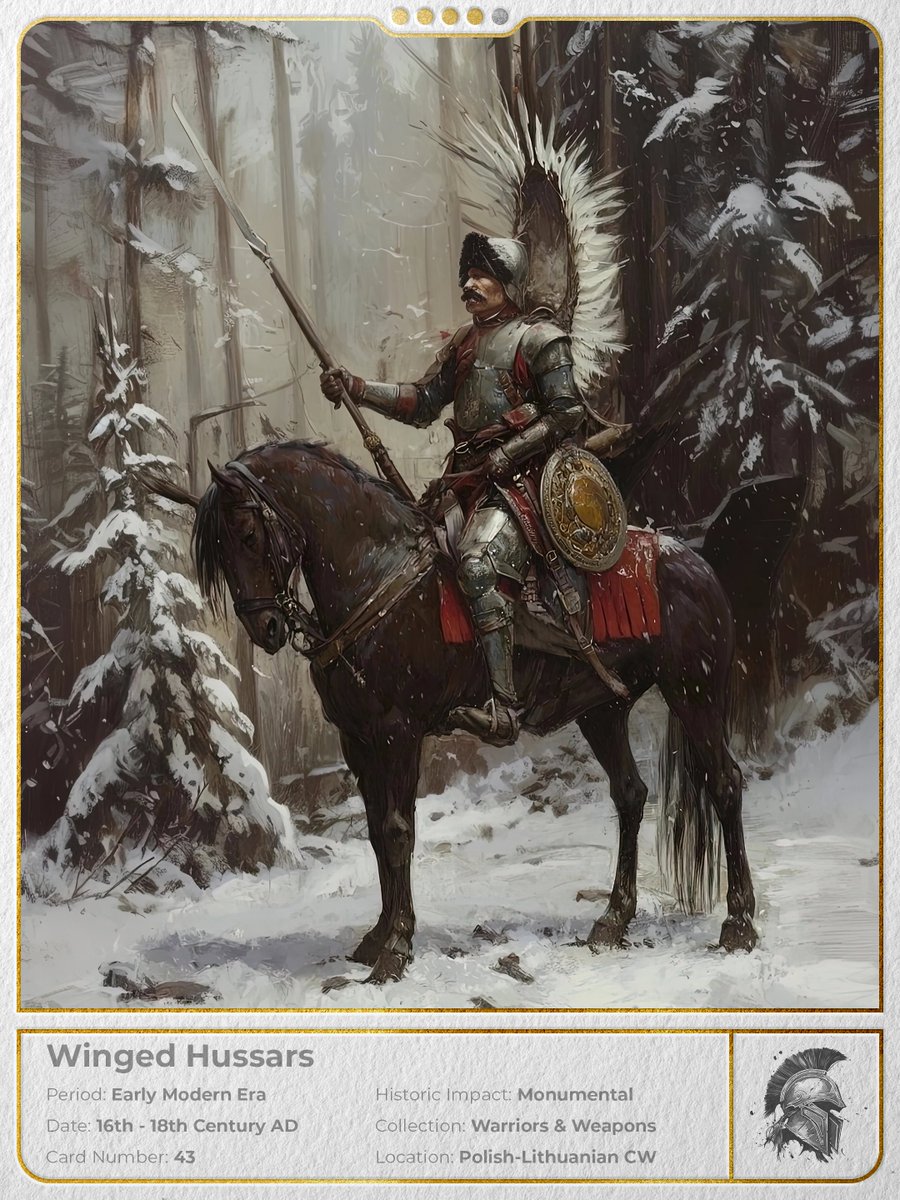
For two centuries, the Ottoman Empire had pushed westward, swallowing kingdoms whole. Vienna was on the brink of collapse, the gate to all of Europe was about to fall open. Then, over the ridge of the Kahlenberg hill, came the largest cavalry charge in recorded history. 🔸By 1683, the Ottoman Empire was the most powerful military force on earth. Grand Vizier Kara Mustafa marched with more than 150,000 soldiers toward Vienna, pulling with him over 300 cannons and a supply chain that stretched back to Constantinople. 🔸On July 14th, the Ottomans surrounded Vienna and began digging. They ran tunnels beneath the city walls, packed them with gunpowder, and detonated them one by one. The city's 12,000 - 15,000 defenders watched their walls crumble from the inside out. 🔸After two months under siege, Vienna was dying. Food had run out, disease was spreading through the streets, and the garrison had lost a third of its men. The city's commander, Ernst Rüdiger von Starhemberg, sent desperate messengers through enemy lines begging for relief. 🔸Holy Roman Emperor Leopold I had spent weeks negotiating one of the most unlikely alliances in European history. Catholic Austria, Protestant German princes, and the Polish-Lithuanian Commonwealth agreed to set aside their rivalries and march together. King Jan III Sobieski of Poland would lead them. 🔸Jan Sobieski was already a legend before Vienna. He had spent his career fighting the Ottomans on Poland's eastern frontier, and the Turks called him the "Lion of Lechistan." When the Pope personally wrote to him asking for help, Sobieski mobilized 74,000 men and began the march south. 🔸On the evening of September 11th, the allied commanders gathered on the Kahlenberg hill overlooking Vienna. Below them, the Ottoman camp stretched across the plain like a city of its own, with silk tents, horse herds, and cooking fires as far as the eye could see. Sobieski turned to his son and said: "Tomorrow we fight." 🔸The battle opened at dawn on September 12th with infantry clashing in the woods and ravines below the hill. For eight hours the fighting ground on, neither side breaking. Then, at around four in the afternoon, Sobieski ordered his cavalry to the ridge. 🔸The Polish Winged Hussars were the most feared heavy cavalry in the world. They rode massive warhorses, carried 16-foot lances, and wore wooden frames on their backs that held enormous eagle and ostrich feathers. At full gallop, the wings created a roaring sound that witnesses said was unlike anything they had ever heard. 🔸18,000 horsemen crested the hill and began riding downhill toward the Ottoman camp. Sobieski led from the front with 3,000 of his Polish Winged Hussars. The ground shook. The Ottoman lines, which had held all day, looked up to see a wall of horses, lances, and screaming wings descending on them at full speed. The formation collapsed almost immediately. 🔸The battle raged for 15 hours after which the Ottoman army was in full retreat. Kara Mustafa abandoned his command tent, his treasury, his artillery, and the green banner of the Prophet Muhammad. The Poles captured so much coffee from the Ottoman camp that it is credited with introducing the coffeehouse culture to Vienna. 🔸Kara Mustafa fled to Belgrade, where he was executed by order of the Sultan three months later. The Ottoman Empire never again threatened central Europe with the same force. The siege of Vienna is now considered the high-water mark of Ottoman expansion into the West. 🔸On the evening of the victory, Sobieski wrote a letter to the Pope. In it, he borrowed the words of Julius Caesar and wrote: "I came, I saw, God conquered." He had just saved Western Europe. He sent the letter before the bodies were even cleared from the field. 🔸The Winged Hussars charged for the last time at Vienna, and they won the most consequential cavalry battle in modern history. Within a generation, the age of mounted shock warfare would be over forever. Most people have never heard of the Battle of Vienna or of Jan Sobieski (he will receive his own card in due time). I believe it is vital you are now part of the group that does. History has a way of burying the moments that changed everything. Europe was about to fall. These men ensured it didn't. Thanks for sticking with me. Tomorrow I've got another fantastic story lined up for you.
Cards of History tweet media
English
234
1.8K
7.5K
268.1K
Andrew Cohill -- One Minute Essays retweetledi
Wall Street Apes
Wall Street Apes@WallStreetApes·
This literally blew my mind There is a healthcare law called ‘The Medical Loss Ratio Rule’ This law says any money you pay in healthcare premiums, the insurance company must spent 80% on your healthcare If they don’t, they’re supposed to refund you Yes, this is real Insurance companies found a loophole. They bought the doctors, the pharmacy benefits managers, the pharmacies and the clinics Now, they skyrocket prices on everything from doctors visits, tests and prescriptions so that your 80% is spent But it’s not really spent, they’re just paying themselves inflated prices so it actually doesn’t cost them anything. They just pocket all the money and never have to refund premiums This provision is written in the Affordable Care Act, called the 80/20 rule 80% must be spent on care or refunded, 20% can be profit for the insurance company We are being robbed blind
English
439
6.3K
13.6K
264.8K
Andrew Cohill -- One Minute Essays retweetledi
Matt Van Swol
Matt Van Swol@mattvanswol·
HOLY CRAP!!! Chimney Rock NC officials have confirmed that the Pennsylvania Amish Community are STILL HELPING REBUILD THE TOWN... ...NEARLY 550 DAYS AFTER HURRICANE HELENE!!!! GOD BLESS THE AMISH!!!!!!!!
Matt Van Swol tweet media
English
1.1K
12.8K
61.3K
391.3K
LadyValor
LadyValor@lady_valor_07·
Does anyone here have something in their house that’s over 20 years old?
English
1.6K
45
1.2K
71.6K
Andrew Cohill -- One Minute Essays retweetledi
☩ 𝕁𝕄𝕋 ☩
☩ 𝕁𝕄𝕋 ☩@SecretFire79·
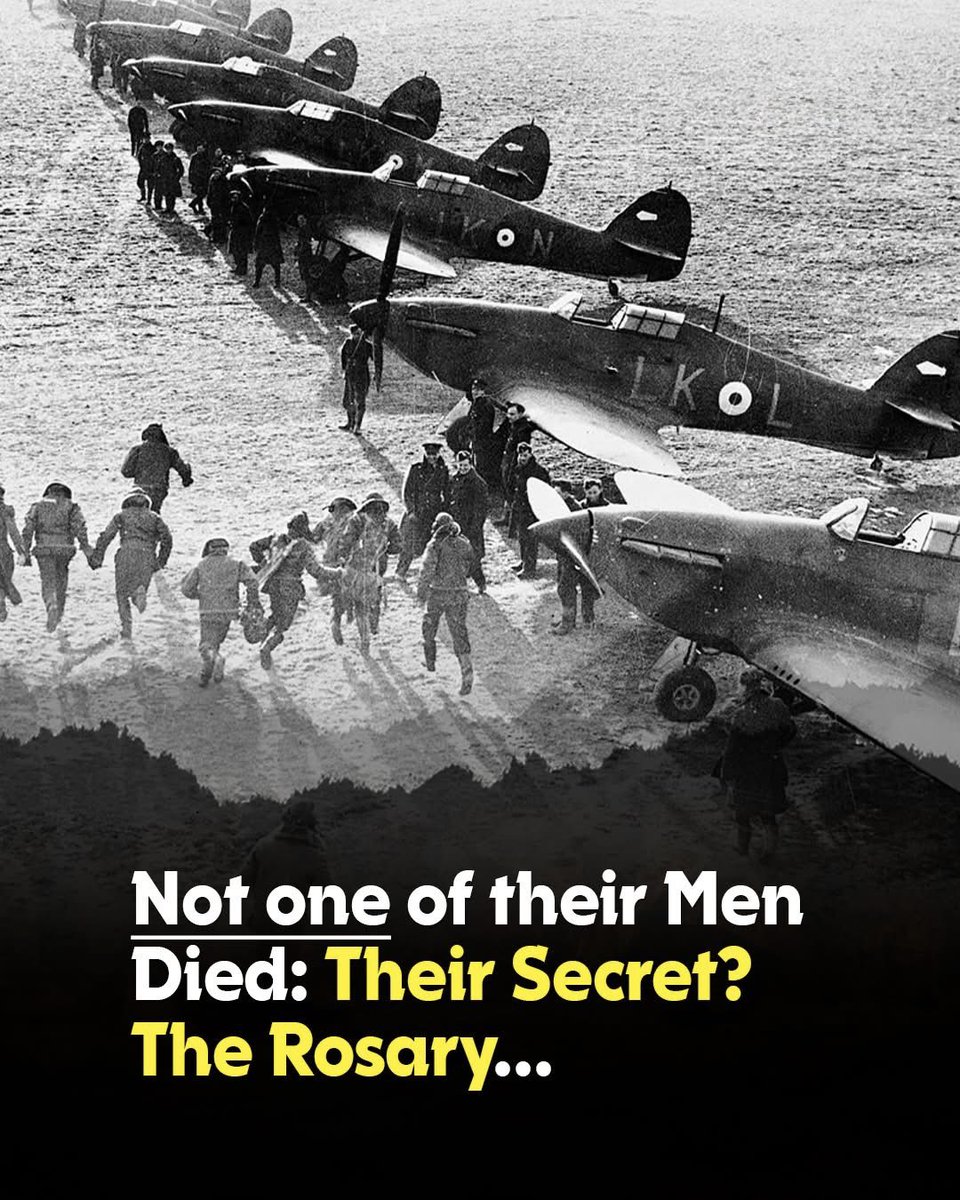
In March of the 1950s, a busy teacher-principal was interrupted by a salesman at her door. As he reached for his pen to get her signature, his Rosary accidentally came out with it. Curious, she remarked, “So, you are a Catholic.” “Oh no,” the man replied, “but a lot of us owe our lives to Our Lady. I promised Her I would always keep my Rosary with me and say it every day.” What followed was an incredible story from May 1940... A group of young Canadian airmen had just been assigned their new squadron leader, Stan Fulton. To their surprise, this officer chose to sleep in the bunkhouse with his men instead of the officers’ quarters. That very first night, he knelt on the floor and quietly prayed his Rosary. The men were stunned. But night after night, more of them began joining him. Soon, the entire squadron was praying the Rosary together before bed. Before leaving for dangerous night missions over Germany, Fulton gave each man a Rosary and made them a promise: “If you keep this Rosary with you always and pray it, I can promise you that Our Lady will bring you all back safely to Canada.” For the next four years, flying through flak, fire, and the terrors of combat, whenever danger closed in, Fulton’s voice would echo through the aircraft: “Hail Mary…” and the men would humbly respond in chorus. Hundreds of Rosaries were prayed in the skies. And the miracle? Their squadron was the only one that never lost a single plane or a single life throughout the entire war. In 1945, every man returned home safely to Canada. The salesman, who was one of those airmen, ended with these words: “I am not a Catholic, but I never forget to keep my Rosary with me and say it every day. When I change my trousers, the first thing I transfer, even before my wallet, is my Rosary.”
☩ 𝕁𝕄𝕋 ☩ tweet media
English
44
358
1.5K
26.6K
Andrew Cohill -- One Minute Essays retweetledi
Cards of History
Cards of History@GodPlaysCards·
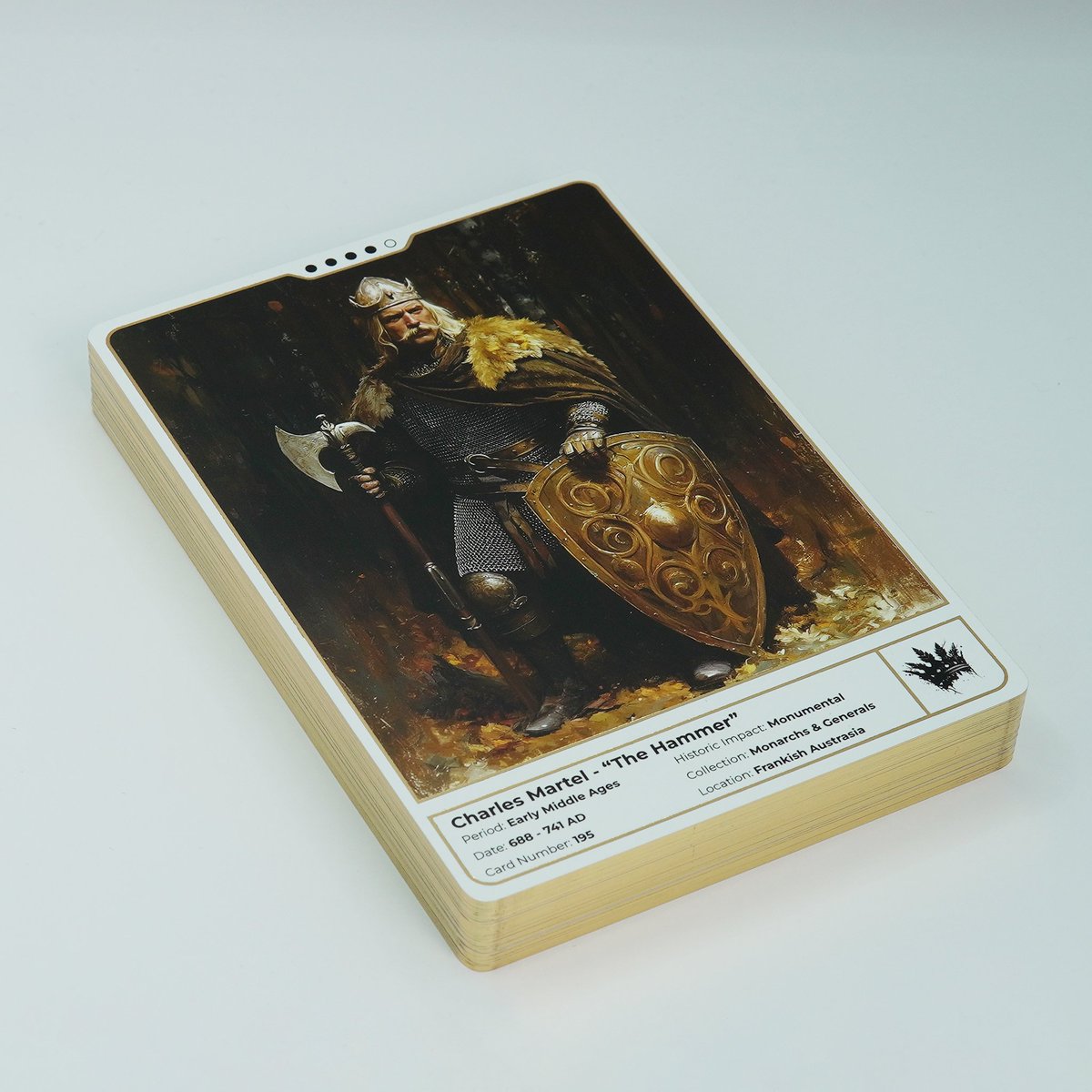
For a century, Islamic armies had swept across continents, from Arabia to Persia, across North Africa, through Spain, and into the heart of Christian Europe. No army could halt the advance. Then, on an autumn day in 732, a Frankish warlord stopped the hordes and saved the west. 🔸Charles was not yet called "Martel." The name, meaning The Hammer, would come later. He was the illegitimate son of Pepin of Herstal, had escaped prison, crushed rival Frankish factions in years of brutal civil war, and emerged as the undisputed strongman of the Frankish kingdoms. He had spent his entire adult life in a fight he was never supposed to win. 🔸He had one serious problem. His army had no cavalry worth relying on. The Umayyad horsemen were among the finest in the world. Every previous European force had crumbled under their charge. Charles knew he could not beat them in open ground. So he chose ground where it wouldn't matter. 🔸He positioned his infantry between the Clain and Vienne rivers, where woodland on both flanks funnelled the battlefield into a narrow corridor. The famous cavalry would have no room to sweep wide and build momentum. Charles had turned the terrain itself into a weapon. 🔸For roughly a week, the two armies watched each other. Abdul Rahman was wary. His men were deep in enemy territory, their supply lines stretched thin. But eventually, he attacked. 🔸The Frankish infantry formed a single dense mass. The Chronicle of 754 recorded what happened next: they stood immobile like a wall, holding together like a glacier. Shoulder to shoulder, shields locked, they absorbed charge after charge. They did not break. 🔸Then Duke Eudes, the same man who had begged Charles for help weeks earlier, led a cavalry strike on the unguarded Umayyad camp. The camp held the army's families, plunder, and supplies. When word reached the Muslim lines, entire units melted away to defend what they'd already taken. The formation fractured. 🔸Abdul Rahman rode into the chaos to restore order. He never came back. The governor was killed in the melee. Without their commander, the Umayyad forces collapsed. When Charles advanced the next morning, the camp was empty. The army had retreated south in the night, but Charles waited for his scouts to confirm it before he moved. He had not survived this long by being reckless. 🔸Charles stood on a battlefield that had just changed the world. The Umayyad armies would never again push this deep into Frankish territory. Later raids in 735 and 737 were turned back as well. The high-water mark had been reached, and it had broken against one man's infantry line. 🔸The victory transformed him. In the years that followed, Charles used his new authority to build a class of armored cavalry vassals bound to fight for their lord, one of the seedbeds from which feudal Europe would eventually grow. The continent he helped save would be reorganized around the battle he had just won. 🔸He never became king. He died in 741 as Mayor of the Palace, a title that disguised the reality that he ran everything. His grandson would be crowned Charlemagne (yes THE Charlemagne). The dynasty Charles built would hold Western Europe together for generations. 🔸The Arab chroniclers called it the Battle of the Court of the Martyrs. The Frankish chroniclers called it simply the great battle. Edward Gibbon argued that without this one afternoon, Islam might have swept unopposed to the English Channel. Europe was saved on that day. I believe it is vital to understand how close we were to losing it all, and honor the legacy that was left by Martel and his brave men. That's why I make these cards, that's why I share these stories. Thanks for being here with me.
Cards of History tweet media
English
14
35
236
6.3K
Andrew Cohill -- One Minute Essays retweetledi
KK.aWSB
KK.aWSB@KKaWSB·
1933年,一个叫丰田喜一郎的日本人拆了一台雪佛兰。 他把每一个零件摊在车间地板上,编号、测量、画图。 然后他试着把它们装回去。 装不回去。 他不是不会装。是他拆的时候发现了太多他想改的地方。 他父亲丰田佐吉是靠自动织布机起家的。老头子临终前给了他一笔钱,说:"去做汽车。日本不能永远从美国买车。" 喜一郎跑去底特律,在福特的工厂外面站了三天。 他进不去。 福特不让日本人参观。 他只能透过铁丝网看流水线上的工人——每个人面前堆着一座小山一样的零件,装完一辆车,零件山小了一点,然后又被补满。 他看了三天,回到名古屋,对他的工程师大野耐一说了一句话: "福特的方法是先把所有零件造出来,堆在那里,然后装。我们反过来——只在需要的那一秒钟,才把零件送到需要的那个人面前。" 大野耐一说:"那如果送晚了呢?" 喜一郎说:"那就是你的问题。" 大野耐一花了二十年解决这个问题。 他发明了一套系统:每个工位旁边有一张卡片,叫"看板"。工人装完一个零件,把看板传给上一个工序,上一个工序才开始生产。 没有看板,就不生产。 没有需求,就不制造。 仓库里不再堆零件山。 刚开始的时候,生产线经常停。因为任何一个环节出了问题,整条线都会停下来。 福特的人听说了,笑话他们:"生产线停了就是亏钱。你们这样搞,一天能造几辆车?" 大野耐一没有反驳。 他在每条生产线上装了一根绳子。任何工人发现问题,都可以拉那根绳子,整条线立刻停下来。 所有人一起看那个问题出在哪里,解决了,再重新启动。 福特的生产线一年停两次大修。丰田的生产线一天停二十次。 但每停一次,就消灭了一个以后永远不会再犯的错误。 十年后,丰田的良品率超过了福特。 二十年后,丰田的成本低于福特。 三十年后,丰田成了全球最大的汽车制造商。 这套系统后来有了一个名字——丰田生产方式,TPS。 全世界的制造业、医院、软件公司、甚至餐厅都在学它。 大野耐一晚年接受采访,有人问他TPS的本质是什么。 他没有说效率,没有说成本,没有说质量。 他说了两个字: "尊重。" 记者不理解。 大野耐一说: "尊重每一个工人的眼睛。 他站在那个位置,看见了你在办公室里看不见的东西。 你给他一根绳子,让他有权停下整条线—— 你不是在拖慢生产, 你是在告诉他:你的判断比这条线值钱。"
中文
248
1.6K
11.5K
1.3M
Andrew Cohill -- One Minute Essays retweetledi
Ihtesham Ali
Ihtesham Ali@ihtesham2005·
A new father became so terrified of never learning anything again that he accidentally dismantled the biggest lie in education. His name is Josh Kaufman, and he wasn't a neuroscientist or a professor. He was an author working from home, running a business with his wife, with a newborn daughter who had just obliterated any concept of free time he thought he had. Around week 8 of sleep deprivation, he had the thought every parent has. I am never going to learn anything new ever again. And because he was the kind of person who responds to panic with research, he went to the library and started reading everything he could find about how humans acquire skills. He read book after book, study after study. Every single one said the same thing. 10,000 hours. He had a full-body reaction to that number. 10,000 hours is a full-time job for five years. He didn't have five years. He didn't have five hours. He had a newborn and a business and a wife who was also building a business in the same house. So he kept digging. And here is where it gets interesting. The 10,000 hour rule came from a researcher named K. Anders Ericsson at Florida State University. What Ericsson actually studied was professional athletes, world-class musicians, chess grandmasters people at the absolute tip of ultra-competitive, ultra-high-performing fields. His finding was that the people at the very top of those narrow fields had put in around 10,000 hours of deliberate practice. That is all the finding said. Then Malcolm Gladwell wrote Outliers in 2007, and the message went through a game of telephone that destroyed its meaning entirely. It takes 10,000 hours to reach the top of an ultra-competitive field became it takes 10,000 hours to become an expert, which became it takes 10,000 hours to become good at something, which became it takes 10,000 hours to learn something. That last statement is completely false. And the actual research had been showing something different the entire time. When cognitive psychologists study skill acquisition, they measure a graph that looks identical across every domain they have ever tested. At the start, performance is terrible. With a small amount of practice, it improves rapidly. Then it plateaus, and subsequent gains become much harder and slower to achieve. The steep part of that curve the jump from knowing nothing to being reasonably good happens much faster than anyone tells you. Not 10,000 hours. Not 1,000 hours. 20 hours. Kaufman tested this himself. He had always wanted to learn ukulele. He picked one up, put 20 hours of focused deliberate practice into it, and stood on a TEDx stage playing a medley of recognizable pop songs in front of a live audience. The crowd went wild. He then told them that performance was his 20th hour. But 20 hours is not just a number. There is a method inside it. The first step is to deconstruct the skill. Most things we think of as single skills are actually bundles of dozens of smaller skills. You do not need all of them. You need the ones that get you to your specific goal the fastest. In music, this means most songs use four or five chords. Learn those first. Ignore the rest until they matter. The second step is to learn just enough to self-correct. Get three to five resources books, courses, videos but do not use them as a reason to delay practice. The point of learning is not to master theory first. It is to get good enough at noticing your own mistakes that you can adjust as you go. The third step is to remove barriers to practice. Not through willpower. Through structure. If the instrument is in the case in the closet, you will not play it. If your phone is in the room, you will not focus. Kaufman was brutal about this. The environment does the work that discipline cannot sustain. The fourth step is the one that actually makes the system work. Pre-commit to 20 hours before you start. Here is why this matters. Every skill has what he called a frustration barrier. The early part of learning anything is genuinely terrible. You are incompetent and you know it. That feeling is so uncomfortable that most people quit before they ever cross to the other side of the curve. By pre-committing to 20 hours, you are making a contract with yourself to push through the frustration long enough to arrive at the part where things start clicking. The barrier to learning something new is never intellectual. It is emotional. We are afraid of feeling stupid. That fear costs most people everything they could have learned. Kaufman figured this out while holding a baby and running out of time, which is the most human possible condition for having a breakthrough. Most people are waiting for the perfect season to start. He just started. 20 hours is 45 minutes a day for a month. That is it. That is the price of going from knowing nothing to being genuinely capable at almost anything you can name. The 10,000 hour rule was never about learning. It was about becoming the best in the world. You probably do not need to be the best in the world. You just need to start.
English
16
269
995
43K
Malick Thioub
Malick Thioub@Mthioub_t·
En tant que étudiant et j'ai peur. Pas peur de l'IA. Peur de me retrouver diplômé avec des compétences que personne ne cherche plus. On nous forme sur des savoirs qui sont déjà en train d'être absorbés par des outils comme Claude. Et pendant ce temps, les cours continuent comme si rien ne se passait. Personne n'en parle de façon sincère d'ailleurs, toujours la langue de bois. On paie des années d'études pour apprendre quoi exactement ? À exécuter des tâches qu'une IA fait en 3 secondes ? Je ne dis pas que l'école ne sert à rien. Je dis qu'elle forme pour un monde qui est en train de disparaître. Et ça m'inquiète.
Français
635
1.6K
9K
960.1K
Ryno J van Vuuren🇺🇲
Ryno J van Vuuren🇺🇲@RynoJvVuuren·
My first American beer. I didn't recognize any of the other brands, so I got a classic.
Ryno J van Vuuren🇺🇲 tweet media
English
856
40
1.3K
34.6K
Eric S. Raymond
Eric S. Raymond@esrtweet·
A science fiction novel I'm reading reminds me of one of my least favorite authorial contrivances in that genre. Our heroes' spaceship assumes standard orbit around an alien world, they start listening to electromagnetic traffic, and more or less instantly start getting video of the aliens below. No. No, it's not going to work that way, not at all, unless you arrive during a ridiculously short window after the locals invented radio. This assumption is a hangover from the analog technology of my youth. The problem is that it's highly unlikely that the locals are still using analog audio and video. If they were, this contrivance is reasonable. There are only a limited number of ways to do that, and it shouldn't be all that difficult to deduce the parameters from looking at the shape of the waveforms. Once they've gone digital, though, all bets are off. There are huge number of possible ways to write digital audio and video codecs, and you can't figure out what encoding is being used from the shape of the waveform. The really good ones look like white noise, because the better your video compression is the more statistically random the compressed blocks are. Aliens arriving in orbit around Earth today would still be able to crack audio with passive listening, because broadcast radio has not gone to spread spectrum digital. But the window for video started closing in the first decade of this century and is now pretty much shut. There's no way around it. Your visiting spaceship is going to have to capture a local video receiver, peel the hardware, and disassemble the firmware. This is not a particularly difficult task, but it is one that requires getting up and close and personal with alien artifacts. Okay, I'll stop waving my cane now.
English
175
73
1.2K
56.9K
RossRadio
RossRadio@cqcqcqdx·
Great for installing your wire antennas way up👍
English
10
16
110
8.1K