Après Capital

5.3K posts

Après Capital banner
Après Capital

Après Capital

@ApresCapital

/ Markets, Macro, Magniloquent /

NYC / Aspen / Courchevel Katılım Ocak 2019
6.1K Takip Edilen1.2K Takipçiler
Après Capital
Après Capital@ApresCapital·
@aleabitoreddit @thgstar2 Any updated thoughts on $SMTOY now — 4 months later. China ban still impacting them hard , or are they still a viable alternative. Ty.
English
3
1
3
652
Serenity
Serenity@aleabitoreddit·
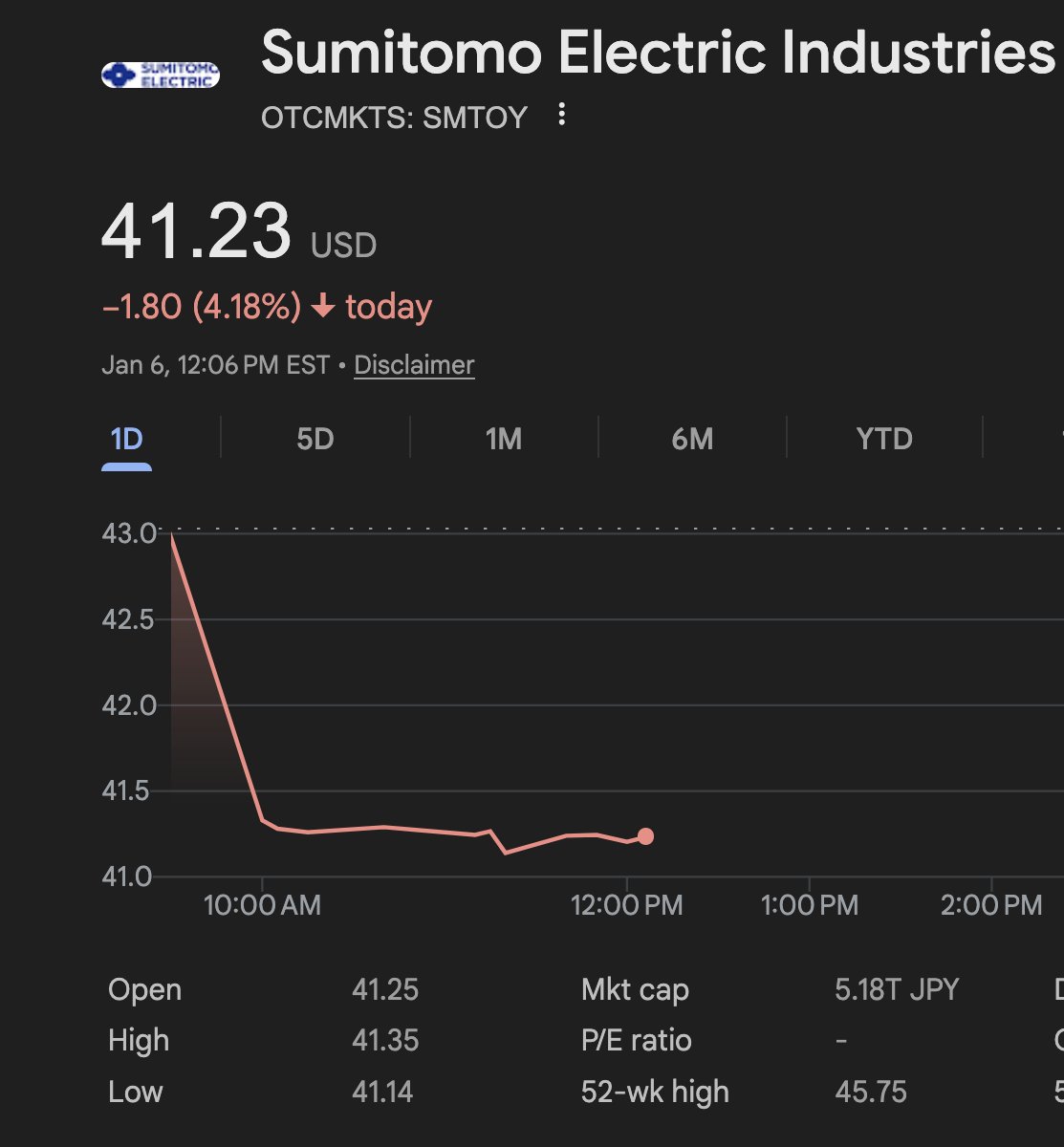
@thgstar2 $SMTOY as a stock would likely be fine since it's an extremely large Japanese giant and InP substrate production is just a small part of their business. But China sent a nuke over to the InP supply chain in Japan with the export control today.
Serenity tweet media
English
1
0
11
6.2K
Serenity
Serenity@aleabitoreddit·
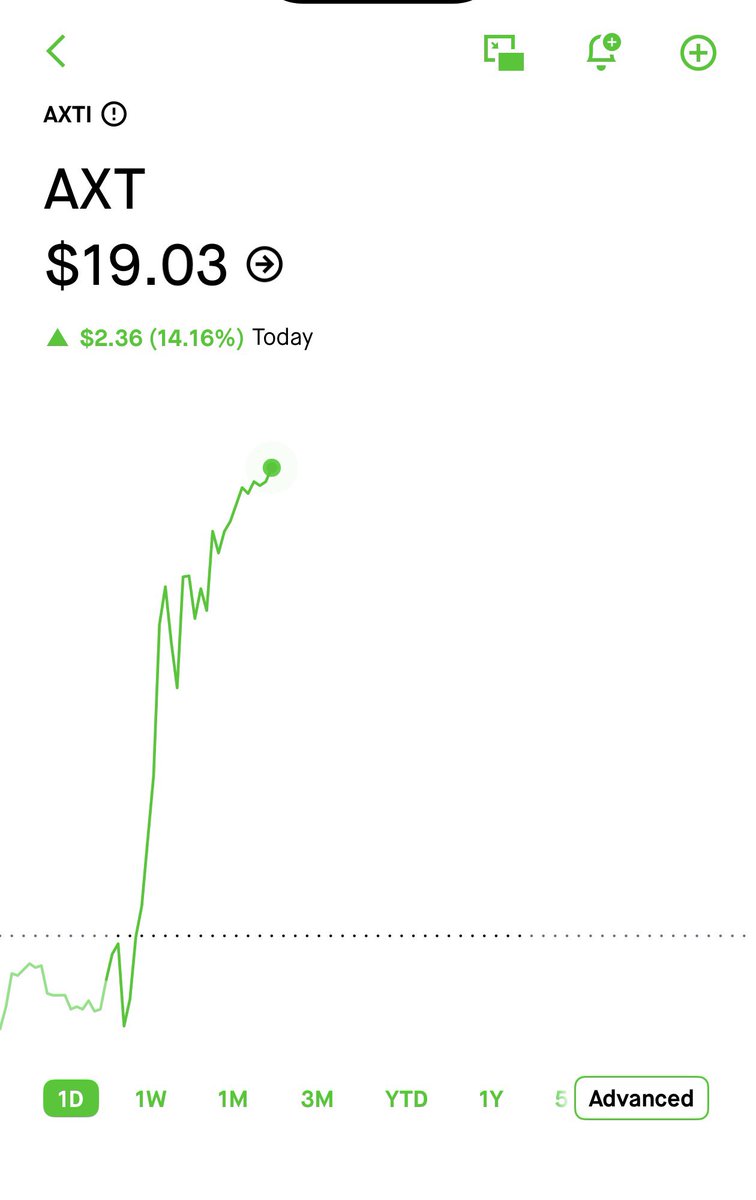
If you’re wondering why $AXTI is up 14%, China probably read this and sent an export control nuke to its only other competitor. AXT just became the monopoly of the InP substrates.
Serenity tweet media
Serenity@aleabitoreddit

Warning: The entire AI industry will likely be bottlenecked by two companies: 1. $AXTI ($700M) 2. $SMTOY ($31.7B) Which both control 60–70%+ of the world's InP substrates. Future $NVDA, $GOOGL TPU v7 pods, $META, $MSFT, $AMZN hyperscaler clusters require InP-based lasers and receivers. $AVGO, $LITE, $COHR use for EMLs for 800G/1.6T transceivers, DFB lasers, and other optical infra. Without InP substrates, the supply chain falters. After looking at TPU BOM to Maia BOM, it looks like future ASICs + GPUs + hyperscaler deployments are heavily reliant on photonics. And two vendors could freeze the global InP substrate market covering nearly all of: - Hyperscaler optics (TPU pods, etc) - Optical transceivers (5g, data) - LiDAR (robotaxis, drones, military) -Optical Modules (interconnect clusters) - Silicon photonics laser dies (Nvidia’s future co-packaged optics and Intel/Broadcom SiPh engines use InP CW laser arrays.) Since these companies make up majority of the market supply: -AXTI (est. ~30–35%) -Sumitomo (est.~30%) - JX Nippon (est. 10-15%) That’s it. (eg. 2021 industry note from Yole states that "Sumitomo Electric + AXT together had “more than 75%” of the InP substrate market") Hyperscalers/AI are moving toward photonics but the entire AI industry is fragile. If either $AXTI or $SMTOY stop supplying materials, the entire future AI buidlout gets crippled. It's even crazier that a $700m company could become the the center of it all. InP substrate will likely one of the biggest bottlenecks alongside HMB as the AI industry shifts to photonics.

English
31
32
484
392.4K
TheValueist
TheValueist@TheValueist·
$AXTI $5016 $SMTOY $IQE The post makes 4 linked assertions and then draws a strong conclusion: 1) Sumitomo Electric is a Japanese supplier of indium phosphide-related materials; 2) China “exports 70% of raw indium supply”; 3) China has “just banned all exports to Japan,” implying Japan-based competitors will be starved of indium feedstock and therefore unable to respond to demand; 4) as a result, “It’s ATX or bust” for most buyers, implying AXT retains unusually strong pricing power and customer captivity despite the export-permit disruption that drove the Q4 revenue shortfall. The factual accuracy of the underlying premises is mixed, and the causal chain from those premises to the “or bust” conclusion is materially overstated given how indium and indium phosphide supply chains actually function and how customers qualify compound-semiconductor substrates. Sumitomo Electric Industries, Ltd. is a Japan-headquartered company (Osaka) and is a relevant supplier across optical and electronics value chains, including InP substrates as part of its data-center strategy disclosures. This point is directionally correct but does not, by itself, establish vulnerability to Chinese export-permit dynamics. Sumitomo’s InP substrate output is not produced inside mainland China in the way AXT’s Tongmei operations are, and therefore it is not directly gated by the same PRC export-permit process that constrained AXT’s Q4 shipments. The post’s implication that Sumitomo’s ability to supply is mechanically tied to the same permitting bottleneck as AXT’s InP exports is not supported by public evidence. The “70%” claim contains an important but easily-misinterpreted truth. USGS data indicates China is the leading global producer of indium, accounting for about 70% of the world total, and is also the leading exporter; it also provides country-by-country refinery production and capacity estimates that show meaningful refining capability outside China (including the Republic of Korea, Japan, Canada, Belgium, and France). “70% of global production” is not the same as “exports 70% of raw indium supply,” and the distinction matters for competitive dynamics. The same USGS source indicates China exported 347 tons of indium in the first 9 months of 2024, with exports primarily to the Republic of Korea (74%), Malaysia (10%), and the United States (10%), which implies that (at least in that cited period) Japan was not a top direct destination for China’s indium exports. In parallel, the same USGS document notes indium is most commonly recovered from ITO scrap in Japan and the Republic of Korea, underscoring that Japan’s indium availability is not purely a function of direct Chinese exports; domestic and regional recycling loops are structurally important in Asia. The most problematic statement in the post is the claim that China “has just banned all exports to Japan,” and the more specific implied claim that this ban is directly about “raw indium.” Recent reporting indicates China imposed restrictions on exports of “dual-use items” to Japan for military end users, military purposes, or other end uses that could enhance Japan’s military capabilities, and subsequent commentary emphasized uncertainty around which items are practically impacted. This is not equivalent to a blanket ban on all exports to Japan across civilian industry, and Reuters reported China’s commerce ministry stated civilian users would not be affected by the new dual-use export ban. There are also indications of broader chilling effects and administrative friction: Reuters reported (citing the Wall Street Journal) that exporters said China had halted export license reviews to Japanese companies, including applications from non-military sectors, while also noting action around rare earths and rare earth-based magnets. Even taking that more expansive interpretation seriously, the available reporting points primarily to rare earths/magnets and to export-license processing behavior; it does not substantiate a verified, explicit ban on “raw indium” exports to Japan. Separately, China implemented export controls effective 02/04/2025 on specific “indium-related items,” which is a different policy vector from the 01/2026 dual-use export restrictions aimed at Japan. MOFCOM described this as export controls on 25 rare metal products across 5 categories, including indium, requiring exporters to apply for permission. Industry and specialist summaries specify that the indium-related controlled items included indium phosphide plus organometallic precursors (trimethylindium and triethylindium), along with associated technology/data needed to produce products using these items. Critically, Project Blue’s analysis of the 02/2025 actions explicitly expected the impact on ex-China indium metal prices to be minimal and anticipated that trade in indium metal and scrap would continue “as usual,” because the restrictions were on indium phosphide and specific chemical precursors rather than on indium metal itself. This directly contradicts the post’s framing that “raw indium” exports were banned in a manner that would starve Japan-based competitors. From a technical supply-chain standpoint, “raw indium” is not typically the bottleneck for InP substrate availability in the way the post implies. Indium is primarily consumed globally via indium tin oxide for displays; InP substrates are a specialized, high-purity, low-volume application, where the binding constraints are usually crystal growth capacity, defectivity/yield, wafer diameter transition (4-inch to 6-inch), polishing/epi-ready surface quality, and customer qualification cycles rather than elemental indium availability. USGS world refinery production estimates for indium (2024e) of about 1,080 tons, with non-China production and substantial non-China capacity, indicate a global supply base that is not singularly determined by Chinese export flows even if China is dominant. A rough mass-balance illustrates the point: a 150 mm (6-inch) InP wafer on the order of 600–700 µm thickness contains on the order of ~50 g of InP, of which ~79% is indium by mass, implying ~40 g of indium per wafer before yield losses and scrap. Even allowing for substantial process loss, the indium metal tonnage required to support very large increases in InP wafer output is small relative to global indium refining volumes, meaning that a generalized “indium shortage” is less likely to be the gating factor than the ability to grow, slice, polish, and qualify more InP boules at acceptable defect density and uniformity. This is consistent with the industry’s repeated emphasis on substrate scarcity and capacity expansion rather than on elemental indium scarcity. Sumitomo Electric’s own disclosures emphasize ramping production capacity for optical devices used for intra-data-center links and note that InP substrate production capacity has also expanded, including large-diameter (4–6 inches) capability. This is inconsistent with the post’s suggestion that Sumitomo is structurally unable to participate meaningfully in filling supply gaps; capacity expansion is explicitly underway. Similarly, JX Advanced Metals has publicly discussed incremental InP substrate capacity investment, with one industry report stating investments intended to increase InP substrate production capacity by about 50% compared with 2025 levels (timing extending to the end of FY2027). These data points indicate that credible competitors exist and are expanding, even if short-term elasticity remains limited. Freiberger Compound Materials publicly positions itself as a supplier of GaAs, InP, and GaN wafers, representing another credible ex-China source for some customers. The “inventory levels will not be high” claim is not verifiable from the post and is directionally ambiguous. If the concern is indium feedstock access in Japan, rational behavior at the manufacturer level would normally be to increase strategic inventory of high-purity indium and critical process consumables where feasible, particularly when lead times for procurement and qualification are long and when end demand is perceived to be in a multi-year upcycle. If the concern is instead customer inventory of InP substrates, many downstream device manufacturers keep limited substrate inventory because the value is embedded later in the process and because substrate needs are tied to fab schedules; however, recent export-permit volatility would generally increase the incentive for customers to build buffer stock and dual-source where qualification allows. In either interpretation, the post asserts a specific inventory outcome without evidence and therefore should be treated as speculation rather than a fact base for investment decisions. The strongest portion of the post is the implicit observation about customer stickiness and the limited ability to instantly substitute InP substrate suppliers. For high-speed optical components (lasers, modulators, photodetectors) and advanced photonic integrated circuits, substrate changes can alter epi growth outcomes, defectivity, and reliability distributions, which typically forces lengthy requalification. This can create near-term “captive demand” where customers continue ordering from a constrained supplier rather than risk a yield and reliability reset. That dynamic supports the general idea that AXT’s demand may remain strong even when shipments are delayed by permits, and it is consistent with AXT’s statement that customer demand remains very strong despite missed shipments. However, the post overextends this valid concept into an absolute conclusion (“or bust”), ignoring 1) the existence of credible competitors, 2) ongoing capacity expansions, and 3) the powerful incentive for ex-China customers to accelerate qualification of non-China sources precisely because AXT’s China-based export permits have proven to be fluid and discontinuous quarter-to-quarter. The investment implications of the post, when corrected for factual and causal overreach, are nuanced and revolve around 3 competing forces: 1) near-term revenue volatility driven by permit timing; 2) medium-term risk of share leakage as customers accelerate dual-sourcing; 3) structural upside from a tight InP substrate market if AXT can secure more predictable permits and successfully expand capacity. AXT’s 01/08/2026 update reduced Q4 revenue expectations to $22.5–$23.5 million due to fewer InP export control permits being issued than expected, versus prior guidance of $27–$30 million. This reinforces that the primary binding constraint for AXT’s ex-China InP business is regulatory throughput (permit issuance cadence), not end demand. The equity market implication is a structurally higher risk premium: revenue is no longer a simple function of bookings, capacity, and yields, but also a function of an opaque and potentially politicized export-licensing process that may not align with quarterly reporting periods. This can create repeated “air pockets” in reported financials even with strong underlying demand, raising the probability of earnings power being discounted and increasing the value of downside protection around earnings dates and permit-related headlines. At the same time, the post’s attempt to argue that competitors cannot respond because of “raw indium” constraints is not supported by the best available data. USGS evidence indicates meaningful non-China indium refining production and capacity and highlights Japan/Korea recycling of indium from ITO scrap, which reduces dependence on direct Chinese indium flows. Moreover, the 02/2025 China export controls on indium-related items were targeted at indium phosphide and specific organometallic precursors rather than indium metal, and Project Blue expected indium metal and scrap trade to continue largely as usual. Therefore, the probability that Japan-based InP substrate suppliers are “blocked” primarily by raw indium unavailability appears low on the current evidence base. A more realistic constraint set for competitors remains wafer growth/polish capacity, diameter migration, and qualification lead times, not elemental indium access. This suggests that competitor response is likely to be partial and time-phased rather than impossible: limited in the next 1–2 quarters, improving over 4–8 quarters as expansions come online and as customer qualifications complete. For AXT specifically, the corrected implication is that the near-term revenue miss and stock volatility are not “solved” by assuming competitors are incapacitated. Instead, AXT faces a dual risk: 1) permits constrain shipments in the short run, mechanically depressing revenue and potentially increasing working capital volatility via inventory accumulation; 2) permit instability increases customer motivation to shift incremental volume to ex-China suppliers over time, which can erode the terminal value of any capacity expansion AXT is funding. Offsetting this, market tightness and slow competitor elasticity can preserve AXT’s strategic relevance and allow backlog to remain robust; if permit issuance normalizes, delayed shipments can convert into sharp revenue rebounds, with potential operating leverage if incremental volumes run through a largely fixed cost base. The post’s “ATX or bust” framing effectively assumes the upside path (persistent customer captivity plus eventual permit normalization) while underweighting the structural downside (permit regime becomes more restrictive or more destination-specific, pushing customers to accelerate supplier diversification). For competitors, the implication of the post is directionally correct only in the sense that any sustained disruption at AXT increases the strategic value of qualified ex-China InP substrate supply. Sumitomo Electric’s disclosed InP substrate capacity expansion and JX Advanced Metals’ reported investment plans indicate that the competitive response is not theoretical. If AXT’s permits remain volatile, competitors gain both volume opportunity and negotiating leverage; if permits normalize, competitors still benefit from structurally rising demand from AI infrastructure and optical interconnect scaling. The key question is not whether competitors exist, but whether they have sufficient qualified, allocable capacity at the required wafer diameters and quality to take incremental share in time to matter for AXT’s medium-term earnings power. The Sino-Japan trade dispute context introduces a separate macro risk channel that the post gestures toward but misstates. China’s 01/2026 dual-use export restrictions aimed at Japan and the reported administrative tightening of export license reviews to Japanese companies raise the possibility of episodic supply-chain disruption for Japan-based high-tech manufacturers more broadly. If export licensing friction widens to cover additional controlled items relevant to compound semiconductors, Japanese suppliers could face disruptions in specific input categories. However, there is not credible public evidence that “raw indium” exports were comprehensively banned to Japan, and the best available evidence suggests China’s earlier indium controls were directed at indium phosphide and select precursors rather than indium metal. As a result, the prudent interpretation is increased headline and policy risk around Japan-facing supply chains, not a confirmed structural incapacity for Japanese InP substrate suppliers. Netting these points, the post should be treated as sentiment and hypothesis rather than as a validated supply-chain fact pattern. The portion that aligns with reality is that InP substrates are scarce, qualification is slow, and short-term substitution away from an incumbent supplier is difficult, which can preserve AXT’s strategic importance even during permit-driven shipment disruptions. The portion that is unreliable is the claim that China’s policy actions amount to a blanket ban on “raw indium” exports to Japan and therefore eliminate Sumitomo (and by extension other Japanese competitors) as a meaningful alternative source. The most important investment implication is that regulatory gating, not end demand, is the principal variable for AXT’s near-term financial trajectory, while the medium-term outcome depends on whether permit volatility accelerates customer diversification faster than AXT can expand capacity and secure predictable export licensing. Key signposts for validating or falsifying the post’s “or bust” conclusion include observable permit issuance cadence in Q1 2026 relative to AXT’s commentary, evidence of customer dual-sourcing activity (qualification announcements, second-source wins at competitors), and any credible, item-specific confirmation that indium metal exports to Japan have been curtailed beyond what is implied by existing indium-phosphide/precursor controls and Japan-focused dual-use export measures.
Derpy@Derp200173

@TheValueist Good explanation and thesis. But remember Sumitomo Electric is Japanese, China exports 70% of raw Indium supply and has just banned all exports to Japan. Sumitomo Electric inventory levels will not be high given the permitting situation. It’s ATX or bust for most clients..

English
4
4
18
8.4K
Après Capital retweetledi
Ziad Daoud
Ziad Daoud@ZiadMDaoud·
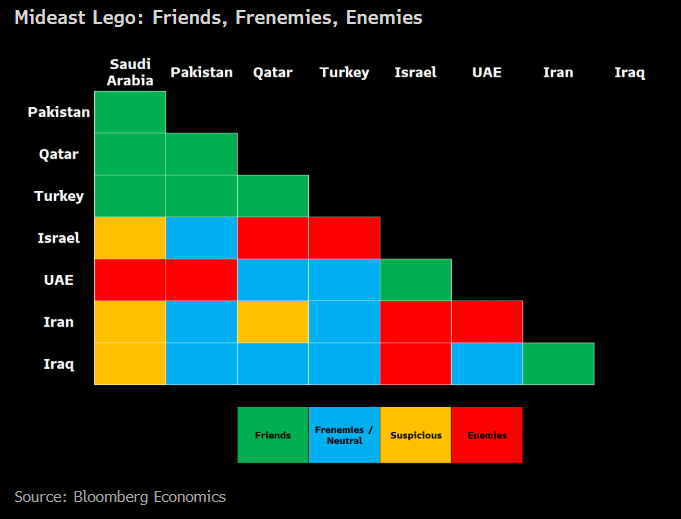
What do the UAE’s OPEC exit, Houthi restraint in the Red Sea, and a Saudi loan to Pakistan have in common? They point to 4 alliances shaping the Mideast today: 1. Iran + its axis 2. UAE + Israel 3. Saudi + Pakistan 4. Turkey + Qatar Analysis, with @DEsfandiary, on @TheTerminal
Ziad Daoud tweet media
English
19
48
141
24.6K
Après Capital retweetledi
ORBS Official (NASDAQ: $ORBS)
@MrBeast just landed on the 2026 @TIME 100, the most influential people in the world. As AI commoditizes content production, distribution and audience trust become the scarce assets. $ORBS has backed @MrBeast Beast Industries (~7% of the Eightco treasury). 🔗 time.com/collection/100…
ORBS Official (NASDAQ: $ORBS) tweet media
English
8
15
99
26.3K
Après Capital retweetledi
Sound Dobad
Sound Dobad@SoundDobad·
Sir, job applications are up 686,000% this morning
Sound Dobad tweet media
English
234
2.2K
41.3K
2M
Andy Constan
Andy Constan@dampedspring·
Two of the three dissenters on the word "additional" are the same ones who stopped QT and flooded the banking system with RMO reserves. I really don't get the logic of Logan, Hammack, Musalem, and in the background Perli. The Repo Gang of Four want a large robust abundant reserves scheme and high short term rates. Literally the root cause of high inflation.
English
8
4
80
14K
Après Capital retweetledi
Patrick OShaughnessy
Patrick OShaughnessy@patrick_oshag·
Paul Tudor Jones says the US is more dependent on equity prices than ever, and explains what a 35% correction would trigger in the economy: "We're 252% of stock market cap to GDP. In 1929 we were 65%. In 1987 we got to ~85-90%. In 2000, 170%. If you think about the periodicity of significant bear markets. Since 1970, we get a mean reversion about every 10 years. Let's say mean revert to the past 25 or 30-year PE. That would be a 30, 35% decline. Well, 35% on 250% of GDP is 80, 90% of GDP. 10% of our tax revenues are capital gains, they go to zero. So you can see the budget deficit blowing up. You can see the bond market getting smoked. You can see this kind of negative self-reinforcing effect. In the stock market, we're over-equitized as a country. We have the highest individual equity weightings in the history of the country. And then the real problem is if you look at private equity in 2007-2008, that was about 7% of institutional portfolios. Now it's about 16% of the institutional portfolios. We're so much more illiquid than we were in 2008. The problem is that if you buy the S&P at this current valuation, the 10-year forward return is negative when you buy the S&P with a PE of 22. That's what history shows. So yes, the S&P is spectacular long-term, if you have a hundred-year view. But that's because that's an average of a hundred years, including times when the S&P 500 PE was 6, 7 and 8, or one third of what it is right now. Valuation matters a lot, and the stock market's really high and it's gonna be really hard to make money from here with any kind of long-term view."
Patrick OShaughnessy@patrick_oshag

My guest today is Paul Tudor Jones (@ptj_official), one of the greatest macro traders of all time. He correctly predicted the 1987 stock market crash and shorted the Japanese bubble in 1990. For over 40 years, his flagship fund has had a negative correlation to the S&P 500. 100% of his returns are alpha. He says today's market has so many similarities to 2000, "the easiest bear market I've ever seen in my whole life." He makes the case for going long dollar-yen, why Bitcoin beats gold as an inflation hedge, and why he was wrong about Warren Buffett. But what I'll remember most from this conversation is Paul's zest for life. He's 71 and still wakes at 2:30 every morning to trade the London open. He works out for two hours a day. He walks with his wife every evening. He travels the country chasing peak spring and peak fall. He's so excited about the songs picked for his funeral that he wishes he could be there to hear them. Paul has lived five lifetimes in one. He's one of the most entertaining and interesting people I've met, and the conversation will leave you searching to be as passionate about what you do as he is about what he does. Enjoy! Timestamps: 0:00 Intro 1:00 The Kindest Thing 13:19 Trading vs. Investing 17:33 Lessons from Warren Buffet 22:24 The Existential Risks of AI 29:54 The Nature of Trading 31:46 Bitcoin 35:55 Bubbles 42:08 A Day in the Life of PTJ 46:00 Information Overload 47:07 Passion for Markets 50:49 The Robin Hood Foundation 54:18 The Workless World 56:03 Journalism 1:00:00 Principal Components of a Great Life 1:05:06 Kill Them With Kindness

English
289
1.4K
8.1K
2.3M
Après Capital retweetledi
Dr. Ilia Bouchouev
Dr. Ilia Bouchouev@IliaBouchouev·
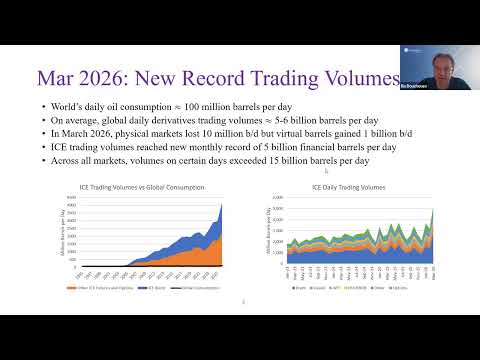
By now, physical mkts largely dropped to match futures. But as explained below, futures were more balanced acting as a buffer, but if futures S&Ds shift then we may get a real spike. It's about duration now with forward paper S&Ds ruling the roost. youtube.com/watch?v=IdAMLK…
YouTube video
YouTube
English
1
12
52
8.5K
Après Capital
Après Capital@ApresCapital·
@GardinerIsland What did you think of Nierenberg’s @SquawkCNBC appearance ? Am a big fan of his and $RITM but thought it was a pretty flat segment; not his best distillation of the business or reasons for undervaluation.
English
0
0
0
655
GardinerIslandCapital
GardinerIslandCapital@GardinerIsland·
$RITM Q1 in line . Seems like as MN breaks it down by segment , each area killed it . Sort of odd . AI stox sucking today on concerns not everybody gonna win here . Gold getting whacked as oil rallies hard
English
1
0
17
538
Après Capital retweetledi
Reihan Salam
Reihan Salam@reihan·
Mamdani and his allies are tenant organizers, and their chief tactic is to identify specific villains. This creates an illusion of accountability (as if the city's fiscal challenges can be assigned to some external bad actor rather than the cumulative impact of buck-passing), emotional engagement (find a focus for public anger and resentment that is not you), and polarization (if you don't join in the outpouring of hatred, you are suspect). The trouble is that the villain needs to be a vulnerable target you can cut off from key resources (money, public support) through intimidating public protest, a media campaign, etc. Mamdani has decided not to make Trump the villain, possibly because Trump has cards to play and doesn't seek the approval of Mamdani's base. Hochul can't be the villain, as the mayor is begging Albany for money. He decided to go after Ken Griffin as a stand-in for nonresident owners of expensive investment properties in NYC, but of course Griffin is not obliged to take the abuse. There's a good case that NYC needs Griffin more than Griffin needs NYC. So who's next? Without a villain, it's not clear that the organizer's playbook can work.
English
1
142
934
97.1K
Après Capital retweetledi
Brian McCarthy
Brian McCarthy@briangobosox·
Kabuki: My guess is the blockade created poor optics for Iran, so they had to do their play-acting on the tanker the other day and let things breathe for a few days before they can return to the table.
MacroKurd@macrokurd

My bias: The deal was agreed already pre and details ironed out in the first round of talks when 100s of American delegation + 80 Iranian delegation attended. The phase we in since has been the agreed theatrics episode to get it sold back home.

English
2
2
14
4.6K
Après Capital retweetledi
Anand Kannappan
Anand Kannappan@anandnk24·
People are misreading the SpaceX/Cursor deal as an M&A story. It’s actually a bet on what the real bottleneck in frontier coding models is. xAI has struggled to close the gap with Claude Code and Codex. Cursor sits on the best corpus of developer traces in the world. The deal lets Cursor train Composer on Colossus while xAI runs the same recipe on Grok. Both sides find out, at the same time, whether Cursor's data is actually the difference. The option structure reflects that uncertainty. If the training work ports over, SpaceX buys Cursor and owns the pipeline. If it doesn’t, they pay $10B for the experiment and walk. Either outcome, Grok ends up stronger than it would have been, and xAI gets an answer to a question it couldn’t answer internally. The part worth holding onto: a pre-IPO company just priced a live experiment to figure out whether real developer traces are the scarce input in coding agents. $10B is what they’re paying to run it. $60B is what the answer is worth if it comes back yes.
Anand Kannappan tweet media
English
60
150
1.5K
256.3K
Après Capital retweetledi
الدكتور منصور المالك 🇸🇦 Mansour Almalik
🚨🚨🚨 انقلاب ثوري في طهران الحرس الثوري يضع قاليباف وبزشكيان وعراقجي تحت الاقامة الجبرية. المفاوضات مع امريكا تتوقف. العالم يتنظر قرار ترامب.
العربية
722
1.3K
5.7K
1.3M
Après Capital retweetledi
Après Capital
Après Capital@ApresCapital·
Bill / SynMax: this is really great stuff congrats. On the SynMax maritime website it says your Theia platform goes beyond traditional AIS. So, just to double check, you are perhaps capturing beyond what is visible by AIS alone? In this war edge case with transponders turned off etc? Tyvm and congrats again on being on the cutting edge.
English
1
0
0
134
SynMax Maritime
SynMax Maritime@SynMaxInt·
Strait of Hormuz normally sees ~130 vessel transits a day. Now: 3. Two of the three were sanctioned. One by the UK (Russia), one by the US (Iran). @Reuters senior shipping correspondents Jonathan Saul and @ReutersNerijusA used SynMax satellite data to identify specific vessels navigating the strait today. Since publication, two more vessels have transited through the Strait of Hormuz, the SEAWAY (IMO 9273650) and the OFAC-Sanctioned MEDA (IMO 8818219), which was tracked, despite being AIS dark, from Bandar Khomeni, Iran. reuters.com/world/middle-e…
English
1
2
4
6.2K
Après Capital retweetledi
Brad Lyons
Brad Lyons@blyons151·
In August I wrote a thesis I never published. The funds I was warning were key Crossover Research clients, so I stayed quiet. Since then, 𝗦𝗼𝗳𝘁𝘄𝗮𝗿𝗲 𝗺𝘂𝗹𝘁𝗶𝗽𝗹𝗲𝘀 𝗮𝗿𝗲 𝗱𝗼𝘄𝗻 𝟱𝟬%+. Salesforce $CRM, ServiceNow $NOW, Adobe $ADBE, Workday $WDAY all off 40% from highs. Thomson Reuters $TRI dropped 16% in a single session on the Anthropic legal agent launch. The SaaSpocalypse arrived. So here's the follow-up. Not commentary on what happened, but where I think this goes next. Most vertical SaaS companies aren't underperforming because their software is bad. 𝗧𝗵𝗲𝘆'𝗿𝗲 𝘂𝗻𝗱𝗲𝗿𝗽𝗲𝗿𝗳𝗼𝗿𝗺𝗶𝗻𝗴 𝗯𝗲𝗰𝗮𝘂𝘀𝗲 𝘁𝗵𝗲𝘆 𝗻𝗲𝘃𝗲𝗿 𝗯𝘂𝗶𝗹𝘁 𝘁𝗵𝗲 𝘀𝗲𝗰𝗼𝗻𝗱 𝗯𝘂𝘀𝗶𝗻𝗲𝘀𝘀. And the first business is under attack. For twenty years, one of the biggest SaaS moats was engineering complexity: deep technical talent, long roadmaps, compounding codebases that were genuinely hard to replicate. 𝗔𝗜 𝘂𝗽𝗲𝗻𝗱𝗲𝗱 𝘁𝗵𝗮𝘁 𝗮𝗹𝗺𝗼𝘀𝘁 𝗼𝘃𝗲𝗿𝗻𝗶𝗴𝗵𝘁. Product development is democratizing to operators with no code background but strong product vision. Look at Anthropic: they've built the engine and are shipping lookalike products at a cadence that would have taken a legacy SaaS vendor three years of roadmap, with a fraction of the headcount. That pace can kill legacy businesses overnight. 𝗜𝗳 𝘁𝗵𝗲 𝗲𝗻𝗴𝗶𝗻𝗲𝗲𝗿𝗶𝗻𝗴 𝗺𝗼𝗮𝘁 𝗶𝘀 𝗴𝗼𝗻𝗲, 𝗳𝗼𝘂𝗿 𝗺𝗼𝗮𝘁𝘀 𝗿𝗲𝗺𝗮𝗶𝗻: 𝗱𝗶𝘀𝘁𝗿𝗶𝗯𝘂𝘁𝗶𝗼𝗻, 𝗽𝗿𝗼𝗽𝗿𝗶𝗲𝘁𝗮𝗿𝘆 𝗱𝗮𝘁𝗮, 𝘄𝗼𝗿𝗸𝗳𝗹𝗼𝘄 𝗯𝗿𝗲𝗮𝗱𝘁𝗵, 𝗮𝗻𝗱 𝗿𝗲𝗴𝘂𝗹𝗮𝘁𝗼𝗿𝘆 𝗶𝗻𝘀𝘂𝗹𝗮𝘁𝗶𝗼𝗻. The first three are moats the company builds. The fourth is a moat the company captures, and it's the one most resistant to AI disruption. 𝗥𝗲𝗴𝘂𝗹𝗮𝘁𝗼𝗿𝘆 𝗰𝗼𝗺𝗽𝗹𝗲𝘅𝗶𝘁𝘆 𝗰𝗿𝗲𝗮𝘁𝗲𝘀 𝘀𝘄𝗶𝘁𝗰𝗵𝗶𝗻𝗴 𝗰𝗼𝘀𝘁𝘀 𝘁𝗵𝗮𝘁 𝗵𝗮𝘃𝗲 𝗻𝗼𝘁𝗵𝗶𝗻𝗴 𝘁𝗼 𝗱𝗼 𝘄𝗶𝘁𝗵 𝗽𝗿𝗼𝗱𝘂𝗰𝘁 𝗾𝘂𝗮𝗹𝗶𝘁𝘆. Once a vendor is embedded in a compliance workflow, ripping them out means re-attesting, re-auditing, and re-certifying every downstream process. The buyer isn't paying for software, they're paying for the accumulated paper trail. Tyler Technologies ($TYL) is the clearest version of the pattern. State and local government software across courts, public safety, assessment, and ERP. Every module is married to statutory process, FIPS, CJIS, audit trails, and procurement cycles that take years. TYL is down 42% TTM and 2026 guidance came in soft, but the moat didn't break. Revenue still compounded, and government procurement runs on five-year cycles, not five-week news cycles. Veeva is the sharper version. Revenue up 16% in FY26, Q4 beat, the stock still down 25%. The market is selling execution, not weakness. Guidewire in P&C insurance, where regulatory filings and rate approvals anchor the stack, sits in the same setup: still compounding ARR, still winning cloud conversions, multiple reset anyway. Same pattern across all three: multiples compressed, fundamentals intact. The moat is the regulatory surface area itself, and it compounds because the rules get more complex, not less. 𝗜 𝘄𝗮𝘀 𝗹𝗼𝗻𝗴 𝗣𝗮𝗹𝗮𝗻𝘁𝗶𝗿 𝗮𝘁 $𝟭𝟯 (read that here: x.com/blyons151/stat…). 𝗡𝗼𝘁 𝗯𝗲𝗰𝗮𝘂𝘀𝗲 𝗼𝗳 𝘁𝗵𝗲 𝗺𝗼𝗱𝗲𝗹 𝗼𝗿 𝘁𝗵𝗲 𝘁𝗼𝗼𝗹𝗶𝗻𝗴. 𝗕𝗲𝗰𝗮𝘂𝘀𝗲 𝗼𝗳 𝘁𝗵𝗲 𝗼𝗻𝘁𝗼𝗹𝗼𝗴𝘆. Palantir is the proprietary-data version of the regulatory thesis. Once Palantir sits between the customer and their own data, ripping it out means rebuilding the data model from scratch. Snowflake and Databricks never had that entrenchment layer. AIP bootcamps then turned the data moat into a distribution moat: 660 bootcamps in a single quarter, 94% y/y US customer deal growth, bookings at 1.9x sales. Own the data, ship functional AI on top of it, let the GTM compound. Every vertical incumbent has a version of this available. The question is whether they'll build it before a challenger does. But regulatory insulation is necessary, not sufficient. Plenty of vendors inside regulated verticals are still getting squeezed because they never became AI-native. BlackLine ($BL) and Trintech are feeling it in close and reconciliation as Numeric, Maximor, and Stacks build AI-native from day one. nCino ($NCNO) in banking faces the same challenge. The regulatory moat buys you time. It doesn't buy you the decade. 𝗧𝗵𝗲 𝘄𝗶𝗻𝗻𝗶𝗻𝗴 𝗳𝗼𝗿𝗺𝘂𝗹𝗮 𝗶𝘀 𝗱𝗮𝘁𝗮 𝗼𝗿 𝗿𝗲𝗴𝘂𝗹𝗮𝘁𝗼𝗿𝘆 𝘀𝘂𝗿𝗳𝗮𝗰𝗲 𝗮𝗿𝗲𝗮 𝗽𝗹𝘂𝘀 𝗳𝘂𝗻𝗰𝘁𝗶𝗼𝗻𝗮𝗹 𝗔𝗜, 𝗻𝗼𝘁 𝗼𝗻𝗲 𝗼𝗿 𝘁𝗵𝗲 𝗼𝘁𝗵𝗲𝗿. Look at why Claude is winning. Anthropic isn't competing on model benchmarks, they're competing on functional workflow. Building for the user, not the leaderboard. That's the playbook vertical incumbents need to run. Take the moat you already have, whether it's regulatory or data-entrenchment, layer genuine workflow AI on top, and the challenger can't catch you. The vendors that do both win the decade. The ones that rely on inertia alone get caught. The ones that ship AI without an anchor get commoditized. You need both. 𝗧𝗵𝗲 𝗯𝘂𝘆𝗲𝗿 𝗶𝘀 𝘁𝗲𝗹𝗹𝗶𝗻𝗴 𝘆𝗼𝘂 𝘁𝗵𝗶𝘀 𝗽𝗹𝗮𝗶𝗻𝗹𝘆. A study we ran with Battery Ventures on AI adoption in the Office of the CFO (battery.com/blog/first-cod…) surveyed 129 finance leaders at companies from $50M to $5B+ in revenue. 77% said they want to uplevel existing systems with AI from new vendors that layer onto existing systems. Only 15% want to replace their current system of record with an AI-native platform. The incumbent wins if they ship AI. The AI-native challenger wins only if the incumbent doesn't. The signal shows up in our VoC data too. In regulated verticals, mission criticality scores cluster above 9, and NPS doesn't track satisfaction, it tracks switching friction. Customers will tell you the product is mediocre and still score it 9 on "would not switch" because the compliance team vetoes any alternative. 𝗧𝗵𝗮𝘁'𝘀 𝘁𝗵𝗲 𝘀𝗶𝗴𝗻𝗮𝘁𝘂𝗿𝗲 𝗼𝗳 𝗮 𝗰𝗼𝗺𝗽𝗹𝗶𝗮𝗻𝗰𝗲-𝗶𝗻𝘀𝘂𝗹𝗮𝘁𝗲𝗱 𝘃𝗲𝗻𝗱𝗼𝗿, 𝗮𝘀 𝗹𝗼𝗻𝗴 𝗮𝘀 𝘁𝗵𝗮𝘁 𝘃𝗲𝗻𝗱𝗼𝗿 𝗶𝘀 𝗮𝗰𝘁𝗶𝘃𝗲𝗹𝘆 𝘀𝗵𝗶𝗽𝗽𝗶𝗻𝗴 𝗮𝗴𝗮𝗶𝗻𝘀𝘁 𝘁𝗵𝗲 𝗔𝗜 𝗰𝘂𝗿𝘃𝗲. Which brings us back to the second business for everyone outside the regulated or data-entrenched moat. Seat ARR got them to $100M. But with the shift to agentic workforce structures, partial human capital replacement, and pricing pressure compressing margins, the traditional SaaS model has to transform fast. The next $500M comes from monetizing the installed base: marketplace rake on demand they generate for their own customers, capital products underwritten by their own transaction data, supplier monetization, brand partnerships, group buying. The assets are already sitting there. Captive SMB audience. Proprietary transaction and behavioral data. A distribution pipe (the UI itself) that delivers new products at near-zero CAC. 𝗪𝗵𝗮𝘁'𝘀 𝗺𝗶𝘀𝘀𝗶𝗻𝗴 𝗶𝘀 𝗼𝗿𝗴𝗮𝗻𝗶𝘇𝗮𝘁𝗶𝗼𝗻𝗮𝗹 𝘄𝗶𝗹𝗹. Monetizing the installed base requires a different org than the one that got you to scale. Different GTM, P&L optics, and talent. Founders and boards under-invest because year one looks worse before it looks better, and public markets punish any SaaS multiple that starts to look like fintech or marketplace. So the second business never ships. The round prices in the optionality. The multiple compresses. The exit underwhelms. 𝗧𝗵𝗿𝗲𝗲 𝗱𝗶𝗹𝗶𝗴𝗲𝗻𝗰𝗲 𝗾𝘂𝗲𝘀𝘁𝗶𝗼𝗻𝘀 𝗻𝗼𝘁 𝗲𝗻𝗼𝘂𝗴𝗵 𝗶𝗻𝘃𝗲𝘀𝘁𝗼𝗿𝘀 𝗮𝗿𝗲 𝗮𝘀𝗸𝗶𝗻𝗴: 𝟭. 𝗪𝗵𝗮𝘁 𝗽𝗲𝗿𝗰𝗲𝗻𝘁 𝗼𝗳 𝗿𝗲𝘃𝗲𝗻𝘂𝗲 𝗰𝗼𝗺𝗲𝘀 𝗳𝗿𝗼𝗺 𝘀𝗼𝘂𝗿𝗰𝗲𝘀 𝗼𝘁𝗵𝗲𝗿 𝘁𝗵𝗮𝗻 𝘀𝘂𝗯𝘀𝗰𝗿𝗶𝗽𝘁𝗶𝗼𝗻 𝗮𝗻𝗱 𝗽𝗮𝘆𝗺𝗲𝗻𝘁 𝗽𝗿𝗼𝗰𝗲𝘀𝘀𝗶𝗻𝗴? Under 5%, they haven't started. 10 to 20%, thesis is live. Over 20%, it's working. 𝟮. 𝗛𝗼𝘄 𝗵𝗮𝗿𝗱 𝘄𝗼𝘂𝗹𝗱 𝗶𝘁 𝗯𝗲 𝘁𝗼 𝗿𝗲𝗰𝗿𝗲𝗮𝘁𝗲 𝘁𝗵𝗶𝘀 𝗰𝗼𝗺𝗽𝗮𝗻𝘆 𝗳𝗿𝗼𝗺 𝘀𝗰𝗿𝗮𝘁𝗰𝗵 𝘄𝗶𝘁𝗵 𝗔𝗜 𝘁𝗼𝗱𝗮𝘆? If a well-funded team with Claude and six engineers could rebuild the functional product in nine months, the software isn't the moat. The moat has to live somewhere else: proprietary data, a network, integrations, or regulatory surface area the challenger can't clear. If you can't point to at least one, you're underwriting a melting ice cube. 𝟯. 𝗪𝗵𝗮𝘁 𝗽𝗲𝗿𝗰𝗲𝗻𝘁 𝗼𝗳 𝘁𝗵𝗲 𝗯𝘂𝘆𝗲𝗿'𝘀 𝘀𝘁𝗶𝗰𝗸𝗶𝗻𝗲𝘀𝘀 𝗶𝘀 𝗿𝗲𝗴𝘂𝗹𝗮𝘁𝗼𝗿𝘆, 𝗮𝗻𝗱 𝘄𝗵𝗶𝗰𝗵 𝘄𝗮𝘆 𝗶𝘀 𝘁𝗵𝗲 𝗿𝘂𝗹𝗲 𝘀𝗲𝘁 𝗺𝗼𝘃𝗶𝗻𝗴? A regulatory moat evaporates if the regulation simplifies. Underwrite the direction of travel, not just the current state. 𝗔𝗻𝗱 𝘁𝗵𝗲 𝗰𝗹𝗼𝗰𝗸 𝗶𝘀 𝘁𝗶𝗴𝗵𝘁𝗲𝗿 𝘁𝗵𝗮𝗻 𝗺𝗼𝘀𝘁 𝗿𝗲𝗮𝗹𝗶𝘇𝗲. Retention in enterprise SaaS has largely been defined by the pain of systems replacement, not genuine moat. If the stickiness isn't backed by proprietary data, a harvesting flywheel, or regulatory surface area, those vendors are about to get disrupted. Pure seat-based pricing is dying unless vendors embrace agent-seat models, and LLM providers have been subsidizing the market on token cost, with recent pricing shifts signaling cash reserves aren't infinite. 𝗛𝗲𝗿𝗲'𝘀 𝘁𝗵𝗲 𝘂𝗻𝗱𝗲𝗿𝗮𝗽𝗽𝗿𝗲𝗰𝗶𝗮𝘁𝗲𝗱 𝗽𝗼𝗶𝗻𝘁: 𝗔𝗜-𝗻𝗮𝘁𝗶𝘃𝗲 𝗰𝗼𝗺𝗽𝗲𝘁𝗶𝘁𝗼𝗿𝘀 𝗵𝗮𝘃𝗲 𝘄𝗼𝗿𝘀𝗲 𝗴𝗿𝗼𝘀𝘀 𝗺𝗮𝗿𝗴𝗶𝗻𝘀 𝘁𝗵𝗮𝗻 𝗦𝗮𝗮𝗦 𝗶𝗻𝗰𝘂𝗺𝗯𝗲𝗻𝘁𝘀, 𝗻𝗼𝘁 𝗯𝗲𝘁𝘁𝗲𝗿. Inference costs haven't collapsed, and burning VC cash to subsidize unit economics is a bridge, not a business model. The incumbents should be winning on P&L. They're losing on product velocity and AI-readiness. That's a solvable problem if the board has the will to ship. Vendors without a second business, without a data moat, and without regulatory insulation will still lose, despite having better margins than their AI-native challengers. Customers switch on features and speed, not on unit economics. 𝗘𝗻𝘁𝗲𝗿𝗽𝗿𝗶𝘀𝗲 𝗮𝗻𝗱 𝗿𝗲𝗴𝘂𝗹𝗮𝘁𝗲𝗱 𝘃𝗲𝗿𝘁𝗶𝗰𝗮𝗹𝘀 𝗮𝗿𝗲 𝘁𝗵𝗲 𝗹𝗮𝘀𝘁 𝘀𝗮𝗳𝗲 𝗵𝗮𝗿𝗯𝗼𝗿, 𝗮𝗻𝗱 𝗼𝗻𝗹𝘆 𝗯𝗲𝗰𝗮𝘂𝘀𝗲 𝗼𝗳 𝗱𝗮𝘁𝗮 𝗯𝗿𝗲𝗮𝗱𝘁𝗵 𝗮𝗻𝗱 𝗰𝗼𝗺𝗽𝗹𝗶𝗮𝗻𝗰𝗲. Everywhere else, the premium is about to get competed away. Any fund underwriting vertical SaaS exposure right now should be asking the second-business question before the next check clears. DM me, email me brad@crossoverresearch.com, or let's chat about your portfolio/underwriting process (book.crossoverresearch.com). Crossoverresearch.com
English
65
210
1.6K
815.2K