

Arjun
48 posts

Arjun
@Arjun__Cruzz
I help coaches & consultants automate operations so they can scale without burning out Lead nurturing • Client onboarding • Workflow automation
Katılım Ağustos 2025
11 Takip Edilen1 Takipçiler

I went from $500 Upwork projects to $500K+/year selling AI systems.
I legitimately made every mistake you can make.
Undercharging, scope creep, building without mapping, hiring wrong, pricing hourly.
Then I figured out what actually works and doubled down.
I put the entire playbook into a free guide. Here's what's inside:
→ How I went from Zapier gigs to $25K-$60K projects
→ The pricing shift that 5x'd my revenue (and the exact formulas)
→ My 4-call sales process for closing $25K-$60K+ deals
→ The discovery framework that turns calls into signed contracts
→ How I built a dev team without burning cash
→ The fulfillment system that keeps clients for years
→ How I position against agencies 10x my size and WIN
→ The content engine that fills my pipeline without ads or cold outreach
→ Every mistake I made and what I'd do differently starting from zero
This took 4 years, 80+ clients, and a lot of painful lessons.
Yours for free.
RT + reply "AGENCY" and I'll send it over. (Must follow so I can DM
GIF
English
@JordanPlatten The headline isn’t “no outbound.”
It’s distribution built into the product.
When referrals compound and reputation precedes you, sales becomes a byproduct.
But that only happens when delivery is elite.
English

Never hired a single salesperson...
Never ran outbound marketing...
& still built one of the most respected ecom fashion marketing agencies in the UK, with 72 employees!
In this week’s Agency Giants episode, Paul Rodgers shares:
• How one client went from tiny fashion startup to £100M+ in months
• Why Paul and his co-founder were terrified of growth & how they were forced to scale
• The real reason they sold their agency, even though they never wanted to!
Watch the full episode here 👉 youtu.be/-5HlGYQ3PzM

YouTube

English

The biggest growth hack in agency history isn't a tool or a tactic.
It's hiring a marketing manager.
Most agencies providing marketing services don't do their own marketing.
It's cobbler's shoes syndrome.
The agencies I've seen grow fastest all hired a dedicated marketing person at around £750k revenue.
A Non-billable role.
Focused only on creating always-on marketing, generating leads for the agency.
English
@JamesonCamp AI replaces execution.
It doesn’t replace thinking.
The agencies getting nervous built
task-based businesses.
The ones building:
– feedback loops
– data engines
– owned systems
will just move faster.
English

The agencies worried about Claude replacing them are the same ones that were already replaceable by Fiverr
If you think great marketing is achieved with a markdown file, get ready to fall further behind faster than ever before
English
@hirdeshmatai Opacity protects margins.
Transparency builds trust.
Most agencies don’t hide data because it’s complex.
They hide it because once you see the engine, you realize you don’t need to rent it forever.
Control is expensive.
Clarity is threatening.
English

Unpopular opinion:
Marketing agencies are scared to show you the full picture.
9 out of 10 marketing managers say agencies need to be more transparent.
(Source: OnePoll x ASK BOSCO)
English
@Liron_Segev Ownership is leverage.
If your growth stops the moment your agency leaves,
you never had a growth engine — you had a subscription.
The goal isn’t outsourcing.
It’s building infrastructure you control.
Systems > dependency.
English

Would you let your home builder keep the keys?
No?
Then why do we accept that from marketing agencies?
It makes no sense.
I was on a call with someone who just left their agency, and they asked: "What do I actually own?"
And the answer was basically nothing.
Years of paying, and the moment they stopped, they walked away with zero besides the content they had in a Google Drive Folder.
You're essentially renting your own marketing.
This is the thing that drives me crazy about the typical agency model.
Every month you pay them is another month of them getting better at serving clients like you, using what they learned from you, and you walk away with a folder of final exports if you're lucky.
I keep telling people: if you can't fire your vendor tomorrow and keep operating, you don't have a system - you have a dependency.
That's bad.
I got screwed like this, which is why I build AI systems differently.
When I build AI workflows for you, it's exactly that - yours.
Your prompts, your processes, your templates, sitting in your accounts, running on your tools.
Nobody should be able to hold you hostage.
DM me if you want to see what actual ownership looks like. None of this rented SaaS bullshit.

English
@apta_agency It’s not about design.
It’s about clarity.
In 5 seconds visitors decide:
“Is this for me?”
“Do they understand my problem?”
“Can I trust them?”
Hero section = positioning in one sentence.
Everything else is secondary.
English

The hero section is where trust begins.
Before features, pricing, or testimonials, visitors decide in seconds if your brand feels right.
Get it right, and everything else gets easier. Get it wrong, and the rest barely matters.
Let´s talk 👉 apta.agency

English
@krpisoweb3 Most people don’t choose mediocrity.
They drift into it.
No plan.
No standards.
No urgency.
Respect the discipline.
Today = build > train > repeat.
English


@shannholmberg Running 100 tests doesn’t matter
if your backend can’t handle 100 signals.
AI removed friction in testing.
The next edge is automating what happens after the data.
Speed without systems = chaos.
English

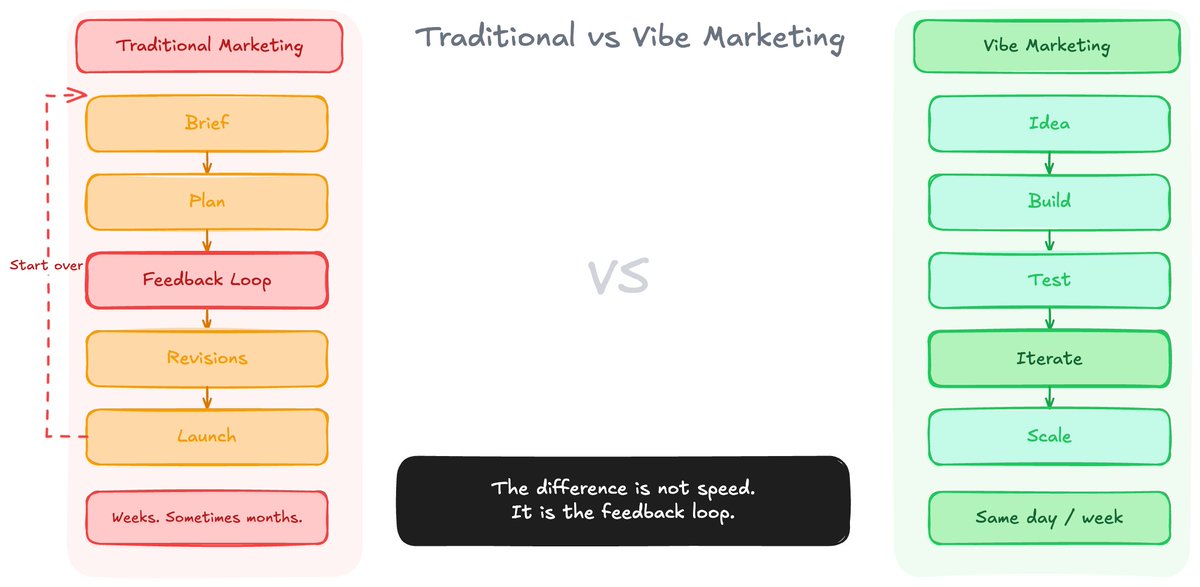
What used to take agencies 3 weeks now takes an afternoon
Traditional marketing:
> Brief
> Plan
> Feedback loop
> Revisions
> Launch
With Vibe marketing:
> Idea
> Build
> Test
> Iterate
> Scale
Trad marketing waits for a review cycle to learn what works. With Vibe marketing we are able to test in real-time.
AI removed the friction between the idea & data on whether it works
You no longer need a 3-week sprint/campaign to find out if your messaging is wrong, you can run 100s of tests along side each other
This is where agencies and projects are heading.
English
@AIProfitsLegend I’d add one thing:
1. Cold outbound validates offer.
2.Meta ads amplify what’s already working.
3. YouTube compounds authority over time.
Most agencies fail because they try to scale before they validate.
Leverage only works after product-market fit.
English

Seems like rn for marketing agencies the best way to get from 0 to 100K/month is:
1. Cold outbound -> get first clients
2. Run meta ads -> to get a lot more clients
3. Pump video content to scale (mostly youtube)
Def exceptions but this is what I’m seeing as the most common
English
@mawebdesign_uk That’s where real branding work happens — not at zero, but at reinvention.
Evolving a brand to match its true market position is often more strategic than building one from scratch.
English

Clients trust our brand agency to evolve their brand and better represent their business. Our clients typically have an existing brand that needs to be reworked or replaced to match their position in the market.
🌐 mawebdesign.co.uk
#webdesign #graphicdesign #seo

English
@elmolehti Attention isn’t the bottleneck — conversion is.
Short-form is great for discovery, but without long-form assets and a follow-up system, creators are just renting dopamine instead of building revenue.
English

Don’t fall for the short-form content trap that kills 99% of creator product launches.
I've seen too many creators try to sell their products with terrible marketing.
Specifically, short-form content creators make the same mistake every time.
Whether it's X, IG or TikTok...
I see the same profit killer in all of them.
This rookie money-murdering mistake is hiding in plain sight.
Once you see it, you can’t unsee it.
It's something so simple and obvious — but so easily missed. Let me show you right now.
Short-form content creators are in a unique position.
The content has to be snappy and attention-grabbing.
Often, this means SHORT.
That’s a great skill to build — getting attention fast.
IF, that is, you just want to deal in dopamine.
But when it comes to dollars?
Short-form content is pretty much the worst possible tool at your disposal.
This is what David Ogilvy, the 'Father of Advertisement', says about short-form content:
“Direct response advertisers know that short copy doesn’t sell. In split-run tests, long copy invariably outsells short copy. But I must warn you that if you want your long copy to be read, you had better write it well. In particular, your first paragraph should be a grabber...
Long copy sells more than short copy, particularly when you are asking the reader to spend a lot of money. Only amateurs use short copy.”
Let me restate that last bit: ONLY AMATEURS USE SHORT COPY.
If you’re reading this, it’s because you’re not content being an amateur.
Here’s the pattern you’ll notice among short-form content creators:
Most of them don't see the power of long-form sales assets because they spend all their time creating, consuming, and benchmarking short-form content.
All dopamine, no dollars.
Their marketing needs proper sales pages, lead magnets, and email marketing.
As Ogilvy says, these are the copy assets that will drive sales.
Yet these are the things short-form junkies ignore in favor of likes and comments.
I don't blame short-form creators for missing this. It’s simply not what they're used to.
But the obvious breakthrough result for short-form content creators would come from using longer-form direct response marketing techniques to increase sales and profits almost instantly.
That’s what I’ve done for myself with my digital product launch which got me +70 customers in 4 days from a tiny audience.
Or what my 7-figure copywriting mentor Thom Benny has done by selling tens of millions of dollars worth of digital products and services and even wrote a single long-form sales page generating over $2.7 million.
So, when it comes to making serious sales, short form just doesn’t cut it.
Short-form content might get attention, but it doesn’t have the firepower to close the deal like long-form does.
To quote Ogilvy once again:
‘Only amateurs use short copy’
English
@WardensWisdom Mindfulness can be incredibly powerful for emotional regulation.
For some people it’s enough on its own, and for others it works best alongside additional support.
Either way, building awareness changes how anxiety shows up.
English

Most people think you need to take Zoloft to calm your mind.
Not true.
Practice mindfulness enough, and you’ll be as cool as a cucumber in almost every circumstance.
Sure, you might get anxious.
But it won’t rock your boat the way it once did.
English
@MubarDauda That’s real leverage — one framework reaching people at every stage of the journey.
Platforms scale impact when knowledge is structured correctly.
English

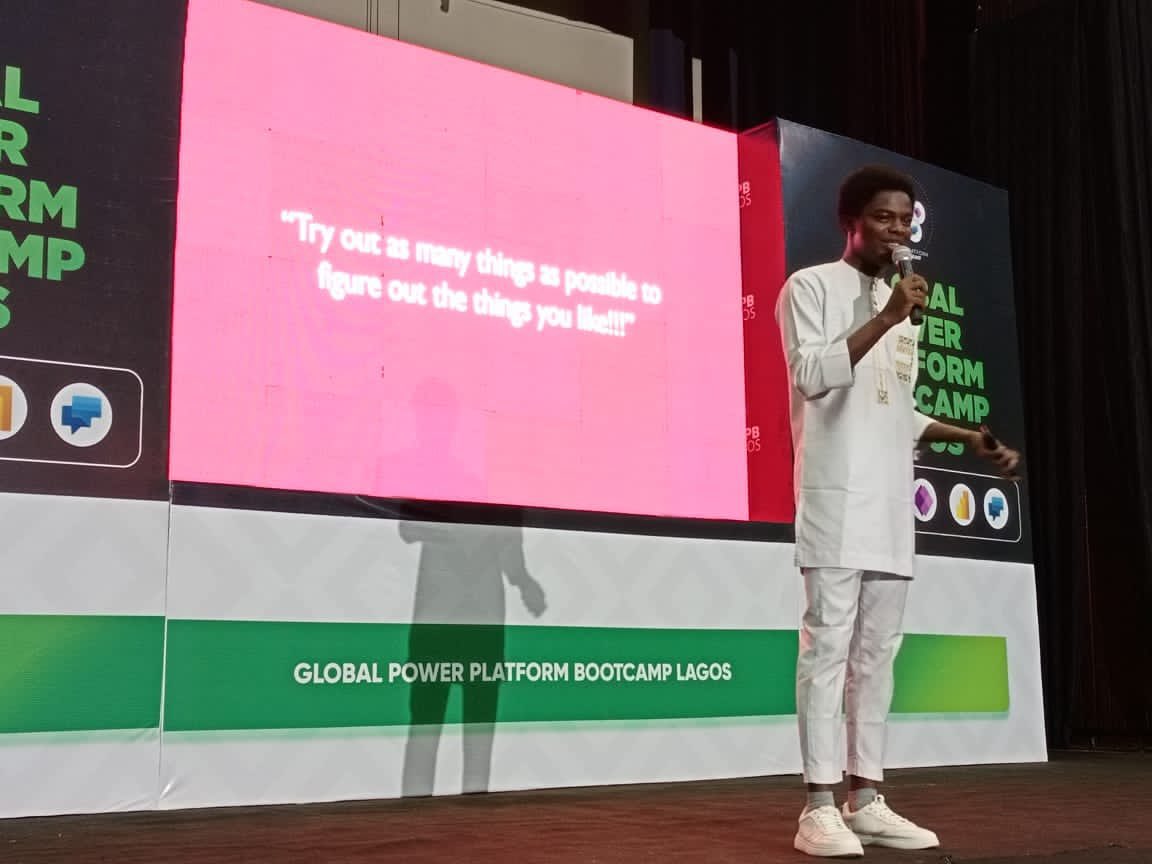
Empowering Your Career: A Journey of Transformation and Impact
It was an honor to speak at one of the largest gatherings worldwide—the Global Power Platform Bootcamp—an event that unites beginners, experts, and those transitioning to Microsoft Power Platform products.


English