
Brandon Brock 🇺🇸 retweetledi
Brandon Brock 🇺🇸
10.7K posts


Brandon Brock 🇺🇸
@BBrandonBrock
Agriculture and Business. #AgLending. #cowcents. Texas Tech University Alumnus. #CASNR #AAEC. West Texas A&M University Alumnus. #MBA.
Lubbock,Texas, USA Katılım Ağustos 2009
4K Takip Edilen1.1K Takipçiler

Brandon Brock 🇺🇸 retweetledi

How about spending less?
Watcher.Guru@WatcherGuru
🇺🇸 US Government is collecting donations to help pay off its $39 trillion debt.
English
Brandon Brock 🇺🇸 retweetledi

Automobile kill-switches are coming soon to car dealerships near you.
I teamed up w/ Scott Perry & Chip Roy to defund this Orwellian mandate, but too many colleagues (Republican & Democrat) voted against us, so the federal mandate for every new car after 2026 is still in place.
Thomas Massie@RepThomasMassie
Federal law says new cars after 2026 must monitor drivers and shut down if the car disapproves. Your dashboard should not be judge, jury, and executioner. @RepScottPerry @RepChipRoy offered an amendment to defund the automobile kill switch mandate. Here’s our debate:
English
Brandon Brock 🇺🇸 retweetledi

Iran war disrupts the circuit board supply chain, raises costs for tech firms
The conflict in the Middle East has disrupted supplies of crucial raw materials and pushed up prices of the printed circuit boards (PCB) used in almost all electronic devices, from smartphones and computers to AI servers, industry sources and executives said.
The disruption is a fresh blow to electronics manufacturers which are already grappling with soaring memory chip costs and highlights the broadening impact of the Iran war that has wreaked havoc on supply chains, plastics, and oil supplies. (Reuters)
English
Brandon Brock 🇺🇸 retweetledi

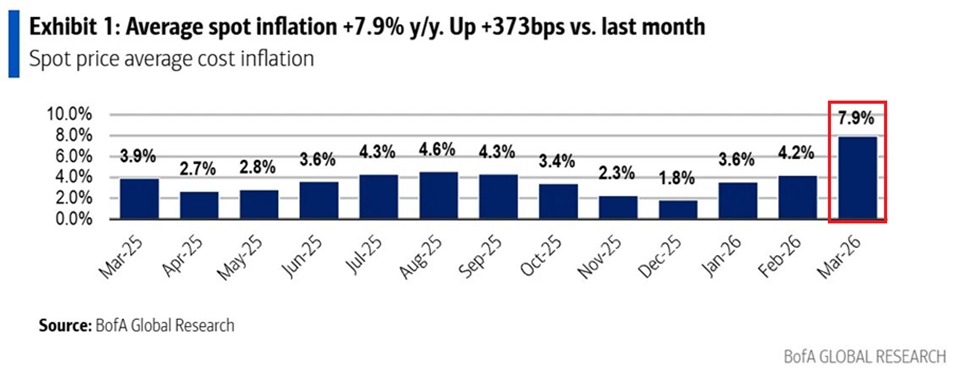
Food inflation is set to accelerate in the US:
Average inflation for food and beverage companies surged +7.9% YoY in March, the biggest jump in at least 12 months.
This is up +373 basis points from +4.2% in February.
The largest jump was recorded in tomatoes at +102% YoY, vegetables at +90%, and diesel at +88%.
This was largely driven by higher fuel costs, meaning the full impact of rising fertilizer and plastics prices has not yet been reflected.
Meanwhile, urea prices, the world's most widely used nitrogen fertilizer, have doubled since February, to ~$900 per metric ton, the highest since the 2022.
Fertilizer costs are rapidly rising for farmers and will eventually translate into higher wholesale food prices before landing on grocery store shelves.
Food inflation is set to accelerate.
English
Brandon Brock 🇺🇸 retweetledi

Since the start of the Iran war...
Jet Fuel: +60%
Sulfur: +53%
Urea: +49%
Heating Oil: +46%
Diesel: +46%
Brent Crude Oil: +36%
Fertilizer: +35%
Gasoline: +35%
WTI Crude Oil: +35%
European Natural Gas: +33%
Palm Oil: +14%
Coal: +12%
Iron Ore: +8%
Rice: +6%
S&P 500: +3%
$VIX: -4%
English
Brandon Brock 🇺🇸 retweetledi
The US demographic situation is getting worse:
The total fertility rate fell to 1.57 births per woman in 2025, the lowest since the data began in the 1930s.
A rate below 2.1 births per woman means a population is no longer replacing itself and is shrinking when excluding immigration.
The fertility rate has been effectively below 2.1 births per woman since the 1970s.
Furthermore, the general fertility rate, measured as births per 1,000 women aged 15 to 44, fell to 53.1 in 2025, an all-time low, continuing a decline that began in 2007.
Additionally, birthrates for women in their late 30s exceeded those for women in their early 20s for the first time on record in 2025.
America is heading into a demographic crisis.

English
Brandon Brock 🇺🇸 retweetledi
Brandon Brock 🇺🇸 retweetledi


Brandon Brock 🇺🇸 retweetledi
Brandon Brock 🇺🇸 retweetledi
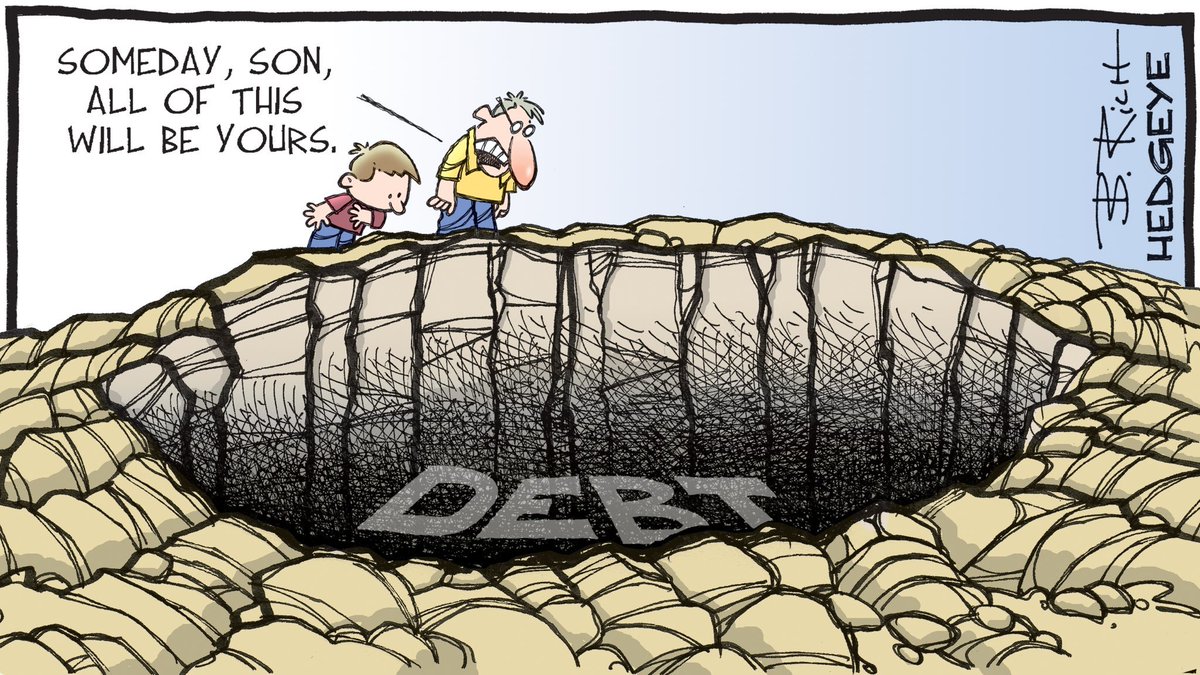
The world is heading into a historic debt crisis:
Global government debt is projected to surge to 102% of GDP by 2031, a level previously seen only in the aftermath of World War II, according to the IMF.
World government debt already stands at ~94% of GDP.
Debt-to-GDP has risen +16 percentage points since 2015, with the US and China responsible for the majority of the increase.
This comes as the US is running a government deficit of 7-8% of GDP, with debt projected to rise to 142% of GDP by 2031.
At the same time, China’s Debt-to-GDP is expected to increase to 127% as the country’s deficit has widened to nearly 8% of GDP.
Global interest payments are expected to rise to ~5% of GDP by 2031 from the current ~3%, as governments refinance maturing debt at today's higher borrowing costs.
The global economy is being increasingly fueled by debt.

English
Brandon Brock 🇺🇸 retweetledi

DoJ Opens Criminal Probe Into Meatpacking Cartel As Food Stocks Slide zerohedge.com/markets/doj-op…
English
Brandon Brock 🇺🇸 retweetledi

🇺🇸 US National Debt:
2011: $14.79T
2012: $16.06T
2013: $16.73T
2014: $17.82T
2015: $18.15T
2016: $19.57T
2017: $20.24T
2018: $21.51T
2019: $22.71T
2020: $26.94T
2021: $28.42T
2022: $30.92T
2023: $33.20T
2024: $36.06T
2025: $38.50T
2026: $39.07T (so far)
That's an increase of 164% since 2011.
English
Brandon Brock 🇺🇸 retweetledi
BREAKING: The US Government has begun refunding up to $166 billion in tariffs charged under President Trump after the Supreme Court ruled the policy unlawful.
Beginning today, businesses can file claims through a new customs system.
Over 330,000 importers across 53 million shipments are expected to be eligible.
Once approved, refunds plus interest will be paid within 60 to 90 days.

English
Brandon Brock 🇺🇸 retweetledi
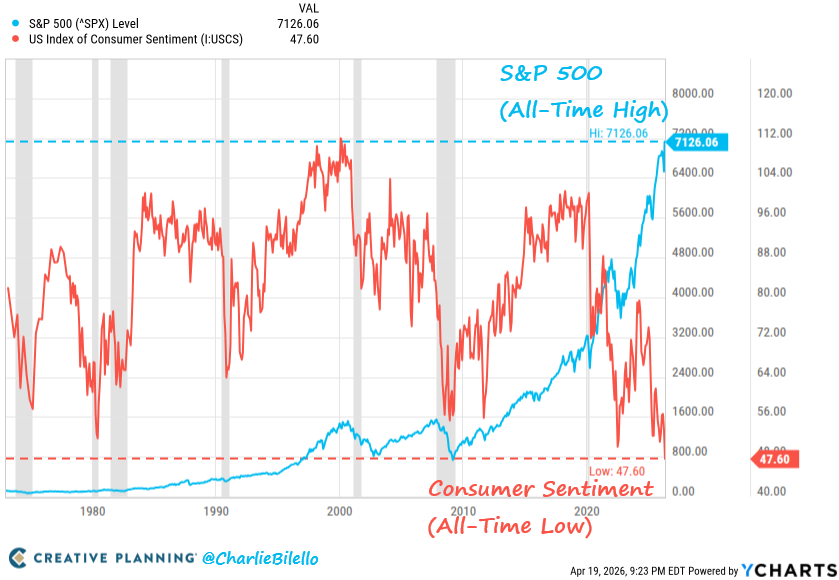
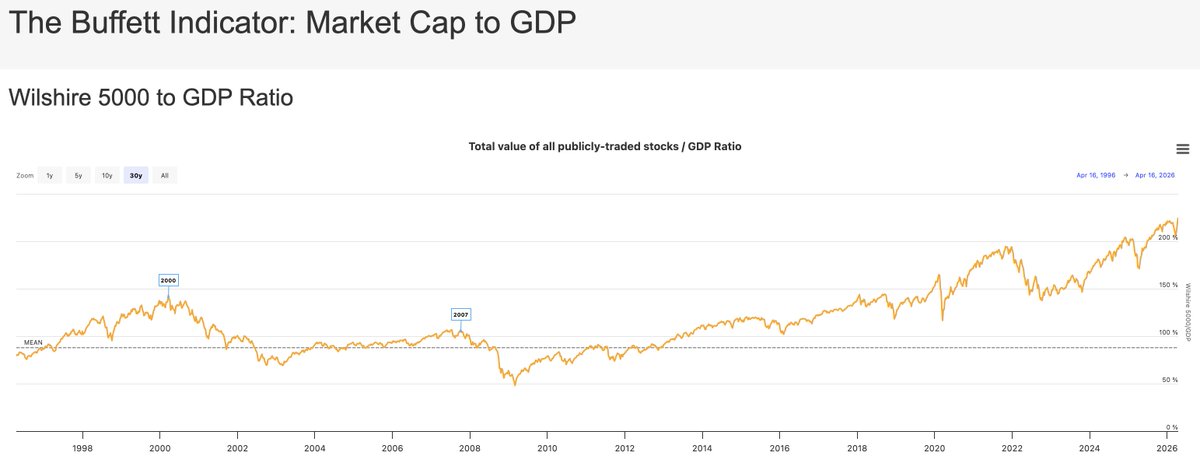
The S&P 500 is at an all-time high while Consumer Sentiment is at an all-time low.
We've never seen a gap this wide between Wall Street and Main Street.
English
Brandon Brock 🇺🇸 retweetledi

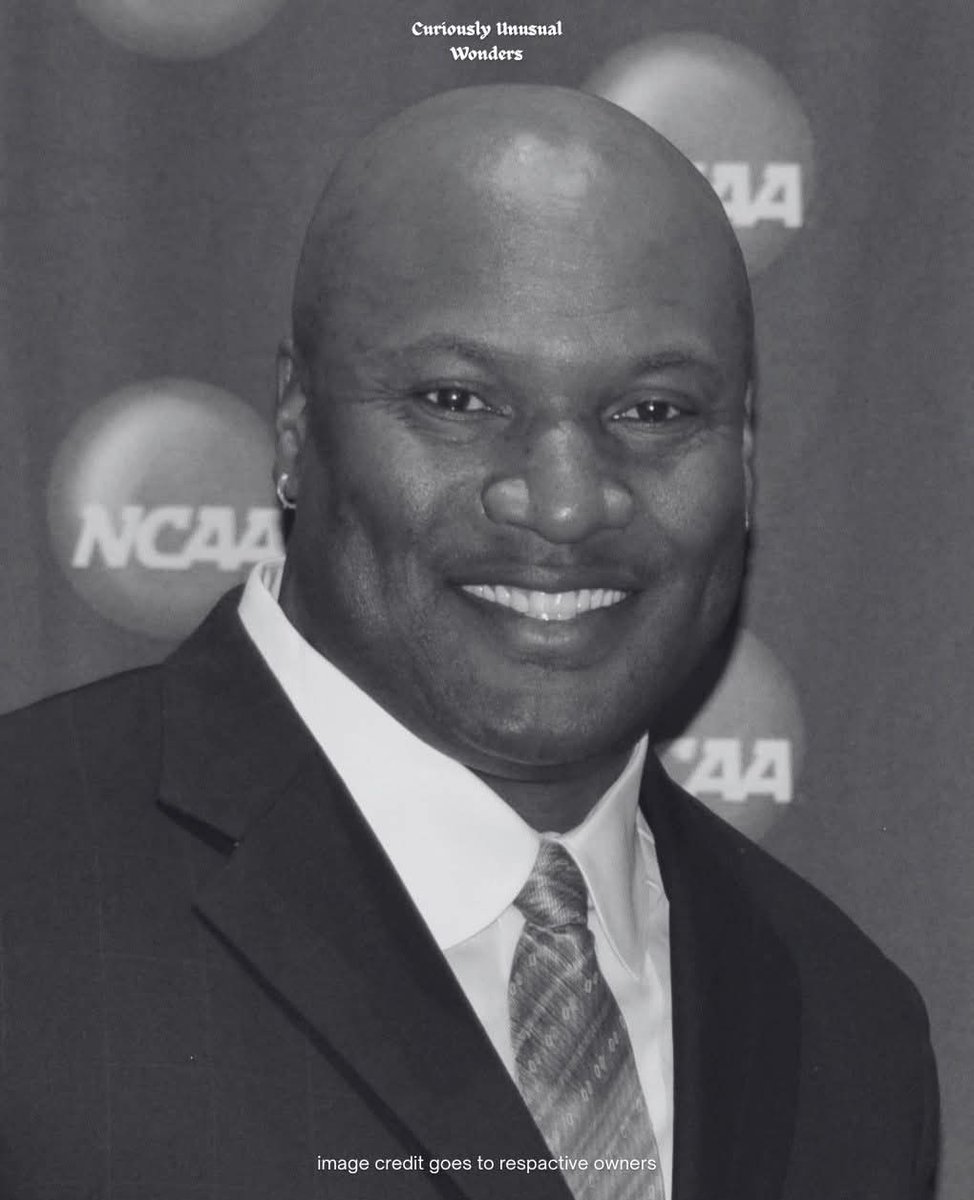
It started with a private jet and a lie.
In early 1986, Bo Jackson was a senior at Auburn University — the reigning Heisman Trophy winner and a rare athlete dominating both football and baseball. The Tampa Bay Buccaneers, holding the first overall pick in the 1986 NFL Draft, wanted him badly. Owner Hugh Culverhouse arranged a private jet to bring him to Tampa.
He told Jackson the trip had been cleared by the NCAA.
It hadn’t.
When Jackson returned, he was ruled ineligible for the rest of his senior baseball season. A season taken from him.
He believed it wasn’t a mistake.
He told Culverhouse: draft me if you want—you’ll waste the pick.
They drafted him anyway. First overall. Offered him $7.6 million.
He said no.
Instead, he signed with the Kansas City Royals for $1.07 million and went to the minor leagues. Bus rides. Empty seats. No guarantees.
From the outside, it looked irrational.
From the inside, it was principle.
On November 30, 1987 — his 25th birthday — Jackson lined up for the Los Angeles Raiders on Monday Night Football against the Seattle Seahawks. Linebacker Brian Bosworth had promised to stop him.
He didn’t.
Jackson took a handoff, broke outside, and ran 91 yards for a touchdown — past defenders, past the sideline, straight into the tunnel.
Later, he ran straight through Bosworth at the goal line.
221 rushing yards.
His fifth NFL game.
Then baseball came.
In 1989, he was named MVP of the MLB All Star Game — chasing down impossible plays and hitting a home run off Rick Reuschel that traveled nearly 450 feet.
Two sports. Two leagues. One athlete.
But the most remarkable thing about Bo Jackson wasn’t the speed or the power.
It was the refusal.
He refused to reward dishonesty.
He refused to let money erase what had been done to him.
He chose a bus ride over millions because some things matter more than numbers.
His career ended too soon — a devastating hip injury in 1991 changed everything.
But his legacy didn’t.
Bo Jackson remains the only athlete ever named an All-Star in both Major League Baseball and the National Football League.
And that legacy began with a decision.
A 22-year-old sitting on the ground in Auburn, his baseball season gone, choosing not to bend.
He didn’t break.
The world adjusted around him.
English
Brandon Brock 🇺🇸 retweetledi
BREAKING: New data shows that zero oil tankers have passed through the Strait of Hormuz today.
It appears that the Strait of Hormuz is now completely closed for the first time in history.
The US “blockade” and Iran’s closure are in full force.
English
Brandon Brock 🇺🇸 retweetledi

Brandon Brock 🇺🇸 retweetledi

Children are the future
DogeDesigner@cb_doge
NEWS: Europe is running out of people. EU’s population is projected to collapse by 50+ million this century as birth rates hit record lows. • Fertility is ~1.4–1.6 children per woman, far below replacement • Deaths outnumber births in many countries This is exactly the civilizational demographic collapse @elonmusk has warned about for years. Low Birth Rate = Decline of Civilization Humanity is dying.
English
Brandon Brock 🇺🇸 retweetledi
BREAKING: The Federal Reserve reported an operating loss of -$18.7 billion in 2025, marking its 3rd consecutive annual loss.
This brings the total 3-year loss to -$210.3 billion after the -$77.6 billion recorded in 2024 and -$114.0 billion in 2023.
The losses are primarily driven by the Fed paying out more in interest to banks and money market funds than it earns from its bond and MBS holdings.
Since the losses began in September 2022, the Fed has stopped remitting income to the Treasury Department, ending a streak that totaled +$1.36 trillion since 2008.
However, the Fed cannot become insolvent because it quite literally creates its own money.
Truly incredible.

English