

English
Mostafa Beshkar
461 posts
@Beshkar
Associate Professor of Economics at @IndianaUniv International Trade and Investment. My account in Persian: @MostafaBeshkar







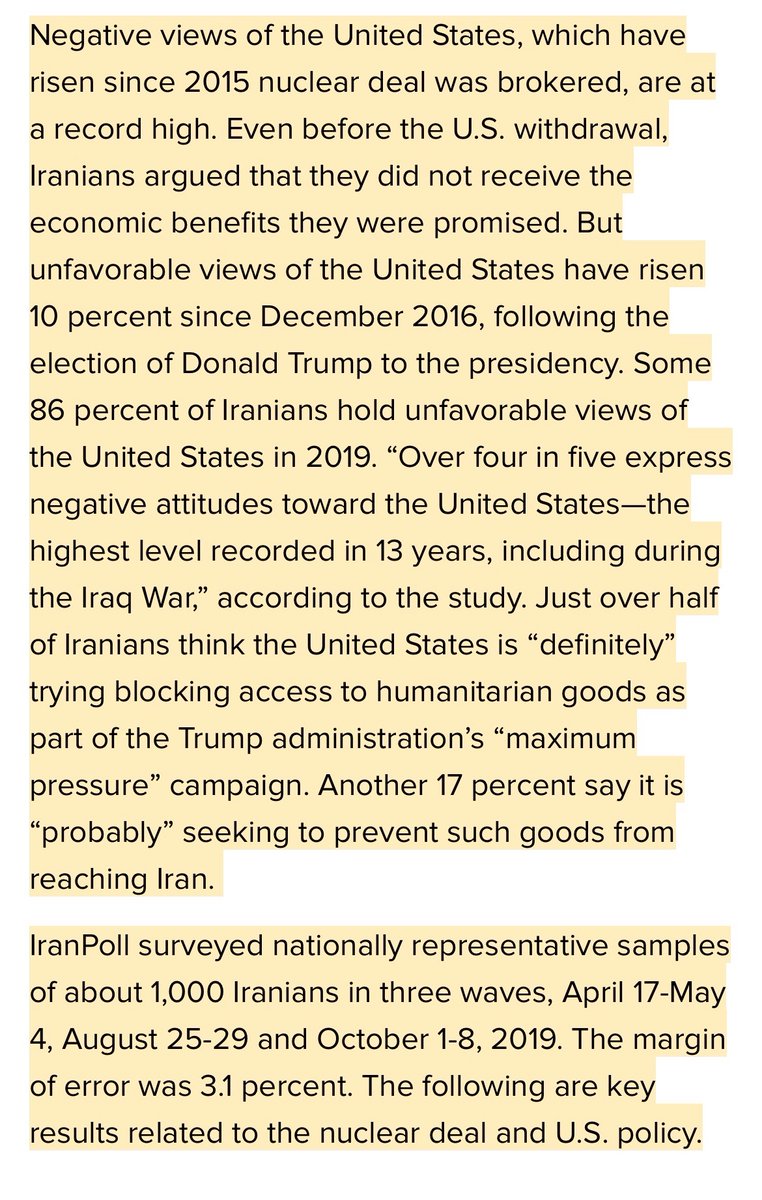
“Consistent opinion polls over recent years show that Iranians hold the United States in remarkably high regard. A military strategy that disregards their well-being risks squandering one of America's most valuable — and underutilized — assets in the Middle East: the goodwill of the Iranian people.”

Open Letter from Economists to @realDonaldTrump On Iran forms.gle/FhHPRpbWAvURSt… Dear President Trump, While we share the Administration's concerns about the Islamic Revolutionary Guard Corps’ (IRGC) nuclear program and destabilizing activities, strikes on Iranian civilian infrastructure, including power plants, industries, bridges, and universities, some of which have already begun, are strategically counterproductive, escalating costs to Americans while reducing our ability to achieve America’s objectives. Iran's ability to disrupt the Strait of Hormuz through mines, fast-attack boats, coastal missiles, and drones does not depend on power plants or refineries. Destroying civilian infrastructure removes Iran's incentive to reopen the Strait; it does not remove its capability to close it. Striking infrastructure devastates the livelihood of 92 million civilians, the very people this war was partly started to liberate. Aside from its resulting humanitarian crisis, it will further widen the scope of the war and allow the IRGC to position themselves as defenders of the nation, and rebuild their badly damaged internal support. Infrastructure strikes and a prolonged war also let them blame economic misery on foreign aggression rather than their own mismanagement. Consistent opinion polls over recent years show that Iranians hold the United States in remarkably high regard. A military strategy that disregards their well-being risks squandering one of America's most valuable — and underutilized — assets in the Middle East: the goodwill of the Iranian people. Beyond Iran, the cost to the United States is immense. Extended closure of the Strait, sustained high oil prices, and extensive damage to production facilities in the region would hurt American consumers directly. Moreover, with lost leverage for achieving peace and a more entrenched IRGC, the risk of this intervention becoming a years-long war in the Middle East goes up dramatically. Your earlier approach to limit the war to targeting IRGC military assets and top leadership, combined with conditional sanctions relief as leverage for behavioral change and termination of the nuclear threat, is still our best hope for getting to a sustainable peace, an open Strait, and avoiding economic damage at home. Once the war ends, the IRGC must answer to their own population, and your policies have already weakened them and changed their calculus. You may well have opened the path to a more moderate Iran in the coming months and years if we can close the deal now, but that option vanishes as soon as infrastructure attacks expand. --- See signatories here: forms.gle/FhHPRpbWAvURSt…
Open Letter from Economists to @realDonaldTrump On Iran forms.gle/FhHPRpbWAvURSt… Dear President Trump, While we share the Administration's concerns about the Islamic Revolutionary Guard Corps’ (IRGC) nuclear program and destabilizing activities, strikes on Iranian civilian infrastructure, including power plants, industries, bridges, and universities, some of which have already begun, are strategically counterproductive, escalating costs to Americans while reducing our ability to achieve America’s objectives. Iran's ability to disrupt the Strait of Hormuz through mines, fast-attack boats, coastal missiles, and drones does not depend on power plants or refineries. Destroying civilian infrastructure removes Iran's incentive to reopen the Strait; it does not remove its capability to close it. Striking infrastructure devastates the livelihood of 92 million civilians, the very people this war was partly started to liberate. Aside from its resulting humanitarian crisis, it will further widen the scope of the war and allow the IRGC to position themselves as defenders of the nation, and rebuild their badly damaged internal support. Infrastructure strikes and a prolonged war also let them blame economic misery on foreign aggression rather than their own mismanagement. Consistent opinion polls over recent years show that Iranians hold the United States in remarkably high regard. A military strategy that disregards their well-being risks squandering one of America's most valuable — and underutilized — assets in the Middle East: the goodwill of the Iranian people. Beyond Iran, the cost to the United States is immense. Extended closure of the Strait, sustained high oil prices, and extensive damage to production facilities in the region would hurt American consumers directly. Moreover, with lost leverage for achieving peace and a more entrenched IRGC, the risk of this intervention becoming a years-long war in the Middle East goes up dramatically. Your earlier approach to limit the war to targeting IRGC military assets and top leadership, combined with conditional sanctions relief as leverage for behavioral change and termination of the nuclear threat, is still our best hope for getting to a sustainable peace, an open Strait, and avoiding economic damage at home. Once the war ends, the IRGC must answer to their own population, and your policies have already weakened them and changed their calculus. You may well have opened the path to a more moderate Iran in the coming months and years if we can close the deal now, but that option vanishes as soon as infrastructure attacks expand. --- See signatories here: forms.gle/FhHPRpbWAvURSt…
Open Letter from Economists to @realDonaldTrump On Iran forms.gle/FhHPRpbWAvURSt… Dear President Trump, While we share the Administration's concerns about the Islamic Revolutionary Guard Corps’ (IRGC) nuclear program and destabilizing activities, strikes on Iranian civilian infrastructure, including power plants, industries, bridges, and universities, some of which have already begun, are strategically counterproductive, escalating costs to Americans while reducing our ability to achieve America’s objectives. Iran's ability to disrupt the Strait of Hormuz through mines, fast-attack boats, coastal missiles, and drones does not depend on power plants or refineries. Destroying civilian infrastructure removes Iran's incentive to reopen the Strait; it does not remove its capability to close it. Striking infrastructure devastates the livelihood of 92 million civilians, the very people this war was partly started to liberate. Aside from its resulting humanitarian crisis, it will further widen the scope of the war and allow the IRGC to position themselves as defenders of the nation, and rebuild their badly damaged internal support. Infrastructure strikes and a prolonged war also let them blame economic misery on foreign aggression rather than their own mismanagement. Consistent opinion polls over recent years show that Iranians hold the United States in remarkably high regard. A military strategy that disregards their well-being risks squandering one of America's most valuable — and underutilized — assets in the Middle East: the goodwill of the Iranian people. Beyond Iran, the cost to the United States is immense. Extended closure of the Strait, sustained high oil prices, and extensive damage to production facilities in the region would hurt American consumers directly. Moreover, with lost leverage for achieving peace and a more entrenched IRGC, the risk of this intervention becoming a years-long war in the Middle East goes up dramatically. Your earlier approach to limit the war to targeting IRGC military assets and top leadership, combined with conditional sanctions relief as leverage for behavioral change and termination of the nuclear threat, is still our best hope for getting to a sustainable peace, an open Strait, and avoiding economic damage at home. Once the war ends, the IRGC must answer to their own population, and your policies have already weakened them and changed their calculus. You may well have opened the path to a more moderate Iran in the coming months and years if we can close the deal now, but that option vanishes as soon as infrastructure attacks expand. --- See signatories here: forms.gle/FhHPRpbWAvURSt…