Ryan Bailey

2.3K posts

Ryan Bailey banner
Ryan Bailey

Ryan Bailey

@BioExplorr

Protein Design & Engineering, Vaccinology & Immunology. PhD student in the lab of Dr. Iain MacPherson at the University of Hawaii.

Katılım Ekim 2019
1K Takip Edilen216 Takipçiler
Sabitlenmiş Tweet
Ryan Bailey
Ryan Bailey@BioExplorr·
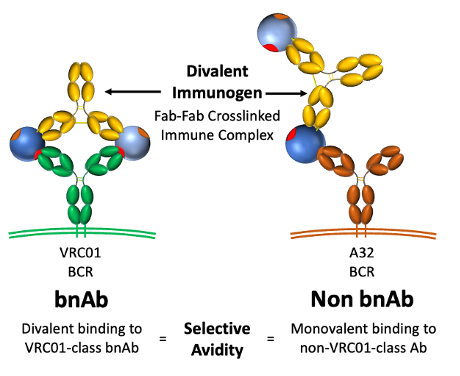
Excited to share our new preprint: ‘Divalent HIV gp120 Immunogen Exhibits Selective Avidity for Broadly Neutralizing Antibody VRC01 Precursors’! We’ve designed a vaccine immunogen that binds divalently to target B cell receptors (like VRC01) but only monovalently to non-target BCRs. Check it out: biorxiv.org/content/10.110… 1/7
Ryan Bailey tweet media
English
2
0
11
3.2K
Ryan Bailey retweetledi
owl
owl@owl_posting·
a few people have told me that this podcast sounds incredibly interesting, but that they don't have 3 hours to devote to it. i get it! life is busy. to help out, i have compiled together 19 minutes of the most interesting bits of the episode. hopefully more palatable, especially at 2x speed! timestamps: 0:00 — Why a cancer vaccine is theoretically the perfect drug 1:52 — How your immune system reads the inside of every cell 4:26 — Why cancer can't just hide from the immune system 5:35 — The one patient who proved a cancer vaccine can work 7:21 — Why flooding the immune system with tumor cells does nothing 10:04 — How cancer vaccines broke every rule of drug development 12:18 — Why not skip the vaccine and engineer the T cells directly? 14:03 — What we can — and can't — learn from a billionaire's cancer journey 16:48 — Why concierge oncology couldn't have worked until now
owl@owl_posting

How to design a cancer vaccine (and vastly improve them): Alex Rubinsteyn & Ben Vincent this is an interview with @iskander and @BenjaminGVincen, two UNC professors. it is three hours of incredibly detailed takes on cancer vaccines, personalized immunotherapy, and how both may be improved in the fullness of time. Alex and Ben are both wellsprings of knowledge and this was a very, very fun episode to film; i expect it could've gone on for an hour longer. enjoy! (other links in reply) youtu.be/EmbciAO9d-M

English
3
19
192
23.4K
Ryan Bailey retweetledi
Maziyar PANAHI
Maziyar PANAHI@MaziyarPanahi·
I finally got an open model to do structural biology by itself 🔥 GLM-5.2 drives the Mol* viewer, judges its own render through Qwen3-VL, and refines until the drug pops in its pocket. Then I spun it in 3D. All open, on @huggingface. What should it build next?
English
26
107
807
59.1K
Ryan Bailey retweetledi
sk
sk@compchemm·
David Baker & Veesler labs "building viruses - Institute for Protein Design (IPD) -Two new Nature papers - "building viruses, at University of Washington" if you believe the headlines. What they've actually done is more interesting than that. ullahsamee.substack.com/p/david-baker-…
sk tweet media
English
1
36
169
11.9K
Ryan Bailey retweetledi
Alena Khmelinskaia
Alena Khmelinskaia@khmelinskaia·
De novo designed oligomers that respond to copper, small molecules, and phosphorylation... Using a single design strategy? 🧬⚙️ 🎉 Excited to share our new bioRxiv preprint—a collaboration between the Khmelinskaia, Correia, Schoeder and a Tinnefeld labs! biorxiv.org/content/10.648…
English
1
26
76
6.6K
Ryan Bailey retweetledi
Claude
Claude@claudeai·
Introducing Claude Science, a new app designed with every stage of research in mind. Artifacts traced to their code, environments managed on demand, and 60+ optional scientific databases that you can connect. Available now in beta.
English
1.1K
3.5K
35.9K
9.7M
Ryan Bailey retweetledi
Aaron Ring
Aaron Ring@aaronmring·
I've been really impressed with ESMFold2's design capabilities. To make it easier to run locally, as well as to support structural templates, multichain targets, hotspots, Protenix-v2 validation, and automated MSA handling, I created this project: github.com/cytokineking/e…
English
0
28
174
9.8K
Ryan Bailey
Ryan Bailey@BioExplorr·
@owl_posting I have two of those four on my desk and basically nothing else. They’re rad
English
0
0
1
226
owl
owl@owl_posting·
crazy to think i spent all of 2025 completely obsessed with making posters and have not thought about it again since the start of the year. sometimes things swallow you and then leave
owl tweet mediaowl tweet mediaowl tweet mediaowl tweet media
English
18
8
294
11.7K
Ryan Bailey retweetledi
Genyro
Genyro@Genyroinc·
Genyro is pleased to share a new publication in #NatureBiotechnology from co-founder Brian Hie and his colleagues Stanford University titled “Efficient Generation of Epitope-Targeted Antibodies with Germinal.” Full paper: nature.com/articles/s4158…
Genyro tweet media
English
1
2
5
654
Ryan Bailey retweetledi
Andrej Karpathy
Andrej Karpathy@karpathy·
This is a new paradigm for interacting with Claude that is significantly more "inline" with all the other human activity org-wide. Once you do all of the under the hood engineering work to make this "just work" (e.g. across tools, integrations, compute environments, memory, security, etc.), Claude basically joins the team in a seamless way - you can talk to it as you would talk to a person and it can help with a very large variety of workloads. Imo this is the 3rd major redesign of LLM UIUX. The first paradigm was that the LLM is a website you go to, the second was that it is an app you download to your computer. This third one is that it is a self-contained, persistent, asynchronous entity with org-wide tools and context, working alongside teams of humans. It really takes a while to wrap your head around it, but it works and it is awesome.
Claude@claudeai

Introducing Claude Tag, a new way for teams to work with Claude. In Slack, Claude joins as a team member with access to the channels and tools you choose. Tag Claude in and delegate tasks to it while you focus on other work.

English
1.3K
1.9K
23.1K
7.9M
Ryan Bailey retweetledi
biohub
biohub@biohub·
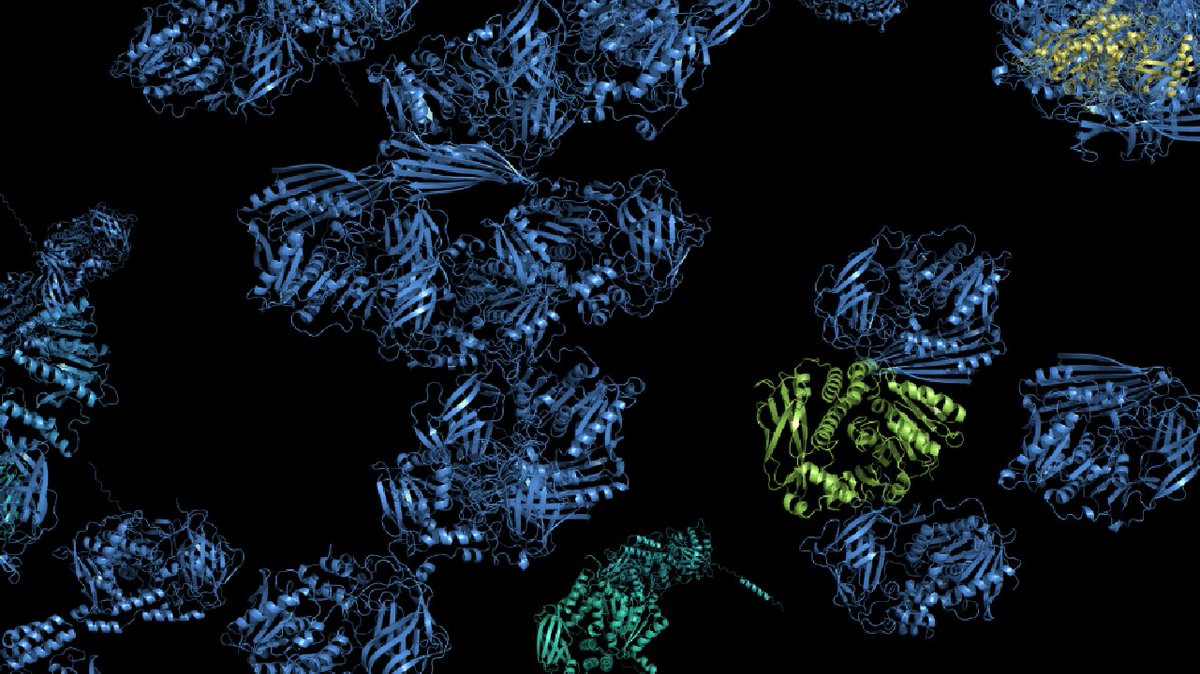
1.1 billion predicted protein structures. That's the largest application of AI to protein biology to date. And it's fully open. But ESM Atlas is not a structure repository. It is an agent you can ask: what is this protein, what does it look like, what might it do? Explore ESM Atlas: bit.ly/4dJcF6G
biohub tweet media
English
10
20
119
6.2K
Ryan Bailey retweetledi
biohub
biohub@biohub·
Antibody therapies now make up ~25% of all new FDA approvals. ESMFold2 is especially strong at modeling antibody-antigen interactions. Hit rates of 15–29% for scFvs across five targets. No target-specific tuning. Download and build: bit.ly/4vmGX52
biohub tweet media
English
6
21
122
7.4K
Ryan Bailey retweetledi
CEPI
CEPI@CEPIvaccines·
Our Calls for Proposals invite innovators worldwide to apply to our scientific programmes to advance the development and manufacture of vaccines and tools against epidemic and pandemic threats. Learn more about our Open Calls and how to apply below. cepi.net/calls-for-prop…
English
0
1
2
826
Ryan Bailey retweetledi
Biology+AI Daily
Biology+AI Daily@BiologyAIDaily·
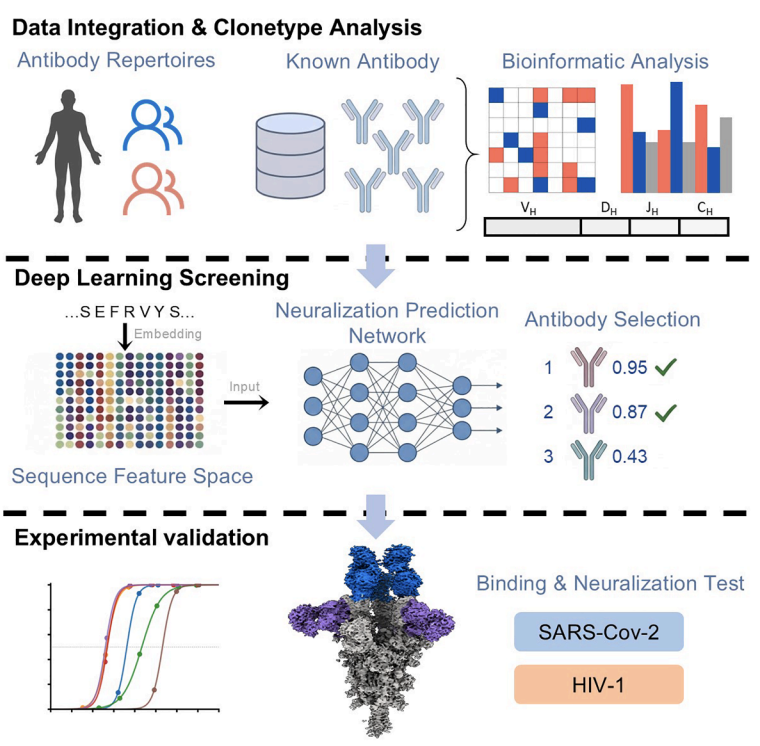
Public antibody clonotypes and deep learning identify SARS-CoV-2 and HIV broadly neutralizing antibodies in immune repertoires 1. The study presents ClonoDeep, a two-stage bnAb discovery pipeline that combines public antibody clonotypes (convergent, recurrent patterns across individuals) with a sequence-only deep learning model to prioritize broadly neutralizing antibody candidates directly from large immune repertoire datasets, without requiring antigen-specific immunization. 2. Core idea: public clonotypes provide a biologically grounded search space, while deep learning ranks candidates within each clonotype for neutralization potential (since clonotype membership alone does not guarantee potency or breadth). This pairing is designed for high-throughput repertoire mining at scale. 3. Stage 1 (clonotype mining): sequences are annotated (ANARCI) and public clonotypes are defined by identical IGHV + IGHJ usage and identical HCDR3 length across individuals; candidates within a clonotype are selected if they share ≥60% HCDR3 sequence similarity to a reference antibody. 4. Stage 2 (deep learning prioritization): antibody heavy/light chains plus antigen sequences are embedded with ProtT5-XL and scored using a hybrid CNN-Transformer. The authors emphasize careful train/val/test splitting by clustering similar sequences to reduce sequence-identity leakage. 5. SARS-CoV-2 application: a neutralization model trained on Cov-AbDab achieves strong performance (reported F1 0.784, AUC 0.831) and remains competitive under an unseen-antigen generalization setting, supporting use for ranking candidates beyond memorizing known sequences. 6. SARS-CoV-2 discovery results: from RBD public clonotypes, ClonoDeep nominated 18 top heavy-chain candidates; experimentally, 30/39 recombinant mAbs bound RBD and 26/30 binders were neutralizing (IC50 ≤10 μg/mL). Eight antibodies showed broad neutralization across variants, demonstrating practical enrichment for functional neutralizers from repertoire mining. 7. Mechanistic insight from structure + mutagenesis: cryo-EM structures of CT1-1 and CT1-5 (clonotype 1; S2E12-like class 1 RBD antibodies) reveal that somatic hypermutations in HCDR3—especially His107—enhance affinity and breadth, while an additional Gly109Ala change can partially reduce the benefit (likely via steric constraints and altered packing). 8. A particularly actionable vaccine/engineering takeaway: HCDR3 positions 107 and 109 emerge as affinity-maturation “control points” for this public clonotype, linking sequence-level mutations to variant breadth and providing concrete residues to target in antibody optimization or immunogen design. 9. HIV application is notable for cohort independence: training on CATNAP yields strong unseen-antigen performance (accuracy 81.1%, AUC 0.905). ClonoDeep then identifies 55 HIV-related public clonotypes and discovers three previously unreported HIV bnAbs from non-HIV immune repertoires, implying bnAb-like precursors can exist in repertoires shaped by unrelated immune histories. 10. Practical operating conditions and limitations: the approach benefits from large labeled training sets (≥10^4 antibody-antigen pairs) and very large repertoire databases (≥10^8 sequences). Candidates with ≥60% HCDR3 similarity and prediction score >0.85 show higher success but still require experimental validation (~20% false positives). A key limitation is reconstructing antibodies by pairing mined heavy chains with reference light chains, which may not generalize when suitable reference light chains are unavailable. 💻Code: doi.org/10.5281/zenodo… 📜Paper: doi.org/10.1016/j.celr… #ComputationalBiology #Immunoinformatics #DeepLearning #AntibodyDiscovery #BCRseq #SARSCoV2 #HIV #bnAbs #VaccineDesign #Therapeutics
Biology+AI Daily tweet media
English
0
4
31
2.6K
Ryan Bailey
Ryan Bailey@BioExplorr·
@k_grajeda Gorgeous. Let us know when/if we can play around with this!
English
0
0
0
138
Kevin Grajeda
Kevin Grajeda@k_grajeda·
this is so fun to play around with
English
5
19
230
15.3K
Ryan Bailey retweetledi
Nature Rev Immunol
Nature Rev Immunol@NatRevImmunol·
Programming the immunological properties of mRNA vaccines for cancer dlvr.it/TT6mRW
English
0
32
101
7.5K