
Biswanath Shaw

771 posts

Biswanath Shaw banner
Biswanath Shaw

Biswanath Shaw

@Bis_acrylamide

Exploring Biophysics @Cornell | Curious about Finance & Businesses | Love 🚴, podcasts & Audiobooks | IISc UG | HSMS | iGEMer

Ithaca, NY Katılım Ocak 2014
2.3K Takip Edilen292 Takipçiler
Biswanath Shaw
Biswanath Shaw@Bis_acrylamide·
Looking forward to share some of the exciting results obtained during the GUP 2&3 sessions at NCCAT. Do join the webinar to learn more about it.
Edward T Eng@edward_eng

The next #CryoEM Current Practices Webinar speaker will be Biswanath Shaw from Cornell University speaking on "Navigating Cryo-EM Sample Preparation Challenges: Dock7 DHR2–Cdc42 Q61L Complex as a Case Study" 5/28/2026 at 12 PM ET / 9AM PT Register today: us02web.zoom.us/webinar/regist…

English

0
0
0
37
Biswanath Shaw retweetledi
Seth Howes
Seth Howes@SethSHowes·
I sequenced my genome at home, on my kitchen table. I wrote up exactly how I did it - the equipment, protocol, theory, and cost: iwantosequencemygenomeathome.com
English
108
762
4.7K
1.2M
Biswanath Shaw retweetledi
NatureStructMolBiol
NatureStructMolBiol@NatureSMB·
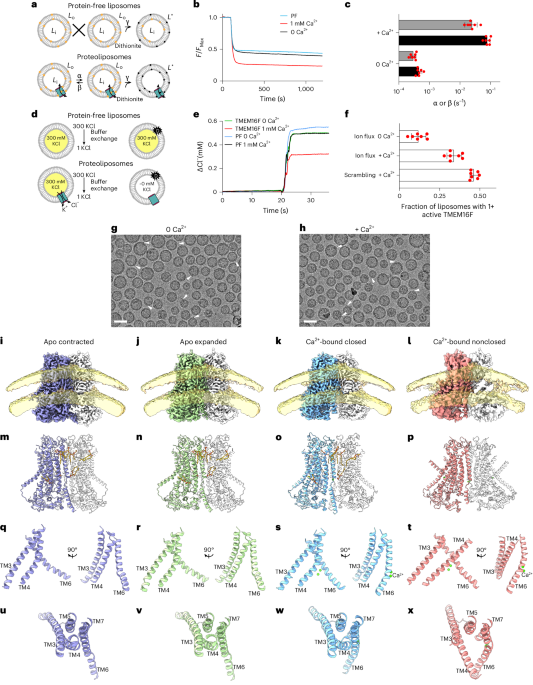
New online! Calcium dependent activation of the TMEM16F scramblase and ion channel dlvr.it/TS5CSt
NatureStructMolBiol tweet media
English
0
18
53
3K
Biswanath Shaw retweetledi
Jorge Bravo Abad
Jorge Bravo Abad@bravo_abad·
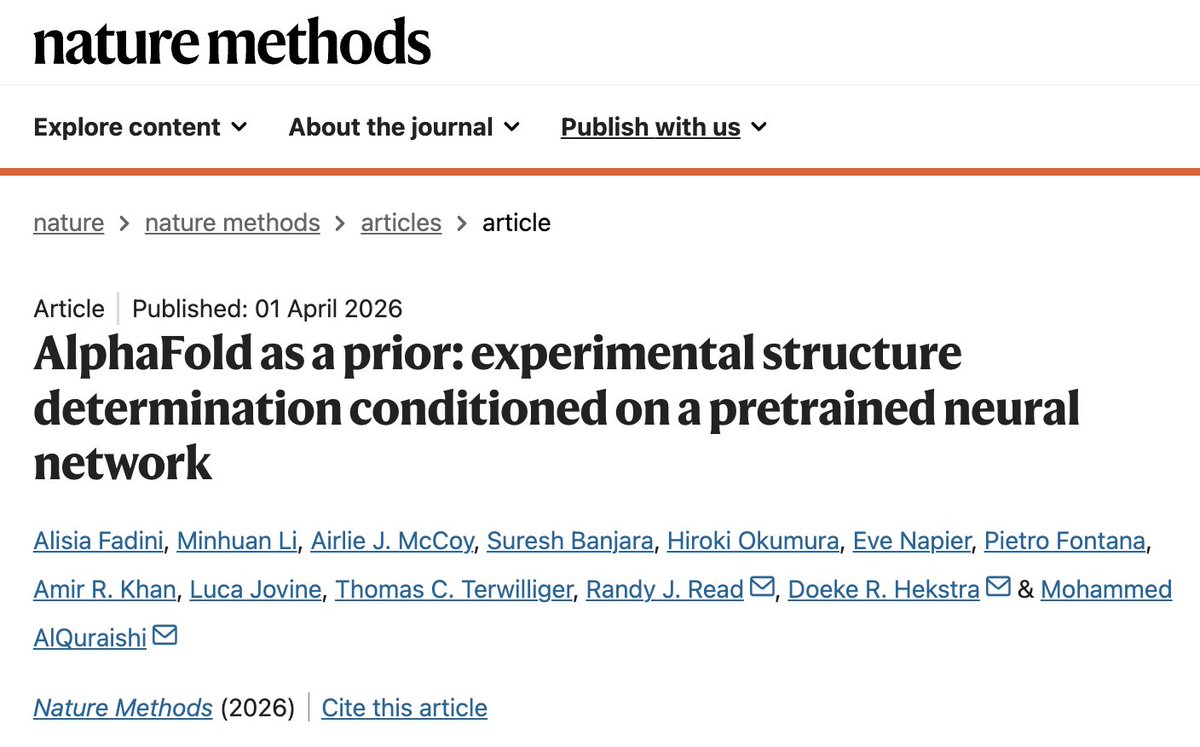
Using AlphaFold as a Bayesian prior for experimental structure determination AlphaFold2 changed structural biology by making accurate structure prediction from sequence routine. But prediction and experiment have largely remained separate workflows: AF2 gives you a starting model, and then conventional refinement tools take over, optimizing atomic coordinates against diffraction data or cryo-EM maps in Cartesian space. That decoupling creates a hard limit—when the experimental data demand large conformational changes from the AF2 prediction, such as loop rearrangements, domain reorientations, or secondary structure switches, standard refinement gets stuck. Below 4–5 Å resolution, the problem becomes severe enough that even experienced crystallographers struggle. Fadini and coauthors take a different approach. Instead of treating AF2 as a one-shot predictor, they treat it as a continuously differentiable structural prior and optimize directly within its latent space. The key insight is that AF2's internal representation—the multiple sequence alignment cluster profile—encodes a rich coevolutionary landscape that implicitly contains information about conformational states a protein can adopt. ROCKET learns multiplicative and additive corrections to this MSA profile at inference time, using crystallographic or cryo-EM likelihood functions as the optimization target, without any retraining of the underlying model. The results are remarkable across a wide resolution range. On 27 high-resolution crystallographic structures, ROCKET improves backbone and side-chain fit in all but one case. More importantly, it succeeds where conventional tools fail: recovering the correct fold from 10 Å cryo-ET subtomogram averages, capturing ligand-induced loop conformations inaccessible to standard refinement, and building complete models from preferred-orientation cryo-EM maps where AF3 cannot even produce a plausible complex. Optimizing in coevolutionary embedding space rather than Cartesian coordinates turns out to substantially lower the barriers for large structural rearrangements. For R&D teams running high-throughput crystallographic fragment screening or cryo-EM campaigns against therapeutic targets, ROCKET directly addresses the bottleneck of converting raw experimental data into interpretable atomic models—particularly at the low resolutions that are common in early-stage campaigns. Automating model building at resolutions that previously required days of expert manual intervention could meaningfully accelerate structure-guided drug design timelines. Source: Fadini et al., Nature Methods (2026) — Journal copyright | doi.org/10.1038/s41592…
Jorge Bravo Abad tweet media
English
0
27
182
13.1K
Biswanath Shaw retweetledi
Mohammed AlQuraishi
Mohammed AlQuraishi@MoAlQuraishi·
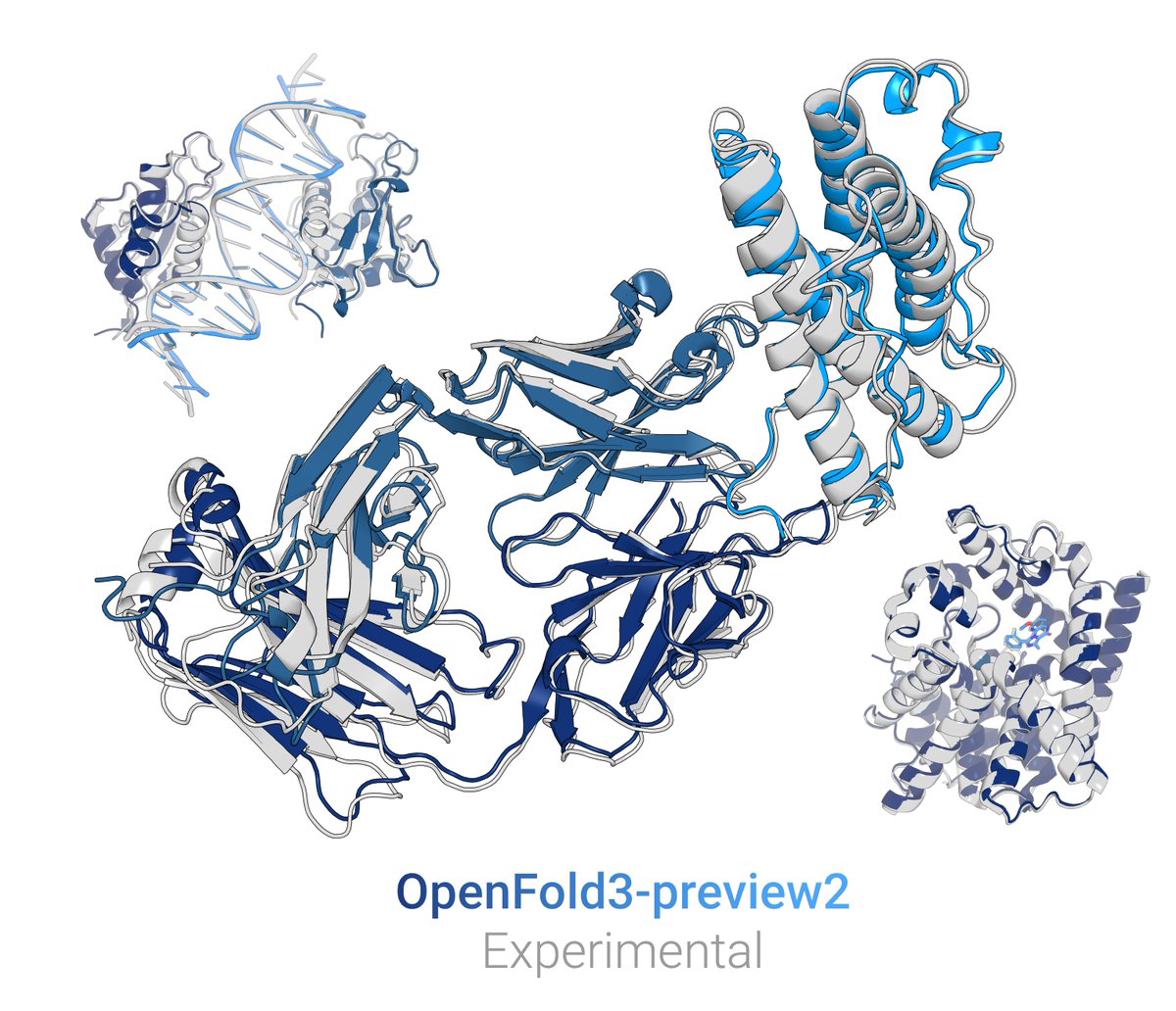
New OpenFold3 preview out! (OF3p2) It closes the gap to AlphaFold3 for most modalities. Most critically, we're releasing everything, including training sets & configs, making OF3p2 the only current AF3-based model that is functionally trainable & reproducible from scratch🧵1/9
Mohammed AlQuraishi tweet media
English
8
179
674
55.5K
Biswanath Shaw retweetledi
Science Magazine
Science Magazine@ScienceMagazine·
A unique Rubisco subunit from the hornwort plant carries a built-in extension that enables the enzyme to cluster into carbon-concentrating structures like algae, according to a new Science study—an innovation that successfully triggered similar condensates when introduced into Arabidopsis plants. The findings reveal a novel and evolutionarily independent solution for Rubisco condensation in land plants and open the door for engineering similar systems in agricultural crops to potentially boost nutrient efficiency and yield. 📄: scim.ag/3OQDBr4 #SciencePerspective: scim.ag/4udcg2k
Science Magazine tweet media
English
2
64
250
23K
Biswanath Shaw retweetledi
Dingchang Lin
Dingchang Lin@DingchangLin·
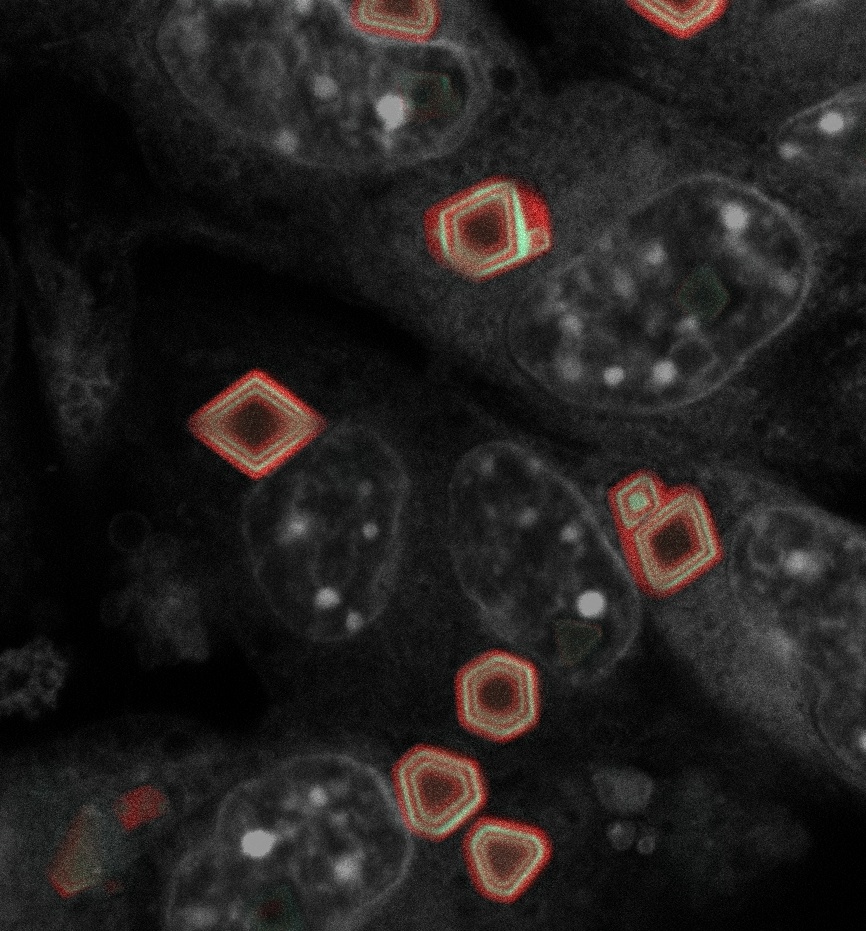
🚨 Today in @Nature, we report GEMINI—a genetically encoded intracellular memory device that writes cellular dynamics into tree-ring-like fluorescent patterns within cytoplasmic protein assemblies.[1/n] nature.com/articles/s4158…
Dingchang Lin tweet media
English
37
300
1.2K
154.9K
Biswanath Shaw retweetledi
Bo Wang
Bo Wang@BoWang87·
Harvard scientists just shattered one of biology’s oldest rules. We were taught: Viruses can’t make their own proteins. They hijack yours. That’s why they’re “not alive.” Except giant DNA viruses just crossed that line. Researchers found they carry a full eukaryotic-style translation complex (vIF4F). Translation machinery. Inside a virus. They can keep making proteins even under stress that shuts down normal viral replication. If a virus brings its own protein-making tools… Is it still just a parasite? For decades we’ve drawn a clean boundary: Cell = alive Virus = not alive Nature doesn’t care about our categories. Maybe viruses aren’t just evolutionary side notes. Maybe they helped build complex life. Paper in Cell 👇 cell.com/cell/fulltext/… Harvard news: cellbio.hms.harvard.edu/recent-researc…
Bo Wang tweet media
English
61
574
2K
128.3K
Biswanath Shaw retweetledi
Niko McCarty.
Niko McCarty.@NikoMcCarty·
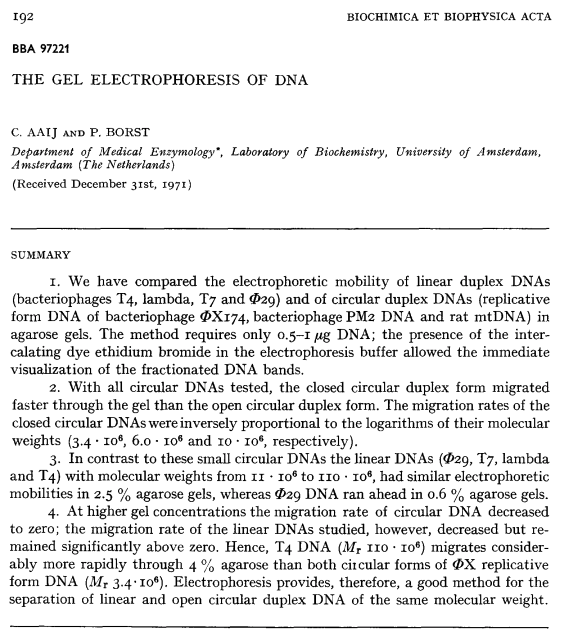
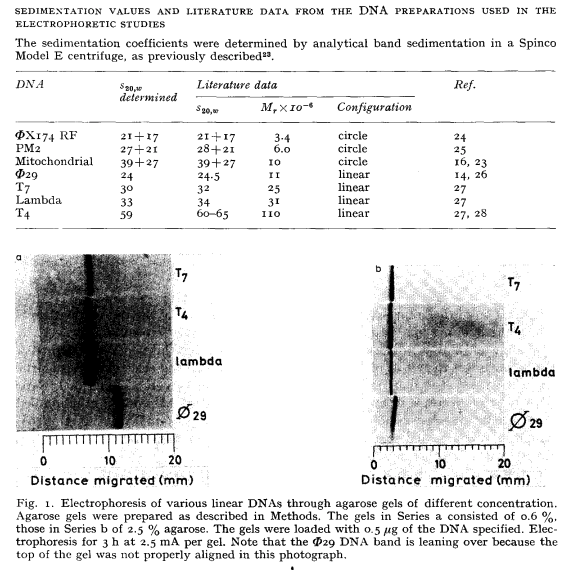
It is really remarkable how so many things in biology, which we take completely for granted, were adopted by accident. One example: When scientists run a gel to separate DNA molecules, they usually add ethidium bromide to the agar. Ethidium bromide is a fluorescent dye that locks into the DNA grooves and emits a red-ish color when you shine a UV light on it. It's an easy way to see where DNA ends up in the gel. But the only reason Ethidium Bromide staining even happened is because of a broken centrifuge. In 1972, two Dutch scientists (Cees Aaij and Piet Borst) were trying to separate DNA isolated from mitochondria. They were spinning down the DNA inside of a big centrifuge, and the machine broke. Undeterred, the duo decided to separate their DNA using gels instead. Agarose gel electrophoresis had been used since the 1960s to separate radiolabeled DNA. The DNA molecules were modified to carry a radioactive isotope (usually heavy phosphorus) and then scientists would move them through the gel and use a radiation detector to figure out where the DNA went. This was obviously both tedious and dangerous. The brilliant insight that Aaij and Borst had was, instead, to just add ethidium bromide to the gel so that the DNA would "light up" instead. No radiation needed. The Dutch scientists stopped using their centrifuge entirely and began separating DNA molecules using this new approach instead. Their discovery spread quickly. (The first gels looked like garbage, though!)
Niko McCarty. tweet mediaNiko McCarty. tweet media
English
12
69
475
31.4K
Biswanath Shaw retweetledi
THE Connect
THE Connect@Connect_by_THE·
CSU’s Prof. Ruan Wei, together with his team, published a landmark study in Nature. The study establishes a critical mechanistic link between the circadian clock and hypoxia, providing new insight into why myocardial injury follows distinct time-of-day patterns. Ad (Sponsored)
English
0
7
55
168K
Biswanath Shaw retweetledi
Jason Sheltzer
Jason Sheltzer@JSheltzer·
AI is cool and all... but a new paper in @ScienceMagazine kind of figured out the origin of life? The paper reports the discovery of a simple 45-nucleotide RNA molecule that can perfectly copy itself.
Jason Sheltzer tweet media
English
179
1K
6.2K
866.7K
Biswanath Shaw retweetledi
Aaron Ring
Aaron Ring@aaronmring·
My mentor Chris Garcia just put out an absolute banger. Required reading for protein design/engineering. Why are natural protein-protein interfaces easier to target with new binders/mAbs than "silent" surfaces? It's not training bias... it's biophysics. science.org/doi/10.1126/sc…
English
1
40
240
16.6K
Biswanath Shaw retweetledi
Isha Jain
Isha Jain@ishahjain·
A huge team effort and joint project with @genophoria (Hani Goodarzi's) lab -- we show that systemic hypoxia (and our hypoxia drug, HypoxyStat) suppress tumor growth! @arcinstitute @GladstoneInst @UCSF led by rockstars (@AyushDMidha, Brandon Chew, @Choi_Benedict, Timmy, Chris!)
Ayush Midha@AyushDMidha

I am excited to share our latest preprint, in which we demonstrate that systemic hypoxia suppresses solid tumor growth. This has been a tremendous collaborative effort in the labs of @IshaHJain and @Genophoria at @GladstoneInst, @ArcInstitute, and @UCSF. biorxiv.org/content/10.648…

English
10
51
462
592.9K
Biswanath Shaw retweetledi
Dawid Zyla
Dawid Zyla@DawidZyla·
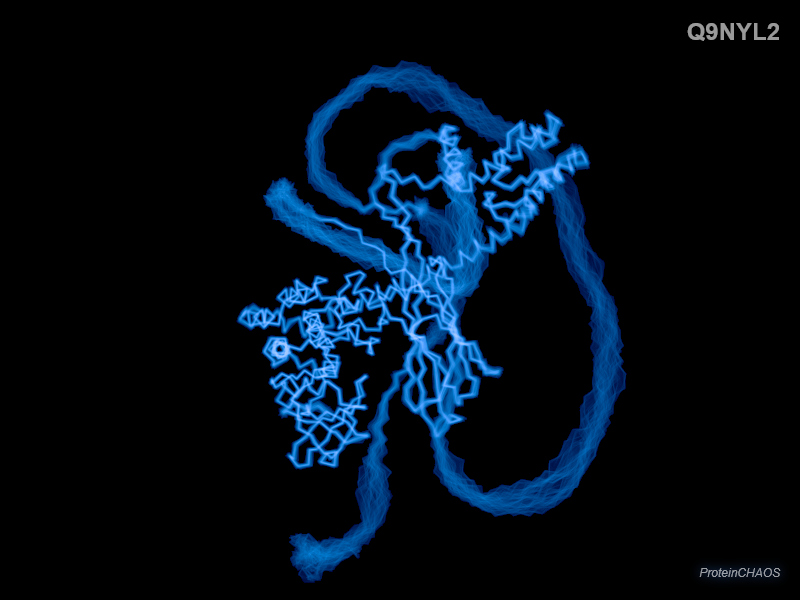
Proteins are dynamic, yet structural biology often depicts them as static. Inspired by long-exposure photography and generative art, I created ProteinCHAOS, an artistic tool that uses molecular dynamics to visualize protein flexibility over time, like a long-exposure photo.
Dawid Zyla tweet media
English
8
23
186
9.2K
Biswanath Shaw retweetledi
Gabriel Rocklin
Gabriel Rocklin@grocklin·
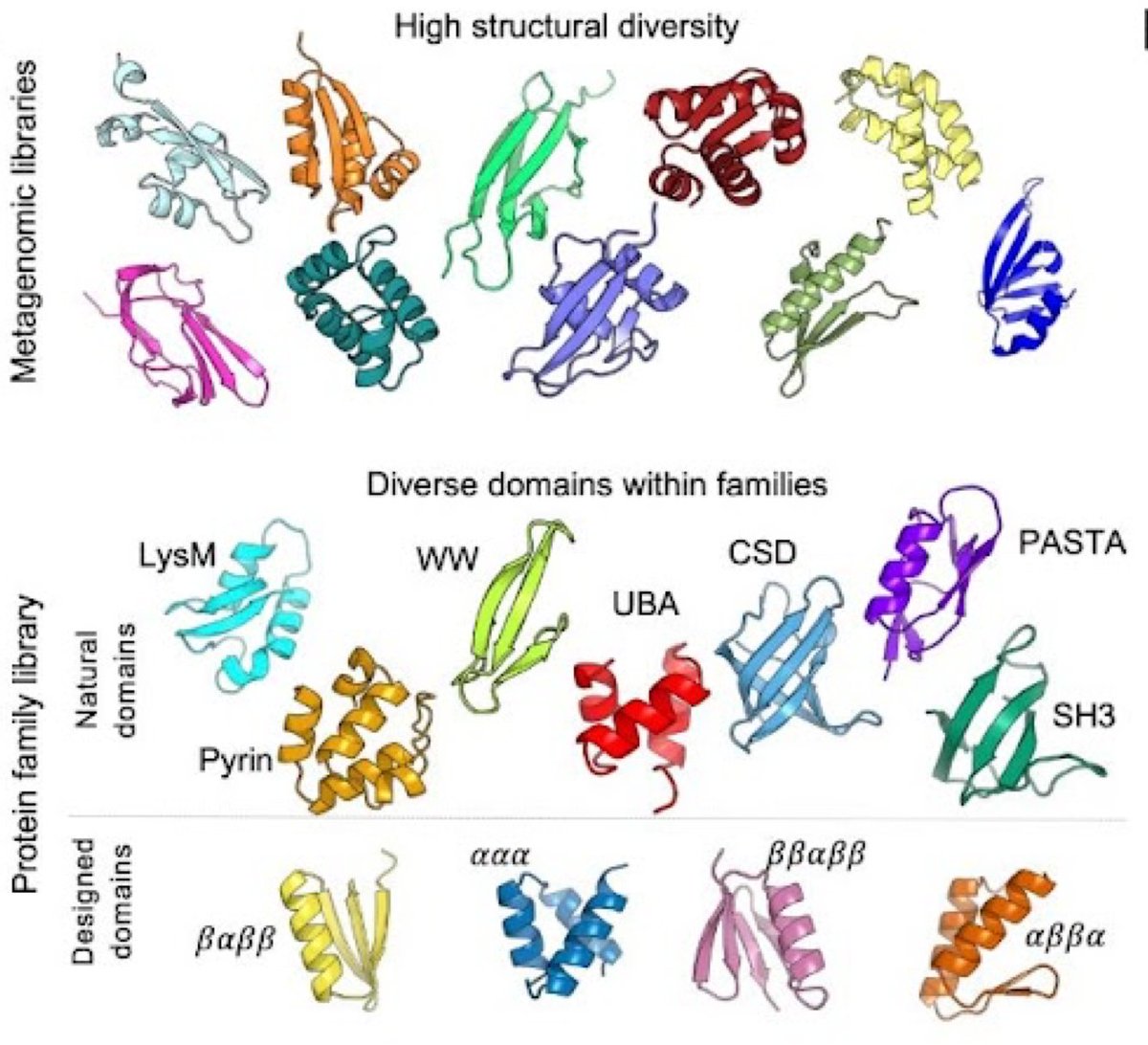
New preprint! We measured temperature- and pH-induced aggregation for over 18,000 natural and de novo designed protein domains!
Gabriel Rocklin tweet mediaGabriel Rocklin tweet media
English
15
123
666
53.6K
Biswanath Shaw retweetledi
Niko McCarty.
Niko McCarty.@NikoMcCarty·
Here are 30 great essays about biology. I consider these to be my "personal canon," and think that they are all basically perfect in their own ways, despite being different in form and style. All have shaped my own writing considerably. I'm not including links here, but you can easily search and find these. 1. Diagnosing the decline in pharmaceutical R&D efficiency, Jack W. Scannell et al., 2012 2. Predictive validity in drug discovery: what it is, why it matters and how to improve it, Jack Scannell et al., 2022 3. Is the cell really a machine?, Daniel J. Nicholson, 2019 4. How academia and publishing are destroying scientific innovation: a conversation with Sydney Brenner, Elizabeth Dzeng, 2014 5. A Future History of Biomedical Progress, Adam Green (Markov), 2022 6. The pharma industry from Paul Janssen to today, Alex Telford, 2023 7. The Lives of a Cell, Lewis Thomas, 1974 8. The maddening saga of how an Alzheimer’s ‘cabal’ thwarted progress toward a cure for decades, Sharon Begley, 2019 9. The Scientific Virtues, Slime Mold Time Mold, 2022 10. First Clean Water, Now Clean Air, Fin Moorhouse, 2023 11. I should have loved biology, James Somers, 2020 12. The Baffling Intelligence of a Single Cell, James Somers & Edwin Morris, 2024 13. Biology is more theoretical than physics, Jeremy Gunawardena, 2013 14. Can a biologist fix a radio?, Yuri Lazebnik, 2002 15. Cells are very fast and crowded places, Ken Shirriff, 2011 16. Life at Low Reynolds Number, E.M. Purcell, 1976 17. Lena, qntm, 2021 18. Sequences and Consequences, Sydney Brenner, 2010 19. The NIH Report, Matt Faherty, 2022 (I edited this one) 20. Simplicity in biology, Uri Alon, 2007 21. A breakthrough from 60 years ago: “General nature of the genetic code for proteins” (1961), Matthew Cobb, 2021 22. Molecular “Vitalism”, Marc Kirschner, John Gerhart, Tim Mitchison, 2000 23. The Coming Technological Singularity, Vernor Vinge, 1993 24. Review of Scientific Self-Experimentation, Brian Hanley & William Bains & George Church, 2018 25. Coming full circle-from endless complexity to simplicity and back again, Robert Weinberg, 2014 26. Nothing in Biology Makes Sense Except in the Light of Evolution, Theodosius Dobzhansky, 1973 27. The Impersonator: The Fake Data Were Coming From Inside the Lab, Uri Simonsohn, 2024 28. The Longevity FAQ, José Luis Ricón (Nintil), 2020 29. The Perfect Human is Puerto Rican, Lior Pachter, 2014 30. No Evidence of Disease, Stephanie Bourque, 2012
English
22
134
824
60.7K
Biswanath Shaw retweetledi
Johannes Gräff
Johannes Gräff@GraeffJohannes·
New paper alert! 🔥 By developing engram-specific epigenetic editing tools, our new study provides the first causal evidence that locus-specific epigenetic modifications are necessary and sufficient to drive memory expression. And that irrespective of the memory phase! 🧠🧬
davide coda@davide_coda

@GraeffJohannes @EPFL Huge congratulations to all authors! and thank you @DrawImpacts for the cover art illustrating how epigenetic modifications act as molecular memory aids!

English
1
23
115
14.4K