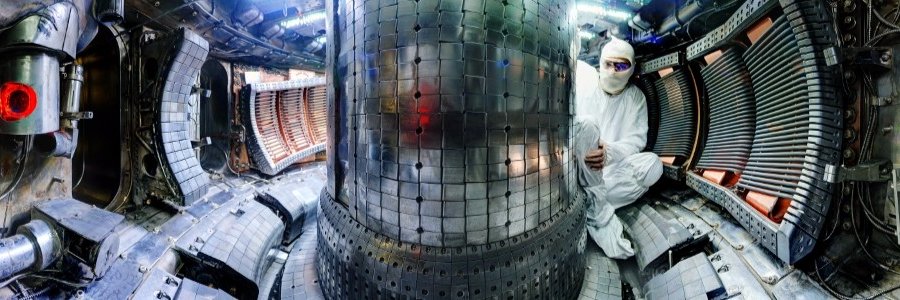

@Energy_Zap made waves a few days ago by announcing a dramatic change to its mission. Instead of just pursuing fusion energy, it’s expanding into fission. In other words, instead of concentrating its effort on combining the lightest elements, it’ll simultaneously work on splitting them apart, too, with a new spin on the technology used in traditional nuclear energy for decades. (See their announcement here: zapenergy.com/announcement).
It’s a dramatic departure that came along with a new CEO. I hope one thing that won’t change is Zap’s efforts to advance the science of the shear-stabilized z-pinch in a step-by-step, quantitative, and clear manner as they have always done. Zap, like the majority of the fusion companies, has demonstrated its commitment to sharing its scientific results through peer-reviewed research. It’s the best way to show you’re on the right track when developing a new technology, whether fusion or some new flavor of fission. I’ve always looked forward to reading about the progress in triple product from the team, and I look forward to seeing new science that’ll show Zap’s approach is progressing, even though the focus is now broader. That’ll help reassure investors and researchers that Zap has reason to remain committed to fusion energy.
From my experience, I’m convinced that blending fission and fusion is a generally bad idea. Sometimes hybrid designs are the worst of both worlds, not the best of both worlds, and a hybrid fission-fusion machine will have all the difficulties of fusion’s plasma physics and fission’s safety and regulatory constraints. In our experience at CFS, the fission personnel, materials, regulations and tools are misaligned with the needs of fusion. Everything is different — as expected given the actual reactions are inverted! Saying fission and fusion both involve neutrons glosses over deep differences in physics and engineering, whether with separate machines or a device using both processes.
Zap has a lot of work to hire staff and develop its technology. Even with today’s favorable political climate for small modular reactors, I don’t see how a Zap fission approach will speed up its commercialization work. Fission is a crowded space, with incumbents that are years ahead, and have teams, technology, and projects.
English