Scott C. Hsu ⛷ retweetledi
Scott C. Hsu ⛷
537 posts

Scott C. Hsu ⛷
@ScottCHsu
Fusion Partner, @Lowercarbon Capital (formerly with Department of @Energy, @ARPAE, and @LosAlamosNatLab).
Washington, DC metro area Katılım Ağustos 2015
362 Takip Edilen979 Takipçiler

@RGregoryClark @ManiacMayhem223 @BobMumgaard @swurzel @ToughSf It’s not possible to report achieved Qeng values until someone is generating real net energy, as described in our 2022 paper, with known system efficiencies. With plausible assumptions on these efficiencies, today one can estimate hypothetical Qeng based on achieved Qsci values.
English

Yes. By continuing to focus on that particular definition of the Q value, they continue to mislead as to the status of fusion power. They are continuing to make the same mistake described here:
youtu.be/LJ4W1g-6JiY
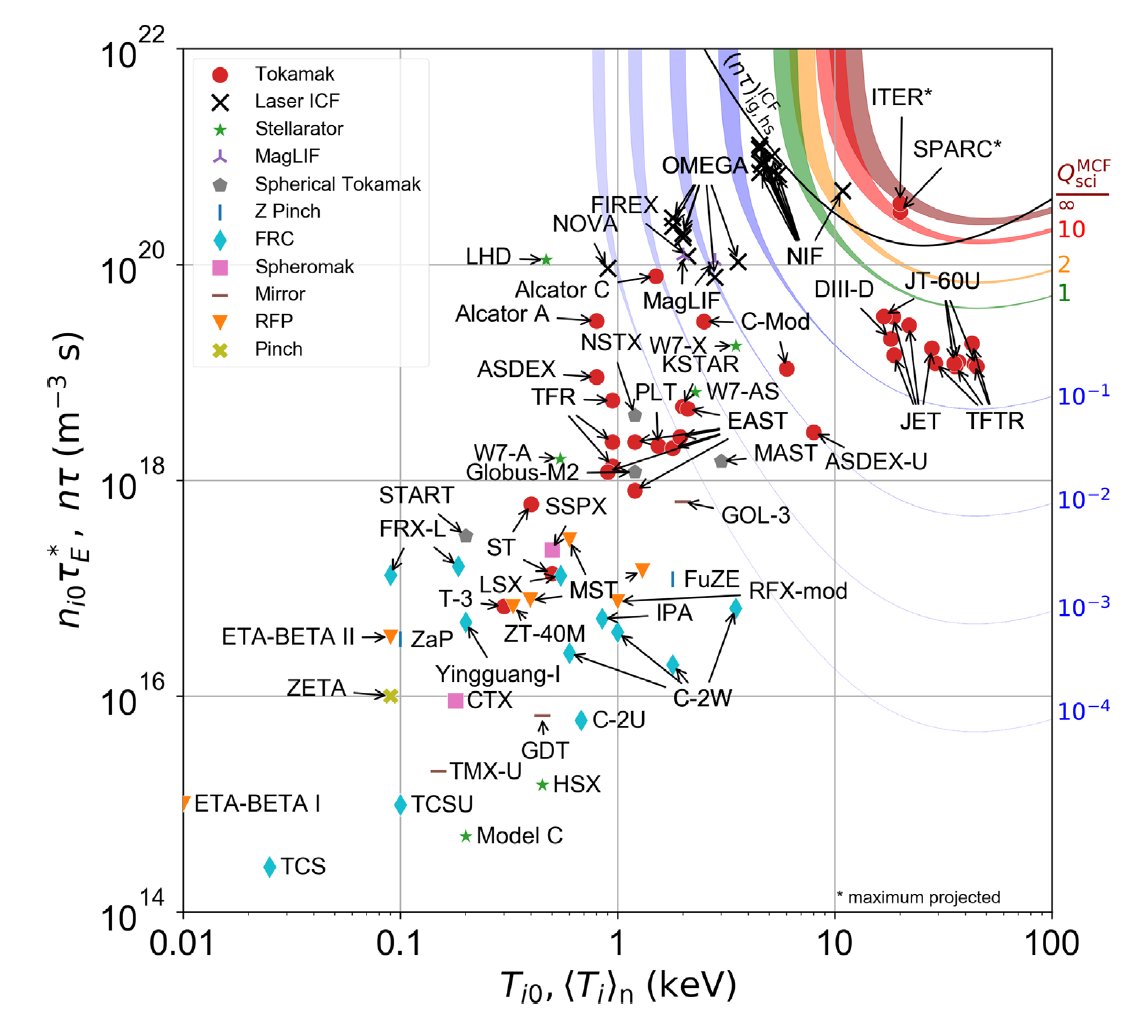
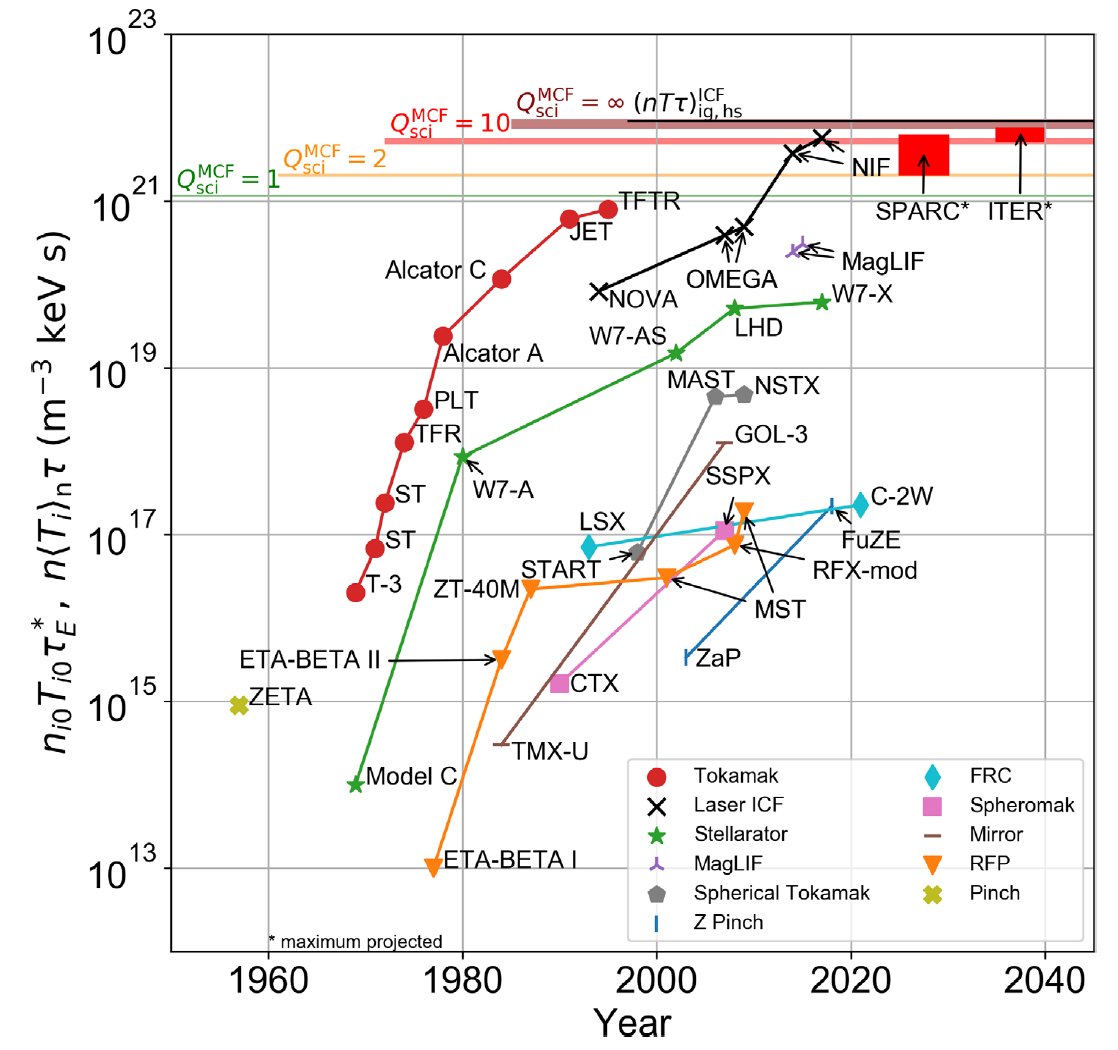
That diagram posted despite its complexity and great number of different approaches cited, still just gives the misleading number. To be accurate, and honest, any discussion of fusion must give the two definitions of the Q value and note the most important one is still well away from 1. The definition cited there commonly called Q_sci, for “Q scientific”, only notes the ratio of the energy out to the energy directly injected into the plasma. The important number called Q_eng, for “Q engineering”, is rarely cited but is the more important number because it relates the energy out to the *total* energy needed to maintain the fusion reaction. This number is still well less than 1.

YouTube
English

With their work to track fusion progress around the world, @swurzel and @ScottCHsu are playing a really helpful role in the effort to commercialize this new source of electricity. Their 2022 paper charting that fusion progress provides one of the best records of actual fusion performance among dozens of experiments by labs, universities, and companies. It truly is the scorecard for the plasma physics needed to make a fusion power plant.
And this week, they published a welcome update to that paper. On top of adding a lot of fresh data, it shows an encouraging level of agreement that transparency is important. I published an open letter last year calling on fusion companies to detail their progress on six milestones toward commercial fusion energy (cfs.energy/news-and-media…), and this paper from Scott and Sam can be used to track the first four of those.
Tracking that progress is important to let observers — investors, policymakers, journalists, and the public — get a better handle on what’s real progress and what’s merely hype. Ultimately, that more grounded assessment builds a foundation of trust in the fusion industry. The tables in their work are the ground truth of what people have actually done: peer-reviewed data.
There’s some notable information in the update to the paper. For one thing, it now shows the successful results at the National Ignition Facility (NIF) starting in 2022 that showed net fusion energy, known as Q>1, which means more energy came out of the fusion reaction than went into it. That’s an important scientific achievement — the fourth of my six milestones — and NIF is the only facility to reach it. In fact, they’ve made it to Q>4. Congrats to the @Livermore_Lab for this achievement.
The paper also shows the progress at the Joint European Torus (JET) in the UK, a project that, like Commonwealth Fusion Systems, uses a fusion machine called a tokamak. JET is shut down now, but it produced record levels of fusion energy — 59 megajoules in 2021 and 69 MJ in 2023. You can now see those points just below Q>1, around Q~0.3.
You can also see some more data from some of the companies including @Energy_Zap, @TokamakEnergy, @TAE, and @GeneralFusion, showing how they're improving their performance. Kudos to them for showing their work.
Right now we’re building our own first tokamak, SPARC, and we expect it’ll be the first magnetic confinement machine to show Q>1. That’s because we have published predictions based on the existing science today. The update from Scott and Sam adds a new Fig. 4 that chronicles Q rising year by year, and we hope to see SPARC there in a future update.
You can read the new research here: pubs.aip.org/aip/pop/articl…
#FusionEnergy

English

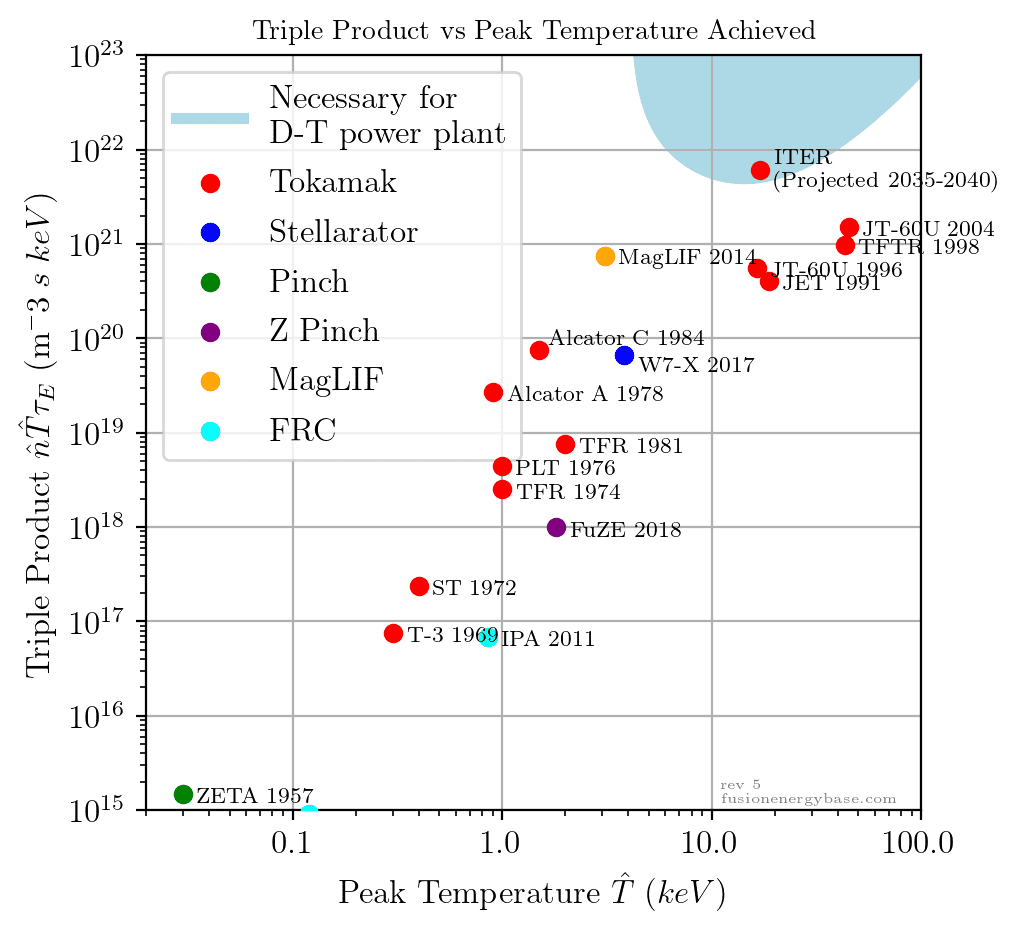
@RGregoryClark @ManiacMayhem223 @BobMumgaard @swurzel @ToughSf One more important postscript: pushing the fusion triple product upwards by more than six orders of magnitude over 5+ decades was, IMHO, likely the hardest part on the path to fusion energy, and this is the reason why scientists believe we are at an inflection point on this path.
English

@RGregoryClark @ManiacMayhem223 @BobMumgaard @swurzel @ToughSf Finally, there is no "one-size-fits-all" requirement/threshold for Qsci and Qeng because the latter depends on key system efficiencies that may greatly differ across fusion concepts/approaches, as our 2022 paper discusses in detail.
English
Scott C. Hsu ⛷ retweetledi

Please spread the word for a new position to lead the Enabling Science and Partnerships (ESP) Division of the @energy @doescience Fusion Energy Sciences (FES) program: usajobs.gov/job/800452100. Applications due Aug. 6, 2024! More info here: linkedin.com/feed/update/ur…. #fusionenergy
English
Scott C. Hsu ⛷ retweetledi

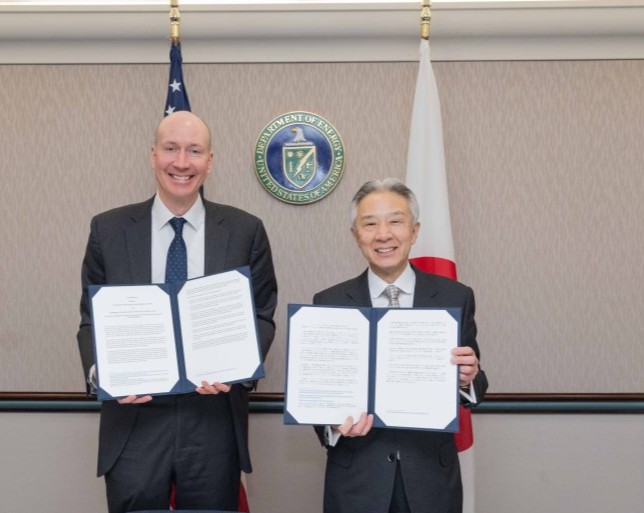
Deputy Secretary David Turk welcomed @MEXTJapan Masahito Moriyama to discuss ways the U.S. and Japan can work together to advance #fusionenergy and establish a major new strategic partnership to accelerate fusion demonstration and commercialization.
>>energy.gov/articles/joint…

English

@quirkyllama @packyM @jasoncrawford @claydumas @Andercot @soundboy Also, Q has increased from around 0.00001 to >1 since the 1970s.
English

@packyM @jasoncrawford @claydumas @Andercot @soundboy I'm listening to podcast, but I'm confused by the difference between Triple Product and Q. The claim is that TP has increased 1e5 since 1970's but Q has only moved from like 0.1 to 1. Isn't Q what matters? Why do we care about TP if it doesn't translate to increases in Q?
English

There's this joke that fusion is always 30 years away.
But since the 1970s, the triple-product has improved by 5 orders of magnitude, faster than Moore's Law.
The curve says fusion is much closer than you think.
So we talked to @claydumas, @Andercot, @soundboy, Ryan Umstattd of @Energy_Zap, and Sehila Gonzalez of @cleanaircatf to learn more about fusion.
Get prepped to cheer on the last leg in the fusion race. Full episode linked in reply:

English

@NomadicQuantum @packyM @claydumas @Andercot @soundboy Here is a plot showing MagLIF (of @SandiaLabs), which has the record for magnetized target fusion, aka magneto-inertial fusion. This is Fig. 2 from a paper available for free download here: doi.org/10.1063/5.0083….

English

@alyssamvance @packyM @claydumas @Andercot @soundboy Here is a plot of triple product vs. year achieved for different fusion concepts. This is Fig. 3 of the paper available for free download here: doi.org/10.1063/5.0083….

English

@quirkyllama @packyM @jasoncrawford @claydumas @Andercot @soundboy Q is uniquely determined by the combination of n*tau and T, but not by the triple product unless T is specified. See Sec. III of this article for gory technical details: doi.org/10.1063/5.0083…. We care about triple product because they are the underlying physics parameters.
English

Just posted: International Partnerships in a New Era of Fusion Energy Development whitehouse.gov/ostp/news-upda… @WHOSTP @StateDept @ENERGY
English
Scott C. Hsu ⛷ retweetledi

Last week, Deputy Secretary David Turk met with U.K. Minister for Nuclear and Networks @AndrewBowie_MP to extend our support toward deep collaboration on fusion and civil nuclear energy as we continue our efforts to preserve the security of our nations.


English

Potential new @ARPAE program coming soon on first-wall materials for #fusionenergy! #FoaId48bb3d61-becd-48f5-8adc-7adb68467cde" target="_blank" rel="nofollow noopener">arpa-e-foa.energy.gov/Default.aspx#F…
English