

lasagne
172 posts



lasagne retweetledi

lasagne retweetledi

lasagne retweetledi

It's really interesting to watch the black South African kids, in these clips. They're perfectly friendly towards Mallett, but also distinctly guarded, which is unsurprising: how could any of them, at that date, feel truly relaxed around a white man? An intriguing moment in time.
Tomos Doran 🏴 🇬🇧 🇺🇦 🇮🇱 🇵🇸@portraitinflesh
Did you know that, in 1991, Timmy Mallett, of Wacaday and "Itsy Bitsy Teeny Weeny Yellow Polka Dot Bikini" fame, tried explaining apartheid to children? The real plot twist is... he did a pretty great job of it. An exceptional job, in fact. They should have shown this in schools.
English
lasagne retweetledi

Britain missed its chance to choose Gaullism because it refused to realise how bad things were after the war. The so-called 'Anglo-Gaullism' of today is vapid piffle. My article in this week's New Statesman. newstatesman.com/politics/uk-po…
English
lasagne retweetledi

Will never get bored of this stat. Happy St George's Day.
Ali Martin@Cricket_Ali
Fun fact: the only England cricketer to score a Test century on St George's Day is Joe Root in 2015 ... in St George's, Grenada
English
lasagne retweetledi

lasagne retweetledi

Michael Billington has ranked all the Shakespeare plays for The Guardian today:
theguardian.com/stage/ng-inter…
English
lasagne retweetledi

It’s totally wild that geologically the Scottish Highlands and the Appalachian mountains are part of the same Pangea-era mountain chain. And then when the first Scots arrived in early America, they flooded directly into Appalachia in large numbers, as if they knew.
English
lasagne retweetledi

@hellothisisivan "My wife is so organised she stores our herbs alphabetically.
"I said to her: 'Where do you find the time?'
"She said: 'Next to the sage'. "
-Bob Monkhouse
English
lasagne retweetledi

The Picts did not fall...
That is the strange thing at the centre of their story. They were not conquered by Rome, though Rome tried. They were not destroyed by the Angles or the Vikings, though both pressed hard against the edges of their world. They did not end in fire or massacre or the kind of catastrophic military defeat that closes other chapters of early medieval history.
They simply stopped being Picts.
By the middle of the 9th century, the people who had controlled much of northern Britain for five hundred years had merged with the Gaelic kingdom of Dalriada to form the kingdom of Alba, the political foundation of what would eventually become Scotland. The merger was not sudden. It was not clean. Historians argue about whether it was primarily political, cultural, or dynastic, whether the Picts absorbed the Gaels or the Gaels absorbed the Picts or whether something genuinely new emerged from the collision of the two. What is harder to argue is the outcome.
Within a few generations, the Picts had become invisible.
Their language disappeared, leaving almost no written record. The few Pictish words that survive come mostly from place names and the names of kings preserved in later lists, scraps of sound without enough context to reconstruct what surrounded them. No Pictish manuscript tradition survives. No law codes. No literature. No religious texts in their own tongue. A people who had maintained their independence against the most powerful empire the ancient world produced left behind less written evidence of themselves than almost any comparable culture in early medieval Europe.
What they left instead were the stones.
Hundreds of them, scattered across the Highlands and islands of Scotland, carved with a visual language that nobody has fully decoded. The symbols appear again and again across different stones and different centuries with a consistency that speaks of meaning, of a shared system understood by the people who made them, but the key to that system did not survive the merger that ended the Pictish world. Spirals and crescents. Stylised animals of extraordinary elegance. Geometric designs of a precision that required both skill and intention. The stones are clearly saying something. We do not know what.
This is what makes the Picts so compelling and so frustrating in equal measure.
They were not a marginal people. From roughly the 3rd to the 9th centuries they controlled most of northern Britain, built fortified settlements, engaged in complex diplomacy with their neighbours, and maintained a cultural identity distinct enough that everyone around them recognised it. Roman writers noted them. Later Gaelic and Northumbrian sources noted them. Medieval chroniclers recorded their kings in lists that suggest an organised and continuous political structure. They were present, powerful, and noticed.
And then the noticing stopped.
The kingdom of Alba that emerged in the 9th century was in many ways a Pictish kingdom wearing Gaelic clothes, or a Gaelic kingdom built on Pictish foundations, depending on which thread you pull. The kings of Alba traced their legitimacy through lines that included Pictish royal blood. The territory was overwhelmingly what had been Pictish land. But the name was gone, and with the name went the identity, at least as a distinct category that the people themselves maintained or that outside observers continued to apply.
What drove the transformation is still debated. A dynastic union under Cináed mac Ailpín, known to later tradition as Kenneth MacAlpin, is the conventional starting point, but the conventional starting point has been questioned and complicated by subsequent scholarship. The reality was probably messier and slower than a single king and a single moment of unification. These things usually are.
#archaeohistories

English
lasagne retweetledi

John Mullan was my PhD supervisor and I 100% endorse this.
English
lasagne retweetledi
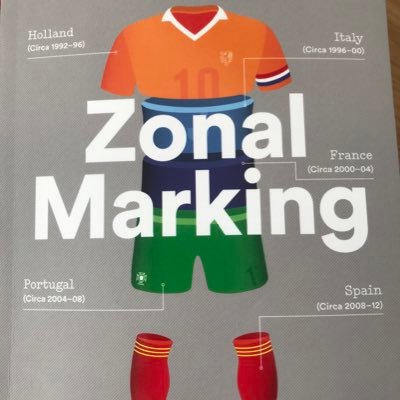
The 2024 version of The Mixer is out now. The most comprehensive account of the Premier League’s on-pitch development over its first 32 years.
Amazon link ⬇️
amazon.co.uk/gp/aw/d/000870…

English
lasagne retweetledi

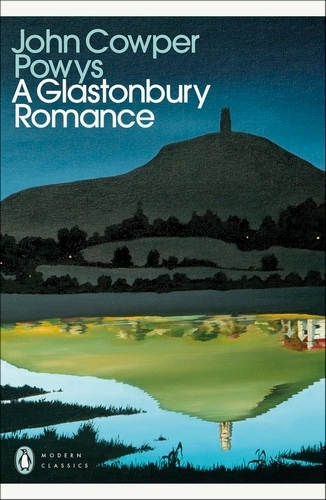
Get ready for your John Cowper Powys girl summer with this @BBCFreeThinking with Margaret Drabble, John Gray and Iain Sinclair. bbc.co.uk/programmes/m00…
English
lasagne retweetledi
This is a fantastic development. Powys is the most outrageously neglected figure in modern English literature. There’s no one else like him in the language, and alongside Dorothy Richardson ought to be read more.
barry pierce@BarryPierce
oh my god… all 1200 pages of it. who at Penguin Modern Classics is leading the John Cowper Powys reprints? absolutely legendary behaviour
English
lasagne retweetledi
Everyone in the UK should read this.
Time for PM to drop the defence bombshell. thetimes.co.uk/article/96859d…

English

@PYeerk Brits are so rude to Americans for no reason it's so clearly a case of programming basically from birth
English
Americans in London are unfailingly polite- the rudest thing they do is presume they need to dissociate themselves from Trump in order to assure you they're "one of the good ones"
Róisín Lanigan@rosielanners
sad to see this kind of thing in British newspapers
English
I was today years old when I realised the correct pronunciation of Magyar. All that Austro-Hungarian history saying it completely wrong. Basically the g is silent? Who knew? Hungarians, I guess. Not history teachers or professors at British schools & universities, apparently.
English
lasagne retweetledi

Thank you for sharing this bit. I looked up the source and it seems like the kind of book on English history that I've been trying to find recently :)

James Marriott@j_amesmarriott
Wonderful bit from Keith Thomas's Man and the Natural World. Early modern clergymen trying to work out why God created so many nasty animals. They concluded the lobster was probably intended as "an object of contemplation"
English
lasagne retweetledi

This one is my favourite. Incredibly interesting, extremely good fun to read, impossible to think about the past in the same way after reading it

James Marriott@j_amesmarriott
I think Keith Thomas is basically my favourite historian. He has such a brilliant and vigilant eye for the strangeness of the past. He never lazily assumes that people 400 years ago would share modern attitudes to anything - war, morality, ghosts, lobsters...
English