

Bottom Call
1.1K posts
Bottom Call
@BottomCalls
Follow us on our Telegram channel for more https://t.co/zNlb4w0ws9 💥Not financial advices, do your own researches
Katılım Aralık 2023
193 Takip Edilen1.1K Takipçiler

EIP-8141 MENTIONED ✅🔥
THIS PROTOCOL IS JUST GETTING STARTED.
YOU’RE NOWHERE NEAR BULLISH ENOUGH.
$GRANTR TO BILLIONS.
- Studious
vitalik.eth@VitalikButerin
Some of my perspective on where the @ethereumfndn is going. First of all, this is only my own view. The board is not just me, and I have no extra special powers on the board that the other board members do not. @aerugoettinea is the one executing much of this transition. My input has been largely on technical questions. The board is in the process of expanding, and my own power within the org will continue to decrease, which is honestly what I want. The 2025 era brought many important improvements to EF and its ability to execute. Many issues were resolved, and EF continues to benefit from its improved efficiency and greater focus on concrete goals to this day. And so with those problems resolved, early this year, the largest remaining hole that I perceived was something different nagging at me: I would regularly spot people saying things like "vitalik says these beautiful things about ethereum needing to be decentralized, and have privacy, and be a sanctuary technology, but why do the EF's actions not reflect that?" Now, you may have been hearing something different. You may not have been sensing a feeling of crisis at all, and maybe were hearing people saying that finally we were taking execution and BD seriously and the main task for us is to keep going that way and be even better and faster. Then probably there is genuine difference between you and me, in what kinds of criticism I take most seriously, and what kinds of critics through their criticism are most able to make me feel pain. As an analogy, let's briefly switch over to a different domain. One belief you can have about Google is that it is a success story, and has brought a lot of good to humanity in organizing the world's information. Another belief you can have about Google is that they had a beautiful idealistic beginning, but at some point the corruption of mainstream corporate attitudes seeped in, and they slowly bit by bit completely abandoned the "don't be evil" slogan. My belief on Google specifically is probably somewhere between the two. BUT, if you had taken me back in time to ~2008, and offered me a button to press to make Google one or two standard deviations more "dogmatic", eg. give Richard Stallman permanent veto power over some key policies, I would immediately press it. Why? Because a choice for one company is not a choice for the world, or even one country. Google existed and exists in the context of a technology industry generally drifting away from early idealistic don't-be-evil roots and toward greed for financial gain, totalizing visions of accelerated superintelligence, infiltration by sociopaths, and craven capitulation to (or worse, active participation in) government pressure for ideological control, surveillance and war. And so *one company* doing something different, positioning itself to be what George Bernard Shaw calls the Unreasonable Man, resisting the trend of the times, would have been better for freedom, balance of power and stability of society as a whole, than *all* large companies bending to dominant trends. This is a part of my version of pluralism. This line of thinking is not just mine, but I also is not too far off from what Aya and others had in mind with the Mandate. Now how does this all get to the role of the EF? EF is not a "center of Ethereum", rather EF is "one node, with a defined purpose, alongside other nodes". We've always said that the EF should be the latter, but many in the Ethereum ecosystem (and even within the EF) wanted us to be the former. Now, we are taking action to ensure that we will be the latter. This is particularly important because EF is a limited organization, with limited resources and limited organizational capacity. The EF has only ~0.16% of all ETH (less than many other individual ETH holders), whereas among other blockchains it's common for "the central foundation" to have 10-50%. Fiscally, the EF was originally designed to fulfill a limited work scope defined in the token sale docs and other pre-launch materials (building the chain software; getting through Frontier, Homestead, Metropolis, Serenity), which was fully completed in 2022; it was not designed to be an eternal steward. And so today, the EF is choosing to use its remaining resources to pursue longevity over breadth (yes, this means we sell less ETH). The EF focuses *specifically* on those activities critical to the success of ethereum as a censorship/capture-resistant, open, private and secure system, that would not happen otherwise. This means making hard choices, and in some cases even activities that we highly approve of and people that we highly respect becoming outside of the EF. People of great technical talent, public respect and even alignment with the mission and CROPS being outside of the EF is in fact necessary if we want important tasks to be able to attract outside capital. This also means the EF taking opinionated stands culturally. This is all intended in cooperation with all other parts of ethereum. We recognize that many other parts of the ethereum world highly respect CROPS and related values. But highly respecting is not the same as choosing to specialize and totally dedicate to a domain (Compare in a different domain: I think reducing animal cruelty is important, and I like vegan food, but am not full unconditional vegan myself) EF is still in a transition period, and we expect its new long-term form to stabilize over the next few months. What are the guiding principles of this new form? Again, I am only one person, but I can give my answer from a technical perspective (there are also critical non-technical aspects). At the core, *Ethereum must be impressive*. We are living in an age of highly intelligent AI and all kinds of other technological acceleration. "Status quo EVM, with a hard fork or two a year to optimize for short-term needs of users" is not interesting. To some, "impressive" means: 250ms latency and 1M TPS. I think Ethereum trying to go that route is a mistake. Being as fast and as scalable as possible, and only a small epsilon more decentralized than the others, is a route to mediocrity, and if we try it we will lose. I think Ethereum should scale. But I think Ethereum should strive the hardest to be deeply impressive in a different dimension: the CROPS dimension. This means things like: * Provably bug-free Ethereum. This is a goal that all cybersecurity researchers would have thought is absurd and impossible, up until roughly 6 months ago. Now, it's on the cusp of being possible, thanks to AI-assisted formal verification. So we should be frontrunners in doing this. * Available chain consensus. Ethereum is, and with lean consensus will cotninue to be, the ONLY chain that has both (i) traditional-BFT style properties that it's safe under asynchrony up to a high level of fault tolerance, and (ii) the bitcoin PoW-style property that under synchrony it's safe up to 49% attackers. As far as I can tell, literally no other chain has this or is planning for it; bitcoin goes for (ii) only and most other chains go for (i) only. Some will remember I fought hard for this, Unreasonably insisting that it is not OK for ethereum to rely on social consensus and hard forks to rescue ethereum from 34% of nodes going offline. It's OK for chains like hyperledger, bnb, solana, tempo, etc. It's not OK for bitcoin or ethereum or eg. zcash. * Intermediary minimization. The fact that smart contract wallets, protocols like railgun, etc have to send transactions through intermediaries to get included onchain is honestly embarrassing, and it's a constant point of fragility. Hence the work on FOCIL and EIP-8141 (and 7701 and years of work before) to make transaction sending intermediary-minimized with public mempool and strong inclusion properties, in a truly general-purpose way, that covers not just eg. secp256r1, but also privacy protocols and much more. Kohaku is pushing intermediary minimization at the user layer, pulling Ethereum away from the dystopian status quo world where our wallets don't even verify the chain, send our private data out to a dozen third-party servers, and toward a brighter CROPS future. Some of these goals are Unreasonable - maybe Ethereum would be "fine" getting only 50% of the way - what if we depend on intermediaries, but make it easy to switch? But going 50% of the way would not make Ethereum Deeply Impressive in the CROPS way. So we push for 100%. Fortunately all these goals are compatible with high TPS, this is a major focus of research (esp. on scaling the state). Well-designed L2s can also help, especially L2s optimized for specific applications (eg. high-volume trading, privacy...). These goals are even compatible with significantly lower slot times, thanks to Raul's work on erasure-coded P2P, and many other optimizations. The most high-value "product" of the ethereum blockchain, financially speaking, is ETH the asset. Ethereum secures $250 billion of ETH. The types of properties of Ethereum that I mentioned above are very good for ETH the asset. Nearly 90% of my net worth is in ETH, and most of the remainder is ~$40m of onchain fiat of which every dollar has already been allocated for some open-source biotech or software or hardware initiative. That said, there are aspects of supporting ETH the asset - *necessary* aspects even - that are outside the scope of the EF. This is where we need other heroes (some of whom hold more ETH than the EF does) to step in and help. EF has been recently thinking more about how it will relate to other such organizations, and give them needed initial support. EF will be a smaller ship than in previous years, a more opinionated one - in some cases more opinionated in ways that might be difficult to comprehend - but a longer-lasting one, and one suited to making sure that ethereum brings something meaningful to the world. We are grateful to all those inside and outside the EF who are helping to make this happen.
English
Bottom Call retweetledi

Funny thing is we already built the foundation Google is describing here
This is the moment to breathe in and understand our future is coded and very far ahead of the biggest players
A common language for agents through Universal Commerce Protocol, secure delegated payments through AP2, and a smart cart that acts as your shopping hub... we have it all and more.
What we shipped is now becoming the industry standard
Google@Google
We’re building a foundation for agentic commerce. Here’s how ⬇️ 1️⃣ Universal Commerce Protocol, an open-source standard that allows all the key players to work together by giving agents and systems a common language. 2️⃣ Agent Payments Protocol (AP2), so your AI agent can securely make payments on your behalf, with boundaries and accountability. 3️⃣ Universal Cart, an intelligent shopping cart and your new hub for shopping on Google #GoogleIO
English

xPowering the Future of Parallel Computing
ParalleliX redefines parallel decentralized computing:
> Parallel Execution with faster, efficient task processing.
> Tap into a worldwide compute network.
> AI, blockchain, big data, and more.
🌐 paralleliX.io $PRLX

English

@clawvatar @kevincodex are you still working on this project on the side sir?
English

@Reljoooo @0xBusyBob Did he launch the token or is a random dev?
English

@0xBusyBob Hey @0xBusyBob could u tell us more about the token u made?
English

Bottom Call retweetledi


Ops, big typo yesterday, sorry for that.
Built a position in @StrixAIETH
Dev is a grinder, he had a good project in the past so at these level looks a potential profitable entry.
Take a look 😉
Bottom Call@BottomCalls
Bought a bag of StripeAi. 60k mc at the moment, seems a good entry right now. Nfa and dyor as usual Strix AI provides 24/7 AI-powered protection for Web3 projects and investors. It features FUD detection, voice AMA hosting, and an investor safety radar and trading terminal. Website: strixai.online Portal: @StrixAIPortal
English
@Millopad Lol.
It has certainly happened in the past and will happen again in the future, but on average calls are solid and profitable.
Hey man, not our first rodeo 😎
English

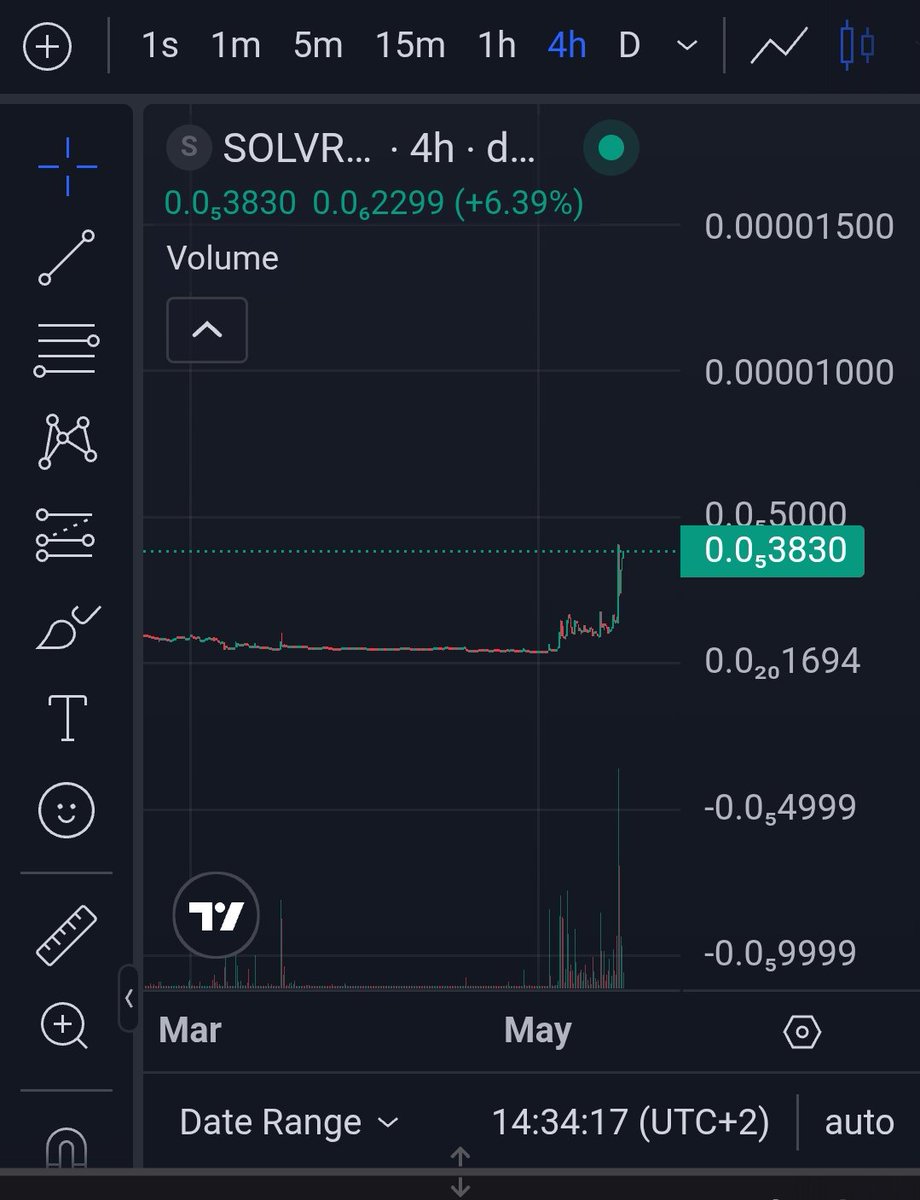
Not wrong, just early.
$SOLVR
Bottom Call@BottomCalls
This use case sounds bullish. Bought a bag of $SOLVR at 120k.
English
Bought a bag of StripeAi.
60k mc at the moment, seems a good entry right now.
Nfa and dyor as usual
Strix AI provides 24/7 AI-powered protection for Web3 projects and investors. It features FUD detection, voice AMA hosting, and an investor safety radar and trading terminal.
Website: strixai.online
Portal: @StrixAIPortal
English
Bottom Call retweetledi
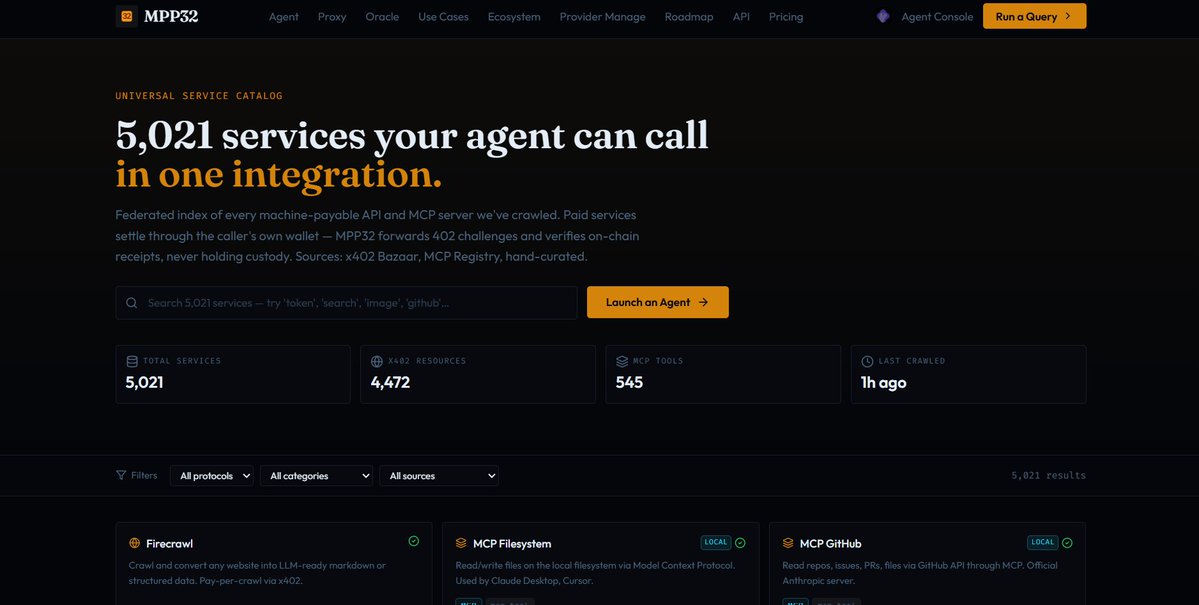
Since last nights update our crawler is already up to 5000+ services found
Use any of them by launching an agent with us, ready to pay on any protocol
Do you still think we're not going to become the #1 go to shop for agents?
Are you looking to be limited to x402 services only?
Are you looking for less variety and not the best prices for your agent?
If so ignore this post.
If not then launch an agent with us, find competitive pricing, and explore services across the entire agent economy! It does you no good to limit your agents ability to one protocol or payment method.
MPP32@MPP32_dev
Shipped the universal discovery layer for the agent economy 4,500+ machine payable APIs with one integration and one click to call. x402 Bazaar, MCP Registry, Curated providers and all of them federated, all callable. agents needed a yellow pages because fragmented registries were killing discovery but not anymore.. Its no joke that were coming to take over every sector untapped and currently broken for the upcoming agent economy.. Every protocol shipping its own directory was rebuilding the same broken pattern as API providers not being able to get paid on different protocols. We built the universal one, filled another gap for agents Any agent can now browse the entire indexed agent economy in one place, deep link straight into the Agent Console, and start calling endpoints without writing a single line of integration code. Search 4500+ services. Filter by protocol, category, source. Click any service and it preselects in your console with slug, price, endpoint, network, and asset already wired. Here is what the catalog handles for you right now today: Live federation from the Coinbase x402 Bazaar. Live federation from the official Model Context Protocol Registry. Curated free APIs for testing. Real time per service pricing in USD. Protocol routing badges. Network and asset metadata. Smart name extraction so duplicate hostnames become real endpoint identities. Stdio MCP detection with copy ready install commands. Click to launch deep linking into the Agent Console. Last crawled timestamps. Full text search across name, description, tags, and category across thousands of endpoints. Every entry is real and every URL points to a working upstream. If it is in our catalog, an agent can find it and call it through MPP32 today. The agent economy is fragmenting fast and very week another registry. Every provider will start asking: where do I list to be discovered? You don't pick, instead you publish to the upstream registries. MPP32 federates them and agents discover you. Payments settle to your own wallet! Browse all services now and click any one to launch it through your agent session!
English
Bottom Call retweetledi

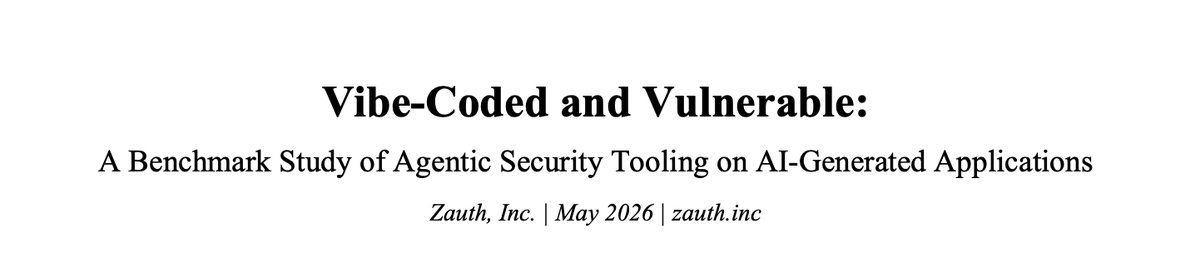
We spent $1,500, built 10 production apps on Lovable, and ran two agentic penetration tests against each of them.
Vector (ours) and Aikido Security (Lovable's native partner).
Vector found 94% of critical vulnerabilities. Aikido found 47%.
Vector cost $14.31/scan average. Aikido cost $100/scan flat. Vector averaged 34.7 minutes per scan. Aikido averaged 73.0 minutes.
100,000 AI-generated apps ship every day. Each one is riddled with vulnerabilities.
Full paper below.
English
Meanwhile $M32 going nuts from shill in our tg at 106k MC.
t.me/Bottom_Call/25…
Goated dev and great utility.
@MPP32_dev
English
This use case sounds bullish.
Bought a bag of $SOLVR at 120k.
Solvr@solvrbot
A perfect demonstration of the use case of our intel, imagine you are building an agent that tracks and autobuys tokens. The stack tells agents what they can do. Solvr tells them what they should do. Security scan → Token is clean or it isn't → Agent acts or skips Now live as a @bankrbot app. One prompt built it. 🔁
English
Shipped the only five protocol payment proxy for the agent economy
MPP. x402. ACP. AP2. AGTP.
Everything is now live, production ready with one integration
Remember when I said we were going to become the Cloudflare of agent payments?
That the provider shouldn't have to pick a protocol?
That uncertainty was paralyzing the entire space?
We built it, filled the gap.
Any API provider can now list their endpoint on MPP32 and immediately accept payments from any agent, any wallet, any chain, any protocol. No payment code. No protocol engineering. No crypto integration on your server at all.
Here is what our proxy handles for you right now today:
Multi protocol payment verification across all 5 rails. USDC settlement on Solana. pathUSD settlement on Tempo. W3C Verifiable Credential authorization. Agent Commerce Protocol checkout sessions. Agent Transfer Protocol identity routing. Idempotency. Rate limiting. Compliance grade audit logging. Real time provider analytics. OpenAPI discovery so agent crawlers find you automatically. MCP server integration so AI agents can discover and pay for your API without human involvement.
Endpoint ownership is verified through HTTP challenge. Every listing is proven. No one can register your API and redirect payments to their wallet. The proxy only routes to verified providers.
The agent payments space is fragmenting fast. Every week another protocol launches. Every provider faces the same question: which one do I pick?
You don't pick. You list on MPP32 and we speak whatever the agent speaks.
Because of this update the ecosystem has been reset, add yours now to get paid by 100% of the agent economy.
Website and Github updated.
English

IMHO
The @worldnetwork ecosystem is one of the most promising places to build right now. Proof-of-human primitives + a chain that’s actually growing. More on what we’re building soon.
Nick V@vasilich_nick
Spent the last couple of days deep in research on the projects currently in the factory’s pipeline and came to the conclusion that the prediction market we’ve been hyping isn’t the best project the factory can build. I went deep into “requests for startups/builds” across different ecosystems, and a few of them caught my eye. Update coming soon.
English

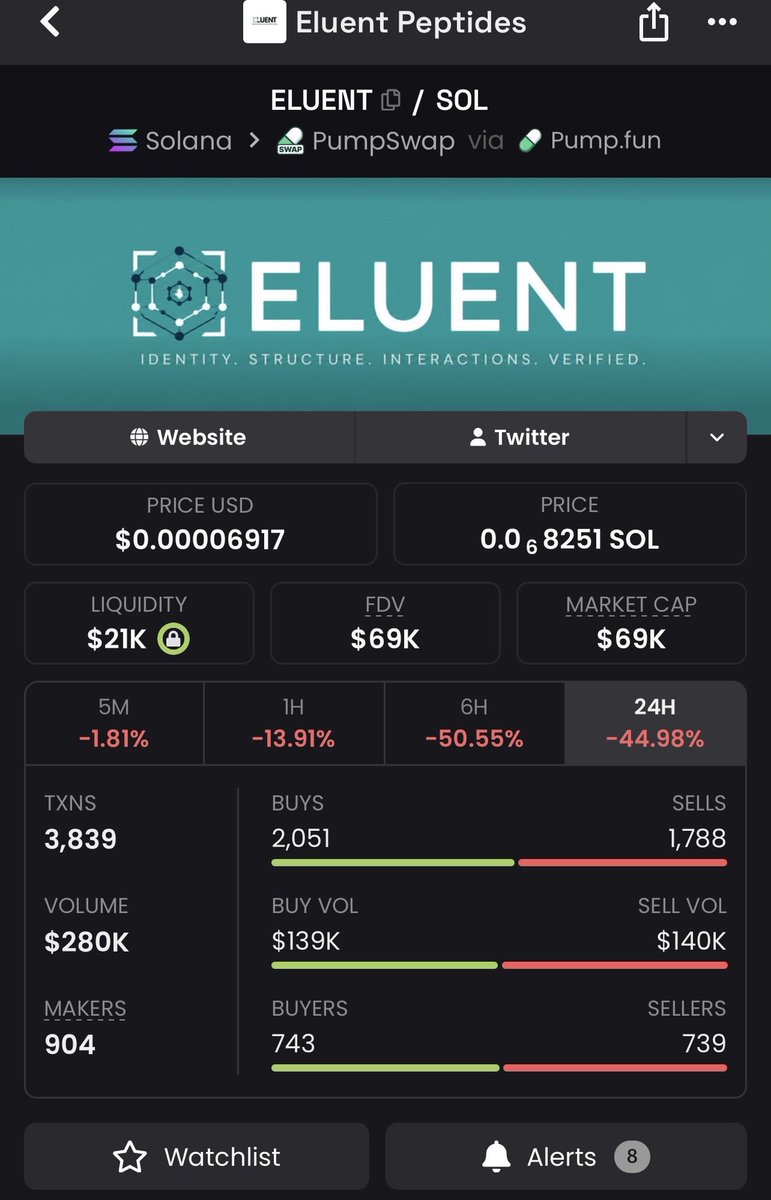
@BottomCalls Check out $ELUENT
Sleeping Giant will break out any time
DQa4mxFws6WsXMwn8gpEBXqMsGfDn4Uopi8W2Zvopump
English
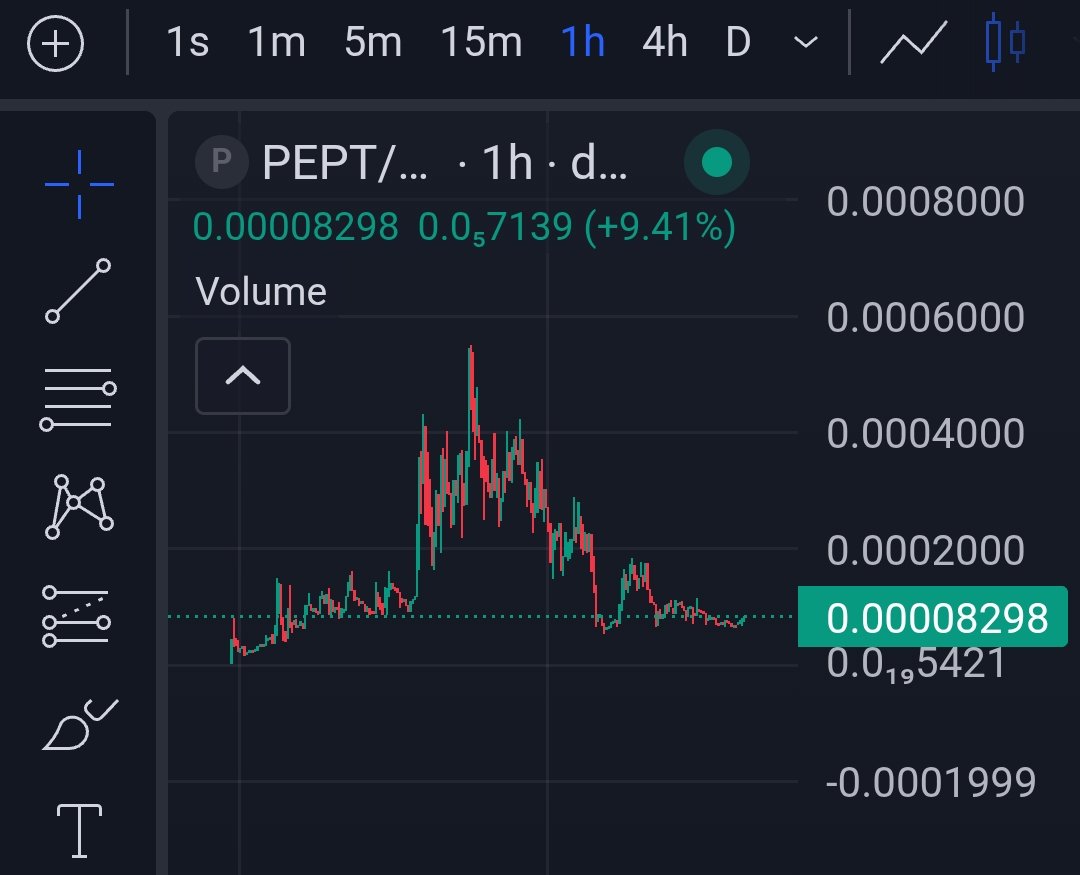
Building a position here around 80k mc. $PEPT
Chart looks bottomed out and team apparently is more focused on developments than PA.
No info about him/them so, more than usual, dyor.
I'll wait mobile release to "change" the mindset in mid-long term hold.
x.com/peptome_ai
Peptome AI@peptome_ai
Peptome is coming to mobile. We have opened a preview of the mobile app (link below), with Apple TestFlight coming soon. What we are building: * A grounded peptide library with real, graded evidence * Custom protocol creation (dose, timing, cadence, full control) * Detailed peptide pages: mechanism, evidence level, benefits, risks * Protocol library with confidence scoring * Daily feedback + outcome tracking * Feedback history -> real signal, not just logs * A home dashboard that reflects your actual loop (adherence, streaks, signal density) * A context-aware Agent that reasons over your stack and data This is the execution layer of Peptome. Where evidence turns into decisions and outcomes feed back into the system. Preview: peptome-mobile.vercel.app Apple TestFlight soon.
English