
Samuel Davenport

1.4K posts

Samuel Davenport banner
Samuel Davenport

Samuel Davenport

@BrainStatsSam

Statistics researcher working from Turin. Research on multiple testing, selective inference, resampling methods, random field theory, and large language models.

Italy Katılım Mayıs 2013
998 Takip Edilen953 Takipçiler
Sabitlenmiş Tweet
Samuel Davenport
Samuel Davenport@BrainStatsSam·
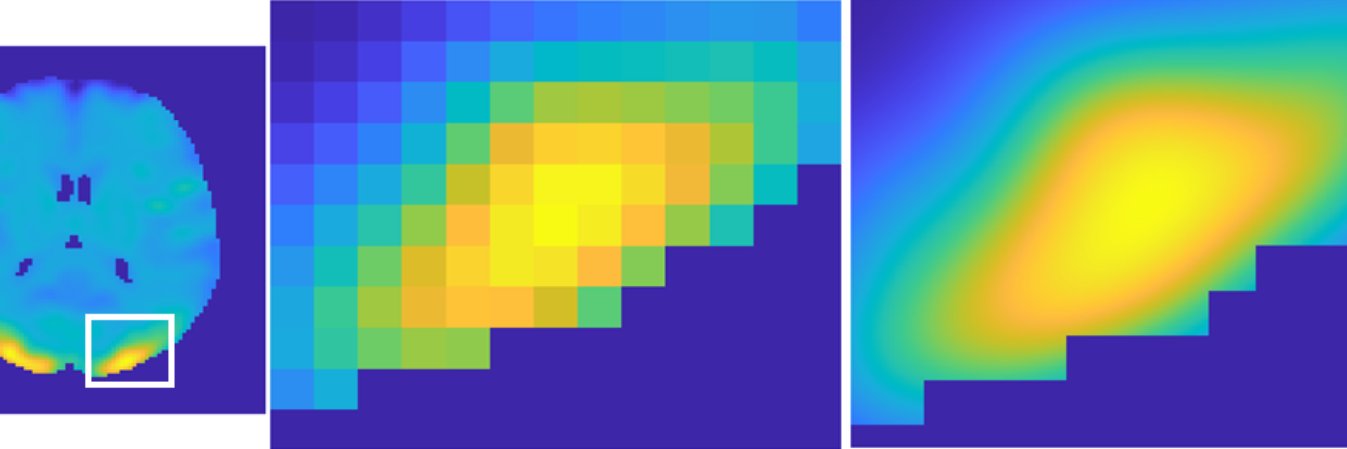
Are you at #OHBM2024? Come check out my talk on Localized Cluster Enhancement - TFCE revisited with valid error control, in the oral session on advanced statistical methods on Wednesday at 11.30. Or poster 1871, on Wednesday/Thursday to see how to improve the validity of TFCE (1)
Samuel Davenport tweet media
English
1
5
23
2.6K
Samuel Davenport retweetledi
Dan Rysk
Dan Rysk@DanDeFiEd·
Italian efficiency when it comes to coffee should be studied. In Italy: - Walk into a bar and look at the guy - Un caffe - 30 seconds later it’s ready - Shoot it - Leave €1 - Walk out In the US: - Join a line - Wait - Order coffee - Answer 12 questions: Size? Milk? Roast? Sugar? Temperature? Colombia beans? Name? How do you spell it? - $12.34 - Ask for a 20% tip. Click 5 times on a ipad to have a custom tip - Tap phone - ask where to send the invoice - Wait again on a different line - Someone call a name that sounds similar to mine - get the coffee - too hot, can't drink it - finally at temperature taste like shit
English
1.4K
4.3K
43.8K
4.6M
Samuel Davenport retweetledi
Max Spero
Max Spero@max_spero_·
@ziv_ravid Anyone upload a PDF to ChatGPT, but a reviewer who offloads their work to AI is not providing any additional value to the conference. Reviewers are domain experts with years in the field, a unique perspective, and a longer context window than any LLM.
English
9
3
48
3.3K
David Pearce
David Pearce@webmasterdave·
@TheGreeneBJ Please stop. People do worse eating a bacon sandwich - which Sam wouldn’t.
English
3
0
10
2.3K
Max Spero
Max Spero@max_spero_·
@dmarusic I may be biased but I think it's a great AI detector. Doesn't get everything, but it is very good at not producing false positives. If it calls something AI, you can be certain that it's AI.
English
3
0
37
1.2K
Damir Marusic
Damir Marusic@dmarusic·
Is Pangram really a good AI detector? Better than one’s own ear?
English
3
0
14
1.9K
Samuel Davenport
Samuel Davenport@BrainStatsSam·
@littmath @roydanroy Do you think this could indicate that the openai effort used smart mathematicians in the loop to guide/help the AI - which public efforts using the same tools would not have access to?
English
1
0
5
625
Dan Roy
Dan Roy@roydanroy·
Does anyone have a list of public efforts on First Proof? Of course OpenAI’s effort was very public and has generated a lot of discussion and some controversy. Wolz and Ingo’s effort was nice to read about. Reply with your favorites (or least favourites).
English
5
1
32
10.2K
Samuel Davenport retweetledi
Prof Jeffrey S Morris
Prof Jeffrey S Morris@jsm2334·
Yep, 100%. I often tell young students/researchers/professionals (including my own son and his friends) that there are three groups of people when it comes to AI, and it’s clear which group they should aim to be in: 1. Those who ignore AI and don’t use it at all. 2. Those who learn to leverage AI effectively—not as a substitute for their own thinking, but as a supplement to it—to handle routine tasks (including coding), improve efficiency, and enhance the clarity of their writing. 3. Those who overuse AI—taking shortcuts, accepting its output uncritically, or relying on it as a replacement for their own thinking. People in group 1 are putting themselves at a serious disadvantage. As others learn to use AI effectively, those who avoid it entirely may struggle to keep pace and remain competitive. People in group 3 face a different risk: they fail to develop their own deep thinking skills and become overly dependent on the technology. The temptation to take shortcuts can be strong, especially when it yields short-term success. But over time, these individuals risk becoming interchangeable—simply “replacement-level AI users” who lack the independent insight and intellectual depth needed to distinguish themselves. People in group 2 avoid both extremes. They learn how to use AI thoughtfully to increase productivity, clarity, and thoroughness, while continuing to cultivate their own reasoning and expertise. They use AI as a tool, not a crutch. These are the individuals who will remain valuable and in demand. My advice to young researchers is simple: make sure you are in group 2. Learn how to leverage AI to enhance your work, but never let it replace your own thinking. If you do that, you will continue to develop durable, meaningful skills that will remain valuable no matter how the technology evolves.
English
7
19
79
5.4K
Samuel Davenport retweetledi
Simon Coste ꙮ
Simon Coste ꙮ@__SimonCoste__·
Martin Hairer and colleagues released a set of hard maths problems, designed to be test cases for LLMs. We have *one week* to solve them, using LLMs. They encrypted the solutions at 1stproof.org and will reveal them just after. arxiv.org/pdf/2602.05192 (1/3)
English
17
47
273
44.4K
Samuel Davenport retweetledi
Camus
Camus@newstart_2024·
Yuval Noah Harari at Davos: “We conquered the world with words—convincing millions of strangers to cooperate through stories, ideologies, religions. That was our superpower.” “Now AI can use words better than us.” Social media already reshaped everything. In 10 years, when AIs command language, what happens to Davos? To politics? To human cooperation? Will the future still need physical humans at the table—or just their avatars? This 2:43 clip is a chilling rethink of what made us dominant… and what might dethrone us. Do you think AI mastering language ends the era of human persuasion? Or will words remain our last stronghold?
English
321
478
923
82K
Samuel Davenport
Samuel Davenport@BrainStatsSam·
@dr_cintas Do you know if it's also possible to connect it to openrouter so that you could use any model?
English
0
0
0
172
Samuel Davenport retweetledi
Michael A. Arouet
Michael A. Arouet@MichaelAArouet·
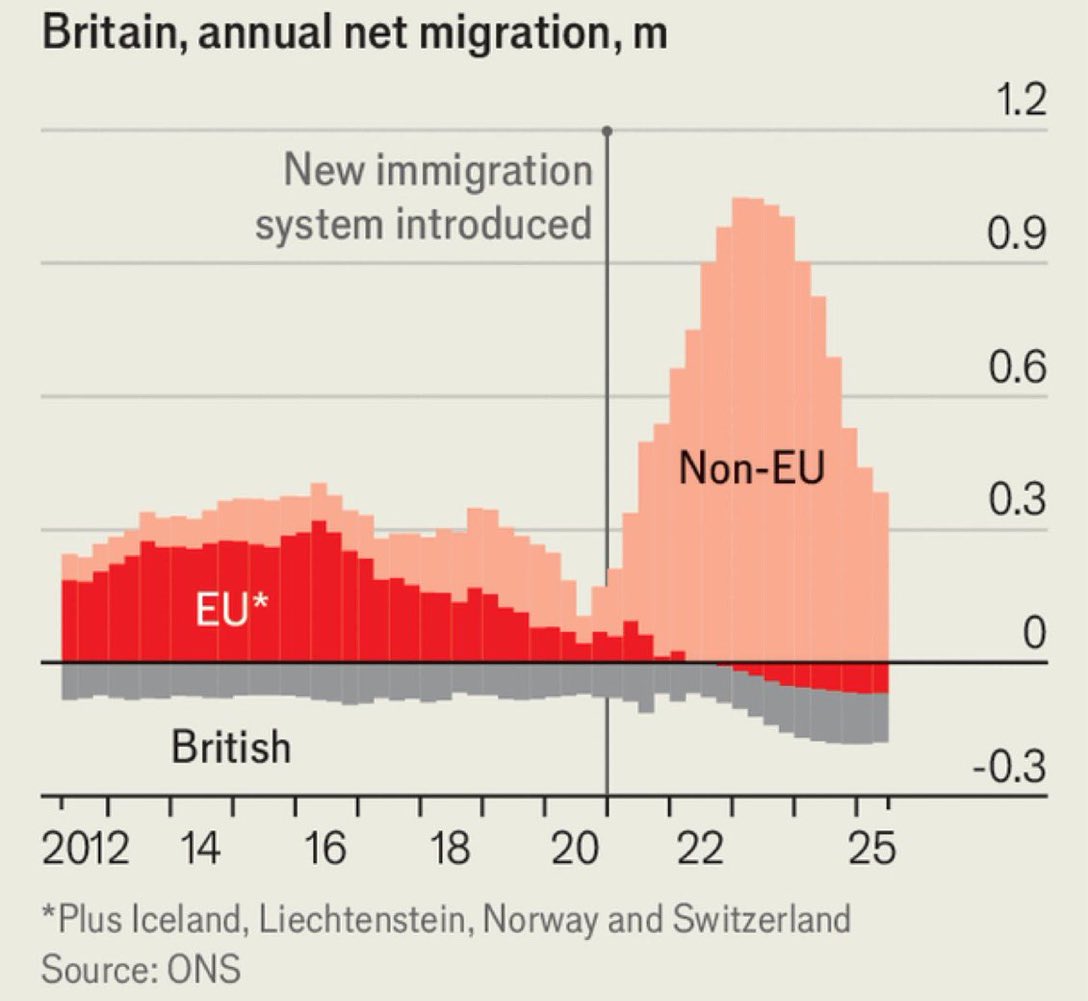
Isn't it ironic that many Brits voted for Brexit to reduce immigration? How did this happen?
Michael A. Arouet tweet media
English
1.5K
2.9K
28.2K
1.7M
Samuel Davenport retweetledi
Omar Khattab
Omar Khattab@lateinteraction·
Many folks are yet to grasp the specification problem. > Wouldn't AI write better code than us? "Better" for what? Or with respect to what exactly? I'm building software because I have a specific vision/intent/need. How should that intent be specified in the first place, so that a specific piece of code is better or worse with respect to it? I'm saying: for many needs, conversation is not an efficient medium of expressing *what* I want. AI having excellent taste or horrible taste has no bearing on that.
Omar Khattab@lateinteraction

I will be so disappointed if the way we build software with AI remains vibe coding rather than a genuinely higher level of abstraction. I want to express the “code” of the system—but shorter and more pleasant—not manage an agent to write 100,000 lines of low-level slop for me.

English
25
14
139
14.3K
Samuel Davenport
Samuel Davenport@BrainStatsSam·
@lpachter That's quite a narrow definition. There are lots of mathematicians who do not teach calculus.
English
0
0
2
136
Samuel Davenport retweetledi
Omar Khattab
Omar Khattab@lateinteraction·
I will be so disappointed if the way we build software with AI remains vibe coding rather than a genuinely higher level of abstraction. I want to express the “code” of the system—but shorter and more pleasant—not manage an agent to write 100,000 lines of low-level slop for me.
Omar Khattab@lateinteraction

There’s a growing time and place for ‘vibe coding’, but it’s disastrous that it doesn’t record the produced system at the level of abstraction it was built. Imagine if the only way to use C was to compile isolated snippets of assembly. We need higher-level programming languages.

English
72
48
500
135.9K
Samuel Davenport retweetledi
Julia Turc
Julia Turc@juliarturc·
Just listened to Richard Sutton on Dwarkesh's podcast (3 months late but my backlog is out of hand). I never thought an intellectual conversation could make me cringe so hard. Sutton was so unnecessarily adversarial. I'm not referring to the substance (which *is* contrarian, but that's all good). I'm talking about his demeanor. He treated Dwarkesh like the slowest idiot student he's ever had to deal with. Meanwhile, Dwarkesh was firm but extremely graceful. I'd expect a university professor to be more... nurturing, more patient. I'm hearing a sort of bitterness that reminds me of Yann LeCun. They're both insanely successful, respected, outwardly recognized (with Turing awards), and I can only assume extremely rich. So where is this bitterness coming from?
English
68
3
452
81K
Samuel Davenport retweetledi
Filip Ganyicz
Filip Ganyicz@ganyicz·
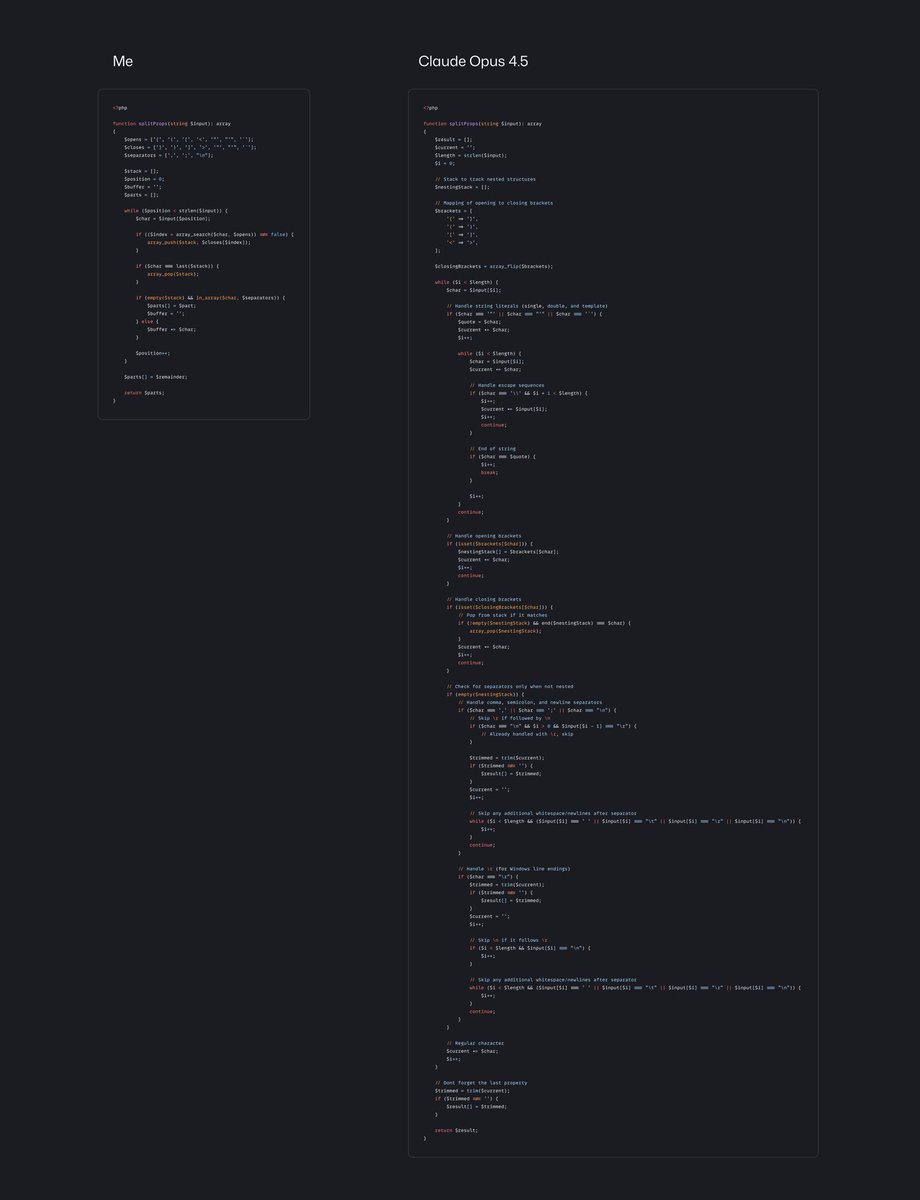
So, have we all decided to just accept this?
Filip Ganyicz tweet media
English
1.1K
441
12K
1.7M
Samuel Davenport
Samuel Davenport@BrainStatsSam·
@athleticKoder Why is it wrong to say to set the temperature to 0? That will mostly make it deterministic?
English
0
0
0
37
anshuman
anshuman@athleticKoder·
A follow-up question that makes you stand out: “How do you handle non-deterministic scoring?” Wrong: “Set temperature = 0.” Right: “Use consensus mechanisms, track score distributions, apply probability weighting for continuous scores, and validate against human baselines.”
English
1
1
6
2.9K
anshuman
anshuman@athleticKoder·
You’re in an ML Engineer interview at Perplexity, and the interviewer asks: “Your LLM generates millions of responses daily. How do you evaluate quality without manual review?” Here’s how you answer:
English
10
13
445
74.2K