
cryptogoblin@Crypto_Goblinz
The DeFi panel at @eth_milano with @DanDeFiEd (@ryskfinance), @connor_enso (@EnsoBuild), @0xAlbitrage (@keyrock), Federico (@bitfinex), moderated by @DavideFi. One of the spiciest panels of the event. Everyone said what most people are too afraid to say out loud.
Yield farming era is dead and DeFi had to grow up:
Connor opened spicy: DeFi was meant to replace TradFi but we're all bending over backwards to work with them now. Same 5,000 users cycling through every app. We had to give up the cypherpunk ideology to onboard real users,there were never people in suits at crypto conferences a few years ago. Now they're everywhere. DeFi yields sit at 2-9% on risk-on plays while off-chain funds offer 12% with $4.6B AUM backing the losses.
Alberto pushed back constructively: smart contract risk is still perceived as higher than traditional credit risk, even when institutional companies do due diligence and credit ratings. Bridging that trust gap is the missing block.
Dan reframed the whole thing: yield is not the product. None of us built DeFi for yield. We built it for infrastructure, transparency, and global access. Yield is a use case of that, not the mission. Yield is purely a function of demand, you can't wake up tomorrow and 10x it, but you can wake up and 10x the infrastructure. Stop overfocusing on yield or you lose the plot.
Federico added that DeFi shouldn't replicate TradFi products, that's why perps dominate in crypto while options dominate in TradFi. Different audience, different preferences. Innovate, don't copy.
The market maker question:
Federico: depends on the ecosystem. More fragmentation = more decentralised LP. More consolidation = a few big MMs dominate via latency and scale.
Alberto: market makers help retailers by removing hidden risks. The 2022 impermanent loss meltdown is the perfect example, retail provided LP without understanding IL, got rekt, and fled to lending protocols where the payoff was easier to understand.
Connor: brutally honest. Users want simplicity and best execution. If centralised gives 2,000 tokens and decentralised gives 1,900, they're taking the 2,000. Enso paused their solver after finding that more centralisation = better quotes. Market makers keep the system alive during flash crashes whether we acknowledge it or not.
What's actually working — Rysk's playbook
Dan dropped real gold here. Their first option product targeted traders, failed. Options traders were too sophisticated, looking for better spreads, better products. Pivot: make options accessible to anyone, not options traders. One simple strategy per product. Tell users exactly what happens and when.
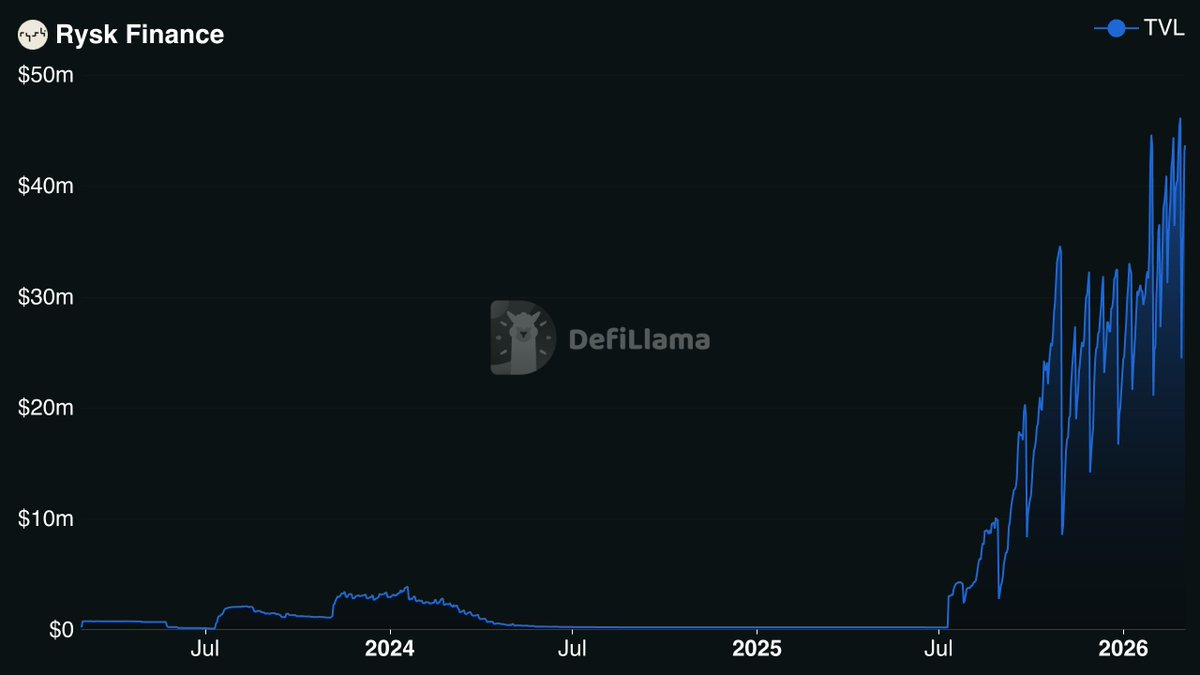
Why it's working now: timing was good (volatile market, Trump waking up and attacking countries, no yield elsewhere), real yield from volatility (not rewards), and they built on Hyperliquid which had massive ecosystem hunger for new products.
On Hyperliquid specifically: they were smart starting with HLP as their own market maker before opening to external ones. They onboard TradFi market makers, not just crypto MMs. Dan said market makers are short-term thinkers, if they can make one cent today they will, doesn't matter about tomorrow. So Rysk uses protocol fees to market-make when external quotes aren't competitive. You need MMs but you can't rely 100% on them.
The token question, is the future tokenless?
Federico: token-as-product was a terrible model. Team focuses on token price instead of product. The fact this model is dying is great.
Connor: tokens aren't going away. Enso has been around 6 years, only launched a token 5 months ago. Most launch within 2 years. The incentive design was wrong from the start, sketchy founders and VCs launching, listing, and dumping. But network-effect tokens are genuinely valuable. Meme coins and culture coins should go.
Alberto: it's a natural evolution. Build the business first, then create access via token, same as TradFi where you build the company, sell shares to VCs, grow, then IPO. Speculation culture is moving from DeFi back to TradFi now (pre-IPO speculation on SpaceX, Cerebras).
Dan: if equity becomes the product, the real product never gets built. Same problem as the token model.
My person take on this, look at discord, they have been building for 11 years before they IPO'ed. really crypto projects should follow suit. You don't need tokens if you have a real product that means something. Build something meaning full have it run for many years, then launch when you earned the right too have one.
Founder advice:
Connor: Don't quit. Adapt. You're building for users, not your ego. Federico: Don't copy success stories. Innovate or get crushed.
Alberto: Build something people need. Be ready to pivot.
Dan: Don't fundraise millions you don't need. Build an edge first. He raised the smart way and pivoted from options to social trading to DeFi super-app to infra. If you raise $50M before knowing your edge, you become good at fundraising instead of serving users.
The spiciest section, DeFi vs the institutional invasion
Alberto opened diplomatic: builders are bringing institutions in by saving them money.
Connor took the mic and went off: "Have a backbone. We built this industry, you didn't. We're all groveling and begging institutions to work with us. The industry has evolved into philosophies, this is how we build, this is our community. They need to adapt to us as well. There needs to be middle ground, not us changing everything for some random guys in suits who weren't around before." Whole room felt that one.
Federico: the edge of this industry is serving people TradFi couldn't serve. Institutions can already operate in TradFi. If we only build for institutions, we lose the long-term mission.
Alberto: TradFi should adapt to what we've built, not the other way around.
Closing thoughts:
Dan: This is the best time for DeFi. The bullshit is finally easy to spot. The pure-ponzi era is over. But it's also the most critical moment, we have institutions now because retail finished their money. They're doing IPOs, buying Cerebras and SpaceX instead of crypto. We can't burn the next wave of users.
Connor: We can still innovate. Doesn't need to be another lending protocol. Choose to work with institutions, but don't lose the culture.
Alberto dropped this line of the panel: "Next year, we shouldn't call it decentralised finance. We should call it on-chain finance. Because nothing is truly decentralized anymore, market makers in the background, governance issues, middle layers everywhere. Decentralization was a philosophical concept. What we actually offer is transparency, permissionlessness, and on-chain visibility. That's the real value proposition."
Dan closed with the perfect example: the Hyperliquid JELLY attack last March. We all watched it happen live on Twitter. We saw the attack, the attacker, the response,everything was visible in real time. Compare to the Binance crash event where nobody still knows what happened. Same product, fundamentally different transparency.
As a user, that's the real edge, not full decentralisation, but the permissionless, on-chain, real-time visibility into everything happening.
Federico closed clean: most of the people left in crypto now are here to build, not to ride the wave. AI took the wave-riders. What's coming next will be higher quality than anything from 2020-2022.
This panel was the realest thing I caught at ETH Milan. We're growing up as an industry.
ill be in Berlin in just over two weeks if you meet up, lmk.