๐™ฒ๐š˜๐š•๐š’๐š— ๐šƒ๐šŠ๐š•๐š”๐šœ ๐™ฒ๐š›๐šข๐š™๐š๐š˜ ๐Ÿช™

66.2K posts

๐™ฒ๐š˜๐š•๐š’๐š— ๐šƒ๐šŠ๐š•๐š”๐šœ ๐™ฒ๐š›๐šข๐š™๐š๐š˜ ๐Ÿช™ banner
๐™ฒ๐š˜๐š•๐š’๐š— ๐šƒ๐šŠ๐š•๐š”๐šœ ๐™ฒ๐š›๐šข๐š™๐š๐š˜ ๐Ÿช™

๐™ฒ๐š˜๐š•๐š’๐š— ๐šƒ๐šŠ๐š•๐š”๐šœ ๐™ฒ๐š›๐šข๐š™๐š๐š˜ ๐Ÿช™

@ColinTCrypto

https://t.co/fD42bQkVf1 @cbbi_daily โ€œAll paper money eventually returns to its intrinsic value โ€“ ZEROโ€ (Voltaire 1729) Fiat is the scam that enables all other scams.

U.S.A. - Puerto Rico ๐Ÿ‡ต๐Ÿ‡ท Katฤฑlฤฑm Eylรผl 2014
141 Takip Edilen89K Takipรงiler
๐™ฒ๐š˜๐š•๐š’๐š— ๐šƒ๐šŠ๐š•๐š”๐šœ ๐™ฒ๐š›๐šข๐š™๐š๐š˜ ๐Ÿช™
$BTC Cycles Notice where the top (green circles) and bottom (pink circles) have formed in each of the past 3-4 cycles. Then ask yourself if itโ€™s really likely the bottom is already in. ๐Ÿค” Fantastic chart by @therationalroot
๐™ฒ๐š˜๐š•๐š’๐š— ๐šƒ๐šŠ๐š•๐š”๐šœ ๐™ฒ๐š›๐šข๐š™๐š๐š˜ ๐Ÿช™ tweet media
Root ๐Ÿฅ•@therationalroot

"The 4-Year Cycle is dead." #Bitcoin

English
12
17
110
12.4K
Cred
Cred@CryptoCredยท
Wtf
Cred tweet media
45
7
656
44.2K
Bo Loudon
Bo Loudon@BoLoudonยท
๐ŸšจBREAKING: Dr. Oz just said they believe HALF of the Los Angeles Hospice centers are fraudulent. We would've NEVER learned this if President Trump didn't return to the Oval Office. Follow: @BoLoudon
English
337
5.5K
23.7K
127.7K
Mayne
Mayne@Tradermayneยท
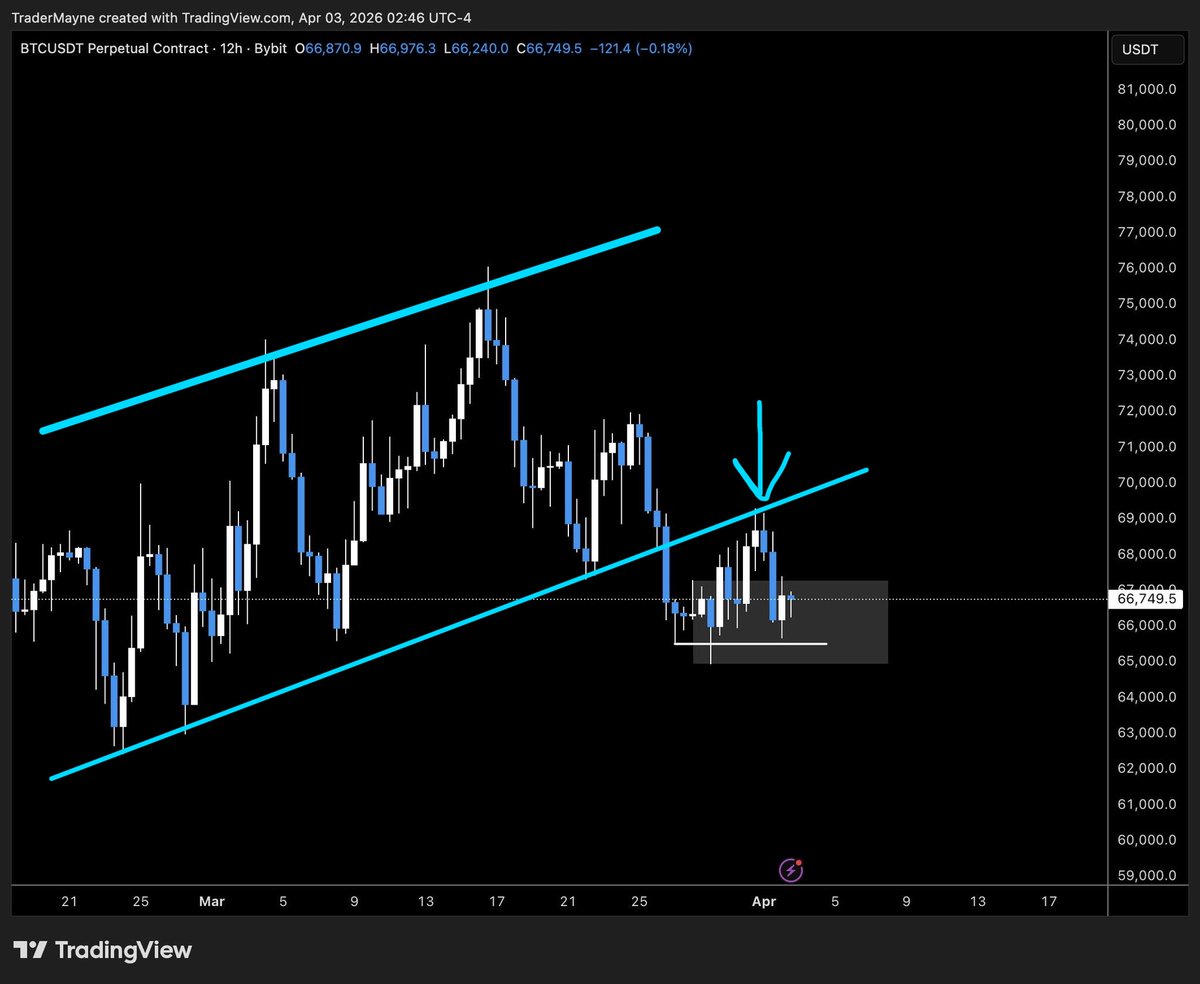
Big spot here for the bulls! Ideally we hold this sweep.
Mayne tweet media
English
70
28
386
27.3K
Aksel Kibar, CMT
Aksel Kibar, CMT@TechChartsยท
Please read this carefully. This discussion is to let you know "the retail investors" that you have the upper hand. That you have huge flexibility in markets. That if you see a chart pattern you can act on it. Not everybody is seeing it. If it fails, it will just fail. Not because everybody have seen the pattern. Institutions who move asset prices with their positioning can NOT enter and exit the way retail investors deploy a 100K or a 1M. They build positions over weeks. They have algorithms that buy X amount throughout the day i.e. on VWAP (Volume Weighted Average Price). In other words they can't just press the buy button and enter at market price the way retail acts at the time of breakout confirmation. So, all this programmed buying is done in an organized fashion, not to push prices higher and let the buying opportunity disappear. So when the algo realizes price is moving away, it might even sell to pressure the price. To keep it in a range as long as possible to complete the accumulation. The pattern you are seeing is the accumulated buying and selling that takes place by different traders/investors. The consolidation that I saw before i.e. the Crude Oil market took off was one of those. Do you think, large funds didn't know the approaching #war risk? So as a retail, as a I always say, YOU have great advantage of being able to: 1) Act once that accumulation is completed and confirmed. 2) Act without any oversight, when you want and with how much you want, without the fear of moving markets. 3) Be able to exit, when conditions change and that breakout fails.
Aksel Kibar, CMT tweet media
Aksel Kibar, CMT@TechCharts

#CRUDEOIL might become a bottom reversal. Neckline and the 200-day average are overlapping around the same level.

English
18
60
481
57.4K
Daniel Vassallo
Daniel Vassallo@dvassalloยท
I just filed my taxes with OpenClaw. Here's how it went. I sold my 90% stake in a business last year for $1.8M cash (installment sale: half in 2025, half in 2026). I also had a single-member LLC, brokerage income from dividends and stocks, HSA distributions, ACA marketplace insurance, 3 real estate properties, prior estimated tax payments, foreign income tax credits, and three kids. Not a simple return. I usually pay a CPA. Last year it cost me $8,000 for personal and business returns, and every question took weeks to get answered (so I didn't ask much). This year I decided to see how far I could get with OpenClaw instead. Here's what actually happened: Phase 1: Research (Monday) I had a pile of documents: the purchase agreement, all LLC operating agreement amendments, old K-1s, prior tax returns going back to 2012, bank statements, balance sheets. I fed everything to OpenClaw and said "read everything in chronological order and figure out my 2025 tax situation." It reconstructed the full entity history: my LLC started in 2019, converted to an S-corp in 2020, became a multi-member LLC (partnership) in 2023, then I sold a small share to an acquirer in 2024, and eventually sold my remaining 90% last year. Having all the prior returns was huge. OpenClaw traced my cost basis through every transition: original capital contributions, income allocations, distributions, entity conversions. It cross-referenced numbers across years, verified how my previous CPA had handled things, and flagged details I never fully understood, like why my ending capital account was negative and what my recourse liabilities represented. It even caught an error. My previous accountant flipped the month with the day for when I sold a small share of my business (5/4 instead of 4/5) which meant I got attributed some income for one month that should have gone to another partner. Didnโ€™t change tax due much, but OpenClaw FTW! By the end of the day, it had prepared a comprehensive summary.md document with all the numbers, forms needed, and open questions. Phase 2: Actually filing (Tuesday) OpenClaw researched TurboTax's current plans and saved me $500 by unburying the $129 TurboTax DIY plan I actually needed. Intuit was trying to sell me a $639 package via a recommendation quiz that said there's no other option for my situation. There was! This was a 4+ hour session where I went screen by screen through TurboTax with OpenClaw guiding every field: - Brokerage 1099: Imported automatically. OpenClaw verified the numbers matched my records. - Schedule C (my solo LLC): I had no bookkeeping done for this, so OpenClaw analyzed all bank transactions and prepared the P&L. I only had to recategorize one transaction because it was a reimbursement for something I had paid for personally. - K-1 partnership income: No actual K-1 yet (the acquirer hasn't filed the entity return), so we estimated my share of the partnership based on bank statements and revenue data. - The installment sale: This was the hardest part. TurboTax kept double counting the gain, reporting it through both the K-1 disposition AND Form 6252. We had to zero out the K-1 sale fields and let the installment sale section handle all the gain reporting. Took several attempts to get right. - Itemized deductions: Mortgage interest, property taxes, local sales taxes, and so on. Uneventful, and OpenClaw correctly predicted the SALT cap limits I'd run into it. TurboTax confirmed those calculations. - Annualized income method: Since the $900K installment came in Q2, using the annualized method on Form 2210 saved ~$3,700 in underpayment penalties. This was quite tedious, and I'm not sure an accountant would have done this for me. I've been told "just pay the penalty" before. - HSA: ~$12K distribution, all qualified medical expenses, $0 taxable. - ACA Premium Tax Credit: 1095-A entered month by month for 11 months of marketplace coverage. I quit the ACA plan in November, in favor of CrowdHealth. No deductions from them unfortunately. At the end, OpenClaw reviewed the final 137 page tax return draft return line by line. Total federal due: $125K, excluding the ~$40K in estimated taxes already paid throughout 2025. โ€” Have you said thank you once, Donald?! What worked well: 1. Document analysis. I threw PDFs and CSVs at it: purchase agreements, K-1s, old returns going back years, bank statements, and it extracted exactly what was needed. Being able to say "look at my 2022 return and tell me what basis my CPA used" and get an answer in seconds was invaluable. Way faster than explaining things to a human. 2. Answering questions in real time. Instead of emailing a CPA and waiting days, I asked "what are recourse vs nonrecourse liabilities?" and got a clear answer in 5 seconds while staring at the TurboTax field. This back-and-forth is what made the whole thing work. Every question I had, answered immediately. 3. Catching optimizations. The annualized income method, investment interest expense from brokerage margin, etc. Small things that add up. 4. Cross-referencing prior years. Having OpenClaw dig through my old returns to verify how things were previously handled gave me real confidence. I could see that the numbers were consistent with what my CPA had done before. What didn't work well: 1. Driving TurboTax directly. I had OpenClaw try to fill in the forms via browser automation. Too slow! TurboTax's multi-step wizards with radio buttons and dynamic forms don't lend themselves well to AI control yet. We switched to me clicking while it dictated what to enter. I'm optimistic this will be improved soon. 2. TurboTax's installment sale handling. This was genuinely tricky. The double counting issue required a creative workaround. A CPA familiar with TurboTax would know the right workflow. OpenClaw had to experiment. 3. No K-1 yet. We estimated the partnership income. When the real K-1 arrives, I'll probably need to amend. This is the same problem I'd have with a CPA though. But if the K-1 preparer was using OpenClaw, maybe I would already have it! What to watch out for: - You need to know your own situation. I'm not completely ignorant about tax prep. I had a reasonable expectation of what the numbers should look like, roughly how much I owed, what the major items were, and so on. I wasn't relying on blind faith. The ability to ask questions and verify things quickly is what built confidence. - Complex form interactions are tricky. The TurboTax installment sale / K-1 double-counting issue could have resulted in extra taxable income if we didn't catch it. Having a sense of what the final number should be matters. - You still need to understand your own finances. The bottom line: Total cost: $129 (TurboTax Premium) vs $8,000 I paid my CPA last year. Also $23.90 in OpenAI GPT 5.4 tokens, including drafting of this post :) Time spent: ~6 hours total across research, prep, and filing. Still faster than dealing with a CPA, and I got much better answers. The biggest difference wasn't the money. It was the speed of answers. Every question I had during filing got answered in seconds. That real-time loop of "what does this field mean?" โ†’ clear explanation โ†’ enter the number โ†’ move on is something no CPA engagement can match. Next year, I'll know the drill. And OpenClaw has memory. That one should be much simpler. Long live the claw! ๐Ÿฆž
English
80
10
405
210.5K
โ‚ฟlackwidow ๐Ÿ•ท
โ‚ฟlackwidow ๐Ÿ•ท@blackwidowbtcยท
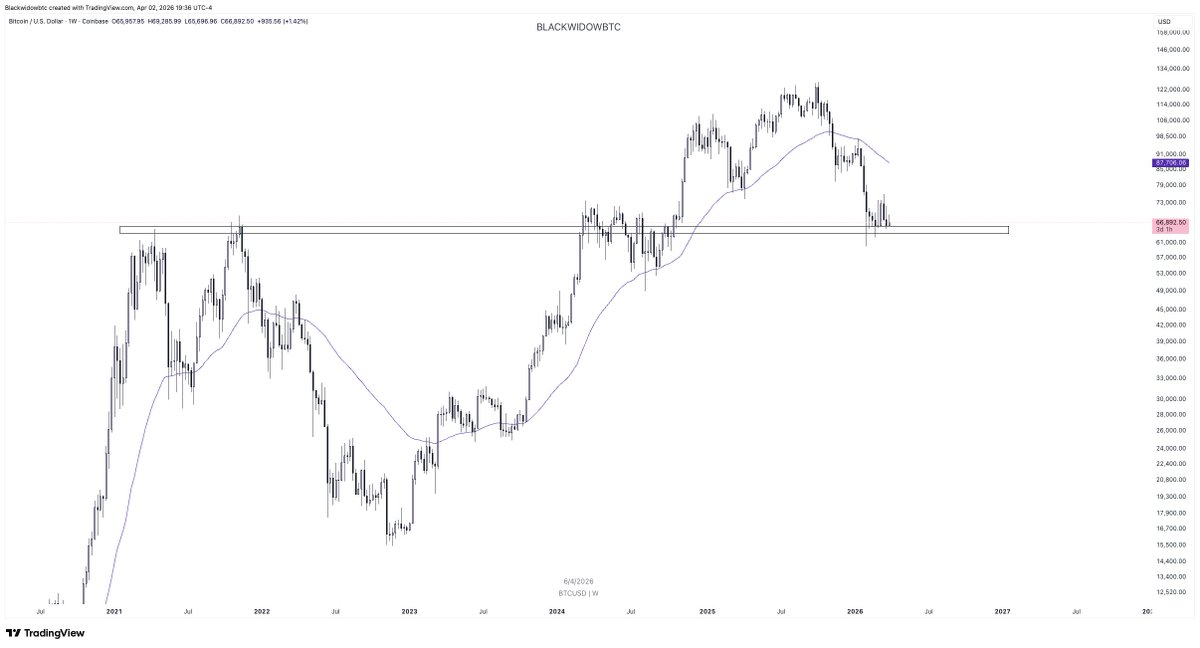
Macro bottom or pit stop? We know this is a strong HTF area - which is why we are seeing a reaction bounce here #Bitcoin
โ‚ฟlackwidow ๐Ÿ•ท tweet media
English
31
5
113
10.2K
Mind Math Money
Mind Math Money@MindMathMoneyยท
@ColinTCrypto $35k-$40k BTC target is possible but timing it is the real challenge. Most people who try to sell and rebuy lower end up missing the bottom entirely. DCA through the pain beats trying to catch the knife. ๐Ÿ”ถ
English
1
0
2
457
Jelle
Jelle@CryptoJelleNLยท
Inflation, war, massive uncertainty - all variables that can mess with your head. All the more reason to make a clear plan, that does not take all those unpredictable variables into account. The chart is the chart. Two triggers; either price, or RSI based. Don't care which one I get. Just patiently waiting for the signal to flash, and then I'm a $BTC buyer again. Simple.
Jelle tweet media
English
32
51
314
17.5K
Rom
Rom@ichlassdesmasoยท
@ColinTCrypto What is your startegy if botcoin jumps to 78k without another leg down, how do you go in, (even though not your base case, what I obviously respect) cheers
English
1
0
2
248
CBBI - ColinTalksCrypto Bitcoin Bull Run Index
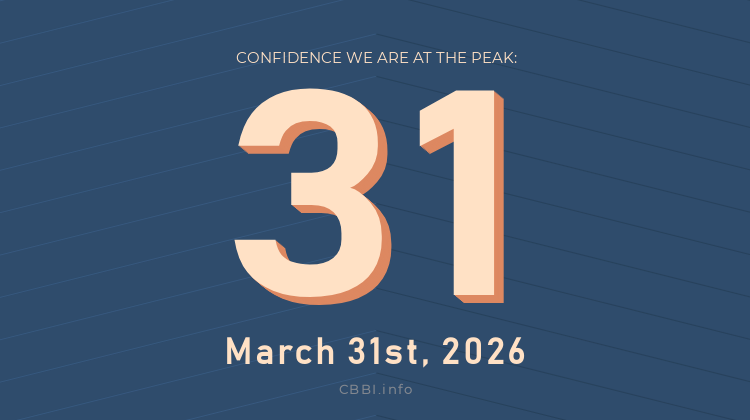
Daily #CBBI status update: CBBI.info ๐‚๐Ž๐๐…๐ˆ๐ƒ๐„๐๐‚๐„ ๐’๐‚๐Ž๐‘๐„: 3๏ธโƒฃ1๏ธโƒฃ ๐Ÿ—“ Apr 1st, 2026 The price of #Bitcoin is $68,215
CBBI - ColinTalksCrypto Bitcoin Bull Run Index tweet media
English
1
1
20
682