Charlie Pearman
44 posts

Charlie Pearman
@CPearman_EP
Cardiologist. Electrophysiologist. Inherited Cardiac Conditions enthusiast. But mainly just a Dad.
Manchester, England Katılım Ekim 2021
20 Takip Edilen71 Takipçiler

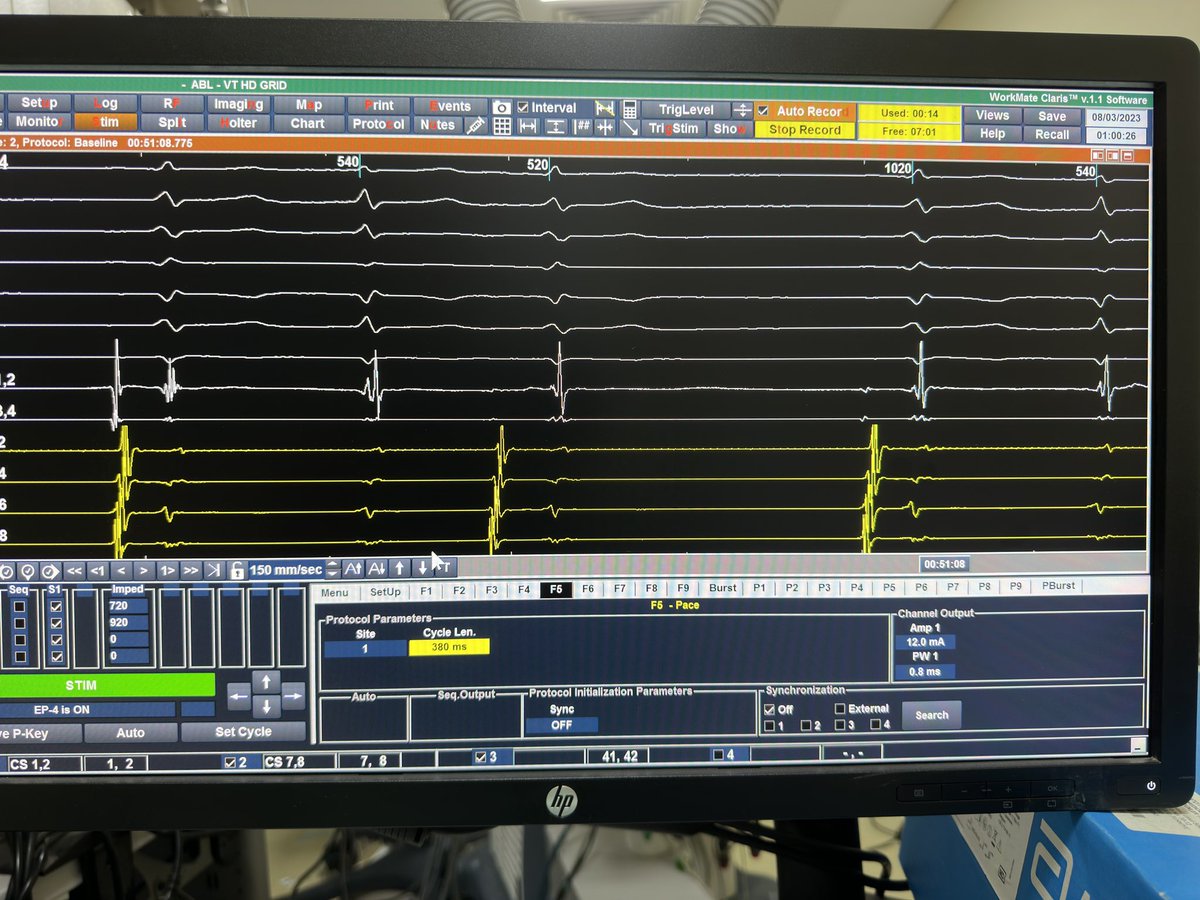
During yesterday’s WHO checklist in the EP lab I tried to confirm with the patient what procedure he was expecting. He was thought he was getting an abomination. #EPeeps
English
Charlie Pearman retweetledi


@Irina67790690 @ecgrhythms If the RV/RA is on the right side of the image (looks like a flipped 5 chamber view with the AV and LVOT on the left) there appears to be apical displacement of the tricupid valve leaflets which would make this Ebstein’s anomoly.
English

Significant tricuspid regurgitation (TR RV 291 ml ?!). Significant dilatation RV, RA.
I don't know the reasons for this situation yet.
#Cardiotwitter #echofirst
English

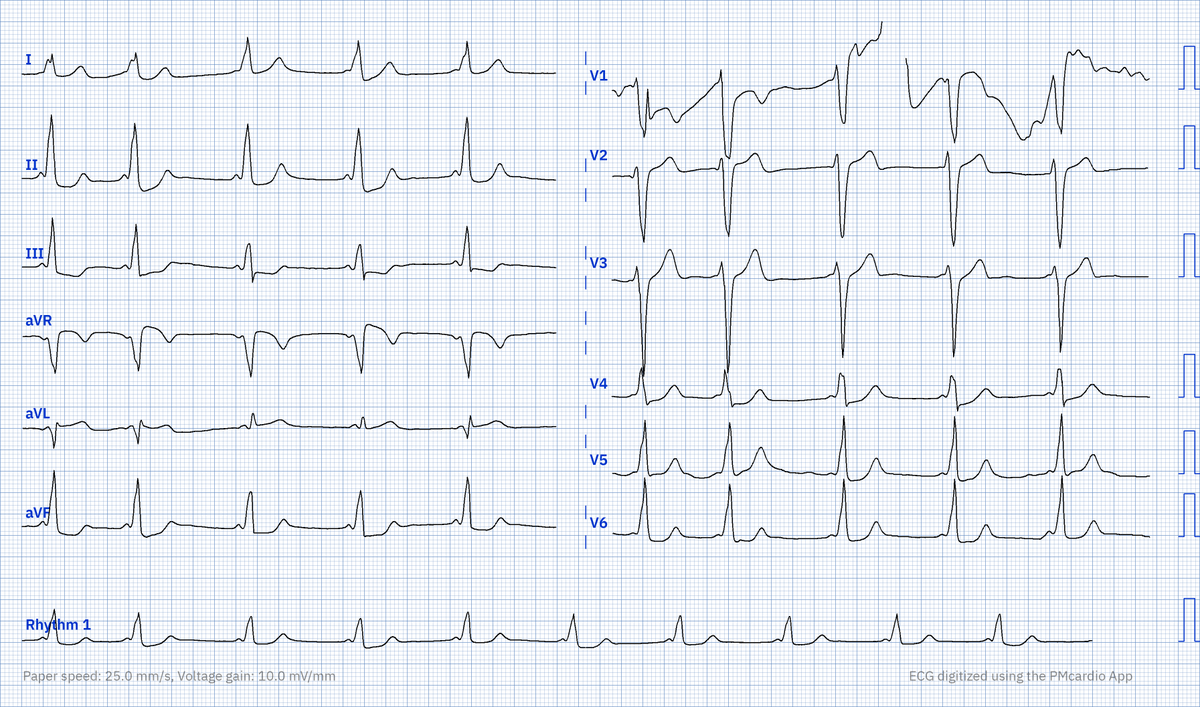
@DaveRichley @ecgrhythms Grouped beating, looks like Wenckebach with some variation in PP interval. Some p-waves appear as pseudo-R’ waves in V1. PP appears longer when there isn’t a QRS between Ps. Suggests ventriculophasic modulation.
English

#ECG OK, arrhythmia nerds - what exactly do you think is happening here? I'm not certain, but I do have a possible explanation.

English

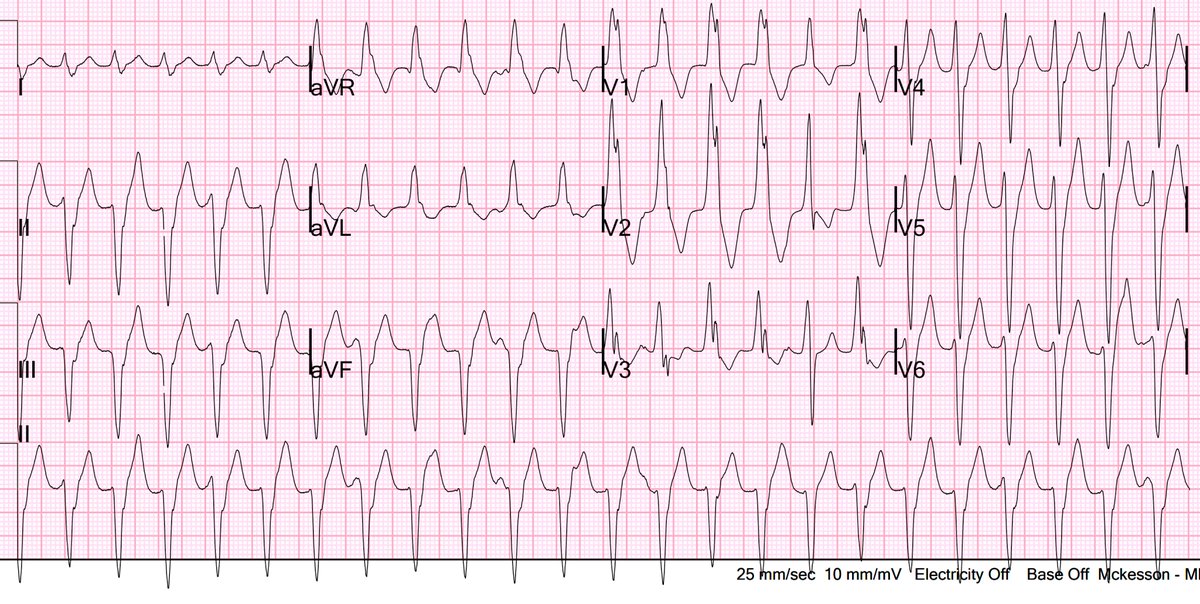
@smithECGBlog @ecgrhythms If conventional DCCV fails, also consider other manoeuvres like AP pad position, compressing chest during defib, and even double sequential defibrillation nejm.org/doi/full/10.10…
English

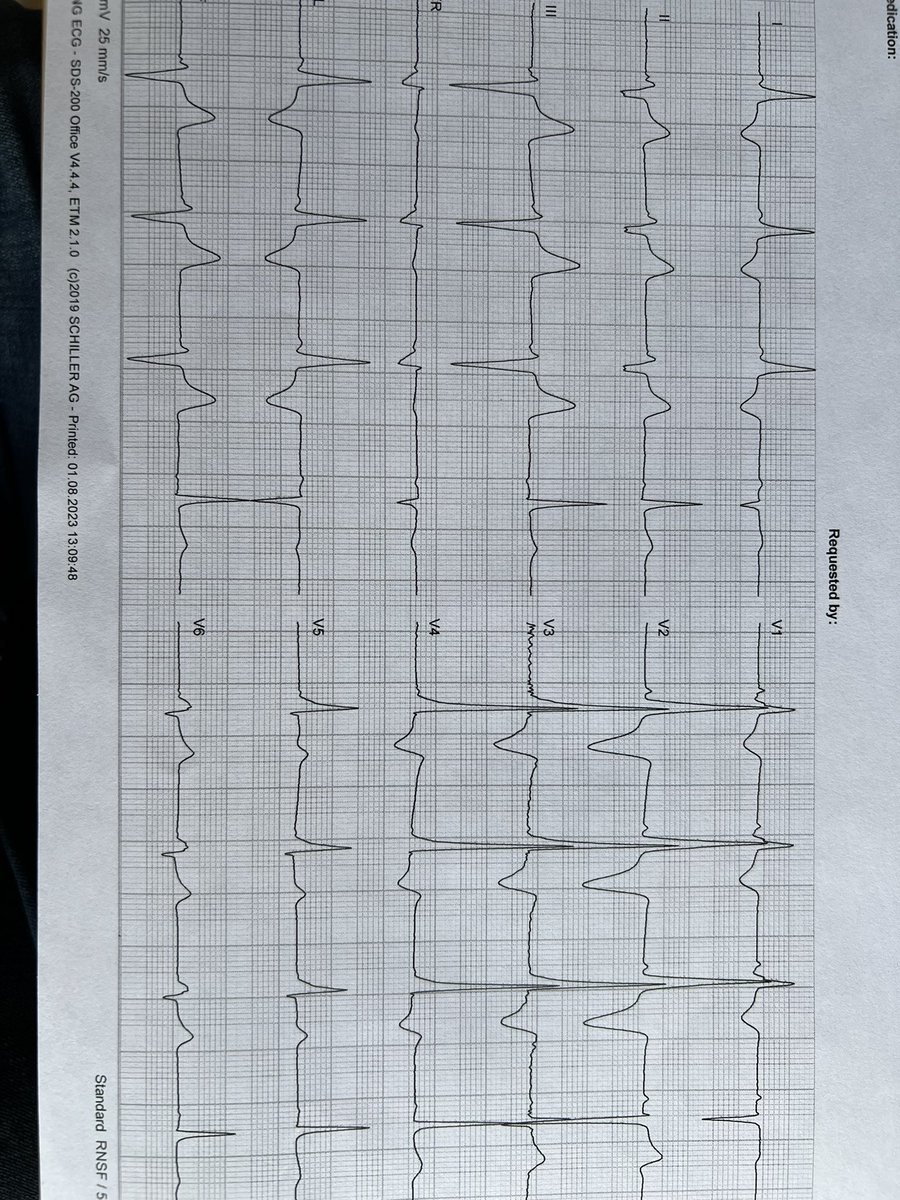
A 50-something with Regular Wide Complex Tachycardia. What to do if Electrical Cardioversion does not work?
hqmeded-ecg.blogspot.com/2023/09/a-50-s…

English

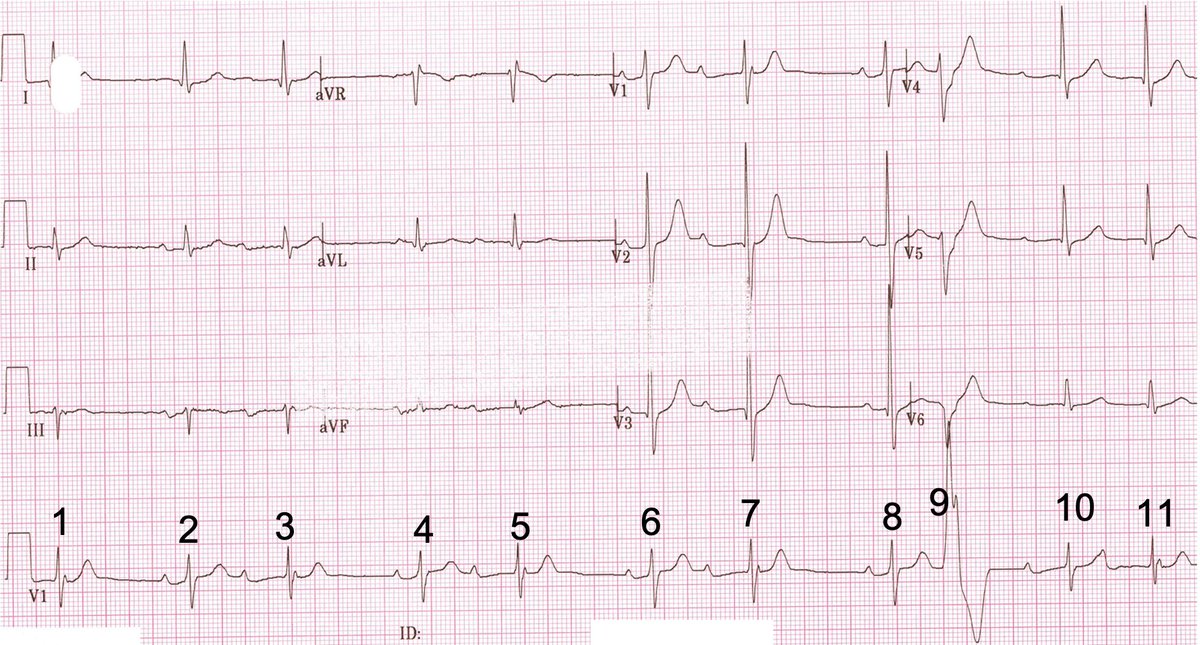
@syamkumarmd @ProfErkanBaysal More likely 2-for-1 if repetitive and if resolved post procedure
English

@syamkumarmd @ProfErkanBaysal Differential diagnoses
(1) Dual AV nodal physiology with simultaneous conduction down fast and slow pathways of the AV node giving a two-for-one ventricular response
(2) Frequent extrasystoles arising from the His with retrograde block to the atria
English

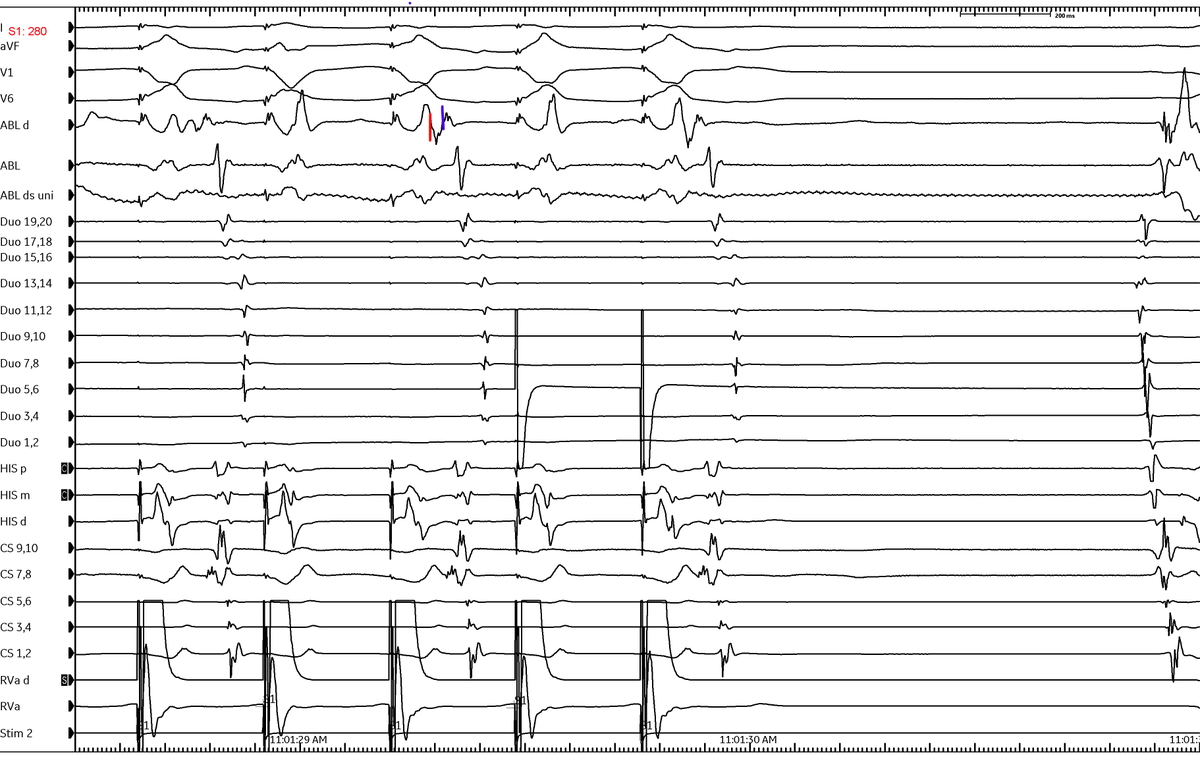
30 y male patient, he had referred due to atrial premature beats ( 32K/ 24 h Holter)
What’s happening 2. and 5. Beats? #EPeeps

English

@shahinzamanii @echo_batman The pre-excitation is intermittent, and the T-wave inversion mentioned is not present on the non-pre-excited beats. QRS complexes of this amplitude may well be a normal finding in a 16y M. Certainly echo, but could well be a structurally normal heart.
English

@echo_batman WPW Pattern + LVH (Seamens sign) with Deep/Striking/Asymetrical TWi in I,aVL & V1-4 leads.
R/O Familial Forms of Preexcitation
Could be:
PRKAG2 mutation
LAMP2 mutation (Danon)
Fabry
Popme
LHON
COXPD2
English

@Miguel_MAntunes @OAB1967 @escardio @DGK_org @YoungDgk @AG14_DGK @EAPCPresident @ASPCardio Weren’t most MIs bystander plaques once upon a time?
English

@OAB1967 @escardio @DGK_org @YoungDgk @AG14_DGK @EAPCPresident @ASPCardio Has a bystander plaque ever killed anyone?
English

You've diagnosed atherosclerotic plaque in an asymptomatic 60 year old marathon runner w elevated LDL. You prescribe a statin! Is this PRIMARY or SECONDARY prevention? I'm confused.
#CardioTwitter @escardio @DGK_org @YoungDgk @AG14_DGK @EAPCPresident #eapc @ASPCardio
Kassel, Germany 🇩🇪 English

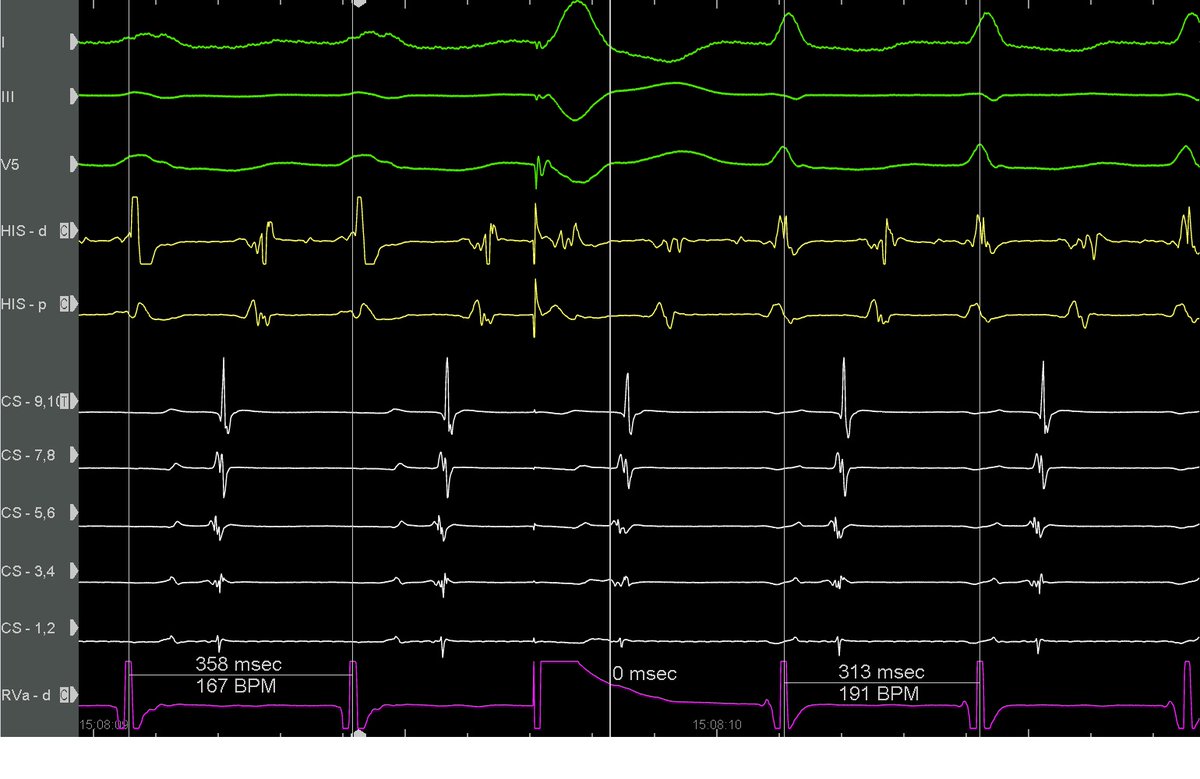
Same patient prior to initiation of isoprenaline infusion. The plot thickens! @GraemeKCrm @SchakrabartiEP @doc_ccc

English


@GraemeKCrm Looks like your favourite psedo-malfunction, but are there any other possible explanations?
English

@CPearman_EP Looks like my favourite pseudo-malfunction and sad to say I called it before seeing the trace! Guessing the Medtronic 120ms version?
English

@samhussam99 Good thoughts! But how do you know atrial sensing and or pacing are working?
English

@CPearman_EP Just a student here. Atrial sensing and pacing seems to wrok fine. The lead in the ventricle seems to pace but with no sensing. And every venteicular spike is falling within the T wave with a risk of V FIB.
English

@SchakrabartiEP @doc_ccc Excellent differential! But in this case the pins were in the right holes
English
Charlie Pearman retweetledi

@KasparHauser15 @RobertHermanMD You’re right - most pre-excited beats are ‘fused’ as a combination of conduction through accesory pathway and AV node. Changes in QRS morphology can be caused by the relative contributions of conduction through the two e.g slower conduction through AVN -> greater pre-excitation
English

@RobertHermanMD The changing QRS morphology, the very short PR interval and the delta wave let's me think about WPW syndrome.
The changing QRS may be due to intermitrnd conduction through the AV node and the Kent bundle.
Is there somethibg like "fusion beats" in WPW?
English

Asymptomatic 24F, pre-op assessment at GP. Mother recently "died due to CVD" (supposedly MI).
Dx? Next steps?
#CardioTwitter #FOAMed #ECG

English