Centre for Social and Economic Progress

19.9K posts

Centre for Social and Economic Progress banner
Centre for Social and Economic Progress

Centre for Social and Economic Progress

@CSEP_Org

CSEP is an independent, Indian public policy think tank based in New Delhi. We're hiring: https://t.co/hfyqmDw5HT

New Delhi, India Katılım Temmuz 2012
593 Takip Edilen44K Takipçiler
Centre for Social and Economic Progress
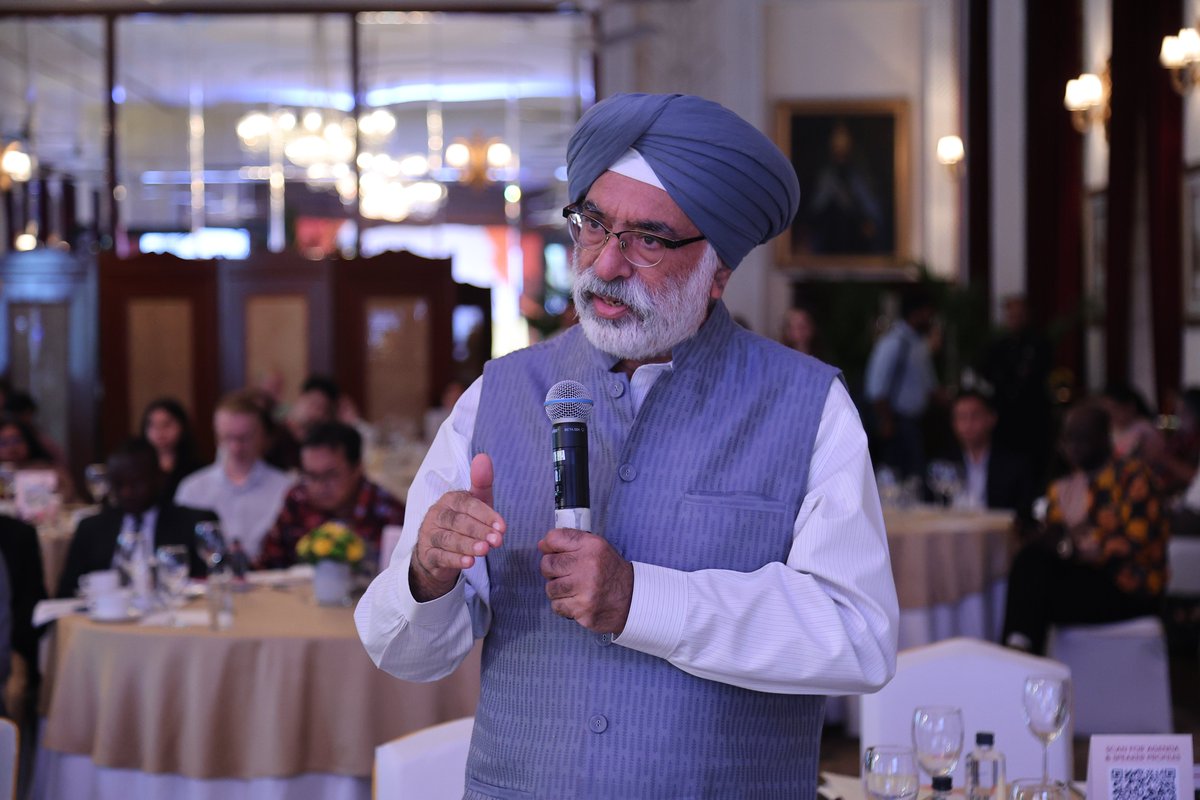
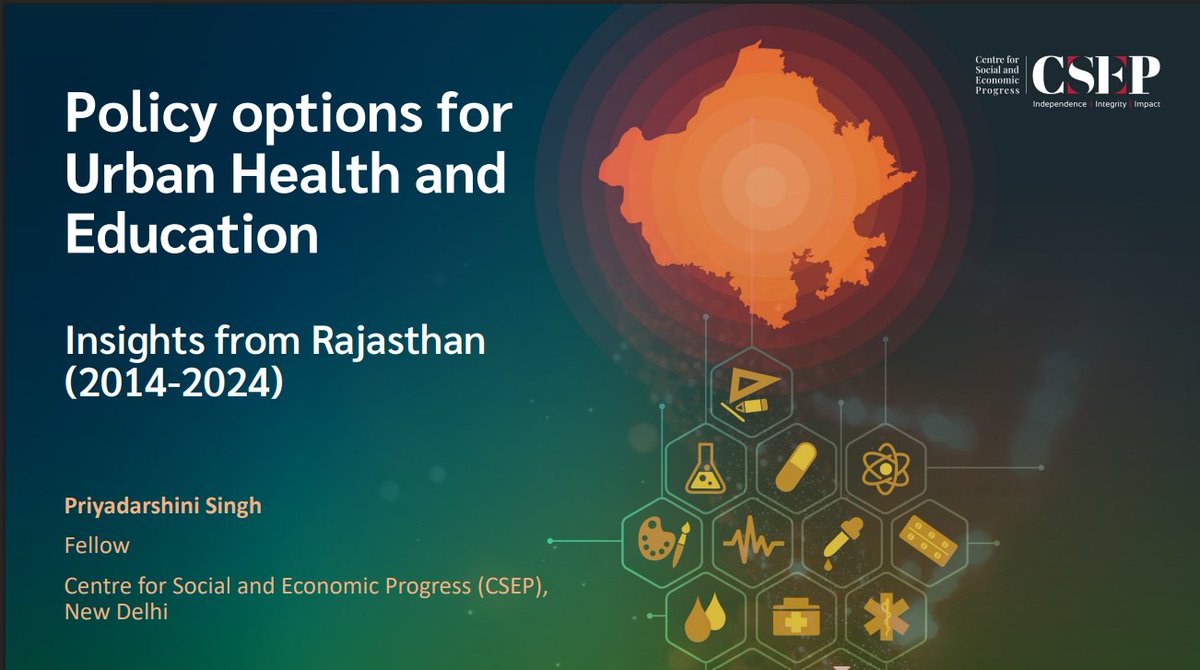
Health continues to be a vital area of India-Africa partnership, but current approaches must be recalibrated to reflect present realities. At CSEP’s event, What's Next for India-Africa Relations?, the panel "Building Resilient Health Systems in the Global South" examined what a genuinely equal, locally rooted & financially sustainable health partnership between India & Africa could look like. @angelalusigi, Resident Representative of @UNDP, articulated the central issue: "The challenge is no longer how India can support health delivery in Africa, but how Indian & African partners can jointly develop health systems that are resilient, context-specific, technologically abled & centred around people's needs." That co-creation must begin with sovereignty. Cedric Crowley, Deputy High Commissioner of South Africa, was direct: "The concept of health sovereignty & domestic pharmaceutical production has become quite critical." He called on India & Africa to jointly establish regional manufacturing hubs, strengthen regulatory systems, & support technology transfer, because "no country can achieve health sovereignty alone." Harinder Sidhu of Apollo Hospitals Group acknowledged how far the partnership has come, while pushing for what comes next: "Medical value travel has been a core component of India-Africa partnerships & has given good results. But this cannot be the only model that we go forward with." He pointed to a looming workforce crisis, a projected shortage of 11 million healthcare personnel by 2030, and called for pooling of skills, resources, & financing between India and African countries to build sustainable models at scale which are economically viable & affordable. Riti Mohapatra, from @BridgespanGroup, highlighted the catalytic role philanthropy can play in bridging the gap between public ambition & private investment: "Philanthropy can go where the private sector has not gone yet. It can provide risk capital, incubate enterprises & form market linkages where private investment can then follow." Together, the panel pointed toward a sharper proposition: the next phase of India-Africa health cooperation must move toward co-manufacturing, workforce development, digital health infrastructure, and community-rooted systems, financed through public-private-philanthropic-multilateral partnerships.
Centre for Social and Economic Progress tweet mediaCentre for Social and Economic Progress tweet mediaCentre for Social and Economic Progress tweet mediaCentre for Social and Economic Progress tweet media
English
0
0
1
286
Centre for Social and Economic Progress retweetledi
The Core
The Core@the_core_in·
“India’s total R&D spending remains at 0.7% of GDP, roughly the same level as in the early 1990s. Worse, private sector R&D is only about 0.3% of GDP. China’s investment is nearly 16 times larger than ours.” Dr Rakesh Mohan of @CSEP_Org asks: If GCCs can bet on India’s talent, why can’t Indian firms? Watch his conversation with @govindethiraj here: youtube.com/watch?v=ce5YN6…
YouTube video
YouTube
English
0
10
9
5.2K
Centre for Social and Economic Progress
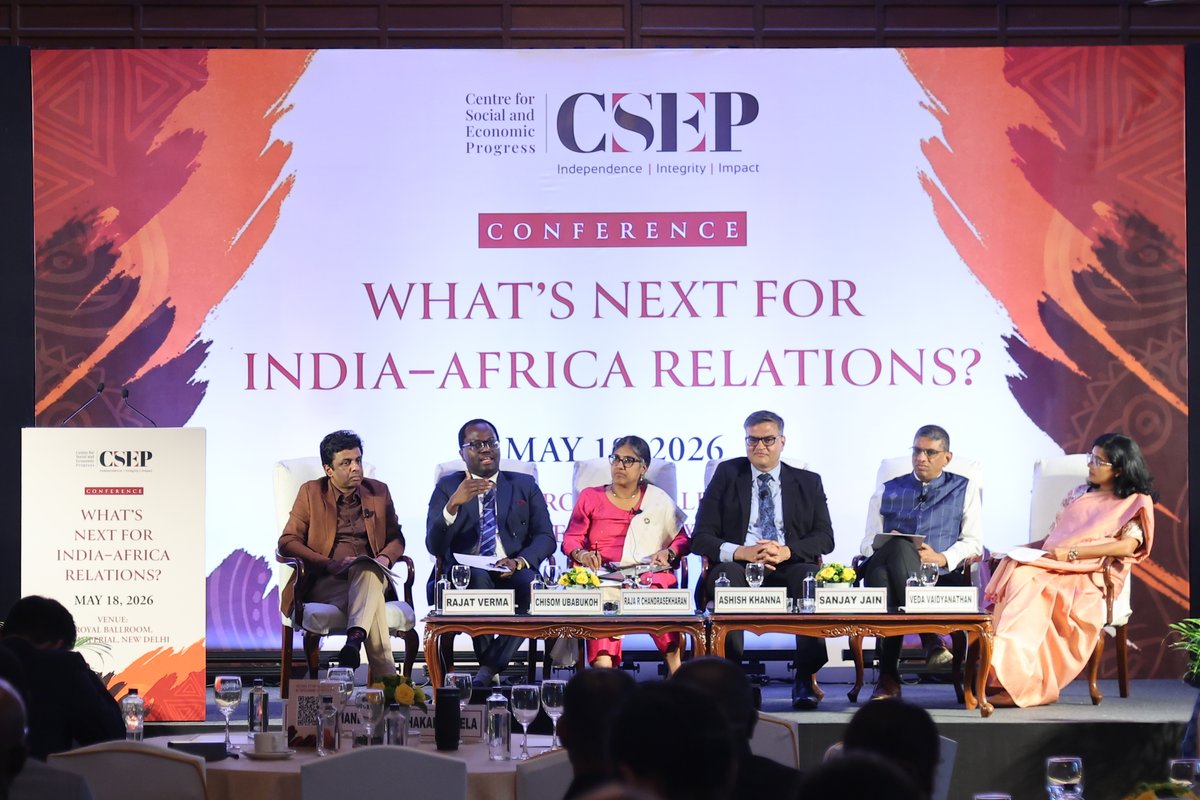
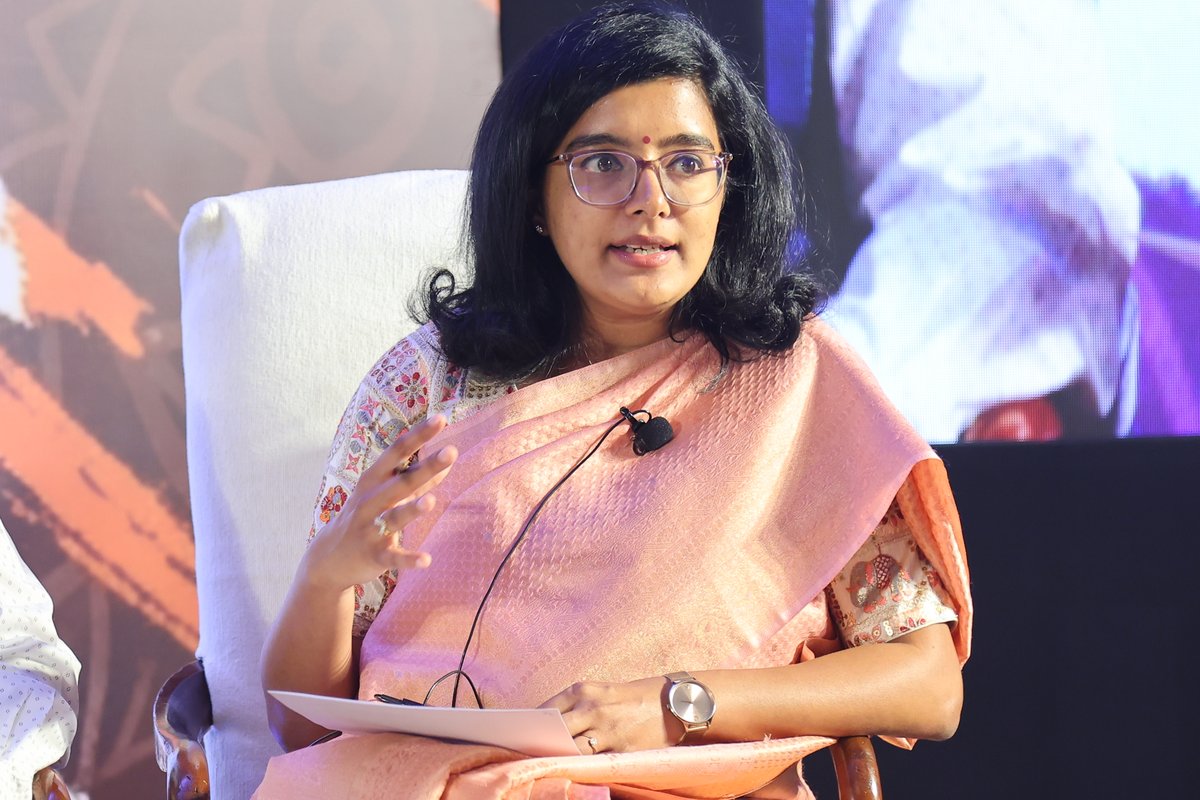
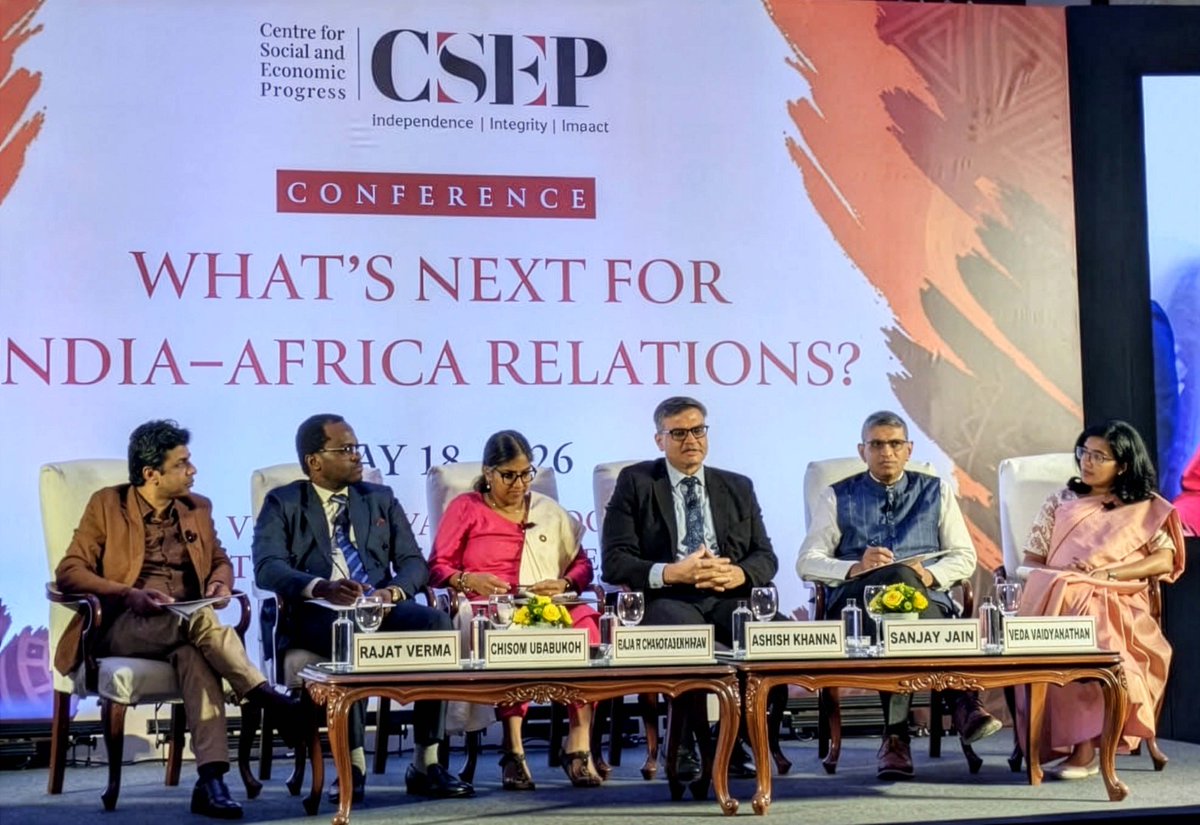
Technology is becoming a key anchor of India-Africa cooperation & development. At “What’s Next for India–Africa Relations?”, the panel “Critical Technologies in a Contested World,” focused on how India & Africa can work together across digital public infrastructure, clean energy, critical minerals, agricultural innovation & technology safeguards. Bringing the critical African perspective, @Chylo360, Professor, @JindalGlobalUNI noted, that "with minerals, the rest of the world has often approached Africa to come in and extract.” India’s opportunity is to help change that model through deeper co-development and implementation. That shift depends first on energy. @Ashish_Khanna, Director General, @isolaralliance put it clearly: “Energy is the binding constraint for growth in Africa. You cannot have digitisation, health, growth without energy.” It also means moving beyond extraction. Rajat Verma, Founder and CEO, @lohum argued that “India needs to bring its refining and processing capabilities to Africa, not just because it is rule mandated, but in the true spirit of partnership.” On digital public infrastructure, Sanjay Jain, Director of Digital Public Infrastructure, @gatesfoundation stressed adaptation over replication: “The principles of DPI need to be taken from India and then localised.” But scale must come with safeguards. As Raja Rajeshwari Chandrasekharan, DPI Safeguards Advisor, @UNDP cautioned, “DPI is one of the best exports that India has created. But when DPI is poorly designed and deployed, it can run into many risks like cyber security, vendor lock-ins, exclusionary risks & capacity issues.” Together, the discussion underscored a sharper proposition: the next phase of India–Africa technology cooperation must connect energy access, digital systems, critical minerals, local value creation & risk mitigation. CSEP’s Africa hub, TARA, is focused precisely on this intersection: bringing together policy research, industry insight, multilateral experience & development practice to identify how cooperation can move from ambition to delivery. @vedavn
Centre for Social and Economic Progress tweet mediaCentre for Social and Economic Progress tweet mediaCentre for Social and Economic Progress tweet mediaCentre for Social and Economic Progress tweet media
English
1
1
9
852
Centre for Social and Economic Progress retweetledi
The Core
The Core@the_core_in·
India imports roughly $120 billion worth of goods from China while exporting only around $20 billion. Dr Rakesh Mohan of @CSEP_Org says India’s “restrictive” policies are doing little to fix this trade imbalance, especially at a time when the country needs stronger foreign capital flows. In a conversation with @govindethiraj.
English
0
2
3
481
Centre for Social and Economic Progress retweetledi
The Core
The Core@the_core_in·
“Why would I expect foreign investors, both direct and portfolio, to invest in our real economy when domestic investors themselves are not investing at the pace they should?” This is a genuine puzzle to me because the corporate balance sheets are good, Dr Rakesh Mohan of @CSEP_Org tells @govindethiraj. Listen in!
English
0
1
1
218
Centre for Social and Economic Progress
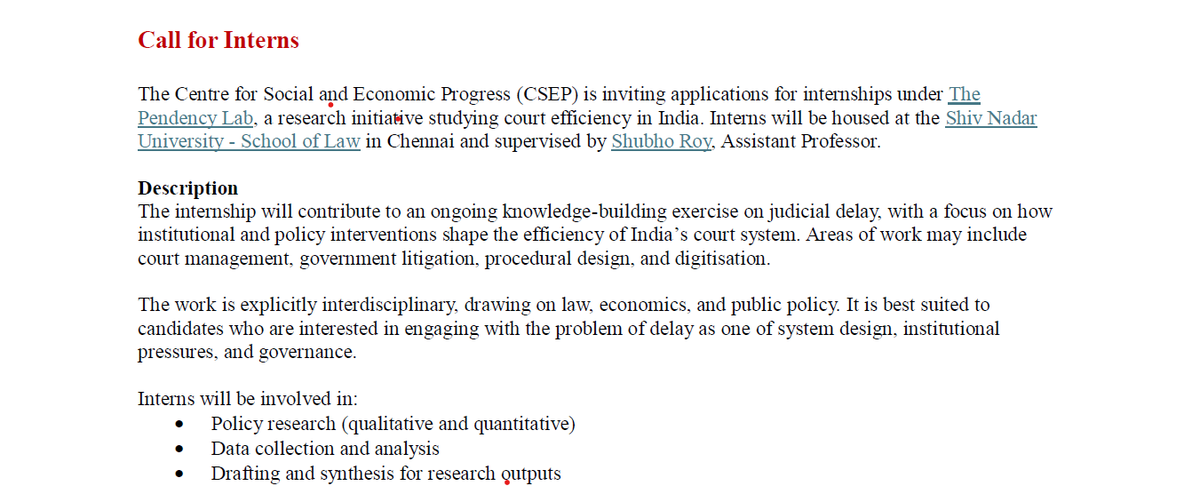
Interested in courts, governance & public policy? The Pendency Lab at CSEP is inviting interns to work on research around judicial delay, court efficiency & institutional reform in India. 📍 Chennai (hybrid preferred) 📅 June–Aug 2026 ⏳ Rolling applications till 1 June csep.org/wp-content/upl…
Centre for Social and Economic Progress tweet media
English
0
0
0
200
Centre for Social and Economic Progress
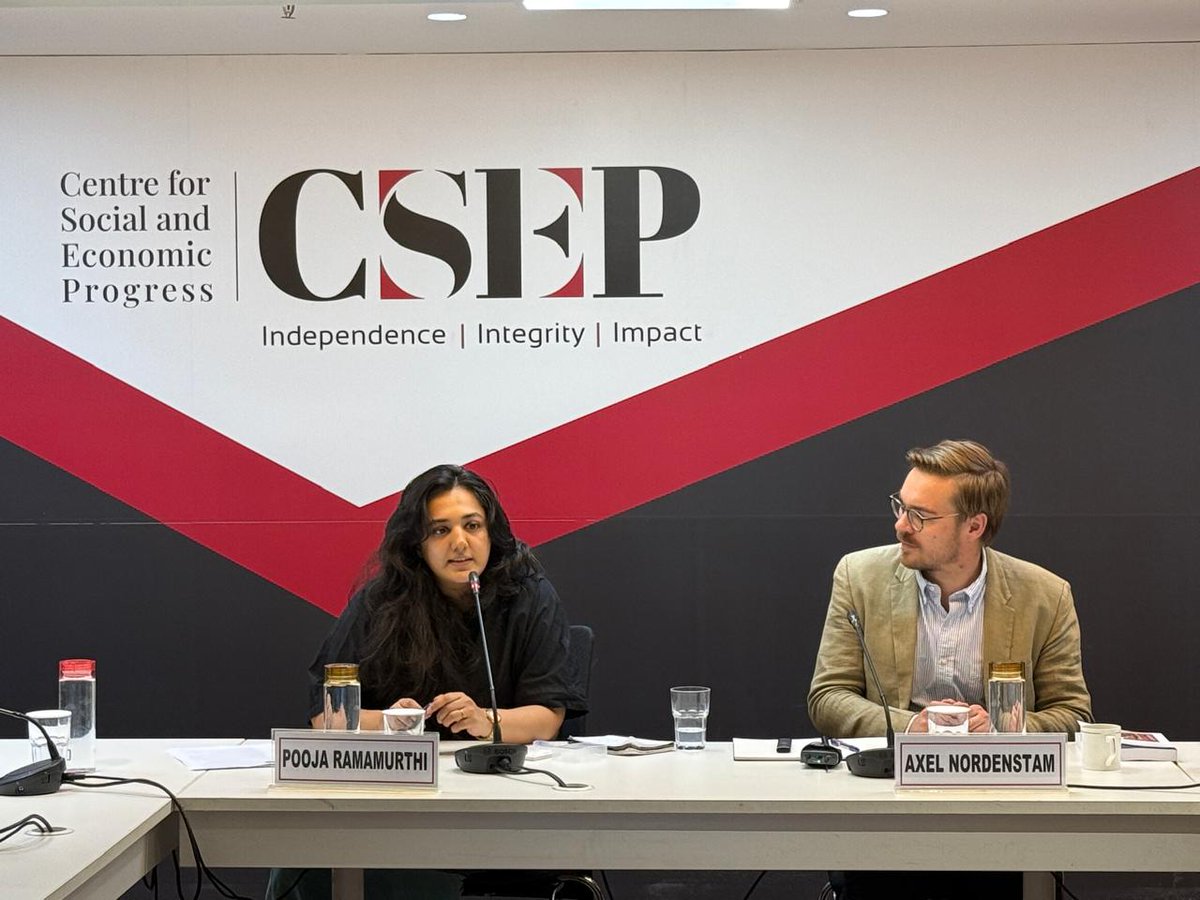
CSEP hosted its 40th Foreign Policy & Security Studies Tiffin Talk on How Indian Diplomats Navigate National Climate Ambitions with @AxelNordenstam, Associate Fellow, Swedish Institute of International Affairs’ Asia Program. (1/4)
Centre for Social and Economic Progress tweet media
English
1
0
2
401
Centre for Social and Economic Progress retweetledi
International Solar Alliance
International Solar Alliance@isolaralliance·
🌍 What’s Next for India–Africa Relations? At the @CSEP_Org Conference held today, the Director General of the International Solar Alliance, Mr @Ashish_Khanna Khanna, highlighted key priorities shaping the future of India–Africa cooperation across energy, agriculture, and urban systems. He emphasized the growing role of #digitisation as a foundational enabler to scale energy access and improve coordination. Underscoring the urgency of the challenge, he noted that hundreds of millions across Africa still lacked access to electricity. Referring to the #M300 initiative, he shared that efforts had been underway to provide energy access to 300 million people, while India remained the only country to have already achieved this scale since 2010. ⚡ Key insights: 🔆 Africa possessed nearly 60% of global solar potential but had received less than 1% of investments, highlighting gaps in policy and regulatory clarity. 🔆Decentralized solar solutions were critical to reaching underserved populations. 🔆Food security was central to the energy transition, with only 4% of agricultural land in Africa irrigated, compared to 55–60% in India, making solar-powered irrigation a key opportunity. 🔆Urban mobility was identified as a growing focus area, where clean energy could transform rapidly expanding cities. 🔆The biggest barriers were not just financing, but risk perception, lack of local currency financing, and skills gaps. He also highlighted the opportunity for entrepreneurs to expand into African markets by building scalable, locally adapted business models across solar, e-mobility, and energy services, leveraging India’s experience in cost-effective innovation. The discussion reinforced that unlocking Africa’s energy potential would require a strong ecosystem approach, anchored in policy clarity, digitisation, decentralized solutions, integration with agriculture, urban mobility, and patient capital. #IndiaAfrica #ISA #EnergyAccess #SolarEnergy #ClimateAction #SustainableDevelopment
International Solar Alliance tweet media
English
0
1
2
346
Centre for Social and Economic Progress retweetledi
Constantino Xavier
Constantino Xavier@ConstantinoX·
What’s Next for India-#Africa Relations? Rich discussions on tech, health, energy and climate-driven driven developmental solutions. Thank you @SudhakarDalela for inaugural address on India’s commitment to work with Africa in partnership mode. Launch of our @CSEP_Org @NEPAD_Agency report by @vedavn and Pamela Gopaul with 100+ recommendations for govts, multilaterals, industry and civil society: csep.org/reports/the-af…
Constantino Xavier tweet mediaConstantino Xavier tweet media
English
0
1
7
695