Callum Mc | Mullac.eth

1.6K posts

Callum Mc | Mullac.eth banner
Callum Mc | Mullac.eth

Callum Mc | Mullac.eth

@Callum_CMc

Blockchains: in it for the tech since '17 | Validator Operator (Eth) | Decentralisation matters | Enjoying a run 🏃 or a dram 🥃

Edinburgh, Scotland Katılım Haziran 2020
646 Takip Edilen152 Takipçiler
Callum Mc | Mullac.eth
Callum Mc | Mullac.eth@Callum_CMc·
I'm against issuance reduction, mainly because my validator approved a block today. Gonna spend the rewards on a Chinese takeaway; chicken chow mein and prawn crackers. Don't take my prawn crackers away from me via the issuance reduction. #homestaker
English
0
0
1
23
Etc.
Etc.@ec265·
@EricBalchunas I was lucky enough to visit Paris last year
Etc. tweet media
English
2
0
8
340
Eric Balchunas
Eric Balchunas@EricBalchunas·
Morning jog views (Paris edition): arguably the most recognizable structure on the planet. I try to avoid being so obvious w pic tweets but it’s just so… exquisite. Beautiful day here too, got lucky with the weather.
Eric Balchunas tweet media
English
28
1
212
19.5K
Callum Mc | Mullac.eth retweetledi
Lefteris Karapetsas
Lefteris Karapetsas@LefterisJP·
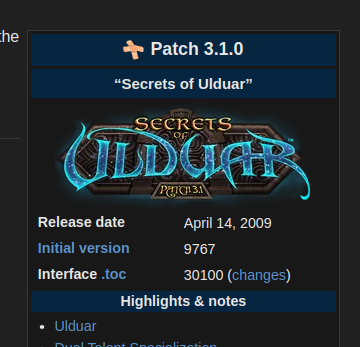
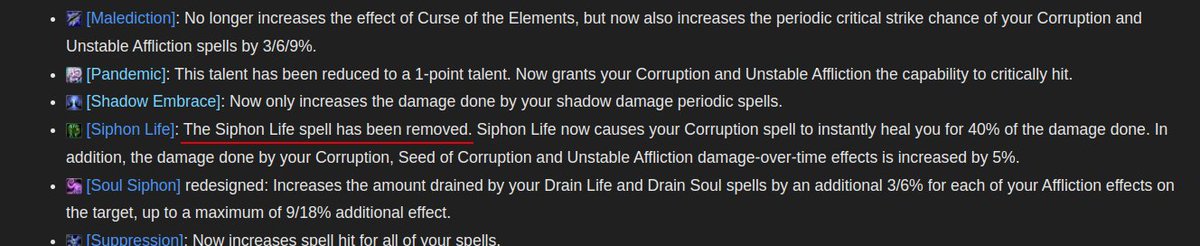
Today is the 17th anniversary of WoW patch 3.1.0, aka the day Blizzard nerfed Siphon Life and accidentally invented Ethereum. In a parallel universe, Affliction warlocks were left alone, @VitalikButerin is a top 500 raider and we are all still using Paypal. You are welcome! 🤣
Lefteris Karapetsas tweet mediaLefteris Karapetsas tweet media
English
4
6
63
2.8K
Callum Mc | Mullac.eth retweetledi
Dappnode
Dappnode@dappnode·
And here goes the other ANNOUNCEMENT: The @thedaofund is adding 69,420 ETH in validators to the pool. They want to help stakers access smoother MEV rewards and it strengthens the whole proposition of Smooth.
Dappnode tweet media
English
1
6
13
332
Callum Mc | Mullac.eth retweetledi
binji
binji@binji_x·
decentralization is the whole point of blockchains
English
45
30
251
18.8K
Callum Mc | Mullac.eth retweetledi
scoopy trooples
scoopy trooples@scupytrooples·
Yes, I (and many others) stayed in the @ethereum eco and yes, that was the right decision.
English
11
23
382
11.4K
Etc.
Etc.@ec265·
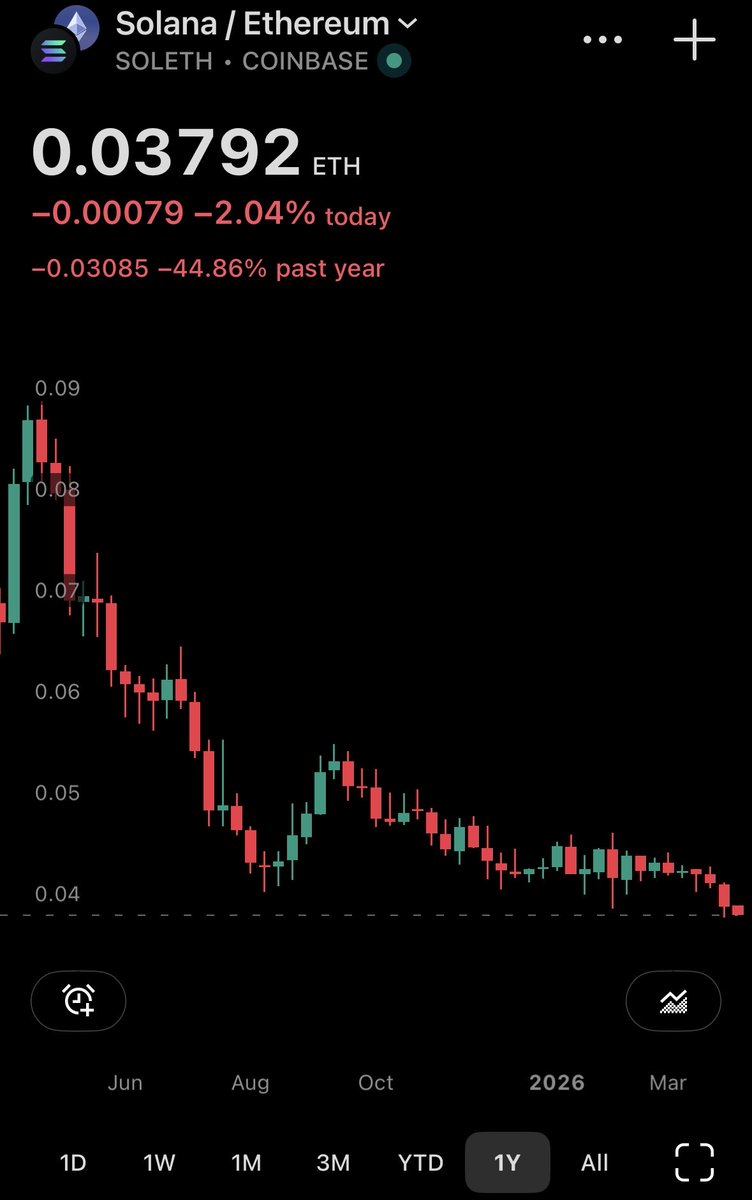
I take soleth in this chart
Etc. tweet media
English
10
3
86
4K
Callum Mc | Mullac.eth
Callum Mc | Mullac.eth@Callum_CMc·
Just bit the bullet on upgrading my validators to compounding validators (0x02) with a view to consolidate them in the near future. Still feckin scary to pissing around with my life savings like this!
English
0
0
1
34
kain.inx
kain.inx@kaiynne·
I’d like to think (and do) that my 50k eth bet was the final amount that tipped @KyleSamani over the edge into retirement 🤣.
English
17
0
71
10.7K
Callum Mc | Mullac.eth
Callum Mc | Mullac.eth@Callum_CMc·
Well I'm still here and still running my home validators. Nothing fundamentally has changed.
English
0
0
1
24
Eli Ben-Sasson | Starknet.io
Eli Ben-Sasson | Starknet.io@EliBenSasson·
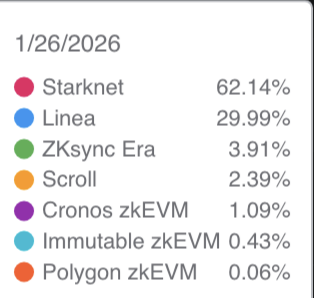
Starknet dominates DEX volume among L2s. Thank you for your attention to this matter.
Eli Ben-Sasson | Starknet.io tweet media
English
63
26
284
56.9K
Callum Mc | Mullac.eth retweetledi
Justin Drake
Justin Drake@drakefjustin·
Today marks an inflection in the Ethereum Foundation's long-term quantum strategy. We've formed a new Post Quantum (PQ) team, led by the brilliant Thomas Coratger (@tcoratger). Joining him is Emile, one of the world-class talents behind leanVM. leanVM is the cryptographic cornerstone of our entire post-quantum strategy. After years of quiet R&D, EF management has officially declared PQ security a top strategic priority. Our journey began in 2019, with the "Eth3.0 Quantum Security" presentation at StarkWare Sessions. Since 2024, PQ has been central to the @leanEthereum vision. The pace of PQ engineering breakthroughs since then has been nothing short of phenomenal. It's now 2026, timelines are accelerating. Time to go full PQ: → PQ ACD: Antonio Sanso (@asanso) kicks off a bi-weekly All Core Devs PQ transactions breakout call next month. These sessions focus on user-facing security, covering dedicated precompiles, account abstraction, and longer-term transaction signature aggregation with leanVM. → PQ foundations: Today we are announcing a $1M Poseidon Prize to harden the Poseidon hash function. We are betting big on hash-based cryptography to enjoy the strongest and leanest cryptographic foundations. Check out our other $1M PQ initiative, the Proximity Prize. → PQ devnets: Multi-client PQ consensus devnets are live! Shoutout to pioneers @zeamETH, @ReamLabs, @PierTwo_com, @geanclient, @ethlambda_lean, as well as established consensus teams Lighthouse, Grandine, and soon Prysm. This incredible teamwork is coordinated by @corcoranwill via weekly PQ interop calls. → PQ workshops: Building on last year's PQ workshop in Cambridge (see photo), the EF is hosting another 3-day PQ event in October. Top experts from around the world will convene. In addition, a PQ day is set for March 29 in Cannes just ahead of EthCC. → PQ FV and AI: Last week Alex Hicks (@alexanderlhicks) ran a specialised maths AI for 8 hours, at a $200 cost. It one-shotted a formal proof one of the hardest lemmas in the foundations of hash-based snarks. Mind-blowing. Applied cryptography will never be the same. → PQ roadmap: A comprehensive breakdown of the EF's proposed PQ strategy will be shared soon™ on pq[.]ethereum[.]org. The roadmap targets a full transition in coming years with zero loss of funds and zero downtime. Stay tuned :) → PQ education: The ZKPodcast (@zeroknowledgefm) is producing a 6-part video series on Ethereum's PQ strategy. EF Enterprise Acceleration is also preparing material for enterprises and nation-states. Finally, Ethereum is now represented on the PQ advisory board that Coinbase announced yesterday. Believe in something. Believe in PQ security.
English
340
694
3.2K
1.2M
Callum Mc | Mullac.eth retweetledi
superphiz.eth
superphiz.eth@superphiz·
1. @Rocket_Pool is a powerful contributor to @Ethereum node diversity. 2. The Rocket Pool Saturn 1 upgrade is coming February 9, 2026. 3. YOU can operate a RP validator with 4 Ether, this is huge.
English
10
26
94
3.5K
Callum Mc | Mullac.eth retweetledi
vitalik.eth
vitalik.eth@VitalikButerin·
Ethereum itself must pass the walkaway test. Ethereum is meant to be a home for trustless and trust-minimized applications, whether in finance, governance or elsewhere. It must support applications that are more like tools - the hammer that once you buy it's yours - than like services that lose all functionality once the vendor loses interest in maintaining them (or worse, gets hacked or becomes value-extractive). Even when applications do have functionality that depends on a vendor, Ethereum can help reduce those dependencies as much as possible, and protect the user as much as possible in those cases where the dependencies fail. But building such applications is not possible on a base layer which itself depends on ongoing updates from a vendor in order to continue being usable - even if that "vendor" is the all core devs process. Ethereum the blockchain must have the traits that we strive for in Ethereum's applications. Hence, Ethereum itself must pass the walkaway test. This means that Ethereum must get to a place where we _can ossify if we want to_. We do not have to stop making changes to the protocol, but we must get to a place where Ethereum's value proposition does not strictly depend on any features that are not in the protocol already. This includes the following: * Full quantum-resistance. We should resist the trap of saying "let's delay quantum-resistance until the last possible moment in the name of ekeing out more efficiencies for a while longer". Individual users have that right, but the protocol should not. Being able to say "Ethereum's protocol, as it stands today, is cryptographically safe for a hundred years" is something we should strive to get to as soon as possible, and insist on as a point of pride. * An architecture that can expand to sufficient scalability. The protocol needs to have the properties that allow it to expand to many thousands of TPS over time, most notably ZK-EVM validation and data sampling through PeerDAS. Ideally, we get to a point where further scaling is done through "parameter only" changes - and ideally _those_ changes are not BPO-style forks, but rather are made with the same validator voting mechanism we use for the gas limit. * A state architecture that can last decades. This means deciding, and implementing, whatever form of partial statelessness and state expiry will let us feel comfortable letting Ethereum run with thousands of TPS for decades, without breaking sync or hard disk or I/O requirements. It also means future-proofing the tree and storage types to work well with this long-term environment. * An account model that is general-purpose (this is "full account abstraction": move away from enshrined ECDSA for signature validation) * A gas schedule that we are confident is free of DoS vulnerabilities, both for execution and for ZK-proving * A PoS economic model that, with all we have learned over the past half decade of proof of stake in Ethereum and full decade beyond, we are confident can last and remain decentralized for decades, and supports the usefulness of ETH as trustless collateral (eg. in governance-minimized ETH-backed stablecoins) * A block building model that we are confident will resist centralization pressure and guarantee censorship resistance even in unknown future environments Ideally, we do the hard work over the next few years, to get to a point where in the future almost all future innovation can happen through client optimization, and get reflected in the protocol through parameter changes. Every year, we should tick off at least one of these boxes, and ideally multiple. Do the right thing once, based on knowledge of what is truly the right thing (and not compromise halfway fixes), and maximize Ethereum's technological and social robustness for the long term. Ethereum goes hard. This is the gwei.
English
1.1K
968
7.7K
898.7K
Callum Mc | Mullac.eth
Callum Mc | Mullac.eth@Callum_CMc·
"Ethereum itself must pass the walkaway test, and so we cannot build a blockchain that depends on constant social re-juggling to ensure decentralization." BULLISH on ethereums long term goals! Last one to leave turn the lights out, the chain will keep on chugging regardless.
vitalik.eth@VitalikButerin

Increasing bandwidth is safer than reducing latency With PeerDAS and ZKPs, we know how to scale, and potentially we can scale thousands of times compared to the status quo. The numbers become far more favorable than before (eg. see analysis here, pre and post-sharding vitalik.eth.limo/general/2021/0… ). There is no law of physics that prevents combining extreme scale with decentralization. Reducing latency is not like this. We are fundamentally constrained by speed of light, and on top of that we are also constrained by: * Need to support nodes (especially attesters) in rural environments, worldwide, and in home or commercial environments outside of data centers. * Need to support censorship-resistance and anonymity for nodes (especially proposers and attesters). * The fact that running a node in a non-super-concentrated location must be not only possible, but also economically viable. If staking outside NYC drops your revenues by 10%, over time more and more people will stake in NYC. Ethereum itself must pass the walkaway test, and so we cannot build a blockchain that depends on constant social re-juggling to ensure decentralization. Economics cannot handle the entire load, but it must handle most. Now, we can decrease latency quite a bit from the present-day situation without making tradeoffs. In particular: * P2P improvements (esp erasure coding) can decrease message propagation times without requiring individual nodes to have lower bandwidth * An available chain with a smaller node count per slot (eg. 512 instead of 30,000) can remove the need for an aggregation step, allowing the entire hot path to happen in one subnet This plausibly buys us 3-6x. Hence, I think moderate latency decreases, to a 2-4s level, are very much in the realm of possibility. But Ethereum is NOT the world video game server, it is the world heartbeat. If you need to build applications that are faster than the heartbeat, they will need to have offchain components. This is a big part of why L2s will continue to have a role even in a greatly scaled Ethereum (there are other reasons too, around VM customization, and around applications that need _even more scale_). Ultimately, AI will necessitate applications that go faster than the heartbeat no matter what we do. If an AI can think 1000x faster than humans, then to the AI, the "subjective speed of light" is only 300 km/s. Hence, it can talk near-instantly within the scope of a city, but not further. As a result, there will inevitably be AI-focused applications that will need "city chains", potentially even chains localized to a single building. These will have to be L2s. And on the flipside, it would be too much of a cost to make it viable to run a staking node on Mars. Even Bitcoin does not strive for this. Ultimately, Ethereum belongs to Terra, and its L2s will serve both hyper-localized needs in its cities, and hyper-scaled needs planet-wide, and users on other worlds. Milady.

English
0
0
0
24
Callum Mc | Mullac.eth
Callum Mc | Mullac.eth@Callum_CMc·
I'm still very much bullish SBET and have been DCAing since it was available in my UK ISA. With this new deployment it goes beyond what any ETF will ever be able to provide. I think I'll be DCAing into SBET for many years down the line.
Sharplink@Sharplink

NEW: We just deployed $170M ETH with first-of-it’s-kind enhanced yield on @LineaBuild. This combines native Ethereum yield, restaking rewards from @eigencloud and direct incentives from @LineaBuild and @ether_fi, all within an institutional-grade qualified custodian thanks to @Anchorage. This is the most productive way to hold ETH with institutional-grade infrastructure. That’s the SharpLink edge.

English
0
0
0
47