

Chacha
1.6K posts


The relationship between the Hausa and Fulani cannot be broken. There is no family in the core north where you won't find both Hausa and Fulani members, which is why some identify as Hausa-Fulani. Agenda to cause chaos between them has been put forward, but I believe both groups are already aware of your evil intentions.

English
@realness000 @BinUmar40 @thesonofgrace_ @iambabangida_ @Bichia_maisango @HabibaIdri40129 @SamailaLab28199 @hausawan_asali @HausaGimbi2878 @Shahid_danbatta @TijjaniImam1 @Millz_umar @FactCheckArewa Didn’t Christian’s has their own traditional name before Christianity invasion? Start using it please
English

Didn’t the Hausa people have their own traditional names before the influence of Arabic and Saudi culture? It would be refreshing to see more people embrace and use indigenous names again. There’s real value in preserving identity and heritage, and it shouldn’t be replaced or diminished.
English

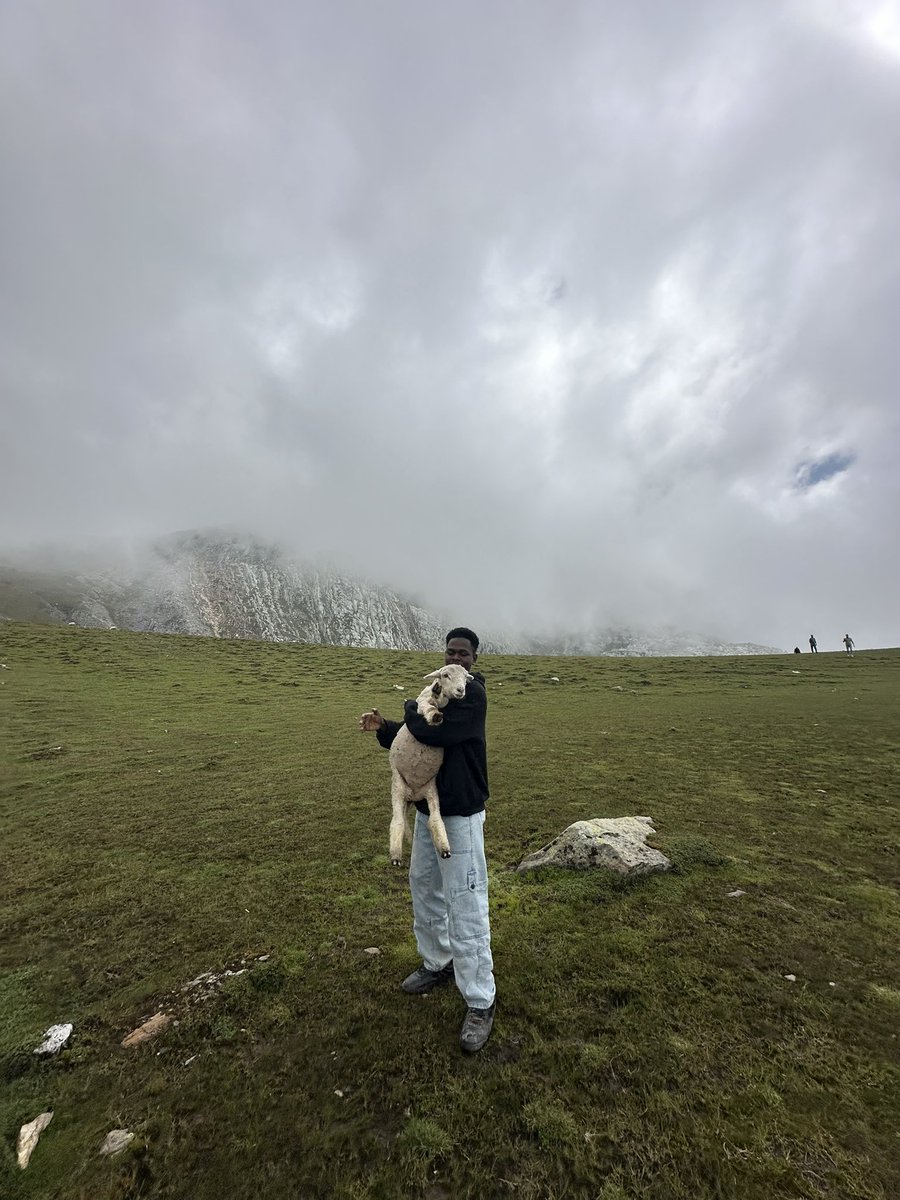
I shot this with my Camera.
I love the greenery and topography.
English

@RayyesFlow @Chachajrr Every ethnic group has its own bad elements. I understand where your anger is coming from, but blaming an entire ethnic group is completely unfair. There was a time we don’t have or hear “fulani bandits “ year back.
English

@Millz_umar @TijjaniImam1 Fun fact is, the author of this post is also arne 😂😂😂
English

They insult us, calling us Maguzawa and arna, and accuse us of collecting money simply because we speak for the Hausa people. However, when others form separate groups like Miyetti Allah, MACBAN, or the Fulbe Christian Association, no one complains. So, why is it a problem when Hausa people organize or claim to be Hausa Zallah? Double standard, We won’t be silenced.

English

Toh shikenan. May Allah help us make better choices. Ameen.
Ya yi. Na yafe.
Chacha@Chachajrr
@ElJefe__ Am sorry brother. It’s okay it didn’t reach to that point. Let it be
English
@Chachajrr You will answer to Allah swt.
Kuma wallah, ban yafe ba. Har abada.
Indonesia
I’m by far a better and more learned Muslim than you can dream of being.
You’re just Fulani but no more Muslim than the killer and rapist Turji.
English
No problem. Lol.
You will tell Allah where He told you this one.
English
@rufusking2023 @RayyesFlow Yesss he don’t know. We just open our eyes and found out we are all Muslims 😂😂
English

@Chachajrr @RayyesFlow Danfodio didnt know they were all muslims when he attacked Hausas and Kanuris? 😂🤣😂
English
@rufusking2023 @RayyesFlow Pains who? IDC I just emphasis that we have nothing in common with northern kafirs. Nothing else if you like call it arna zalla idc
English
@RayyesFlow @Chachajrr awesome... its all this name-calling that justifies HAUSA ZALLA.... e pains them so much
English
No Hausa man will gather fellow Hausa men and women and speak to them in English.
That boy is not Hausa that is why he spoke English.
This propaganda of Hausa Zallah pushed by southern and northern Christians will not fly.
English
@Chachajrr The funny thing is I don’t have a Hausa bone in my body. What I do have is Fulani blood.
Blue blood sef. Amma ko ni na san gaskiya. Balle kai. Tasha 😂😂😂
English
@BasedLagos07 @Marshal783923 @Idrisbishi99 @s__e__t__ @TijjaniImam1 @Millz_umar @gimbakakanda STF. Remove north out of your mouth then
English
@Chachajrr @Marshal783923 @Idrisbishi99 @s__e__t__ @TijjaniImam1 @Millz_umar @gimbakakanda That doesn't mean I'm Fulani
English
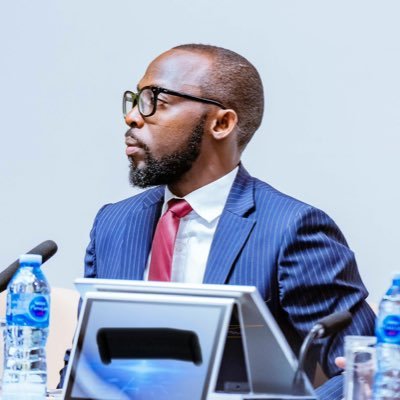
The Hausa-Fulani Debate
This trending debate about the two ethnic groups dancing on the edge of an unmistakable rupture has, to me, always been a debate about political convenience disguised as ethnic certainty. They are two distinct groups, marked by different linguistic and cultural idiosyncrasies. Whatever the Fulani share with the Hausa, they also share, in one form or another, with other groups, just as the Hausa share traits with peoples beyond the Fulani. The difference is that these other groups rarely lose their consciousness of self.
The traditional institutions across many northern communities are headed by monarchs of Fulani ancestry, and this is true even among the Nupe emirates in Nigeria. The Etsu Nupe in Bida and the Emir of Lapai, for instance, have distinctly Fulani ancestry, yet neither hyphenates his ethnic identity. They identify simply as Nupe, and that is the end of the matter. There is nothing in the cultural expression of a Hausa mixed with Fulani that is not, in similar ways, expressed among the Nupe mixed with Fulani. Culture is fluid. Identity is fluid too. We should be honest enough to admit this.
Hausa is, of course, culturally magnetic, and that is why it has succeeded in becoming the Bermuda Triangle of many languages in northern Nigeria. Many of us grew up struggling to balance Hausa and our native language, trying not to lose one in the dominance of the other. But that cultural force is not enough reason to reduce Hausa to a mere language, as some tend to theorise, or to deny that it belongs to a distinct people. That would be like arguing that the universality of English means there are no distinct English people. A language can travel widely, absorb others, and still remain the language of a people whose distinct identity does not vanish with its spread.
If these Nupe royal families, many of whom are patrilineally Fulani but maternally Nupe, could identify simply as Nupe and nothing more, then I believe every group can do the same—to choose a part that aligns with their reality. To me, that offers a practical template for integration among us. What it exposes, instead, is the poverty of a social arrangement in denial of lived identity, where accommodation rests solely on the father’s origin. That may satisfy the logic of patriarchy, but it does not satisfy the logic of justice, social reality, or national cohesion.
We live, however, in a patrilineal society that compels the child to inherit the father’s identity, and this logic extends even into our notions of indigeneship and citizenship. Unless we are prepared to uphold that rigidity consistently, or else allow all of us to bear the identities of both parents, we are simply living a lie. My objection to the Hausa-Fulani categorisation is not that it is inherently flawed, for it reflects a social reality many of us already recognise. It is that the arrangement is self-serving, privileging one set of interethnic identities while denying the same legitimacy to others. Our society would be far more honest with itself if it embraced our maternal identities and values just as seriously as it does the paternal. That would not only weaken this patriarchal inheritance of identity, but also deepen integration.
I made this argument years ago in a column where I advanced the case for bilateral descent. Every child is the product of two parents, two lineages, two inheritances. In many cases, indeed in most, the child is first shaped by the mother’s language, habits, and culture before any wider socialisation takes hold. It makes no sense, therefore, that a child of a Yoruba father and a Hausa mother, born and bred in Hausa society, formed by its language and customs, should be told to return to a father’s village he has never known whenever questions of belonging or political participation arise. That contradiction is one of the quiet engines of our national polarisation.
1/2
English
You are not a Muslim if you’re just throwing that word around.
English
@BasedLagos07 @Marshal783923 @Idrisbishi99 @s__e__t__ @TijjaniImam1 @Millz_umar @gimbakakanda As long as you are Muslims we are all brothers and sisters.
English
@Chachajrr @Marshal783923 @Idrisbishi99 @s__e__t__ @TijjaniImam1 @Millz_umar @gimbakakanda Lambaaa😂🤣 we all know what we are doing. My great grandma is fulani that doesn't make me Yoruba-fulani but yes I acknowledge I have some Fulani blood. Hausa and Fulani are different tribe. We are Muslim doesn't mean 2 two tribes are now one
English
@AyanrinolaOlu1 @MasterMaliq My brother it’s happening now. We are all one Nigeria 😁
English


Look at Amina Mohammed, one of the MOST RESPECTED Muslim women Nigeria has ever produced. No hijab. No Arab-style abaya. Yet she radiates PEAK MODESTY and class. So tell me again why some of you swear a woman without hijab or Arab cultural dresses can NEVER be modest?

English
@ConelAA @TijjaniImam1 @_Sufy2 You are only crying, poor in both academic, financially and mindset 😂😂
English
@niggergerian @RayyesFlow Mete gadun chacha da arne. Arne kam ai kafiri kenan, chacha kuma yana da maana dayawa 😂😂
Indonesia

@Chachajrr @RayyesFlow Cha-cha fa sunan ka, kuma kake cewa wani Arne😭😭😭🤣🤣🤣🤣🤣. You people are so funny and stupid all at once
English
@BasedLagos07 @Marshal783923 @Idrisbishi99 @s__e__t__ @TijjaniImam1 @Millz_umar @gimbakakanda But our religion is first, we don’t care about tribe, we are Muslims, if it pains you kill ur self 😂😂
English
@Chachajrr @Marshal783923 @Idrisbishi99 @s__e__t__ @TijjaniImam1 @Millz_umar @gimbakakanda This isn't Muslim affairs. Stop these gaslight please. It's about tribe not religion
English