Remembering Martin Gardner, who passed away on this day in 2010 at age 95—a master of puzzles and recreational math.
Here’s one in his spirit:
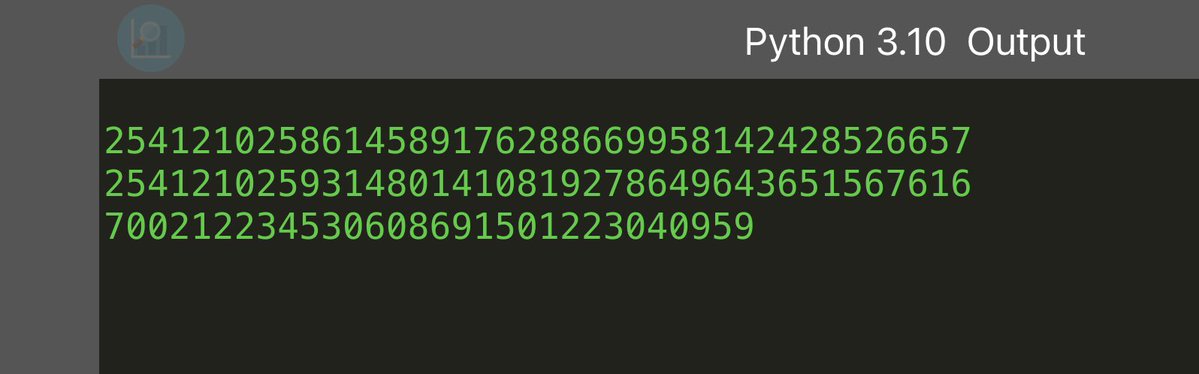
“Can you pick six digits from the illustration that add up to 21.”
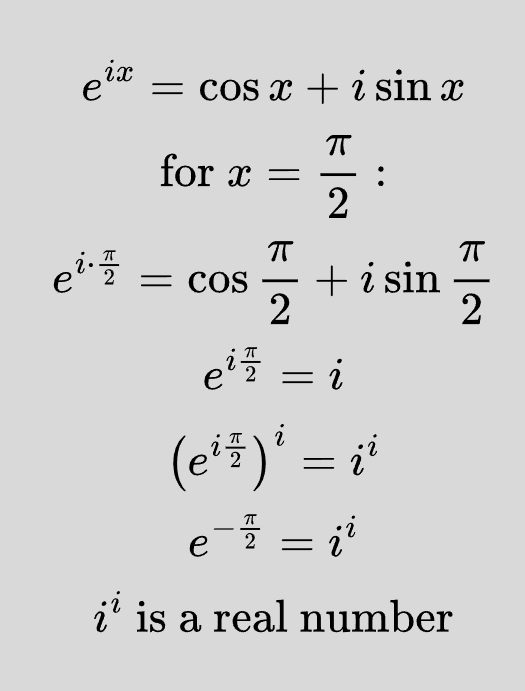
@Math_files The problem is it is not a real number it is a set of real numbers.
i^i=e^[i (π/2+2 k π)*i]
=e^[- (2k+1/2) π]
For k in Z (k=0,1,2,3,… or -1,-2,-3,..)
How a “number” takes many different real values ? It is a “super” real number.
The television show The Simpsons, in the “Treehouse of Horror” episode from the sixth season, revealed the following counterexample to Fermat’s Last Theorem:
1782¹² + 1841¹² = 1922¹²
We leave it as an exercise for you to make peace between this example and Andrew Wiles’s celebrated proof.
Source: Mathematical Apocrypha
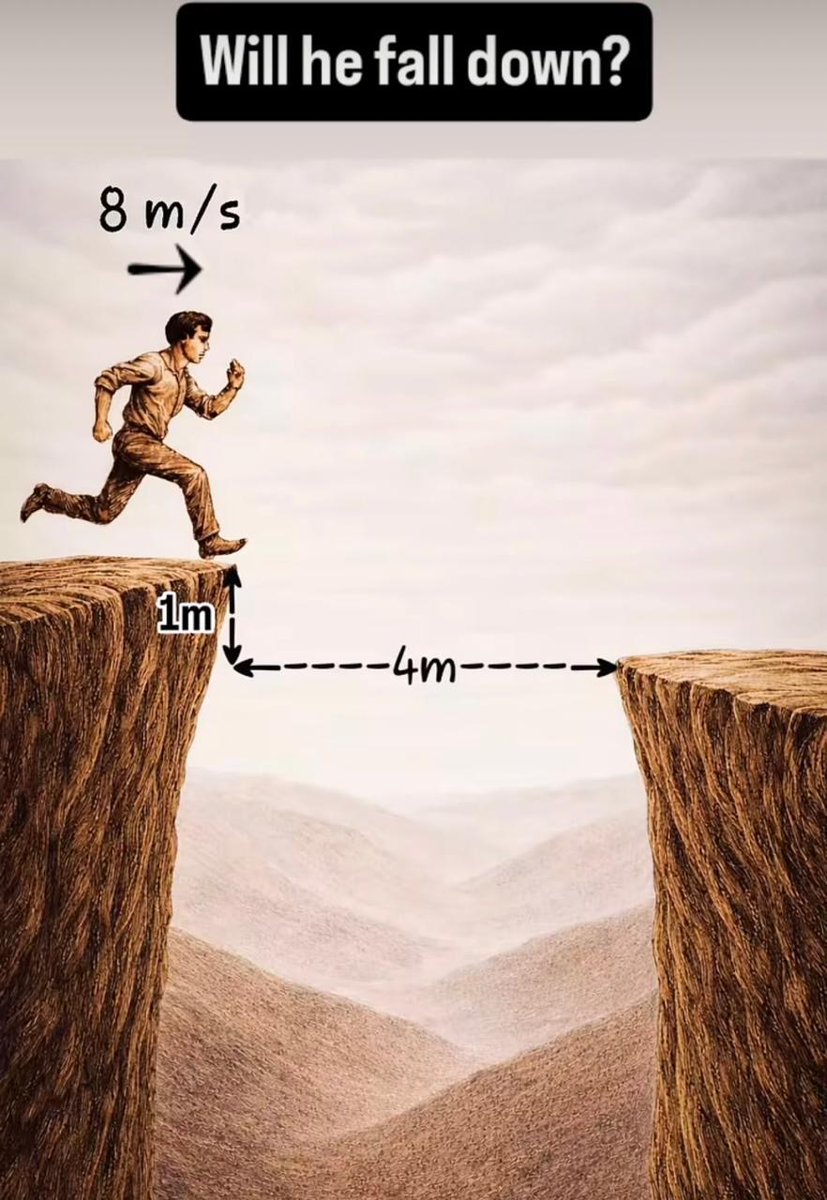
@Puzzlesonly By the time he reaches the other side his feet will be 1.226m below the original position or 0.226m bellow the right side surface, he could still survive if he uses his hands to climb up .
(Calculation: t=4/8=0.5s. h=1/2*g*t^2)
@Math_files Maybe you mean multiplies by 1.5 50% increase each day) Bcs the other option is the $1 goes to 0.
If everyday *1.5 then by the 30th day is better = 1.5^30=191,751.0592 $
@SeriesIntegral 1/2: After high-precision computation (n,m ≤ 50, 120 digits), the two proposed double sums do **not** equal the claimed combinations of π²ln2, (ln2)³ and ζ(3). The gaps are clear. Even assuming both identities, solving for ζ(3) yields ~1.18796 instead of the true 1.20206.