
KD retweetledi
KD
462 posts


KD
@ChekhovianGun
Engineer @Nvidia. Opinions are my own. I like to discuss AI, Math, Philosophy and everything in between.
Katılım Kasım 2022
3K Takip Edilen183 Takipçiler


KD retweetledi
FWIW, I think this moves up my AI timelines a bit. I think the next milestone will be "Artificial *Grothendieck* Intelligence" (AGrI): defining new general mathematical structures to solve the hardest of open problems as special cases, like the Riemann Hypothesis or P vs. NP.
What impressed me about the OpenAI planar unit-distance result is not just that it solved a hard problem, but the particular way it seems to have done so.
For decades, the expert intuition was that the best constructions should look roughly grid-like. That intuition was *not* obviously silly; it was held by extremely serious mathematicians (of the likes of Erdos!). And yet the model found a new family of constructions that defeated it, based on literature in other areas of mathematics.
This feels like one of those cases where the "vague idea" is natural, but the solution lives in a huge space of possible design choices: which symmetries to preserve, which to break, which parameters to introduce, which ugly cases to try, which seemingly-unmotivated configurations to keep exploring.
Humans tend to navigate that space with aesthetic priors. We get embarrassed by ugly constructions. We avoid paths that do not look conceptually clean early on. The model seems much more willing to "fearlessly" plough through the design space until something works.
I imagine a lot of open problems in mathematics (and theoretical computer science!) may have a similar flavor, and would not be surprised if many of them start to fall soon.
But for the "very big" problems, maybe extensive search through constructions in the vast existing literature is not enough. Maybe what is needed for those problems is closer to Grothendieck-style mathematics: inventing the right ambient language in which the original problem becomes a special case of a more general structure.
That's what I mean by Artificial Grothendieck Intelligence (AGrI). Not merely AI that proves theorems, but AI that invents the new mathematical objects in which the theorems become *inevitable*.
And why stop at one AGrI? You could imagine simulating something like the IHES school: manager agents dividing a research program into subprograms, subagents pursuing lemmas for hours or days, other agents distilling the resulting abstractions, checking them, and communicating the useful pieces back upward.
One reason Grothendieck's IHES school was so successful is that its abstractions were relatively human-compressible. Once you adopted the relative perspective, the ideas could propagate through the community.
But maybe that constraint has also been a bottleneck. Maybe many longstanding open problems, like those in number theory which Grothendieck felt was the hardest nut to crack, have solutions that are checkable in principle, but whose motivating abstractions are not human-compressible.
In fact, I would wager that many, if not all, of these longstanding, open human conjectures live in PSPACE, but PSPACE is massive! I could imagine the AGrIs of the future might easily find non-human compressible abstractions that can be checked in PSPACE, but are infeasible for any human to check manually.
Thus, the next frontier may be mathematics that is machine-discovered, machine-compressible, and machine-checkable — beautiful, in a different way to the machines, but not necessarily in the human way.
I can't wait to see what open problems get solved next. What an exciting time to be alive.
OpenAI@OpenAI
Today, we share a breakthrough on the planar unit distance problem, a famous open question first posed by Paul Erdős in 1946. For nearly 80 years, mathematicians believed the best possible solutions looked roughly like square grids. An OpenAI model has now disproved that belief, discovering an entirely new family of constructions that performs better. This marks the first time AI has autonomously solved a prominent open problem central to a field of mathematics.
English
Nice visual representation of matrix decomposition. Looking forward to the book
François Fleuret@francoisfleuret
TFW when you have 100 pages written of an unfinished Little Book of Mathematics.
English
KD retweetledi


@FailedDirector @priestlyclass What is the argument in favour of legalizing betting? What benefits does it bring to society?
English

@ChekhovianGun @priestlyclass Yes.. Betting should be legalized like they are legalized in Europe
English

Whatever the regime can't control & manipulate, they considers it as a threat
Indian Tech & Infra@IndianTechGuide
🚨 The Indian government is set to block US-based prediction market platforms, Polymarket and Kalshi.
English
KD retweetledi

That "thinking about the situation properly" IS what constitutes the game theory math
judah@joodalooped
slightly disrespectful question: is there anything in game theory math that leads to insight that you couldn't get just by thinking about the situation properly?
English
> None of this is gambling in any economically meaningful sense
Since when is putting money/bets down on fundamentally uncertain events for a quick return NOT gambling? This is a W from the Indian govt, not a L. We don't need further financialization of our economy for some theoretical Hayekian "Information generation" system. How about we don't enable further financial degeneracy and indiscipline among the youth
Frontier Indica@frontierindica
Of course. The same establishment that cannot get a tehsildar to issue a clean land title in under nine months has now decided it understands prediction markets better than the people using them, and has arrived at the only conclusion sattvic boomer ministers and risk-averse babus ever reach when confronted with anything they have not personally pre-approved: ban kar do, satta hai saar, aunty-nashnul saar, kuch toh chal raha hai saar. A prediction market is not a casino. It is the most efficient information aggregation mechanism humans have built. Thousands of people putting real money on whether RBI will cut rates, who actually wins Uttar Pradesh, whether the Iran-Israel conflict escalates, produces a real-time probability calibrated by skin in the game. Polls lie because lying is free. Analysts drift because being wrong has no cost. A market with money on the line filters signal from noise faster than any think tank, any sarkari forecasting cell, any godi anchor shouting from a Noida studio. Polymarket called the 2024 US election outcome days before mainstream pollsters caught up because the participants had money on the line and the model had no incentive to flatter anyone. Polymarket also correctly predicted that BJP had the edge in West Bengal weeks before the results were declared. This is why serious governments and central banks quietly watch them. They generate cleaner reads on inflation expectations, geopolitical risk, and policy probability than most official surveys. Businesses use them to hedge regulatory exposure. Journalists use them to fact-check their own narratives. Researchers use them to calibrate models. Citizens use them to see what informed money actually thinks instead of what TV studios want them to think. None of this is gambling in any economically meaningful sense. It is information generation, and the only reason a state would want to suppress that particular kind of information is that the resulting prices would inevitably reveal things the state prefers unsaid. This is what bishwaguru looks like in operation. Not ease of doing business, not ease of living, not viksit anything. License raj 2.0 dressed up in gazette notifications, a state willing to order ISP-level blocks for any small exercise of financial or informational freedom it did not personally license, tax, and supervise. The crypto founders are already in Dubai and Singapore. The prediction market users will route through VPNs. The signal will find a price somewhere, because that is what markets always do, except now that intelligence is no longer visible to Indian regulators, Indian researchers, or Indian citizens. We have chosen to make ourselves deaf and blind, but "proud nationalists" will call it an exercise of flexing digital sovereignty.
English
KD retweetledi

This is why we need to gate-keep science. Two pseudo-intellectuals thinking they discovered something deep, conflating
>social attention
>transformers attention
>quantum physics observer (attention)
These have nothing in common, other than the ambiguity of English language. Naked ladies on Instagram have nothing to do with a weighted average followed by softmax.
But they're both so mind-blown by their discovery. Dunning–Kruger will only get amplified by AI sycophancy.
Please call me out if you see me going beyond my own DK threshold.
English
KD retweetledi

proposing the flag of artificial superintelligence

Alvaro Lozano-Robledo@mathandcobb
Following up on the suggestion from Will Sawin, here is an illustration of the new configurations that disprove Erdos' unit distance conjecture (made with the help of ChatGPT 5.5 Thinking).
English
English

@rmm4pi8 @Noahpinion Appreciate it, but TBF my initial comment was a but harsher than I usually am on here.
English

What's the downside of AI discovering all the math that can possibly be discovered? Math doesn't exist as a jobs program for IMO gold medalists.
English
KD retweetledi


Not a computational problem, it's a knowledge problem. I believe we do have the technology to "compute" and crunch the numbers once we have them now (given the humongous increase in our computational technology over the past few decades), but getting the right numbers/data in the first place is challenge
William O’Brien@No5mallf3at
Central planning hot take: it’s not a computational problem—at least not in the conventional sense. It’s a recursion problem. People will act in accordance with conditions, so the computation has to account for reactions to its own computations, which makes a feedback loop.
English
KD retweetledi

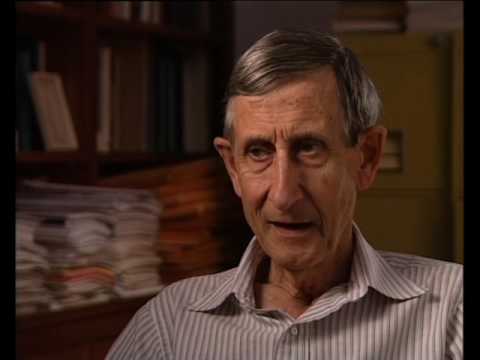
Striking statement from Freeman Dyson on the permanence of mathematics vs physics: "Essentially everything I've ever published in mathematics is there, whereas only about a quarter of what I published on physics was worth preserving."
"The beauty of mathematics, as opposed to physics, is that it's forever. I published my selected papers recently in one volume, and I found out that when you publish your selected papers most of the physics is ephemeral, that you don't want to publish stuff that was written 10 or 20 years earlier, but the mathematics is permanent. So essentially everything I've ever published in mathematics is there, whereas only about a quarter of what I published on physics was worth preserving.
youtube.com/watch?v=lHSrYc…
YouTube
English
KD retweetledi

Maybe I am simplifying a bit, but in the 1990s onwards numerical optimization was not considered an exciting area. There were many breakthroughs (say, Karmarkar, and in hindsight esp. Nesterov/Nemirovski) but not much funding. Junior faculty in the area were denied tenure. The problems and the algorithms seemed to suffice. Convex problems, tens of thousands of variables. Who needs more?
So let’s spend a minute in silence contemplating the ONE TRILLION spend (this year) devoted to efficiently solving a distributed, non-convex numerical optimization problem in ~1E12 variables. Did we ever get to spend that much in simulations and PDEs for nuclear devices? Not even close; less than $10B/yr. What about NOAA (weather prediction) ? Also lss than $10B/yr.
So this is the biggest ever application of numerical methods ever, by a mile. Also, the most consequential optimization problem, ever.
Many departments withering, or closing. It turns out we were just not looking far enough. I guess there is a lesson about research in this.
Jessica Lessin@Jessicalessin
Good lord. Half-ish of the cloud backlog at Microsoft, Oracle, Google and Amazon is OpenAI and Anthropic????
English