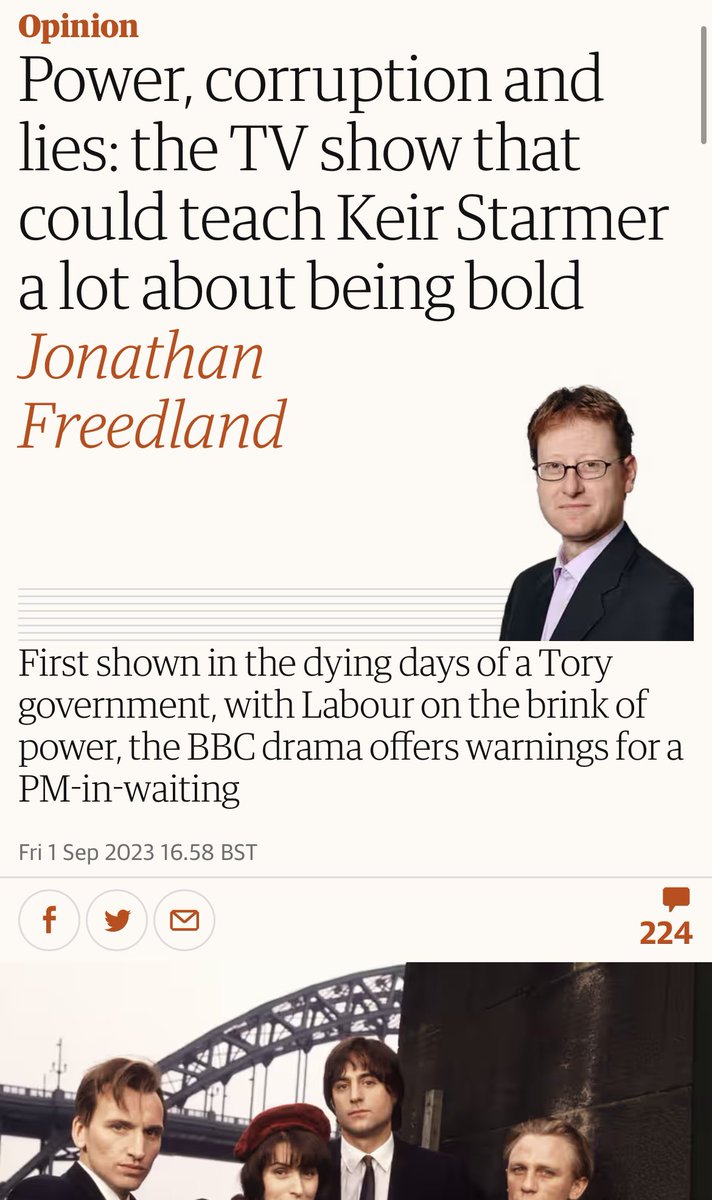
1997 nostalgia from people who have absolutely nothing more than that to offer. Why not watch the box set of This Life instead for exactly the same effect.
As with much else about this stuff, it feels like things might have gone less disastrously if someone had taken Sir Keir aside and explained the actual situation was somewhat less clear cut and murkier than they’d been telling the press it was. theguardian.com/politics/2023/…
12 Reasons Why Cities Need More Trees:
1. Temperature Control
One large tree is equivalent to 10 air conditioning units, and the shade they provide can reduce street temperature by more than 30%.
2. Noise Reduction
Trees can reduce loudness by up to 50%. In urban areas filled with the sound of cars, construction, sirens, aeroplanes, and music, trees are essentially the best way to block noise and keep cities — along with the homes and workplaces in them — quieter.
3. Air Purity
Trees remove an astonishing amount of harmful pollutants and toxins from the air. In urban areas air quality is often disastrously bad — with severe consequences for our health. Trees make the air we breathe much cleaner.
4. Oxygen
And, while absorbing all those pollutants, trees also put more oxygen back into the urban environment. Oxygen levels are significantly lower in cities compared to the countryside; trees help to solve that problem.
5. Water Management
Trees do more than just shelter us and our buildings from rain — which is, in fact, extremely important. They also absorb huge quantities of water, reduce run-off, neutralise the severity of flooding, and make flooding more unlikely altogether. Not to forget that their roots absorb pollutants and prevent them from feeding back into a city's water supply.
6. Psychological Health
Studies have proven what we instinctively know to be true: that human beings are significantly happier when surrounded by nature rather than sterile urban environments. Our emotions, behaviour, and thoughts are shaped by the places we spend time — and trees have a profoundly positive effect on our psychology. The consequential benefits of being happier and more peaceful — as individuals and as a society — are immense.
7. Physical Health
Beyond all the other ways in which trees improve air quality and the urban environment, much to the benefit of our health, they also encourage people to go outside. Cycling, running, and walking are all more common in urban areas with plenty of trees. A knock-on effect of people spending more time outdoors is also social integration and stronger communities.
8. Privacy
A simple point, but not inconsequential, is that trees provide privacy.
9. Economics
The total economic benefit of urban trees is hard to calculate. There are costs, of course, including the repair of infrastructure damaged by roots and maintaining the trees themselves. But the total economic benefit — a consequence of everything else in this list and more — far outweighs the expenditure. Trees make cities wealthier.
10. Wildlife
Trees are miniature cities all of their own, serving as a habitat for hundreds of different species, including birds and mammals and insects.
11. Light Pollution
Trees don't only block the light shining down, therefore keeping us and our cities cooler — they also disrupt light shining up, from street lighting, cars, houses, and billboards. Skies are clearer in cities with more trees.
12. Aesthetics
And, finally, trees are beautiful. They break up the potential monotony of urban environments — the sharp geometry, the greyscale roads and buildings, the endless rows of cars — with their trunks, boughs, canopies, and flowers.
Just think: the gold and red of falling leaves in autumn, the white and pink blossom of spring, the vast green canopies of summer, and the branches lined with hoar-frost in winter. Every single tree is a myriad of intricacy and texture, of colour and scent, of dappled light on the pavement, mottled bark, knotted roots, of clustered leaves and delicate petals and stern boughs.
Few streets would not be improved by the kaleidoscopic aesthetic delights of a tree, not to mention the many different species of tree, all over the world, whether willow, oak, lime, cherry, aspen, maple, birch, horse chestnut, dogwood, hornbeam, ash, sycamore... the list goes on.
There are some drawbacks to urban trees, most of them context-specific, and they are not — of course — universally appropriate. But it seems fair to say that many cities would benefit from at least a few more trees here and there.
THE FORKS IN THE ROAD
In this video from his podcast, @AMercouris provides an excellent historical summary of the choices that the U.S. faced in the lead-up to the Ukraine War that would have averted the current disaster:
In 2004, the US could have stayed out of Ukrainian affairs altogether, but instead it chose to support a color revolution.
In 2008, the US could have listened to then-ambassador, now-CIA director Bill Burns’ advice not to expand NATO to Ukraine because it would cross the brightest of all redlines for the entire Russian leadership. But instead the US issued the Bucharest declaration that Ukraine would join NATO.
In 2013, the US and its European allies could have compromised on the EU accession agreement to address Russian concerns. But instead they maintained that they would not change even a punctuation mark.
In 2014, the US could have supported a peaceful transition of power in Ukraine. But instead it backed the Maidan coup against a democratically-elected government.
In 2015-2022, the US could have supported peaceful attempts, via the Minsk agreements, to resolve the protests by ethnic Russians that broke out in reaction to the coup. But instead it supported Kiev’s attempts to violently suppress and shell the Donbas.
In 2021-2022, the US could have negotiated over the draft Russian agreements which principally sought a written guarantee that Ukraine would not join NATO. But instead it insisted that it would never compromise over that policy.
In 2022, after the war broke out, the US could have supported the peace process in Belarus and Istanbul, but instead it sabotaged those agreements.
And now, in the wake of a failing counteroffensive, the US could seek to enter into serious negotiations with the Russians, but instead it’s demanding that the slaughter continue.
At every fork in the road, the US foreign policy elite have chosen the path of confrontation and conflict as opposed to compromise and peace.
James O'Brien going big on buses.
The same James O'Brien who ridiculed former Labour Leader Jeremy Corbyn for raising the destruction of our bus network at PMQs.
Grifting faux Lefties have no self-awareness and no memory. #LBC
@BriefcaseMike Do you enjoy sounding like a right-winger by calling @mrjamesob a ‘faux Leftie?’
If you’re really a Socialist why don’t you aim your criticism at the vile right-wing politicians who are destroying the country?
Between a rock & a hard place.
Jailing may martyr him in the eyes of his supporters.
Letting him roam free until his trial enables him to continue to wreak havoc.
Will Donald Trump be jailed before his trial? | Robert Reich theguardian.com/commentisfree/…
In possibly the least surprising development you can imagine, it turns out that the wacky Stop Brexit funsters of FBPE are now also crazed irrational extremists whose views can be safely disregarded. newstatesman.com/comment/2023/0…
Donald Trump, Imran Khan, Alexei Navalny. A mania for those in power to lock up their opponent.
Almost nobody condemns all of these.
The willingness to applaud anti-democratic action by your "side" is the demise of the notion of democratic tolerance and resolution of difference.
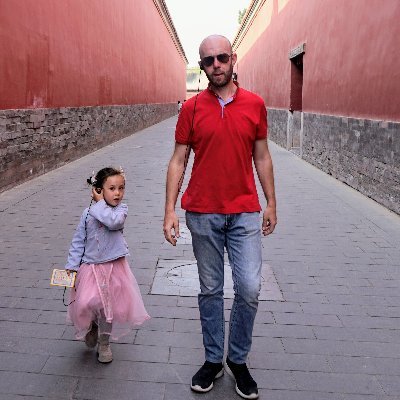
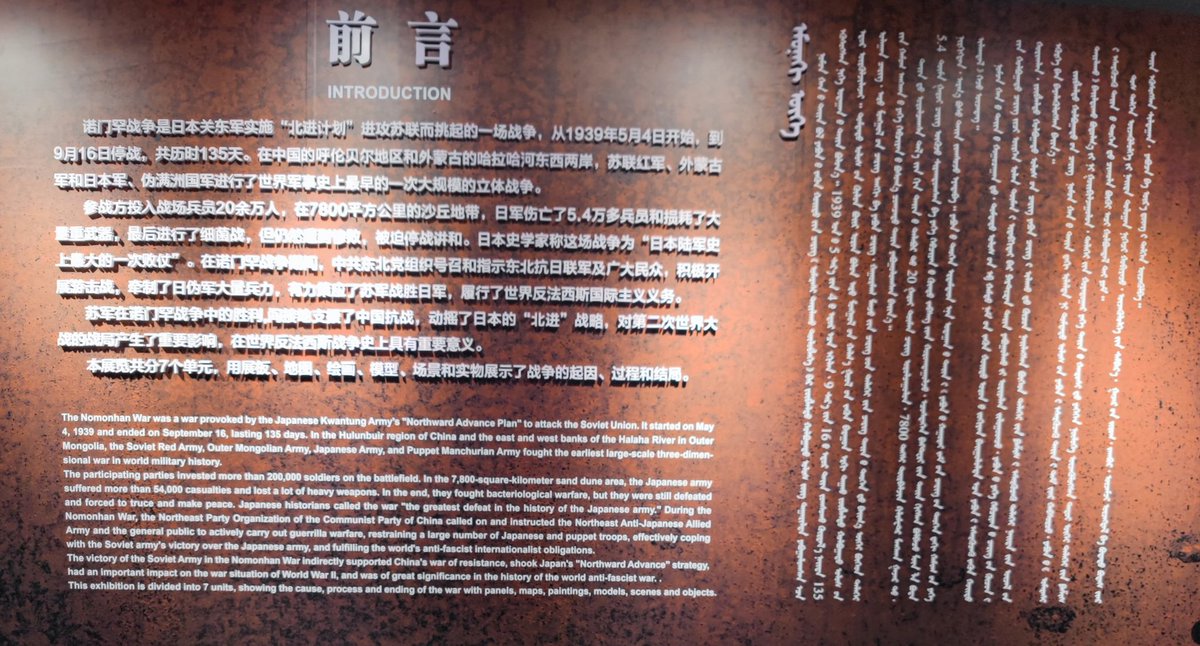
We spending the night in the most important WW2 historical site you've never heard of: Nomonhan (also known as the site of the battles of Khalkhin Gol), where the Soviet Union defeated Japan in 1939, which changed the course of the war.
Japan and Nazi Germany may have won WW2 were it not for the battles that happened right here during 135 days. Incredibly this episode of the war is virtually untaught in the West, maybe because it didn't involve the West (which shows how self-centered our version of history is).
During WW2 Northeast of China had been invaded and annexed by Japan, transformed into a puppet state called Manchukuo. This place is in the extreme West of this former puppet state (which is now back to being Northeast China), on the border with Mongolia and the former Soviet Union (now the Russian border).
At the time, 1939, Japan's basic strategy for the war was "Northward Advance" (Hokushin-ron), i.e. seizing Siberia for its resources as far as Lake Baikal.
The USSR obviously begged to differ and Stalin sent General Zhukov, one of his best men (the future Marshal of the Soviet Union) on site to fight the Japanese back.
Long story short, the battles that ensued - with 200,000 soldiers on the battlefield - lastest 135 days and were the earliest large-scale 3-dimensional warfare in military history. It ended in a humiliating Japanese defeat which some Japanese historians call "the greatest defeat in the history of the Japanese army", with 54,000 casualties.
The most important consequence of the battles that were fought here is that the Japanese completely changed their strategy from "Northward Advance" to "Southward Advance", favoring seizing the resources of Southeast Asia instead of those of Siberia.
Masanobu Tsuji, the Japanese colonel most instrumental in these battles became "the most determined single protagonist in favor of war with the United States" and one of the strongest proponents of the attack on Pearl Harbor inside the Japanese army (according to postwar testimonies), having been traumatized by his experience of fighting the Soviet Union. The US was of course the biggest power the Japanese would have to confront by pursuing the "Southward Advance" strategy since only the US Pacific Fleet stood in the way of seizing the oil-rich Dutch East Indie.
In fact the Nomonhan battles traumatized the Japanese so much that they didn't dare fight the Soviet Union again for the remainder of WW2. Even when their ally Nazi Germany opened the Eastern front the Japanese army adopted a resolution "not to intervene in German Soviet war for the time being", leaving Hitler to fight the Soviet Union on his own, which would ultimately prove to be his demise.
So it's no exaggeration to say that had the battles here not been fought or had the Japanese won, WW2 would have most likely turned out dramatically different. Pearl Harbor wouldn't have happened, and Japan would have likely helped Nazi Germany fight the Soviet Union by opening a front to the East.
Nomonhan may in fact have been the most consequential battles of WW2!
#BlueMAGA is a made up Twitter term to try and rile up Biden supporting Democrats. It doesn't actually exist and the people using it are trolls. Don't bother engaging. It's not worth the time nor the oxygen.
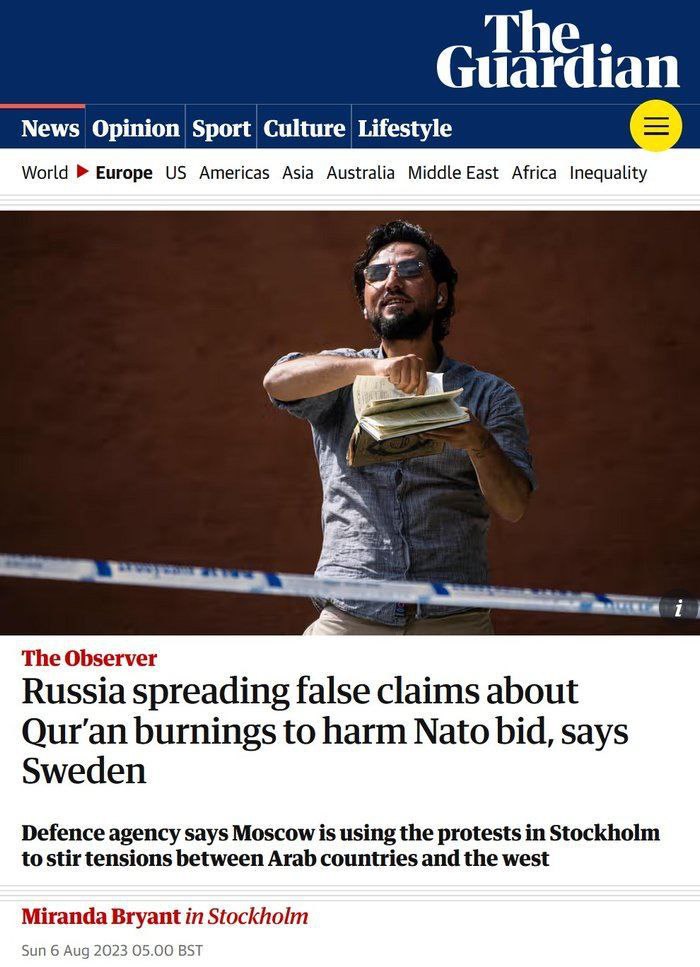
🤦♂ The Guardian: Russia uses Qoran burning to prevent Sweden from joining NATO
It turns out that the Swedish authorities are not to blame for the public burning of the Qoran, but Russia, which "puts Sweden in a bad light in front of the Arab world".
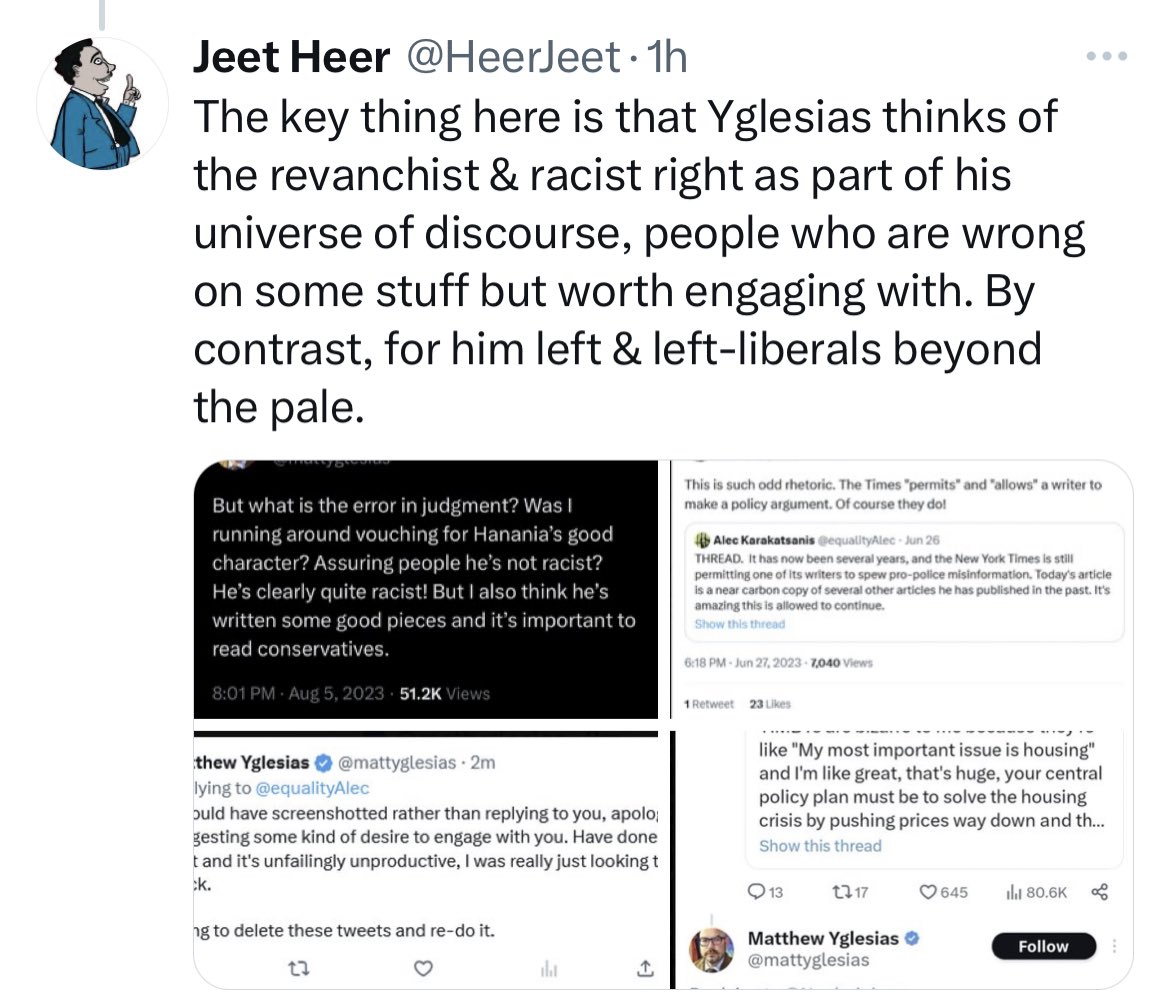
@flying_rodent Matt went to the same exclusive school Jeffrey Epstein worked at and while at Harvard supported the Iraq war because it would irritate his liberal peers. A true font of smug superiority ignorant opinions. No wonder he’s such a hit with Democrat types.
This is standard in the UK, where overt fascists are regular columnists, deliberately wrecking services the public rely on is defended to the death and sending Them to The Camps is well within the window of acceptable politics.