

Choolwe Mpondamasaka
6.7K posts
@ke_le_brimbor @ssishuwa @ukusefya When he notices a difference in opinion, he assumes you haven't read his article which he believes is the basis of truth... The only historian in Zambia 🤗🙄
English
Sir, I have 10yrs mining experience. Articles won’t solve Zambia’s problems. Real solutions we see working in other countries will. We need not invent the wheel here.
Mining corporations are business people. Their primary goal is to make money. If it takes them befriending a politician, they will do so. Remove HH put somebody else, they’ll still find a way to make their money. Ours is to make sure if those guys make 50% profit, we also make 50%. That can only happen if you’re shareholder in their listed corporations. Have a Sovereign Wealth Fund in place to achieve that.
English

Zambia can easily pay for its health budget – and finance its development – if the government implements effective policies, especially in the crucial mining sector where multinational corporations have captured the ruling elite, and stops corruption that results in illicit financial flows of over $3bn annually.
AIDS has been well known and understood in Zambia for at least 30 years. Why have successive governments not used that time to prepare their own response to the most serious health challenge facing the country? It is totally unacceptable to keep blaming those helping Zambia for failure to keep helping Zambia!
Please stop blaming Donald Trump and Elon Musk for the sheer complacency of Zambia's government to assume someone else would pay for the health budget indefinitely.
More details here: diggers.news/local/2025/07/…
Anne Applebaum@anneapplebaum
Trump and Elon Musk destroyed most of the global H.I.V. program that saved hundreds of thousands of lives in Zambia. Now the US is threatening to cut remaining support, unless Zambia gives access to the country’s mineral resources. nytimes.com/2026/04/25/hea…
English

@NawaNjekwa @Mike42726245 It is the silence, especially from both party and state house media
English

@Mike42726245 I don't think Bally is interested in being a lifelong president. If he goes that way then he will become extremely unpopular in his third term presumed attempt. But seriously why are we even making this a topic because he has not indicated otherwise. 🤷
English

Modern day dictators don’t need to use guns,they use the law instead.
Sishuwa Sishuwa@ssishuwa
What, or who, will stop Hichilema? Unless nature takes him, Zambia should prepare for a life president! By Sishuwa Sishuwa Earlier this week, a video clip of an interview featuring Cosmas Chileshe, a member of the ruling United Party for National Development (UPND), went viral after he proposed the removal of term limits so that President Hakainde Hichilema can rule for as long as possible. Appearing on a private national television station, Chileshe argued that the current Constitution, which limits a president to five-year terms in office, is undemocratic: “The country should remove the term limit of two-five-year terms but keep the five-year cycle of elections so that the people are the ones to decide if they want the President to continue or not. Unlike what Zimbabwe is proposing, which is to extend the 5-year term to 7 years, Zambia should simply remove the term limit. One of the reasons we don’t develop is because we change leadership too much and other countries are laughing at us for that. Why should a President who is working very well for the people be removed simply because he has served 2 terms?”, Chileshe asked. Many people have condemned Chileshe’s proposal as outrageous and unacceptable, warning that it could lead to a presidency in perpetuity. This condemnation is necessary but not sufficient. Zambians also need to understand why it is Chileshe who is making such comments. When I was growing up in the village in Western Zambia, I learnt that among dogs, there is one whose role is only to bark at the passer-by or intruder and another that bites. Cosmas is the barking dog; the hot air balloon. Contrary to what some of his critics have argued, Chileshe's call for the elimination of term limits was neither random nor a result of carelessness. It had a specific purpose. In other words, there is “methodical” thinking behind what appears to be an isolated position. Broadly speaking, there are three reasons that explain why Chileshe was carefully chosen as the most suitable individual to kickstart the “no term limits” discussion. The first is that Chileshe is just an ordinary party member, not an official. Sending him to a major national platform to promote the idea of no term limits creates room for the ruling party to distance itself from his views if this becomes necessary. The second reason is that Chileshe is an ex-member of the former ruling party, the Patriotic Front (PF), who now serves as part of the UPND presidential media team. This identity matters because it allows the ruling party, if needs be, to claim that the proposal came not from the UPND, but from a former PF member who is not yet familiar with the political culture of his new political home. In the short term, Chileshe’s campaign for no term limits allows him to perform loyalty by showing that he is so much in support of the president that he would rather Hichilema rules forever. In the long term, Chileshe’s campaign benefits Hichilema. By injecting, in the public mind, the thought that Hichilema must rule without term limits, Chileshe has laid the ground for the entry of more voices on a subject that is likely to dominate political life after the August election: succession politics. The fact that his proposal has received wider public traction is an achievement for him and for his patrons. Not long ago, Attorney General Mulilo Kabesha said Zambians want constitutional amendments after the election. mastmediazm.com/2026/03/zambia… Chileshe is one of the Zambians that Kabesha had in mind and has revealed one of the amendments that are coming. In proposing the idea now, Chileshe is allowing Hichilema to test the public’s reaction. Should there be any public backlash to the proposal, Hichilema can easily distance himself from Chileshe’s views and even discard him. If, as expected, there is no major public outrage, it won’t be long before the next movement on the issue happens. There is a timetable to this madness, to these things! The third reason is Chileshe is a Bemba and his ethnic identity matters under Hichilema’s politics. A careful examination of how Hichilema has operated since 2021 shows that when it comes to doing wrong or unpopular things, the president usually fronts Bembas or Easterners from the as the “useful idiots”. Think of Miles Sampa (see the article on the link below, for an example), Robert Chabinga, Levy Ngoma, Andrew Lubusha, Elias Nkandu, and several others who hail from the Chambeshi-Luangwa region – that is the region covering the four provinces that share the Chambeshi and Luangwa rivers: Eastern and the Bemba-speaking provinces of Muchinga, Luapula and Northern. africanarguments.org/2023/12/zambia… In avoiding the use of the usual suspects from the Zambezi region – that is parts of Central and the three provinces that share the Zambezi River: Northwestern, Southern and Western – Hichilema is showing that he has learnt lessons from the 2006 experience that followed the death of the party’s founding president Anderson Mazoka. At the time, the Tonga-speaking Hichilema, who was in the private sector but had been a card-carrying member of the UPND, relied on the Zambezi supremacists such as Ackson Sejani, Rex Natala, and Syacheye Madyenkuku to promote his political interests that then rested on the idea that “only a Tonga must replace Mazoka”. To read further on how succession politics played out in 2006, see the article on the link below. doi.org/10.1080/000839…\ Although Hichilema succeeded in securing the UPND presidency, the ethnic campaign that marred his election adversely damaged the UPND’s standing and explains why he was to spend over 15 years in opposition before managing to rebuild the party’s appeal beyond Tongas. Nearly two decades later, the president and his party have not forgotten the lesson of 2006 and are this time relying on useful idiots from the Chambeshi-Luangwa region to promote his political interests that rest on the idea that presidential terms should be removed, or that the election of the president should be done by parliament rather than the voters. The latter idea rests on the soon-to-be completed reconfiguration of the National Assembly, thanks to delimitation, that will permanently leave the Zambezi region with even more seats in parliament than the Chambeshi-Luangwa region. If there is another thing that Hichilema learnt from the 2006 experience, it is that it is not easy to disown members of his own ethnic group. When many people condemned the Zambezi supremacists who were pushing the narrative that “only a Tonga must succeed Mazoka”, Hichilema refused to condemn or distance himself from the supremacists because they were members of his ethnic group. This time around, he can easily disown Chileshe – only if there is public backlash to the proposal of “no term limits” – since he belongs to easily dispensable members of the Chambishi-Luangwa region and was until recently a supporter of the former ruling party whose members the president embraces or discards when convenient. Hichilema’s failure to disown the foul conduct of Zambezi supremacists has also been demonstrated in his attitude towards the broadly expanded offence of hate speech. When those on the receiving end of what is considered hate speech are individuals who hail from the Chambeshi-Luangwa region, with the perpetrators coming from the Zambezi region, Hichilema has not been bothered, and no one has been arrested and prosecuted. When those on the receiving end of what is considered hate speech are individuals who hail from the Zambezi region, with the perpetrators coming from the Chambeshi-Luangwa region, Hichilema has been quick to act, and many people have been prosecuted. This experience is also true for the offence of seditious practices, with Zambians from the Chambeshi-Luangwa region accounting for nearly all the arrests and prosecutions so far under his presidency. The point is this: succession politics is on, and Hichilema is preparing his successor, namely, himself. So serious about his bid for life presidency is Hichilema that even those within the ruling party whom he deems as potential stumbling blocks to the realisation of his long-term political interests have been frozen out of their positions in both Cabinet and in the UPND. Among the most high-profile examples here are former Minister of Local Government Gary Nkombo, who is also Mazabuka Central MP, and Elijah Muchima, the Ikeleng’i constituency lawmaker, who until recently was Minister of Health. Both are seen as capable of frustrating Hichilema’s bid for life presidency and will consequently not be readopted for parliamentary election. The official justification for sidelining them is that they voted against Bill 7, but the real reason is succession politics: Hichilema has long considered Nkombo a major threat to his bid for absolute power, which explains why he sacked him from cabinet long before the vote on the Bill. This is the unfolding wider context within which Chileshe’s views, and his role, should be understood. Chileshe is, figuratively speaking, John the Baptist who is out to prepare the ground for the political messiah! As I wrote in the article below on 7 April, Hichilema is out to secure the dominance of the state by the Zambezi region for a very long, long time: x.com/ssishuwa/statu… As I write this, I have just read that Hichilema has appointed and promoted, at one go, 40 judges to various superior courts! 40 judges! This is, from all points of view, an abuse of presidential power that is aimed at changing the complexion of the judiciary. Hichilema knows that he will get away with his move, just as he got away with it when he previously appointed 20 new judges at once. This time, he decided to double the number. A close examination of the list of the newly appointed and promoted judges is even more damming and shows the intensifying implementation of what appears to be his ethnic-regional vision for the capture of the State. When Hichilema last appointed the 20 judges, 13 of them came from the Zambezi region. This time, 17 of the 26 newly appointed High Court judges are from the Zambezi region. Four out of seven Court of Appeal judges are from the Zambezi region. Two of the three new judges to the Constitutional Court are from the Zambezi. One of Hichilema's personal lawyers, an ex-captain in the Zambia Air Force named Butler Sitali, also from the Zambezi region, has been airlifted from the private sector directly to the Supreme Court, overlooking experienced and serving judges of the superior courts. This suggests that Hichilema may be preparing his personal lawyer to take over as either Chief Justice when the incumbent Mumba Malila retires in four years’ time or as Deputy Chief Justice, should the president decide to promote the current holder of the post, another of Hichilema’s former lawyers, be replace Malila. Hichilema has further promoted executive-friendly judges who have been messing up things, especially for the opposition, in the High Court to the Court of Appeal and the Constitutional Court. He has also promoted several rogue magistrates, who have been convicting members of the opposition on slight and politically motivated charges, to the High Court. Under Hichilema, politically sensitive cases in which he has an interest have always been allocated to only judges from the Zambezi region, regardless of the level of the court. In promoting magistrates and judges who are from the region and generally seen as pro-executive, the president has not only packed the courts at all levels but also sent a message to other magistrates and judges that it is a crime to be professional; what secures one’s promotion is doing the bidding of the regime, not integrity, competence, fairness, or quality judgements. And coming four weeks before the dissolution of parliament, both the timing and purpose of these judicial appointments and promotions are not accidental. The timing is strategic for Hichilema because apart from having a compromised parliament, he knows that MPs will not have enough time to thoroughly scrutinise his 40+ appointees before the House stands dissolved on 13 May. As a result, the nominees are all likely going to be easily ratified. Already, MPs are too worried about their own adoptions and survival in the coming elections to care much about these new judges and commissioners. In terms of purpose, Hichilema is preparing for the forthcoming general election in August when courts will play a central role in determining who gets to stand against him and the winner. Before ethe election, courts will have a final say during nominations. Last year, Hichilema changed the constitutional rules governing nominations to make it easier to exclude rival candidates through court-engineered disqualification of duly nominated candidates. Before the amendment, Zambia’s constitution stated that: “Where … a court disqualifies a candidate for corruption or malpractice, after the close of nominations and before the election date, the Electoral Commission shall cancel the election and require the filing of fresh nominations by eligible candidates and elections shall be held within thirty days of the filing of the fresh nominations.” Hichilema deleted this clause and replaced it with the following: “Where a candidate has been disqualified by a court, after close of nominations, the candidate shall not be eligible to contest the elections, and the election shall proceed to be held on the date prescribed for holding the election.” The consequence of this change is twofold. The first is that unlike in the past where validly nominated candidates could only be disqualified for reasons of either corruption or malpractice, judges now have been given the sole and unregulated discretion to determine the grounds for disqualifying any candidate from running for public office. Given the many pro-executive judges now on the bench, any strong opposition candidate can easily be disqualified for any reason the judge deems fit, making it possible for Hichilema to run unopposed or with weaker candidates. The second is that once disqualified, the affected political party will not be given an opportunity to present an alternative candidate for election, as the poll will go ahead. To illustrate: if the opposition were to find and nominate a strong unity presidential candidate, the Hichilema-appointed judges on the ConCourt may disqualify such a candidate for whatever reason (s) they can dream of, and Hichilema will be re-elected unopposed or after defeating relatively weaker candidates. Courts will also play an important role after the election. For instance, of the 11 judges on the Constitutional Court, seven have been appointed by Hichilema since 2023 while one has been promoted by him. The president, who fired three of the ConCourt’s judges who had been appointed by his predecessor and previously ruled against him, has now totally reconstituted the very court that will hear any presidential election petition. Of the 11, six are from the Zambezi region, and five of them are Hichilema’s appointees. This is the reconstituted Constitutional Court that will hear any petition against him. Similarly, the High Court will hear all parliamentary election petitions. With 26 new High Court judges, alongside the crop that he had appointed earlier, Hichilema has reconstituted the High Court in his party’s image. Although these appointments are subject to parliamentary ratification, Hichilema knows that all his nominees will be approved because of the supine character of the current National Assembly. After all, most MPs in parliament have sold out to the executive, as they showed during the vote on the deplorable Bill 7. To strengthen his hold on the Electoral Commission of Zambia, Hichilema also announced appointments to the body. First, the president appointed former UPND aspiring candidate for Luanshya constituency, Zevyanji Sinkala, as a commissioner. Second, he promoted another commissioner from the Zambezi region to become the deputy chairperson. This means four of the five commissioners on the electoral management body are from the Zambezi region, including the chairperson and deputy chairperson. The only exception is a card-carrying member of the ruling party who has been redeployed to further secure the UPND’s interests on the electoral commission. If a sitting president can both rig an election and control the Constitutional Court, it is hard to see how he or she can ever be voted out of office. In recent days, Hichilema, perhaps intent on hoodwinking international actors, has been going round claiming that Zambia will hold free, fair, and credible elections. Based on his actions so far, the forthcoming elections are likely to be anything but free, fair, and credible. Instead of convincing voters on why he deserves another term, Hichilema has been very deliberate and methodical in the way he has dismantled alternative sources of power. Over the course of the last five years, the president has employed several legal mechanisms to enhance executive power and undermine the integrity of the forthcoming poll. In addition to the above appointment of judges using a nontransparent criterion, Hichilema has used: · the registrar of societies to prevent the registration of opposition parties deemed as likely threats to his re-election, with John Sangwa's party serving as the latest victim; · the police to block all public meetings called by the opposition outside by-elections even as he himself continues to hold rallies freely; · the courts and Robert Chabinga to prolong divisions in the main opposition party and stifle the other parties; · the much changed and compromised electoral commission to disadvantage his main rivals; and · the strategy of co-optation to appoint critical voices to public bodies and, in the process, weaken civil society. I have examined many of these points in this Mail & Guardian article, published in September last year: mg.co.za/thought-leader… Having sapped any semblance of remaining professionalism in formal institutions such as the judiciary, electoral commission, and the police, Hichilema feels emboldened. Herein lies the real danger. Once public trust in these and other institutions is totally eroded, opposition to his leadership may find expression in undemocratic means or informal outlets. Already, growing levels of frustration with the government’s failure to address the escalating cost-of-living crisis have left many areas, especially in towns and cities, teetering on the brink of social unrest. All that it may take to torch this simmering discontent – and make what happened in Tanzania look like a picnic – is a disputed election. Or even the electoral exclusion of an opposition leader that many people see as the only real alternative. Not even Hichilema may survive the potential consequences of what he is, in effect, brewing. Who, or what, will stop Hichilema? For there seems to be an increasing probability that if he is not stopped, and unless nature takes him, Zambians will do well to start preparing for a wamuyaya (life time) president. Should he manage to steal the next election and then move to successfully either remove term limits or abolish the presidential vote, Hichilema, who is only 63, may even attempt to bend nature to his will for at least 20 years.
English
Would be nice to see a dismissal of this by State house media and the UPND. Political players must realise that we had powerful parties in this country such as UNIP & MMD. Term limit extensions are never tolerated. Chiluba tried, but learnt the hard way.
Sishuwa Sishuwa@ssishuwa
What, or who, will stop Hichilema? Unless nature takes him, Zambia should prepare for a life president! By Sishuwa Sishuwa Earlier this week, a video clip of an interview featuring Cosmas Chileshe, a member of the ruling United Party for National Development (UPND), went viral after he proposed the removal of term limits so that President Hakainde Hichilema can rule for as long as possible. Appearing on a private national television station, Chileshe argued that the current Constitution, which limits a president to five-year terms in office, is undemocratic: “The country should remove the term limit of two-five-year terms but keep the five-year cycle of elections so that the people are the ones to decide if they want the President to continue or not. Unlike what Zimbabwe is proposing, which is to extend the 5-year term to 7 years, Zambia should simply remove the term limit. One of the reasons we don’t develop is because we change leadership too much and other countries are laughing at us for that. Why should a President who is working very well for the people be removed simply because he has served 2 terms?”, Chileshe asked. Many people have condemned Chileshe’s proposal as outrageous and unacceptable, warning that it could lead to a presidency in perpetuity. This condemnation is necessary but not sufficient. Zambians also need to understand why it is Chileshe who is making such comments. When I was growing up in the village in Western Zambia, I learnt that among dogs, there is one whose role is only to bark at the passer-by or intruder and another that bites. Cosmas is the barking dog; the hot air balloon. Contrary to what some of his critics have argued, Chileshe's call for the elimination of term limits was neither random nor a result of carelessness. It had a specific purpose. In other words, there is “methodical” thinking behind what appears to be an isolated position. Broadly speaking, there are three reasons that explain why Chileshe was carefully chosen as the most suitable individual to kickstart the “no term limits” discussion. The first is that Chileshe is just an ordinary party member, not an official. Sending him to a major national platform to promote the idea of no term limits creates room for the ruling party to distance itself from his views if this becomes necessary. The second reason is that Chileshe is an ex-member of the former ruling party, the Patriotic Front (PF), who now serves as part of the UPND presidential media team. This identity matters because it allows the ruling party, if needs be, to claim that the proposal came not from the UPND, but from a former PF member who is not yet familiar with the political culture of his new political home. In the short term, Chileshe’s campaign for no term limits allows him to perform loyalty by showing that he is so much in support of the president that he would rather Hichilema rules forever. In the long term, Chileshe’s campaign benefits Hichilema. By injecting, in the public mind, the thought that Hichilema must rule without term limits, Chileshe has laid the ground for the entry of more voices on a subject that is likely to dominate political life after the August election: succession politics. The fact that his proposal has received wider public traction is an achievement for him and for his patrons. Not long ago, Attorney General Mulilo Kabesha said Zambians want constitutional amendments after the election. mastmediazm.com/2026/03/zambia… Chileshe is one of the Zambians that Kabesha had in mind and has revealed one of the amendments that are coming. In proposing the idea now, Chileshe is allowing Hichilema to test the public’s reaction. Should there be any public backlash to the proposal, Hichilema can easily distance himself from Chileshe’s views and even discard him. If, as expected, there is no major public outrage, it won’t be long before the next movement on the issue happens. There is a timetable to this madness, to these things! The third reason is Chileshe is a Bemba and his ethnic identity matters under Hichilema’s politics. A careful examination of how Hichilema has operated since 2021 shows that when it comes to doing wrong or unpopular things, the president usually fronts Bembas or Easterners from the as the “useful idiots”. Think of Miles Sampa (see the article on the link below, for an example), Robert Chabinga, Levy Ngoma, Andrew Lubusha, Elias Nkandu, and several others who hail from the Chambeshi-Luangwa region – that is the region covering the four provinces that share the Chambeshi and Luangwa rivers: Eastern and the Bemba-speaking provinces of Muchinga, Luapula and Northern. africanarguments.org/2023/12/zambia… In avoiding the use of the usual suspects from the Zambezi region – that is parts of Central and the three provinces that share the Zambezi River: Northwestern, Southern and Western – Hichilema is showing that he has learnt lessons from the 2006 experience that followed the death of the party’s founding president Anderson Mazoka. At the time, the Tonga-speaking Hichilema, who was in the private sector but had been a card-carrying member of the UPND, relied on the Zambezi supremacists such as Ackson Sejani, Rex Natala, and Syacheye Madyenkuku to promote his political interests that then rested on the idea that “only a Tonga must replace Mazoka”. To read further on how succession politics played out in 2006, see the article on the link below. doi.org/10.1080/000839…\ Although Hichilema succeeded in securing the UPND presidency, the ethnic campaign that marred his election adversely damaged the UPND’s standing and explains why he was to spend over 15 years in opposition before managing to rebuild the party’s appeal beyond Tongas. Nearly two decades later, the president and his party have not forgotten the lesson of 2006 and are this time relying on useful idiots from the Chambeshi-Luangwa region to promote his political interests that rest on the idea that presidential terms should be removed, or that the election of the president should be done by parliament rather than the voters. The latter idea rests on the soon-to-be completed reconfiguration of the National Assembly, thanks to delimitation, that will permanently leave the Zambezi region with even more seats in parliament than the Chambeshi-Luangwa region. If there is another thing that Hichilema learnt from the 2006 experience, it is that it is not easy to disown members of his own ethnic group. When many people condemned the Zambezi supremacists who were pushing the narrative that “only a Tonga must succeed Mazoka”, Hichilema refused to condemn or distance himself from the supremacists because they were members of his ethnic group. This time around, he can easily disown Chileshe – only if there is public backlash to the proposal of “no term limits” – since he belongs to easily dispensable members of the Chambishi-Luangwa region and was until recently a supporter of the former ruling party whose members the president embraces or discards when convenient. Hichilema’s failure to disown the foul conduct of Zambezi supremacists has also been demonstrated in his attitude towards the broadly expanded offence of hate speech. When those on the receiving end of what is considered hate speech are individuals who hail from the Chambeshi-Luangwa region, with the perpetrators coming from the Zambezi region, Hichilema has not been bothered, and no one has been arrested and prosecuted. When those on the receiving end of what is considered hate speech are individuals who hail from the Zambezi region, with the perpetrators coming from the Chambeshi-Luangwa region, Hichilema has been quick to act, and many people have been prosecuted. This experience is also true for the offence of seditious practices, with Zambians from the Chambeshi-Luangwa region accounting for nearly all the arrests and prosecutions so far under his presidency. The point is this: succession politics is on, and Hichilema is preparing his successor, namely, himself. So serious about his bid for life presidency is Hichilema that even those within the ruling party whom he deems as potential stumbling blocks to the realisation of his long-term political interests have been frozen out of their positions in both Cabinet and in the UPND. Among the most high-profile examples here are former Minister of Local Government Gary Nkombo, who is also Mazabuka Central MP, and Elijah Muchima, the Ikeleng’i constituency lawmaker, who until recently was Minister of Health. Both are seen as capable of frustrating Hichilema’s bid for life presidency and will consequently not be readopted for parliamentary election. The official justification for sidelining them is that they voted against Bill 7, but the real reason is succession politics: Hichilema has long considered Nkombo a major threat to his bid for absolute power, which explains why he sacked him from cabinet long before the vote on the Bill. This is the unfolding wider context within which Chileshe’s views, and his role, should be understood. Chileshe is, figuratively speaking, John the Baptist who is out to prepare the ground for the political messiah! As I wrote in the article below on 7 April, Hichilema is out to secure the dominance of the state by the Zambezi region for a very long, long time: x.com/ssishuwa/statu… As I write this, I have just read that Hichilema has appointed and promoted, at one go, 40 judges to various superior courts! 40 judges! This is, from all points of view, an abuse of presidential power that is aimed at changing the complexion of the judiciary. Hichilema knows that he will get away with his move, just as he got away with it when he previously appointed 20 new judges at once. This time, he decided to double the number. A close examination of the list of the newly appointed and promoted judges is even more damming and shows the intensifying implementation of what appears to be his ethnic-regional vision for the capture of the State. When Hichilema last appointed the 20 judges, 13 of them came from the Zambezi region. This time, 17 of the 26 newly appointed High Court judges are from the Zambezi region. Four out of seven Court of Appeal judges are from the Zambezi region. Two of the three new judges to the Constitutional Court are from the Zambezi. One of Hichilema's personal lawyers, an ex-captain in the Zambia Air Force named Butler Sitali, also from the Zambezi region, has been airlifted from the private sector directly to the Supreme Court, overlooking experienced and serving judges of the superior courts. This suggests that Hichilema may be preparing his personal lawyer to take over as either Chief Justice when the incumbent Mumba Malila retires in four years’ time or as Deputy Chief Justice, should the president decide to promote the current holder of the post, another of Hichilema’s former lawyers, be replace Malila. Hichilema has further promoted executive-friendly judges who have been messing up things, especially for the opposition, in the High Court to the Court of Appeal and the Constitutional Court. He has also promoted several rogue magistrates, who have been convicting members of the opposition on slight and politically motivated charges, to the High Court. Under Hichilema, politically sensitive cases in which he has an interest have always been allocated to only judges from the Zambezi region, regardless of the level of the court. In promoting magistrates and judges who are from the region and generally seen as pro-executive, the president has not only packed the courts at all levels but also sent a message to other magistrates and judges that it is a crime to be professional; what secures one’s promotion is doing the bidding of the regime, not integrity, competence, fairness, or quality judgements. And coming four weeks before the dissolution of parliament, both the timing and purpose of these judicial appointments and promotions are not accidental. The timing is strategic for Hichilema because apart from having a compromised parliament, he knows that MPs will not have enough time to thoroughly scrutinise his 40+ appointees before the House stands dissolved on 13 May. As a result, the nominees are all likely going to be easily ratified. Already, MPs are too worried about their own adoptions and survival in the coming elections to care much about these new judges and commissioners. In terms of purpose, Hichilema is preparing for the forthcoming general election in August when courts will play a central role in determining who gets to stand against him and the winner. Before ethe election, courts will have a final say during nominations. Last year, Hichilema changed the constitutional rules governing nominations to make it easier to exclude rival candidates through court-engineered disqualification of duly nominated candidates. Before the amendment, Zambia’s constitution stated that: “Where … a court disqualifies a candidate for corruption or malpractice, after the close of nominations and before the election date, the Electoral Commission shall cancel the election and require the filing of fresh nominations by eligible candidates and elections shall be held within thirty days of the filing of the fresh nominations.” Hichilema deleted this clause and replaced it with the following: “Where a candidate has been disqualified by a court, after close of nominations, the candidate shall not be eligible to contest the elections, and the election shall proceed to be held on the date prescribed for holding the election.” The consequence of this change is twofold. The first is that unlike in the past where validly nominated candidates could only be disqualified for reasons of either corruption or malpractice, judges now have been given the sole and unregulated discretion to determine the grounds for disqualifying any candidate from running for public office. Given the many pro-executive judges now on the bench, any strong opposition candidate can easily be disqualified for any reason the judge deems fit, making it possible for Hichilema to run unopposed or with weaker candidates. The second is that once disqualified, the affected political party will not be given an opportunity to present an alternative candidate for election, as the poll will go ahead. To illustrate: if the opposition were to find and nominate a strong unity presidential candidate, the Hichilema-appointed judges on the ConCourt may disqualify such a candidate for whatever reason (s) they can dream of, and Hichilema will be re-elected unopposed or after defeating relatively weaker candidates. Courts will also play an important role after the election. For instance, of the 11 judges on the Constitutional Court, seven have been appointed by Hichilema since 2023 while one has been promoted by him. The president, who fired three of the ConCourt’s judges who had been appointed by his predecessor and previously ruled against him, has now totally reconstituted the very court that will hear any presidential election petition. Of the 11, six are from the Zambezi region, and five of them are Hichilema’s appointees. This is the reconstituted Constitutional Court that will hear any petition against him. Similarly, the High Court will hear all parliamentary election petitions. With 26 new High Court judges, alongside the crop that he had appointed earlier, Hichilema has reconstituted the High Court in his party’s image. Although these appointments are subject to parliamentary ratification, Hichilema knows that all his nominees will be approved because of the supine character of the current National Assembly. After all, most MPs in parliament have sold out to the executive, as they showed during the vote on the deplorable Bill 7. To strengthen his hold on the Electoral Commission of Zambia, Hichilema also announced appointments to the body. First, the president appointed former UPND aspiring candidate for Luanshya constituency, Zevyanji Sinkala, as a commissioner. Second, he promoted another commissioner from the Zambezi region to become the deputy chairperson. This means four of the five commissioners on the electoral management body are from the Zambezi region, including the chairperson and deputy chairperson. The only exception is a card-carrying member of the ruling party who has been redeployed to further secure the UPND’s interests on the electoral commission. If a sitting president can both rig an election and control the Constitutional Court, it is hard to see how he or she can ever be voted out of office. In recent days, Hichilema, perhaps intent on hoodwinking international actors, has been going round claiming that Zambia will hold free, fair, and credible elections. Based on his actions so far, the forthcoming elections are likely to be anything but free, fair, and credible. Instead of convincing voters on why he deserves another term, Hichilema has been very deliberate and methodical in the way he has dismantled alternative sources of power. Over the course of the last five years, the president has employed several legal mechanisms to enhance executive power and undermine the integrity of the forthcoming poll. In addition to the above appointment of judges using a nontransparent criterion, Hichilema has used: · the registrar of societies to prevent the registration of opposition parties deemed as likely threats to his re-election, with John Sangwa's party serving as the latest victim; · the police to block all public meetings called by the opposition outside by-elections even as he himself continues to hold rallies freely; · the courts and Robert Chabinga to prolong divisions in the main opposition party and stifle the other parties; · the much changed and compromised electoral commission to disadvantage his main rivals; and · the strategy of co-optation to appoint critical voices to public bodies and, in the process, weaken civil society. I have examined many of these points in this Mail & Guardian article, published in September last year: mg.co.za/thought-leader… Having sapped any semblance of remaining professionalism in formal institutions such as the judiciary, electoral commission, and the police, Hichilema feels emboldened. Herein lies the real danger. Once public trust in these and other institutions is totally eroded, opposition to his leadership may find expression in undemocratic means or informal outlets. Already, growing levels of frustration with the government’s failure to address the escalating cost-of-living crisis have left many areas, especially in towns and cities, teetering on the brink of social unrest. All that it may take to torch this simmering discontent – and make what happened in Tanzania look like a picnic – is a disputed election. Or even the electoral exclusion of an opposition leader that many people see as the only real alternative. Not even Hichilema may survive the potential consequences of what he is, in effect, brewing. Who, or what, will stop Hichilema? For there seems to be an increasing probability that if he is not stopped, and unless nature takes him, Zambians will do well to start preparing for a wamuyaya (life time) president. Should he manage to steal the next election and then move to successfully either remove term limits or abolish the presidential vote, Hichilema, who is only 63, may even attempt to bend nature to his will for at least 20 years.
English
@m__chileshe @ssishuwa Zambia is an emerging economy, vulnerable to possible instability unlike Russia and China. The danger of life presidency to country like ours would be catastrophic. Imagine post HH, a funny chap assumes the presidency with life presidency in the constitution...?
English

@ssishuwa Russia also had term limits, leadership crisis and a very poor economy until God gave them Putin. When they noticed that he was continuously performing, they removed the term limits and we all know Putin is still doing wonders. So there is nothing wrong if it's in good faith👏🏽
English
What, or who, will stop Hichilema? Unless nature takes him, Zambia should prepare for a life president!
By Sishuwa Sishuwa
Earlier this week, a video clip of an interview featuring Cosmas Chileshe, a member of the ruling United Party for National Development (UPND), went viral after he proposed the removal of term limits so that President Hakainde Hichilema can rule for as long as possible. Appearing on a private national television station, Chileshe argued that the current Constitution, which limits a president to five-year terms in office, is undemocratic:
“The country should remove the term limit of two-five-year terms but keep the five-year cycle of elections so that the people are the ones to decide if they want the President to continue or not. Unlike what Zimbabwe is proposing, which is to extend the 5-year term to 7 years, Zambia should simply remove the term limit. One of the reasons we don’t develop is because we change leadership too much and other countries are laughing at us for that. Why should a President who is working very well for the people be removed simply because he has served 2 terms?”, Chileshe asked.
Many people have condemned Chileshe’s proposal as outrageous and unacceptable, warning that it could lead to a presidency in perpetuity. This condemnation is necessary but not sufficient. Zambians also need to understand why it is Chileshe who is making such comments. When I was growing up in the village in Western Zambia, I learnt that among dogs, there is one whose role is only to bark at the passer-by or intruder and another that bites. Cosmas is the barking dog; the hot air balloon.
Contrary to what some of his critics have argued, Chileshe's call for the elimination of term limits was neither random nor a result of carelessness. It had a specific purpose. In other words, there is “methodical” thinking behind what appears to be an isolated position. Broadly speaking, there are three reasons that explain why Chileshe was carefully chosen as the most suitable individual to kickstart the “no term limits” discussion.
The first is that Chileshe is just an ordinary party member, not an official. Sending him to a major national platform to promote the idea of no term limits creates room for the ruling party to distance itself from his views if this becomes necessary.
The second reason is that Chileshe is an ex-member of the former ruling party, the Patriotic Front (PF), who now serves as part of the UPND presidential media team. This identity matters because it allows the ruling party, if needs be, to claim that the proposal came not from the UPND, but from a former PF member who is not yet familiar with the political culture of his new political home. In the short term, Chileshe’s campaign for no term limits allows him to perform loyalty by showing that he is so much in support of the president that he would rather Hichilema rules forever.
In the long term, Chileshe’s campaign benefits Hichilema. By injecting, in the public mind, the thought that Hichilema must rule without term limits, Chileshe has laid the ground for the entry of more voices on a subject that is likely to dominate political life after the August election: succession politics. The fact that his proposal has received wider public traction is an achievement for him and for his patrons.
Not long ago, Attorney General Mulilo Kabesha said Zambians want constitutional amendments after the election.
mastmediazm.com/2026/03/zambia…
Chileshe is one of the Zambians that Kabesha had in mind and has revealed one of the amendments that are coming. In proposing the idea now, Chileshe is allowing Hichilema to test the public’s reaction. Should there be any public backlash to the proposal, Hichilema can easily distance himself from Chileshe’s views and even discard him. If, as expected, there is no major public outrage, it won’t be long before the next movement on the issue happens. There is a timetable to this madness, to these things!
The third reason is Chileshe is a Bemba and his ethnic identity matters under Hichilema’s politics. A careful examination of how Hichilema has operated since 2021 shows that when it comes to doing wrong or unpopular things, the president usually fronts Bembas or Easterners from the as the “useful idiots”. Think of Miles Sampa (see the article on the link below, for an example), Robert Chabinga, Levy Ngoma, Andrew Lubusha, Elias Nkandu, and several others who hail from the Chambeshi-Luangwa region – that is the region covering the four provinces that share the Chambeshi and Luangwa rivers: Eastern and the Bemba-speaking provinces of Muchinga, Luapula and Northern.
africanarguments.org/2023/12/zambia…
In avoiding the use of the usual suspects from the Zambezi region – that is parts of Central and the three provinces that share the Zambezi River: Northwestern, Southern and Western – Hichilema is showing that he has learnt lessons from the 2006 experience that followed the death of the party’s founding president Anderson Mazoka. At the time, the Tonga-speaking Hichilema, who was in the private sector but had been a card-carrying member of the UPND, relied on the Zambezi supremacists such as Ackson Sejani, Rex Natala, and Syacheye Madyenkuku to promote his political interests that then rested on the idea that “only a Tonga must replace Mazoka”. To read further on how succession politics played out in 2006, see the article on the link below.
doi.org/10.1080/000839…\
Although Hichilema succeeded in securing the UPND presidency, the ethnic campaign that marred his election adversely damaged the UPND’s standing and explains why he was to spend over 15 years in opposition before managing to rebuild the party’s appeal beyond Tongas. Nearly two decades later, the president and his party have not forgotten the lesson of 2006 and are this time relying on useful idiots from the Chambeshi-Luangwa region to promote his political interests that rest on the idea that presidential terms should be removed, or that the election of the president should be done by parliament rather than the voters. The latter idea rests on the soon-to-be completed reconfiguration of the National Assembly, thanks to delimitation, that will permanently leave the Zambezi region with even more seats in parliament than the Chambeshi-Luangwa region.
If there is another thing that Hichilema learnt from the 2006 experience, it is that it is not easy to disown members of his own ethnic group. When many people condemned the Zambezi supremacists who were pushing the narrative that “only a Tonga must succeed Mazoka”, Hichilema refused to condemn or distance himself from the supremacists because they were members of his ethnic group. This time around, he can easily disown Chileshe – only if there is public backlash to the proposal of “no term limits” – since he belongs to easily dispensable members of the Chambishi-Luangwa region and was until recently a supporter of the former ruling party whose members the president embraces or discards when convenient.
Hichilema’s failure to disown the foul conduct of Zambezi supremacists has also been demonstrated in his attitude towards the broadly expanded offence of hate speech. When those on the receiving end of what is considered hate speech are individuals who hail from the Chambeshi-Luangwa region, with the perpetrators coming from the Zambezi region, Hichilema has not been bothered, and no one has been arrested and prosecuted. When those on the receiving end of what is considered hate speech are individuals who hail from the Zambezi region, with the perpetrators coming from the Chambeshi-Luangwa region, Hichilema has been quick to act, and many people have been prosecuted. This experience is also true for the offence of seditious practices, with Zambians from the Chambeshi-Luangwa region accounting for nearly all the arrests and prosecutions so far under his presidency.
The point is this: succession politics is on, and Hichilema is preparing his successor, namely, himself. So serious about his bid for life presidency is Hichilema that even those within the ruling party whom he deems as potential stumbling blocks to the realisation of his long-term political interests have been frozen out of their positions in both Cabinet and in the UPND. Among the most high-profile examples here are former Minister of Local Government Gary Nkombo, who is also Mazabuka Central MP, and Elijah Muchima, the Ikeleng’i constituency lawmaker, who until recently was Minister of Health. Both are seen as capable of frustrating Hichilema’s bid for life presidency and will consequently not be readopted for parliamentary election.
The official justification for sidelining them is that they voted against Bill 7, but the real reason is succession politics: Hichilema has long considered Nkombo a major threat to his bid for absolute power, which explains why he sacked him from cabinet long before the vote on the Bill. This is the unfolding wider context within which Chileshe’s views, and his role, should be understood. Chileshe is, figuratively speaking, John the Baptist who is out to prepare the ground for the political messiah! As I wrote in the article below on 7 April, Hichilema is out to secure the dominance of the state by the Zambezi region for a very long, long time:
x.com/ssishuwa/statu…
As I write this, I have just read that Hichilema has appointed and promoted, at one go, 40 judges to various superior courts! 40 judges! This is, from all points of view, an abuse of presidential power that is aimed at changing the complexion of the judiciary. Hichilema knows that he will get away with his move, just as he got away with it when he previously appointed 20 new judges at once. This time, he decided to double the number.
A close examination of the list of the newly appointed and promoted judges is even more damming and shows the intensifying implementation of what appears to be his ethnic-regional vision for the capture of the State. When Hichilema last appointed the 20 judges, 13 of them came from the Zambezi region. This time, 17 of the 26 newly appointed High Court judges are from the Zambezi region. Four out of seven Court of Appeal judges are from the Zambezi region. Two of the three new judges to the Constitutional Court are from the Zambezi.
One of Hichilema's personal lawyers, an ex-captain in the Zambia Air Force named Butler Sitali, also from the Zambezi region, has been airlifted from the private sector directly to the Supreme Court, overlooking experienced and serving judges of the superior courts. This suggests that Hichilema may be preparing his personal lawyer to take over as either Chief Justice when the incumbent Mumba Malila retires in four years’ time or as Deputy Chief Justice, should the president decide to promote the current holder of the post, another of Hichilema’s former lawyers, be replace Malila.
Hichilema has further promoted executive-friendly judges who have been messing up things, especially for the opposition, in the High Court to the Court of Appeal and the Constitutional Court. He has also promoted several rogue magistrates, who have been convicting members of the opposition on slight and politically motivated charges, to the High Court. Under Hichilema, politically sensitive cases in which he has an interest have always been allocated to only judges from the Zambezi region, regardless of the level of the court. In promoting magistrates and judges who are from the region and generally seen as pro-executive, the president has not only packed the courts at all levels but also sent a message to other magistrates and judges that it is a crime to be professional; what secures one’s promotion is doing the bidding of the regime, not integrity, competence, fairness, or quality judgements.
And coming four weeks before the dissolution of parliament, both the timing and purpose of these judicial appointments and promotions are not accidental. The timing is strategic for Hichilema because apart from having a compromised parliament, he knows that MPs will not have enough time to thoroughly scrutinise his 40+ appointees before the House stands dissolved on 13 May. As a result, the nominees are all likely going to be easily ratified. Already, MPs are too worried about their own adoptions and survival in the coming elections to care much about these new judges and commissioners.
In terms of purpose, Hichilema is preparing for the forthcoming general election in August when courts will play a central role in determining who gets to stand against him and the winner. Before ethe election, courts will have a final say during nominations. Last year, Hichilema changed the constitutional rules governing nominations to make it easier to exclude rival candidates through court-engineered disqualification of duly nominated candidates. Before the amendment, Zambia’s constitution stated that:
“Where … a court disqualifies a candidate for corruption or malpractice, after the close of nominations and before the election date, the Electoral Commission shall cancel the election and require the filing of fresh nominations by eligible candidates and elections shall be held within thirty days of the filing of the fresh nominations.”
Hichilema deleted this clause and replaced it with the following:
“Where a candidate has been disqualified by a court, after close of nominations, the candidate shall not be eligible to contest the elections, and the election shall proceed to be held on the date prescribed for holding the election.”
The consequence of this change is twofold.
The first is that unlike in the past where validly nominated candidates could only be disqualified for reasons of either corruption or malpractice, judges now have been given the sole and unregulated discretion to determine the grounds for disqualifying any candidate from running for public office. Given the many pro-executive judges now on the bench, any strong opposition candidate can easily be disqualified for any reason the judge deems fit, making it possible for Hichilema to run unopposed or with weaker candidates.
The second is that once disqualified, the affected political party will not be given an opportunity to present an alternative candidate for election, as the poll will go ahead. To illustrate: if the opposition were to find and nominate a strong unity presidential candidate, the Hichilema-appointed judges on the ConCourt may disqualify such a candidate for whatever reason (s) they can dream of, and Hichilema will be re-elected unopposed or after defeating relatively weaker candidates.
Courts will also play an important role after the election. For instance, of the 11 judges on the Constitutional Court, seven have been appointed by Hichilema since 2023 while one has been promoted by him. The president, who fired three of the ConCourt’s judges who had been appointed by his predecessor and previously ruled against him, has now totally reconstituted the very court that will hear any presidential election petition. Of the 11, six are from the Zambezi region, and five of them are Hichilema’s appointees. This is the reconstituted Constitutional Court that will hear any petition against him.
Similarly, the High Court will hear all parliamentary election petitions. With 26 new High Court judges, alongside the crop that he had appointed earlier, Hichilema has reconstituted the High Court in his party’s image. Although these appointments are subject to parliamentary ratification, Hichilema knows that all his nominees will be approved because of the supine character of the current National Assembly. After all, most MPs in parliament have sold out to the executive, as they showed during the vote on the deplorable Bill 7.
To strengthen his hold on the Electoral Commission of Zambia, Hichilema also announced appointments to the body. First, the president appointed former UPND aspiring candidate for Luanshya constituency, Zevyanji Sinkala, as a commissioner. Second, he promoted another commissioner from the Zambezi region to become the deputy chairperson. This means four of the five commissioners on the electoral management body are from the Zambezi region, including the chairperson and deputy chairperson. The only exception is a card-carrying member of the ruling party who has been redeployed to further secure the UPND’s interests on the electoral commission. If a sitting president can both rig an election and control the Constitutional Court, it is hard to see how he or she can ever be voted out of office.
In recent days, Hichilema, perhaps intent on hoodwinking international actors, has been going round claiming that Zambia will hold free, fair, and credible elections. Based on his actions so far, the forthcoming elections are likely to be anything but free, fair, and credible. Instead of convincing voters on why he deserves another term, Hichilema has been very deliberate and methodical in the way he has dismantled alternative sources of power. Over the course of the last five years, the president has employed several legal mechanisms to enhance executive power and undermine the integrity of the forthcoming poll. In addition to the above appointment of judges using a nontransparent criterion, Hichilema has used:
· the registrar of societies to prevent the registration of opposition parties deemed as likely threats to his re-election, with John Sangwa's party serving as the latest victim;
· the police to block all public meetings called by the opposition outside by-elections even as he himself continues to hold rallies freely;
· the courts and Robert Chabinga to prolong divisions in the main opposition party and stifle the other parties;
· the much changed and compromised electoral commission to disadvantage his main rivals; and
· the strategy of co-optation to appoint critical voices to public bodies and, in the process, weaken civil society. I have examined many of these points in this Mail & Guardian article, published in September last year: mg.co.za/thought-leader…
Having sapped any semblance of remaining professionalism in formal institutions such as the judiciary, electoral commission, and the police, Hichilema feels emboldened. Herein lies the real danger. Once public trust in these and other institutions is totally eroded, opposition to his leadership may find expression in undemocratic means or informal outlets.
Already, growing levels of frustration with the government’s failure to address the escalating cost-of-living crisis have left many areas, especially in towns and cities, teetering on the brink of social unrest. All that it may take to torch this simmering discontent – and make what happened in Tanzania look like a picnic – is a disputed election. Or even the electoral exclusion of an opposition leader that many people see as the only real alternative. Not even Hichilema may survive the potential consequences of what he is, in effect, brewing.
Who, or what, will stop Hichilema? For there seems to be an increasing probability that if he is not stopped, and unless nature takes him, Zambians will do well to start preparing for a wamuyaya (life time) president. Should he manage to steal the next election and then move to successfully either remove term limits or abolish the presidential vote, Hichilema, who is only 63, may even attempt to bend nature to his will for at least 20 years.
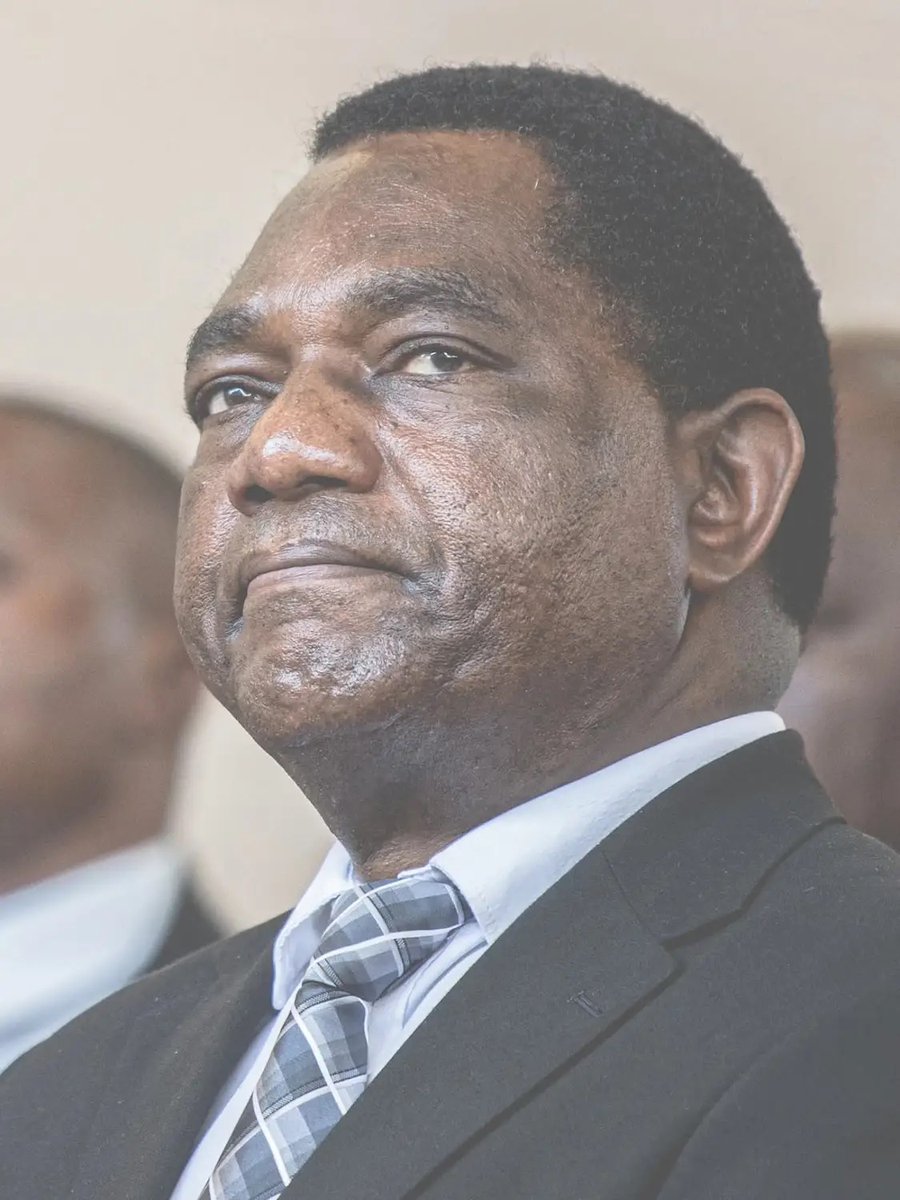
Sishuwa Sishuwa@ssishuwa
Watch out for ethnic-regional imbalances in Hichilema’s judicial appointments By Sishuwa Sishuwa On 8 August 2025 President Hakainde Hichilema signed into law the Superior Courts Act, which provides for the number of judges of the Supreme Court, the Constitutional Court, Court of Appeal, and the High Court. The new statute repeals and replaces the Superior Courts (Number of Judges) Act of 2016. It provides for thirteen judges of the Supreme Court, including the Chief Justice and the Deputy Chief Justice; thirteen judges of the Constitutional Court, including its President and Deputy President; not more than thirty-one judges of the Court of Appeal (this is up from 19 in 2016), including the Judge President and the Deputy; and not more than one hundred judges of the High Court (up from 60 judges in 2016). There are three broad points I wish to make on this important development. The first is that I commend President Hichilema for increasing the number of judges at the two busiest levels of our justice system: the High Court and Court of Appeal. A key reason why it takes a long time for cases to be disposed of is because judges are simply overwhelmed. On average, a High Court judge in Lusaka handles about 300 cases a year. This is simply unmanageable and prevents the timely delivery of justice. When one adds the low salaries that judges receive, it is hard to understand why any self-respecting individual would aspire to be a judge under the circumstances. According to the latest Judges (Salaries and Conditions of Service) Regulations published in May 2025, the current annual basic salary of a judge on the High Court bench is K370, 473.73. Their counterpart on the Court of Appeal receives a basic salary of K388, 997.38 per annum. This means a High Court judge gets about K30, 000 monthly before tax while one on the Court of Appeal receives about K32, 000. This is far less than what politicians in the two other branches of government – parliament and the executive – get. It is largely because of Zambia’s high rate of unemployment that many people are prepared to take up such low-paying jobs on the thinking that although ‘the salary is low, it is better than nothing’ especially when other conditions of service such as housing allowances are added. And precisely because such individuals join the judiciary for the paycheck, not any commitment to justice, many of them, eager to beef up their income, become susceptible to corruption from a highly corrupt executive that often wants to use judges for its partisan goals. Judges of the Constitutional Court and the Supreme Court handle very few cases a year, averaging 20 at most, so I am not concerned about them. Much of the workload that is before the superior courts is handled by the low-staffed High Court and Court of Appeal benches. That is why I am praising Hichilema for increasing the numbers of judges to the two courts by 40 and 12 respectively. In fact, even these additional numbers are not enough, given the volume of work that is before the High Court and Court of Appeal, but the increase marks a good starting point. Instead of fighting to increase the number of members of parliament, Hichilema is better advised to increase the number of judges because they provide a clear and more important service to the people. The second point is that there is an urgent need to enact a law that provides for a transparent system that would result in merit-based identification, interviews, and appointment of potential judges. The increase in the numbers alone is not enough. It needs to be supported by other measures. In addition to an unmanageable caseload and poor conditions of service, another factor that contributes to poor and late delivery of justice is the sheer incompetence of some of our judges. However, we will not solve the problem of corruption and incompetence in the judiciary if people who end up as judges are not appointed on merit. Even before Judicial Service Commission (JSC) and President Hichilema move to fill up the created vacancies in the judiciary, it is important to enact an Act of Parliament that would provide for a competitive, merit-based, and transparent system of appointing judges. This should involve advertising vacancies, publishing the names of both unsuccessful and shortlisted candidates, and conducting interviews before a properly reconstituted JSC which should include the Chief Justice. Presently, everything is done in secrecy and in a manner that overly concentrates power in the presidency. Judges are currently appointed by the President on the recommendation of the JSC, but members of this body are themselves appointed by the President subject to ratification by a generally pliant parliament through a simple majority. No one knows the criteria that the JSC uses to identify judges. People just wake up to news that so and so has been appointed to this or that court without any knowledge of how the affected individuals were identified. Right now, the appointment of judges operates like an admission to a secret society. What is needed is to create legislation that will provide for a very clear process of appointing judges in a transparent, competitive, and open manner. As earlier stated, let there be adverts calling for interested candidates to apply for positions in the judiciary so that anyone interested and meeting the outlined requisite qualifications is free to apply and become a judge. The JSC, whose members should not be appointed by the president, will then hold open and even televised interviews with the shortlisted candidates. Members of the public should be free to give evidence-driven testimony against any shortlisted person whom they think lacks the integrity to serve as a judge. This manner of proceeding would ensure that those who end up as judges in our superior courts do so not because they know someone in the corridors of power but are qualified, competent, and impartial individuals with demonstrable experience, intimate knowledge and understanding of the law and who possess proven levels of integrity. The incompetence that we see in our judiciary today is not accidental; it is the result of the lack of a transparent and open mechanism of appointing judges. A key reason why I voted for Hichilema in the 2021 election was that I had hoped that he would change this undesirable status quo where judges are appointed in a secretive way that does not foster transparency. After all, he had promised to create such a mechanism when he was in opposition. But after winning power, the President has reneged on his campaign promise, as he has done on so many others, and has used the same rotten system that his predecessors relied upon to appoint judges. The problem, in my view, is not just the lack of capacity in the individuals appointed to these roles; it is the inadequacies of a system that allows such individuals to end up as judges in the first place. Unless the current system is changed, the next crop of appointments to superior courts risks including several dishonourable magistrates, mainly those in Lusaka, who have been making a truckload of such questionable judgements in favour of the executive that one would be forgiven for thinking that they have been promised appointments to the High Court if they secure the interests of those in power. The third and final point is the need to ensure regional, gender, youth, and equitable representation of persons with disabilities in the appointment of judges. This would promote inclusion and national unity and prevent accusations and perceptions that the President is packing the courts with individuals who predominantly come from one region. The good thing is that there already exists a law in place for this measure. All that is required is for the President to comply with it. Article 259 of Zambia’s Constitution provides that “Where a person is empowered to make a nomination or an appointment to a public office, that person shall ensure — (a) that the person being nominated or appointed has the requisite qualification to discharge the functions of the office, as prescribed or specified in public office circulars or establishment registers; (b) that fifty percent of each gender is nominated or appointed from the total available positions, unless it is not practicable to do so; and (c) equitable representation of the youth and persons with disabilities, where these qualify for nomination or appointment.” The same Article also states that “A person empowered to make a nomination or appointment to a public office shall, where possible, ensure that the nomination or appointment reflects the regional diversity of the people of Zambia.” This means the Constitution itself requires the President to be sensitive to regional representation when making appointments to any public office. Unfortunately, Hichilema has so far not shown much respect for the law. For instance, in February 2023, the President appointed a total number of 20 judges to various positions in the superior courts. These included Margaret Munalula, Arnold Shilimi, Mudford Mwandenga, Maria Mapani, Kenneth Mulife, Mwiinde Siavwapa, Laston Mwanabo, Mwaka Ngoma Samundengu, Mbile Muwindwa Wina, Vincent S. Siloka, Greenwell Malumani, Mabolobolo Mwananjiti, and Situmbeko Chocho. The rest were Abha Nayah Patel, Yvonne Chembe, Enias Chulu, Obister Musukwa, Anne Malata – Ononuju, Geoffrey Chilufya Mulenga, and Malaro Nyirenda. Of these 20 appointments, the first thirteen came from only three provinces or one region: Southern, Western, and Northwestern. Such regional imbalances are unlawful and must be avoided in the next set of appointments. If there are 50 vacancies in the judiciary, Hichilema must make sure that those appointed reflect regional, gender, youth, and equitable representation of persons with disabilities in Zambia today. If there is to be any departure from this constitutional principle, there must be compelling grounds. As the Judicial Service Commission and Hichilema move to fill the numerous vacancies created in the superior courts, I make an earnest appeal to members of the public to remain vigilant and specifically watch out for ethnic-regional imbalances in the distribution of the soon-to-be announced appointments of judges. We owe it to ourselves to build a better, equal, united, just, and fair Zambia in which no citizen feels shut out or excluded from any public opportunities on account of their ethnic identity, region of origin, gender, disability, and where presidents respect the laws that we have set for ourselves. It is possible.
English

"The family is prepared to wait as long as it takes to ensure Lungu receives a burial they consider dignified, even if it means stalling the process."
Exactly 10 months today since ECL's demise, Makebi's prophecy has come to pass.
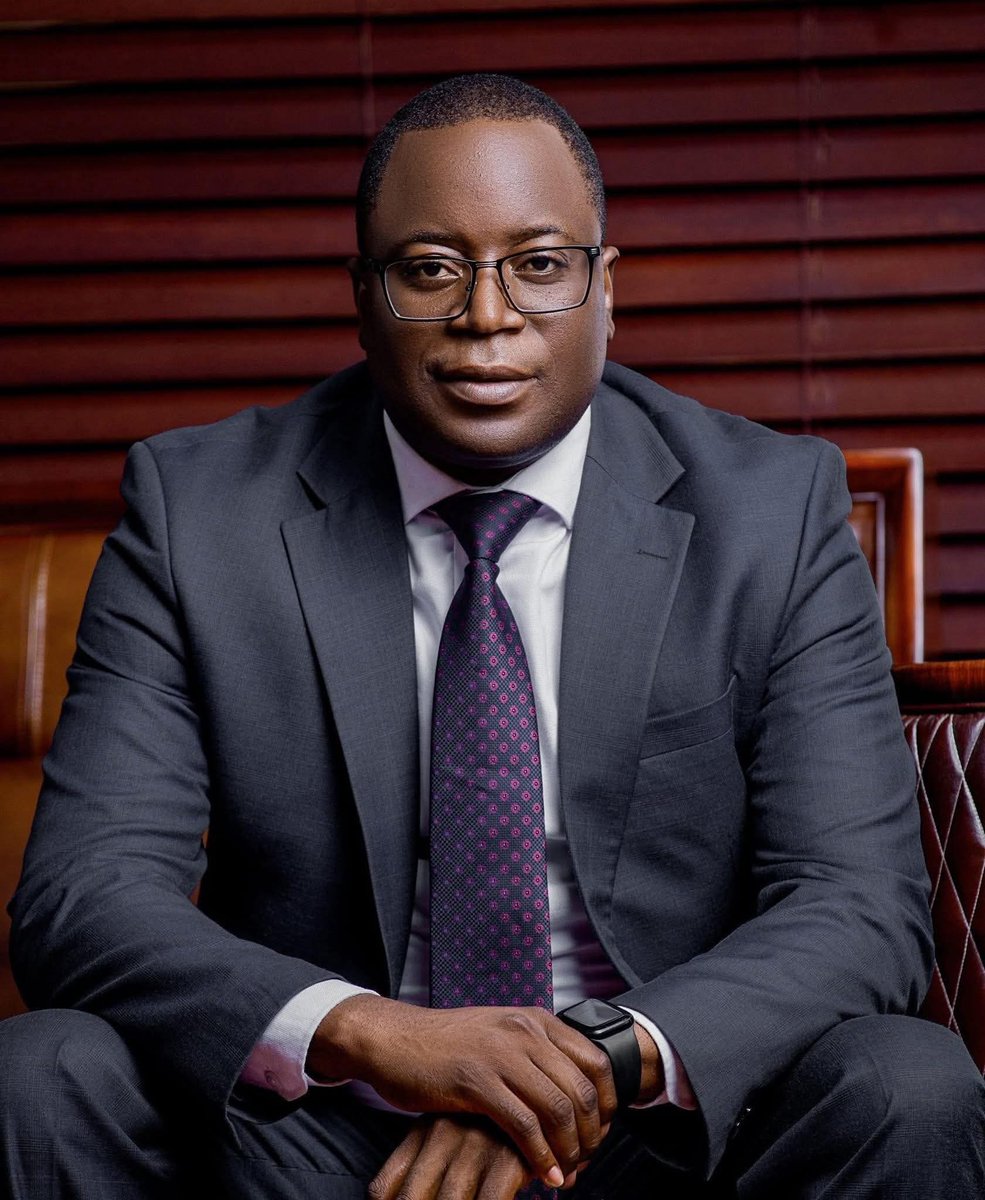
English
@ssishuwa Fortunately for the benefit of humanity, laws are not obsolute, they are dictated and formulated by citizens, through legislation overtime... We can hope for a brighter Zambia 🙏
English
@Chozy2nyce Zambia is not governed by tradition or non-legal precedent. It is governed by the law, and there is currently no law that gives the state control over the body. If it was governed by tradition or non-legal precedent, Hichilema will be living in Nkwazi, not his private residence.
English
10 months ago today, a former president died. His successor heard.
Since then, the successor’s primary concern has been the same: not grief nor concern for the deceased’s family, but self-service. “I must attend the funeral or else there will be none.”
After failing to get his way, he moved to block the burial and waste millions of taxpayers’ money on hiring lawyers in a foreign land to secure his interest.
That is his mind in its purest form: what is in it for me?
Not empathy.
Not compassion.
Not dignity.
Just a presidency where even death gets measured in personal benefit.
The man is EVIL. He does not care about anything and anyone except for their use and benefit to him.
Vile. Despicable.

English
@ssishuwa Oh no, i am not suggesting that precedence should always be legally binding, especially in our country. Also, avoid assuming that those that engage you, do not read your opinion pieces or other articles related to the subject matter...
English
@Chozy2nyce Learn to read, please, so that you can respond to what has been stated. There is no legal precedent nor law that provides that the state has control over the body of a former president. Until there’s a law in place, the family’s wishes must prevail.
x.com/ssishuwa/statu…
Sishuwa Sishuwa@ssishuwa
Elias, when former president Kaunda died in 2021, you argued that the state had no control over a former president’s body. I agreed with your position. What has changed now, since the law has not changed? Are you changing positions out of expediency? You know, as I do, that the government’s reasons for insisting on a state funeral – that Lungu merits one as a former president – collapse in the face of scrutiny. Let us carefully examine these reasons one by one. The first argument is that Lungu should be buried in Zambia because he deserves a state funeral. This reason is not supported by law. In Zambia, a state funeral is not a legal requirement or an entitlement; it is an honour accorded by a sitting president, using his or her discretion, to individuals considered worthy of it. The recipient or their representatives have the freedom to accept or reject such honours. And if f the objective is to accord Lungu a state funeral, the president could have done so without making his presence a precondition for granting that honour to his predecessor. The state is a system, not an individual, and Hichilema, if he has no personal interest in the funeral, could have easily delegated authority to another official who is acceptable to the family to represent him. The family is not opposed to having Lungu accorded a state funeral; they are only opposed to the involvement of Hichilema in any form in the funeral. This is the sticky point. The second argument is that Lungu should be buried in Zambia because there is a precedent that supports the State’s legal action, namely, the matter involving the family of former president Kenneth Kaunda against the State. This reason is defective for three reasons. One is that at the time he died, Kaunda was still enjoying the benefits accorded to former presidents by law, including funeral expenses covered by the state. This was not the case with Lungu, who, by operation of law, had lost his benefits after he returned to active politics in 2023. Two is that the legal involvement of the state in the funeral of a former president is only limited to covering their funeral expenses. Even this point does not apply to Lungu, who had lost his legal benefits withdrawn at the time of his death. This explains why the family has to date covered all his funeral-related expenses including paying the South African morgue that is keeping his remains, as they did when he was alive in relation to his medical treatment. More importantly, the Kaunda case never resolved the question of who, between the family of the deceased and the state, holds the ultimate say on the funeral of a late former president. The genesis of the Kaunda case was the decision by the Lungu administration to bury former president Kaunda at a government site in Lusaka against his wishes, left to his family, that he be buried next to his late wife at their family farm when he dies. In response to this decision, the Kaunda family filed an urgent application in the High Court seeking leave to commence judicial review against the State over the specified decision. The family correctly argued that every decision that the State makes must be governed by law, and that since there is no law that obliges the government to bury the remains of a former president at any designated site, the decision must be declared null and void for want of authority. They also asked the court to order the State to release the remains of Kaunda so that he could be buried in accordance with his wishes. The Kaunda family further requested the court to suspend the government’s decision to bury him until after hearing the arguments from both sides in the main matter. Unfortunately, the High Court judge who was allocated the case sat on the urgent application until after the burial took place on 7 July. Following the burial, the judge ruled that that he was not persuaded that the family had a good case and thus refused to grant them permission to commence judicial review against the State, who did not even bother to appear before him. Although the judge gave the family leave to appeal against his decision, the family chose not to, as doing so would have been an academic exercise since the action they sought to prevent – the burial of Kaunda in a place that disregarded his wishes – had already taken place. Since the courts never examined the merits of the decision that the government had taken, this outcome meant that there was no judgment in the Kaunda case that could serve as a precedent. All that the Kaunda family did was simply asking for permission to review the decision of the government so that the issue of who has ultimate responsibility over the body and funeral of a former president could be ventilated upon in court. A judicial review of the government’s decision would have resulted in it either being set aside or upheld. So, there is no case law on the point. There is also currently no written law that empowers the government to conduct the funeral of a former president. This explains why the Attorney General, even in court, has not cited any statute which gives the government the authority over a former president’s body and funeral. What presently exists in Zambia is customary law, which is recognised by the country’s Constitution. Article 7 of the constitution of Zambia defines the “Laws of Zambia” to include the Constitution itself; laws enacted by Parliament; statutory instruments; Zambian customary law which is consistent with the Constitution; and the laws and statutes which apply or extend to Zambia as prescribed. This means that in the absence of a statute that empowers the state to conduct the funeral of a former president, the death and funeral of a former president is subject to customary law. Under customary law, the body of the deceased belongs to the family, and it is the family that has the ultimate responsibility to decide what to with it including where to bury. Altogether, this shows that the government has no compelling interest in the protracted but undignified row over Lungu’s burial. Outside spiritual warfare and serving the ego of Hichilema, the only other possible reason behind the government’s interest is to reduce the political costs of burying Lungu in exile. If the former president is interred in South Africa, the issue of Lungu’s burial location is likely to feature prominently in the political campaigns ahead of the election in August. Hichilema’s rivals could promise voters that they would exhume Lungu’s remains and bring them to Zambia for reburial if the person who made it impossible for the former president to be buried at home was voted out. By initiating initiating the court action, Hichilema is probably hoping that he could undermine the effectiveness of such political messages by claiming that he tried all that he could do to bring Lungu’s remains to Zambia and was only prevented by the South African courts. If the court action succeeds, Hichilema, whose administration violated Lungu’s right to travel abroad for medical treatment and the logical outcome is what has happened (death), can try to cleanse himself by showing care for him in death that he did not show when Lungu was alive. This might explain why Zambia’s Attorney General Mulilo Kabesha recently stated that the government intends to bury Lungu before the election. Kabesha, who had earlier said the government is prepared to bury the former president without the involvement of his family, did not explain the relationship between the August polls and the burial. Over to you.
English
@ssishuwa I think, that you choose to seperate the individual from his position in Government is prolonged proof of your disatisfaction or rather mistrust in our governance institutions. I hope your reasons are solid other than the tribal rhetoric...
English
@Chozy2nyce I would respect the position of the family. In any funeral-related standoff between the family of a deceased former president and the govt, whether under PF or the UPND, my position remains unchanged: let all of us respect the wishes of the family.
x.com/ssishuwa/statu…
Sishuwa Sishuwa@ssishuwa
Contrary to Inonge Wina's claim, it’s not the wish of Kaunda’s family to take his coffin to #Zambia’s 10 provinces amid #COVID19. This agenda is being pushed by the Govt that wants to manipulate the funeral for political gain. Mr @EdgarCLungu, stop this cynical election strategy!
English
@ssishuwa I guess the argument is about you thinking HH has personal interest in this funeral vs precedence set, irrespective of law on this matter...
English
@ssishuwa Yes! as soon as you give me yours! Would you prefer your former head of State lay in foreign land. Since your opinion as an OXFORD scholar would be more important than me a common Zambian, i'm sure you responding first would matter most... Especially to many of your followers...
English
@Chozy2nyce Is your response to the question I asked still on the way?
English
@ssishuwa Sishuwa, would you as a citizen rather have your former head of state buried on foreign soil, Yes or No!?
English
@Chozy2nyce Where in the existing law does it say it is up to you and I, or any other Zambian outside the deceased’s affected family, to decide where, or how, a former president is to be buried?
x.com/ssishuwa/statu…
Sishuwa Sishuwa@ssishuwa
Elias, when former president Kaunda died in 2021, you argued that the state had no control over a former president’s body. I agreed with your position. What has changed now, since the law has not changed? Are you changing positions out of expediency? You know, as I do, that the government’s reasons for insisting on a state funeral – that Lungu merits one as a former president – collapse in the face of scrutiny. Let us carefully examine these reasons one by one. The first argument is that Lungu should be buried in Zambia because he deserves a state funeral. This reason is not supported by law. In Zambia, a state funeral is not a legal requirement or an entitlement; it is an honour accorded by a sitting president, using his or her discretion, to individuals considered worthy of it. The recipient or their representatives have the freedom to accept or reject such honours. And if f the objective is to accord Lungu a state funeral, the president could have done so without making his presence a precondition for granting that honour to his predecessor. The state is a system, not an individual, and Hichilema, if he has no personal interest in the funeral, could have easily delegated authority to another official who is acceptable to the family to represent him. The family is not opposed to having Lungu accorded a state funeral; they are only opposed to the involvement of Hichilema in any form in the funeral. This is the sticky point. The second argument is that Lungu should be buried in Zambia because there is a precedent that supports the State’s legal action, namely, the matter involving the family of former president Kenneth Kaunda against the State. This reason is defective for three reasons. One is that at the time he died, Kaunda was still enjoying the benefits accorded to former presidents by law, including funeral expenses covered by the state. This was not the case with Lungu, who, by operation of law, had lost his benefits after he returned to active politics in 2023. Two is that the legal involvement of the state in the funeral of a former president is only limited to covering their funeral expenses. Even this point does not apply to Lungu, who had lost his legal benefits withdrawn at the time of his death. This explains why the family has to date covered all his funeral-related expenses including paying the South African morgue that is keeping his remains, as they did when he was alive in relation to his medical treatment. More importantly, the Kaunda case never resolved the question of who, between the family of the deceased and the state, holds the ultimate say on the funeral of a late former president. The genesis of the Kaunda case was the decision by the Lungu administration to bury former president Kaunda at a government site in Lusaka against his wishes, left to his family, that he be buried next to his late wife at their family farm when he dies. In response to this decision, the Kaunda family filed an urgent application in the High Court seeking leave to commence judicial review against the State over the specified decision. The family correctly argued that every decision that the State makes must be governed by law, and that since there is no law that obliges the government to bury the remains of a former president at any designated site, the decision must be declared null and void for want of authority. They also asked the court to order the State to release the remains of Kaunda so that he could be buried in accordance with his wishes. The Kaunda family further requested the court to suspend the government’s decision to bury him until after hearing the arguments from both sides in the main matter. Unfortunately, the High Court judge who was allocated the case sat on the urgent application until after the burial took place on 7 July. Following the burial, the judge ruled that that he was not persuaded that the family had a good case and thus refused to grant them permission to commence judicial review against the State, who did not even bother to appear before him. Although the judge gave the family leave to appeal against his decision, the family chose not to, as doing so would have been an academic exercise since the action they sought to prevent – the burial of Kaunda in a place that disregarded his wishes – had already taken place. Since the courts never examined the merits of the decision that the government had taken, this outcome meant that there was no judgment in the Kaunda case that could serve as a precedent. All that the Kaunda family did was simply asking for permission to review the decision of the government so that the issue of who has ultimate responsibility over the body and funeral of a former president could be ventilated upon in court. A judicial review of the government’s decision would have resulted in it either being set aside or upheld. So, there is no case law on the point. There is also currently no written law that empowers the government to conduct the funeral of a former president. This explains why the Attorney General, even in court, has not cited any statute which gives the government the authority over a former president’s body and funeral. What presently exists in Zambia is customary law, which is recognised by the country’s Constitution. Article 7 of the constitution of Zambia defines the “Laws of Zambia” to include the Constitution itself; laws enacted by Parliament; statutory instruments; Zambian customary law which is consistent with the Constitution; and the laws and statutes which apply or extend to Zambia as prescribed. This means that in the absence of a statute that empowers the state to conduct the funeral of a former president, the death and funeral of a former president is subject to customary law. Under customary law, the body of the deceased belongs to the family, and it is the family that has the ultimate responsibility to decide what to with it including where to bury. Altogether, this shows that the government has no compelling interest in the protracted but undignified row over Lungu’s burial. Outside spiritual warfare and serving the ego of Hichilema, the only other possible reason behind the government’s interest is to reduce the political costs of burying Lungu in exile. If the former president is interred in South Africa, the issue of Lungu’s burial location is likely to feature prominently in the political campaigns ahead of the election in August. Hichilema’s rivals could promise voters that they would exhume Lungu’s remains and bring them to Zambia for reburial if the person who made it impossible for the former president to be buried at home was voted out. By initiating initiating the court action, Hichilema is probably hoping that he could undermine the effectiveness of such political messages by claiming that he tried all that he could do to bring Lungu’s remains to Zambia and was only prevented by the South African courts. If the court action succeeds, Hichilema, whose administration violated Lungu’s right to travel abroad for medical treatment and the logical outcome is what has happened (death), can try to cleanse himself by showing care for him in death that he did not show when Lungu was alive. This might explain why Zambia’s Attorney General Mulilo Kabesha recently stated that the government intends to bury Lungu before the election. Kabesha, who had earlier said the government is prepared to bury the former president without the involvement of his family, did not explain the relationship between the August polls and the burial. Over to you.
English


@_Vndy_H The same one you imagine it is.
The funny thing is, this person had the temerity to turn around, lie, and play the victim to the public after I broke up with her.
People? Crazy.
English
@LankyObserver This is one of the symptoms of regional balancing. Adopt a supposedly influencial politician for the northern vote, regardless of character. I tend to think the Mundubile Lubinda fiasco in PF is also indicative of regional politics.
English
GBM's trucking company has been siezed by the National Prosecution Authority.
He's also been ordered to pay millions to the State, on conviction of crimes committed when he was PF Minister of Defence.
Had things gone different, this man would be our Vice President under UPND.
English
And the only reason some of us pay insurance is because RTSA holds us at gun point!
Mwanamukazhi@kasubasikamo_
In November, someone drove into my car, paid admission of guilt then refused to authorise my claim. Had to seek legal help & report Professional Insurance to the PIA, a process that takes 21 days. Still hasn’t been closed. I can see why people give up on systems in this country
English
@LankyObserver @damweembs @BuyoyaJonah Today if someone is fired by HH, the first thing critics swing at is, 'What tribe is he?' before anything else...
English
@damweembs @BuyoyaJonah GBM only didn't end up our vice-President because he fell out with the UPND hierarchy, not because party's leadership had looked into these matters before appointing him.
These things were done before 2015, when he was appointed Veep.
That's the challenge with our ruling party.
English

Zambia’s National Prosecution Authority has seized GBM Trucking Ltd, owned by ex‑Defence Minister Geoffrey Bwalya Mwamba, in a non‑conviction forfeiture. Mwamba was jailed in 2024 for conflict of interest & money laundering, later released on medical grounds.
English
@LankyObserver @damweembs @BuyoyaJonah It is a Problem with our Politics, apparently because there is a need for the bemba vote. You have to consider a bemba however questionable their character is, to win in Zambia. I don't know how these became our values...
English