Christopher Bonnet

4.9K posts

Christopher Bonnet

Christopher Bonnet

@ChrisBonnet14

Christopher Bonnet

Katılım Aralık 2022
307 Takip Edilen156 Takipçiler
Christopher Bonnet retweetledi

Shining Science
Shining Science@ShiningScience·
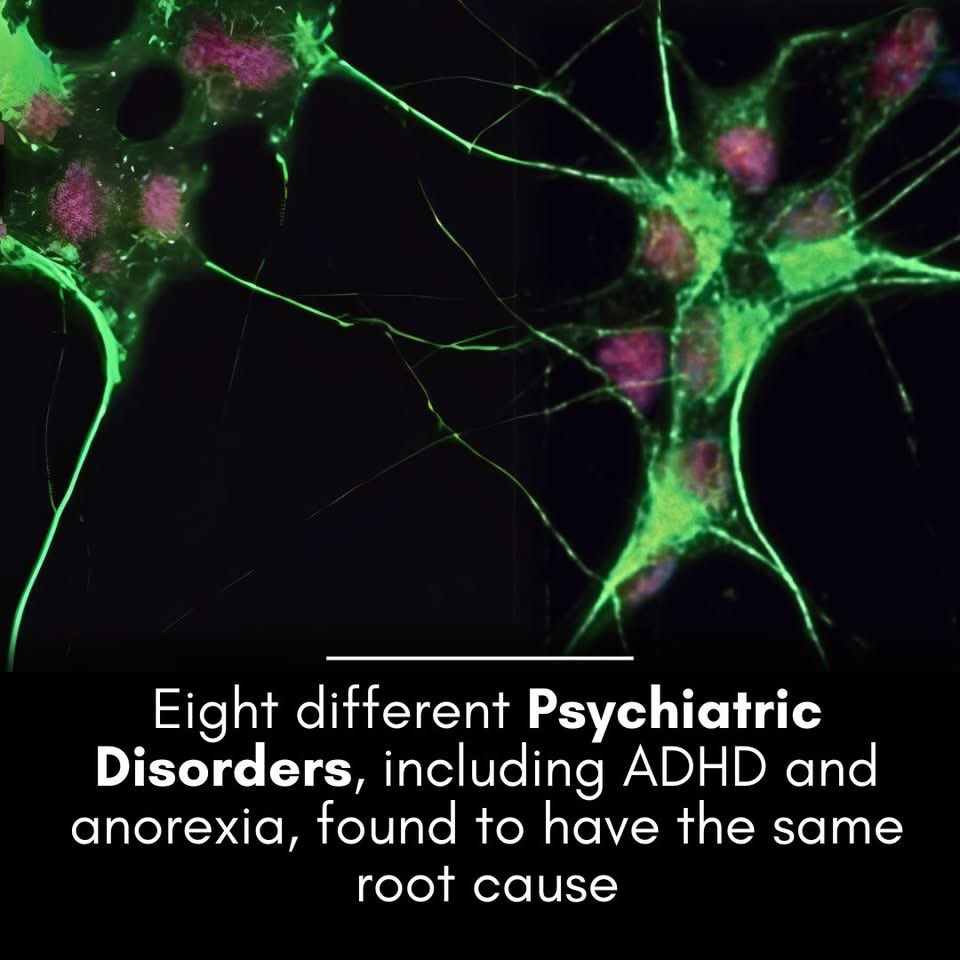
New research shows one genetic marker links 8 major psychiatric disorders — including autism, ADHD, schizophrenia, and depression. A groundbreaking study has identified 683 common genetic variants that link eight major psychiatric conditions, including autism, ADHD, schizophrenia, and major depressive disorder. These shared genetic factors appear to regulate critical stages of brain development and influence complex protein interactions, providing a biological explanation for why these conditions frequently co-occur within individuals and families. This discovery suggests that rather than being entirely distinct ailments, many mental health disorders share a foundational genetic architecture that shapes the brain's growth from its earliest stages. By shifting the focus from individual diagnoses to shared biological pathways, this research challenges traditional psychiatric classifications and opens the door for innovative, broad-spectrum therapies. With nearly one billion people worldwide living with mental health disorders, the ability to target these underlying genetic drivers could revolutionize treatment protocols. Scientists believe that understanding these shared variants will lead to more effective, genetically-informed interventions that could simultaneously address multiple conditions, offering new hope for personalized and comprehensive mental healthcare. source: Psychiatric Genomics Consortium. Shared genetic architectures across psychiatric disorders and brain development. Cell.
Shining Science tweet media
English
3
63
201
7.2K
Christopher Bonnet retweetledi
Dr Singularity
Dr Singularity@Dr_Singularity·
History will compress this decade into a single sentence "Everything changed faster than expected"
English
11
23
232
5.6K
Christopher Bonnet retweetledi
SingularityNET
SingularityNET@SingularityNET·
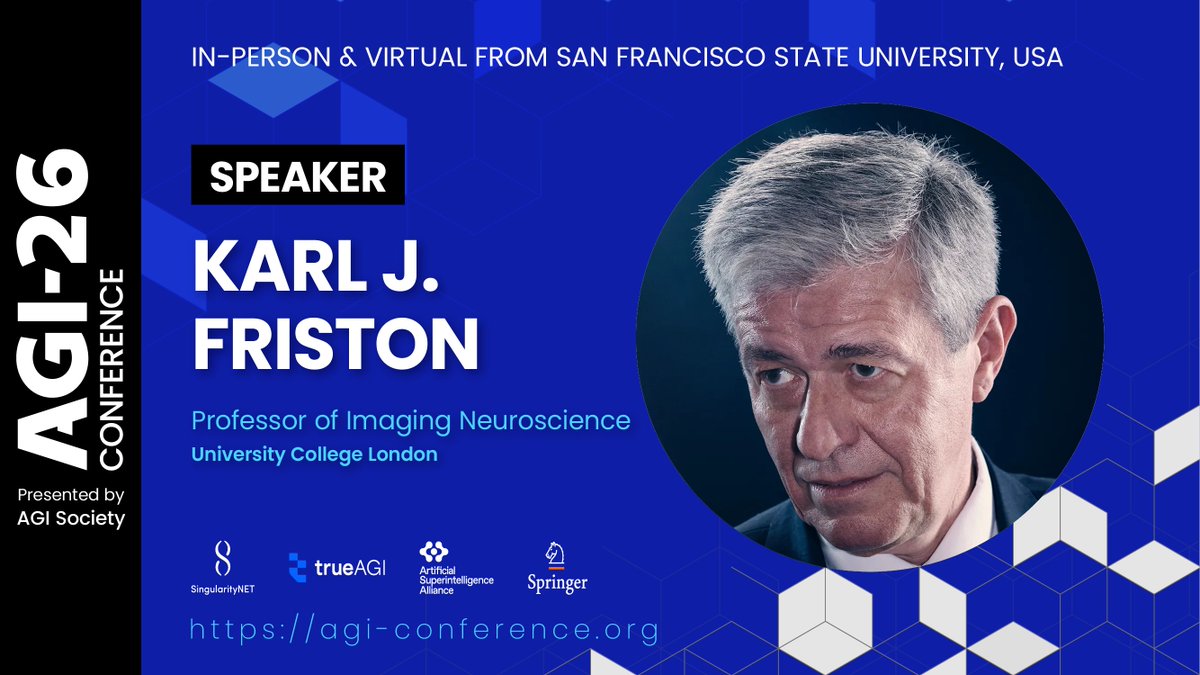
We are pleased to announce that Karl Friston, Professor of Imaging Neuroscience at University College London, will speak at the 19th Annual AGI Conference in San Francisco, California, taking place from 27 to 30 July.
SingularityNET tweet media
English
1
8
77
3.1K
Christopher Bonnet retweetledi
Jorge Bravo Abad
Jorge Bravo Abad@bravo_abad·
Physics-informed KANs for quantum dynamics, with 95% less data Black-box sequence models can fit quantum time series. But they tend to violate conservation laws, produce unphysical oscillations, and demand large training sets to rediscover physics that was known all along. The question is whether you can bake the physics directly into the architecture—and pay far less for data as a result. Abhijit Sen and coauthors combine Kolmogorov-Arnold networks (KANs) with Ehrenfest's theorem to build KAN-ETS, a physics-informed time series framework for quantum systems. The target application is high harmonic generation in driven quantum spin chains—a nonlinear, non-stationary problem where a time-varying magnetic field drives a spin chain and the task is predicting the full magnetization time series from the input driving field. The core idea: Ehrenfest's theorem provides exact dynamical constraints relating observable time derivatives to commutators with the Hamiltonian. These become a derivative-based penalty in the loss function alongside standard MSE, enforcing physical consistency at every training step. This Ehrenfest penalty also regularizes smoothness—eliminating the spurious oscillations that plague temporal convolution networks (TCNs) on the same problem. The results are remarkable. Where TCNs required 3,700 training trajectories to achieve reliable predictions, KAN-ETS reaches comparable or better accuracy with just 200—a 94.6% reduction in data. Over 95% of test predictions hit R² > 0.95 on single-amplitude datasets. The authors further introduce the chain of KANs: an architecture that assigns a separate KAN to each output time step, encoding temporal causality directly so that prediction at time k depends only on inputs up to k. For simulation-heavy R&D pipelines in quantum computing, materials characterization, and ultrafast spectroscopy, this points to a concrete opportunity: physics-informed KANs as surrogate models that are both data-efficient and physically consistent—replacing expensive first-principles simulations without sacrificing interpretability or physical fidelity. Paper: Sen et al., Physical Review Research (2026) — CC BY 4.0 | journals.aps.org/prresearch/abs…
Jorge Bravo Abad tweet media
English
1
20
107
4.8K
Christopher Bonnet retweetledi
SciTech Era
SciTech Era@SciTechera·
Wow. This is unexpected A new chip survives lava-level heat 🤯! NEW BREAKTHROUGH: Researchers have built a new type of memory device that operates at 700°C (1300°F), far beyond the limits of conventional electronics. Rather than collapsing under extreme heat, this new chip uses a tungsten–hafnium oxide–graphene structure that blocks atomic diffusion, preventing the short circuits that normally destroy electronics at high temperatures. This device is based on a memristor architecture, meaning it can both store and process data 👀 In testing, it maintained stable performance for 50+ hours at 700°C, handled over a billion switching cycles, and operated at nanosecond speeds with low voltage. This breakthrough could enable AI systems to function directly in extreme environments, from deep space missions to industrial reactors. Bro. Now AI will operates anywhere, not just inside data centers.
SciTech Era tweet media
English
19
57
238
7.8K
Christopher Bonnet retweetledi
Acer
Acer@AcerFur·
Big respect to Quanyu Tang, one of the few others who have had serious success using GPT on the Erdős problems. Really glad he reached out to me via email a few months ago.
Pietro Monticone@PietroMonticone

AI is increasingly changing how we do mathematics. Erdős Problem #650, open for over 60 years, was solved a few weeks ago through a collaboration between human mathematicians, an informal reasoning model (GPT 5.4 Pro @OpenAI) and a formal one (Aristotle @HarmonicMath). 🧵

English
2
9
123
7.7K
Christopher Bonnet retweetledi
Damian Player
Damian Player@damianplayer·
THIS IS WILD! Peter Thiel’s company the “Enhanced Games” got valued at $1.2B before a single event. the first one is next month. here’s what the headlines aren’t telling you (share this): every athlete is monitored. every compound is clinically approved. every dose is tracked. two independent medical commissions oversee the whole thing. and if your bloodwork doesn’t pass, you don’t compete. the same investors behind the biggest peptide and longevity companies put $1.2B behind this. these aren’t sports guys… they’re taking a public bet that performance medicine becomes a real market. whether you’re into it or not, pay attention.
English
194
458
6.7K
3M
Christopher Bonnet retweetledi
Pedro Domingos
Pedro Domingos@pmddomingos·
People who hate billionaires don't understand this.
Pedro Domingos tweet media
English
24
25
204
7.8K
Christopher Bonnet retweetledi
Jorge Bravo Abad
Jorge Bravo Abad@bravo_abad·
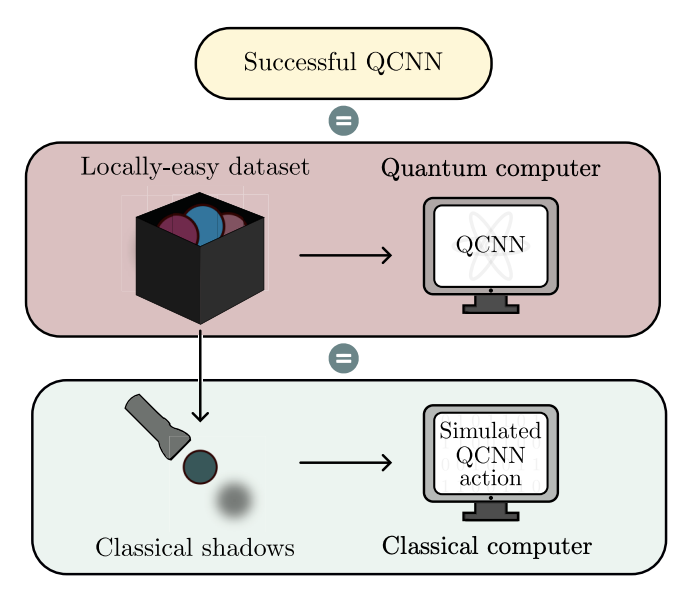
Quantum convolutional neural networks can be replaced by classical algorithms Quantum convolutional neural networks have been one of the most celebrated architectures in quantum machine learning. They avoid barren plateaus, show heuristic success on classification tasks, and have been benchmarked extensively on both classical and quantum datasets. They are widely regarded as a leading candidate for near-term quantum advantage in machine learning. This paper argues that this optimism is premature. Bermejo and coauthors identify two structural properties that explain why QCNNs appear to work. First, when randomly initialized, these models only process information encoded in low-bodyness—that is, low-weight—Pauli observables of their input states. The contribution of higher-weight operators decays exponentially, meaning the model never really leaves a polynomially sized subspace of the full operator space. Second, and more consequentially, every dataset used in the literature to demonstrate QCNN power turns out to be "locally easy": classifiable using precisely the low-bodyness information that QCNNs can access. From these two observations, the authors construct a purely classical surrogate—combining Pauli propagation, tensor networks, and classical shadows—that matches or outperforms standard QCNNs on all benchmark datasets tested, including quantum phase classification problems on up to 1024 qubits, run on a laptop. For classical data such as MNIST and EuroSAT, no quantum resources are needed at all. For quantum data, the quantum computer is reduced to performing simple single-qubit measurements for classical shadow tomography—far simpler than running a full hybrid quantum-classical training loop. The authors are careful about what this does and does not prove. They do not claim QCNNs can never be useful, only that there is currently no evidence they are useful on tasks that cannot be classically simulated. The burden of proof now rests with practitioners to identify nontrivial datasets where QCNNs provide genuine advantage. For any organization evaluating quantum computing as part of a research or technology roadmap, this result is a useful calibration point. It does not close the door on quantum machine learning, but it sharpens the question that needs to be answered before quantum hardware investments in this direction can be justified. Paper: Bermejo et al., PRX Quantum (2026) — CC BY 4.0 | journals.aps.org/prxquantum/abs…
Jorge Bravo Abad tweet media
English
3
9
47
2.9K
Christopher Bonnet retweetledi
Longevity Science News
Longevity Science News@LongevitySNews·
The next step of disease treatment is here. Designing custom peptides for specific biological targets used to take years and billions. Now, AI on a GPU can do it in minutes. If AI can predict protein interactions, diseases may become a thing of the past.
English
1
19
45
1.3K
Christopher Bonnet retweetledi
David Sinclair
David Sinclair@davidasinclair·
Here's my take on your paper: Cellular senescence or "zombie cell" events happen when a cell experiences too much genetic or epigenetic noise, caused by cellular damage (e.g. DNA breaks) or telomere erosion Your study of a Lewis Lung Carcinoma (LLC) mouse model indicates training the immune system to recognize senescent cells shrinks tumors. Why test this at all? Senescent cells are thought to be a protective mechanism that helps prevent cancer. With epigenetic and telomere erosion over time, senescent cells accumulate & secrete inflammatory factors. By the time we are 50, out fat, for example, is riddled with these cells. If you stained them blue with beta-galactosidase, a 20 year old's fat would be light blue and I, at 56, would have navy blue fat Increasingly, it looks like they also influence how the immune system behaves, in part by expressing cell surface proteins like PD-L1 that can dampen CD8 T cell activity That is why senolytics that kill zombie cells have generated so much interest. Removing them seems to restore tissue function and potentially improve immune surveillance against cancer At the same time, the biology in the paper is likely layered. CD8 T cells seem to be involved, which is good. But senescent cells may both suppress immunity and serve as targets themselves. So it’s possible the effects reflect a combination of clearing those cells and reactivating immune responses against tumors Either way, it points to an important direction, one that connects aging biology directly to cancer therapy.
Dr. Thomas Ichim@exosome

Greatest antiaging scientist is @davidasinclair I wonder what he thinks of our #senovax antiaging vaccine pmc.ncbi.nlm.nih.gov/articles/PMC12…

English
12
29
279
36K
Christopher Bonnet retweetledi
Dr Singularity
Dr Singularity@Dr_Singularity·
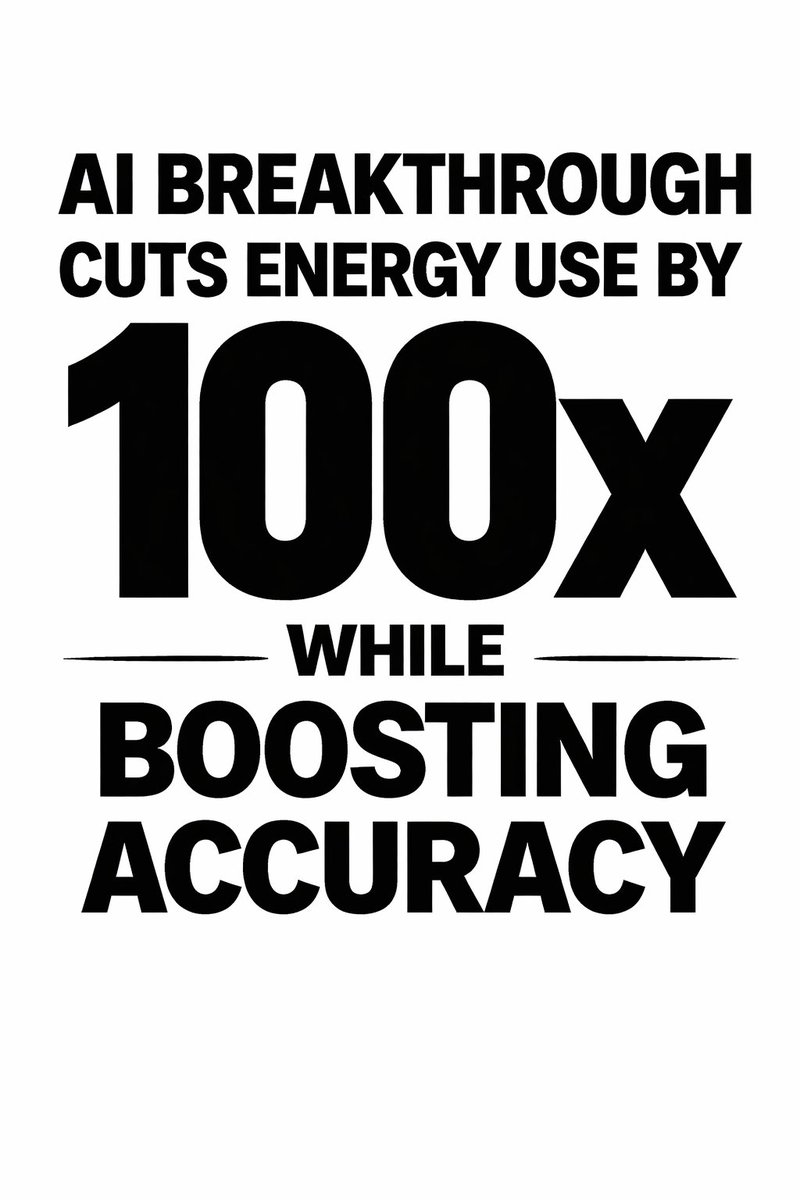
pretty insane Researchers at Tufts University have developed a new neuro symbolic AI that combines neural networks with logical reasoning. By adding structured thinking to AI systems, the model avoids wasteful computation and solves problems more efficiently. The result is up to 100x lower energy use while actually improving accuracy. 👀 This approach mimics human like reasoning, making it especially effective in complex tasks like robotics.
Dr Singularity tweet media
English
17
35
218
7K
Christopher Bonnet retweetledi
Isabel Brown
Isabel Brown@theisabelb·
Teenagers are sharing photos of their AP U.S. Government textbooks, and the sheer amount of indoctrination is wildly disturbing. Apparently, Barack Obama is ideologically a right wing authoritarian. Hillary Clinton and George W Bush are entirely indistinguishable politically. Donald Trump is of course virtually the same as Hitler. @tedcruz is apparently more radically authoritarian than Fidel Castro AND Joseph Stalin..??!!?? @Linda_McMahon — can we expedite some major changes to American public education?
English
1.8K
9.2K
37.1K
20.3M
Christopher Bonnet retweetledi
Rand
Rand@rand_longevity·
ASI has been achieved internally
Chubby♨️@kimmonismus

Looks like OpenAI reached Superintelligence. OpenAI: "Now, we’re beginning a transition toward superintelligence: AI systems capable of outperforming the smartest humans even when they are assisted by AI." OpenAI just published a 13-page policy blueprint for the "Intelligence Age"- proposing a Public Wealth Fund, 32-hour workweek pilots, portable benefits, a formal "Right to AI," and tax reforms to offset shrinking payroll revenue as automation scales. The document frames superintelligence not as a distant scenario *but an active transition requiring New Deal-level ambition*: new safety nets, containment playbooks for dangerous models, and international coordination modeled on aviation safety institutions. Here are OpenAI's suggestions (tl;dr): Open Economy: -Give workers a formal voice in AI deployment decisions -Microgrants and "startup-in-a-box" for AI-native entrepreneurs -Treat AI access as basic infrastructure (like electricity) -Shift tax base from payroll toward capital gains and corporate income -Public Wealth Fund — every citizen gets a stake in AI growth -Fast-track energy grid expansion via public-private partnerships -32-hour workweek pilots, better benefits from productivity gains -Auto-scaling safety nets triggered by displacement metrics -Portable benefits untied from employers -Invest in care economy as a transition path for displaced workers -Distributed AI-enabled labs to accelerate scientific discovery Resilient Society: -Safety tools for cyber, bio, and large-scale risks -AI trust stack — provenance, verification, audit logs -Competitive auditing market for frontier models -Containment playbooks for dangerous released models -Frontier AI companies adopt Public Benefit Corporation structures -Codified rules and auditing for government AI use -Democratic public input on AI alignment standards -Mandatory incident and near-miss reporting -International AI safety network for joint evaluations and crisis coordination Notably, OpenAI calls for stricter controls only on a narrow set of frontier models while keeping the broader ecosystem open, a clear attempt to position regulation as targeted, not industry-wide. They're backing it with up to $100K in fellowships and $1M in API credits for policy research, plus a new DC workshop opening in May.

English
29
28
385
56.6K
Christopher Bonnet retweetledi
Maria Davidson
Maria Davidson@MariaDavidson·
US population grew 6% in the last decade. Federal spending grew 40%, inflation adjusted. Not as bad as California, but you have to ask - where did all the money go?
Maria Davidson tweet media
Elon Musk@elonmusk

Wow

English
732
3.2K
13.4K
1.6M
Christopher Bonnet retweetledi
SciTech Era
SciTech Era@SciTechera·
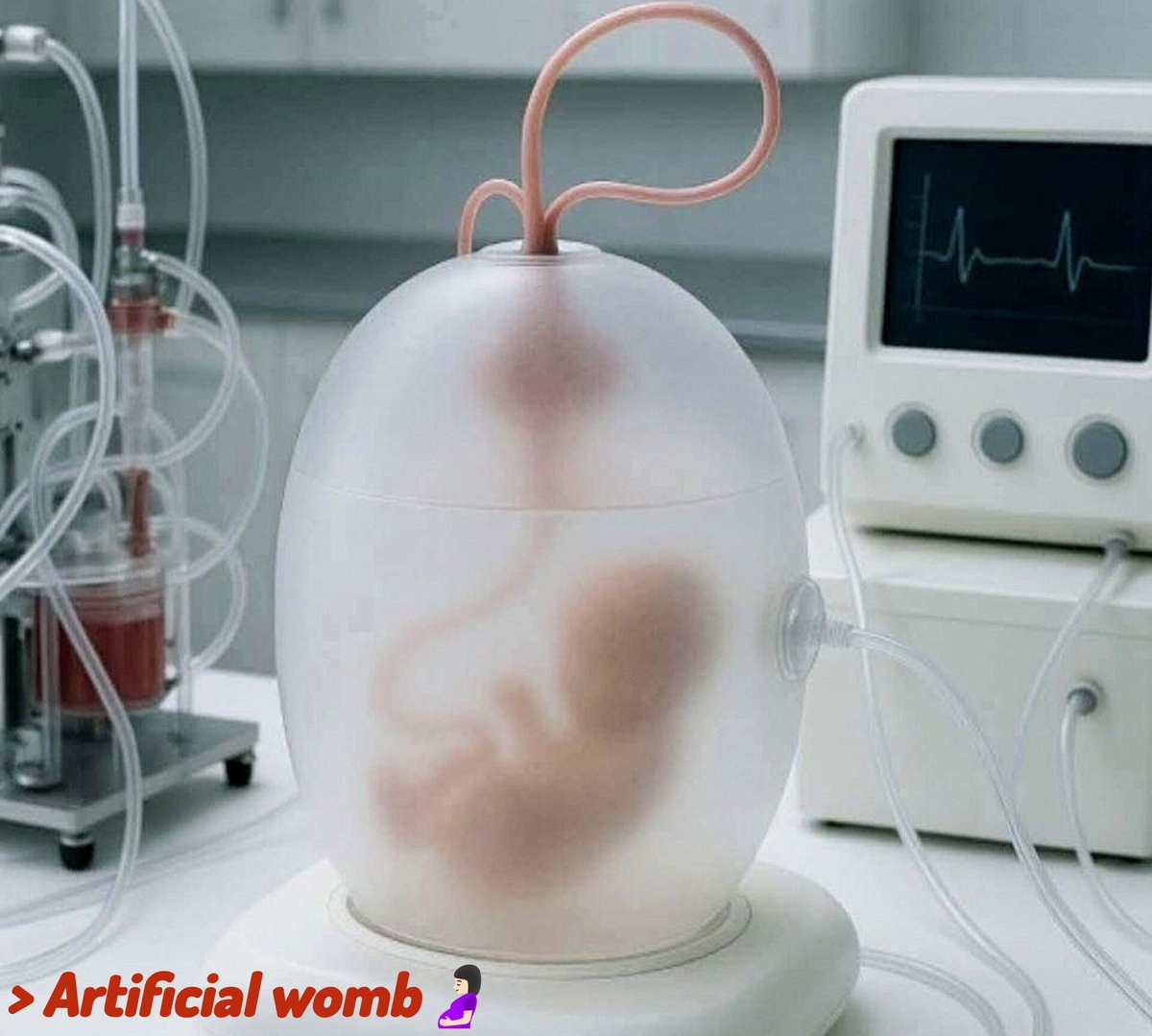
Believe it or not, but it’s happening! Scientists have already taken the first real steps toward artificial wombs. In the famous biobag experiments, premature lamb fetuses survived and developed in a fluid-filled system that mimics the womb. We haven’t solved full pregnancy outside the body yet. Proper early development, placenta-level support, and hormonal control are still complex challenges that need to be solved. We are already entering a golden biological era, where biology is being engineered step by step. Artificial wombs could eventually remove the biggest risks of pregnancy, save millions of premature babies, and redefine reproduction itself. I feel it’s inevitable.
SciTech Era tweet media
English
25
56
158
6.8K
Christopher Bonnet retweetledi
Epoch AI
Epoch AI@EpochAIResearch·
We estimate that over 60% of global AI compute is owned by the top US hyperscalers, led by Google with the equivalent of roughly 5 million Nvidia H100 GPUs! Unlike the other hyperscalers, which rely primarily on Nvidia, Google’s fleet is dominated by its custom TPU chips.
Epoch AI tweet media
English
3
26
209
80.7K