
Sabitlenmiş Tweet
Alexander Leirvåg
5K posts

Alexander Leirvåg
@Claybight
Founder @ Causeway - Building AI infrastructure for autonomous operations - blog: https://t.co/t8RrWP2uTX
📨 Newsletter → Katılım Kasım 2021
1.3K Takip Edilen6.5K Takipçiler

What if RAG was differentiable?
I ran an experiment: separate memory content (database) from memory access (neural network). Make retrieval trainable.
Key finding: embedding entity names separately from facts gives +27% accuracy. The model learned on its own that entity matching is 84% of the signal.
Results: → 85% retrieval on completely unseen entities → Instant updates → No retraining
Bounded compute, unbounded knowledge.
#proto-agi" target="_blank" rel="nofollow noopener">alexander.space/#proto-agi
English


technology doesn't overwhelm us because there's too much of it.
it overwhelms us because none of it is actually for YOU.
google figured this out: you don't need to know traffic is bad everywhere—just that YOUR commute is blocked.
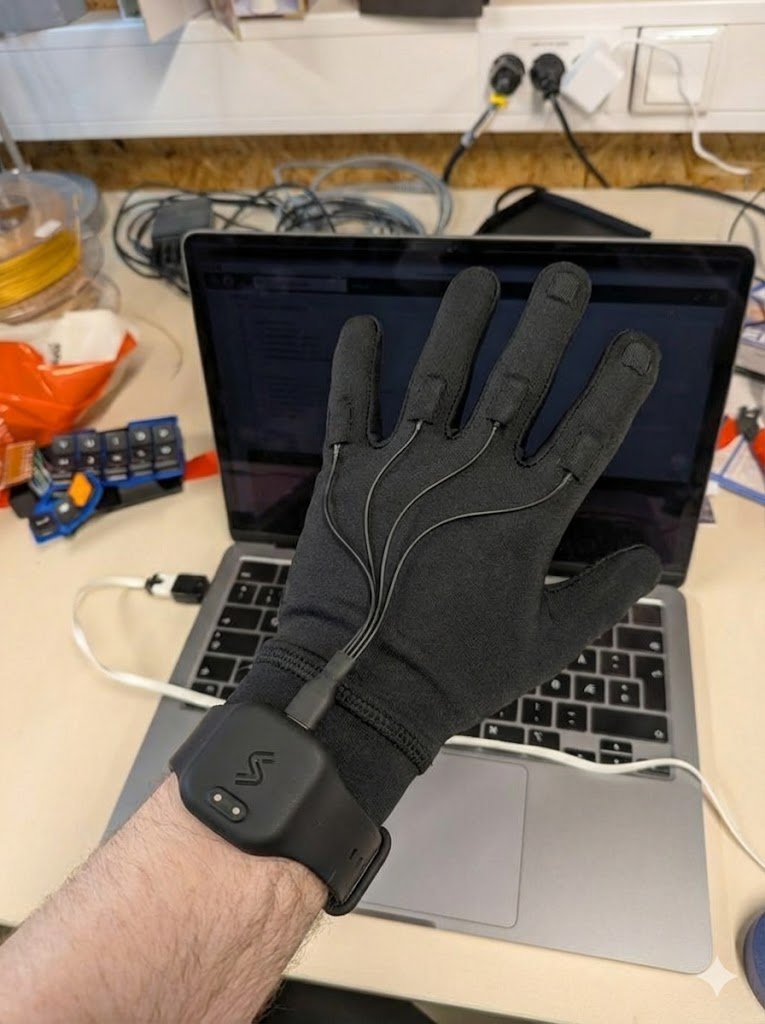
i'm building somasens to take this further: a haptic system you wear that lets any device—payment terminals, your car, vr headsets—communicate directly to you through touch. your own private channel. no visual noise. no fighting for attention with everyone else's notifications. personal tech bubbles.

English

@pdmthorsrud @jonathanbrnd Thanks! The hard part is realizing the failiure mode is not due to LLM capability, but problem definition and context.
English

@jonathanbrnd with experts like @Claybight having shown me how the right context at the right time at the right amount takes it from 70% to 150%. the answer is a definitive yes.
English

@Claybight Is that how you see what happened at Salesforce and Hubspot as they each transitioned from sales/marketing to having the opposite product?
English

@zeydou Hardware is interesting, the physical aspect makes it harder at least. I wonder how automated manufacturing, AI driven design might change that.
English

@wojakcodes Build distribution. Taste is the last moat. Be a weird specific combination of things no job description captures. Roles get automated. People don't.
English

@starter_story What 10K actually teaches: the universe responds to specificity. Most people stay vague because vague can't fail. Getting to 10K forces you to be specific enough to be wrong, repeatedly, until you're right. That's the real skill — the tolerance for being visibly wrong in public.
English

The "10K Rule":
If you can organically build something to 10K subscribers, 10K email list, or $10K profit, then you are set for life.
Not for the audience or money specifically, but for the skills you develop on the way & the persistence required to get there.
Knowing you can do it gives you the confidence you can do anything in life.

English

@pdmthorsrud @1Umairshaikh Self learning and compounding is the most underrated power of AI.
English

@Claybight @1Umairshaikh it had specifically learned from previous interactions with me that it was a bad idea
English

Making peace with discomfort" is close but not quite it. What actually works is building a self-model that can watch yourself panic without being the panic. Company dying and you being okay aren't mutually exclusive — not checked out, still fighting — but your nervous system stops coding startup failure as literal death threat. That's not personality. It's a skill. Takes ~2 years of getting it wrong before it clicks.
English

Most people have no idea what it actually takes to be a founder. They talk about vision, grit, or passion. Those words are props.
What you really sign up for is a life where every decision feels like it costs something real. You will spend years being misunderstood. By your team, your family, even the people you hire to help you. You will fail in public and still need to keep the energy up in private. Every founder lives with the weight of knowing that you can do everything right and still get crushed by luck, timing, or somebody else’s mistake.
Founders aren’t braver than anyone else. They just get used to uncertainty, then stop waiting for clarity. Most of your wins won’t feel like wins at all. The first revenue will be too small. The first team will outgrow you or leave. The first product that feels right will barely matter to the market. You will doubt yourself in private, sometimes every week. The founders who last figure out how to keep moving while the ground shifts underneath them.
Most outsiders want the founder badge but none of the scars. They want the upside, not the drag. The hardest part is sticking around after every plan gets blown up and you have to rebuild with less optimism and more scar tissue. What makes it work isn’t relentless hustle or some mythical trait. It’s learning to make peace with constant discomfort, and then making decisions anyway.
If you need constant reassurance, you’ll give up before the real work begins. If you want everyone to like you, you’ll never make the calls that matter. If you can’t handle months where nothing feels certain, this life will eat you alive.
But if you can hold your own in chaos, get better at being wrong, and still want to show up and try again, you just might have a shot at building something that matters.
That’s what it actually takes. And nobody cares until you make it work.
English

@VadimStrizheus Building the missing part to agi, curing alzheimers in claude code causeway.run
English

@benvspak @pdmthorsrud is building some really cool stuff. One is a split keyboard with feedback.
English

@Claybight @hayesdev_ Our mind is emergent but studying neuroscience helps us understand it better. Sure the whole is way more than sum of parts.
English

@pmitu Its a context problem, it forgets once you chat with it too much or create a new chat. This solves this.
English