
Lelouch

1.5K posts

Lelouch

Lelouch

@CodeGea78599083

Economist and Thinker. Love brainstorming on Startups and Web3!!

Katılım Şubat 2021
2.6K Takip Edilen167 Takipçiler
Lelouch retweetledi
Michael McNair
Michael McNair@michaeljmcnair·
Gold and silver are not acting well in a period of rapidly rising geopolitical risks. We have an Iran War, Strait of Hormuz blockade, rising volatility. In the old framework, that setup should be close to ideal for gold. But once you understand what is now driving gold, this move makes perfect sense. Something fundamental changed after the US and Europe froze Russian reserves in 2022. For decades, surplus countries parked their excess savings in US dollar assets, mostly Treasuries. The freezing of Russian reserves combined with the current administration's explicit push to discourage foreign countries from parking excess savings in US financial assets, forced surplus countries to rethink where they store reserves. And those countries haven't changed their domestic policies that generate the excess savings, so those savings have to be placed somewhere. The result is that gold and silver have increasingly become the obvious “neutral” reserve assets. That’s why gold decoupled from the three factors that used to explain it…real interest rates, volatility, and liquidity. Now reserve accumulation flows have become the primary driver. That shift has a consequence I don’t think most investors have thought through. If gold is now primarily driven by reserve flows from surplus countries, then gold has become pro-cyclical. Reserve growth is driven by export revenues, trade surpluses, economic growth in surplus economies. When the global economy is strong and surplus countries are generating large export revenues, their excess savings grow, their reserve accumulation accelerates, and gold catches a bid. When that surplus generation is disrupted, the bid weakens or reverses. This is exactly what is happening with the blockade of the Strait of Hormuz. The GCC countries are major reserve/gold buyers and now their export revenues are collapsing. They likely need to liquidate some reserves to cover fiscal obligations, and gold is one of their most liquid assets. Even if the reserve sales aren’t excessive yet, the market can see their reserve accumulation has stalled and probably reversed. That flow, which was a meaningful source of gold demand, has gone to zero at best. There are also secondary effects on other surplus economies. China is the world's largest oil importer. An energy shock of this magnitude slows Chinese growth, and compresses Chinese surpluses, which slows Chinese reserve accumulation. That same growth shock ripples through Korea, Taiwan, Japan, and the rest of Asia. The whole chain that has been driving gold higher, surplus countries generating excess savings that need a home outside the dollar system, is being disrupted by an event that in the old model would have been unambiguously bullish for gold. This doesn't mean the structural case for gold is broken. The dollar standard is still ending. Surplus countries still need an alternative to Treasuries and gold is still the most obvious destination. But it does mean gold is going to be more volatile along that structural trend than most people expect, and the volatility will correlate with global growth and surplus generation rather than with the old drivers. Gold rallies when surpluses expand. Gold sells off when surpluses contract. Even if the reason for the contraction is rising geopolitical risk that, under the old model, should have sent gold to the moon.
English

186
541
3K
526.4K
Lelouch retweetledi
Chota Don
Chota Don@choga_don·
Every Hindu girl must watch this video 👇 Nothing will happen to Monalisa, she won't be packed in a fridge, nor turned into a baby-producing machine. Instead, she'll be portrayed as a good example to TRAP other Hindu girls.
English
14
887
1.7K
19.1K
Lelouch retweetledi
Rakesh Krishnan Simha
Rakesh Krishnan Simha@ByRakeshSimha·
Never make fun of Indian English. It's OUR accent. Only make fun of liberals with fake foreign accents. - Great ad by 'Axij' Bank.
English
144
1K
4.2K
161.2K
Lelouch retweetledi
Invest Hyderabad
Invest Hyderabad@InvestHyderabad·
The use case of farmland is evolving. One example: A Rent A Tree startup from Kochi lets people lease a mango tree and enjoy the entire harvest without doing any farming. It operates farms in 3 states Customers can rent a tree from ₹10,300 and receive up to 90 kg of naturally ripened mangoes. Pick a tree online, farm managed by company and delivers Mangoes to your home If such models scale, farmland monetisation will evolve rapidly I strongly believe institutional capital will make land tokenisation reality in the next decade. If that happens, we may see the next wave of millionaires coming from villages.
Invest Hyderabad tweet media
English
151
475
4.6K
436.9K
Lelouch retweetledi
Charlie.hl
Charlie.hl@0xBroze·
How does HL portfolio margin differ from CEX PM systems? Key difference is that HL offloads the credit risk (and yield profile) to lenders as opposed to taking that in-house. Thiskeeps HL as a neutral layer from a credit risk perspective to coordinate borrowers and lenders. In ByBit’s PM system, ByBit mints traders margin against their portfolios and then handles a liquidation engine internally. HL portfolio margin relies on lenders who serve as the ultimate risk underwriter, not the protocol itself Will be interested to see how yields will compare for HL PM lending over the next few months vs HLP vs HyperEVM lending. Bottleneck for Hyperliquid Portfolio Margin will be if yields don’t end up being competitive enough to move enough supply, but if a few users are borrowing with size and driving utilization high, that rate should attract more supply in same mode as how this functions on Felix Vanilla, HyperLend, etc
Rajiv Patel-O’Connor@rajivpoc

The rollout of portfolio margin (PM) is the biggest release that has gotten the least amount of attention from the community. It should be a key lever for attracting large accounts still on cexes, increased spot trading on HyperCore ($$$$), and increased stablecoin tvl.

English
8
12
95
16.6K
Lelouch retweetledi
sahil bhadviya
sahil bhadviya@sahilbhadviya·
Excellent insights at the worst phase from the biggest bull India has even seen.
English
7
91
559
57.6K
Lelouch
Lelouch@CodeGea78599083·
@stevenfiorillo @ankitatIIMA : I was skeptical about your prediction (on NY and Texas) back at the time but I cannot deny it anymore! It’s unfolding right in front of our eyes. (Mamdani is just a means)
English
5
52
337
24.7K
Lelouch retweetledi
Steven Fiorillo
Steven Fiorillo@stevenfiorillo·
My post on Friday regarding the estate tax proposal in New York got 600,000+ views, so clearly this struck a nerve. Some individuals asked me to back up what I said so I am going to discuss what happens when states push tax policy past the breaking point. Here is what the data shows and it’s worse than most people realize. According to IRS migration data, New York has lost $111 billion in net adjusted gross income over the last decade from residents moving to other states. That’s not hypothetical, that’s $111 billion in taxable income that used to fund schools, subways, police, and infrastructure that is now funding those things in Florida and Texas rather than New York. California lost $102 billion over the same period. Florida gained $196 billion. Texas gained $54 billion. That’s not a coincidence, it’s a pattern. Between 2018 and 2024, 561 companies relocated their headquarters across the country. The San Francisco Bay Area lost 156 corporate headquarters. Los Angeles lost 106. New York City lost 27. Meanwhile Dallas alone gained 100, Austin gained 81, and Nashville gained 35. This didn’t come to a halt in 2025 or 2026. Palantir $PLTR which was the largest publicly traded company in Colorado, announced in February that it was moving its headquarters from Denver to Miami. It was PLTR’s second move in six years after leaving Silicon Valley in 2020. The governor of Colorado said he found out through a social media post. ExxonMobil’s $XOM board unanimously recommended that shareholders approve reincorporating the company from New Jersey to Texas after 144 years at the vote in May. Exxon has physically operated out of Texas since 1989, and its CEO said Texas has created a policy environment that allows them to maximize shareholder value. Chevron $CVX completed its move from California to Houston. In-N-Out Burger is opening a 100,000-square-foot eastern headquarters near Nashville and is leaving California. These aren’t outliers anymore as this is becoming the new normal. It’s not just corporate headquarters moving. Entire financial ecosystems are relocating. Citadel, one of the most profitable hedge funds in the world, moved its headquarters from Chicago to Miami in 2022 and has been building out aggressively ever since. They’re constructing a massive new waterfront headquarters in Miami’s Brickell financial district. Elliott Management moved to West Palm Beach. Carl Icahn moved Icahn Enterprises from New York to Sunny Isles Beach. Cathie Wood’s ARK Investment Management relocated to St. Petersburg. Goldman Sachs $GS is building a $500 million campus in Dallas designed to house over 5,000 employees. JPMorgan Chase $JPM and Wells Fargo $WFC have both invested hundreds of millions into massive new campuses in the Dallas-Fort Worth area. Wells Fargo is also moving its wealth management division from San Francisco to West Palm Beach. NYSE Texas a reincorporation of the 143-year old Chicago Stock Exchange officially launched in Dallas in early 2025. The Texas Stock Exchange which is a brand new national securities exchange backed by over $160 million from BlackRock $BLK , Citadel Securities, and Charles Schwab $SCHW is set to begin trading by the end of this year. Nasdaq has also expanded its Texas presence with operations in Irving. When you have that level of financial infrastructure being built in a single metro area, that’s not a trend it’s an ecosystem being constructed from scratch to compete directly with New York. Each of these moves represents not just a company but thousands of high-paying jobs, billions in local economic activity, and a signal to every other firm still on the fence that states with competitive rather than restrictive policy are creating enticing operating environments. Currently over 1 million residents have left New York for other states since 2020 according to the latest Census estimates. International immigration has partially offset the population headcount, but it hasn’t replaced the tax base. The people leaving earn significantly more on average than the people arriving. Almost 1,700 millionaires changed their address out of New York in 2024 alone. Millionaires paid 44.6% of all personal income tax collected in the state last year. The proposed response to this fragility is to drop the estate tax threshold from $7.1 million to $750,000, raise the top rate to 50%, add a new 2% income tax surcharge on millionaires, increase corporate taxes, and add a capital gains surcharge. Under these proposals, the combined federal, state, and city top marginal rate on high earners in New York City would approach 54%. That’s a policy framework that ignores everything the last decade of data has told us. The Dallas mayor just publicly predicted an “avalanche” of NYC financial firms heading to Texas under these policies. Florida realtors are seeing a surge of inquiries from wealthy New Yorkers. Cities like Miami, Austin, and Nashville are building entire ecosystems including schools, cultural centers, and financial services clusters which are designed specifically to attract the people New York is pushing out. Ken Griffin and Stephen Ross just launched a $10 million campaign called “Ambitious Accelerated” to recruit more businesses to what they’re calling Florida’s “Tech Gold Coast.” They’re not waiting for New York to figure it out. They’re actively recruiting our talent, our capital, and our tax base. That’s what makes this moment so critical. We are in the middle of the most competitive environment for jobs, businesses, and investment that this country has ever seen. States are actively building infrastructure to attract employers and high earners. This is the time to compete, not to double down on the same policy approach that has been pushing wealth and businesses to lower-tax states for a decade. Texas entered its latest legislative session with a $24 billion surplus while having no personal or corporate income tax. Think about that for a moment, no personal or corporate income tax and they have a $24 billion surplus. Florida added more new businesses than any other state in 2024, with over 266,000 formed in a single year. These states didn’t create an attractive business landscape out of thin air. They made deliberate policy choices to create environments where businesses want to operate, where employers want to hire, and where working people can actually build something without the ground shifting underneath them every budget cycle. This matters because of what it means for everyday people. When a company relocates its headquarters, it doesn’t just move a sign, the entire company leaves, from the executive team to the support staff. It doesn’t stop there because that's only internal. Externally, all of the trades that may do work for the company will no longer receive those phone calls. The restaurants will no longer see those repeat customers. The tax revenue from those paychecks won’t be collected, and future job growth in the community from that company will cease to exist. When Dallas gained 100 corporate headquarters over six years, that meant tens of thousands of new jobs, new residents spending money, new homes being purchased, new small businesses opening to serve those people. That’s how local economies actually grow. That’s how neighborhoods stay alive, and when a corporate headquarters leaves a city, the exact opposite happens. The jobs thin out, the spending dries up, the small businesses that depended on that foot traffic start closing, and the tax base that funded public services shrinks. New York has every natural advantage in the world. The talent, infrastructure, culture, and institutions are all here, but it won’t be enough if the policy environment drives away the employers and investors who create opportunities for everyone else. The states that are growing right now aren’t growing by accident. They made a decision to be competitive. They kept tax burdens manageable, they created regulatory clarity for businesses, and they built an environment where employers want to expand and hire. New York has every tool to do the same thing. The question is whether the people making the decisions recognize that we’re in a competition and right now, we’re not acting like it. Here’s the part nobody in Albany wants to hear. The people who leave don’t just take their tax returns with them. They take their fundraising networks, philanthropy, job creation, and spending to a new economy. A city that once attracted the world’s most ambitious people risks becoming a place they leave once they’ve made it, or worse, a place they never lay down roots. That’s not ideology. It’s an economic reality that the IRS, Census, and corporate relocation data have been telling us. I said it in my first post, and I’ll say it again. When you tax people past the point where the math makes sense, they leave. When they leave, the burden falls on everyone who doesn’t have the resources to relocate. It’s time to take a common-sense approach to policy and make the great state of New York competitive again. New York has a decision to make. Either it continues down this path and alienates more taxpayers or it becomes more competitive. I love this state, but I am extremely worried for it’s future. We should be building a thriving ecosystem with an abundance of opportunities for New Yorkers, but instead we are pushing entrepreneurs and businesses to states that are more competitive with policy. Is this really the path we want to take not only for the current residents but for the next generation? @amitisinvesting @basispointpod @chamath @Jason @BillAckman @kevinolearytv @patrickbetdavid @PBDsPodcast
English
271
778
3.3K
786.5K
Lelouch retweetledi
Mark Gadala-Maria
Mark Gadala-Maria@markgadala·
This is wild. 143 million people thought they were catching Pokémon. They were actually building one of the largest real-world visual datasets in AI history. Niantic just disclosed that photos and AR scans collected through Pokémon Go have produced a dataset of over 30 billion real-world images. The company is now using that data to power visual navigation AI for delivery robots. Players didn't just walk around with their phones. They scanned landmarks, storefronts, parks, and sidewalks from every angle, at every time of day, in lighting and weather conditions that staged photography would never capture. They documented the physical world at a scale no mapping company with a fleet of vehicles could have replicated on the same timeline or budget. Niantic collected this systematically, data point by data point, across eight years, while users thought the only thing at stake was catching a rare Charizard. The most valuable AI training datasets in the world aren't being assembled in data centers. They're being built by people who have no idea they're building them.
NewsForce@Newsforce

POKÉMON GO PLAYERS TRAINED 30 BILLION IMAGE AI MAP Niantic says photos and scans collected through Pokémon Go and its AR apps have produced a massive dataset of more than 30 billion real-world images. The company is now using that data to power visual navigation for delivery robots, letting them identify exact locations on city streets without relying on GPS. Source: NewsForce

English
2.2K
24.4K
107.4K
13.9M
Lelouch retweetledi
Navroop Singh
Navroop Singh@TheNavroopSingh·
Interesting Facts & Analysis on Strait of Hormuz Closure : A) Global oil production shut-ins could surge to 12 million barrels per day next week as shipping disruptions continue, according to JPMorgan. B) SPR release by G7 Would cover a 12 million bpd shortfall for about 33 days (400,000,000 ÷ 12,000,000 ≈ 33.33 days, or roughly 1 month). C) Iran allowing China and India oil through the Strait, that's more than half of normal oil traffic already (7mmb/d). Throw in the Saudi East-West pipeline for redirection (another 7mb/d). D) This is now selective targeting by Iran, Asian economies like China & India part of BRICS+ are being insulated by Iran from Hormuz and Russia by way of Oil, LNG & Fertilisers. E) China has added roughly 400–430 million barrels to its crude oil stockpiles over the last 12 months (March 2025–March 2026), averaging 0.9–1.1 million bpd. F) This aggressive buildup has pushed China’s total onshore inventories (strategic + commercial) to ~1.2–1.3 billion barrels, providing 90–120+ days of import cover. Meanwhile Russia & Iran continue to add to China’s buffer. G) Japan relies on the Middle East for ~95% of its oil imports, with around 70% of those (or ~65-70% overall) passing through the Strait of Hormuz. H) South Korea sources ~70% of its crude oil imports from the Middle East, with nearly all (~65-70% overall) transiting the Strait of Hormuz. I) US Fertilisers and chemicals face indirect global price impacts as nearly 50% Urea comes from Qatar while helium sees surges from Qatar’s ~30-36% global supply disruption that could impact US Chip manufacturing. J) Europe faces sharp price spikes and indirect risks; fertilizers are highly exposed 30-49% global urea/ammonia from Gulf, one-third of trade via Hormuz while 15% Gas is sourced from Qatar. Russian one is already closes tightening Natural Gas prices in Europe ! Analysis: 1) The Hormuz closure is impacting the G7+ US Allies countries more i.e. Japan, South Korea, Europe & US (in few sectors the most). 2) BRICS (Russia, India & China) countries are being allowed to use Hormuz by Iran while Russia insulates India & China will alternative Oil, Gas & Fertilisers supplies. 3) G7 will import more inflation due to elevated costs of Oil, Gas, Fertilisers, Manufacturing which will indirectly flow into US Economy & Consumers. 4) If Hormuz crisis lasts for few more weeks which it could, then Inflationary pressure would mean rate hike by Fed & not cut. The rate cut cycle should end in natural course of things putting Western economies into Stagflation risks heading into a recession. 5) The thesis that Hormuz closure would impact Asian giants like China & India more is a western fantasy. China & India have aggressively built reserves, de-carbonised its sources of energy from Solar to Nuclear and even Coal fired plants. 6) In the last 4-5 years (roughly 2021–2025), China commissioned a massive amount of new coal-fired power capacity, peaking in 2025 with a record ~78 GW added (equivalent to dozens of large plants, including over 50 units of 1 GW+ each). 7) By early 2026, China has added 15-20 new Nuclear Reactors from 2021-25 & operational reactors reached ~59–61 with ~62 GW total capacity. 8) China has added massive solar capacity in recent years, installing a record ~217 GW in 2024 alone and ~120–150 GW in 2025, pushing total installed solar photovoltaic capacity to over 900 GW by early 2026. 9) Solar is China’s fastest-growing power source, with generation now exceeding 10–12% of total electricity and continuing to grow at 30–50% annually. 10) India’s nuclear capacity grew modestly to about 8.8 GW from 24 reactors over the period 2021 to 2026. Coal capacity reached roughly 221 GW by January 2026 while adding 8 to 10 GW annually. 11) Solar power in India exploded to 140–144 GW installed capacity by early 2026 from 40 GW in 2021. Record additions of 35–38 GW in 2025 made solar India’s fastest-growing power source.
English
6
53
134
12.8K
Lelouch retweetledi
Savitri Mumukshu - सावित्री मुमुक्षु
That’s it - my next research paper will be titled “Traditional South Asian solar sanitation methodology for pathogen attenuation in household bedding matrices.” known in local nomenclature as dhoop me gaddha, rajai, kambal ki sikai 😬
ChiefHerbalist@HerbalistChief

Placing pillows in sunlight once a week naturally sterilizes them with UV rays. This practice kills dust mites, bacteria, and molds, giving you a cleaner, healthier sleep.

English
98
474
2K
29.2K
Lelouch retweetledi
vittorio
vittorio@IterIntellectus·
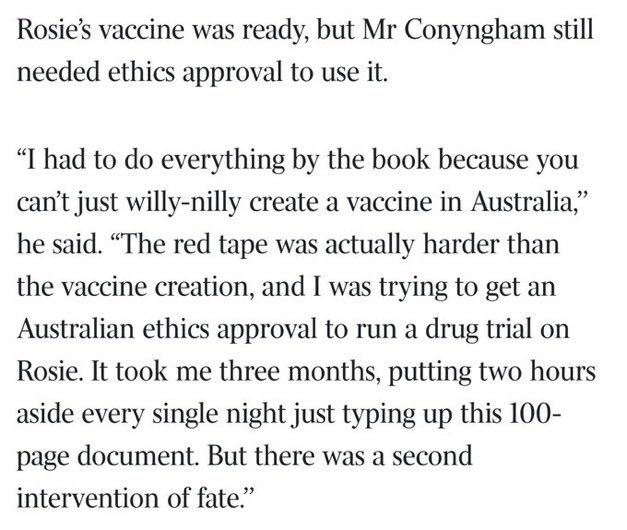
this is actually insane > be tech guy in australia > adopt cancer riddled rescue dog, months to live > not_going_to_give_you_up.mp4 > pay $3,000 to sequence her tumor DNA > feed it to ChatGPT and AlphaFold > zero background in biology > identify mutated proteins, match them to drug targets > design a custom mRNA cancer vaccine from scratch > genomics professor is “gobsmacked” that some puppy lover did this on his own > need ethics approval to administer it > red tape takes longer than designing the vaccine > 3 months, finally approved > drive 10 hours to get rosie her first injection > tumor halves > coat gets glossy again > dog is alive and happy > professor: “if we can do this for a dog, why aren’t we rolling this out to humans?” one man with a chatbot, and $3,000 just outperformed the entire pharmaceutical discovery pipeline. we are going to cure so many diseases. I dont think people realize how good things are going to get
vittorio tweet mediavittorio tweet mediavittorio tweet mediavittorio tweet media
Séb Krier@sebkrier

This is wild. theaustralian.com.au/business/techn…

English
2.5K
19.9K
118K
17.3M
Lelouch retweetledi
Josh Kale
Josh Kale@JoshKale·
Andrej Karpathy just dropped a project scoring every job in America on how likely an AI will replace it from 0-10 > Scraped all 342 occupations from the Bureau of Labor > Fed each one to an LLM with a detailed scoring rubric > Built an interactive treemap where rectangle size = number of jobs and color = how exposed that job is to AI The key signal in his scoring: if the work product is fundamentally digital and the job can be done entirely from a home office, exposure is inherently high. The scale: 0-1: Roofers, janitors 4-5: Nurses, retail, physicians 8-9: Software devs, paralegals, data analysts 10: Medical transcriptionists Average across all 342 occupations: 5.3/10. The entire pipeline is open source. BLS scraping, LLM scoring, the visualization. All of it. Much respect for the sensei this is scary and awesome
English
285
894
6.9K
1.2M
Lelouch retweetledi
Mindset Machine 
Mindset Machine @mindsetmachine·
4 People You Need To Forgive
English
81
2.6K
11.5K
636.9K
Lelouch retweetledi
Anish Moonka
Anish Moonka@AnishA_Moonka·
If you're an AI startup in India, renting processing power from the government to train your model costs about $0.7 per hour. The same hardware on Amazon Web Services costs $3.7. On Microsoft Azure, $6.6. The Indian government is subsidizing AI infrastructure at rates that would make most Western startups do a double-take. I read all 26 pages of the white paper this tweet links to. The numbers inside are wild. The IndiaAI Mission has a budget of about $1.2 billion over five years, approved in March 2024. Almost half of that, roughly $500 million, goes straight to building the processing power AI companies need to train their models. The original plan was to deploy 10,000 processors. By December 2025, they had 38,000 running. 3.8x what they promised. A government open call in January 2025 pulled 506 proposals. The four startups picked first were Sarvam AI, Soket AI, Gnani AI, and Gan AI. Eight more were added by September. India now has 12 separate teams building AI models, ranging from tiny ones for basic chatbots to massive ones rivaling those from the US and China. They cover language, voice, vision, medical diagnosis, material science, and even brain-computer interfaces. The one I keep coming back to is Sarvam AI. They raised $41 million from Lightspeed, Peak XV, and Khosla Ventures. In May 2025, they released a model built on top of a French AI system (Mistral Small) and customized for Indian languages. It got roasted online. Critics said it was a foreign model in Indian clothing. So they went back and built Sarvam-105B completely from scratch, using Indian hardware under the government mission. It outperformed China's DeepSeek-R1 on certain tests, even though it was a model six times larger. Both were released for anyone to download and use in March 2026. There's something else buried in the paper I haven't seen another country try at this scale. India is building a copyright system specifically for AI training data. Under a December 2025 government proposal, AI companies can train their models on any copyrighted content they can legally access, books, articles, music, anything. Creators cannot say no. But the moment an AI product makes money, royalties are collected by a centralized government body and distributed back to creators. Singapore allows AI companies to use content without payment. China requires strict consent before training. India is trying a middle path, and publishers are already calling it forced participation. Stanford's AI Vibrancy Index, which measures a country's overall AI strength across research, talent, infrastructure, and investment, ranked India third globally in 2025. Up from seventh in 2023. But the actual scores tell you how far the gap still is: US at 79, China at 37, India at 22. And India's $1.2 billion budget sits next to China's $47.5 billion semiconductor fund and Saudi Arabia's $100 billion Project Transcendence. India is currently spending 40x less than the frontrunners. This white paper is the most detailed public bet yet that smart infrastructure design can close that gap.
Office of Principal Scientific Adviser to the GoI@PrinSciAdvOff

𝐀𝐬 𝐩𝐚𝐫𝐭 𝐨𝐟 𝐭𝐡𝐞 𝐨𝐧-𝐠𝐨𝐢𝐧𝐠 𝐀𝐈 𝐏𝐨𝐥𝐢𝐜𝐲 𝐖𝐡𝐢𝐭𝐞 𝐏𝐚𝐩𝐞𝐫 𝐒𝐞𝐫𝐢𝐞𝐬, 𝐭𝐡𝐞 𝐎𝐟𝐟𝐢𝐜𝐞 𝐨𝐟 𝐭𝐡𝐞 𝐏𝐫𝐢𝐧𝐜𝐢𝐩𝐚𝐥 𝐒𝐜𝐢𝐞𝐧𝐭𝐢𝐟𝐢𝐜 𝐀𝐝𝐯𝐢𝐬𝐞𝐫 𝐭𝐨 𝐭𝐡𝐞 𝐆𝐨𝐯𝐞𝐫𝐧𝐦𝐞𝐧𝐭 𝐨𝐟 𝐈𝐧𝐝𝐢𝐚 𝐫𝐞𝐥𝐞𝐚𝐬𝐞𝐬 𝐚 𝐰𝐡𝐢𝐭𝐞 𝐩𝐚𝐩𝐞𝐫 𝐨𝐧 “𝐀𝐝𝐯𝐚𝐧𝐜𝐢𝐧𝐠 𝐈𝐧𝐝𝐢𝐠𝐞𝐧𝐨𝐮𝐬 𝐅𝐨𝐮𝐧𝐝𝐚𝐭𝐢𝐨𝐧 𝐌𝐨𝐝𝐞𝐥𝐬. The versatility of Foundation Models makes them a critical layer of today’s AI ecosystem and a key area for innovation in India. Therefore, developing indigenous foundation models is a strategic priority. India’s objective is to harness foundation models for inclusive growth and public good, while ensuring they are governed in a manner consistent with the country’s values, legal framework, and security interests. This white paper provides an understanding of India’s approach to advancing indigenous foundation models through public–private collaboration and to governing these systems that support trust, accountability, and responsible adoption. The White Paper also provides details on India’s approach - which is centred on building indigenous capability across the foundation-model stack. Rather than relying on a single model, India is developing an ecosystem that combines (i) shared compute access, (ii) India-centric data and model repositories, and (iii) multiple model-building efforts across text, speech, multimodal, and sectoral systems. Read the White Paper here: psa.gov.in/CMS/web/sites/…

English
53
620
3.3K
288.8K
Lelouch retweetledi
Chris Murphy 🟧
Chris Murphy 🟧@ChrisMurphyCT·
It’s crystal clear now that Trump has lost control of this war. He badly misjudged Iran’s ability to retaliate. The region is on fire. 1/ I’m going to explain to you in this🧵what I’ve learned - in part from closed door briefings - about the four biggest current crises.
English
4.3K
10.1K
41.4K
5.4M
Lelouch retweetledi
shouko
shouko@shoukointech·
Naval Ravikant: You should live your life like a lion
English
83
1.2K
8.7K
444.8K
Lelouch retweetledi
Balu Gorade
Balu Gorade@BaluGorade·
It's not capital that builds a great business. It's about the business model. Today you value Zomato at ₹1 lakh crore. Tell me when will it generate ₹3,000 crore in free cash flow? Classic RJ. 🔥
English
10
64
613
87.6K
Lelouch retweetledi
Vijay Thirumalai
Vijay Thirumalai@VijayT1609·
Best job in the world is Indexing + doing something worthwhile- AI, Surgeon, Electrician etc VC, PE, bros given how the Public markets are fucking up the multiples, the regime has moved from 100x P/S to 30X EV EBIDTA to 20X P/ FCF ( adjusted for SBC), Most of the Enterprise Tech funds will not even return capital if these multiples persist Now if enterprise tech is trading at 20X P/ FCF, why would your protein powder D2C selling on shopify trade at 100X P/FCF Pls do something worthwhile in life. Issued in public interest
English
3
5
50
5.7K