Kasplex@kasplex
Kasplex zkEVM: Smart contracts arrive on Kaspa Layer 2
Kasplex, in collaboration with the Kaspa Ecosystem Foundation (KEF) @Kaspa_KEF , has officially launched its zkEVM Layer-2 mainnet, bringing Ethereum-compatible smart contracts to the Kaspa network.
This launch represents more than just a technical achievement. It’s the first time that programmable dApps, DeFi protocols, and complex smart contracts can run on Kaspa; an ecosystem known for its ultra-fast, Layer-1 proof-of-work blockchain.
For developers, it opens a brand-new design space; for the Kaspa community, it’s a leap into decentralized finance, tokenization, and beyond.
Background: The foundation laid by “Crescendo”
Kaspa’s Crescendo hard fork, activated on May 5, 2025, was a historic milestone for the network. Internally labeled v1.0.0, Crescendo was the culmination of years of research into blockDAG scaling Kaspa’s unique consensus innovation that allows blocks to be created and confirmed in parallel.
Key upgrades introduced with Crescendo include:
• Block rate increase: Kaspa’s throughput jumped from 1 block per second (BPS) to 10 BPS, multiplying raw network capacity by a factor of 10.
• Transaction ordering improvements: Ordered transaction execution was made possible; an essential prerequisite for any Layer-2 that relies on determinism in state changes.
• Layer-2 readiness: Protocol updates for latency reduction, parallelism, and data availability ensured that Kaspa could support zk-rollups and other scaling solutions.
• Developer foundations: By upgrading the underlying infrastructure, Crescendo essentially “primed” Kaspa for programmable logic, while retaining its hallmark instant confirmation and finality.
Without Crescendo, Kasplex would not have been possible. It transformed Kaspa into a foundation ready for programmability at scale.
What Is Kasplex zkEVM?
Kasplex is the first zkEVM rollup deployed on Kaspa. Kasplex inherits Ethereum compatibility, meaning that developers can use the same tools they already know Solidity, Hardhat, Remix, Truffle, MetaMask without learning a brand-new development stack. Deployment is as simple as redirecting RPC endpoints.
Some of Kasplex’s defining features include:
• Gas in $KAS: Unlike most L2s that introduce a separate token, Kasplex uses bridged $KAS from Layer-1 as the native gas token. This preserves economic alignment and keeps value within the Kaspa ecosystem.
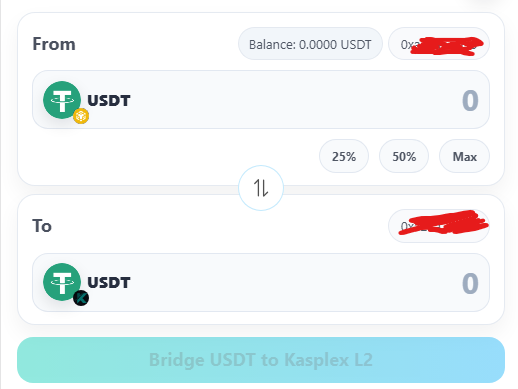
• Bridging mechanism: A two-way bridge enables users to move $KAS from L1 → L2 to use in smart contracts, and back from L2 → L1 seamlessly.
• Open node infrastructure: Kasplex offers three types of nodes that anyone can run, ensuring decentralization rather than limiting validation to a closed set of operators.
This is more than a technical upgrade, it’s a strategic expansion for Kaspa:
• For developers, Kasplex lowers the entry barrier: if you can code on Ethereum, you can now code on Kaspa.
• For users, it means fast, low-cost DeFi, NFTs, DAOs, and experimental applications all secured by Kaspa’s proof-of-work Layer-1.
• For the ecosystem, it’s the bridge to mass adoption: Kaspa goes from being a high-throughput Layer-1 to a complete smart contract platform.
L2 Testnet: Key metrics & early performance
Here are some of the notable statistics from Kasplex’s testnet since launch
• Blocks generated: ~ 6.5 million (Kasplex does not generate empty blocks); blocks are produced only when there is payload to commit from L1.
• Transactions: ~ 24 million
• Unique wallets: over 300,000
• Throughput: over 1,000 transactions per second (tps)
• Average block time: 0.9–1 (bps)
These numbers speak to robustness, stability, and growing adoption. They suggest the system is performing well under load.
Components
Here’s how Kasplex is structured, and what its ecosystem includes:
• Two-way bridge: Supports transfers from L1 → L2 → L1, so users can move $KAS into the Layer-2 environment, use them for gas/contracts, then exit if needed.
kasbridge-evm.kaspafoundation.org
• RPC / API: Full RPC endpoints supporting EVM-compatible calls
evmrpc.kasplex.org
• Explorer: Blockchain explorer for viewing transactions, blocks, and smart contract state on L2.
explorer.kasplex.org
• Chain ID: 202555 (this is the identifier for the Kasplex Layer-2 chain).
• Token: $KAS
• Official website: kasplex.org
• Documentation: docs-kasplex.gitbook.io/l2-network
• Layer 2 audit: github.com/kasplex/evm-l2…
• Community: linktr.ee/kasplex
What’s Next: Roadmap & Upgrades
Kasplex is not static; several future developments are in motion:
• KRC-20 (Kasplex’s token/inscription standard) will receive important upgrades before year-end.
• A new EVM-Lua interface is in development that will allow for alternative smart contract languages or scripting paradigms.
• Further Layer-2 functionality upgrades leveraging innovations from Kaspa itself (for instance, zero-knowledge proof improvements, “vprogs” or virtual programs, etc.).
Why this matters: Implications for Kaspa & the ecosystem
• DeFi readiness: Kasplex unlocks detailed smart contracts and composability, enabling AMMs, lending/borrowing, stablecoins, and all the tools of decentralized finance.
• Developer onboarding: Because it’s zkEVM + Ethereum‐compatible, porting existing dApps is much easier. This will accelerate ecosystem growth.
• Scalability with security: Kaspa’s PoW + blockDAG architecture combined with Kasplex’s roll-up design aims to maintain strong security and decentralization.
• KAS utility: Using $KAS as the gas token helps retain economic alignment, not relying on an external token.
Closing thoughts
We extend our sincere gratitude to the Kaspa core developers, whose groundbreaking work made this possible, and to the Kaspa community, whose vision and energy continue to inspire us.
A special thanks goes to all the teams and builders who tested their applications on the Kasplex testnet, providing invaluable feedback that helped shape the mainnet launch.
Kasplex zkEVM is not just our achievement, it is the result of collective dedication, collaboration, and belief in what Kaspa can become.
This milestone belongs to all of us, and it marks just the beginning of what we can build together.