
Sabitlenmiş Tweet
goldenSparrow 𐤊 🛡️ || Kaspa Intern
2K posts


goldenSparrow 𐤊 🛡️ || Kaspa Intern
@KaspaIntern
15+ yrs Int. Law | Startup founder, cooked chicken 🐔 | Running 2k daily 700+ days and counting 🐣 | Kaspa enthusiast 𐤊
Vilnius, Lithuania 🇱🇹 Katılım Mayıs 2021
3K Takip Edilen1.8K Takipçiler
goldenSparrow 𐤊 🛡️ || Kaspa Intern retweetledi

Genau richtig. Solar/wind/Speicher wird weltweit die Basis der Strom-,
und generell Energie-, versorgung @DiiDesertEnergy
Dirk Laurenz@DirkLaurenz
200 Quadratmeilen Wüste. 15.000 Arbeiter. Eine eigene Entsalzungsanlage, ein eigenes Glasfasernetz, Roboter, die zweimal am Tag staubfrei wischen. Und Solarmodule, so weit das Auge reicht. Willkommen im Khavda Renewable Energy Park in Indien. Dem größten Kraftwerk, das die Menschheit je gebaut hat. 30 Gigawatt. Solar und Wind kombiniert, auf einer Salzwüste in Gujarat, betrieben vom Adani-Konzern. 13 Gigawatt sind bereits am Netz. Das allein wäre schon mehr als die gesamte installierte Solarleistung mancher europäischer Länder. Aber es wird noch verrückter. Weil tagsüber mehr Strom produziert wurde als verkauft werden konnte, hat Adani in neun Monaten die vermutlich größte Netzbatterie der Welt gebaut. 1,1 Gigawatt Leistung, 3,5 Gigawattstunden Kapazität. Offiziell in Betrieb seit diesem Monat. Bis April 2027 sollen weitere 10 Gigawattstunden dazukommen. 13,5 Gigawattstunden Batteriespeicher an einem einzigen Standort. Der Grund für die Batterie: Tagsüber ist der Strom billig, weil die Sonne scheint und alle Solaranlagen gleichzeitig liefern. Abends wird der Strom teuer, weil die Nachfrage steigt und Solar wegfällt. Adani speichert jetzt den billigen Tagesstrom und verkauft ihn abends zu Marktpreisen. Das ist kein Subventionsmodell. Das ist ein Geschäftsmodell. Adani-Nachhaltigkeitschef Arun Sharma sagt es so: "Wir machen nichts auf Megawatt-Ebene. Auch nicht auf Hunderte-Megawatt-Ebene. Wenn es nicht Gigawatt ist, haben unsere CEOs nicht die Aufmerksamkeitsspanne dafür." Und Khavda ist nicht allein. In der chinesischen Provinz Qinghai, auf dem Tibetischen Plateau in 3.000 Metern Höhe, steht der Talatan-Solarpark. Über 17 Gigawatt, auf einer Fläche von sieben Manhattan. Die Höhe ist kein Nachteil, sondern ein Vorteil: Die Sonne strahlt intensiver als auf Meereshöhe, und die kalte Luft macht die Solarmodule effizienter. Unter den Modulen grasen Schafe. In Kalifornien plant der Westlands Water District einen 21-Gigawatt-Solarpark auf brachliegenden Agrarflächen im Central Valley, deren Wasser versiegt ist. Aus einem Wasserproblem wird ein Energieprojekt. Stellt euch das vor: 30 Gigawatt Erzeugung plus 13,5 Gigawattstunden Speicher an einem einzigen Standort in Indien. 17 Gigawatt auf dem Dach der Welt in China. 21 Gigawatt auf ehemaligem Farmland in Kalifornien. Vor fünf Jahren galten Projekte mit einigen hundert Megawatt als Rekorde. Die Solarenergie hat die Gigawatt-Schwelle durchbrochen. Und sie kommt nicht wieder zurück. Quellen: Canary Media / New York Times / Adani Green Energy / cleanthinking.de
Deutsch
goldenSparrow 𐤊 🛡️ || Kaspa Intern retweetledi

I truly believe in $KAS technology as do so many others, as people spread the word and more users/builders come to the network, the potential scale of growth from here price-wise too can be life changing.
English
goldenSparrow 𐤊 🛡️ || Kaspa Intern retweetledi

Chainlink co-founder Sergey Nazarov: “I think the whole global financial system will be run on blockchains, period. Everyone here will be in the blockchain industry, eventually” during The Future of Value panel at Sibos.
English
goldenSparrow 𐤊 🛡️ || Kaspa Intern retweetledi

Toccata, Kaspa's next consensus upgrade, is currently targeted for mid to late June.
Here's what it means for the ecosystem and for Igra.
What is Toccata?
Toccata is the first major Kaspa hard fork since Crescendo. It is a foundational shift towards new L1-native primitives and a stronger base for the execution layers built on Kaspa.
What features does Toccata add to Kaspa L1?
- Covenants: Kaspa-native primitives for enforcing how KAS can be spent. Enables future native L1 assets and vault-like designs.
- ZK opcodes: Groth16 and RISC Zero STARKs verification on Kaspa. Cryptographic groundwork that future capabilities like vProgs and trust-minimized bridges will build on.
- Partitioned sequencing: application-specific lanes that let L1 applications and execution layers maintain isolated transaction history. This scales L1 by isolating each application's data.
How does Toccata relate to rollups?
These primitives are additive to existing execution architectures on Kaspa. EVM rollups like Igra already operate on Kaspa. L1-native capabilities advance in parallel: native Kaspa assets, including potential native stablecoins, become possible as the primitives mature.
What does it mean for Igra?
Several changes for teams integrating with Igra at the L1 level:wy Igra release. We are migrating from txid_mask grinding to a dedicated IGRA lane with updated ATAN storage format and deployment tooling. We are integrating with TN12 and TN10 (where the DAA score transition will be tested) and runnwing our own devnet on the Toccata branch for repeated fork simulation.
What does it mean for the Igra ecosystem?
Several changes for teams integrating with Igra at the L1 level:
- Code that filters or searches for Igra transactions on L1 will need to add a subnet check.
- Code that generates Igra entry transactions (wallets, bridges) will need to include the correct subnet.
More details here: t.me/IgraCommunity/…
We're considering a transition period to support the current prefix alongside the new subnet requirement; we'll communicate the decision as it firms up.
What's the timeline for integration on Igra?
Igra's Frigate testnet for Toccata integration will be available end of May. Expect several weeks of testing to validate the integration. If you're building on Igra, or plan to, reach out and we'll get you set up.
What does it mean for Igra users and holders?
Your iKAS and all other assets are safe. All bridges and protocols remain operational throughout the testing and upgrade window. Igra has navigated complex mainnet operations before with no asset loss, and we are preparing redundant testing infrastructure to simulate the fork transition extensively before mainnet deployment. No action required from you during this period.
We will keep you informed at every step.
Questions or comments? Please join our socials. Telegram: t.me/IgraCommunity
Discord: discord.com/invite/igralabs
Email: team@igralabs.com

English
goldenSparrow 𐤊 🛡️ || Kaspa Intern retweetledi

I have tremendous respect for @hashdag research and ideation contributions; this is why it is even more important to point out inaccuracies.
(Meta note -- declaring no debate while writing multiple paragraphs debating it is a contradiction.)
"EVM is outdated tech." TCP/IP is outdated too. EVM chains hold 80%+ of collective DeFi TVL. Big actors are risk-averse and prefer audited, battle-tested infrastructure.
"Vitalik declaring a move away." Not a move away. RISC-V replaces the execution engine underneath. EVM stays as the interface layer. If anything, RISC-V is Ethereum doubling down on EVM longevity by giving it a faster backend.
"L2s are parasitic." Most L2s today use centralized sequencers. Igra doesn't. It's a based rollup, a category of L2 that uses L1 miners for ordering and routes fees back to them. That's not parasitic. That's additive fee revenue for Kaspa's security budget.
"L1 dev serves L2s, reverse never happens." Igra open-sourced Kaswallet and RPC service for the community. ATAN is on its way. We have collected deep expertise on building based rollups on Kaspa L1, which will be required for vProgs too. We are ready to share it with anyone.
"L2 roadmap declared dead." By whom? L2s hold 40% of Ethereum ecosystem TVL and growing. Over 65% of new smart contracts in 2025 deployed directly on L2. That's not dead. That's an architectural pattern with its own tradeoffs, like every other approach in tech.
"It fragments the efforts." Every project building on Igra or any other rollup expands Kaspa's brand outreach and user base. Expanding programmability expands Kaspa's reach. Restricting it does the opposite.
Kaspa Daily@DailyKaspa
10/13 Q: There's an active debate around zk-native execution versus EVM compatibility as Kaspa's long-term programmability path. Why prioritize zk-native architecture over leaning fully into the existing EVM tooling that L2s already bring? Is the long-term picture zk-native L1 with EVM layers as a transitional bridge? A: There’s no active debate. EVM is an outdated tech antithetical to Kaspa’s boutique brand. Vitalik declaring a move away from it should be enough to end this imagined debate. An L2 takeover is the nightmare of L1s — especially at such an early stage before the L1 has solidified its status. It fragments the efforts, the messaging, the execution layer, the standards, the expectations, the observers. It creates a surreal situation where the project is trying to grow its network effect whilst trying to fend off parasitic networks. L1 development efforts serve L2’s, the reverse never happens (I invite you to skim through pub rnd TG channel and validate this). I know of no crypto project that had to deal this early with L2’s trying to siphon its network effect - before it secured its own. I reiterate that my stance is completely banal, and it is weird that I need to belabour it and present it as “my peculiar decisive opinion” rather than just referring ppl to coindesk articles or crypto twitter and letting them DYOR. The L2 roadmap has been declared dead and L2 projects are fading. Some called it earlier some later than others, the bottom line is one and the same.
English
goldenSparrow 𐤊 🛡️ || Kaspa Intern retweetledi
Friday train of thought.
The KelpDAO meltdown and Arbitrum Conclave censorship are just two more grains on the pile that makes decentr theater obvious.
Even the best CEXes are banks in disguise. There are good banks, but when you give up custody you give up freedom.
Systems that rely on central actors are inherently vulnerable. This is why we don't rely on centralized sequencer.
PoS as a consensus is easy to censor. This is why we run on PoW.
We put "unstoppable, extraction-resistant, censorship-resistant" in our thesis a year ago because we believe in it.
The market keeps validating that conviction.
English

Guess who's got a new website?
kaspa.org
x.com/elldeeone/stat…
Luke Dunshea@elldeeone
Kaspa.org has been refreshed. Kaspa has a lot going on, but the main site does not need to put it all at the front door. Its first job is simple: help someone arrive, understand what Kaspa is, and know where to go next. The previous site accumulated more over time. Pages, explanations, resources, and audiences were added. This version starts smaller, so it can grow with Kaspa from here. The refresh is not just visual. The wording, structure, and narrative direction all needed attention IMO. The content traces back to @hashdag’s writing, simplified for a first read. Kaspa is already deep enough. The first read should not make people work harder than necessary. There are many true ways to talk about Kaspa, but Kaspa.org cannot carry twenty narratives at once. For this version, the strongest one to unify around is real-time decentralisation. Part of the refresh was also about making the builder path easier to follow. Kaspa.org gives people the overview of what exists, why it matters, and where to go next. Docs.kaspa.org gives builders the deeper material, with room for examples, detail, and ongoing improvement. Docs.kaspa.org starts with @IzioDev's work and has the broader goal of bringing important Kaspa L1 builder documentation into one place. Both repos are public. Pages will be added, wording will change, gaps will be filled, and the work can happen in the open. Big shoutout to @kasmediadotcom for their support in helping bring this refresh together. Have a look around. If you see something that can be better, please open an issue or PR.
English

goldenSparrow 𐤊 🛡️ || Kaspa Intern retweetledi
Great initiative — community-built experimental node resolution service by @asaefstroem. Igra discovery endpoint: nrs.pub/38833. Worth checking out.
saefstroem@asaefstroem
The KelpDAO hack meant $292M lost because their verifier depended on a fixed set of RPC nodes. Attackers compromised those nodes and fed fake data. If they had randomized node resolution as a fallback, the attack model breaks. Today I announce NRS: Node Resolution Service. A free service that gives you a working RPC endpoint for any blockchain in milliseconds. Once your request hits, we pick a healthy node from a curated pool, and redirect you there. Every request goes to a different node i.e no single point of failure. Live now with $ETH $BNB $POL $ARB $IGRA and testnets. Open source, free, MIT licensed.
English
goldenSparrow 𐤊 🛡️ || Kaspa Intern retweetledi
🚀 We've submitted a CoinGecko listing request for $iKAS (Igra Bridged Kaspa), the native gas token of Igra Network, our EVM-compatible based rollup on Kaspa BlockDAG.
Verification post for @CoinGecko.
🎫 Request ID: CL2004260025
Contact: Telegram @argonmining
English
goldenSparrow 𐤊 🛡️ || Kaspa Intern retweetledi
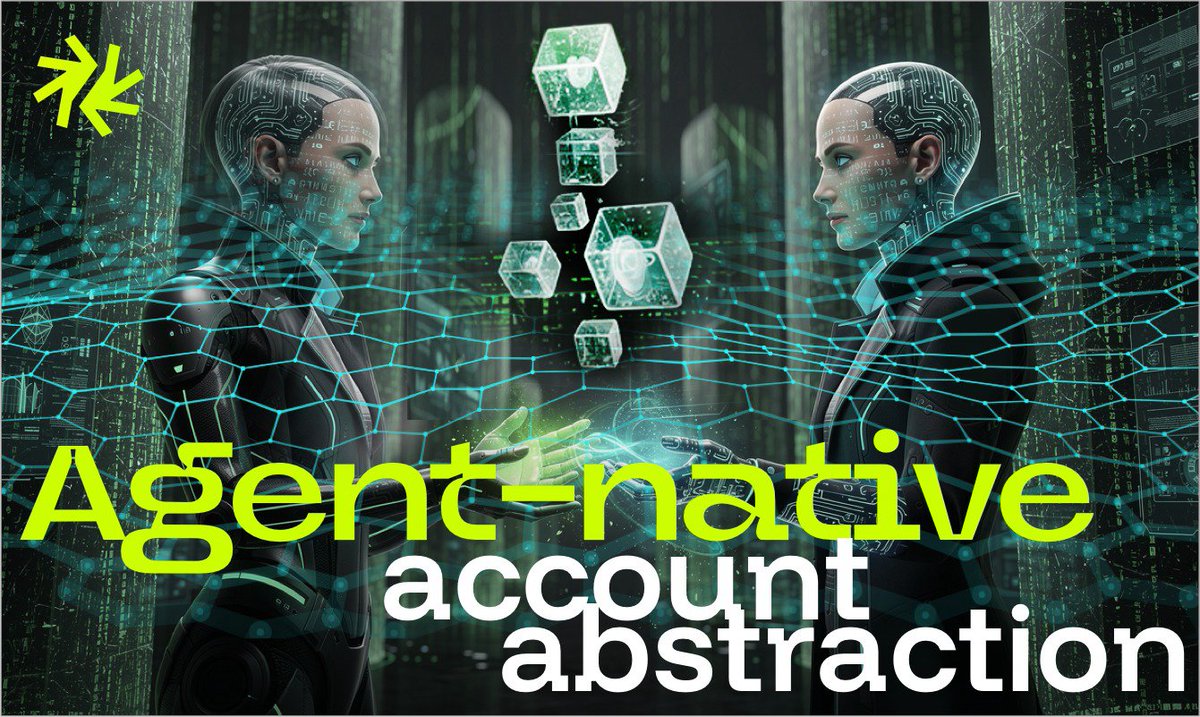
AI agents need wallets that don't require human co-signing on every tx. That infra is now live on Igra.
EIP-7702: any EOA can execute as a smart contract for the duration of one transaction. Atomic approve+swap.
ERC-4337 v0.9: full smart account stack. Gas sponsorship, bundled operations, session keys, passkeys, multisig validation. EntryPoint and SimpleAccountFactory are deployed. Paymaster and bundler not yet live — gasless transactions coming soon.
Together: an agent can hold an EOA, delegate execution to a smart account, and batch its operations atomically via 7702 today. Gas
sponsorship via 4337 paymasters is next.
Documentation:
- igra-labs.gitbook.io/igralabs-docs/…
- igra-labs.gitbook.io/igralabs-docs/…
English
goldenSparrow 𐤊 🛡️ || Kaspa Intern retweetledi
Reminder - @Igra_Labs is on @DefiLlama now, and they’ve fixed the trading volume metric for @ZealousSwap yesterday.
Total Value Locked in DeFi
$467,874 +9.39% 24h
DEXs Volume (24h) $30,038
defillama.com/chain/igra
English

goldenSparrow 𐤊 🛡️ || Kaspa Intern retweetledi
Disbelief is the first phase of every new infrastructure layer.
Chainlink@chainlink
The future looks impossible until it becomes inevitable.
English
goldenSparrow 𐤊 🛡️ || Kaspa Intern retweetledi

Hyperlane is LIVE on @Igra_Labs.
You can now bridge USDC, iKAS, cbBTC, and wstETH from 7 chains to Igra Network.
Explore >> nexus.hyperlane.xyz

English
English

The cypherpunk dream has nowhere to go, except maybe Ethereum
Our CEO @EvgenyGaevoy on why @ethereumfndn is ahead of the curve for the first time, and why @ethereum might be the only blockchain still publicly committing to its cypherpunk origins
His opinions with @_choppingblock ↓
English
@cryptodotnews A DEX with Centralized Nodes 🤡
English

JUST IN: Bitget CEO Gracy Chen declares Hyperliquid is not a true DEX but a centralized exchange, citing the JELLY incident


English
goldenSparrow 𐤊 🛡️ || Kaspa Intern retweetledi

Great work from Angel, @KaspaIntern on seeing this take flight!
What he’s building matters more than it might seem at first glance.
This is a compliance engine that takes complex regulatory frameworks across multiple jurisdictions and turns them into something executable. Instead of reports, audits, and attestations living in siloed systems, they can be generated, verified, and anchored on a shared ledger.
Using @Igra_Labs on #Kaspa means those attestations are not just stored, they are time-ordered, verifiable, and settled quickly enough to be practical in real workflows.
Compliance has always been slow, fragmented, and expensive because trust has to be recreated in every step, across every system. When you can attest to something on a Decentralized network that finalizes in seconds, you reduce that friction dramatically.
For energy markets, digital assets, and #RegTech, this points toward a shift where compliance becomes part of the system itself, not a layer bolted on after the fact.
Good to see this moving from concept to production!
#PoweredByKaspa
#BuildonKaspa
@KaspaKii
@pvson

goldenSparrow 𐤊 🛡️ || Kaspa Intern@KaspaIntern
Just shipped my first production compliance platform. After years of research and two months of intense building, the GS Automated Compliance Engine is live. AI-powered regulatory reporting. Legal research. Blockchain attestation via @IgraLabs on Kaspa BlockDAG @Kaspa_Commons REMIT · EMIR · MiFIR · SFTR · ISDA · MiCA · VARA · FSRA · MAS 15+ EU National Regulators. 4 jurisdictions. One platform. The smart contract settled on-chain in seconds. That was the moment it became real. If you're in energy trading, digital assets compliance, or RegTech, come see what we built. 🔗 gscompliance.io #RegTech #Compliance #EnergyTrading #Kaspa #IgraLabs #Blockchain
English
Just shipped my first production compliance platform. After years of research and two months of intense building, the GS Automated Compliance Engine is live.
AI-powered regulatory reporting. Legal research. Blockchain attestation via @IgraLabs on Kaspa BlockDAG @Kaspa_Commons
REMIT · EMIR · MiFIR · SFTR · ISDA · MiCA · VARA · FSRA · MAS 15+ EU National Regulators. 4 jurisdictions. One platform.
The smart contract settled on-chain in seconds. That was the moment it became real.
If you're in energy trading, digital assets compliance, or RegTech, come see what we built.
🔗 gscompliance.io
#RegTech #Compliance #EnergyTrading #Kaspa #IgraLabs #Blockchain

English
goldenSparrow 𐤊 🛡️ || Kaspa Intern retweetledi

Three New Bitcoin ONLY Calculators
for teaching Plebs about… #BTC #Bitcoin
Send this to your favourite Bitcoiner.
pow-protocol-university.web.app/BITCOIN-SECURI…
English