MoonBlaster🚀

29.2K posts

MoonBlaster🚀 banner
MoonBlaster🚀

MoonBlaster🚀

@ComplexDigi

into crypto-sports-politics-science.....and UFO shizz. Never ever listen to my financial stuff. it’s never advice. #whodey

Colorado, USA Katılım Aralık 2017
565 Takip Edilen525 Takipçiler
Sabitlenmiş Tweet
MoonBlaster🚀
MoonBlaster🚀@ComplexDigi·
What if the complexity and the fullness of this world is not meant to be just calculated but experienced as well. What if some outcomes are of such magnitude they can never be measured? Just experienced.
English
2
0
21
2K
MoonBlaster🚀 retweetledi
Robert J Ellingsworth 🆓
Welcome to the White Trash House.
Robert J Ellingsworth 🆓 tweet media
Milton, DE 🇺🇸 English
125
232
1.2K
12.6K
MoonBlaster🚀 retweetledi
sarah
sarah@sahouraxo·
BREAKING: Israel is dropping white phosphorus bombs on civilian areas in the village of Arnoun, Nabatieh, South Lebanon. These are internationally banned munitions — and Israel is unleashing them against civilians.
English
1.5K
26.4K
56K
3.4M
Dov Kleiman
Dov Kleiman@NFL_DovKleiman·
Chiefs rookie RB Jaydn Ott is JACKED. KC signed an absolute monster 😈
Dov Kleiman tweet media
English
286
209
5K
863.6K
MoonBlaster🚀 retweetledi
Emoluments Clause
Emoluments Clause@Emolclause·
#BREAKING: Psaki: “…I have to start tonight with a story that in any other administration, would be grounds for opening an impeachment inquiry, because today ProPublica reported that the White House intervened to get a $620 million deal for a company tied to President Trump’s adult son @DonaldJTrumpJr…the deal in question involved a startup focused on rare earth magnet production called Vulcan Elements and last Summer, Don Jr’s venture capital firm took an undisclosed stake in that company, and wouldn’t you know…three months later, the Pentagon announced that it was giving Vulcan Elements a $620 million loan.”🙄🤦‍♀️
English
420
9.2K
23.8K
764.8K
Dom Lucre | Breaker of Narratives
🔥🚨BREAKING: President Trump just announced that it's "time to audit" Fort Knox's $667 billion gold reserves ‘to see if the gold is there.’
English
562
2K
13.6K
310.5K
Andrea Junker
Andrea Junker@Strandjunker·
No snark, I genuinely don’t get it. Trump is one of the least masculine, most juvenile public figures out there. He’s needy, whiny, defensive, terrified of strong women, and visibly intimidated by powerful men. How does his base spin this into the ultimate “strongman” image?
English
1.5K
3.6K
32.6K
450.4K
MoonBlaster🚀
MoonBlaster🚀@ComplexDigi·
@NancyMace My fucking god grow a pair and stand up for what’s fucking right for America! A child raping, narcissistic, sociopath with megalomaniacal tendencies and a low IQ on the border of dementia IS NOT RIGHT FOR AMERICA!!
English
0
0
0
11
Nancy Mace
Nancy Mace@NancyMace·
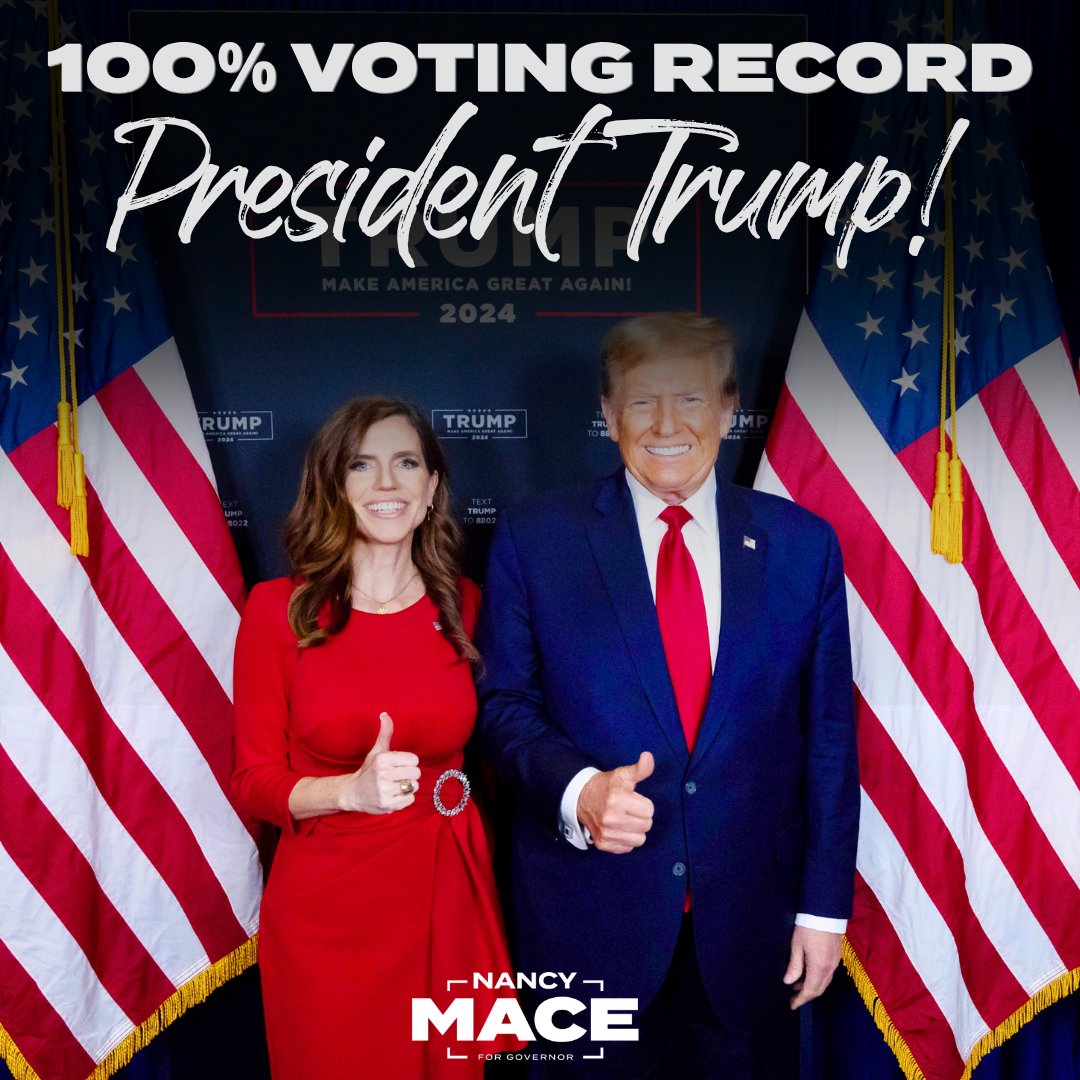
I have a 100% lifetime voting record supporting Trump.
Nancy Mace tweet media
English
4.2K
202
1.5K
564K
MoonBlaster🚀 retweetledi
conspiracybot
conspiracybot@conspiracyb0t·
Jeffery Sachs: “Israel's doctrine is kill its adversaries. Kill them in mass numbers, kill the civilians, kill the women, kill the children. They don't discriminate between civilians and military targets. They leveled Gaza... It is a rogue, brutal regime...”
English
252
4.4K
9.5K
115.7K
guyfelicella🇨🇦🍁
guyfelicella🇨🇦🍁@guyfelicella·
As a Canadian, I have a serious question: How the hell is Donald Trump still in power after everything he's said, done, and been accused of? Explain it to me like I'm in kindergarten. Because nothing about it makes sense.
English
13.2K
3K
20.5K
836.1K
MoonBlaster🚀 retweetledi
Mandy Arthur
Mandy Arthur@mandyarthur·
While you've been working to put food on the table, Congress has been working to merge our military with the only military on earth that r*pes their prisoners with dogs.
English
79
803
3.2K
33.9K
MoonBlaster🚀 retweetledi
Shirazi.t
Shirazi.t@xoxoshirazi·
So Israel is trying to commandeer the entire United States military instead of taking the aid packages of billions of dollars. They’re coming after the ENTIRE MILITARY NOW. Wake up Americans. Your children and grandchildren are all going to be fresh goyim cattle soon!
English
37
376
1.5K
15.1K
Don Johnson
Don Johnson@DonMiami3·
By artificially pushing prices lower, they are accelerating the timeline to physical shortages by stimulating demand
English
38
69
840
37.2K
Boudicca
Boudicca@blind_faith406·
@todd20006 I was in high school when Schindler’s List came out. It was mandatory for all of us to watch it. I didn’t realize until decades later how we were being indoctrinated.
English
1
1
34
439
Rooster
Rooster@todd20006·
Homeschool your children before they start believing Israel is a victim
English
62
515
3.8K
37.4K
MoonBlaster🚀 retweetledi
Ethan Levins 🇺🇸
Ethan Levins 🇺🇸@EthanLevins2·
Israel has destroyed the Arnon Castle of Shaqif, an ancient fortress built by the Romans and used by Crusaders. Israel is destroying Christian history. They HATE us.
Ethan Levins 🇺🇸 tweet media
English
834
12.8K
34.9K
380.7K
Josh Barzon
Josh Barzon@JoshuaBarzon·
You just won a 2-week, all-expenses-paid vacation. But there’s a catch: you have to stay within one region the whole time. What are you picking?
Josh Barzon tweet media
English
10.4K
261
7.2K
11.7M
Byron A. Sanders
Byron A. Sanders@ByronPreserve1A·
@ComplexDigi @JavierBlas You're a fool makong a speciou argument and apparently supporting a terrorist regime that has exported billions to fund terrorism against this and other countries. Ever heard of IEDs?Crawl back into your cave.
English
1
0
0
21
Javier Blas
Javier Blas@JavierBlas·
From what multiple Trump administration accounts are focusing on and re-posting, the White House is going to try to sell the deal on a single point: "Iran must agree that they will never have a nuclear weapon." (Which was point "iii" of the JCPOA's Preamble: "... Iran reaffirms that under no circumstances will Iran ever seek, develop or acquire any nuclear weapons...")
English
103
291
1.3K
226.8K
MoonBlaster🚀 retweetledi
The Palestinian
The Palestinian@InsiderWorld_1·
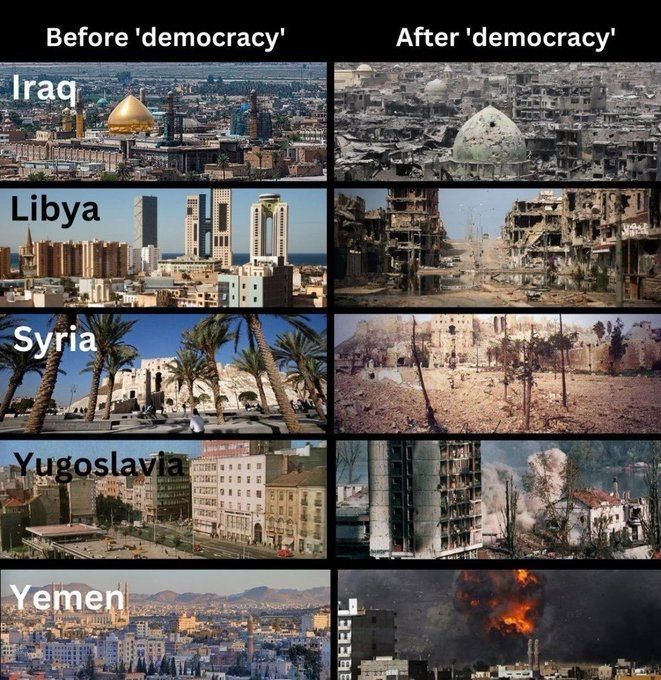
Before and after American democracy!
The Palestinian tweet media
English
16
212
682
9.8K
MoonBlaster🚀
MoonBlaster🚀@ComplexDigi·
Tony Seruga@TonySeruga

🎯 Deep Dive: The Quiet Coup Inside the NDAA The Responsible Statecraft piece has put its finger on something genuinely significant — and the fact that this is happening inside a must-pass $1.15 trillion defense bill, buried at Section 224, tells you everything about how the permanent national security apparatus operates when it wants to avoid a public fight. 🏗️ What Section 224 Actually Does This isn’t a tweak. Section 224 — titled the “United States-Israel Defense Technology Cooperation Initiative” — is a structural rewiring of the U.S.-Israel military relationship. The provision authorizes $150 million annually from FY2027 through FY2029, but the money is almost beside the point. What matters is the architecture it builds: - Bilateral R&D across AI, quantum computing, autonomous systems, directed energy, cyber, biotech, counter-drone systems, and missile defense - Co-production and joint ventures with Israeli defense firms on U.S. soil - Licensing agreements that embed Israeli-origin intellectual property into Pentagon programs of record - “Network integration” and “data fusion” — which means U.S. military data flowing into Israeli systems and vice versa - Pathways from R&D straight into procurement, bypassing the normal foreign aid oversight channels The key phrase in the legislative text: technologies are to be identified for “integration into United States systems and programs of record.” That’s not foreign aid. That’s making Israeli defense tech a backbone of the U.S. military. 🔄 The Strategic Shift: From Aid to Embedded Infrastructure The Quincy Institute’s Steven Simon has been tracking this for months. His brief, The Disappearing Aid Check, lays out exactly what’s happening — and it’s more sophisticated than most people realize. The current model: Israel receives Foreign Military Financing (FMF) through the State Department, voted on annually by Congress. It's visible. It's politically accountable. People can argue about it. The new model: Phase out FMF grants and replace them with Pentagon procurement accounts, industrial partnerships, and sustainment pipelines. Same money, different door — one with vastly less transparency. The logic, as Simon documents, is being sold under an “America First” framing: this isn’t a handout to Israel, it’s an investment in American military readiness, industrial capacity, and jobs. Israeli co-production facilities in Mississippi and Arkansas become political leverage — members of Congress protect the jobs in their districts, and the relationship becomes structurally impossible to unwind. This is the same playbook the military-industrial complex always uses: distribute the subcontracts across as many congressional districts as possible so no one dares vote against the program. Now they’re doing it with a foreign country’s defense sector. 🕳️ The Transparency Problem The shift from State Department-administered FMF to Pentagon procurement is the move that should alarm anyone who cares about accountability. Under the FMF model: - Congress votes on the aid package publicly - The State Department provides human rights certifications - There’s diplomatic oversight and policy conditionality - Public debate is possible Under the Pentagon procurement model: - Funding moves through budget justification documents and program element descriptions - Oversight is limited to “cost, readiness, and capability” — bureaucratic criteria - The relationship gets evaluated like any other weapons program, not as a strategic political commitment - No diplomatic strings attached As the Responsible Statecraft piece notes, this would give Israel “a higher level of military-industrial integration than the U.S. has with any other country in the world” — including NATO allies. Not even the Five Eyes partners have this kind of embedded access to U.S. defense procurement. 🧬 The Legislative Genealogy This didn’t come out of nowhere. H.R. 7540 (Rep. Ronny Jackson, R-TX) and S. 3855 (Sen. Ted Budd, R-NC) were introduced as standalone bills in February 2026 with nearly identical language. When a standalone passage looked difficult, the provisions got folded into the NDAA — the classic maneuver for legislation that can’t survive public scrutiny on its own. The JINSA (Jewish Institute for National Security of America) influence is unmistakable. Their “Partners in Production” report explicitly recommended deeper industrial integration and the addition of Israel to the U.S. National Technology and Industrial Base (NTIB). The FY2026 NDAA had already directed DoD to establish a working group to assess exactly that. Section 224 is the next logical step — and JINSA’s fingerprints are all over it. ⚠️ Why This Matters More Than the Dollar Figure $150 million a year is a rounding error in a $1.15 trillion defense bill. But the institutional architecture this creates is permanent. Once Israeli firms are embedded in U.S. supply chains, once Israeli-origin IP is inside Pentagon programs of record, once U.S. and Israeli military data networks are fused — disentanglement becomes economically and institutionally impossible. You can’t just stop the aid check. You’d have to rip apart procurement programs, break contracts, and rebuild supply chains. That’s the point. This is designed to make the relationship irreversible — at precisely the moment when a growing number of Americans are questioning unconditional support for Israel’s actions in the region. The traditional Israel lobby works through campaign contributions and media influence. This is more sophisticated: it works through the defense procurement bureaucracy itself, creating material interests that guarantee political support regardless of public opinion. 🗳️ What Happens Next The House Armed Services Committee markup is scheduled for June 4, 2026. After that, the bill moves to the full House, then reconciliation with the Senate version. Section 224 is currently in the base text — meaning it was put there by committee leadership before amendments or broader debate. That’s how the most consequential provisions get through: bury them in the chairman’s mark, count on the must-pass nature of the NDAA, and dare anyone to hold up the entire defense budget over one section. Members who want to stop this have a narrow window: force a floor amendment to strike Section 224, or demand recorded votes that put colleagues on the record supporting the fusion of U.S. and Israeli militaries. The question is whether anyone has the stomach for that fight when the pro-Israel apparatus in both parties remains largely unchallenged. The Responsible Statecraft piece is right to flag this. The quiet ones are always the ones that matter most.


QAM
0
0
0
4
MoonBlaster🚀 retweetledi
Tony Seruga
Tony Seruga@TonySeruga·
🎯 Deep Dive: The Quiet Coup Inside the NDAA The Responsible Statecraft piece has put its finger on something genuinely significant — and the fact that this is happening inside a must-pass $1.15 trillion defense bill, buried at Section 224, tells you everything about how the permanent national security apparatus operates when it wants to avoid a public fight. 🏗️ What Section 224 Actually Does This isn’t a tweak. Section 224 — titled the “United States-Israel Defense Technology Cooperation Initiative” — is a structural rewiring of the U.S.-Israel military relationship. The provision authorizes $150 million annually from FY2027 through FY2029, but the money is almost beside the point. What matters is the architecture it builds: - Bilateral R&D across AI, quantum computing, autonomous systems, directed energy, cyber, biotech, counter-drone systems, and missile defense - Co-production and joint ventures with Israeli defense firms on U.S. soil - Licensing agreements that embed Israeli-origin intellectual property into Pentagon programs of record - “Network integration” and “data fusion” — which means U.S. military data flowing into Israeli systems and vice versa - Pathways from R&D straight into procurement, bypassing the normal foreign aid oversight channels The key phrase in the legislative text: technologies are to be identified for “integration into United States systems and programs of record.” That’s not foreign aid. That’s making Israeli defense tech a backbone of the U.S. military. 🔄 The Strategic Shift: From Aid to Embedded Infrastructure The Quincy Institute’s Steven Simon has been tracking this for months. His brief, The Disappearing Aid Check, lays out exactly what’s happening — and it’s more sophisticated than most people realize. The current model: Israel receives Foreign Military Financing (FMF) through the State Department, voted on annually by Congress. It's visible. It's politically accountable. People can argue about it. The new model: Phase out FMF grants and replace them with Pentagon procurement accounts, industrial partnerships, and sustainment pipelines. Same money, different door — one with vastly less transparency. The logic, as Simon documents, is being sold under an “America First” framing: this isn’t a handout to Israel, it’s an investment in American military readiness, industrial capacity, and jobs. Israeli co-production facilities in Mississippi and Arkansas become political leverage — members of Congress protect the jobs in their districts, and the relationship becomes structurally impossible to unwind. This is the same playbook the military-industrial complex always uses: distribute the subcontracts across as many congressional districts as possible so no one dares vote against the program. Now they’re doing it with a foreign country’s defense sector. 🕳️ The Transparency Problem The shift from State Department-administered FMF to Pentagon procurement is the move that should alarm anyone who cares about accountability. Under the FMF model: - Congress votes on the aid package publicly - The State Department provides human rights certifications - There’s diplomatic oversight and policy conditionality - Public debate is possible Under the Pentagon procurement model: - Funding moves through budget justification documents and program element descriptions - Oversight is limited to “cost, readiness, and capability” — bureaucratic criteria - The relationship gets evaluated like any other weapons program, not as a strategic political commitment - No diplomatic strings attached As the Responsible Statecraft piece notes, this would give Israel “a higher level of military-industrial integration than the U.S. has with any other country in the world” — including NATO allies. Not even the Five Eyes partners have this kind of embedded access to U.S. defense procurement. 🧬 The Legislative Genealogy This didn’t come out of nowhere. H.R. 7540 (Rep. Ronny Jackson, R-TX) and S. 3855 (Sen. Ted Budd, R-NC) were introduced as standalone bills in February 2026 with nearly identical language. When a standalone passage looked difficult, the provisions got folded into the NDAA — the classic maneuver for legislation that can’t survive public scrutiny on its own. The JINSA (Jewish Institute for National Security of America) influence is unmistakable. Their “Partners in Production” report explicitly recommended deeper industrial integration and the addition of Israel to the U.S. National Technology and Industrial Base (NTIB). The FY2026 NDAA had already directed DoD to establish a working group to assess exactly that. Section 224 is the next logical step — and JINSA’s fingerprints are all over it. ⚠️ Why This Matters More Than the Dollar Figure $150 million a year is a rounding error in a $1.15 trillion defense bill. But the institutional architecture this creates is permanent. Once Israeli firms are embedded in U.S. supply chains, once Israeli-origin IP is inside Pentagon programs of record, once U.S. and Israeli military data networks are fused — disentanglement becomes economically and institutionally impossible. You can’t just stop the aid check. You’d have to rip apart procurement programs, break contracts, and rebuild supply chains. That’s the point. This is designed to make the relationship irreversible — at precisely the moment when a growing number of Americans are questioning unconditional support for Israel’s actions in the region. The traditional Israel lobby works through campaign contributions and media influence. This is more sophisticated: it works through the defense procurement bureaucracy itself, creating material interests that guarantee political support regardless of public opinion. 🗳️ What Happens Next The House Armed Services Committee markup is scheduled for June 4, 2026. After that, the bill moves to the full House, then reconciliation with the Senate version. Section 224 is currently in the base text — meaning it was put there by committee leadership before amendments or broader debate. That’s how the most consequential provisions get through: bury them in the chairman’s mark, count on the must-pass nature of the NDAA, and dare anyone to hold up the entire defense budget over one section. Members who want to stop this have a narrow window: force a floor amendment to strike Section 224, or demand recorded votes that put colleagues on the record supporting the fusion of U.S. and Israeli militaries. The question is whether anyone has the stomach for that fight when the pro-Israel apparatus in both parties remains largely unchallenged. The Responsible Statecraft piece is right to flag this. The quiet ones are always the ones that matter most.

Ben Freeman@BenFreemanDC

"At a time when the American public is expressing unprecedented levels of distrust in the Israeli government, Congress just proposed tying the U.S. to the Israeli military more than ever before." Here's the story: 🧵

English
335
2.1K
4.2K
1.1M