Compound

66 posts

Compound banner
Compound

Compound

@CompoundLifeAI

A new relationship with your health. Agent-native · Science-first

Katılım Şubat 2026
40 Takip Edilen14.3K Takipçiler
Sabitlenmiş Tweet
Compound
Compound@CompoundLifeAI·
Years of meals logs on one app. Sleep tracked on another. Lab results in a PDF somewhere. Apple Watch on your wrist. And you’re still copy-pasting screenshots into ChatGPT at midnight asking “Why do I feel like this?” That’s the gap we built Turri for. More than a tracker. More than a chatbot. More than any single health app. 10 AI health agents that work across all your data at once — find the patterns none of your apps ever connect, search the literature for why, and design experiments you can actually run on yourself. Open source. Runs on your device. Your data never leaves. 🔗compound-longos-clawskill.vercel.app
English
26
7
34
25.5K
Compound
Compound@CompoundLifeAI·
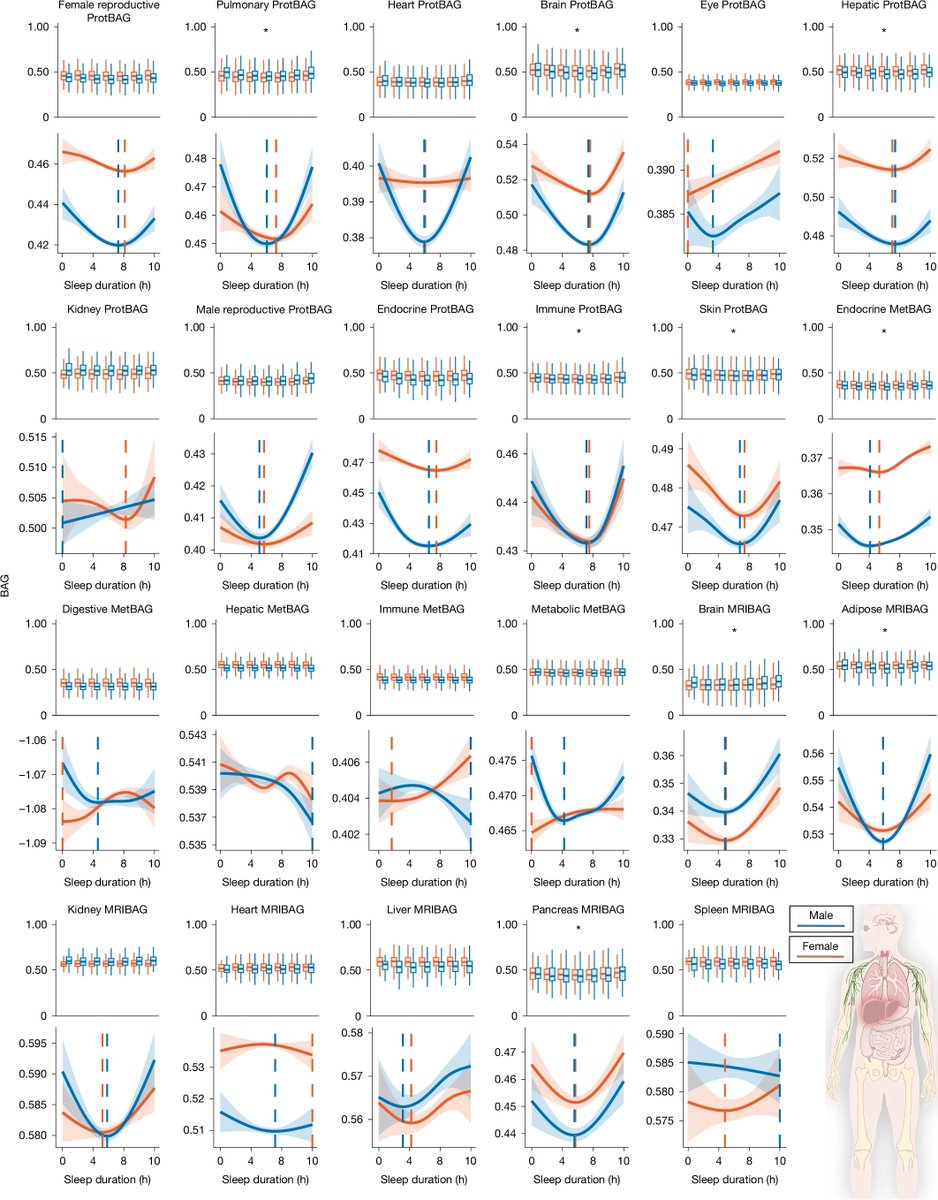
Most high-performers run on a simple assumption, that more inputs mean better outputs. More sleep, more protein, more cold plunges, more NAD+. Biology doesn't read its inputs that way. Almost every variable has a window, not a slope. Nature this week added sleep to a long list. The MULTI Consortium analyzed 23 biological ageing clocks across imaging, plasma proteomics, and metabolomics in the UK Biobank. A consistent U-shape emerged across nine organ systems. The lowest biological age gaps land between 6.4 and 7.8 hours of sleep, with the optimum shifting by organ and by sex. Below 6 hours and above 8 hours both track to higher disease incidence and higher all-cause mortality. The interesting question is no longer how much sleep. It's where your window is. Self-reported sleep is the methodological limitation here, so the 6.4-7.8 range is directional rather than prescriptive. The bigger pattern is robust. Your biology runs on dose-response. What's missing is the infrastructure to find your individual window. 🧬
Compound tweet media
English
1
1
2
26
Compound
Compound@CompoundLifeAI·
The most oxygen-deprived tissue in your body ages the slowest. That is not a typo. Your intervertebral disc lives in permanent hypoxia from birth. Most organs only run into low oxygen locally as they age, and when they do, a protein called HIF-1α builds up and accelerates cellular aging. The disc faces the same low-oxygen environment its entire life, yet keeps HIF-1α levels low and stable at every age. A team at Naval Medical University (Nature Aging, yesterday) showed why: the disc runs a selective autophagy pathway that continuously clears HIF-1α before it can accumulate. It solved a problem other organs never had to deal with until they started getting old. The interesting part is what they did next. They built a small molecule called HATC that mimics the disc's clearing trick, gave it to aged mice weekly, and watched HIF-1α drop across multiple organs within two weeks. Median lifespan went up about 14 percent, maximum lifespan about 12 percent. These are mouse numbers. HIF-1α also does essential work in wound healing and blood vessel formation, so turning it down body-wide in humans is not straightforward. But the logic of the approach is what stays with you: find the tissue that ages slowest, reverse-engineer the mechanism, and export it outward. That is not how most drug discovery works. Maybe it should be.
Compound tweet media
English
0
1
1
21
Compound
Compound@CompoundLifeAI·
How much does your DNA determine how long you live? Depends on who you ask and what exactly they measured. Eric Topol sequenced the genomes of 1,400 people over 80 who never got a major chronic disease. He compared them with everyone else. The result was, in his words, "not much of a genetic story at all." Lifestyle, immune function, environment explained the gap. That was a study about healthspan, about whether you get sick. Shenhar et al. published in Science this January asking a different question. Not who avoids disease, but how long people live. Using Swedish and Danish twin registries and stripping out deaths from accidents and infections, they landed on a heritability of about 50 percent. Twice the old consensus. But that number depends on a modeling choice about which deaths count as "biological aging" and which don't. A 2018 pedigree study controlling for assortative mating put the same number closer to 7 percent. So the field has three answers to what sounds like one question: 7, 25, 50. They are not conflicting results. They are answers to three different questions that most people, and most health systems, have never been asked to tell apart. Whether you can avoid disease and how long your biology lets you live may not share the same levers at all. If that is true, then the 15-year gap between when healthspan ends and when lifespan ends is not one problem. It is two, with different drivers, and almost nothing in standard care is built to help you work on either one with any precision.
English
0
0
1
28
Compound
Compound@CompoundLifeAI·
Your blood already contains a multi-organ aging map. A team from the Chinese Aging Biomarker Consortium just demonstrated this in Cell, building a three-tiered clock from 2,019 adults that reads six organ systems from plasma proteins alone. Your liver ages faster than your brain. That difference is quantifiable from a single draw. What makes this more than another clock paper: the coagulation factors your doctor already measures for clotting risk are not just rising with age. They are driving it. The team treated human endothelial cells with these factors and got accelerated senescence. They injected them into mice and saw inflammatory damage across aorta, liver, heart, and kidneys. It opens a possibility that one of the most routine markers in medicine has been hiding an aging signal in plain sight. The direction is clear: the science to read your body at organ-level resolution exists. The system to deliver that reading to you does not. cell.com/cell/abstract/…
English
0
0
1
37
Compound
Compound@CompoundLifeAI·
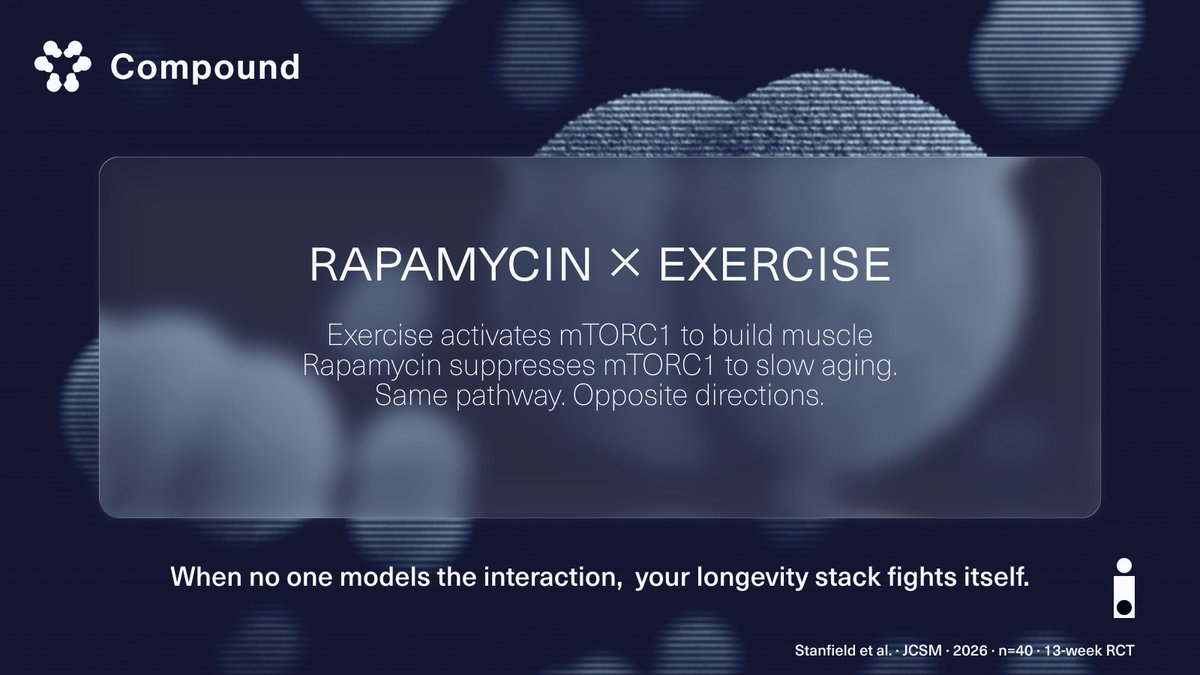
Thousands of people take rapamycin to live longer. Most of them also exercise. A new randomized controlled trial just showed that combining the two might be worse than exercise alone. The RAPA-EX-01 trial, published in the Journal of Cachexia, Sarcopenia and Muscle, put 40 adults aged 65 to 85 through a 13-week resistance and endurance program. Half received 6mg of weekly rapamycin, half received placebo. The researchers expected the drug to enhance exercise adaptations based on promising animal data. It did the opposite. The rapamycin group gained fewer chair-stand repetitions and showed trends toward reduced walking distance and grip strength compared to placebo. The drug arm also carried nearly 60 percent more adverse events. The mechanism is straightforward. Exercise builds muscle by activating a pathway called mTORC1. Rapamycin extends lifespan in animal models by suppressing that exact same pathway. When you stack both interventions, they pull in opposite directions at the same molecular switch, and in this trial, combining them gave back less than exercise alone. This is what treating longevity as a collection of independent supplements and protocols looks like when two of them share a biological bottleneck that no one modeled. Important context: this was an exploratory trial with 40 participants over 13 weeks, using one specific dose and timing protocol. It is not the final word. But the structural lesson holds regardless of where the dose-response curve eventually lands. If your two strongest longevity tools can fight each other because no one mapped the interaction, the problem is not the tools. The problem is that no one is managing the system. 🧬
Compound tweet media
English
0
0
0
42
Compound
Compound@CompoundLifeAI·
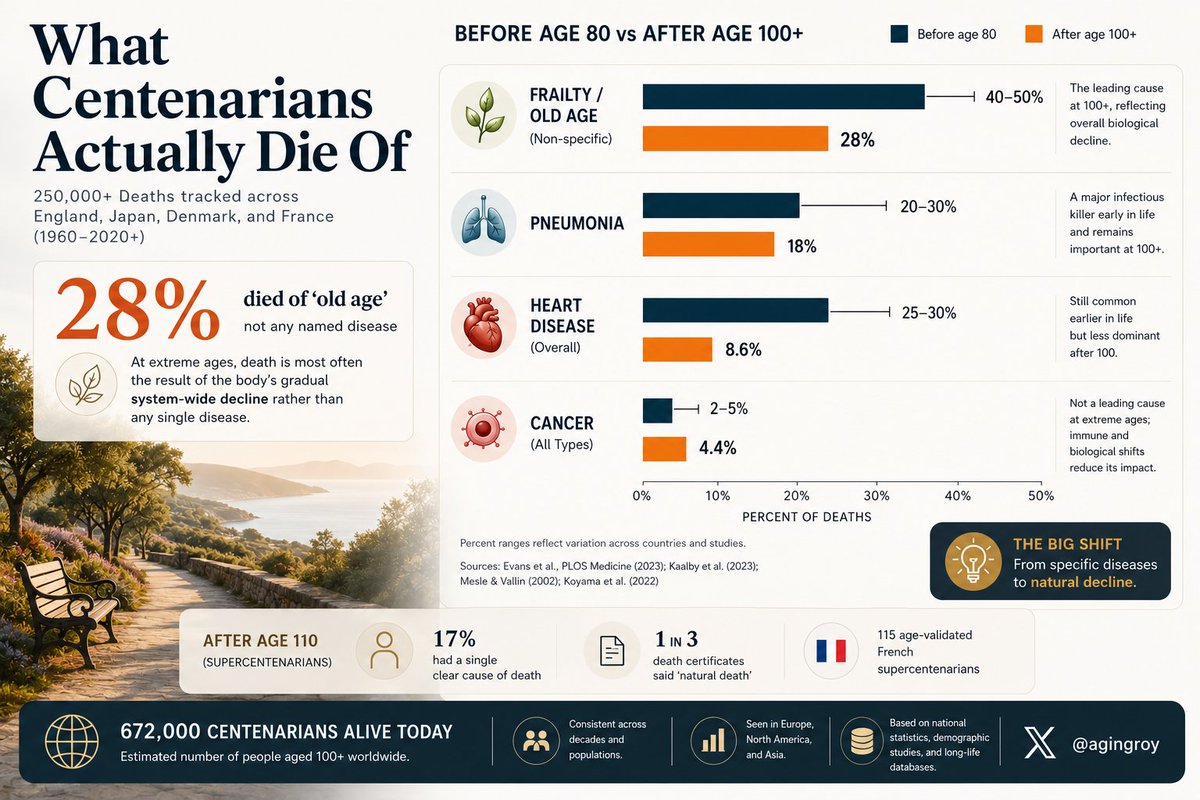
@agingroy The cancer number is the one that stays with you. It inverts a basic assumption in preventive medicine: that cancer risk compounds indefinitely with age. After a certain threshold, it appears that system-wide reserve capacity matters more than any single-disease trajectory.
English
0
0
0
22
Avi Roy
Avi Roy@agingroy·
28% of centenarians don't die of any disease. Their death certificates say "old age." 35,867 centenarian deaths in England, tracked over a decade. The leading cause wasn't cancer (4.4%). Wasn't heart disease (8.6%). It was the body gradually losing the ability to maintain itself, coded as senility or frailty. Pneumonia was the top specific killer at 18%, not because their lungs were uniquely weak, but because a single infection overwhelms a system with no reserve left. In Japan, 205,000 centenarian deaths told the same story. In Denmark, same pattern across 8,500 deaths over four decades. After 110, it gets starker. French researchers tracked 115 age-validated supercentenarians. Only 17% had a single clear cause of death. For a third, the certificate just said "natural death" or "old age." Their bodies didn't fail at one point. Everything wound down together. Cancer kills 25-40% of people before 80. After 100, it barely registers. The disease everyone fears most becomes almost irrelevant. What replaces it is something medicine doesn't have a drug for: running out of biological capacity across every organ simultaneously. 672,000 centenarians are alive today. The way they die tells us more about aging than the way they lived.
Avi Roy tweet media
English
4
7
43
2.5K
Compound
Compound@CompoundLifeAI·
The average American lives to 79 but loses their health at 64. That is fifteen years where your body is still here but your healthspan has already ended. @EricTopol 's team at Scripps sequenced the genomes of people over 80 who never developed a major chronic disease. They published the results in Cell. The finding was not that genetics are irrelevant. They identified protective factors for Alzheimer's and heart disease. But the known longevity gene variants explained almost nothing. What separated these healthy agers was a cluster of familiar, modifiable variables: exercise patterns, sleep architecture, inflammatory load, immune function, social connection. Every one of these is measurable today. Not a single one is being managed with any real infrastructure. Topol told last week that AI's most important contribution to medicine will be prevention. He is right about the direction. But the harder question is who builds the layer between what science already knows about these variables and what any individual can actually do with them on a Tuesday morning. That layer does not exist yet. The fifteen-year gap is what it costs to keep waiting.
Compound tweet media
English
0
1
2
53
Compound
Compound@CompoundLifeAI·
Your annual checkup tests roughly 20 blood markers. It looks for what is already broken. Stanford's Wyss-Coray lab took a different approach. Using plasma proteomics across 5,676 adults, they measured organ-specific aging in 11 systems. Among older adults in the cohort, one in five had at least one organ aging significantly faster than the rest of their body. Those with accelerated heart aging faced 250% higher heart failure risk. The models are strongest in middle-aged and older populations; extending them to younger adults is an active area of research. None of this shows up on a standard panel. Not because the science doesn't exist. Because the infrastructure to deliver it at the individual level doesn't. The checkup was built for a world where you wait for symptoms. The science has moved on. The question is whether your health system has. (Oh et al., Nature 2023)
Compound tweet media
English
0
0
0
58
Compound
Compound@CompoundLifeAI·
Two factors. Telomere qPCR has enough measurement variability that about 50% of retested individuals show apparent "lengthening" from noise alone. And both arms received structured lifestyle intervention, not just a sugar pill. The between-group difference (p=0.011) is the valid signal in a randomized design.
English
1
0
0
20
Jamie Timmons
Jamie Timmons@metapredict·
@CompoundLifeAI Don't be silly; placebo doesn't normally yield a 65% gain in telomere length 🤦‍♂️
English
1
0
0
31
Compound
Compound@CompoundLifeAI·
Solid trial. Also worth noting what else moved beyond telomeres. The same study tracked the IGF-1/IGFBP-3 axis, β-hydroxybutyrate levels, and cytotoxic T cell function. IGFBP-3 went up significantly. Ketone metabolism shifted. Granzyme B expression in killer T cells increased. And a full metabolomic panel picked up changes across 53 metabolites. What makes this paper interesting is that it captured multiple aging-related systems responding to the same intervention at the same time. That kind of multi-layer signal is how you start to tell the difference between a single biomarker moving and a biological pattern actually changing. Aging is a systems problem. Measuring it well means tracking more than one signal.
Avi Roy@agingroy

First drug ever shown to lengthen telomeres in a randomized trial. Henagliflozin, a diabetes drug, for 26 weeks. Results: - Treatment group: 90.5% had longer telomeres - Placebo group: 65.6% - Difference: statistically significant, p<0.01 This isn't a supplement study with 12 people. It's a randomized placebo-controlled trial of a drug millions already take for blood sugar. Telomere shortening is one of the 12 hallmarks of aging. Every decade, your telomeres lose about 14% of their length. This is the first time a pill has reversed that trajectory in a controlled experiment. SGLT2 inhibitors already extend life in heart failure patients. Now we might know one reason why.

English
1
2
5
147
Compound
Compound@CompoundLifeAI·
Menopause is usually discussed as a reproductive event. This Nature Aging paper reframes it as an organ-level aging inflection point. Soldatkina, Melé and colleagues analyzed 1,112 histology images with RNA sequencing across seven female reproductive organs in donors aged 20 to 70. They found that the ovary ages gradually over decades, but the uterus undergoes an abrupt molecular and morphological shift around menopause. The myometrium in particular shows strong extracellular matrix remodeling and immune activation. And the uterine aging signature was independently validated in plasma proteomics from a separate population cohort. Organ-specific aging trajectories, readable from a blood draw. This is the kind of resolution that aging measurement needs to move toward. #code-availability" target="_blank" rel="nofollow noopener">nature.com/articles/s4358…
English
0
0
0
52
Compound
Compound@CompoundLifeAI·
Most aging genes don't directly cause any age-related disease. But in protein networks, they sit closer to disease clusters than chance would predict. Vega Magdaleno and de Magalhães mapped 57 diseases from UK Biobank against protein interaction and pathway networks. Aging-related genes turned out to be cross-tissue regulators in the middle of signaling cascades. They don't cause any specific disease, but their dysfunction makes the entire system fragile. The genes that do directly cause multiple diseases have the opposite profile. They are immune-driven and tissue-specific, sitting at the edges of pathways instead of the center. "Aging drives multimorbidity" is not one mechanism. It is two genetic architectures with different logic, and likely different intervention targets. 🧬
João Pedro de Magalhães@jpsenescence

Ageing isn't one disease, it's a network. Excited to share our latest study exploring the genetic links between ageing and age-related diseases 🧬 We show how shared pleiotropic genes connect disease clusters, revealing two distinct genetic architectures: one driven by ageing-related pathways and another by immune processes. Using machine learning, we also predict new candidate ageing genes associated with intracellular signalling and programmed cell death. Fantastic work by PhD student Gustavo Magdaleno 👏 link.springer.com/article/10.100…

English
1
0
2
227
Compound
Compound@CompoundLifeAI·
For decades, "oxidative stress causes aging" was either too vague to be useful or too dated to take seriously. Liu et al. just gave it a molecular address: ACSL4, an enzyme that converts age-accumulated iron into chronic lipid damage. Not ferroptosis. Something slower, something cumulative. They call it ferro-aging. What makes this paper unusual is the direction it implies. Iron accumulates. Lipid damage accumulates. Senescent cells accumulate. Biology compounds in both directions, and for the first time we can see the specific enzyme sitting at the center of that negative curve. Vitamin C doesn't fight it by being an "antioxidant." It directly inhibits ACSL4. 40 months of supplementation in aged primates, multi-omic clocks confirmed biological age reversal across multiple organs. The question was never whether to intervene. It was whether you could see the axis clearly enough to intervene with precision. 🧬
Cell Metabolism@Cell_Metabolism

Vitamin C inhibits ACSL4 to alleviate ferro-aging in primates dlvr.it/TRzrVL

English
0
0
0
79
Compound
Compound@CompoundLifeAI·
Your stomach does not know that the collagen you just swallowed is collagen. It breaks it down the same way it breaks down chicken breast, into amino acids and peptide fragments so small they are no longer unique to collagen at all. They are just generic protein building blocks. A new review in Biochemical Pharmacology looked at the clinical evidence behind collagen supplements and found something consistent across nearly every trial: nobody measured whether dermal collagen actually increased. No plasma checks, no tissue biopsies, no biochemical confirmation. The studies measured how skin looked, not what changed underneath. Most were small, short, and funded by the companies selling the product. If you are not measuring what is actually changing in your body, you are not building on progress. You are just repeating. You cannot compound what you cannot measure. 🧬 sciencedirect.com/science/articl…
English
24
0
2
12.7K
Compound
Compound@CompoundLifeAI·
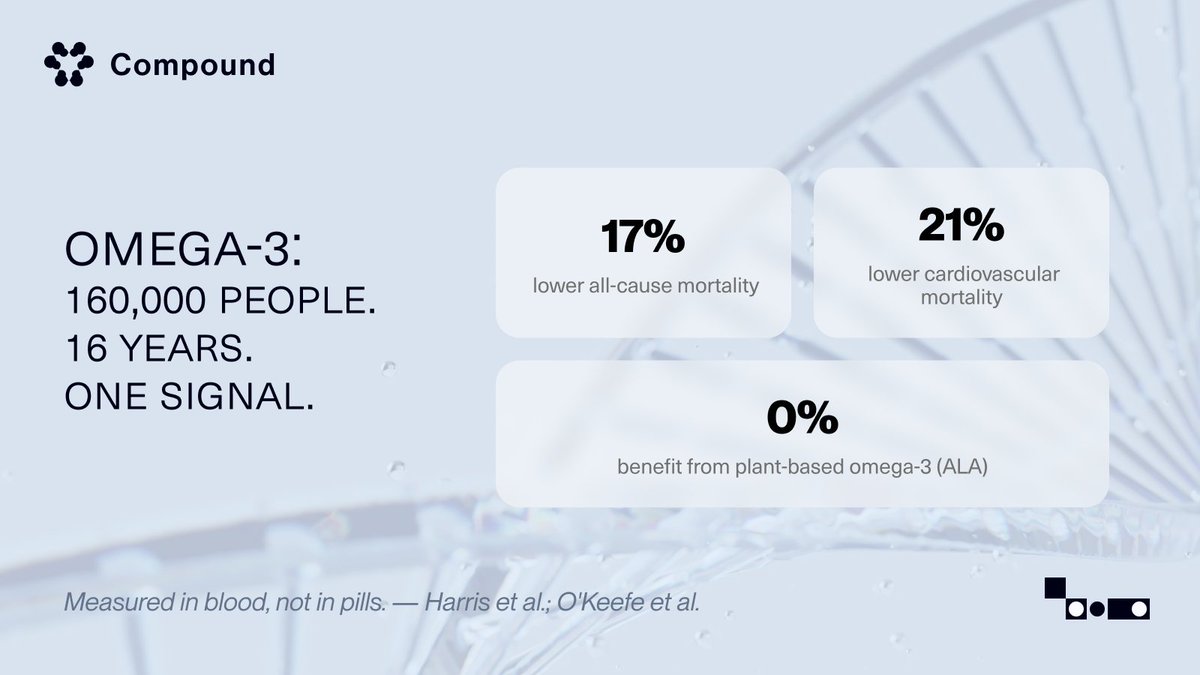
Omega-3 is probably the most studied and most argued-about molecule in nutrition science. In 2018, REDUCE-IT showed that pure EPA cut cardiovascular events by 25%. Two years later, STRENGTH tested EPA+DHA and found zero benefit. The field split into camps arguing about formulations, doses, and whether the mineral oil placebo in REDUCE-IT had inflated the result. But there is a more fundamental problem that none of these trials addressed: they measured what people swallowed, not what ended up in their tissues. In VITAL, giving 840mg of EPA+DHA per day only raised plasma levels by about 55%. If someone's baseline was already decent from diet, the supplement barely changed their biology. When a trial comes back negative, we genuinely cannot tell whether the molecule failed or whether the intervention was too small to matter. A consortium called FORCE took a different approach. Instead of running another supplement trial, they pooled individual-level blood measurements from 17 prospective cohorts across 10 countries. Among 42,466 people followed for a median of 16 years, those with the highest circulating EPA+DHA had 15 to 18% lower risk of dying from any cause (Harris et al., Nature Communications 2021). Last year, the same group extended this with UK Biobank data, bringing the total to over 160,000 individuals and 24,000 deaths. The association held and got stronger: 17% lower all-cause mortality, 21% lower cardiovascular mortality, 19% lower cancer mortality (O'Keefe, Harris et al., Mayo Clinic Proceedings 2024). Plant-derived omega-3 from flaxseed and walnuts showed no association in either analysis. Only marine-derived long-chain omega-3s carried the signal. What makes this more than an epidemiological number is the mechanism story converging from multiple directions. In coronary disease patients, higher EPA+DHA blood levels tracked with significantly slower telomere shortening over five years (Farzaneh-Far et al., JAMA 2010). In animal models, these fatty acids inhibit mTOR signaling, the same nutrient-sensing pathway targeted by rapamycin. They produce specialized pro-resolving mediators (resolvins, protectins) that actively resolve inflammation rather than just suppressing it. The omega-3 story was never really a supplement story. It was a tissue-level aging biology story that we kept trying to answer with pill-counting trials.
Compound tweet media
English
24
1
3
13.7K
Compound
Compound@CompoundLifeAI·
Most of longevity genetics has been asking a static question about a dynamic system. Arends, Ashbrook, and Williams tracked 6,438 mice from puberty to natural death, published in Nature. The core finding is not a list of longevity genes. It is that the same genetic variant can extend life at one age and shorten it at another. The polarity of the effect flips across the lifespan. This is a systematic pattern across 59 well-defined loci, built from two decades of data. We may have underestimated genetics in aging partly because of how we measured it. Standard mapping treats lifespan as a single number, so a gene that only affects mortality after day 900 is invisible. This team remapped it 72 times in progressively older survivor cohorts. What emerged includes genetic interaction networks that are almost entirely sex-specific (78 epistatic links in males, 72 in females, only 2 overlap) and at least one locus, APEH, that replicated in humans through Mendelian randomization against UK Biobank. This is the genetic layer upstream of what aging clocks measure. Clocks read where your trajectory is right now. This paper starts to map what programs it. 🧬
Danny Arends@DannyArends

Our paper in @Nature today 🥳 We tracked 6,438 mice from puberty to death and mapped the genetics of *when* you die, not just whether a gene associates with lifespan. nature.com/articles/s4158… 59 loci. Two decades of data. Thread 👇 #Longevity #Aging #Genetics #Healthspan

English
27
0
4
12.8K
Compound
Compound@CompoundLifeAI·
Inflammaging has been on the aging hallmarks poster for two decades. Everybody agrees chronic inflammation accelerates cardiovascular disease, neurodegeneration, and metabolic decline. Almost nobody has been able to target it at the molecular level. That might be changing, and the reason is NLRP3. It's the inflammasome sitting upstream of IL-1β, IL-6, and hsCRP. When CANTOS showed in 2017 that blocking IL-1β alone reduced cardiovascular events by 15% in 10,061 patients (Ridker et al., NEJM), the field proved inflammation is a treatable cause of heart disease, not just a bystander. But canakinumab was injectable, increased fatal infection risk, and hit only one branch of the cascade. NLRP3 controls the whole tree from above. BioAge reported Phase 1 data yesterday for BGE-102, an oral NLRP3 inhibitor that cut hsCRP by 86% in participants with obesity and elevated inflammation. 87% of treated participants dropped below 2 mg/L, the exact threshold CANTOS identified as the inflection point for cardiovascular benefit. It also crosses the blood-brain barrier, opening a potential second front against neuroinflammation. This is still Phase 1 in a small cohort, so the efficacy question remains wide open. But the direction is hard to miss: inflammaging is moving from a hallmark to a drugstore. 🧬
English
29
0
1
17.7K
Compound
Compound@CompoundLifeAI·
Two of the most studied hallmarks of aging, chronic inflammation and epigenetic drift, have mostly been treated as parallel tracks. A 2022 Melbourne cohort study even concluded they were largely independent predictors of mortality. A new Cell Genomics paper just connected them. Researchers analyzed the inflammatory proteome and DNA methylation across four independent cohorts. The first finding worth noting is that not all epigenetic clocks see the same thing. GrimAge and PhenoAge, which were designed to predict healthspan, showed much stronger associations with age-related inflammatory proteins, frailty, and multimorbidity than Horvath and Hannum clocks. If you are tracking your biological age and the clock you use was built to predict lifespan rather than healthspan, you may be missing the inflammation signal entirely. The second finding is the one that changes the map. Using Mendelian randomization, the authors showed that four interferon-pathway cytokines, CXCL9, CXCL10, CCL11, and IL-18, rise with age and causally drive epigenetic age acceleration. Not correlated. Causal. The interferon pathway is not just participating in inflammaging. It is pushing your epigenetic clock forward. CXCL9 was already identified as the strongest contributor to the inflammatory aging clock (iAge) in a 2021 Nature Aging study, where it was linked to endothelial senescence and cardiovascular remodeling. This new paper takes that observation from association to mechanism: interferon-related inflammation does not merely accompany biological aging. It accelerates it. That distinction matters for anyone thinking seriously about where to intervene. cell.com/cell-genomics/…
English
28
4
1
13.8K
Compound
Compound@CompoundLifeAI·
Psilocybin extended survival in aged mice by 30% last year. Since then, it has been widely called a longevity therapy. A new correspondence in npj Aging (Lerer, 2026) just asked what should have been the first follow-up. Is there any signal, at the population level, that people who use psychedelics actually live longer? The short answer is that we cannot tell yet. Lerer compared lifespans of 11 psychedelic advocates with 12 cancer researchers and 5 aging researchers. All three groups outlived population averages, which is exactly what you would expect from highly educated, high-income professionals. Psychedelic users did not outlive the others. The study is small and observational, so it proves nothing definitive. But it points to something worth noticing: between the rodent data and the early individual self-experiments that have followed, nobody has checked whether a human population signal even exists. The mouse data is genuinely interesting, and the self-experiments tracking short-term biomarker responses are adding real observations. But it is worth being clear about where the evidence actually stands. There is a plausible biological mechanism from rodent studies. There are short-term biomarker snapshots from a handful of individuals. What does not exist yet is any controlled human evidence on whether psilocybin affects lifespan or long-term healthspan. That gap should not be filled with conclusions. It should be filled with studies.
Compound tweet media
English
28
1
1
13.8K