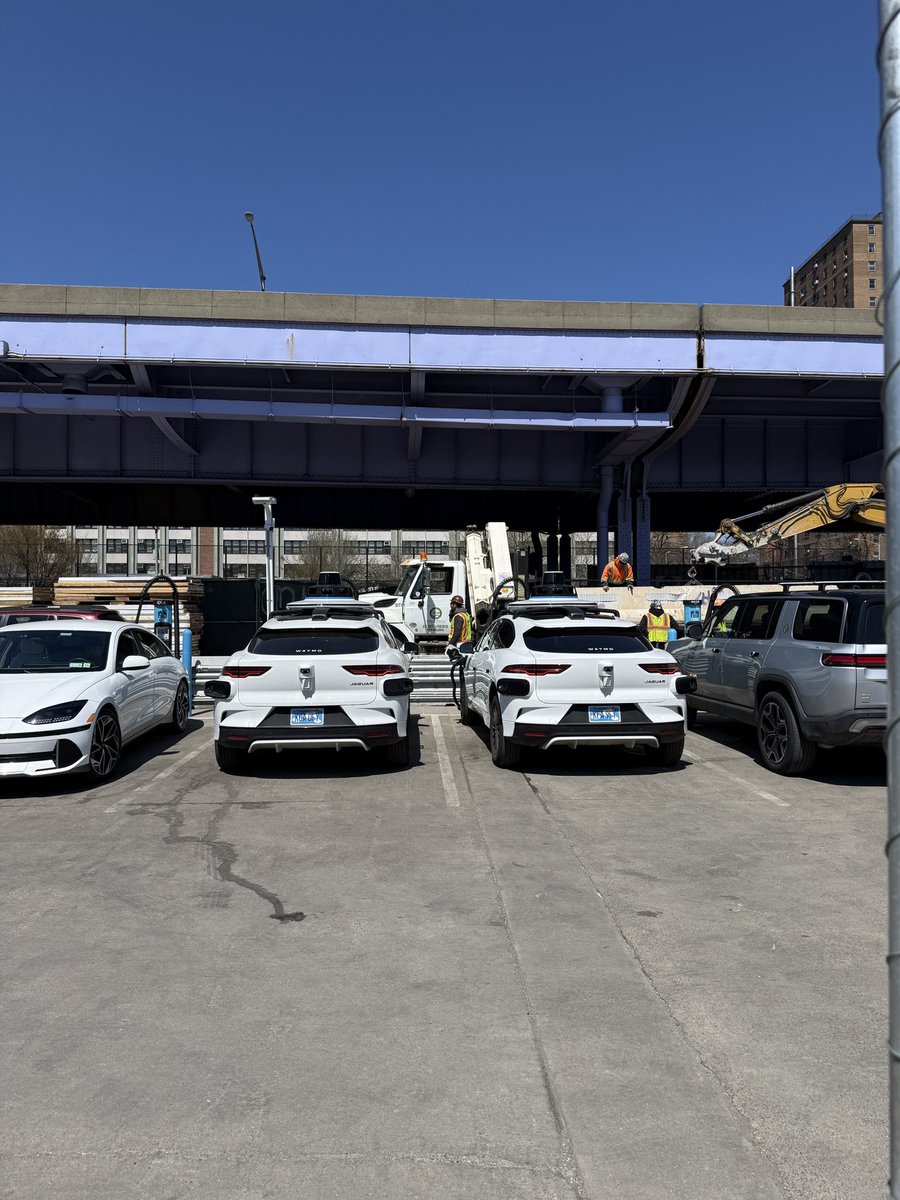
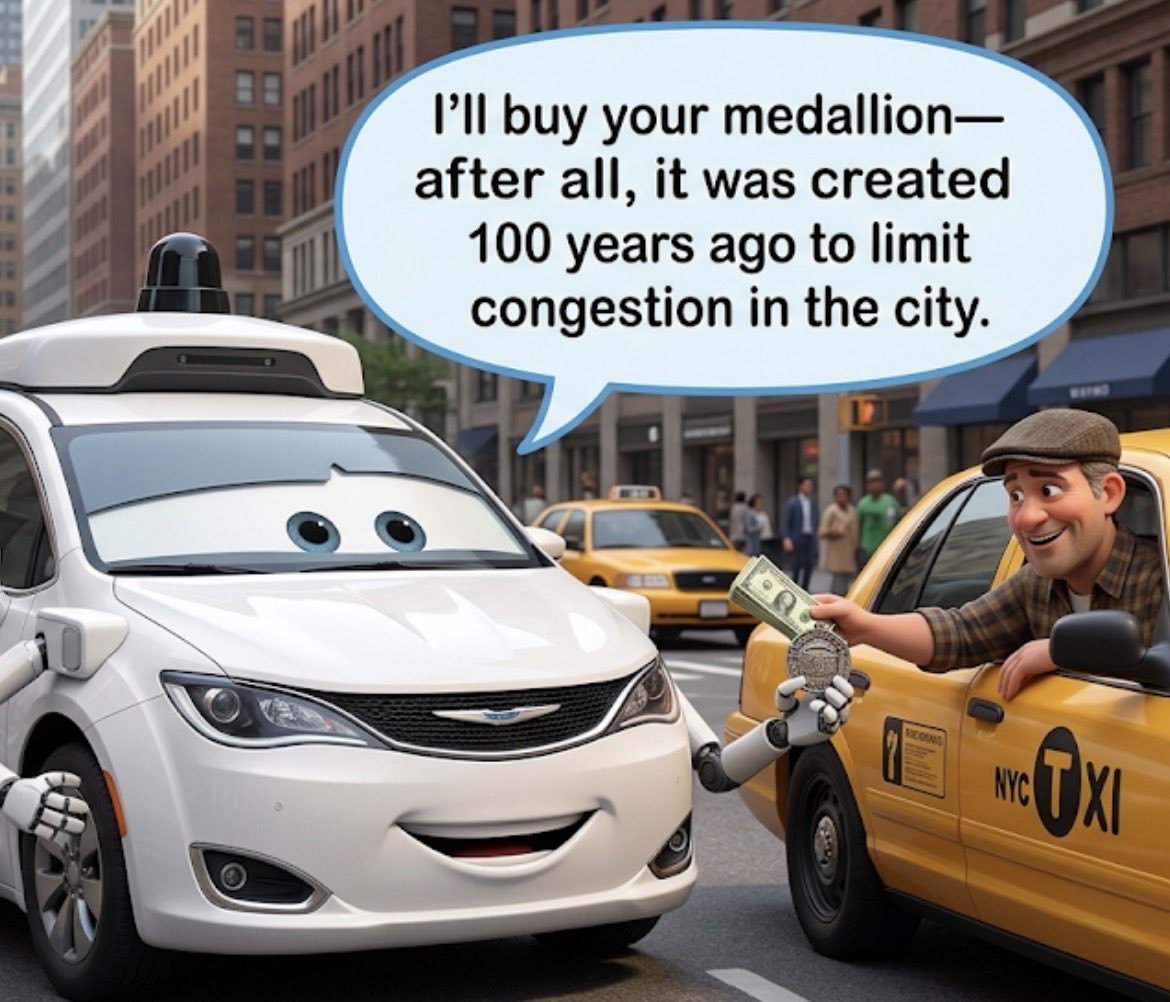
@curl_justin The taxi medallion eases the transition. Few people realize this. Bills are being introduced to repurpose the taxi medallion as the AV license in NYC.
English
Crawdad
453 posts

@Crawdad_Inc
Last fair deal in the country; Last fair deal in the town

New essay on the economics of structural change and the post-commodity future of work. 1. Almost any question about the impact of advanced AI on the economy needs to start at the same place: what is still scarce? Answer that, and the analysis becomes pretty straightforward. This essay explores what becomes scarce if AI really can replicate most of what humans do in production, and what this mean for the future of jobs. 2. My conjecture, working through the economics: labor reallocates across sectors, and the sector it reallocates to has properties that keep labor a meaningful share of the economy. Ultimately this is about the structure of demand itself. For this, we have to go back to Girard, Augustine and Rousseau: once people's base needs are met, their preferences shift to comparative motives (e.g., status, exclusivity, social desirability). This motive is inherently non-satiated. 4. The key paper is Comin, Lashkari, and Mestieri (Econometrica 2021). As people get richer, they don't buy proportionally more of everything. They shift spending toward sectors with higher income elasticity. They estimate income effects account for 75%+ of observed structural change. 5. The ironic consequence: the sector that gets automated becomes a smaller share of the economy, not a larger one. Agriculture got massively more productive and its share of employment collapsed. Manufacturing too. The "stagnant" sectors absorb the spending and the jobs. 6. So the question is: which sectors have high income elasticity in a post-AGI world? I argue it's what I call the relational sector. Categories where the human isn't just an input into production, it is part of the value. 7. Why does the relational sector have high income elasticity? Because human desire has a mimetic, relational dimension. We don't just want things for their intrinsic properties. We want what others want, and we want it more when others can't have it. Girard, Rousseau, Augustine, and Hobbes all saw this. 8. In work with Kristóf Madarász, we showed this experimentally: WTP roughly doubles when a random subset of others is excluded from the good. And in new work with Graelin Mandel, AI involvement kills the premium. Human-made art gains 44% from exclusivity; AI-made art only 21%. 9. This all comes together for the core argument. The sector that absorbs spending as AI makes commodity production cheap is one where human provenance is part of the value, and demand for it grows faster than income. Exactly the profile that keeps labor meaningful. 10. To be clear about the claim: I'm NOT saying aggregate labor share must rise. It may fall. The claim is about sectoral composition, i.e., where expenditure and employment go once commodities get cheap, and the fact that the sector that will absorb reallocated labor maps to a substantial component of human preferences and desire. 11. If you're interested in the formal model, a linked companion technical note works out all the economics. Read the essay here: aleximas.substack.com/p/what-will-be…

NEW: If Waymo gets its way, 2 million workers will be out of work. When Waymo gets a firm hold on a city, wages go down. Some drivers now have to work 12 hours day, 7 days a week just to get by. This isn't inevitable — but Big Tech is spending millions to make you think it is.


NEW: If Waymo gets its way, 2 million workers will be out of work. When Waymo gets a firm hold on a city, wages go down. Some drivers now have to work 12 hours day, 7 days a week just to get by. This isn't inevitable — but Big Tech is spending millions to make you think it is.





The New York Times has an article examining how a Nepalese Uber driver named Anup Baniya supports a family on $25k take-home pay. Midway down the article, we learn a shocking fact: Baniya pays $2,400 per month to rent a Toyata RAV4 hybrid SUV. A new RAV4 costs around $32,000 for a base model. The monthly payment on a 60 month financing plan is $629. So why is this guy paying four times that? Because NYC caps the number of licenses it grants for for-hire vehicles, so people with the licenses rent out their cars and plates to people who don't have them for hundreds of dollars per week. But why would anyone take such an arrangement? Why would Baniya pay $30k in overhead to earn $25k? Why doesn't he just walk into a McDonald's and ask for an application? Hourly fast-food workers earn about $40k per year in NYC. According to the article, Baniya drives under this arrangement because he likes being able to choose his own hours, though he complains about the impact of sedentary 10 hour driving shifts on his health. But if you find that unpersuasive, another possible reason someone might work under such an arrangement could be that his legal status bars him from other work (the article does not say whether Baniya is legally allowed to work in the US). Platforms like Uber require drivers to provide Social Security Numbers to set up a driver account, but illegal immigrants routinely circumvent this by buying or renting active accounts from other people who are legally allowed to have them. A recent Transunion survey of gig workers found that 45% of respondents had rented out or sold access to an account. The article mentions "a recent tax return," but that doesn't mean Baniya is here legally. Illegal immigrants in New York file tax returns under ITINs, which enables them to get refunds for taxes withheld, as well as qualify for public subsidies on health insurance and childcare. Illegal immigrants who file this way are protected from immigration enforcement by New York's sanctuary law.




NYC taxi medallions hit $1.3 million each in 2013. Then Uber launched and destroyed that artificial scarcity overnight. By 2018, medallions traded for $160,000 - an 88% collapse that represents the largest peacetime transfer of wealth from rent-seekers to consumers in modern history. The taxi cartel had politicians bought and paid for (Bloomberg took $50K from taxi interests while blocking ride-sharing apps). They artificially restricted supply to maybe 13,000 yellow cabs in a city of 8 million people. You'd wait 45 minutes in the rain while empty cabs refused to go to Brooklyn. Uber didn't just compete - it obliterated the entire regulatory capture scheme. Consumers voted with their phones, choosing abundant rides over government-rationed scarcity. The medallion owners screaming about "unfair competition" sound exactly like telegraph operators complaining about the telephone (creative destruction works both ways, fellas). This is why bureaucrats hate entrepreneurs. Every successful startup exposes how unnecessary their permission slips really were...

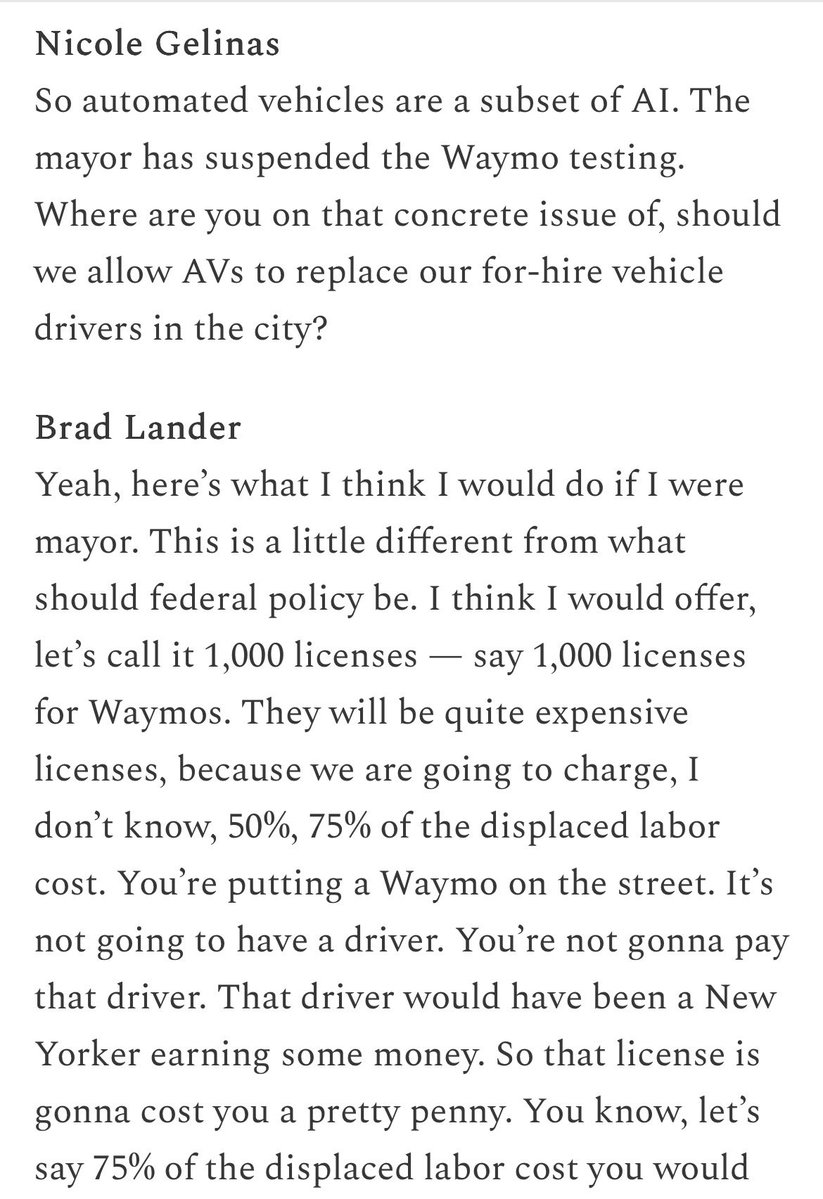
@nicolegelinas "Stealing" from transit is a funny way for them to put it. It's just latent demand, that finally has a supply. Transit doesn't own customers.