CyberFox

2.1K posts

CyberFox banner
CyberFox

CyberFox

@CyberReynard

Katılım Nisan 2016
236 Takip Edilen103 Takipçiler
CyberFox retweetledi
Boyan Slat
Boyan Slat@BoyanSlat·
As we speak, we have over 100 people working to clear the legacy pollution from the Gulf of Honduras coastline. Step 1: stop the inflow with Interceptors Step 2: clean up the legacy pollution along the coast Step 3: success
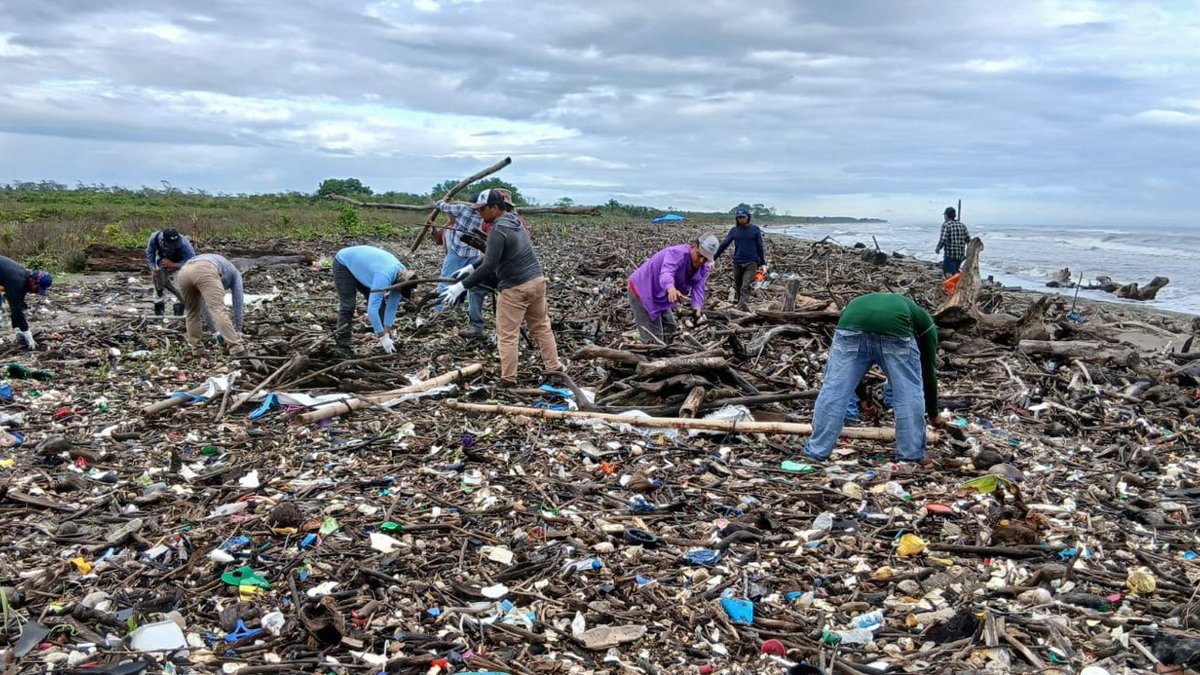
Boyan Slat tweet media
English
25
65
501
9.7K
CyberFox retweetledi
Proton VPN
Proton VPN@ProtonVPN·
Who made this 😭
Proton VPN tweet media
English
132
834
9.1K
4.6M
CyberFox retweetledi
Based Jessica
Based Jessica@RealJessica·
Thank you Germany 🇩🇪and Britain 🇬🇧 for sacrificing your economies to save the planet. China appreciates you exporting your manufacturing to provide jobs for their citizens.
Based Jessica tweet media
English
717
9.8K
49.1K
1.2M
CyberFox retweetledi
Defiant L’s
Defiant L’s@DefiantLs·
NASA was paying a billion-dollar premium every year to rent its own workforce through contractors instead of just hiring them directly, and somehow nobody thought that was a problem until Jared Isaacman showed up.
Breaking911@Breaking911

BREAKING: NASA Administrator Jared Isaacman is converting a select number of outsourced contractor roles into civil servant positions, ending an arrangement that cost U.S. taxpayers over $1 billion a year in unnecessary fees to staffing agencies.

English
125
1.4K
7.9K
200.2K
CyberFox retweetledi
David Parker
David Parker@david_parker·
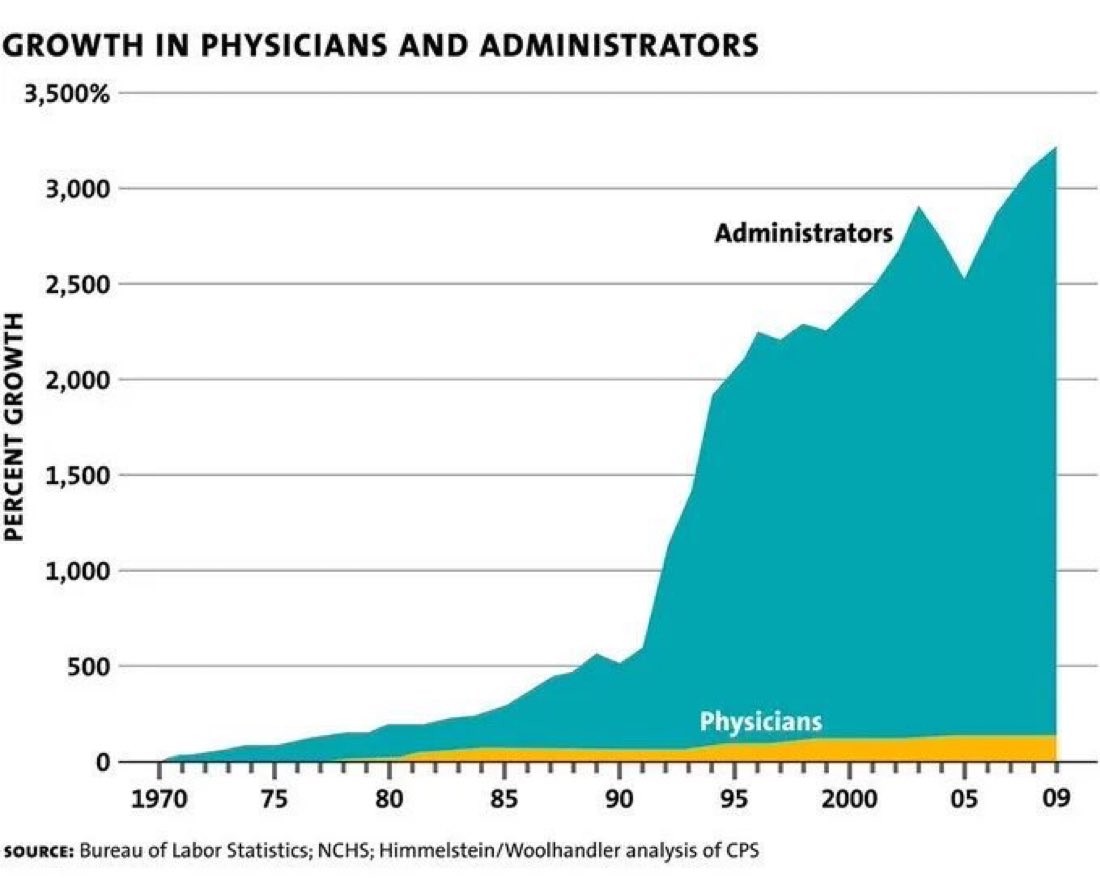
This is why your healthcare sucks. Most of the money is being used to create fake jobs for parasites.
David Parker tweet media
English
826
5.1K
31.1K
616.6K
CyberFox retweetledi
alex sammon
alex sammon@alex_sammon·
Orange production in Florida has collapsed over 95% in less than 25 years. 100% of trees are now infected with a disease officially deemed “incurable.” Who killed the Florida orange? My investigation, in @slate, into the lost empire of the old citrus state.
English
273
3.5K
23.6K
1.7M
キャロル@Vtuber初心者🔰
キャロル@Vtuber初心者🔰@carrol_genie_·
アドバイス頂いて庫内温度を275℉から250℉まで落として、これにて完成! 良い感じにsmokeできたような気がする。
キャロル@Vtuber初心者🔰 tweet media
日本語
212
333
5.1K
535K
CyberFox retweetledi
Nav Toor
Nav Toor@heynavtoor·
Your smart TV is taking screenshots of your screen every 15 seconds. Not a guess. Not a theory. A peer-reviewed study by researchers at UC Davis, UCL, and UC3M tested it. Samsung TVs: every minute. LG TVs: every 15 seconds. Even when you're just using it as a monitor. Here's how to turn it off for every brand:
English
854
6.7K
26.5K
6.5M
CyberFox retweetledi
Aakash Gupta
Aakash Gupta@aakashgupta·
The scariest finding in this paper: the subjects couldn't tell it was happening. UPenn ran this study on 48 healthy adults. One group slept 8 hours. Another slept 6. Another slept 4. For 14 straight days. They tested cognitive performance every 2 hours from 7:30am to 11:30pm. The 6-hour group's reaction times, working memory, and sustained attention deteriorated on a near-linear curve. By day 14 they were performing at the same level as someone who hadn't slept at all in 48 hours. The 4-hour group hit that threshold by day 6. Here's the part that should unsettle everyone who thinks they "do fine" on 6 hours: the subjects' self-reported sleepiness flatlined after the first few days. Their brains kept getting worse. Their perception of how impaired they were stopped updating. The cognitive decline was invisible to the person experiencing it. The researchers found a hard threshold. Any wakefulness beyond 15.84 hours in a day produces cumulative neurobiological cost. That cost compounds every single day you exceed it and does not reset with a weekend of sleeping in. About 35% of American adults sleep less than 7 hours a night. 40% of those get 6 hours or less. In 1942 that number was 11%. We built an entire professional culture around a sleep schedule that this paper says is functionally equivalent to pulling consecutive all-nighters. "I'm fine on 6 hours" is the most common response to sleep research. The first thing chronic sleep debt destroys is your ability to notice chronic sleep debt.
Nicholas Fabiano, MD@NTFabiano

Sleeping <6h a night for 2 weeks reduces cognitive performance equal to 2 nights of total sleep deprivation.

English
220
3K
19.8K
5.4M
Atomah
Atomah@Atomahhh·
Reminder that session 6 goes live tomorrow! 👀
English
1
0
5
103
CyberFox
CyberFox@CyberReynard·
@RoyLMattox I don't know what an O'Neil follow through is, but I'm excited!
English
3
0
0
412
Dan 🐩🐩🐩
Dan 🐩🐩🐩@danshep55·
$tsla if gets down to 355 im opening up #onlydans to the public . Just please don’t look directly in the eyes .
English
3
0
16
1.8K
CyberFox retweetledi
Anish Moonka
Anish Moonka@anishmoonka·
A newborn sperm whale can’t swim. It starts sinking the second it’s born. If nobody pushes it to the surface, it drowns in mile-deep water. On July 8, 2023, a sperm whale named Rounder went into labor off the coast of Dominica. Researchers from Project CETI, a $33 million AI initiative out of MIT, Harvard, and Northeastern that’s trying to decode whale language, happened to be there doing routine fieldwork. They had drones in the air and underwater microphones running. What they captured over the next six hours just got published in two papers, one in Science and one in Scientific Reports. Eleven whales gathered at the surface before Rounder even started delivering. Her mother, Lady Oracle, was there. So was her daughter Accra. Three generations in the water. But the wild part: half those whales belonged to a completely separate bloodline that normally keeps its distance from Rounder’s family. On a typical day, these two family lines split off to hunt in different areas and rarely cluster together. For the birth, they all converged before labor started. The unrelated family somehow knew it was coming. The delivery took 34 minutes. Sperm whale calves come out tail-first with their flukes still folded from the womb. They haven’t developed the oil-filled organ in their heads that helps adult whales float, so the moment they’re born, they’re dead weight in the ocean. Every adult whale in the group, related and unrelated, started taking turns pushing the calf up to breathe. They kept this rotation going for three hours. When a pod of pilot whales (known to be aggressive toward sperm whales) and a large group of Fraser’s dolphins showed up during delivery, the adults formed a wall around the newborn until the threat passed. The underwater audio is where it gets interesting. CETI’s microphones picked up the whales changing their vocal patterns during the birth. The click-based sounds they use to talk to each other shifted at specific moments, and vowel-like structures appeared in the recordings. This builds on what CETI found in 2024 when they ran machine learning on over 8,700 recorded whale calls and discovered sperm whale communication isn’t a basic 21-sound code. It’s a system of about 300 distinct sound combinations, with the whales adjusting rhythm and timing in real time, speeding up and slowing down the way a musician does mid-performance. A 2025 follow-up from UC Berkeley found these clicks also contain vowel patterns, something scientists had assumed only humans could produce. Sperm whales carry the largest brain of any animal on the planet. About 9 kg. Roughly six times heavier than yours. The evolutionary analysis in the new Science paper suggests this kind of cooperative birthing goes back over 36 million years, to the common ancestor of all toothed whales. The calf was spotted a year later, swimming with its family.
The Associated Press@AP

Rare footage of a sperm whale giving birth has offered scientists a window into the behavior of these large, elusive mammals.

English
99
3K
18.9K
1.7M