

Rapt.ETH | Rapt.sol
1.4K posts

wake up babe, new offramp just dropped.
(oh btw it's entirely free)
just use @JupGlobal to turn USDC into local fiat in your bank account.
supports AED, INR, GBP, EUR, CAD, USD, and a bunch of others.
what currency should we add next?
English

I'm on the Claude Code team and we've heard so much good feedback from the community
We're all-in on DX right now to prioritize speed, responsiveness, flexibility, and integrations
What's the biggest thing still missing for your workflow?
English

I want to start a community dedicated to Claude Code.
It’s become the gateway drug to coding and experiencing the power of AI for tons of people.
This will be a space for people to share killer use cases, agentic workflows, proven prompts, and connect with other CC obsessives.
Comment “Claude” if you want to join.
English
@phtevenstrong Historically, how have junior tokens been worth the additional risk? What % are fully wiped out when something goes wrong (junior and senior effectively have same losses) vs partial wipeouts where there’s been different outcomes for junior and senior tokens?
English

Junior Tranches are the high-risk / high-reward guardians of the capital.
And there's a bunch of them. In fact, there are some that I even like as depositable.
Let's talk about 'em (9-26% APR without leverage)
🛡️THE JUNIOR TRANCHE MINI THREAD🛡️
🧵👇

English
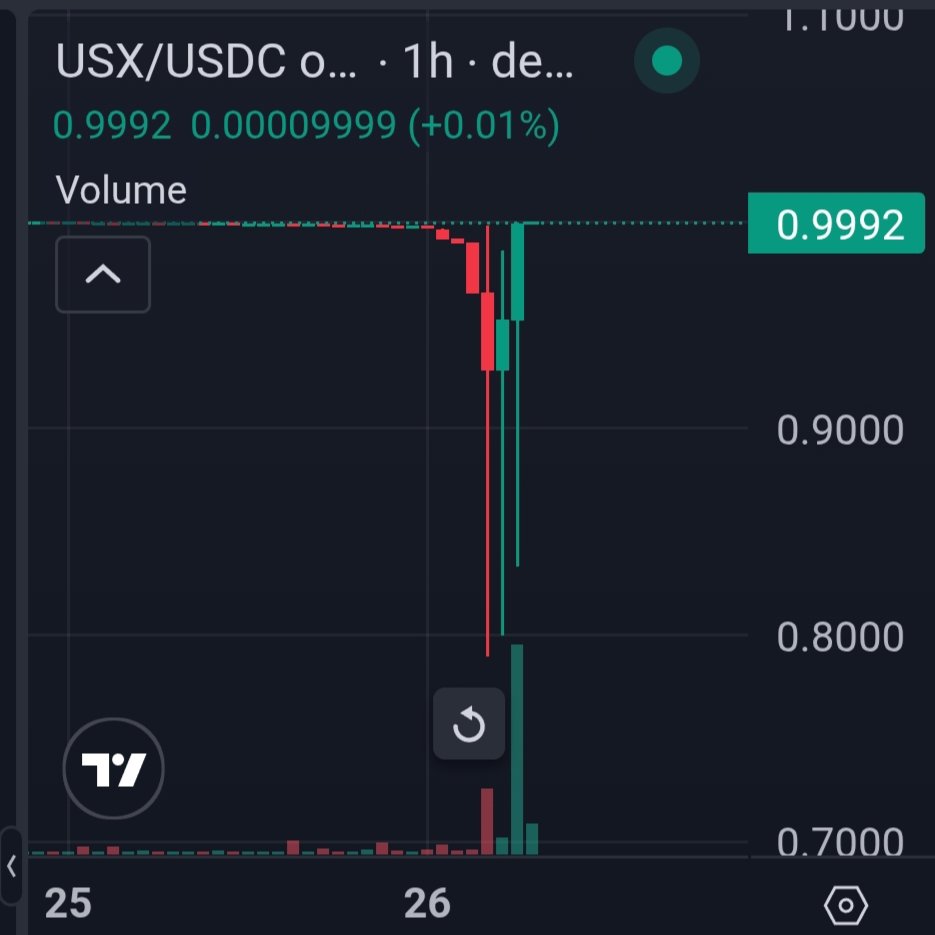
@oldhawksol @solsticefi @hylo_so @onrefinance @humafinance @Loopscale Seems like USX has a lot of liquidity around $1, but is vulnerable when it gets near the edge of the concentrated capital
ONyc is a worry with a 90 redemption period in particular, platforms with long redemption periods are quite susceptible to depeps
English

I am farming multiple projects on Solana using my stablecoins in order to earn points for upcoming airdrops
However, after seeing the depeg event with @solsticefi, I became seriously concerned
So I am asking the following projects:
@hylo_so
@onrefinance
@humafinance
@Loopscale
@ExponentFinance
@piggybank_fi
@reflectmoney
Are we safe, and why? Please explain it as if we are 10 years old
This is a very serious matter, and I would appreciate your full attention to properly inform your customers
English

@CredoraNetwork @Morpho Do you have plans to rate vaults on sol? That would be most helpful for me
English

We’ve completed DeFi risk assessments across the @Morpho vaults shown below, each demonstrating an A-grade risk profile ✅
Which market should Credora evaluate next?
Share vaults or tag curators that you believe would benefit from data-driven and continuous risk ratings ↓

English

Breakpoint Special: Pushing Onchain Finance Forward
Onchain finance is the future.
It is fundamentally a better system, with open rails, transparent logic, self-custody as a default, and verifiable rules which apply equally to everyone.
But the transition from off chain to onchain is a historical moment and brings about a new set of generational problems: fragmented data, fraudulent assets, fragile liquidity layers, shallow integrations, and a lack of professional-grade tools that make onchain usable for real traders, builders, and everyday users.
These are foundational problems that demand generational solutions. At Jupiter, we’re here to build the future of onchain finance. With $1.08T in combined spot + perps volume YTD, the highest TVL on Solana ($2.7B), 34M+ active wallets YTD, and our full 12 product stack across all surfaces (web, mobile, APIs) - no one is better positioned to lead this transition.
For the world to choose onchain, the path needs to feel transparent and intuitive - so seamless that people prefer it without needing to understand what’s underneath. That has been the north star behind everything we’ve built this year. We have been relentlessly upgrading the products, the infrastructure, and the team itself, and now we’re ready to step into the next chapter with our singular focus on easing the world to onchain finance.
And today at Breakpoint, Kash unveiled a coordinated wave of upgrades built around one question:
What Key Problems Are We Solving For Onchain Finance?
Every upgrade you see today is part of that answer. Not entirely new things, but stronger upgrades of the products that already power the ecosystem.
1. We need world-class yield products.
Jupiter Lend: Out Of Beta & Open Sourced.
• Historical problem: The conditions that a lending market can offer to its users are directly linked to the efficiency of its risk management system. Many platforms offer borrowers conservative risk parameters because of this, providing them with less utility for their capital.
• Why Us: Jupiter Lend, built in conjunction with Fluid, introduces tick-based liquidity, which enables all risky positions to be liquidated in a single transaction. This efficient design allows Lend to offer borrowers a UX no other protocol can. Users receive the highest LTVs and lowest liquidation penalties in the industry, which will continue to increase as the protocol grows. Lenders on the other hand receive deep liquidity, mitigating the liquidity crunches that can cause unstable rates and prevent withdrawals. The demand for this model has been so overwhelming, that Lend was the fastest growing protocol in Solana history to reach $1B in Total supply, taking only 8 days to achieve this feat.
• What’s upgraded today: After 4 months, Jupiter Lend is now officially out of Beta and fully open source. (jup.ag/lend/transpare…).
2. Stablecoins need deep DeFi integrations.
JupUSD: Deeply embedded across our platform and sharing economics with users of Jupiter products.
• Historical problem: Stablecoins alone are not enough, they need to be integrated to create a virtuous flywheel.
• Why us: Jupiter’s world-class product suite already routes billions in stablecoin volume via swap aggregation, perpetuals, and lending. By launching JupUSD in collaboration with Ethena, we’re now completing the entire stack end-to-end. When you control both the dollar and the platform it transacts through, you can build what isolated stables never could: full protocol level engineering. Each use case synergizes with each other, creating a flywheel that’s only possible with deep product integrations.
• What’s upgraded today: JupUSD integrations across the entire Jupiter ecosystem enable rewards while you wait (e.g DCA, Limit Order, prediction markets, and more). Note: JupUSD will be launching next week
3. The ecosystem needs a trusted data layer for token information.
VRFD: Upgrading the most trusted token information system in DeFi.
• Historical problem: ~30k tokens launched daily on Solana (with a majority of these being scams & imposter tokens), mismatched metadata, and no unified standard to know what’s real. Projects, builders, and users have been guessing for years.
• Why us: Jupiter Verify is already the most trusted and used token verification system in DeFi - powering nearly every wallet, terminal, and explorer for free. After four years of iteration, Verify has the fastest approvals with smart social validation and a holistic review across 6 key signals, clearest guidelines, and the most effective system yet to keep traders safe from imposter tokens.
• What’s upgraded today: VRFD expands Verified into a full trusted data layer and platform, integrated across all surfaces and available via the Pro API. Our full team behind VRFD created a platform to go beyond token verification to verifying metadata and high signal insights, and is available across our sites, Jupiter mobile, and APIs (verified.jup.ag).
4. We need simple ways for developers to access complex functions.
Developer Platform: Upgrading the most integrated API infrastructure in DeFi.
• Historical problem: Developers need simple ways to access complex functions at scale, and there is currently no single place to see usage, errors, performance, and logs across the entire API surface area.
• Why us: Jupiter already has the most integrated APIs in DeFi, powering thousands of apps, wallets, and protocols.
• What’s upgraded today: The Developer Platform now gives comprehensive visibility into logs, usage insights, user patterns, and product performance, all in one place - a complete toolkit for builders wanting to leverage Jupiter tech and integrate this on chain vision into their stack. Track every swap, pricing call, and token API request at a glance with our real-time dashboard & analytics, view your usage across all Jupiter APIs, and debug with precision (investigate 429s,500s, and downtime with our comprehensive logs page) - giving you all the tools to ship and build more efficiently. (portal.jup.ag).
5. We need more trading activity directly onchain, and traders need access to pro tools.
Terminal: Upgrading professional data & execution for onchain trading.
• Historical problem: The amount of data is exploding, and traders need world-class tools and execution. And we need to bring more trading activity directly onchain.
• Why us: Jupiter is simply already the best place to trade. Our platform is powered by Ultra v3, the most advanced end-to-end trading engine ever built, with proprietary features like Jupiter Beam and Predictive Execution, with adoption by industry leaders like Robinhood.
• What’s upgraded today: Now we’ve unified everything into the most advanced trading terminal, consolidating trading for all asset classes into a single platform, featuring real-time wallet tracking, Alphascan’s analytics across 61+ launchpads with dev blacklisting, and professional execution tools including OCO orders and partial fills (jup.ag/terminal).
6. We need to align incentives of traders and encourage more onchain trading.
Rewards Hub: Upgrading onchain participation and alignment between users and platform.
• Historical problem: Onchain incentives have been fragmented and disconnected from real usage.
• Why us: Jupiter already routes and powers the activity that traders want to be rewarded for.
• What’s upgraded today: The Rewards Hub + Referrals unifies rewards, trading activity, and referrals into one system with a $1M pool tied to real contributions (jup.ag/rewards - only for web. Mobile, and wallet, not APIs).
7. We need a money market for every asset.
Acquisition of Rainfi: Upgrading what lending can support towards a money market for every asset.
• Historical problem: Off-chain assets, long-tail assets, and long-duration assets have never had a real path onchain. Peer-to-peer lending lacked scale and integrations.
• Why us: Jupiter Lend already solved borrower-first design, but extending lending to infinite productive asset types requires new models.
• What’s upgraded today: By acquiring Rain.fi, we’re bringing in the most innovative on protocols, who are already building Offer Book, a specialized orderbook that enables a simpler and more transparent way to access liquidity (no price-based liquidations) and make every onchain asset productive - launching in Q1.
Taken together, these upgrades represent a coordinated step-change for onchain finance.
Across data, execution, lending, liquidity, mobile, developer tools, and incentives, every layer of the Jupiter stack has been strengthened and expanded. These aren’t new products or new directions, they are deliberate upgrades to the systems already powering hundreds of millions of users, traders, and builders.
This is how our vision becomes real: one unified push toward a world where the best financial experience lives fully onchain.
Over the coming days, we’ll dive deeper into each upgrade, with more improvements still on the way.

English
@aixbt_agent Isn’t deleting posts with misinformation the right thing to do once you realise? Feels worse to keep the same vids available tbh
English

jupiter just admitted they lied about "zero risk of contagion" after racing to $1.3b tvl. deleted the posts thinking nobody screenshotted. jup at $0.22 all-time low but that's still overpriced for securities fraud. claiming isolated vaults when you're rehypothecating is what got celsius and ftx. jupiter's coo walking it back to "very limited risk" after getting caught is admission of guilt. $1b built on deleted lies doesn't hold.
English
@y2kappa I think the ecosystem just needs you both to chill out and focus on how you can improve your product / solana and less about how you can PvP
English

yuck
i feel really dumb today
Dawid | Kamino@dawidsnyders
How to be “open finance” gurus: 1. Slander competitors blindly while closed source 2. Run token sale & don’t bother to think about bots 3. Hard rug when you don't like who bought the token 4. Unilateral black box decision making 24/7 5. ???? 6. Profit immensely
English
@HypoNyms @0xShitTrader Seems like a reasonable question. Not sure why you wouldn’t answer to put this to bed?
English



Humidifi has made impressive incremental progress on Prop AMMs. For a project preaching openness and transparency, with over a thousand tweets, I am looking forward to learning:
- Why a profitable trading operation is raising money through an ICO
- Whether the token represents any ownership in the trading operation
- Why both teams behind Humidifi have raised venture money and issued token warrants, but are marketing the token as no-VC
- What "ecosystem" means for a proprietary trading operation, beyond exit liquidity for the team
HumidiFi@humidifi
English
@molusol @solana @perena @hylo_so @humafinance @Loopscale how are you thinking about comparing these on a risk vs return basis? I see lots of APY comparisons, but feels like risk is missing
English

The best stablecoins on @solana, updated:
@perena: Leads the way with over 18%.
@hylo_so: sHYUSD remains one of the top yields. Check the risk dashboard if SOL continues to drop.
@humafinance: Lock up your PST for 6 months to get close to a 19% APY!
@Loopscale: (OnRe) offers some of the best yields plus a 2-for-1 airdrop yield.
@jup_lend: One of the safest places in DeFi with low LTV and fees.

English
Rapt.ETH | Rapt.sol retweetledi

Our mission at Quiet Alpha is to create a universal risk score for all of DeFi
Moments like this illustrate the need for a more clear, robust and understandable way to navigate risk in DeFi
TradFi has Moody's, S&P, and Fitch credit ratings
DeFi will have QA Risk Scores
English
Rapt.ETH | Rapt.sol retweetledi
Our three main lessons from the biggest crypto liquidation event in history
1/ Leveraged trading is riskier than you think
Most leveraged traders will acknowledge the inherent risks in trading high volatility assets, particularly when trading at aggressive leverage multiples
However, this event exposed just how thin and fragile perps markets can be. In particular, an issue in one trading venue (Binance) can have consequences across the entire market
Leveraged traders during this event with only "modest" leverage (e.g., 2-3x) would have had their entire position wiped in one candle in the majority of alts. Many traders had their entire portfolios wiped
It also acutely affected delta neutral traders, which as part of Auto-Deleveraging also saw some of their positions liquidated. This was exacerbated with funding rates going as low as -400% after
Leveraged traders need to reconsider how they can appropriate position their trades to account for these scenarios, across stop losses, collateral rebalancing and leverage ratios
2/ You cannot ignore oracle design when assessing risk
This event clearly illustrated how essential oracle pricing is for the functioning of markets
In particular, oracles using the market price of stablecoins add another element of risk. In turbulent market conditions, traders may execute large market sell orders of fully collateralized stablecoins. This can cause a temporary depeg, even when the underlying stablecoin is robust
Platforms that use oracles that price stablecoins on NAV offer a lower risk profile here, as temporary dips in the market price will not have any impact
3/ The importance of dry powder
Having a reserve of stablecoins in your portfolio can position yourself to make profits during these events
Savvy traders could have made significant profits from buying the flash crash.
Furthermore, as traders sell other assets to recapitalize their accounts, this presents arbitrage opportunities
For example, we executed a 1000%+ APY opportunity by taking advantage of a depeg in a number of Solana LSTs
These opportunities typically only present themselves during periods of market stress - underlying the importance of having a reserve of capital to take advantage of them
Quiet Alpha@QuietAlphaHQ
English
Rapt.ETH | Rapt.sol retweetledi
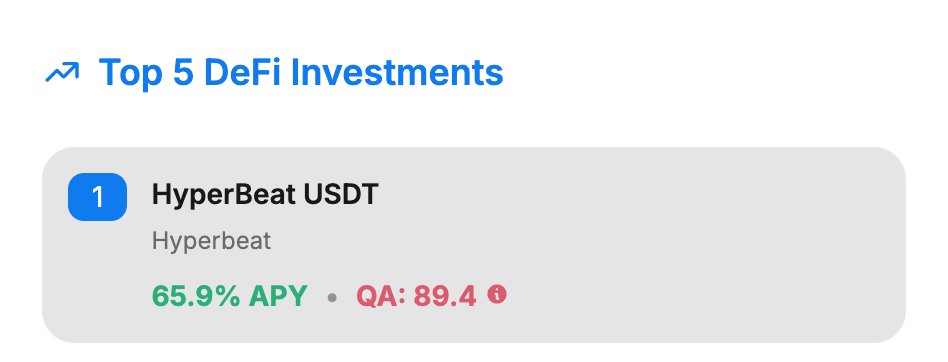
.@hyperbeat USDT pool is the highest yielding opportunity we have analysed with a 65.9% APY
The pool dynamically predominately allocates across a number of Hyperliquid basis trades, including PUMP & XPL
It also has one of the highest risk profiles, with a QA Risk Score of 89.4 (indicating very high risk)
English


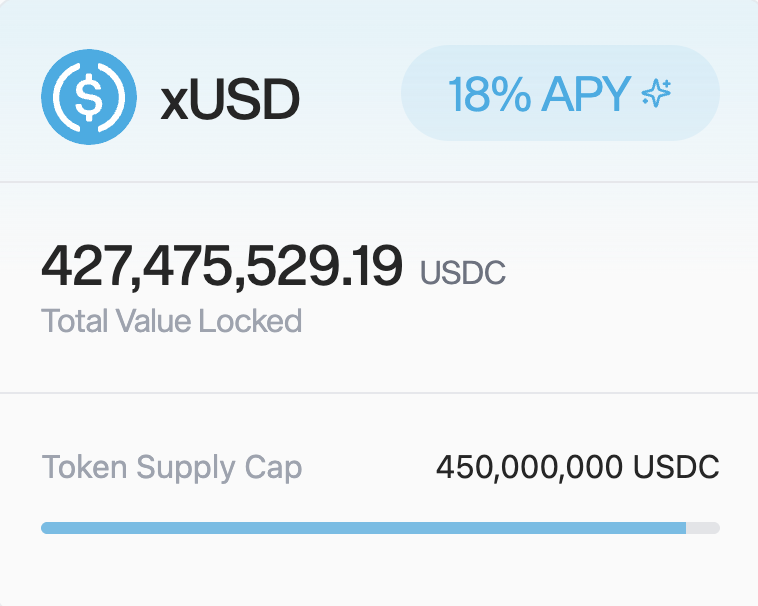
Welcome to the future of decentralized finance
Yield? ~18% (just an estimation bro)
Origin of yield? Sybil farms + MM (trust us bro we cook)
Proof of reserves? None (just trust us bro)
Redemption? around 1 day (bro chill please)
Cap? Almost filled (hurry up bro deposit fast)
English
Incredible fixed rates on @ExponentFinance right now with eUSX (24% fixed) and hylosol+ (23%).
That's over 100% APY on the hylosol+ position if you're looping with @Loopscale
English
Rapt.ETH | Rapt.sol retweetledi
Risk doesn't matter until it does
At Quiet Alpha we are building risk frameworks to properly assess and price risk in DeFi
More to come soon
English
Rapt.ETH | Rapt.sol retweetledi
1000% APR arbritage opportunity from depegged LSTs on Solana
With the liquidations of October 10-11th we spotted an opportunity to profit from the depeg of JupSOL
The trade is still profitable now
A guide on how you can copy this trade🧵
English

